You’ll find simple, clear ways to bring mid-century modern style into your apartment living room without losing comfort or function. This article shows eight practical ideas that help you mix iconic shapes, warm wood tones, bold rugs, and smart storage so your space looks stylish and works for everyday life. You’ll learn how to balance vintage-inspired pieces with modern needs, so small rooms feel open and purposeful. Expect tips on furniture choices, lighting, color pops, and storage that make a real difference for apartment living. Table of Contents1) Incorporate iconic furniture like the Eames Lounge Chair for authentic mid-century style.2) Use warm wood tones in coffee tables and shelving to add natural elegance.3) Choose bold, geometric rugs with retro patterns to anchor the living space.4) Opt for a statement Sputnik-style chandelier to elevate lighting and focus5) Mix clean-lined sofas with tapered wooden legs for a sleek look.6) Add pops of color through vintage-inspired cushions and throw blankets.7) Select minimalist wall art with abstract shapes and muted palettes.8) Use multifunctional storage solutions that blend form and function.Design Principles of Mid Century Modern Living RoomsCore Elements and MaterialsColor Palettes and PatternsMaximizing Space in Apartment Living RoomsFurniture Placement StrategiesMulti-Functional Design Solutions 1) Incorporate iconic furniture like the Eames Lounge Chair for authentic mid-century style. Choose an Eames Lounge Chair or a faithful replica to anchor your living room. Its curved plywood and leather design adds instant mid-century character without cluttering the space. Place the chair where you read or relax, such as beside a floor lamp or near a window. Pair it with a simple side table and a low-profile sofa to keep lines clean and balanced. Use neutral tones and natural woods to match the chair’s classic look. Add one or two bold accents—like a patterned rug or a single bright cushion—to keep the room from feeling flat. If a genuine Eames chair is outside your budget, seek quality replicas or similar mid-century pieces at thrift stores and online marketplaces. Focus on good proportions and durable materials so the piece looks and feels authentic in your apartment. 2) Use warm wood tones in coffee tables and shelving to add natural elegance. Choose coffee tables and shelves in warm woods like walnut, teak, or oak to bring a calm, natural feel to your mid-century living room. These tones match the era’s look and soften modern lines without adding clutter. Place a warm wood coffee table near your seating to anchor the space. A simple, low-profile table with tapered legs echoes mid-century design and gives you a functional focal point. Use shelving to display books, ceramics, and a few plants. Open wood shelves create height and texture while keeping the room airy. Mix wood tones lightly by repeating one warm finish in key pieces and balancing with neutral fabrics. Add metal or glass accents to prevent the wood from feeling heavy. Keep finishes subtle and avoid high gloss. A matte or satin finish highlights the grain and keeps the room feeling authentic and relaxed. 3) Choose bold, geometric rugs with retro patterns to anchor the living space. Pick a rug with clear geometric shapes and a simple color scheme to ground your furniture. A strong pattern gives the room a focal point and ties together mid-century pieces like a low sofa or tapered-leg coffee table. Choose colors that echo other accents in the room, such as cushions or art. Earthy tones or muted brights work well with wood finishes and metal legs without overwhelming the space. Keep scale in mind: a larger rug under key seating makes the layout feel intentional. If your room is small, a mid-sized rug can define the living area without crowding traffic paths. Opt for modern materials that mimic vintage looks but are easier to clean. That way you get the retro feel with durable performance for apartment living. 4) Opt for a statement Sputnik-style chandelier to elevate lighting and focus Choose a Sputnik-style chandelier to give your living room a clear focal point. Its starburst shape draws the eye and ties together mid-century modern elements. Pick a size that fits your space. A compact fixture works over a small seating area, while a larger one suits open-plan rooms. Keep scale in mind so the chandelier feels balanced, not crowded. Select finishes and bulbs that match your decor. Warm bulbs soften the metal look and make the room feel inviting. Matte black, brass, or gold finishes pair well with wood tones and clean lines. Mount it over your main seating or a coffee table to anchor the layout. You can also use a dimmer to control mood and function. Adjustable-height models help you adapt the fixture to different ceiling heights. 5) Mix clean-lined sofas with tapered wooden legs for a sleek look. Choose a sofa with clean lines and tapered wooden legs to anchor your living room. The slim silhouette makes small apartments feel more open while still offering a polished mid-century vibe. Pick neutral upholstery for flexibility, or a muted color to add character without dominating the space. Tapered legs lift the sofa visually, creating lightness and showing off your flooring or rug. Balance the sofa with simple side tables and a textured throw for warmth. Keep accessories minimal and intentional so the clean lines remain the focus. If you need extra seating, add a low-profile armchair with similar legs to keep the style consistent. This creates a cohesive, streamlined look that reads as both modern and timeless. 6) Add pops of color through vintage-inspired cushions and throw blankets. You can brighten a mid-century modern living room without changing large pieces. Use cushions and throws in vintage patterns like geometric prints, florals, or bold stripes to add color and period charm. Choose a limited palette that ties to your main furniture tones. A few bright cushions on a neutral sofa create focus, while a single patterned throw can link other accents in the room. Mix textures for depth—velvet, wool, and woven fabrics work well together. Keep shapes simple and avoid too many competing patterns so the room stays balanced and calm. Pick one or two accent colors and repeat them in small decor items. This keeps the look intentional and helps vintage pieces feel fresh in a modern apartment. 7) Select minimalist wall art with abstract shapes and muted palettes. Choose art that uses simple forms and gentle colors to keep your space calm and balanced. Abstract shapes add visual interest without cluttering the room. Stick to muted palettes like beige, soft gray, olive, or dusty pink to match mid-century tones. These colors work with wood furniture and warm fabrics. Pick pieces with clean lines and plenty of negative space. That helps the art feel modern and lets other design elements stand out. Consider one larger canvas or a small set of coordinated prints for a cohesive look. Frame choices should stay simple—thin black, wood, or no frame at all. Hang art at eye level and center it over key furniture like the sofa or a console. Proper placement makes the room feel intentional and well-composed. 8) Use multifunctional storage solutions that blend form and function. Choose furniture that hides clutter and still looks stylish. A low credenza or media console gives you closed storage for cables and games and a flat top for plants or art. Wall-mounted shelving frees floor space and keeps the room airy. Mix open shelves to show books and objects with closed cabinets for items you don’t want on view. Look for pieces with built-in features, like a coffee table with drawers or an ottoman that opens for blankets. These items give you extra storage without adding more furniture. Pick warm woods and simple lines to match mid-century style. This keeps the room cohesive while giving you practical places to store things. Design Principles of Mid Century Modern Living Rooms You’ll focus on clean forms, warm woods, and purposeful details that make small apartments feel both open and cozy. Emphasize useful furniture, natural materials, and a restrained but bold use of color. Core Elements and Materials Start with furniture that has low profiles, tapered legs, and simple silhouettes. Choose a compact sofa and an armchair with exposed wood frames so you save space and keep sight lines open. Use built-in or slim media units to reduce clutter and keep the room feeling larger. Prioritize materials like walnut, teak, and oak for tables and shelving. Add leather or wool upholstery for durability. Include a single statement light — a globe pendant or arc floor lamp — to anchor the seating area without crowding your layout. Add a few purposeful accessories: a geometric rug, a minimalist clock, and one or two sculptural vases. Keep ornamentation limited so each piece reads clearly in your apartment’s small footprint. Color Palettes and Patterns Pick a base of neutrals — warm white, soft gray, or beige — to keep walls and large items calm. Layer in accent colors like mustard, olive green, burnt orange, or teal on pillows, a single chair, or an art piece to create focal points without overwhelming the room. Use patterns sparingly. Geometric prints and simple stripes work best on throw pillows, a rug, or a single curtain panel. Match pattern scale to room size: choose small-scale repeats for compact spaces and larger motifs only if you have an open-plan layout. Balance warm wood tones with matte black or brass hardware for contrast. Keep the palette to three main colors plus neutrals so your apartment feels cohesive and intentional. Maximizing Space in Apartment Living Rooms Use furniture that defines zones, keeps sightlines open, and adds storage. Choose pieces with slim profiles, raised legs, and built-in function to make the room feel larger and work harder. Furniture Placement Strategies Place the sofa against a long wall to open floor space and create a clear traffic path. Angle a chair or place a low-profile console behind the sofa to form a conversation area without blocking movement. Float a narrow media unit on the wall instead of a bulky cabinet to keep the floor visible. Use a single large rug to unite seating and make the space read as one room. Measure before buying: leave at least 30–36 inches for main walkways and 18–24 inches between a coffee table and seating. Choose furniture with exposed legs and lighter tones to reduce visual weight. Group items in odd numbers (three pieces works well) so the layout feels intentional and not crowded. Multi-Functional Design Solutions Pick a storage ottoman or bench that doubles as seating and a place to hide blankets or games. Use nesting tables and a slim drop-leaf table that expands for meals or work, then tucks away when you need open floor. Mount shelves high on the wall for books and decor, keeping floor space free. Install a wall-mounted desk that folds down for occasional work and stows flat when not in use. Choose a sleeper sofa for guests and a TV stand with drawers to hide cables and media. Label zones with lighting: a floor lamp for reading, a pendant over the dining nook, and LED strip lighting under shelves to add function without bulky fixtures.
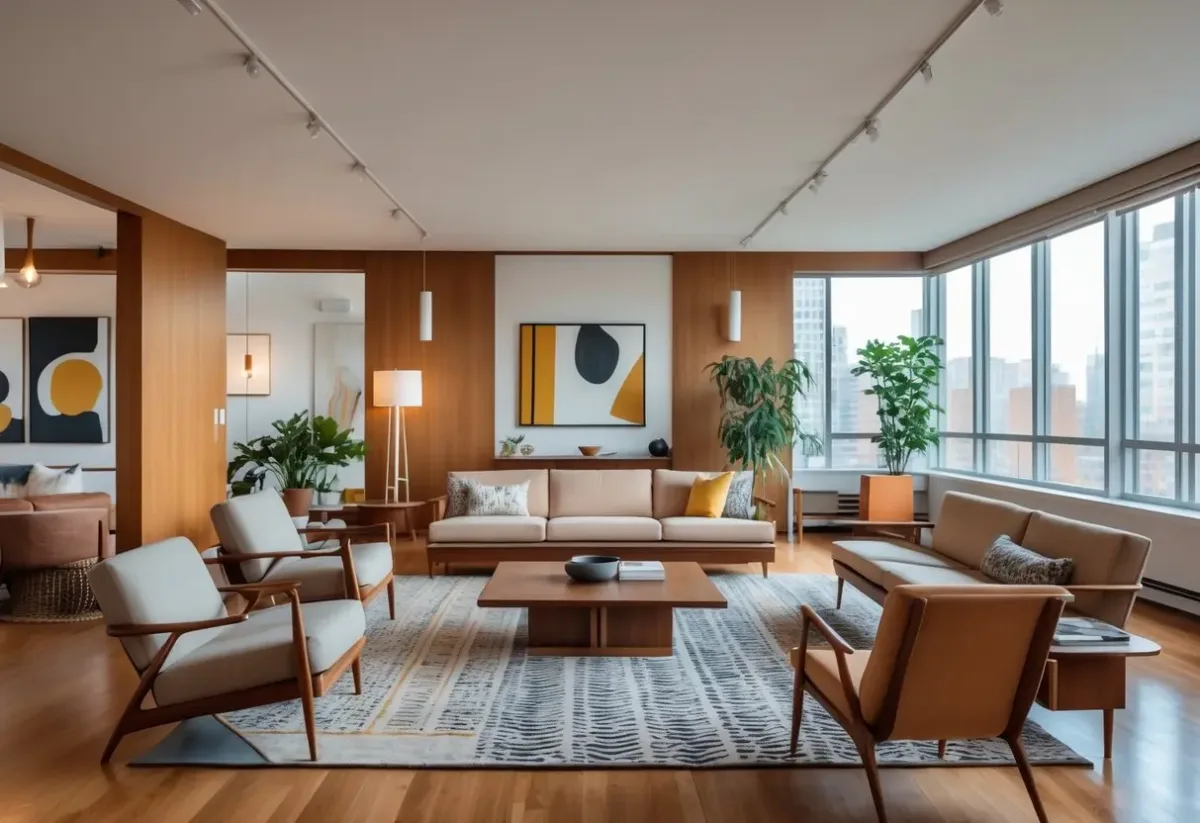
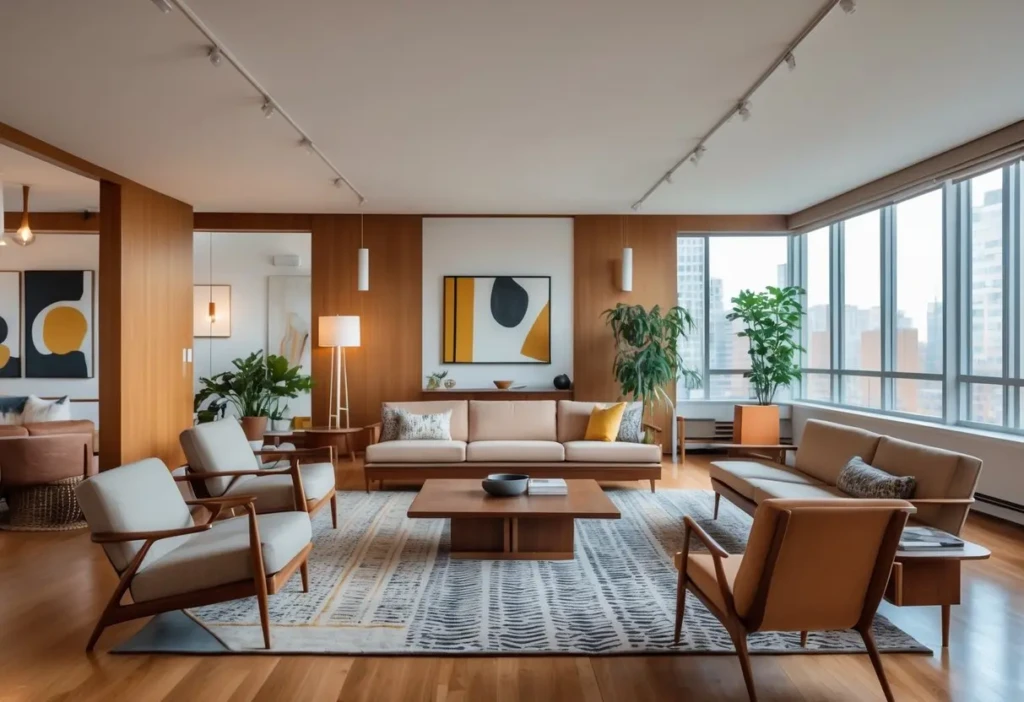
You’ll find simple, clear ways to bring mid-century modern style into your apartment living room without losing comfort or function. This article shows eight practical ideas that help you mix iconic shapes, warm wood tones, bold rugs, and smart storage so your space looks stylish and works for everyday life.
You’ll learn how to balance vintage-inspired pieces with modern needs, so small rooms feel open and purposeful. Expect tips on furniture choices, lighting, color pops, and storage that make a real difference for apartment living.
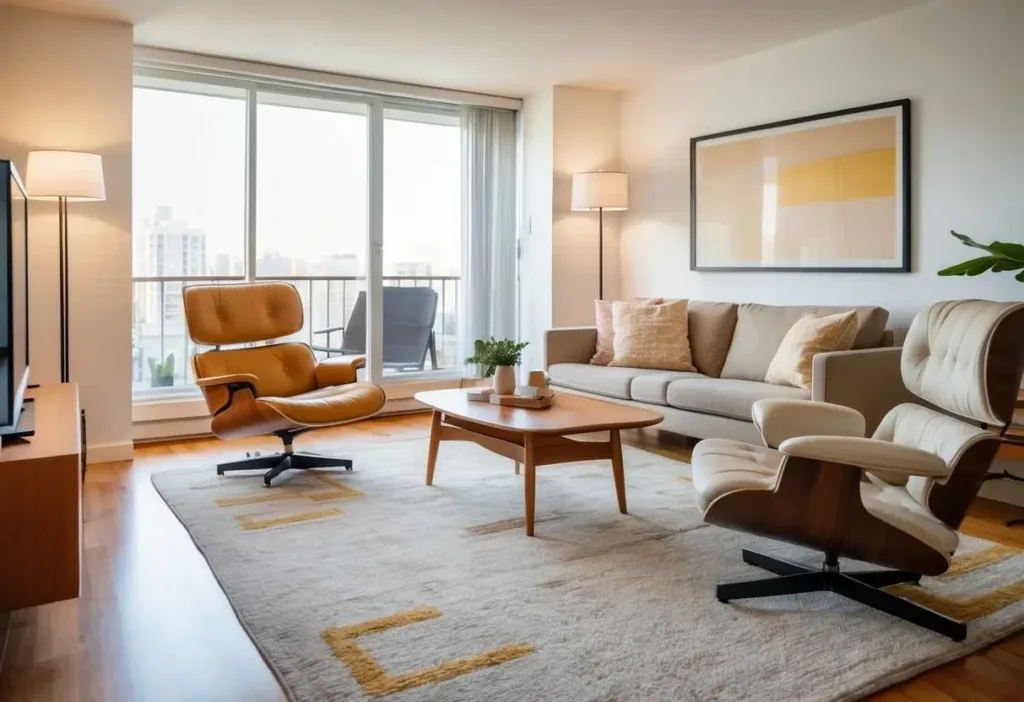
Choose an Eames Lounge Chair or a faithful replica to anchor your living room. Its curved plywood and leather design adds instant mid-century character without cluttering the space.
Place the chair where you read or relax, such as beside a floor lamp or near a window. Pair it with a simple side table and a low-profile sofa to keep lines clean and balanced.
Use neutral tones and natural woods to match the chair’s classic look. Add one or two bold accents—like a patterned rug or a single bright cushion—to keep the room from feeling flat.
If a genuine Eames chair is outside your budget, seek quality replicas or similar mid-century pieces at thrift stores and online marketplaces. Focus on good proportions and durable materials so the piece looks and feels authentic in your apartment.
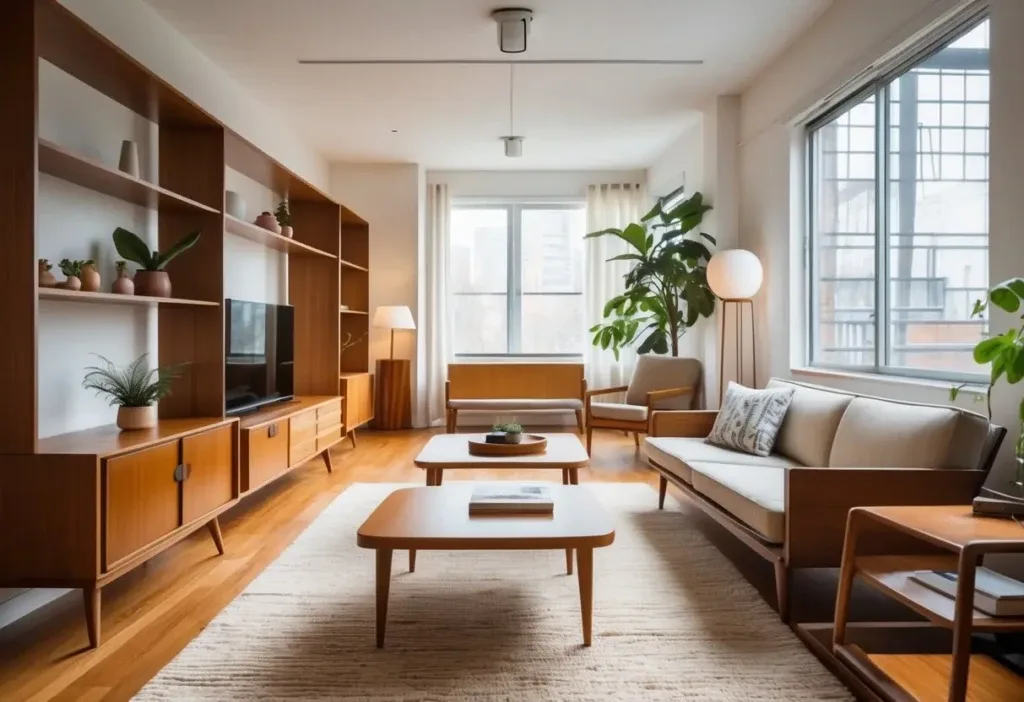
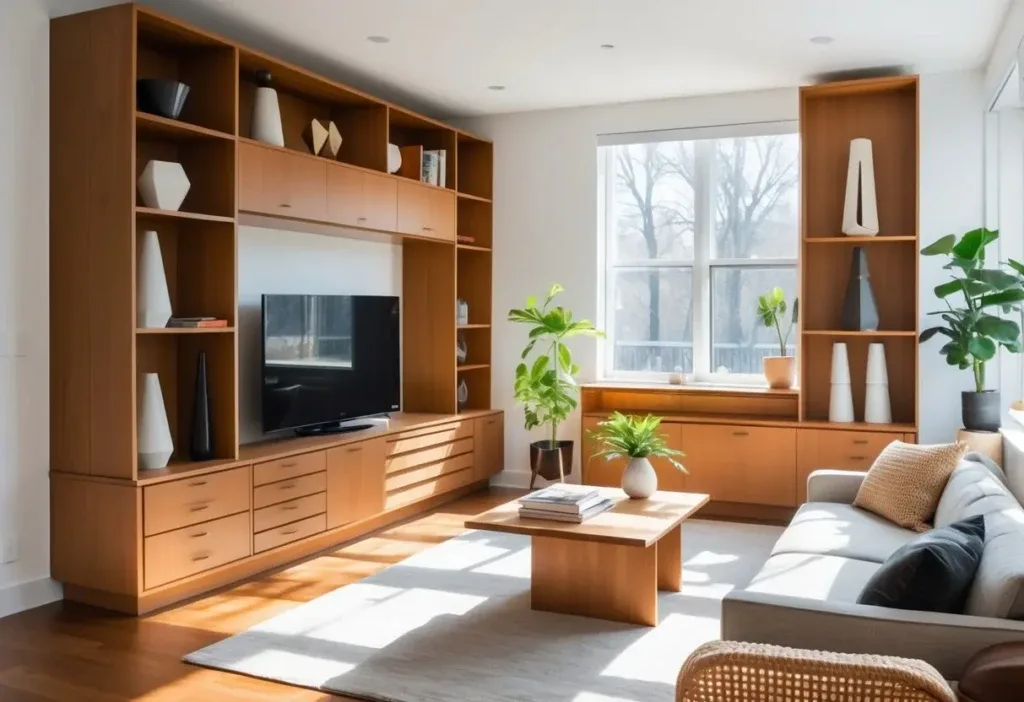
Choose coffee tables and shelves in warm woods like walnut, teak, or oak to bring a calm, natural feel to your mid-century living room. These tones match the era’s look and soften modern lines without adding clutter.
Place a warm wood coffee table near your seating to anchor the space. A simple, low-profile table with tapered legs echoes mid-century design and gives you a functional focal point.
Use shelving to display books, ceramics, and a few plants. Open wood shelves create height and texture while keeping the room airy.
Mix wood tones lightly by repeating one warm finish in key pieces and balancing with neutral fabrics. Add metal or glass accents to prevent the wood from feeling heavy.
Keep finishes subtle and avoid high gloss. A matte or satin finish highlights the grain and keeps the room feeling authentic and relaxed.
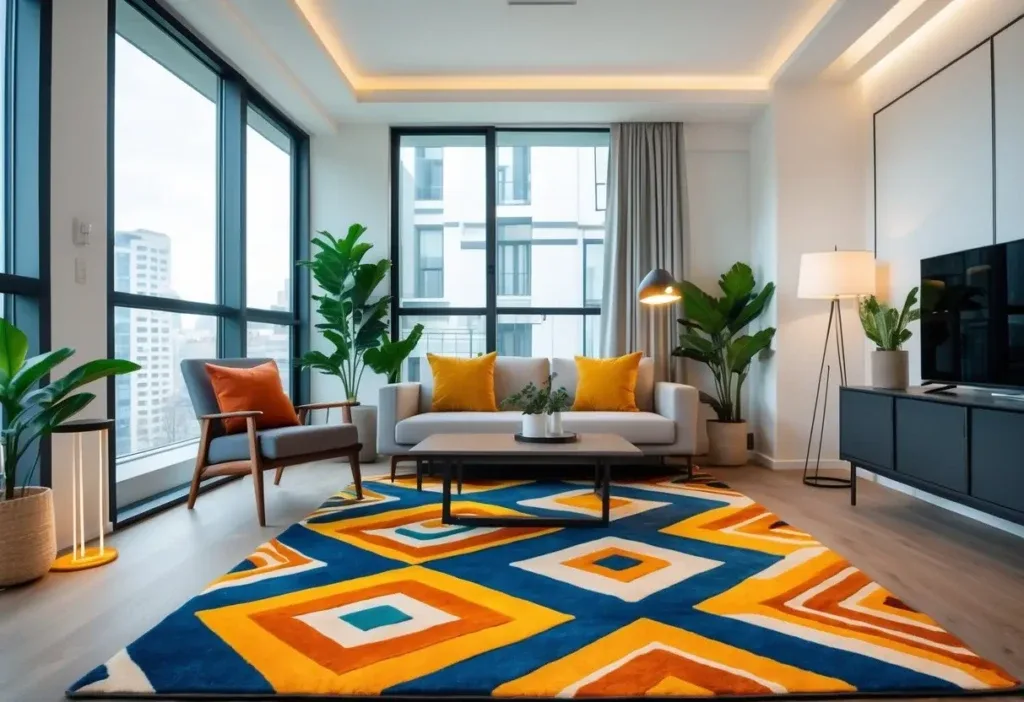
3) Choose bold, geometric rugs with retro patterns to anchor the living space.
Pick a rug with clear geometric shapes and a simple color scheme to ground your furniture. A strong pattern gives the room a focal point and ties together mid-century pieces like a low sofa or tapered-leg coffee table.
Choose colors that echo other accents in the room, such as cushions or art. Earthy tones or muted brights work well with wood finishes and metal legs without overwhelming the space.
Keep scale in mind: a larger rug under key seating makes the layout feel intentional. If your room is small, a mid-sized rug can define the living area without crowding traffic paths.
Opt for modern materials that mimic vintage looks but are easier to clean. That way you get the retro feel with durable performance for apartment living.
4) Opt for a statement Sputnik-style chandelier to elevate lighting and focus
Choose a Sputnik-style chandelier to give your living room a clear focal point. Its starburst shape draws the eye and ties together mid-century modern elements.
Pick a size that fits your space. A compact fixture works over a small seating area, while a larger one suits open-plan rooms. Keep scale in mind so the chandelier feels balanced, not crowded.
Select finishes and bulbs that match your decor. Warm bulbs soften the metal look and make the room feel inviting. Matte black, brass, or gold finishes pair well with wood tones and clean lines.
Mount it over your main seating or a coffee table to anchor the layout. You can also use a dimmer to control mood and function. Adjustable-height models help you adapt the fixture to different ceiling heights.
5) Mix clean-lined sofas with tapered wooden legs for a sleek look.
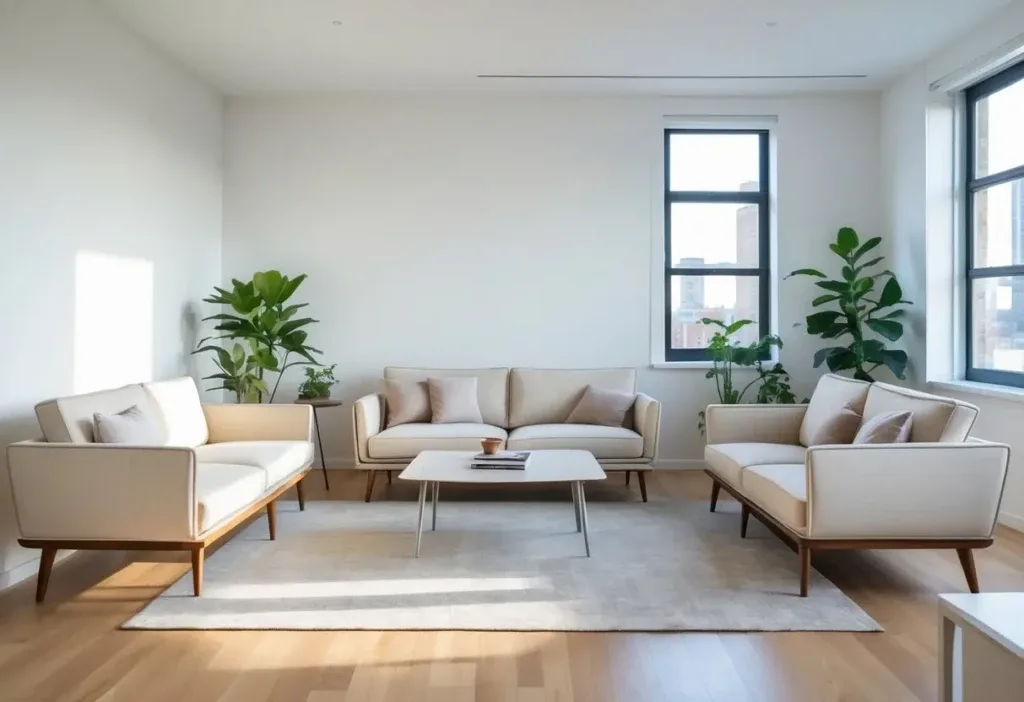
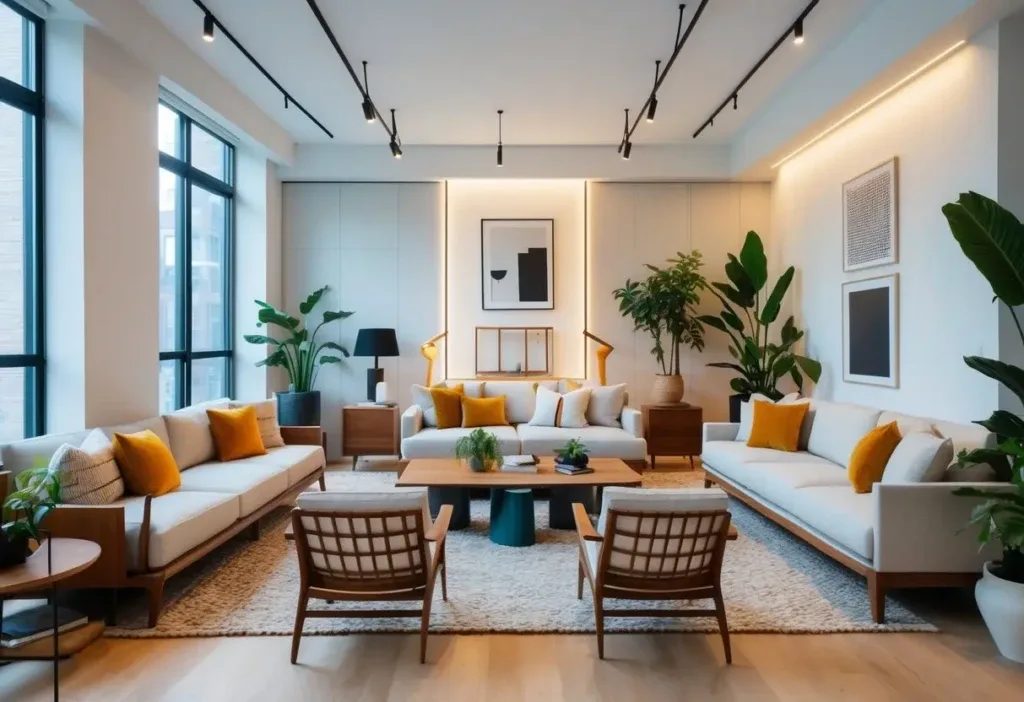
Choose a sofa with clean lines and tapered wooden legs to anchor your living room. The slim silhouette makes small apartments feel more open while still offering a polished mid-century vibe.
Pick neutral upholstery for flexibility, or a muted color to add character without dominating the space. Tapered legs lift the sofa visually, creating lightness and showing off your flooring or rug.
Balance the sofa with simple side tables and a textured throw for warmth. Keep accessories minimal and intentional so the clean lines remain the focus.
If you need extra seating, add a low-profile armchair with similar legs to keep the style consistent. This creates a cohesive, streamlined look that reads as both modern and timeless.
6) Add pops of color through vintage-inspired cushions and throw blankets.
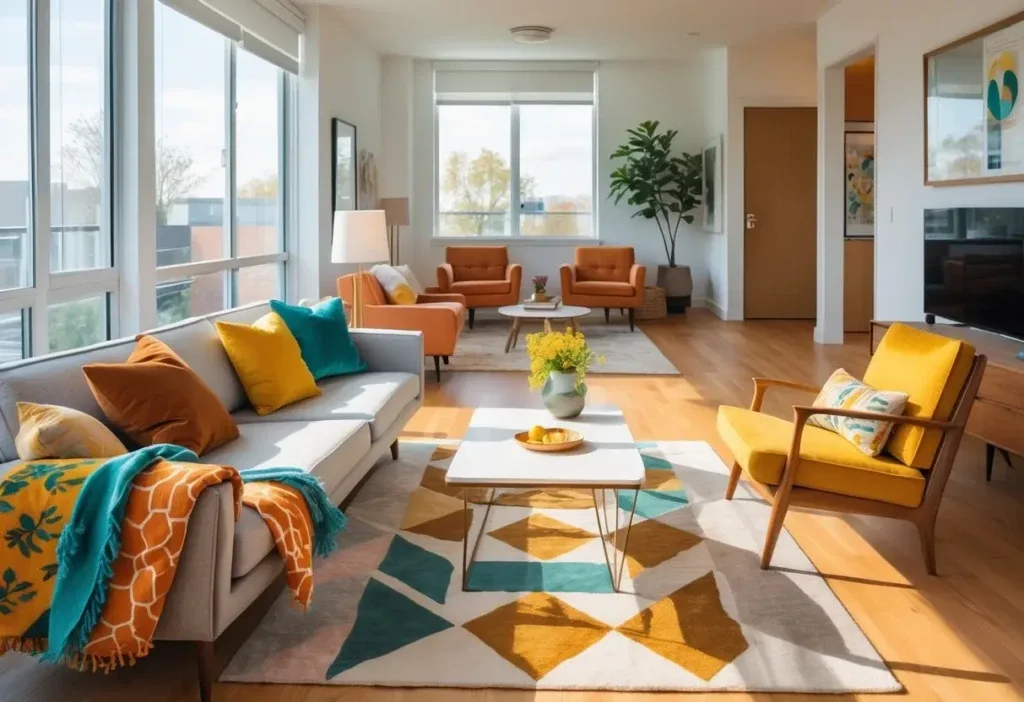
You can brighten a mid-century modern living room without changing large pieces. Use cushions and throws in vintage patterns like geometric prints, florals, or bold stripes to add color and period charm.
Choose a limited palette that ties to your main furniture tones. A few bright cushions on a neutral sofa create focus, while a single patterned throw can link other accents in the room.
Mix textures for depth—velvet, wool, and woven fabrics work well together. Keep shapes simple and avoid too many competing patterns so the room stays balanced and calm.
Pick one or two accent colors and repeat them in small decor items. This keeps the look intentional and helps vintage pieces feel fresh in a modern apartment.
7) Select minimalist wall art with abstract shapes and muted palettes.
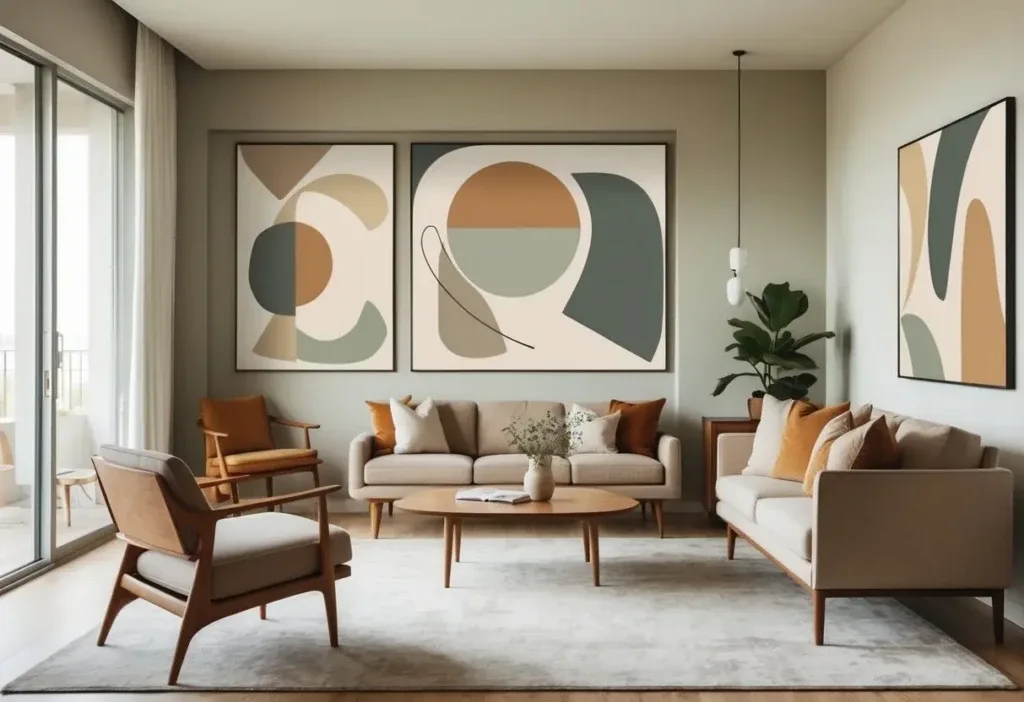
Stick to muted palettes like beige, soft gray, olive, or dusty pink to match mid-century tones. These colors work with wood furniture and warm fabrics.
Pick pieces with clean lines and plenty of negative space. That helps the art feel modern and lets other design elements stand out.
Consider one larger canvas or a small set of coordinated prints for a cohesive look. Frame choices should stay simple—thin black, wood, or no frame at all.
Hang art at eye level and center it over key furniture like the sofa or a console. Proper placement makes the room feel intentional and well-composed.
8) Use multifunctional storage solutions that blend form and function.
Choose furniture that hides clutter and still looks stylish. A low credenza or media console gives you closed storage for cables and games and a flat top for plants or art.
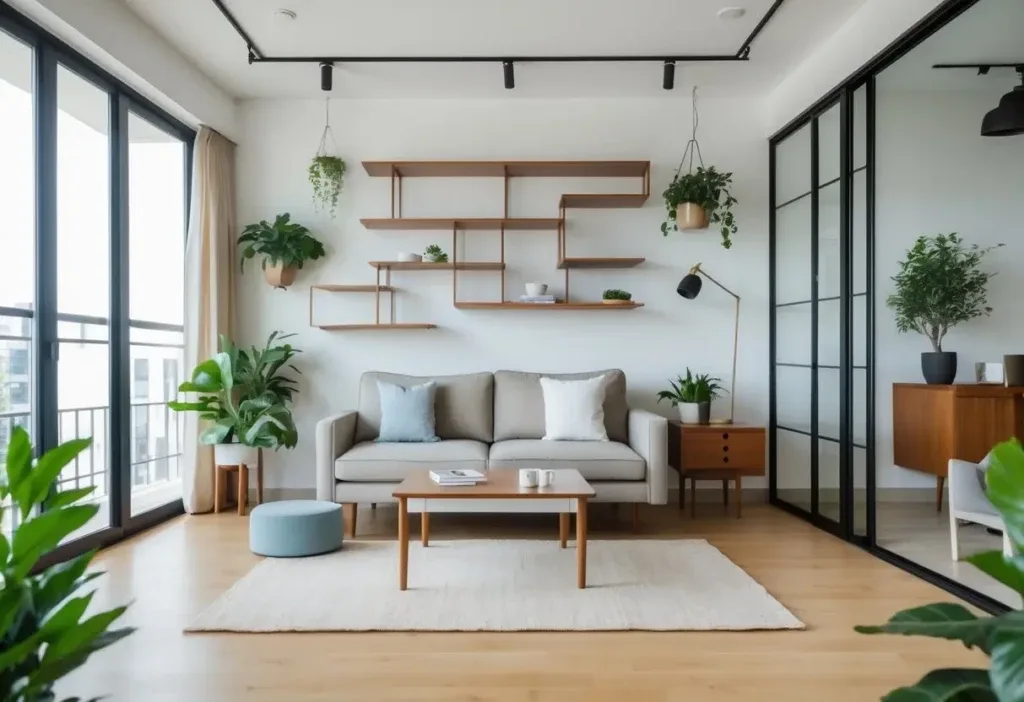
Wall-mounted shelving frees floor space and keeps the room airy. Mix open shelves to show books and objects with closed cabinets for items you don’t want on view.
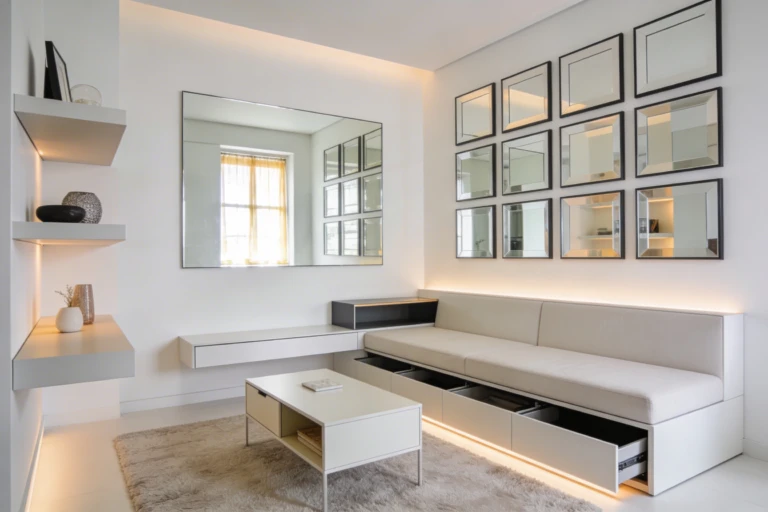
Look for pieces with built-in features, like a coffee table with drawers or an ottoman that opens for blankets. These items give you extra storage without adding more furniture.
Pick warm woods and simple lines to match mid-century style. This keeps the room cohesive while giving you practical places to store things.
Design Principles of Mid Century Modern Living Rooms
You’ll focus on clean forms, warm woods, and purposeful details that make small apartments feel both open and cozy. Emphasize useful furniture, natural materials, and a restrained but bold use of color.
Core Elements and Materials
Start with furniture that has low profiles, tapered legs, and simple silhouettes. Choose a compact sofa and an armchair with exposed wood frames so you save space and keep sight lines open. Use built-in or slim media units to reduce clutter and keep the room feeling larger.
Prioritize materials like walnut, teak, and oak for tables and shelving. Add leather or wool upholstery for durability. Include a single statement light — a globe pendant or arc floor lamp — to anchor the seating area without crowding your layout.
Add a few purposeful accessories: a geometric rug, a minimalist clock, and one or two sculptural vases. Keep ornamentation limited so each piece reads clearly in your apartment’s small footprint.
Color Palettes and Patterns
Pick a base of neutrals — warm white, soft gray, or beige — to keep walls and large items calm. Layer in accent colors like mustard, olive green, burnt orange, or teal on pillows, a single chair, or an art piece to create focal points without overwhelming the room.
Use patterns sparingly. Geometric prints and simple stripes work best on throw pillows, a rug, or a single curtain panel. Match pattern scale to room size: choose small-scale repeats for compact spaces and larger motifs only if you have an open-plan layout.
Balance warm wood tones with matte black or brass hardware for contrast. Keep the palette to three main colors plus neutrals so your apartment feels cohesive and intentional.
Use furniture that defines zones, keeps sightlines open, and adds storage. Choose pieces with slim profiles, raised legs, and built-in function to make the room feel larger and work harder.
Furniture Placement Strategies
Place the sofa against a long wall to open floor space and create a clear traffic path. Angle a chair or place a low-profile console behind the sofa to form a conversation area without blocking movement.
Float a narrow media unit on the wall instead of a bulky cabinet to keep the floor visible. Use a single large rug to unite seating and make the space read as one room. Measure before buying: leave at least 30–36 inches for main walkways and 18–24 inches between a coffee table and seating.
Choose furniture with exposed legs and lighter tones to reduce visual weight. Group items in odd numbers (three pieces works well) so the layout feels intentional and not crowded.
Multi-Functional Design Solutions
Pick a storage ottoman or bench that doubles as seating and a place to hide blankets or games. Use nesting tables and a slim drop-leaf table that expands for meals or work, then tucks away when you need open floor.
Mount shelves high on the wall for books and decor, keeping floor space free. Install a wall-mounted desk that folds down for occasional work and stows flat when not in use. Choose a sleeper sofa for guests and a TV stand with drawers to hide cables and media.
Label zones with lighting: a floor lamp for reading, a pendant over the dining nook, and LED strip lighting under shelves to add function without bulky fixtures.
Listen to this article 10 10 0:00 / 0:00 Speed 0.75×1×1.25×1.5×2× If your tiny living room feels cramped, you’re about to change the game. These ideas prove you don’t need square footage to brag about a gorgeous lounge. Let’s get you 8 proven small-space wins that look bigger, feel cozier, and are actually doable. 1….
Listen to this article 10 10 0:00 / 0:00 Speed 0.75×1×1.25×1.5×2× You want a living room rug that lifts your space and ties together furniture, color, and texture with a clear mid-century modern vibe. This article helps you find seven strong mid-century modern rugs and shows how to pick and style the right one for your room. You’ll…
Listen to this article 10 10 0:00 / 0:00 Speed 0.75×1×1.25×1.5×2× You want a living room that feels timeless and calm, yet shows off your style. This article guides you through eight midcentury modern decor ideas that help you mix classic pieces, warm woods, clean lines, and a few bold accents to shape a balanced,…
Listen to this article 10 10 0:00 / 0:00 Speed 0.75×1×1.25×1.5×2× You want a living room that feels timeless, simple, and thoughtfully styled. This article shows eight mid century modern ideas that help you mix clean lines, warm woods, and smart accents so your space looks put together without feeling staged. You will learn how to…
Listen to this article 10 10 0:00 / 0:00 Speed 0.75×1×1.25×1.5×2× Think walls are just background? Think again. These seven ideas prove a fresh wall can transform a room from meh to wow in minutes. 1. Gallery Wall With a Personal Twist A curated gallery brings character to your living room without breaking the bank….
Listen to this article 10 10 0:00 / 0:00 Speed 0.75×1×1.25×1.5×2× You can bring mid-century modern style into your living room with a few well-chosen pieces that balance form and function. These eight iconic furniture items help you create a timeless, comfortable space that feels both classic and modern. This guide shows what makes each piece special and how to…