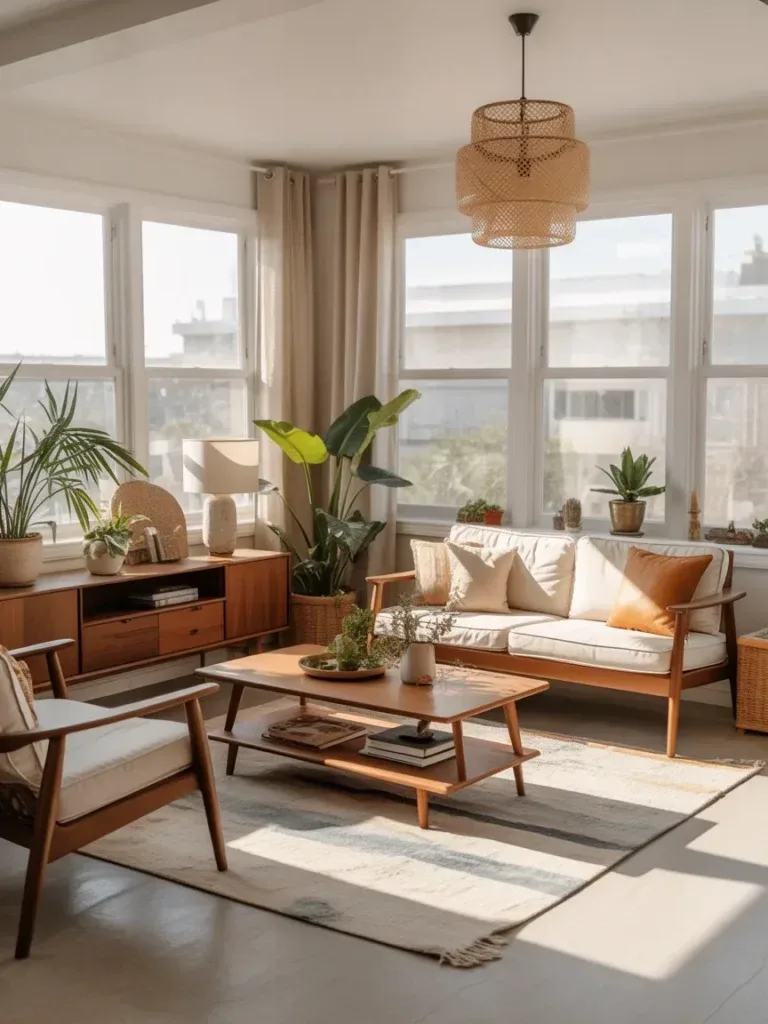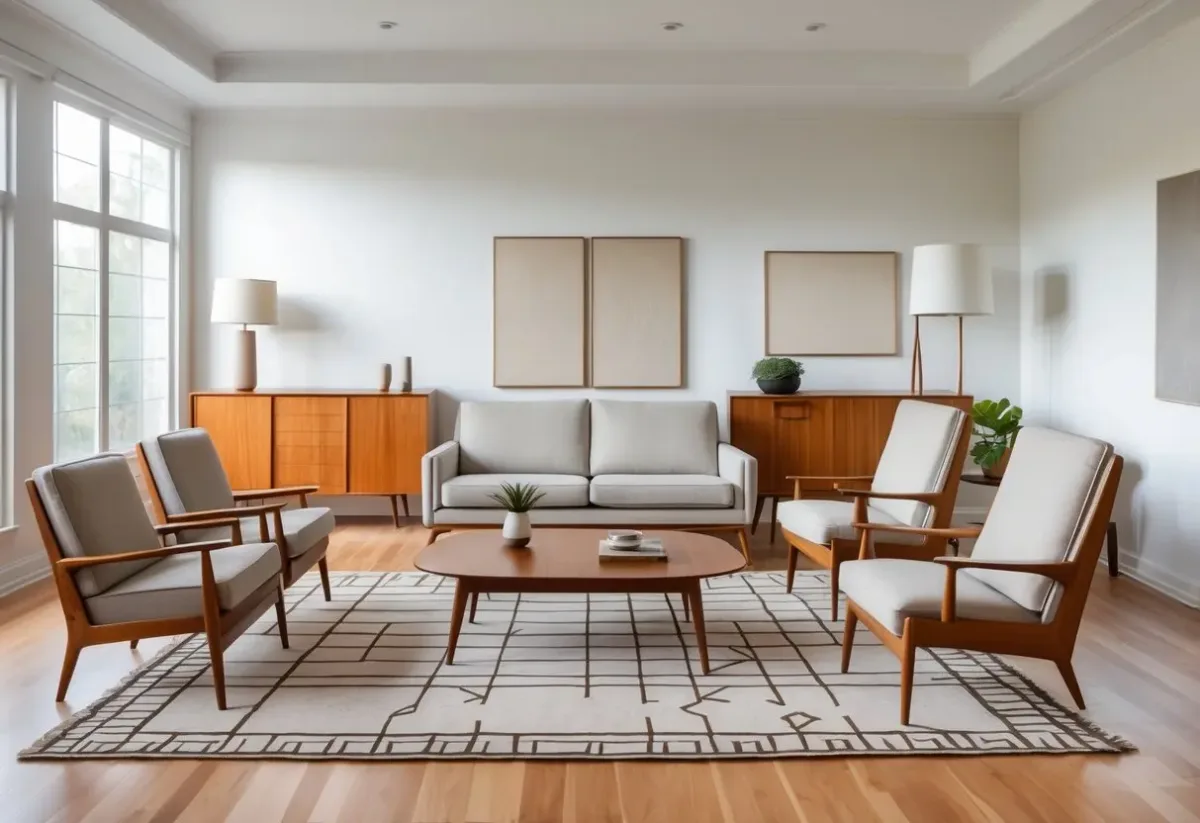
8 Mid Century Modern Living Room Furniture: Essential Pieces and Styling Tips
Good mid century modern living room furniture does two things at once: it looks sculptural enough to stand on its own, and it works hard for everyday living. Tapered legs, honest materials, and clean silhouettes are the throughline, whether you’re shopping for a sofa, a credenza, or a simple side table.
This guide breaks down eight defining pieces, shows you how to spot authentic craftsmanship versus a weak reproduction, and walks through practical mid century modern living room ideas for pulling a whole room together — including shelving, wall units, and media storage that rarely get enough attention in style guides.
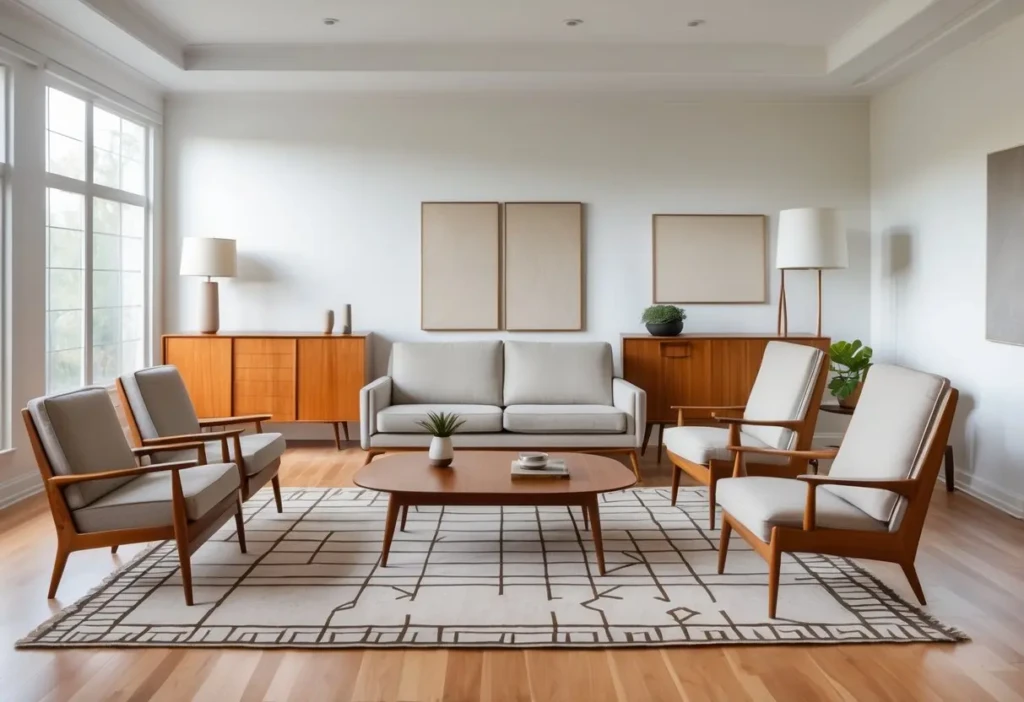
Quick-Reference: Key Takeaways
- Prioritize clean lines, tapered or splayed legs, and visible wood grain over ornamentation.
- Anchor the room with one large piece — a sofa or credenza — in a neutral tone, then layer in one accent color.
- Teak, walnut, rosewood, brass, and chrome are the materials most associated with the era.
- Check undersides, hardware, and labels before paying a premium for “authentic” or “vintage” pieces.
- Open, low-profile mid century modern lighting and shelving matter as much as seating for the overall look.
1) Eames Lounge Chair and Ottoman
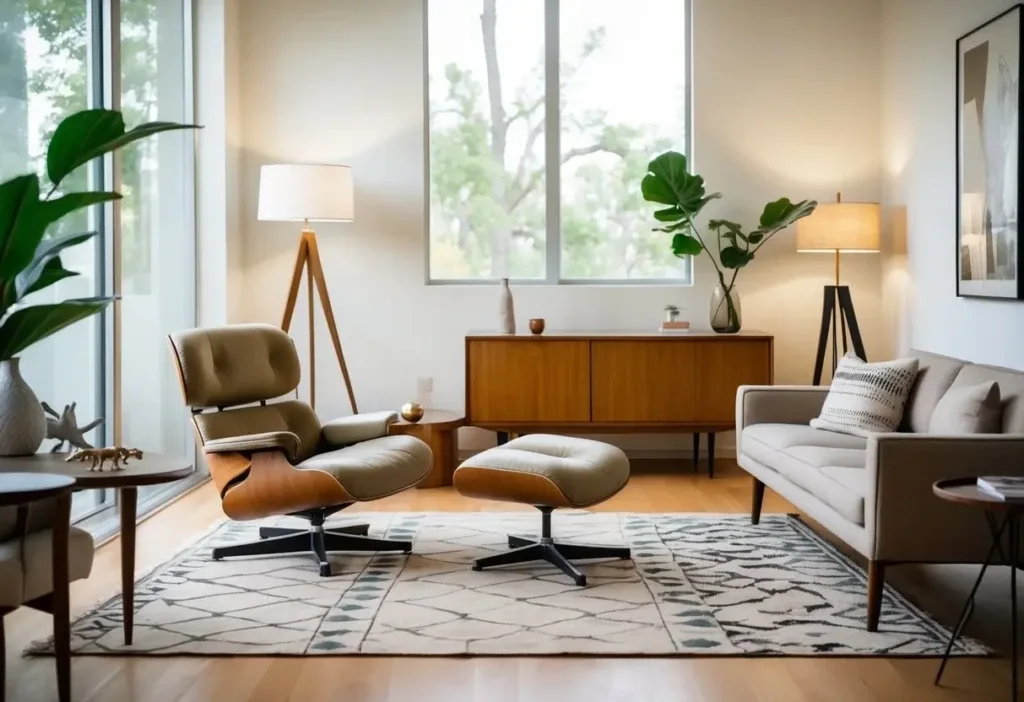
You’ll recognize the Eames Lounge Chair and Ottoman by its curved plywood shells and plush leather cushions. It blends comfort with a clean, sculptural look that fits both living rooms and museum collections, which is part of why it’s still copied so often.
Use it as a focal point rather than one chair among many. Placing it near a window or beside a low bookshelf turns an ordinary corner into a dedicated reading nook with genuine presence.
The chair pairs naturally with simple lines and neutral colors. Wood coffee tables, slim metal floor lamps, and textured wool rugs all sit comfortably around it without competing for attention.
If you’re buying an authentic version, expect premium materials — five-ply molded veneer, top-grain leather, and a die-cast aluminum base. Reproductions can deliver a similar silhouette for far less, so compare shell construction and leather quality before deciding.
2) Noguchi Coffee Table
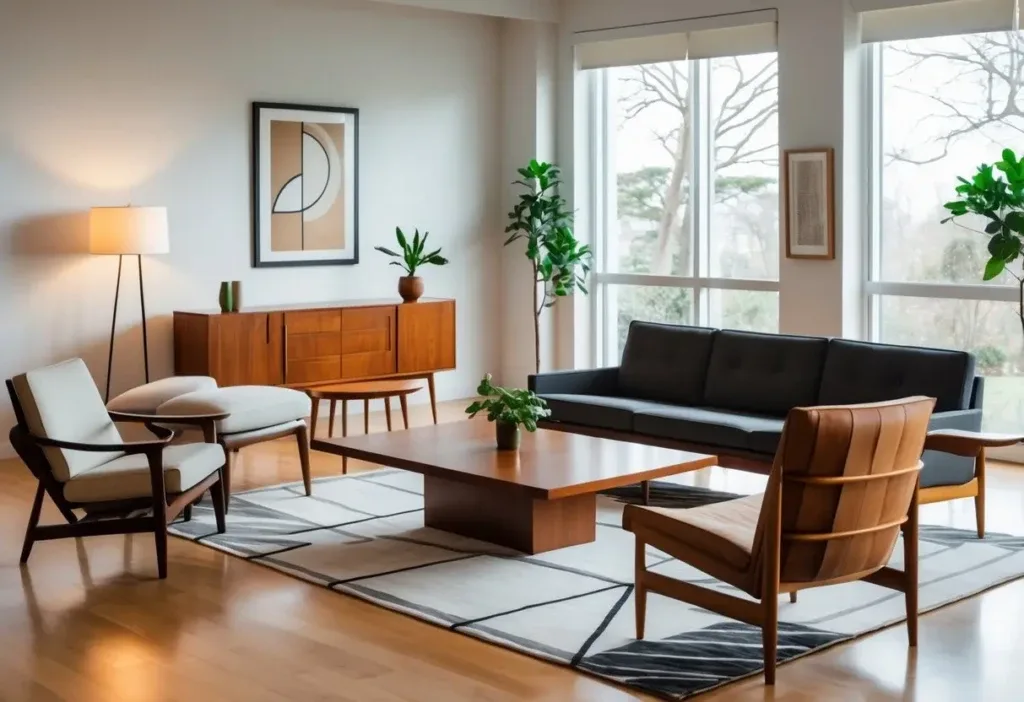
The Noguchi coffee table is easy to spot: a curved wooden base and a freeform glass top that reads almost like a small sculpture. It happens to also hold drinks, books, and decor without effort.
Two interlocking solid wood pieces form a stable, airy base. Because the glass top floats above it, the room feels more open and less crowded than it would with a solid table of the same footprint.
This table works across mid century modern, minimalist, and contemporary rooms. It functions as a soft focal point without ever dominating the space, and pairs easily with sofas that keep their own lines simple.
3) Saarinen Tulip Side Table
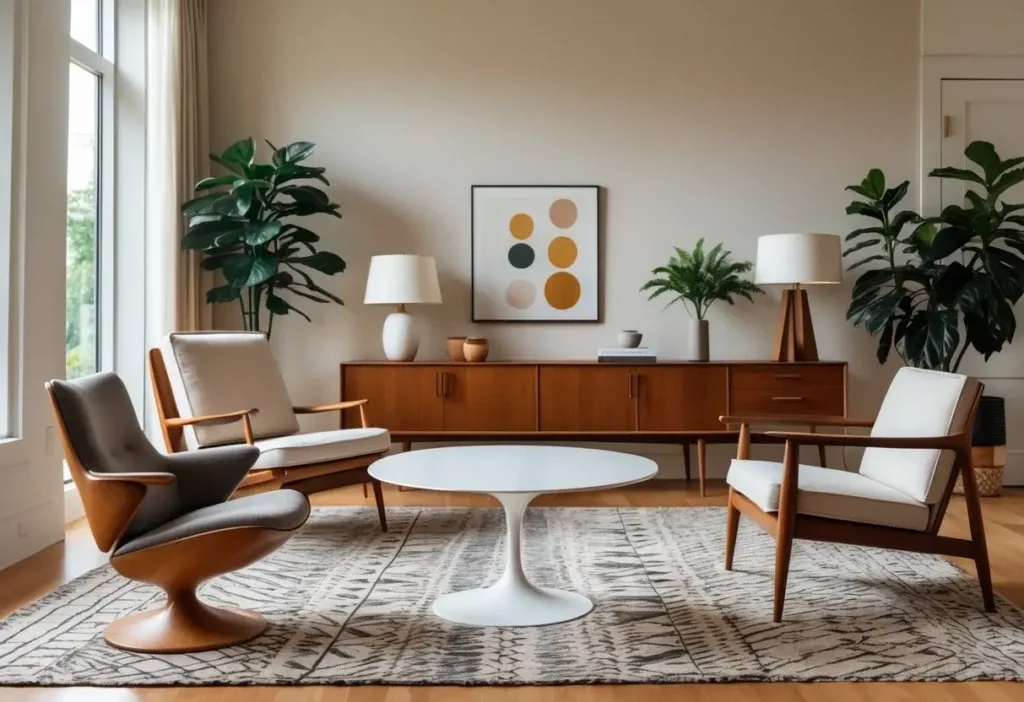
The Saarinen Tulip Side Table stands out for its single pedestal base and smooth, round top. That stem-like base removes the visual clutter of four legs and gives the room a calm, uncluttered look.
It earns its keep beside a sofa or chair, holding a lamp, a book, or a cup of coffee without adding extra legs to trip over.
Materials range from molded fiberglass and marble to walnut tops on a cast metal base. Match the finish to your other pieces so the room reads as one cohesive scheme rather than a collection of unrelated shapes.
The original design dates to the mid-1950s and pairs especially well with other mid century modern seating. If you’re chasing a light, airy feel, this table earns its spot easily.
4) Florence Knoll Sofa
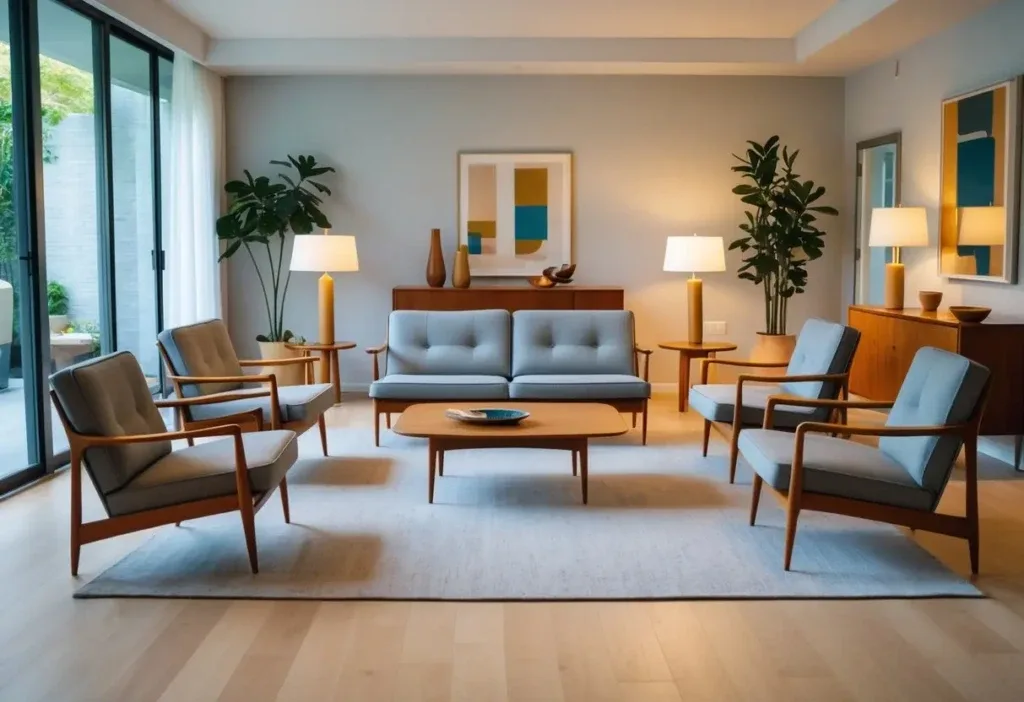
The Florence Knoll Sofa is defined by clean lines and balanced proportions — a textbook example of mid century modern principles: simplicity, function, and restrained elegance rather than ornamentation.
It sits low, with a tight, tailored seat and a thin frame, giving the living room a neat, architectural anchor without visual weight.
Leather or fabric upholstery both work, which is part of why this mid century modern sofa style suits formal and casual rooms alike.
As a mid century modern couch option, it pairs easily with other era-appropriate furniture and modern accents, giving you a structured centerpiece while keeping the rest of the room feeling light.
5) Danish Teak Credenza
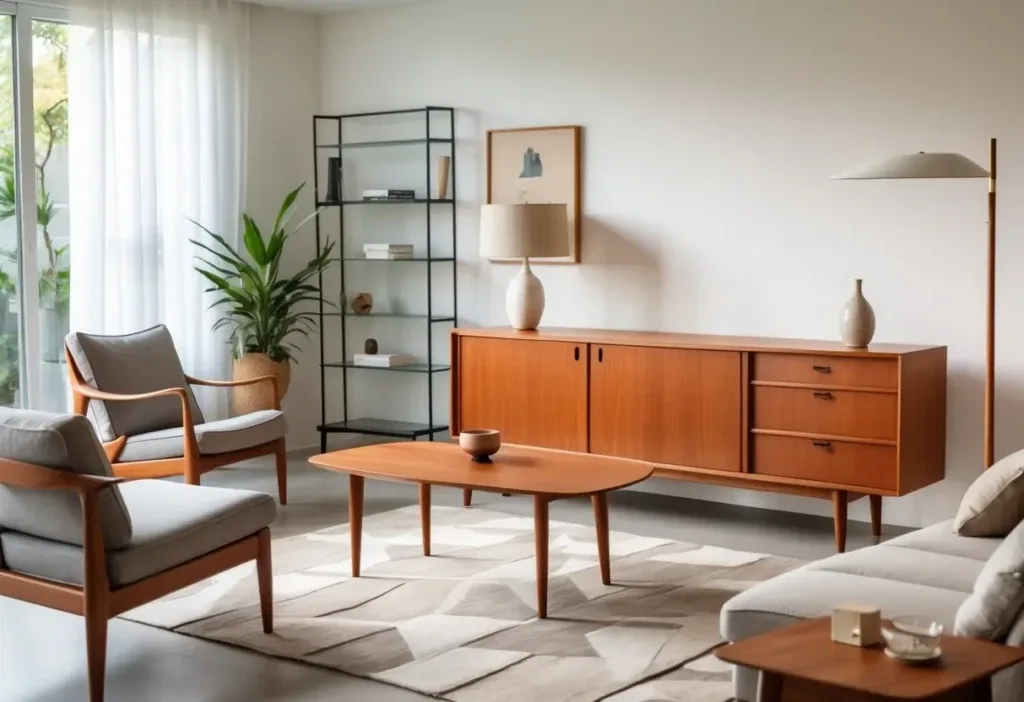
A Danish teak credenza anchors the room with clean lines and warm wood tones, combining storage and style without overwhelming the space.
Look for solid teak or well-matched veneer, tight joinery, and original hardware — these details separate a piece that will age gracefully from one that won’t.
Use the top surface for a record player, art, or a low-profile TV. The long, low shape keeps sightlines open and can make a smaller room feel wider.
Mid-century makers like Arne Vodder and Bernhard Pedersen are highly sought after, but solid examples exist at many price points — a vintage original or a faithful new-production piece can both work depending on your budget.
A teak credenza also functions as informal mid century modern shelving, giving you closed storage up top and open display space along the surface. It pairs well with a sculpted lounge chair, a velvet sofa, or simple open shelving nearby.
6) Wegner Wishbone Chair
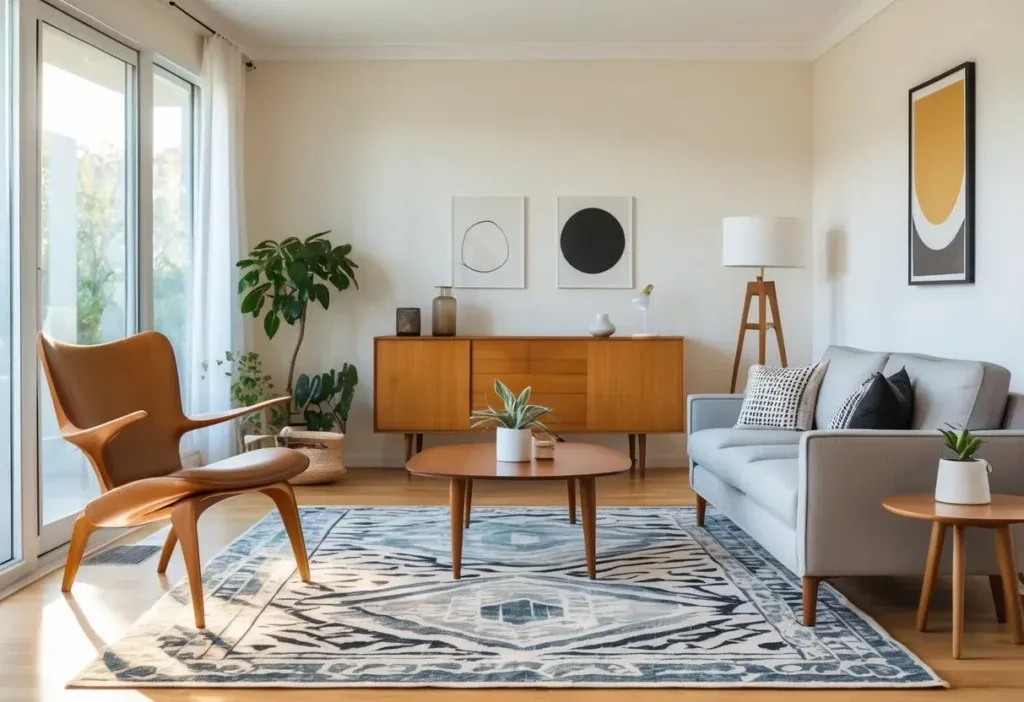
The Wegner Wishbone Chair adds a light, sculptural feel to a living room. A slim wooden frame and an open, Y-shaped back keep sightlines clear and the space feeling airy.
Originally made by Hans J. Wegner, the chair pairs naturally with mid century modern decor and contemporary rooms alike. Its woven paper-cord seat adds subtle texture without bulky padding.
Choose natural wood tones for a warm, Scandinavian look, or a darker stain for more contrast. It works as a standalone accent chair or grouped around a small table for casual seating.
Because of its clean lines and honest construction, it’s a piece you can move between rooms as your layout changes, and it fits comfortably alongside sofas, credenzas, and minimalist shelving units.
7) Nelson Platform Bench
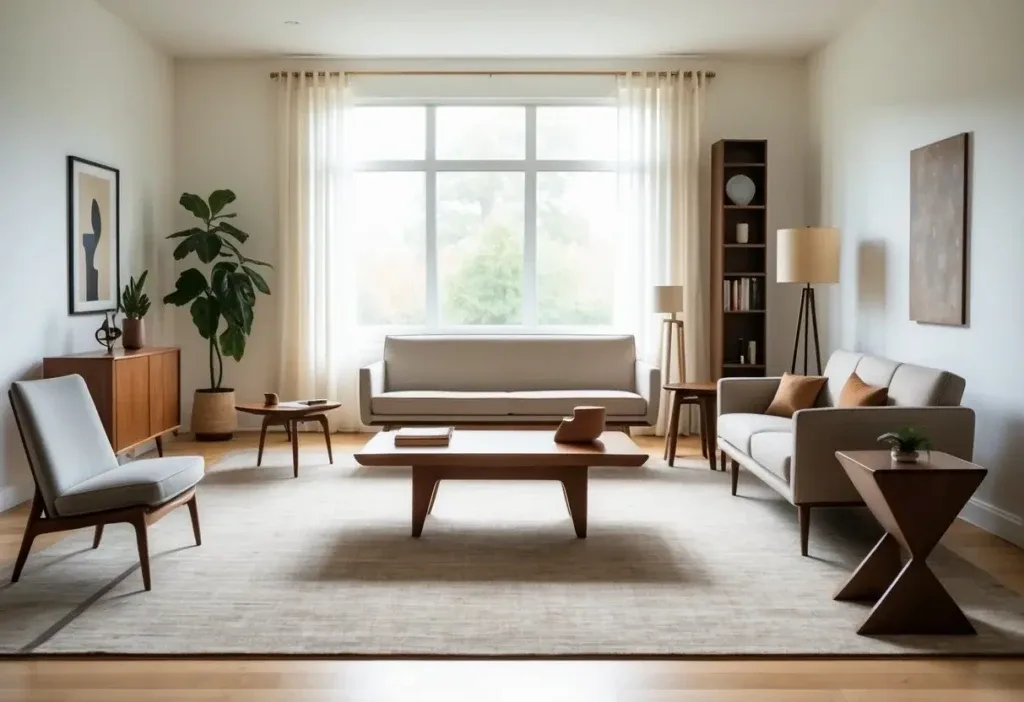
The Nelson Platform Bench works as seating, a low table, or a display surface. Its simple slatted wood top and narrow profile fit into most living room layouts without crowding the space.
It brings the era’s look through clean lines and honest materials. Place it at the foot of a sofa, under a window, or against a wall to anchor a seating area.
A natural wood finish or a darker stain can match your existing palette, and a slim cushion or a couple of decorative pillows adds comfort while keeping the bench’s minimalist profile intact.
8) George Nelson Marshmallow Sofa
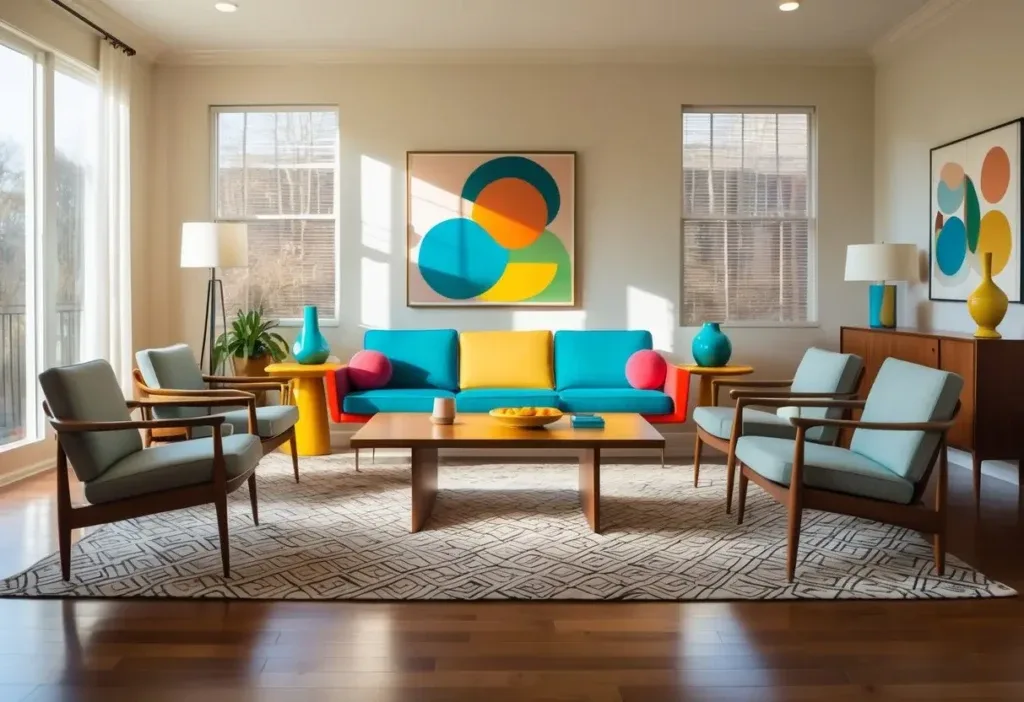
The Marshmallow Sofa is instantly recognizable for its round, disc-like cushions arranged like a row of colorful saucers. Designed in 1956 by Irving Harper for George Nelson Associates, it breaks from traditional sofa shapes with a playful, graphic silhouette.
The frame uses tubular steel, and the cushions are foam discs covered in vinyl or fabric that can be removed for cleaning or replacement. Its modular look makes it a strong focal point without overwhelming the rest of a mid century modern living room.
Authentic versions are produced by Herman Miller, with occasional vintage examples on the resale market. Replicas exist too, so check labels and construction closely if authenticity matters to you.
Mid Century Modern Shelving, Wall Units, and Media Storage
Seating tends to get all the attention, but mid century modern shelving and storage do just as much to define the look of a room. A well-chosen mid century modern shelving unit keeps books, records, and decor organized while reinforcing the era’s love of open, airy structure.
Look for slim wood frames, angled or hairpin legs, and shelves that appear to float rather than sit on solid panels. These details are what separate genuine mid century modern living room shelves from generic flat-pack storage.
A mid century modern wall unit — sometimes built as modular cabinets and open shelves combined — can also double as a mid century modern media wall, hiding cables and electronics behind clean wood or veneer doors while keeping open sections for display. This is often the most practical upgrade for rooms that need to balance a TV with a period-appropriate look.
When shopping for shelving, prioritize solid wood or good veneer, exposed joinery, and a low, horizontal profile that echoes the rest of your furniture. Avoid anything with a high-gloss finish or heavy, boxy proportions, since both work against the light, floating look the style is known for.
Identifying Authentic Mid Century Modern Living Room Furniture
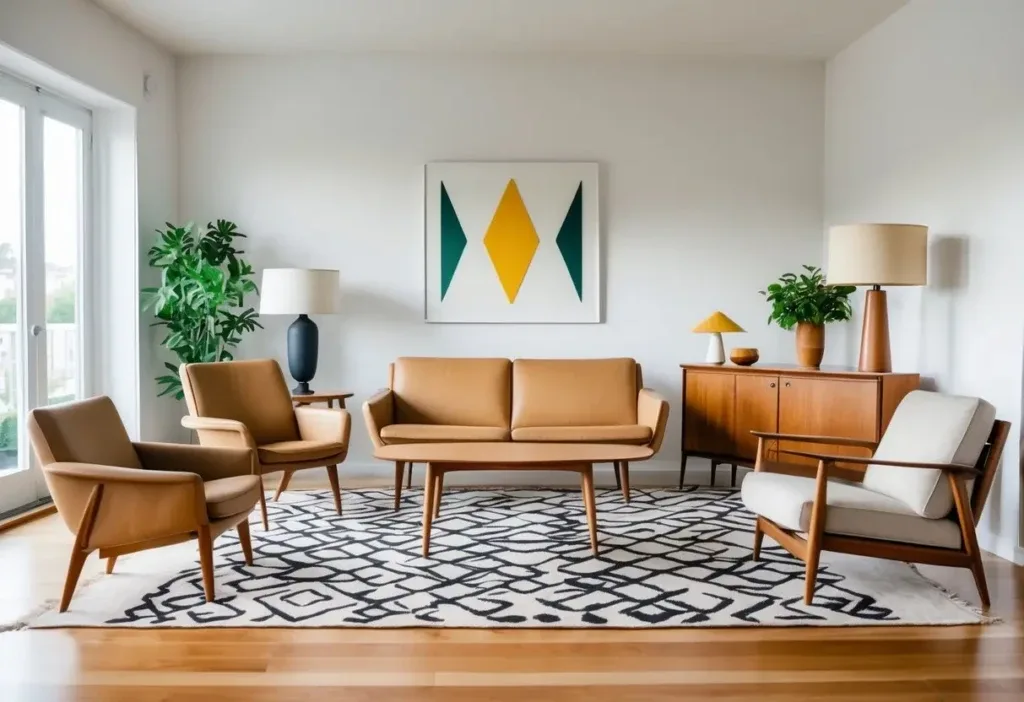
Look for clean lines, honest materials, and maker marks. Construction details, hardware, and wear should all match the piece’s claimed age and use.
Characteristics of Mid Century Modern Design
Mid century modern favors simple shapes and functional form. Expect low profiles, tapered legs, and uncluttered silhouettes that prioritize comfort and utility over decoration. Seating often has a slight recline and wide armrests for relaxed posture.
Look for integrated details: continuous wood grain across drawer fronts, exposed joinery, and minimal ornament. Legs are often splayed or cone-shaped and set at the piece’s outer corners to create a light, floating look. Upholstery tends toward solid or subtly patterned fabrics rather than heavy brocade.
Assess proportions carefully. Pieces are typically scaled for everyday use, not grand formal rooms, so confirm that curves and angles feel purposeful rather than purely decorative.
Common Materials and Finishes
Woods like teak, walnut, rosewood, and oak dominate mid century pieces, usually as solids or veneers with visible, continuous grain. Thin veneers over plywood were common, allowing curved shapes without heavy mass.
Metals include brass, chrome, and steel for legs, pulls, and bases. Brass hardware often shows patina; chrome should show age-appropriate wear. Plastic and fiberglass appear in select pieces — look for molded construction with smooth, even surfaces.
Finishes are generally satin or semi-gloss rather than high-gloss lacquer. Check the underside and back panels: consistent aging, paper labels, and original screws help confirm age, while fresh stain or modern screws can indicate refinishing or a later reproduction.
Recognizable Designers and Brands
Knowing names helps you spot authenticity. Look for pieces by Charles and Ray Eames, Hans Wegner, Arne Jacobsen, Finn Juhl, George Nelson, and Florence Knoll — each has signature traits, from Eames’ molded forms to Wegner’s exposed joinery to Jacobsen’s sleek curves.
Also check manufacturers: Herman Miller, Knoll, Fritz Hansen, and G-Plan produced licensed pieces. Search for maker’s stamps, paper labels, or metal plaques on frames and drawer interiors. Original catalogs or dealer marks can add further provenance.
If a piece lacks marks, compare construction details to known examples — joinery type, screw heads, and upholstery method often reveal its true origin.
Authentic vs. Reproduction: Pros and Cons
| Option | Pros | Cons |
|---|---|---|
| Authentic vintage | Original materials, provenance, resale value | Higher cost, condition varies, harder to find |
| Licensed reissue | New condition, warranty, accurate materials | Costs more than generic reproductions |
| Reproduction | More affordable, widely available | Variable quality, weaker materials or joinery |
How to Build a Mid Century Modern Living Room, Step by Step
- Choose one large anchor piece — a sofa, credenza, or wall unit — in a neutral, warm tone.
- Add one or two statement seats, such as a lounge chair or wishbone chair, for contrast in shape.
- Bring in a sculptural coffee or side table to soften hard lines around the seating.
- Add open mid century modern shelving or a wall unit for storage and display.
- Layer in one accent color across two or three textiles — a cushion, a chair, or a rug.
- Finish with lighting, art, and plants to make the room feel lived-in rather than staged.
Styling Your Living Room With Mid Century Modern Pieces
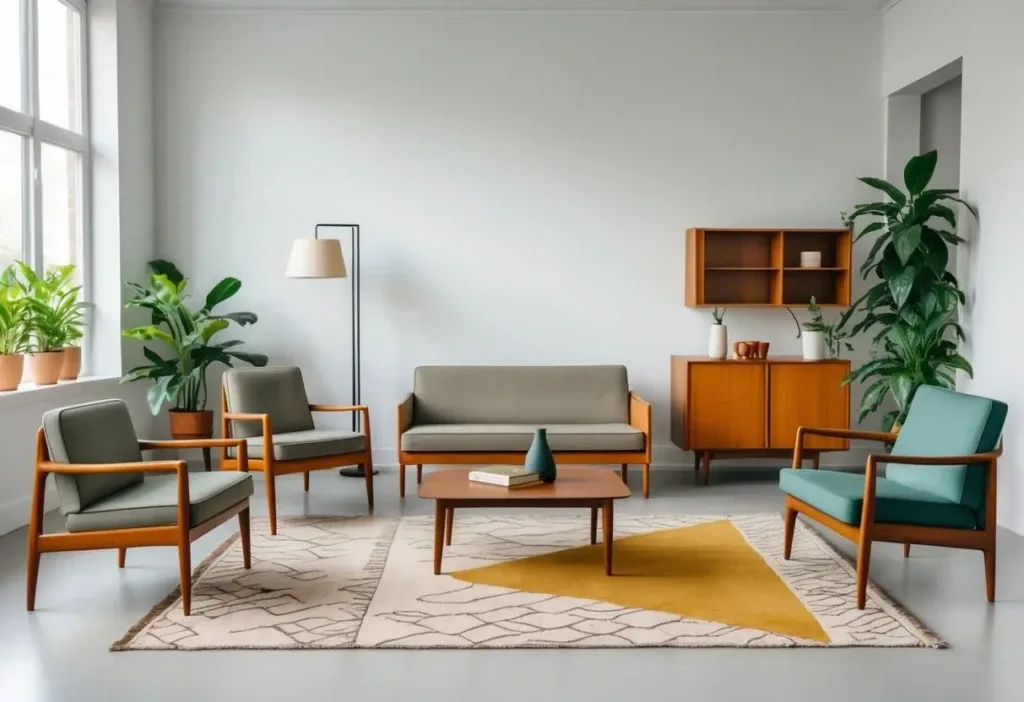
Use wood tones, clean shapes, and a limited color palette to let each piece stand out. Focus on one bold accent color, layered textures, and a simple layout that keeps traffic flow clear. For more room-by-room inspiration, see these mid century modern living room decor ideas.
Balancing Color and Texture
Pick one strong accent color — mustard, teal, or olive — and repeat it in two or three places: a sofa cushion, an accent chair, or a rug. Keep large items like the sofa, media console, or shelving in neutral shades such as warm gray, tan, or walnut to anchor the room.
Mix textures to add warmth and depth. Combine a smooth leather sofa with a wool rug and a woven throw, and consider a mid century modern rug to ground the seating area. Add a lacquered or glass-top coffee table to contrast with wood surfaces.
Use pattern sparingly. A geometric pillow or a low-profile graphic rug complements mid century lines without crowding the space. If you use a bold pattern, balance it with plain textiles and solid wood finishes elsewhere.
Mixing Vintage With Contemporary Decor
Start with authentic mid century silhouettes: a tapered-leg sofa, an arched floor lamp, or a teak sideboard. These pieces set the style and act as anchors for newer items. For a broader palette of options, browse these mid century modern living room ideas.
Introduce contemporary elements that match scale and material. A modern glass lamp or a minimal metal shelving unit works well when its proportions align with vintage furniture. Avoid overly ornate or heavy contemporary items — stick to simple shapes and thin profiles.
Use grouping to make the mix feel intentional. Place a vintage credenza under a modern, unframed mirror, or pair a restored dining chair with a new upholstered seat cushion in a coordinating color. If you’re drawn to a looser, more layered look, it’s worth comparing this approach against a boho vs. mid century modern living room style before you commit to a full plan.
Things to Consider Before You Buy
- Measure your space first — many mid century pieces sit lower and shallower than modern furniture.
- Decide between authentic vintage, licensed reissue, or reproduction based on budget and priorities.
- Check materials and joinery in person or via detailed photos before buying secondhand.
- Plan storage needs — a wall unit or shelving unit can solve media and display storage in one piece.
- Pick your accent color before shopping so new pieces stay cohesive with what you already own.
Frequently Asked Questions
What defines mid century modern living room furniture?
Clean lines, tapered or splayed legs, honest materials like teak and walnut, and a focus on function over ornamentation define the style.
Is it better to buy vintage or reproduction furniture?
It depends on budget and priorities. Vintage originals offer authentic materials and provenance, while reproductions are more affordable but vary in quality — always check construction before buying.
How do I add mid century modern shelving without it looking bulky?
Choose open, low-profile shelving units with slim wood frames and legs rather than boxy cabinets. Floating shelves or a wall unit with a mix of open and closed storage keeps the look light.
What’s the easiest way to start a mid century modern living room?
Start with one anchor piece, such as a sofa or credenza, in a neutral tone, then add a statement chair and one accent color across textiles.
Can I mix mid century modern with other styles?
Yes. Simple shapes and warm woods blend well with minimalist, Scandinavian, and even boho decor, as long as proportions and materials stay consistent.
Our Verdict
You don’t need to fill a room with iconic designer names to get the mid century modern look right. A single well-chosen sofa or credenza, one statement chair, honest wood shelving, and a limited color palette will do more for the room than a dozen scattered accent pieces. Focus your budget on the largest items first, then build outward with lighting, textiles, and smaller accents.