You want a dining light that looks right and works well. Choose a fixture that fits your table size, hangs 30–36 inches above the surface, and matches your room’s style so meals feel bright and balanced without glare or wasted space. This article will show you how to pick the right type, size, and bulb so you get both function and style. Imagine warm, focused light for dinners, layered lighting for tasks, or a bold pendant to anchor the room. You’ll learn about fixture types, sizing and placement tips, current styles, bulb choices, and simple installation and care steps to make your dining area shine. Table of ContentsTypes of Dining Room Light FixturesChandeliers for Dining TablesPendant LightingLinear Suspension FixturesSelecting the Right Size and PlacementFixture Size GuidelinesHeight and Spacing ConsiderationsProportion to Table ShapeLighting Styles and Design TrendsModern and Contemporary FixturesTraditional and Classic OptionsTransitional DesignsLighting Functionality and Bulb SelectionAmbient vs. Task LightingDimmable Light FixturesLED and Energy-Efficient ChoicesInstallation and Maintenance TipsWiring and Safety PrecautionsFixture Cleaning and Care Types of Dining Room Light Fixtures Choose fixtures that give even task light, match your table shape, and let you control brightness for meals and mood. Chandeliers for Dining Tables Chandeliers make a strong visual center above a table. Pick a chandelier width about half to two-thirds the table width for balance. For a standard 6-foot rectangular table, a 30–40 inch chandelier works well. Hang chandeliers 30–36 inches above the tabletop in rooms with 8–9 foot ceilings. Raise the height by 3 inches for each extra foot of ceiling height. Use dimmable bulbs or a dimmer switch to change atmosphere from bright family meals to soft dinner parties. Choose finishes and styles that match your room: metal and glass for modern, crystal or multiple arms for traditional. If your table is long, consider two smaller chandeliers spaced evenly instead of one oversized fixture. 24-Inch Capiz Shell Chandelier, 8-Light Gold Coastal Chandelier, … Modern Crystal Chandelier: Beyond its beauty, this tree branch chandelier is an ambiance creator. Expertly crafted from … E12 Sockets: Featuring 8 E12 sockets (bulbs not included), this coastal chandelier is compatible with most bulbs, such a… Adjustable Hanging Height: With its adjustable cable (max. 77″), this capiz shell chandelier offers flexible hanging hei… $219.99 Buy on Amazon Pendant Lighting Pendants give flexible, focused light and work well singly or in groups. A single pendant suits small round tables; clusters or multiple pendants suit long or rectangular tables. Size each pendant so it doesn’t overwhelm. For multiple pendants, space them 12–30 inches apart depending on shade size and table length. Keep pendants centered over the table length and aligned with the table’s long axis. Pendants let you aim light or add decorative accents. Choose clear glass or open shades for more task light; opaque or fabric shades for softer glow. Always install on a dimmer for adjustable brightness. 12.4” Boho Rattan Chandelier Light Fixture, 1-Light Hand Woven Pe… [BOHO CHIC] This Boho Rattan Chandelier is handwoven by skilled artisans. The light gently filters through the woven rat… [VERSATILITY & E26 BULB] Equipped with a standard E26 socket, our Rattan Chandelier Light Fixture is adaptable to variou… [EASY INSTALLATION] With its high-quality integrated structure that requires no assembly, setting up this rattan chandel… $64.99 Buy on Amazon Linear Suspension Fixtures Linear suspensions stretch light evenly across long tables. They work best over rectangular or conference-style dining tables where you need uniform illumination from end to end. Pick a fixture length about 70–90% of the table length. For a 96-inch table, choose a 70–85 inch fixture for even coverage. Mount the fixture 30–36 inches above the tabletop, and keep its center aligned with the table centerline. Linear fixtures come in low-profile bars, multi-light tracks, and chains of pendants on one rail. Choose diffused lenses or multiple small lamps to avoid hotspots and glare. Use a dimmer to control light for different dining needs. Selecting the Right Size and Placement Choose a fixture that matches your table width, hangs at the right height for sight lines, and sits centered or evenly spaced when multiple lights are used. Keep scale, clearance, and light spread in mind. Industrial Pendant Lights, Black Pendant Light Fixtures, Vintage … 【3-Pack Pendant Lights】High quality metal, matte black surface, won’t rust and scratch-resistant; Adjustable length wire… 【Package】Includes 3 black pendant lights, mounting hardware and installation instructions, bulbs are not included. These… 【Size】Canopy size: 4.72” in diameter, light: 5.9” in diameter. Adjustable Height, the entire height of the light is 87.4… $59.90 Buy on Amazon Fixture Size Guidelines Pick a fixture diameter about one-third the width of your table for balanced scale. For example, a 36-inch table works well with a 12-inch-wide pendant or a cluster totaling that width. For long tables, use multiple pendants spaced evenly instead of one oversized fixture. If your room is large or you want a bold look, you can go a bit larger, but avoid covering more than half the table width with a single fixture. For visual balance, measure the table first, then choose fixtures whose combined widths match the one-third rule. Height and Spacing Considerations Hang the bottom of a pendant 30–36 inches above the tabletop for ceilings 8–9 feet high. Raise the fixture 3 inches for each extra foot of ceiling height. Keep sight lines clear so diners can see each other and the fixture does not block views. When using two or three pendants, space them evenly along the table length. Aim for 12–15 inches between a pendant edge and the table ends on each side. Maintain 8–12 inches between multiple fixture edges to avoid crowding. Proportion to Table Shape Match round tables with round or clustered fixtures and rectangular tables with linear or multi-light arrangements. A round pendant over a square table works if the pendant diameter follows the one-third rule and centers on the table. For oval or boat-shaped tables, use an elongated chandelier or a row of pendants to follow the table’s length. Keep proportions consistent: the fixture’s shape should echo the table shape and its scale should stay within the size and spacing guidelines above. Lighting Styles and Design Trends You’ll find fixtures that make a strong design statement, fixtures that blend with classic rooms, and those that bridge both looks. Think about scale, finish, and light output first to match the fixture to your table and room. Modern and Contemporary Fixtures Modern fixtures favor clean lines, sculptural shapes, and mixed materials. You might choose a linear LED pendant for a rectangular table or a cluster of glass globes over a round table. These fixtures often use dimmable LEDs and adjustable rods or cables so you can set the height and brightness for tasks or mood. Finishes like matte black, brushed nickel, and warm brass are common. Pick a fixture with directional light or integrated diffusers to reduce glare on glossy tabletops. If your dining table is long, consider two smaller pendants spaced evenly rather than one oversized piece. Traditional and Classic Options Traditional chandeliers use tiers, arms, and shades to create layered light. You can pick crystal, wrought iron, or polished brass to match crown molding, wood trim, or antique furniture. Mount the chandelier 30–36 inches above a standard table for balance, and raise that by 2–3 inches for every foot of ceiling height above 8 feet. Shaded or fabric-lamped fixtures soften light, which helps during long dinners and lends a formal feel. Choose bulbs with warm color temperature (2700–3000K) for true-to-life skin tones and a cozy look. Match the fixture scale to the table diameter to avoid visual crowding. Transitional Designs Transitional designs blend modern simplicity with classic proportions so you get the best of both styles. Look for pieces with simple silhouettes but with materials like aged brass, smoked glass, or matte ceramics to add warmth. These fixtures work well if you have mixed furniture—say a farmhouse table with modern chairs. Function matters: choose fixtures with layered lighting options—downlights for tasks plus an ambient glow—so the fixture reads right in different settings. For flexible styling, pick neutral finishes and easily swapped shades. Transitional pieces often adapt better when you update other elements later. Lighting Functionality and Bulb Selection Choose lighting that fits how you use the table: soft, warm light for meals and brighter, focused light for work or hobbies. Match fixture position and bulb type to the room size, table shape, and the mood you want to create. Ambient vs. Task Lighting Ambient lighting gives even, general light across the whole dining area. Use a central pendant or chandelier sized to the table (roughly 1/2 to 2/3 the table width for single fixtures). Aim for 300–500 lumens per square meter for everyday dining; increase this if you plan to read or do detailed tasks at the table. Task lighting focuses on the table surface for eating, serving, or working. Position pendants 28–34 inches above a standard table top for glare control and even coverage. For long tables, use a row of smaller fixtures or an elongated linear light to avoid bright hot spots. Combine ambient and task sources so you can get both even room light and direct surface light when needed. Dimmable Light Fixtures Dimmers let you change brightness for mood and function. Choose fixtures and bulbs labeled “dimmable” and pair them with compatible dimmer switches to avoid flicker. For LED bulbs, use dimmers rated for LED load and check the bulb-dimmer compatibility chart from the manufacturer. Install a multi-zone control if you have wall sconces, ceiling fixtures, or recessed lights alongside the main pendant. This lets you lower only the overhead light for intimate dinners while keeping wall lights on for balance. For smart dimming, confirm the system supports smooth fades and a low minimum brightness to prevent sudden cutouts. LED and Energy-Efficient Choices LED bulbs provide high lumen output with low energy use and long life. Pick LEDs with a color temperature of 2700–3000K for warm, flattering dining light. Look for a CRI (Color Rendering Index) of 90 or higher so food and decor appear natural. Compare bulbs by lumens, not watts, to match desired brightness. Choose dimmable LED options with a rated lifespan (e.g., 15,000–25,000 hours) and check for flicker-free performance. Consider integrated LED fixtures when you want slim profiles and matched performance, but note these may be harder to replace than standard-socket bulbs. Installation and Maintenance Tips You will learn the key safety steps for wiring and the best ways to keep your fixture clean. Follow exact measurements, use proper tools, and schedule electrical work if you are unsure. Wiring and Safety Precautions Turn off power at the breaker before you start. Use a voltage tester on the circuit to confirm power is off. Mount the electrical box to a ceiling joist or use a rated brace if the fixture is heavy. Match wire colors: black (hot) to black, white (neutral) to white, and green or bare to ground. Use wire nuts sized for the wire gauge and wrap connections with electrical tape. Support the fixture weight with the mounting bracket, not the wires. Check the fixture’s watts against the bulb rating. Use a dimmer rated for the bulb type when needed. If the ceiling is high, attach a temporary ladder stabilizer or have someone hold the ladder. Hire a licensed electrician for new circuits, metal conduit work, or if you cannot access the junction box safely. Fixture Cleaning and Care Turn off the fixture and let bulbs cool before cleaning. Remove shades, bulbs, and removable parts for separate cleaning. Wipe metal frames and glass with a soft cloth and mild soap solution; avoid abrasive cleaners that strip finishes. For glass or crystal, dry with a lint-free cloth to prevent streaks. Tighten screws and fasteners after cleaning to keep the fixture secure. Replace bulbs in matched wattage and color temperature to maintain even light. Create a simple maintenance schedule: Monthly: dust shades and bulbs. Every 6 months: deep clean glass and check wiring connections. Annually: inspect mounting hardware and test the switch and dimmer.
You want a dining light that looks right and works well. Choose a fixture that fits your table size, hangs 30–36 inches above the surface, and matches your room’s style so meals feel bright and balanced without glare or wasted space. This article will show you how to pick the right type, size, and bulb so you get both function and style.
Imagine warm, focused light for dinners, layered lighting for tasks, or a bold pendant to anchor the room. You’ll learn about fixture types, sizing and placement tips, current styles, bulb choices, and simple installation and care steps to make your dining area shine.
Choose fixtures that give even task light, match your table shape, and let you control brightness for meals and mood.
Chandeliers for Dining Tables
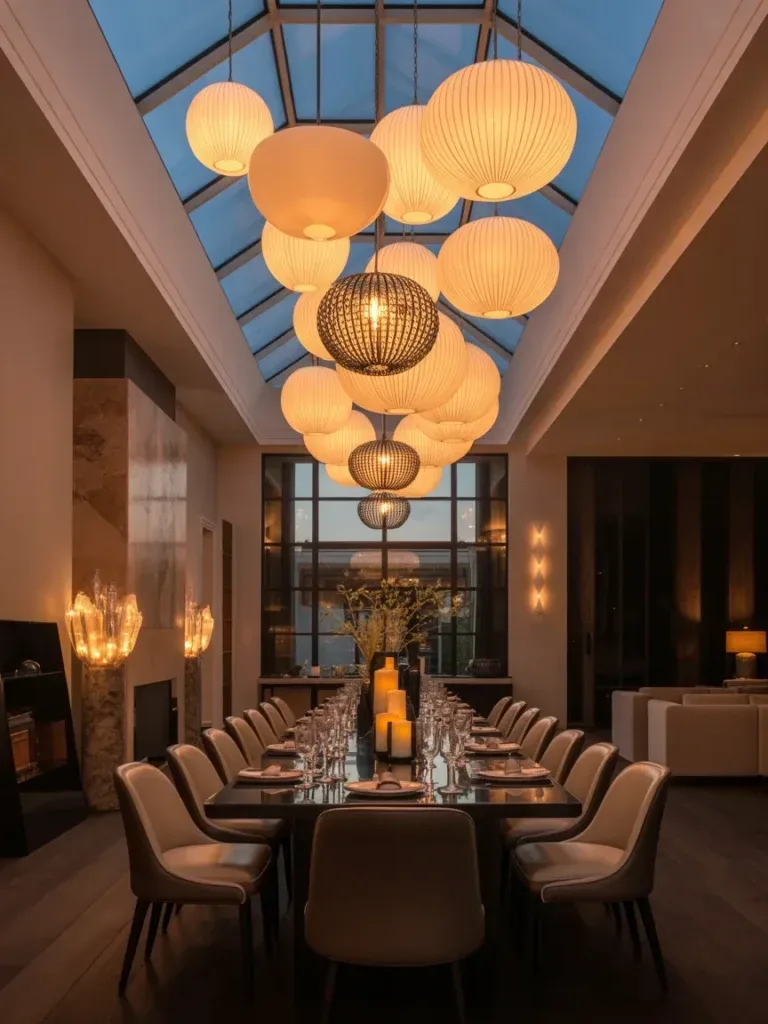
Chandeliers make a strong visual center above a table. Pick a chandelier width about half to two-thirds the table width for balance. For a standard 6-foot rectangular table, a 30–40 inch chandelier works well.
Hang chandeliers 30–36 inches above the tabletop in rooms with 8–9 foot ceilings. Raise the height by 3 inches for each extra foot of ceiling height. Use dimmable bulbs or a dimmer switch to change atmosphere from bright family meals to soft dinner parties.
Choose finishes and styles that match your room: metal and glass for modern, crystal or multiple arms for traditional. If your table is long, consider two smaller chandeliers spaced evenly instead of one oversized fixture.
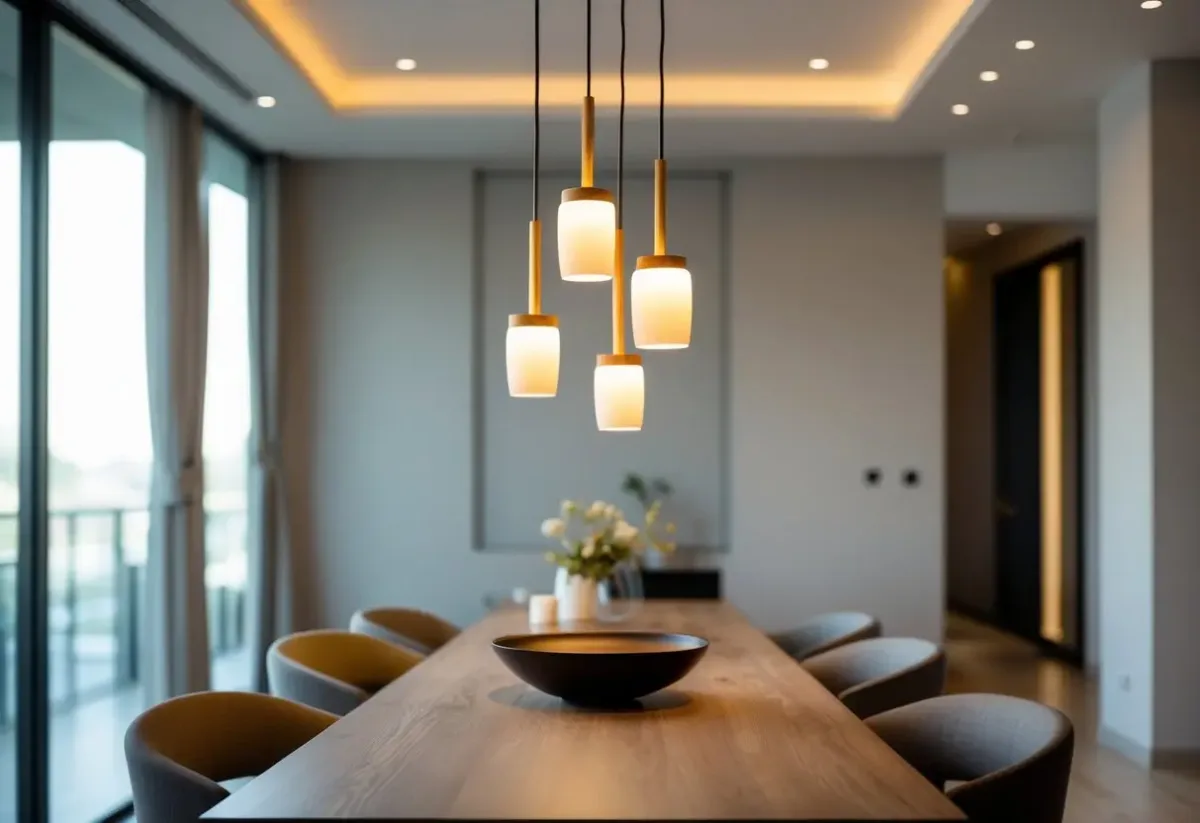
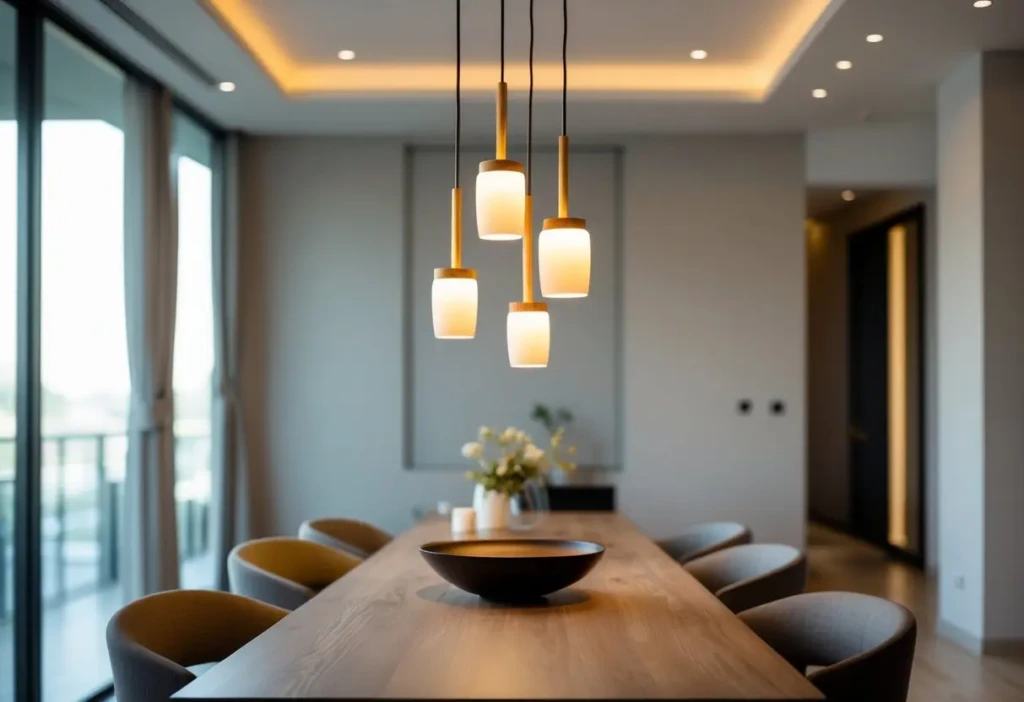
Pendants give flexible, focused light and work well singly or in groups. A single pendant suits small round tables; clusters or multiple pendants suit long or rectangular tables.
Size each pendant so it doesn’t overwhelm. For multiple pendants, space them 12–30 inches apart depending on shade size and table length. Keep pendants centered over the table length and aligned with the table’s long axis.
Pendants let you aim light or add decorative accents. Choose clear glass or open shades for more task light; opaque or fabric shades for softer glow. Always install on a dimmer for adjustable brightness.
Linear suspensions stretch light evenly across long tables. They work best over rectangular or conference-style dining tables where you need uniform illumination from end to end.
Pick a fixture length about 70–90% of the table length. For a 96-inch table, choose a 70–85 inch fixture for even coverage. Mount the fixture 30–36 inches above the tabletop, and keep its center aligned with the table centerline.
Linear fixtures come in low-profile bars, multi-light tracks, and chains of pendants on one rail. Choose diffused lenses or multiple small lamps to avoid hotspots and glare. Use a dimmer to control light for different dining needs.
Choose a fixture that matches your table width, hangs at the right height for sight lines, and sits centered or evenly spaced when multiple lights are used. Keep scale, clearance, and light spread in mind.
Pick a fixture diameter about one-third the width of your table for balanced scale. For example, a 36-inch table works well with a 12-inch-wide pendant or a cluster totaling that width. For long tables, use multiple pendants spaced evenly instead of one oversized fixture.
If your room is large or you want a bold look, you can go a bit larger, but avoid covering more than half the table width with a single fixture. For visual balance, measure the table first, then choose fixtures whose combined widths match the one-third rule.
Height and Spacing Considerations
Hang the bottom of a pendant 30–36 inches above the tabletop for ceilings 8–9 feet high. Raise the fixture 3 inches for each extra foot of ceiling height. Keep sight lines clear so diners can see each other and the fixture does not block views.
When using two or three pendants, space them evenly along the table length. Aim for 12–15 inches between a pendant edge and the table ends on each side. Maintain 8–12 inches between multiple fixture edges to avoid crowding.
Proportion to Table Shape
Match round tables with round or clustered fixtures and rectangular tables with linear or multi-light arrangements. A round pendant over a square table works if the pendant diameter follows the one-third rule and centers on the table.
For oval or boat-shaped tables, use an elongated chandelier or a row of pendants to follow the table’s length. Keep proportions consistent: the fixture’s shape should echo the table shape and its scale should stay within the size and spacing guidelines above.
You’ll find fixtures that make a strong design statement, fixtures that blend with classic rooms, and those that bridge both looks. Think about scale, finish, and light output first to match the fixture to your table and room.
Modern and Contemporary Fixtures
Modern fixtures favor clean lines, sculptural shapes, and mixed materials. You might choose a linear LED pendant for a rectangular table or a cluster of glass globes over a round table. These fixtures often use dimmable LEDs and adjustable rods or cables so you can set the height and brightness for tasks or mood.
Finishes like matte black, brushed nickel, and warm brass are common. Pick a fixture with directional light or integrated diffusers to reduce glare on glossy tabletops. If your dining table is long, consider two smaller pendants spaced evenly rather than one oversized piece.
Traditional and Classic Options
Traditional chandeliers use tiers, arms, and shades to create layered light. You can pick crystal, wrought iron, or polished brass to match crown molding, wood trim, or antique furniture. Mount the chandelier 30–36 inches above a standard table for balance, and raise that by 2–3 inches for every foot of ceiling height above 8 feet.
Shaded or fabric-lamped fixtures soften light, which helps during long dinners and lends a formal feel. Choose bulbs with warm color temperature (2700–3000K) for true-to-life skin tones and a cozy look. Match the fixture scale to the table diameter to avoid visual crowding.
Transitional Designs
Transitional designs blend modern simplicity with classic proportions so you get the best of both styles. Look for pieces with simple silhouettes but with materials like aged brass, smoked glass, or matte ceramics to add warmth. These fixtures work well if you have mixed furniture—say a farmhouse table with modern chairs.
Function matters: choose fixtures with layered lighting options—downlights for tasks plus an ambient glow—so the fixture reads right in different settings. For flexible styling, pick neutral finishes and easily swapped shades. Transitional pieces often adapt better when you update other elements later.
Choose lighting that fits how you use the table: soft, warm light for meals and brighter, focused light for work or hobbies. Match fixture position and bulb type to the room size, table shape, and the mood you want to create.
Ambient vs. Task Lighting
Ambient lighting gives even, general light across the whole dining area. Use a central pendant or chandelier sized to the table (roughly 1/2 to 2/3 the table width for single fixtures). Aim for 300–500 lumens per square meter for everyday dining; increase this if you plan to read or do detailed tasks at the table.
Task lighting focuses on the table surface for eating, serving, or working. Position pendants 28–34 inches above a standard table top for glare control and even coverage. For long tables, use a row of smaller fixtures or an elongated linear light to avoid bright hot spots. Combine ambient and task sources so you can get both even room light and direct surface light when needed.
Dimmable Light Fixtures
Dimmers let you change brightness for mood and function. Choose fixtures and bulbs labeled “dimmable” and pair them with compatible dimmer switches to avoid flicker. For LED bulbs, use dimmers rated for LED load and check the bulb-dimmer compatibility chart from the manufacturer.
Install a multi-zone control if you have wall sconces, ceiling fixtures, or recessed lights alongside the main pendant. This lets you lower only the overhead light for intimate dinners while keeping wall lights on for balance. For smart dimming, confirm the system supports smooth fades and a low minimum brightness to prevent sudden cutouts.
LED and Energy-Efficient Choices
LED bulbs provide high lumen output with low energy use and long life. Pick LEDs with a color temperature of 2700–3000K for warm, flattering dining light. Look for a CRI (Color Rendering Index) of 90 or higher so food and decor appear natural.
Compare bulbs by lumens, not watts, to match desired brightness. Choose dimmable LED options with a rated lifespan (e.g., 15,000–25,000 hours) and check for flicker-free performance. Consider integrated LED fixtures when you want slim profiles and matched performance, but note these may be harder to replace than standard-socket bulbs.
You will learn the key safety steps for wiring and the best ways to keep your fixture clean. Follow exact measurements, use proper tools, and schedule electrical work if you are unsure.
Wiring and Safety Precautions
Turn off power at the breaker before you start. Use a voltage tester on the circuit to confirm power is off. Mount the electrical box to a ceiling joist or use a rated brace if the fixture is heavy.
Match wire colors: black (hot) to black, white (neutral) to white, and green or bare to ground. Use wire nuts sized for the wire gauge and wrap connections with electrical tape. Support the fixture weight with the mounting bracket, not the wires.
Check the fixture’s watts against the bulb rating. Use a dimmer rated for the bulb type when needed. If the ceiling is high, attach a temporary ladder stabilizer or have someone hold the ladder. Hire a licensed electrician for new circuits, metal conduit work, or if you cannot access the junction box safely.
Fixture Cleaning and Care
Turn off the fixture and let bulbs cool before cleaning. Remove shades, bulbs, and removable parts for separate cleaning. Wipe metal frames and glass with a soft cloth and mild soap solution; avoid abrasive cleaners that strip finishes.
For glass or crystal, dry with a lint-free cloth to prevent streaks. Tighten screws and fasteners after cleaning to keep the fixture secure. Replace bulbs in matched wattage and color temperature to maintain even light.
Create a simple maintenance schedule:
Monthly: dust shades and bulbs.
Every 6 months: deep clean glass and check wiring connections.
Annually: inspect mounting hardware and test the switch and dimmer.
Listen to this article 10 10 0:00 / 0:00 Speed 0.75×1×1.25×1.5×2× Nothing changes a dining room faster than the right light fixture. One beautiful pendant or chandelier can make even the simplest table feel cozy, collected, and full of personality. If your dining space feels a little flat, these boho-inspired lighting ideas might be exactly…
Listen to this article 10 10 0:00 / 0:00 Speed 0.75×1×1.25×1.5×2× Tiny dining rooms really know how to test your patience, don’t they? One oversized chair and suddenly you’re squeezing sideways like you’re in a crowded coffee shop at brunch hour. The good news? A round dining table can completely change the game without making…
Listen to this article 10 10 0:00 / 0:00 Speed 0.75×1×1.25×1.5×2× Your dining room lighting can either make dinner feel magical or make everyone look like they’re sitting inside a grocery store aisle. Harsh? Maybe. True? Absolutely. The right light over your dining table changes everything, from casual takeout nights to fancy holiday dinners that…
Listen to this article 10 10 0:00 / 0:00 Speed 0.75×1×1.25×1.5×2× You want a dining room that looks intentional and functions well for every meal and gathering. This article shows seven lighting ideas and practical considerations to help you pick fixtures that match your style, scale, and lighting needs. You’ll explore a range of options—from warm, rustic chandeliers…