You want a living room that feels current, comfortable, and thoughtfully arranged without fuss. This article shows seven practical modern design ideas you can apply to create a sleek, warm, and functional living space that reflects how you live now. Expect guidance on furniture, art, layout, materials, color, and lighting so you can confidently shape a cohesive room. Each idea focuses on clear design choices—streamlined seating, natural accents, bold walls, sculptural pieces, and smart layouts—to help you make purposeful updates. Worth Garden White Large Round Planter, 12.5″ Dia x 18.5″ H Light… DIMENSIONS: Large round planter measures 12.5 inches in diameter and 18.5 inches in height, perfect for indoor or outdoo… MATERIAL: Crafted from durable magnesium oxide cement, offering a modern concrete-look finish with an attractive texture… DRAINAGE: Features a built-in drainage hole at the bottom to prevent water accumulation and promote healthy root growth $99.99 Buy on Amazon Table of Contents1) Incorporate slim, streamlined sofas for a sleek look2) Use abstract artwork to add a modern artistic touch3) Opt for functional layouts that maximize space and flow4) Include natural accents like wood or stone for warmth5) Choose statement accent walls with bold colors or textures6) Mix contemporary and traditional elements for balance7) Add sculptural furniture pieces as focal pointsKey Principles of Modern Living Room DesignMinimalism and FunctionalityBalancing Comfort and StyleEnhancing Space With Lighting and ColorNatural Light OptimizationSelecting a Modern Color Palette 1) Incorporate slim, streamlined sofas for a sleek look Choose a slim, armless or low-profile sofa to keep sightlines open and make your room feel more spacious. These designs reduce visual clutter and fit well in both compact and open-plan layouts. Lean toward straight lines, thin legs, and minimal tufting to achieve a modern aesthetic. You can balance the streamlined shape with soft cushions or textured throws for comfort without losing the clean look. Select neutral upholstery or a single bold accent color to maintain cohesion. Modular slim sofas also let you reconfigure seating when your needs change, giving you flexibility without bulk. Place the sofa to define the seating area while preserving flow around it. Keep surrounding furniture proportionate so the streamlined sofa remains the focal point, not overwhelmed by heavy pieces. SAFAVIEH Abstract Collection Area Rug – 9′ x 12′, Light Grey & Iv… [DURABLE HANDMADE CONSTRUCTION]: Hand-tufted by skilled artisans for a truly unique textured look and feel [PREMIUM FIBERS]: Made from 100% premium wool fibers with a comfortable 0.3-inch pile thickness [VERSATILE DECORATING OPTIONS]: Works with bohemian, contemporary, modern, and transitional styles of décor $313.00 Buy on Amazon 2) Use abstract artwork to add a modern artistic touch Choose abstract pieces to set the mood without overpowering the room. Bold, energetic works inject vibrancy, while muted palettes promote calm and cohesion. Scale art to the wall and furniture it accompanies. A large canvas becomes a focal point above a sofa, while a grouped arrangement adds rhythm to a long wall. Match the artwork’s color accents to small decor elements. Throw pillows, a rug, or decorative objects can echo hues to create a deliberate, curated feel. Keep framing and placement simple for a modern look. Minimal frames or gallery-wrap canvases maintain clean lines and let the art speak for itself. Consider texture and medium to add depth. Mixed-media pieces or textured paint can introduce subtle contrast against smooth surfaces without cluttering the space. HOMFINE Washable Modern Area Rug – Geometric Style 5×7 Rugs for L… 【Novel Geometric Pattern Design】HOMFINE modern area rugs for living room each attract attention with their unique geomet… 【Soft Short Velvet Material】Rugs for bedrooms are made of short velvet material and synthetic fibers, which have excelle… 【Non-Slip TPE Design】Modern rug adopts TPE non-slip design, which has good non-slip performance and can effectively redu… $47.99 Buy on Amazon 3) Opt for functional layouts that maximize space and flow Start by identifying primary activities you host in the room — conversation, TV viewing, reading, or working — and arrange furniture to support those uses. Position seating to face focal points and allow clear sightlines so movement feels natural. Use scale and proportion to keep pathways open. Choose slimmer-profile sofas or modular pieces in tighter rooms to create circulation without sacrificing seating. Define zones with rugs, lighting, or low shelving rather than tall partitions; this preserves openness while giving each activity its own area. In open-plan spaces, align furniture to create visual boundaries that still permit flow between kitchen and living areas. Consider multifunctional furnishings like storage ottomans, nesting tables, or a sofa with built-in storage to reduce clutter and free up floor space. Keep major walkways at least 30–36 inches wide to maintain comfortable traffic patterns. Arrange pieces to allow flexible swapping as needs change. A layout that adapts easily will keep your living room useful and inviting over time. 4) Include natural accents like wood or stone for warmth Add wood or stone to anchor your living room and introduce tactile warmth. A reclaimed-wood coffee table or floating shelves bring subtle character without overwhelming modern lines. Use stone sparingly where it counts — a full-height fireplace wall or a low-profile hearth adds texture and a grounded focal point. You can also choose thin stone veneers or stacked tiles for a cleaner, contemporary look. Combine natural accents with smooth, neutral surfaces to keep the room feeling fresh. Pair light oak or maple with soft textiles, or offset dark wood with pale walls to maintain balance. Keep proportions in mind so natural materials enhance rather than dominate. Smaller rooms benefit from lighter woods or stone accents; larger spaces can handle bolder, more rustic pieces. 5) Choose statement accent walls with bold colors or textures Pick one wall to anchor the room and make it the focal point of your living space. A single bold color or textured finish adds depth without overwhelming the rest of your palette. Consider saturated paint tones like deep teal, charcoal, or warm terracotta to create contrast with neutral furnishings. You can also use textured options—wood panels, stone veneer, plaster, or grasscloth—to introduce tactile interest that changes with light. Position the accent wall behind key features such as the sofa, fireplace, or TV to draw the eye and organize seating. Keep surrounding walls calm and coordinated so the statement feels intentional rather than busy. If you rent or want flexibility, try removable wallpaper or peel-and-stick panels for dramatic effect that’s easy to change. Test samples on the wall and view them at different times of day to ensure the color or texture reads as you expect. 6) Mix contemporary and traditional elements for balance You can create a calm, layered living room by pairing clean-lined, contemporary furniture with a few traditional pieces. Start with a neutral foundation—walls, larger upholstery, and rugs—so contrasting details read as intentional instead of cluttered. Choose one or two traditional focal points, such as a carved coffee table, moulded mantel, or patterned Persian rug, and balance them with streamlined sofas or minimalist lighting. This keeps the room grounded while preserving modern simplicity. Use scale and material to link styles: warm wood or brass bridges older detailing to sleek finishes, and repeating a single accent color ties disparate items together. Textures—linen, leather, carved wood—add depth without competing. Limit decorative motifs to prevent visual noise. Let your contemporary pieces dominate the silhouette, while traditional items provide warmth and personality. 7) Add sculptural furniture pieces as focal points Choose one or two sculptural furniture pieces to anchor the room. A curving sofa, an asymmetrical armchair, or a carved coffee table immediately draws the eye and defines the seating area. Keep surrounding furnishings simple so the sculptural piece stands out. Neutral colors and minimal accessories let form, texture, and silhouette do the work without overwhelming the space. Mix materials deliberately—stone, metal, wood, or boucle each bring a different character. Contrast smooth and rough surfaces to add depth while maintaining a restrained palette. Position the piece where traffic and sightlines naturally converge, such as opposite the entry or next to a window. Good placement makes the object feel intentional and gives the room a clear visual center. Key Principles of Modern Living Room Design Focus on clean lines, purposeful furniture placement, and a restrained palette. Prioritize items that serve a function and contribute to a calm, cohesive atmosphere. Minimalism and Functionality Keep only what you use: choose furniture with clear purpose and storage built in, like a console with drawers or a coffee table with shelving. Opt for streamlined silhouettes — low-profile sofas, slim-legged chairs, and wall-mounted media units — to free floor space and create visible circulation paths. A limited palette helps reduce visual clutter. Use two to three base colors (neutrals plus one accent) and repeat them across textiles, art, and accessories for coherence. Materials should perform as well as they look: hardwood or engineered wood floors, stain-resistant upholstery, and matte metal or glass for durability. Use layered lighting to support tasks and mood. Combine recessed or track lighting, a sculptural pendant, and adjustable floor lamps so illumination follows how you live in the room. Finally, plan power and cable access before placing large pieces to keep technology integrated and hidden. Balancing Comfort and Style Comfort begins with scale. Choose seating depth and cushion firmness that match how you use the room: deeper, softer sofas for lounging; firmer, slightly shallower seating for conversation. Test pieces in person where possible; measurements alone don’t guarantee comfort. Mix tactile elements to make the space inviting without undermining modern clarity. Pair a sleek leather sofa with a wool rug, or a slim metal chair with linen cushions. Keep textures subtle and organized — group similar textures together rather than scattering them randomly. Anchor the room with one or two statement pieces that reflect your taste, such as a sculptural light fixture or a bold area rug. Keep accessories purposeful: a tray for remotes, a few curated books, and one or two plants for life and scale. Ensure each item supports daily use and visual balance. Enhancing Space With Lighting and Color Good lighting and a focused color strategy change how your living room feels and functions. Use light to define zones and color to control perceived scale and mood. Natural Light Optimization Maximize window area where possible and keep treatments minimal. Choose bottom-weighted sheer curtains or motorized blinds that retract fully; they preserve privacy while letting daylight flood seating and traffic paths. Place mirrors or a high-gloss console opposite windows to reflect light into darker corners. Angle a large mirror so it catches sky or tree light rather than a direct view into a neighbor’s house. Use layered artificial light for cloudy days and evenings: recessed downlights for general illumination, a sculptural chandelier over the main seating for focal glow, and wall sconces beside artwork to reduce harsh shadows. Select LED sources with CRI ≥ 90 and color temperature 2700–3000K for warm, natural skin tones, or 3000–3500K if you favor a slightly cooler modern look. Selecting a Modern Color Palette Anchor the room with one neutral base wall and two coordinating accent hues. For example: warm greige on three walls, charcoal on the focal wall, and muted teal for accessories like cushions and a rug. Use a 60-30-10 rule: 60% dominant neutral (walls/floor), 30% secondary tone (sofa/large furniture), 10% accent (lamps, art, pillows). This keeps the scheme modern and balanced. Choose finishes intentionally. Matte paint reduces glare on large surfaces; satin or eggshell on trim resists scuffs. For metallic accents, pick one tone—brushed brass or matte black—and repeat it across fixtures and hardware for cohesion.
You want a living room that feels current, comfortable, and thoughtfully arranged without fuss. This article shows seven practical modern design ideas you can apply to create a sleek, warm, and functional living space that reflects how you live now.
Expect guidance on furniture, art, layout, materials, color, and lighting so you can confidently shape a cohesive room. Each idea focuses on clear design choices—streamlined seating, natural accents, bold walls, sculptural pieces, and smart layouts—to help you make purposeful updates.
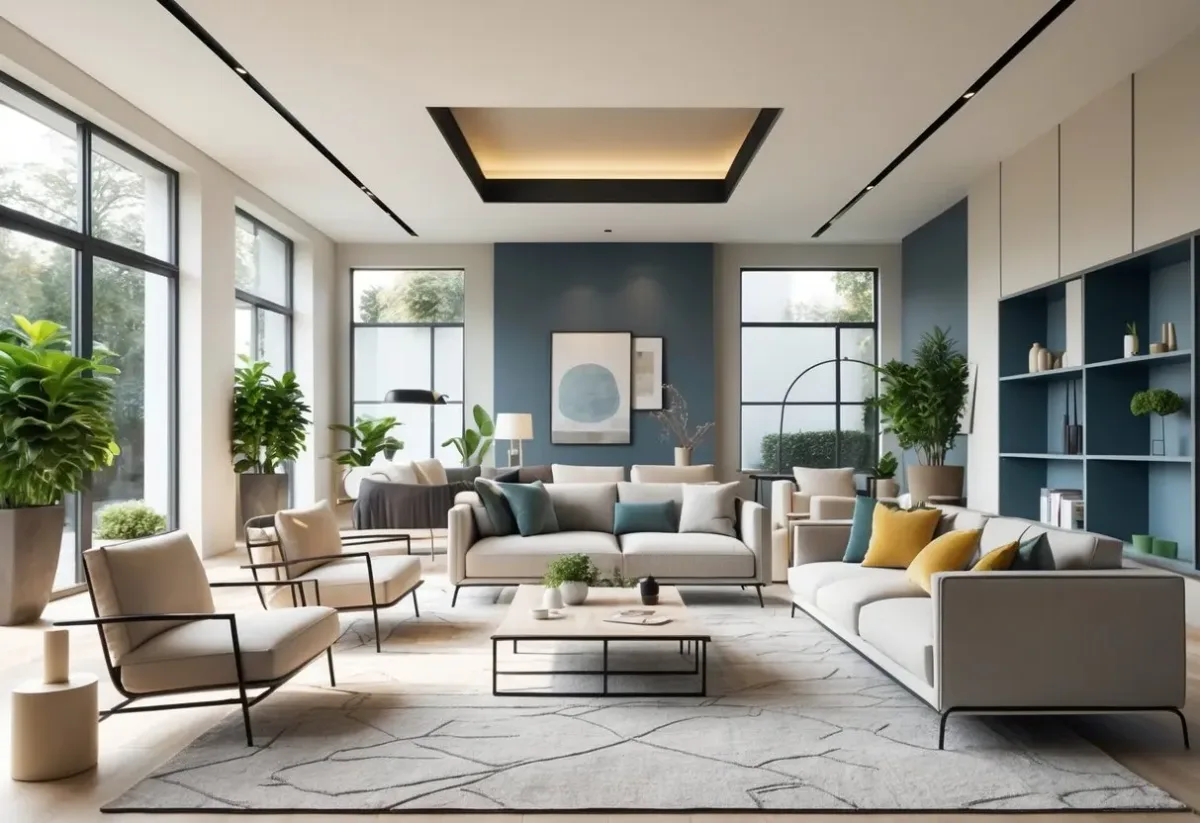
Choose a slim, armless or low-profile sofa to keep sightlines open and make your room feel more spacious. These designs reduce visual clutter and fit well in both compact and open-plan layouts.
Lean toward straight lines, thin legs, and minimal tufting to achieve a modern aesthetic. You can balance the streamlined shape with soft cushions or textured throws for comfort without losing the clean look.
Select neutral upholstery or a single bold accent color to maintain cohesion. Modular slim sofas also let you reconfigure seating when your needs change, giving you flexibility without bulk.
Place the sofa to define the seating area while preserving flow around it. Keep surrounding furniture proportionate so the streamlined sofa remains the focal point, not overwhelmed by heavy pieces.
Choose abstract pieces to set the mood without overpowering the room. Bold, energetic works inject vibrancy, while muted palettes promote calm and cohesion.
Scale art to the wall and furniture it accompanies. A large canvas becomes a focal point above a sofa, while a grouped arrangement adds rhythm to a long wall.
Match the artwork’s color accents to small decor elements. Throw pillows, a rug, or decorative objects can echo hues to create a deliberate, curated feel.
Keep framing and placement simple for a modern look. Minimal frames or gallery-wrap canvases maintain clean lines and let the art speak for itself.
Consider texture and medium to add depth. Mixed-media pieces or textured paint can introduce subtle contrast against smooth surfaces without cluttering the space.
Start by identifying primary activities you host in the room — conversation, TV viewing, reading, or working — and arrange furniture to support those uses. Position seating to face focal points and allow clear sightlines so movement feels natural.
Use scale and proportion to keep pathways open. Choose slimmer-profile sofas or modular pieces in tighter rooms to create circulation without sacrificing seating.
Define zones with rugs, lighting, or low shelving rather than tall partitions; this preserves openness while giving each activity its own area. In open-plan spaces, align furniture to create visual boundaries that still permit flow between kitchen and living areas.
Consider multifunctional furnishings like storage ottomans, nesting tables, or a sofa with built-in storage to reduce clutter and free up floor space. Keep major walkways at least 30–36 inches wide to maintain comfortable traffic patterns.
Arrange pieces to allow flexible swapping as needs change. A layout that adapts easily will keep your living room useful and inviting over time.
4) Include natural accents like wood or stone for warmth
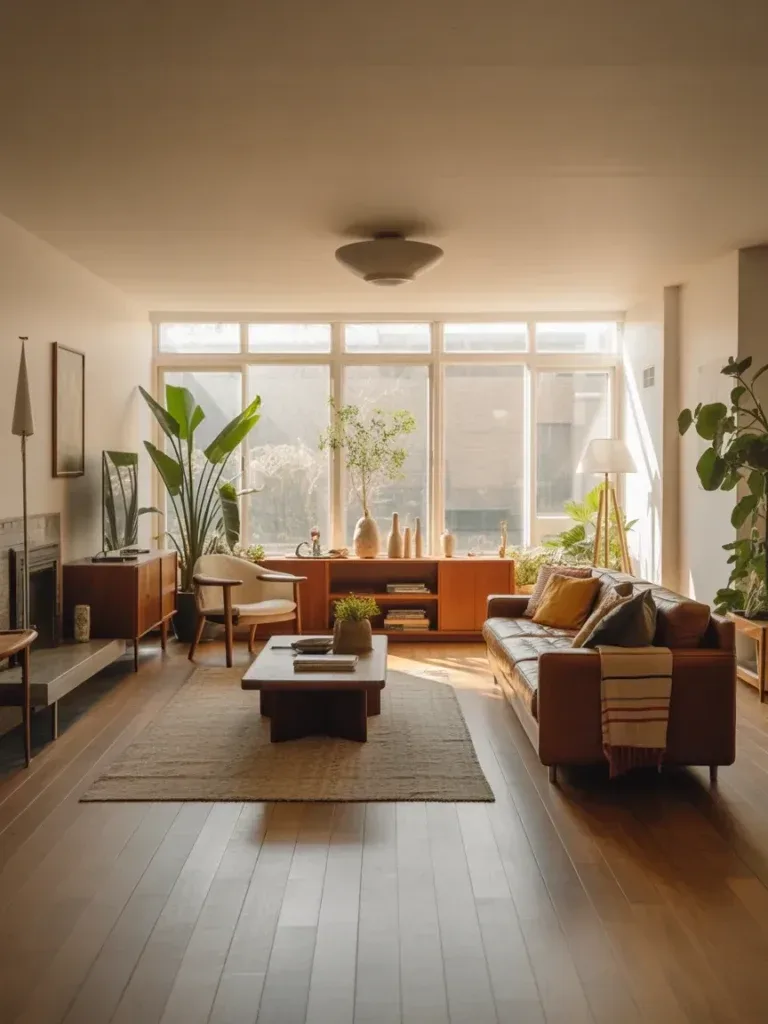
Add wood or stone to anchor your living room and introduce tactile warmth. A reclaimed-wood coffee table or floating shelves bring subtle character without overwhelming modern lines.
Use stone sparingly where it counts — a full-height fireplace wall or a low-profile hearth adds texture and a grounded focal point. You can also choose thin stone veneers or stacked tiles for a cleaner, contemporary look.
Combine natural accents with smooth, neutral surfaces to keep the room feeling fresh. Pair light oak or maple with soft textiles, or offset dark wood with pale walls to maintain balance.
Keep proportions in mind so natural materials enhance rather than dominate. Smaller rooms benefit from lighter woods or stone accents; larger spaces can handle bolder, more rustic pieces.
5) Choose statement accent walls with bold colors or textures
Pick one wall to anchor the room and make it the focal point of your living space. A single bold color or textured finish adds depth without overwhelming the rest of your palette.
Consider saturated paint tones like deep teal, charcoal, or warm terracotta to create contrast with neutral furnishings. You can also use textured options—wood panels, stone veneer, plaster, or grasscloth—to introduce tactile interest that changes with light.
Position the accent wall behind key features such as the sofa, fireplace, or TV to draw the eye and organize seating. Keep surrounding walls calm and coordinated so the statement feels intentional rather than busy.
If you rent or want flexibility, try removable wallpaper or peel-and-stick panels for dramatic effect that’s easy to change. Test samples on the wall and view them at different times of day to ensure the color or texture reads as you expect.
6) Mix contemporary and traditional elements for balance
You can create a calm, layered living room by pairing clean-lined, contemporary furniture with a few traditional pieces. Start with a neutral foundation—walls, larger upholstery, and rugs—so contrasting details read as intentional instead of cluttered.
Choose one or two traditional focal points, such as a carved coffee table, moulded mantel, or patterned Persian rug, and balance them with streamlined sofas or minimalist lighting. This keeps the room grounded while preserving modern simplicity.
Use scale and material to link styles: warm wood or brass bridges older detailing to sleek finishes, and repeating a single accent color ties disparate items together. Textures—linen, leather, carved wood—add depth without competing.
Limit decorative motifs to prevent visual noise. Let your contemporary pieces dominate the silhouette, while traditional items provide warmth and personality.
7) Add sculptural furniture pieces as focal points
Choose one or two sculptural furniture pieces to anchor the room. A curving sofa, an asymmetrical armchair, or a carved coffee table immediately draws the eye and defines the seating area.
Keep surrounding furnishings simple so the sculptural piece stands out. Neutral colors and minimal accessories let form, texture, and silhouette do the work without overwhelming the space.
Mix materials deliberately—stone, metal, wood, or boucle each bring a different character. Contrast smooth and rough surfaces to add depth while maintaining a restrained palette.
Position the piece where traffic and sightlines naturally converge, such as opposite the entry or next to a window. Good placement makes the object feel intentional and gives the room a clear visual center.
Key Principles of Modern Living Room Design
Focus on clean lines, purposeful furniture placement, and a restrained palette. Prioritize items that serve a function and contribute to a calm, cohesive atmosphere.
Minimalism and Functionality
Keep only what you use: choose furniture with clear purpose and storage built in, like a console with drawers or a coffee table with shelving. Opt for streamlined silhouettes — low-profile sofas, slim-legged chairs, and wall-mounted media units — to free floor space and create visible circulation paths.
A limited palette helps reduce visual clutter. Use two to three base colors (neutrals plus one accent) and repeat them across textiles, art, and accessories for coherence. Materials should perform as well as they look: hardwood or engineered wood floors, stain-resistant upholstery, and matte metal or glass for durability.
Use layered lighting to support tasks and mood. Combine recessed or track lighting, a sculptural pendant, and adjustable floor lamps so illumination follows how you live in the room. Finally, plan power and cable access before placing large pieces to keep technology integrated and hidden.
Balancing Comfort and Style
Comfort begins with scale. Choose seating depth and cushion firmness that match how you use the room: deeper, softer sofas for lounging; firmer, slightly shallower seating for conversation. Test pieces in person where possible; measurements alone don’t guarantee comfort.
Mix tactile elements to make the space inviting without undermining modern clarity. Pair a sleek leather sofa with a wool rug, or a slim metal chair with linen cushions. Keep textures subtle and organized — group similar textures together rather than scattering them randomly.
Anchor the room with one or two statement pieces that reflect your taste, such as a sculptural light fixture or a bold area rug. Keep accessories purposeful: a tray for remotes, a few curated books, and one or two plants for life and scale. Ensure each item supports daily use and visual balance.
Enhancing Space With Lighting and Color
Good lighting and a focused color strategy change how your living room feels and functions. Use light to define zones and color to control perceived scale and mood.
Natural Light Optimization
Maximize window area where possible and keep treatments minimal. Choose bottom-weighted sheer curtains or motorized blinds that retract fully; they preserve privacy while letting daylight flood seating and traffic paths.
Place mirrors or a high-gloss console opposite windows to reflect light into darker corners. Angle a large mirror so it catches sky or tree light rather than a direct view into a neighbor’s house.
Use layered artificial light for cloudy days and evenings: recessed downlights for general illumination, a sculptural chandelier over the main seating for focal glow, and wall sconces beside artwork to reduce harsh shadows. Select LED sources with CRI ≥ 90 and color temperature 2700–3000K for warm, natural skin tones, or 3000–3500K if you favor a slightly cooler modern look.
Selecting a Modern Color Palette
Anchor the room with one neutral base wall and two coordinating accent hues. For example: warm greige on three walls, charcoal on the focal wall, and muted teal for accessories like cushions and a rug.
Use a 60-30-10 rule: 60% dominant neutral (walls/floor), 30% secondary tone (sofa/large furniture), 10% accent (lamps, art, pillows). This keeps the scheme modern and balanced.
Choose finishes intentionally. Matte paint reduces glare on large surfaces; satin or eggshell on trim resists scuffs. For metallic accents, pick one tone—brushed brass or matte black—and repeat it across fixtures and hardware for cohesion.
Listen to this article 10 10 0:00 / 0:00 Speed 0.75×1×1.25×1.5×2× Mid-century modern never really left—it just got better at relaxing. Clean lines meet cozy textures, and suddenly your living room feels like a design magazine and a nap-friendly zone. If you’ve been craving that balance between stylish and livable, you’re in the right place….
Listen to this article 10 10 0:00 / 0:00 Speed 0.75×1×1.25×1.5×2× I redid my living room three times before it finally felt right, and each version taught me something the last one missed. The truth about luxury living room designs modern interiors actually rely on is that it’s rarely one big splurge — it’s a…
Listen to this article 10 10 0:00 / 0:00 Speed 0.75×1×1.25×1.5×2× You don’t need a millionaire’s budget to make your bedroom look like it belongs in a five-star hotel. The secret? It’s all about choosing the right modern luxury decor pieces that give off high-end vibes without draining your wallet. A few smart upgrades can…
Listen to this article 10 10 0:00 / 0:00 Speed 0.75×1×1.25×1.5×2× The dollar store fall aisle is mostly foam pumpkins, plastic leaves, and craft-store basics — nothing that looks expensive on the shelf. What makes DIY dollar store fall decor look high-end isn’t the materials, it’s what you do to them before they hit your…
Listen to this article 10 10 0:00 / 0:00 Speed 0.75×1×1.25×1.5×2× Ready to give your living room that effortlessly cool, “I just threw this together” vibe (even though we both know you didn’t)? Boho style is all about layering textures, mixing patterns, and breaking a few design rules along the way. Think cozy, eclectic, and…
Listen to this article 10 10 0:00 / 0:00 Speed 0.75×1×1.25×1.5×2× Your stuff isn’t the problem—your systems are. These clever, cheap DIYs tame chaos fast and look amazing doing it. You’ll use scraps, baskets, hooks, and a few brainy tweaks to win back your space. Ready to stop playing hide-and-seek with your keys, lids, and…