You want a modern small dining room that feels spacious, functional, and stylish without a major renovation. This article shows practical, design-forward approaches you can apply right away to make your dining area work harder and look cleaner. Expect clear, achievable ideas—like streamlined furniture, clever seating, and lighting strategies—that help you maximize space and elevate the room’s modern feel. Explore options that balance form and function so your small dining area becomes both inviting and efficient. Table of Contents1) Use sleek, minimalist dining furniture with clean lines2) Incorporate a round dining table to enhance flow and save space3) Add built-in bench seating with storage underneath4) Choose light, neutral color palettes to open up the space5) Install a large mirror to visually expand the room6) Use pendant lighting to define the dining area without clutter7) Opt for multifunctional furniture like extendable tablesDesign Principles for Modern Small Dining RoomsMaximizing Visual SpaceBalancing Color and TextureSmart Furniture Choices for Limited SpacesSelecting Multi-Functional PiecesChoosing Appropriate Table Shapes 1) Use sleek, minimalist dining furniture with clean lines Choose furniture with simple silhouettes and thin profiles to keep visual clutter low and make the room feel larger. A rectangular or round table with slim legs creates open sightlines, so the space reads as airy rather than cramped. Opt for chairs without bulky arms and with narrow backs; they tuck closer to the table and reduce visual weight. Materials like light wood, metal, or molded plastic maintain a modern aesthetic while staying practical for everyday use. Devoko Home Acacia Wood Dining Table 6-Person Indoor Outdoor Tabl… Large Table Top: 69 “L x 33” W x 30 “H indoor dining table can comfortably accommodate 6 people at the same time. Enough… Ideal Choice: The simple wooden dining table can be used for many purposes according to your needs. The natural style of… Advanced Material: This table top is made of 2.16 ” thick all-natural solid acacia wood, which has a good texture and t… $169.99 Buy on Amazon Pick finishes in neutral tones or a single muted accent to create cohesion and avoid competing patterns. If you need storage, select built-in benches or a slim sideboard that echoes the table’s lines to preserve the minimalist flow. Scale matters: measure the room and choose pieces that allow at least 24–30 inches per person for comfortable seating. Prioritize multifunctional items—extendable tables or stackable chairs—so your dining area adapts to different needs without sacrificing style. 2) Incorporate a round dining table to enhance flow and save space Choose a round table to reduce visual clutter and improve circulation in a compact dining area. Its curved edges let you move around more easily than with a rectangular table. Pick a pedestal base or tulip-style leg to free up knee and chair space. That small change increases usable seating without widening the table footprint. VASAGLE MAEZO Collection – Round Dining Table for 4-6 People, 47…. Style Reigns: Discover the MAEZO Collection—a furniture line featuring streamlined designs, tapered legs, and smooth, cu… Spacious Surface: The 47.2-inch diameter round dining table comfortably seats 4 to 6 people, making it ideal for family … Sturdy and Reliable: Built with solid wood legs and table frame, this circle kitchen table supports up to 264 lb for rel… $169.99 Buy on Amazon Scale the diameter to your room: 36–48 inches works well for two to four people; 48–60 inches can fit four to six comfortably if space allows. Measure walkways so you keep at least 30 inches around the table for chairs. Consider multifunctional pieces, like a drop-leaf round table or one with an extendable top. These let you expand for guests and retract for daily life, keeping the room flexible. 3) Add built-in bench seating with storage underneath Built-in bench seating saves floor space and gives your dining area a streamlined, modern look. You can position a bench along a wall or under a window to free up circulation and make the room feel larger. Design the bench with lift-up seats or drawers to store linens, place settings, or seasonal items. This keeps clutter out of sight and reduces the need for extra furniture in a small room. Choose durable upholstery and a seat height that matches your table for comfortable dining. Finish the bench in the same paint or trim as surrounding built-ins to create a cohesive, custom appearance. Incorporate open shelving at one end or add a slim ledge behind the seat for plants and decor. Small touches like concealed hinges and soft-close mechanisms enhance usability without disrupting clean lines. 4) Choose light, neutral color palettes to open up the space Light neutrals reflect more light, so your small dining room will feel brighter and more open. Whites, warm beiges, pale grays, and soft greiges create a calm backdrop that makes furniture and art stand out without crowding the eye. Use the same neutral family across walls, trim, and large furniture to create visual continuity. That uninterrupted flow helps the room read as one larger space instead of several cramped zones. Introduce subtle contrast with texture rather than bold color. A woven rug, linen curtains, or a wood sideboard adds depth while keeping the palette restrained. If you want a bit of personality, add a single accent in a muted tone—dusty blue, sage, or terracotta—so it reads as intentional, not distracting. Keep metallics and high-contrast patterns minimal to maintain the airy effect. 5) Install a large mirror to visually expand the room Place a large mirror on the wall opposite a window or light source to bounce natural light and make the dining area feel brighter. You’ll immediately notice increased depth without changing the floor plan. A floor-to-ceiling or oversized framed mirror creates vertical sweep, which helps the ceiling read as taller. Leaning a full-length mirror against the wall gives a relaxed, modern look and avoids complex installation. Centering a mirror behind the dining table doubles the perceived space and highlights artwork or a pendant light when reflected. Keep the mirror clean and avoid cluttered reflections to preserve the illusion. Choose a frame that complements your decor—slim metal for modern minimalism or warm wood for a softer vibe. If you have a narrow room, consider a narrow mirrored panel or mirrored cabinetry to extend the wall subtly. 6) Use pendant lighting to define the dining area without clutter Choose a single pendant or a small cluster to anchor your table visually. A focused light source creates a clear dining zone without needing bulky furniture or room dividers. Keep the fixture proportionate to your table — about one-third the table width for a single pendant, or balanced groupings for clusters. Lower the pendants to roughly 28–34 inches above the tabletop to provide comfortable illumination and reduce glare. Select simple shapes and finishes that complement the room’s palette to avoid visual noise. Materials like matte metal, frosted glass, or wood add interest while staying minimal. Hardwire or use a clean ceiling mount and conceal cords to maintain a tidy look. Dimmable bulbs let you shift from task lighting to softer ambience for meals or gatherings. 7) Opt for multifunctional furniture like extendable tables Choose an extendable table to give your small dining room flexibility without sacrificing style. You can keep the table compact for daily use and expand it when guests arrive. Look for mechanisms that glide smoothly and lock securely; quality hardware reduces wobble and wear. Materials and finishes should match your room’s aesthetic so the table reads as intentional, not temporary. Consider models with built-in storage or leaves that tuck neatly under the tabletop. Those features save space and keep linens or extra place settings close at hand. Use the table as a workspace or console when folded down to maximize function. This lets one piece serve multiple roles in a tight floor plan. Design Principles for Modern Small Dining Rooms Focus on visual openness and a concise palette to make the room feel larger and intentional. Prioritize furniture scale, lighting placement, and texture choices that improve circulation and comfort. Maximizing Visual Space Use scale to your advantage: choose a round or narrow rectangular table that leaves at least 36 inches of clear walk space around it. Consider a pedestal base or thin legs to expose more floor and reduce visual bulk.Mirrors work best when placed opposite a window or light source; a single large mirror or a grid of slim mirrors doubles perceived depth without clutter.Keep storage low and streamlined. Built-in banquettes with under-seat drawers or a wall-mounted narrow console keep surfaces free and maintain sightlines.Opt for multi-functional pieces — a drop-leaf table, stackable or folding chairs, and benches that tuck fully under the table free up usable floor area when you’re not dining. Balancing Color and Texture Limit your palette to two dominant neutrals plus one accent color to avoid visual noise. Use matte finishes on walls and subtly reflective materials on fixtures to control light without glare.Introduce texture with a low-profile rug, woven chair cushions, or a linen runner to add warmth while staying visually light. Keep patterns small-scale and repeating to avoid overwhelming the space.Metal accents (brushed brass, blackened steel) should be used sparingly — one pendant, one set of chair legs, or hardware — to create focal points without fragmenting the palette.If you use wood, match tones across furniture and trim or deliberately contrast a single piece to anchor the room. Smart Furniture Choices for Limited Spaces Focus on pieces that serve more than one function and shapes that fit your traffic flow. Prioritize storage-integrated seating and compact table shapes that allow clear movement and comfortable elbow room. Selecting Multi-Functional Pieces Choose seating with built-in storage—benches or banquettes with lift-up seats give you 6–12 cubic feet for linens, serving ware, or pantry overflow. Look for ottomans or stools that stack or tuck under the table to free floor space when not in use. Pick a sideboard that doubles as a buffet and a surface for coffee gear or a compact bar. Measure the wall depth (typically 12–18 inches) before buying to ensure it won’t obstruct the walkway. Consider drop-leaf or extendable tables with hidden leaf storage. These provide a full dining surface when needed and reduce to half the footprint during daily use. Prioritize solid hardware and glide systems so the mechanism lasts. Choosing Appropriate Table Shapes Round tables maximize circulation in tight plans because they remove sharp corners; a 36–42 inch round table suits two to four people while allowing clear paths around it. If you host rarely, a 30–36 inch bistro round saves even more space. Rectangular and oval tables work well against walls or in narrow rooms. A narrow console-height table (12–18 inches deep) can convert into a dining surface with folding legs or pull-out leaves. Consider glass or acrylic tops to reduce visual bulk, and choose slim pedestal bases over bulky legs to give chairs room and make cleaning easier. Match table size to the chair footprint—allow about 24 inches of width and 12–18 inches of knee clearance per seat.
You want a modern small dining room that feels spacious, functional, and stylish without a major renovation. This article shows practical, design-forward approaches you can apply right away to make your dining area work harder and look cleaner.
Expect clear, achievable ideas—like streamlined furniture, clever seating, and lighting strategies—that help you maximize space and elevate the room’s modern feel. Explore options that balance form and function so your small dining area becomes both inviting and efficient.
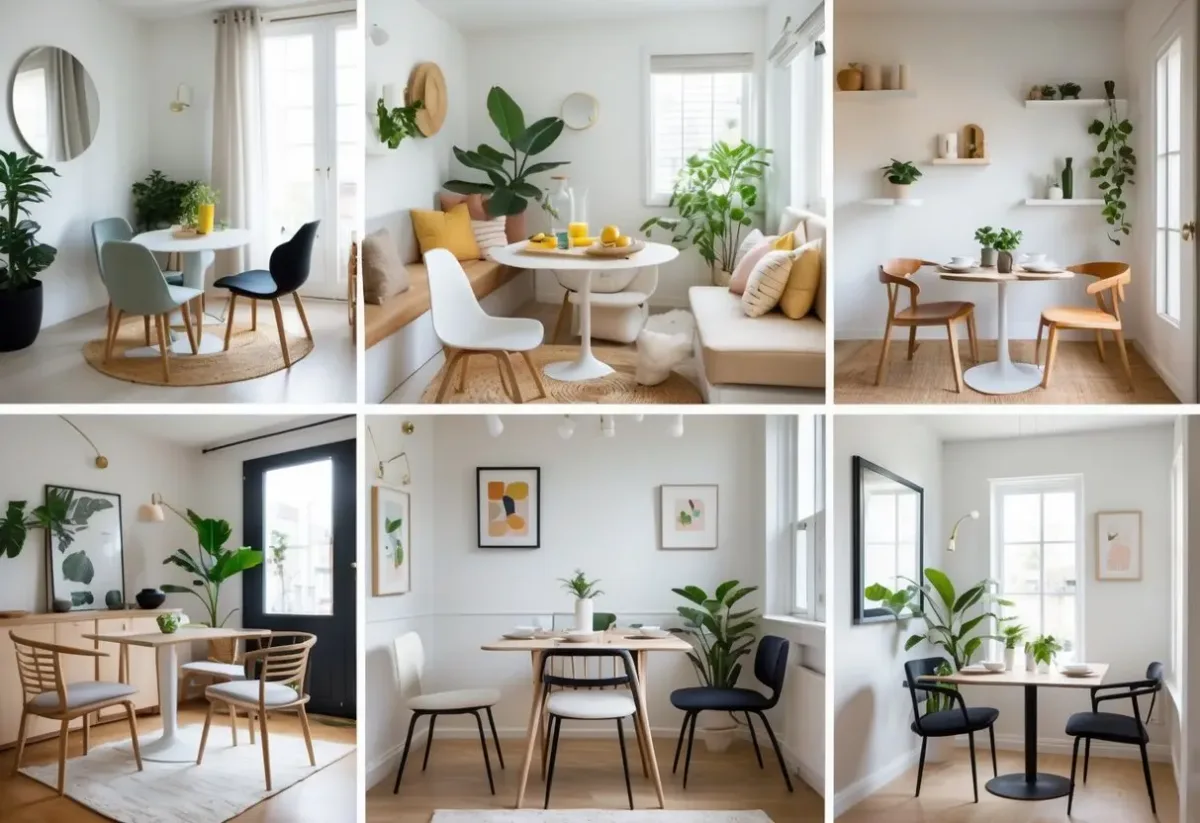
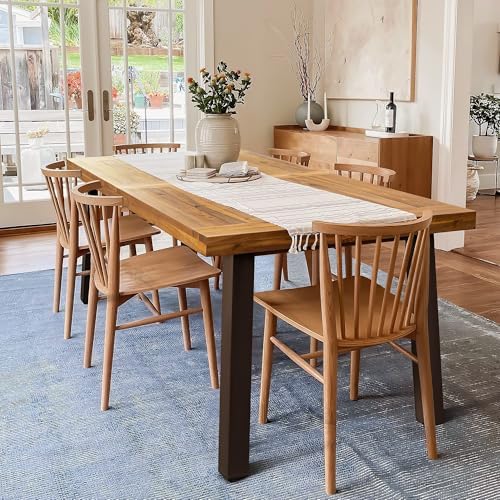
Choose furniture with simple silhouettes and thin profiles to keep visual clutter low and make the room feel larger. A rectangular or round table with slim legs creates open sightlines, so the space reads as airy rather than cramped.
Opt for chairs without bulky arms and with narrow backs; they tuck closer to the table and reduce visual weight. Materials like light wood, metal, or molded plastic maintain a modern aesthetic while staying practical for everyday use.
Pick finishes in neutral tones or a single muted accent to create cohesion and avoid competing patterns. If you need storage, select built-in benches or a slim sideboard that echoes the table’s lines to preserve the minimalist flow.
Scale matters: measure the room and choose pieces that allow at least 24–30 inches per person for comfortable seating. Prioritize multifunctional items—extendable tables or stackable chairs—so your dining area adapts to different needs without sacrificing style.
2) Incorporate a round dining table to enhance flow and save space
Choose a round table to reduce visual clutter and improve circulation in a compact dining area. Its curved edges let you move around more easily than with a rectangular table.
Pick a pedestal base or tulip-style leg to free up knee and chair space. That small change increases usable seating without widening the table footprint.
Scale the diameter to your room: 36–48 inches works well for two to four people; 48–60 inches can fit four to six comfortably if space allows. Measure walkways so you keep at least 30 inches around the table for chairs.
Consider multifunctional pieces, like a drop-leaf round table or one with an extendable top. These let you expand for guests and retract for daily life, keeping the room flexible.
3) Add built-in bench seating with storage underneath
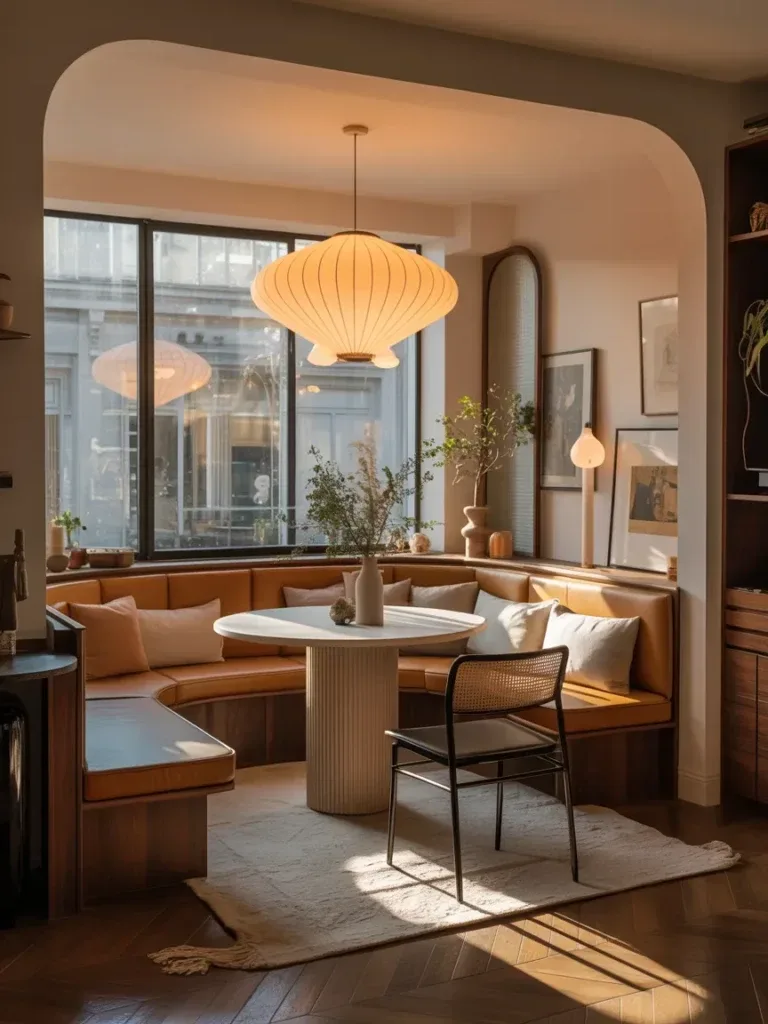
Built-in bench seating saves floor space and gives your dining area a streamlined, modern look. You can position a bench along a wall or under a window to free up circulation and make the room feel larger.
Design the bench with lift-up seats or drawers to store linens, place settings, or seasonal items. This keeps clutter out of sight and reduces the need for extra furniture in a small room.
Choose durable upholstery and a seat height that matches your table for comfortable dining. Finish the bench in the same paint or trim as surrounding built-ins to create a cohesive, custom appearance.
Incorporate open shelving at one end or add a slim ledge behind the seat for plants and decor. Small touches like concealed hinges and soft-close mechanisms enhance usability without disrupting clean lines.
4) Choose light, neutral color palettes to open up the space
Light neutrals reflect more light, so your small dining room will feel brighter and more open. Whites, warm beiges, pale grays, and soft greiges create a calm backdrop that makes furniture and art stand out without crowding the eye.
Use the same neutral family across walls, trim, and large furniture to create visual continuity. That uninterrupted flow helps the room read as one larger space instead of several cramped zones.
Introduce subtle contrast with texture rather than bold color. A woven rug, linen curtains, or a wood sideboard adds depth while keeping the palette restrained.
If you want a bit of personality, add a single accent in a muted tone—dusty blue, sage, or terracotta—so it reads as intentional, not distracting. Keep metallics and high-contrast patterns minimal to maintain the airy effect.
5) Install a large mirror to visually expand the room
Place a large mirror on the wall opposite a window or light source to bounce natural light and make the dining area feel brighter. You’ll immediately notice increased depth without changing the floor plan.
A floor-to-ceiling or oversized framed mirror creates vertical sweep, which helps the ceiling read as taller. Leaning a full-length mirror against the wall gives a relaxed, modern look and avoids complex installation.
Centering a mirror behind the dining table doubles the perceived space and highlights artwork or a pendant light when reflected. Keep the mirror clean and avoid cluttered reflections to preserve the illusion.
Choose a frame that complements your decor—slim metal for modern minimalism or warm wood for a softer vibe. If you have a narrow room, consider a narrow mirrored panel or mirrored cabinetry to extend the wall subtly.
6) Use pendant lighting to define the dining area without clutter
Choose a single pendant or a small cluster to anchor your table visually. A focused light source creates a clear dining zone without needing bulky furniture or room dividers.
Keep the fixture proportionate to your table — about one-third the table width for a single pendant, or balanced groupings for clusters. Lower the pendants to roughly 28–34 inches above the tabletop to provide comfortable illumination and reduce glare.
Select simple shapes and finishes that complement the room’s palette to avoid visual noise. Materials like matte metal, frosted glass, or wood add interest while staying minimal.
Hardwire or use a clean ceiling mount and conceal cords to maintain a tidy look. Dimmable bulbs let you shift from task lighting to softer ambience for meals or gatherings.
7) Opt for multifunctional furniture like extendable tables
Choose an extendable table to give your small dining room flexibility without sacrificing style. You can keep the table compact for daily use and expand it when guests arrive.
Look for mechanisms that glide smoothly and lock securely; quality hardware reduces wobble and wear. Materials and finishes should match your room’s aesthetic so the table reads as intentional, not temporary.
Consider models with built-in storage or leaves that tuck neatly under the tabletop. Those features save space and keep linens or extra place settings close at hand.
Use the table as a workspace or console when folded down to maximize function. This lets one piece serve multiple roles in a tight floor plan.
Focus on visual openness and a concise palette to make the room feel larger and intentional. Prioritize furniture scale, lighting placement, and texture choices that improve circulation and comfort.
Maximizing Visual Space
Use scale to your advantage: choose a round or narrow rectangular table that leaves at least 36 inches of clear walk space around it. Consider a pedestal base or thin legs to expose more floor and reduce visual bulk. Mirrors work best when placed opposite a window or light source; a single large mirror or a grid of slim mirrors doubles perceived depth without clutter. Keep storage low and streamlined. Built-in banquettes with under-seat drawers or a wall-mounted narrow console keep surfaces free and maintain sightlines. Opt for multi-functional pieces — a drop-leaf table, stackable or folding chairs, and benches that tuck fully under the table free up usable floor area when you’re not dining.
Balancing Color and Texture
Limit your palette to two dominant neutrals plus one accent color to avoid visual noise. Use matte finishes on walls and subtly reflective materials on fixtures to control light without glare. Introduce texture with a low-profile rug, woven chair cushions, or a linen runner to add warmth while staying visually light. Keep patterns small-scale and repeating to avoid overwhelming the space. Metal accents (brushed brass, blackened steel) should be used sparingly — one pendant, one set of chair legs, or hardware — to create focal points without fragmenting the palette. If you use wood, match tones across furniture and trim or deliberately contrast a single piece to anchor the room.
Smart Furniture Choices for Limited Spaces
Focus on pieces that serve more than one function and shapes that fit your traffic flow. Prioritize storage-integrated seating and compact table shapes that allow clear movement and comfortable elbow room.
Selecting Multi-Functional Pieces
Choose seating with built-in storage—benches or banquettes with lift-up seats give you 6–12 cubic feet for linens, serving ware, or pantry overflow. Look for ottomans or stools that stack or tuck under the table to free floor space when not in use.
Pick a sideboard that doubles as a buffet and a surface for coffee gear or a compact bar. Measure the wall depth (typically 12–18 inches) before buying to ensure it won’t obstruct the walkway.
Consider drop-leaf or extendable tables with hidden leaf storage. These provide a full dining surface when needed and reduce to half the footprint during daily use. Prioritize solid hardware and glide systems so the mechanism lasts.
Choosing Appropriate Table Shapes
Round tables maximize circulation in tight plans because they remove sharp corners; a 36–42 inch round table suits two to four people while allowing clear paths around it. If you host rarely, a 30–36 inch bistro round saves even more space.
Rectangular and oval tables work well against walls or in narrow rooms. A narrow console-height table (12–18 inches deep) can convert into a dining surface with folding legs or pull-out leaves.
Consider glass or acrylic tops to reduce visual bulk, and choose slim pedestal bases over bulky legs to give chairs room and make cleaning easier. Match table size to the chair footprint—allow about 24 inches of width and 12–18 inches of knee clearance per seat.
Listen to this article 10 10 0:00 / 0:00 Speed 0.75×1×1.25×1.5×2× Want a dining nook that feels cozy, not cramped? You don’t need a McMansion or a contractor on speed dial. With a few smart moves, your small dining room can look bigger, function better, and host game night without elbow wars. Let’s turn that…
Listen to this article 10 10 0:00 / 0:00 Speed 0.75×1×1.25×1.5×2× Mid-century modern dining rooms have that rare magic—they look effortlessly cool without trying too hard. Clean lines, warm woods, and just the right amount of retro charm? Yes, please. If your dining space feels a little “meh,” these ideas will wake it up fast….
Listen to this article 10 10 0:00 / 0:00 Speed 0.75×1×1.25×1.5×2× Nothing beats eating outside when the weather finally cooperates. Fresh air, good food, and family conversations somehow feel way more fun under string lights than under a dining room chandelier. The tricky part? Creating an outdoor dining setup that feels cozy without looking cluttered…
Listen to this article 10 10 0:00 / 0:00 Speed 0.75×1×1.25×1.5×2× Tiny dining rooms can feel like a decorating nightmare. One oversized chair and suddenly you’re squeezing sideways just to grab a fork. But the right layout, colors, and furniture choices can turn even the smallest corner into a dining setup that looks ridiculously stylish….
Listen to this article 10 10 0:00 / 0:00 Speed 0.75×1×1.25×1.5×2× Got a corner that’s doing absolutely nothing for your dining life? Let’s fix that. These dining room nook ideas turn awkward spaces into the coziest, most functional spots in your home. You’ll eat more breakfasts at home, host more game nights, and finally have…