You want a teen bedroom that feels bigger, works harder, and actually reflects who they are without a complete overhaul. This article shows six practical, space-smart ideas that help you free floor area, add storage, and keep the room functional and stylish so a small space works for both sleep and study. You’ll find straightforward ways to use vertical space, clever storage under and around the bed, compact work surfaces, and simple color and lighting choices that make the room feel open and personalized. Expect actionable options you can try right away to maximize usability and express personality without clutter. Table of Contents1) Use loft beds to free up floor space for study or storage.2) Incorporate under-bed drawers or bins for extra storage.3) Choose a fold-down desk to maximize functionality in a small area.4) Install wall-mounted shelves to keep surfaces clear and organized.5) Select neutral color palettes with pops of bright accents for a fresh look6) Add a gallery wall with personalized artwork to enhance personalityMaximizing Space and FunctionalitySmart Storage SolutionsFlexible Furniture ChoicesColor and Lighting StrategiesOptimizing Natural LightCreative Accent Walls 1) Use loft beds to free up floor space for study or storage. A loft bed lifts the sleeping area so you can use the floor footprint for a desk, shelving, or a compact closet. This design gives you a clear zone for studying without making the room feel crowded. Choose a loft with integrated storage or a built-in desk to avoid adding extra furniture. That keeps traffic paths open and reduces visual clutter. Measure ceiling height and stair or ladder clearance before buying or building to ensure safe, comfortable access. Proper lighting and a stable ladder make the setup practical for daily use. If you prefer flexibility, pick a modular loft system that can convert into a standard bed later. That extends the furniture’s usefulness as your teen’s needs change. 2) Incorporate under-bed drawers or bins for extra storage. Slide-out drawers and slim bins turn dead space under the bed into tidy storage without changing the room layout. You can store off-season clothes, shoes, school supplies, or sports gear so surfaces stay clear and daily routines move faster. Choose containers that fit your bed height and measure first to avoid wasted space. Clear or labeled bins make it easy to find items, while fabric drawers soften the look and reduce noise when pulling things out. If you like DIY, add caster wheels to old dresser drawers for a custom, durable solution. For a cleaner aesthetic, hide storage behind a bed skirt or pick drawers that match the frame so the room feels cohesive. Forestell Queen Bed Frame with Wood Headboard, Black Platform Bed… Built-in USB Charging Station: Never scramble for a charger again! The integrated USB ports are conveniently built into … Modern Ambient LED Lighting System: This queen bed frame with headboard features advanced rgb light strips that you can … Durable Wood Headboard with Built-in Shelf: Crafted from sturdy wood, the elegant headboard features a handy shelf. This… $139.99 Buy on Amazon 3) Choose a fold-down desk to maximize functionality in a small area. A fold-down desk frees floor space by folding flat against the wall when you don’t need it. You get a fully usable work surface for studying, hobbies, or gaming without a permanent footprint. Look for models that include built-in storage or a small shelf to keep supplies organized. That reduces clutter and keeps frequently used items within reach. Mount the desk at a height that suits your chair and posture to prevent strain. Secure mounting and quality hinges ensure stability when you’re typing or leaning on the desk. Pick a finish and style that matches the room so the desk blends in when closed. A neutral color or wood tone makes the space feel cohesive, while a brighter finish can make it a focal point. 4) Install wall-mounted shelves to keep surfaces clear and organized. Wall-mounted shelves free up floor and desk space so your room feels less cluttered. They give you quick access to books, chargers, and décor without crowding surfaces. Choose shelves that match your storage needs and wall type; floating shelves work for light items, while brackets or cleats handle heavier loads. Measure stud locations and use appropriate anchors to keep shelves secure and safe. Arrange shelves at varied heights to create visual interest and designate zones for study, display, and daily essentials. Use small boxes or baskets on shelves to corral cables, makeup, or school supplies and make tidying faster. Keep a clear rule for what stays on each shelf to prevent overflow. Rotate items seasonally or weekly so shelves stay purposeful and your room stays organized. 5) Select neutral color palettes with pops of bright accents for a fresh look Choose a neutral base—soft greige, warm beige, or pale gray—to make the room feel larger and calmer. Neutrals create visual unity and let your chosen accents stand out without overwhelming the space. Add bright accents through pillows, a rug, or wall art to inject personality. Pick one or two vivid colors like teal, mustard, or coral and repeat them in small doses for cohesion. Use texture and tone within the neutral palette to avoid flatness; mix matte paint with a glossy lamp or woven throw. This keeps the room layered and interesting while staying understated. Keep larger furniture pieces neutral so you can swap accent colors as tastes change. That flexibility makes the room easy to update without a full repaint or new furniture purchase. 6) Add a gallery wall with personalized artwork to enhance personality A gallery wall lets you display favorite photos, prints, and DIY pieces without taking up floor space. Arrange a mix of frame sizes and orientations to keep the layout dynamic and visually balanced. Choose artwork that reflects your interests—music, travel, quotes, or original sketches—to make the room feel uniquely yours. Incorporate small shelves or ledges so you can swap pieces easily as your taste changes. Use a consistent element, like a frame color or mat style, to unify diverse pieces and prevent the wall from feeling cluttered. Plan the layout on the floor or with paper templates on the wall before committing to nails. Keep lighting and sightlines in mind; a picture light or adjustable wall lamp highlights key pieces and adds depth. If you rent, use damage-free hanging strips for lighter frames to avoid holes. Maximizing Space and Functionality Target storage that hides clutter and furniture that performs more than one job. Prioritize vertical solutions, zones for sleeping/studying, and pieces you can reconfigure as needs change. Smart Storage Solutions Use under-bed drawers or rolling bins sized to fit your mattress frame for clothes, shoes, or out-of-season items. Add clear-lidded boxes so you can see contents without opening them.Mount floating shelves above the desk and bed at staggered heights to store books, display items, and keep surfaces clear. Install a narrow wall-mounted bookcase or vertical cubby beside the desk to free floor space. Choose a pegboard or slatwall panel above the desk for headphones, chargers, and small school supplies; label hooks and bins for quick access. Use over-the-door organizers with slim profiles for accessories or toiletries.Keep one visible basket for daily laundry and one hidden bin for extra bedding to prevent piles from building up. Flexible Furniture Choices Select a daybed or loft bed to reclaim floor area; a loft creates clear space for a desk, seating, or storage below. If a loft is not possible, choose a bed with built-in drawers or a hydraulic lift mattress for large-volume storage.Pick a desk with adjustable height or a wall-mounted fold-down desk that tucks away when not in use. For seating, use stackable stools or a small ottoman with internal storage so you can add seats without permanent bulk. Choose modular shelving units with detachable cubes so you can reconfigure as your needs change. Opt for a dresser on casters to slide from closet to room when needed. Prioritize durable finishes and neutral colors so pieces work through growth and style changes. Color and Lighting Strategies Choose paint, fixtures, and lamps that increase perceived space and support activities like studying and hanging out. Use light-reflecting finishes, layered lighting, and one or two bold accents to keep the room lively without crowding it. Optimizing Natural Light Position the bed and desk to keep the window area clear so sunlight reaches the room’s center. Use sheer curtains or a top-down blind to control glare while preserving daylight; mount the curtain rod a few inches above the window frame to make ceilings feel taller. Paint walls in high-LRV (light-reflective value) shades—soft white, pale gray, or warm beige—to bounce light. Keep window trim and ceiling a shade or two lighter than walls for subtle contrast. Place mirrors opposite or adjacent to the window to double daylight; a floor mirror or a grid of small mirrors works well. For privacy without blocking light, choose frosted film on lower window panes or adjustable slatted blinds. Add a cool-white desk lamp (around 4000K) for focused tasks and a dimmable overhead or track light for general brightness. Creative Accent Walls Pick one wall for a strong visual focus so the rest of the room stays light and open. Use a matte or eggshell paint in a saturated color—navy, forest green, or terracotta—on the accent wall behind the bed or workspace to ground the room without shrinking it. If you prefer patterns, install removable wallpaper or a large-scale mural on the chosen wall only. Stripes that run vertical will raise perceived ceiling height; horizontal stripes can widen a narrow room. Keep adjacent walls neutral to prevent visual clutter. Incorporate accent lighting—picture lights, LED strips behind a headboard, or a wall-mounted sconce—to highlight the wall after dark. This maintains the accent’s impact while allowing you to control mood and brightness independently from the room’s main lights.
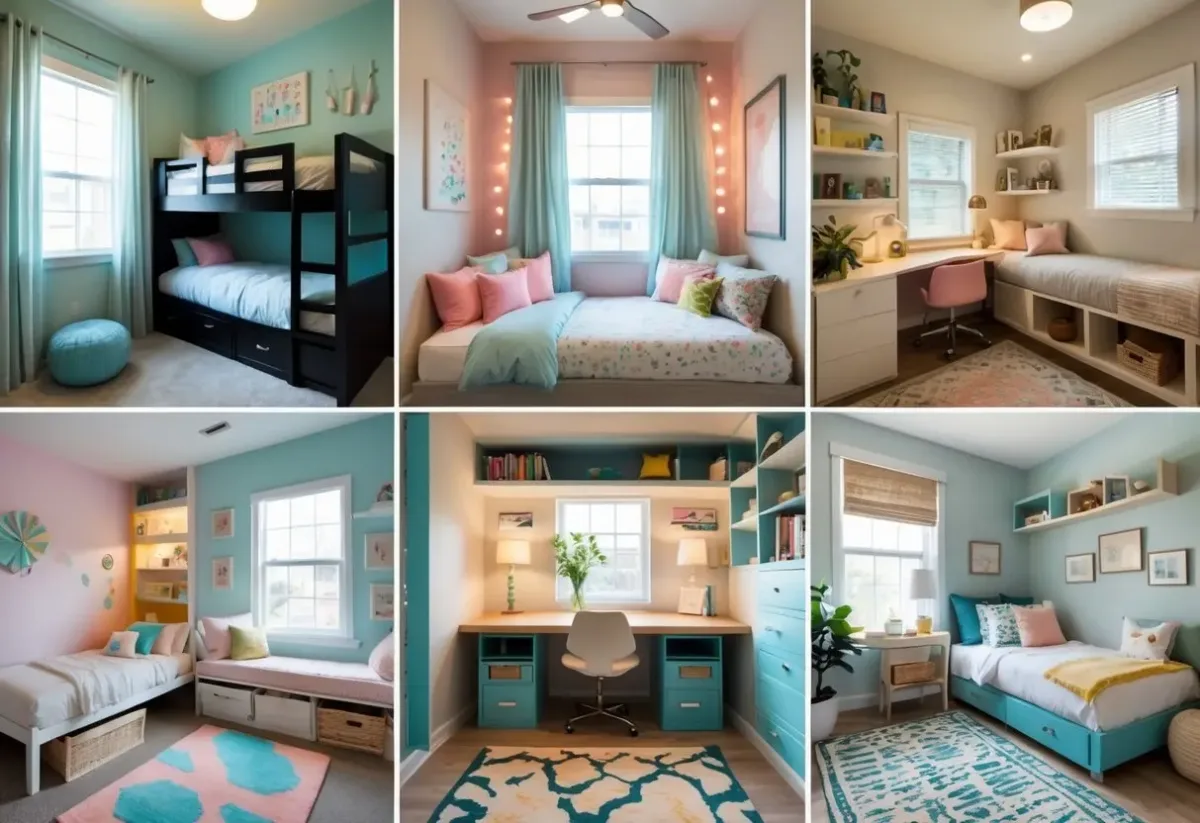
You want a teen bedroom that feels bigger, works harder, and actually reflects who they are without a complete overhaul. This article shows six practical, space-smart ideas that help you free floor area, add storage, and keep the room functional and stylish so a small space works for both sleep and study.
You’ll find straightforward ways to use vertical space, clever storage under and around the bed, compact work surfaces, and simple color and lighting choices that make the room feel open and personalized. Expect actionable options you can try right away to maximize usability and express personality without clutter.
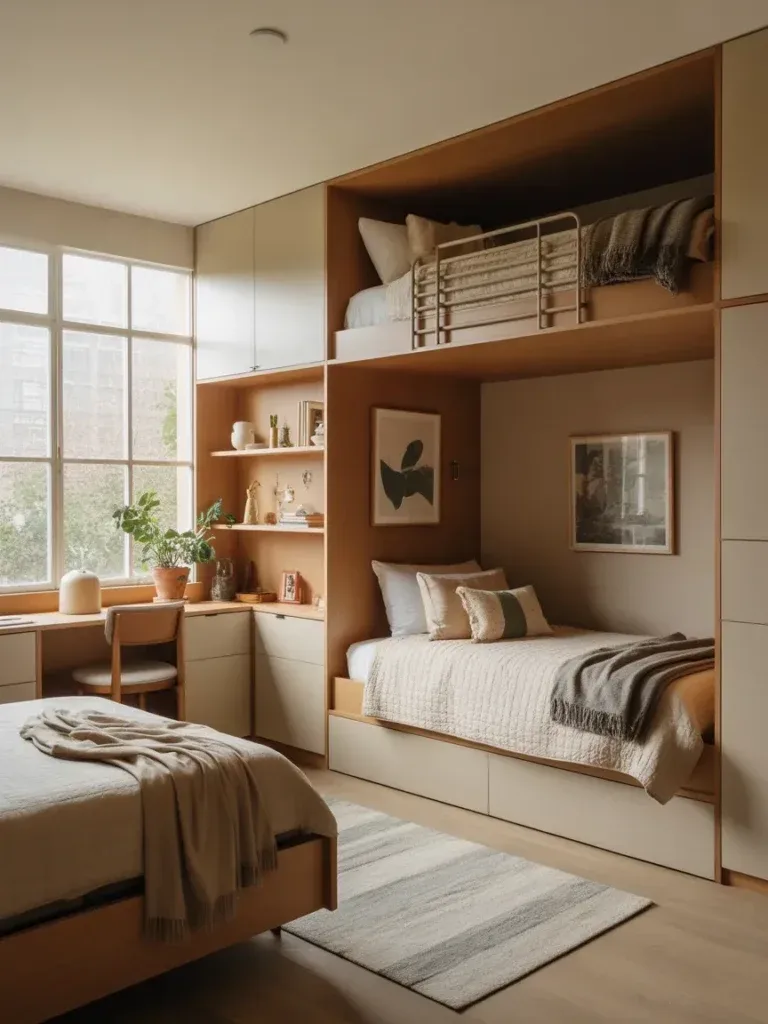
A loft bed lifts the sleeping area so you can use the floor footprint for a desk, shelving, or a compact closet. This design gives you a clear zone for studying without making the room feel crowded.
Choose a loft with integrated storage or a built-in desk to avoid adding extra furniture. That keeps traffic paths open and reduces visual clutter.
Measure ceiling height and stair or ladder clearance before buying or building to ensure safe, comfortable access. Proper lighting and a stable ladder make the setup practical for daily use.
If you prefer flexibility, pick a modular loft system that can convert into a standard bed later. That extends the furniture’s usefulness as your teen’s needs change.
2) Incorporate under-bed drawers or bins for extra storage.
Slide-out drawers and slim bins turn dead space under the bed into tidy storage without changing the room layout. You can store off-season clothes, shoes, school supplies, or sports gear so surfaces stay clear and daily routines move faster.
Choose containers that fit your bed height and measure first to avoid wasted space. Clear or labeled bins make it easy to find items, while fabric drawers soften the look and reduce noise when pulling things out.
If you like DIY, add caster wheels to old dresser drawers for a custom, durable solution. For a cleaner aesthetic, hide storage behind a bed skirt or pick drawers that match the frame so the room feels cohesive.
A fold-down desk frees floor space by folding flat against the wall when you don’t need it. You get a fully usable work surface for studying, hobbies, or gaming without a permanent footprint.
Look for models that include built-in storage or a small shelf to keep supplies organized. That reduces clutter and keeps frequently used items within reach.
Mount the desk at a height that suits your chair and posture to prevent strain. Secure mounting and quality hinges ensure stability when you’re typing or leaning on the desk.
Pick a finish and style that matches the room so the desk blends in when closed. A neutral color or wood tone makes the space feel cohesive, while a brighter finish can make it a focal point.
4) Install wall-mounted shelves to keep surfaces clear and organized.
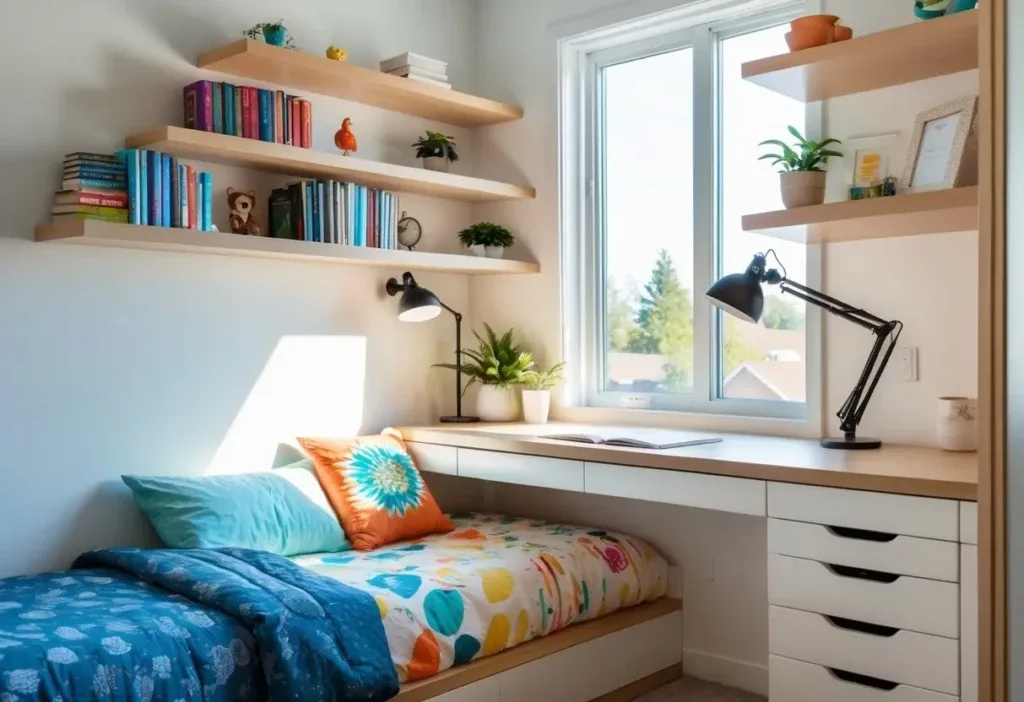
Wall-mounted shelves free up floor and desk space so your room feels less cluttered. They give you quick access to books, chargers, and décor without crowding surfaces.
Choose shelves that match your storage needs and wall type; floating shelves work for light items, while brackets or cleats handle heavier loads. Measure stud locations and use appropriate anchors to keep shelves secure and safe.
Arrange shelves at varied heights to create visual interest and designate zones for study, display, and daily essentials. Use small boxes or baskets on shelves to corral cables, makeup, or school supplies and make tidying faster.
Keep a clear rule for what stays on each shelf to prevent overflow. Rotate items seasonally or weekly so shelves stay purposeful and your room stays organized.
5) Select neutral color palettes with pops of bright accents for a fresh look
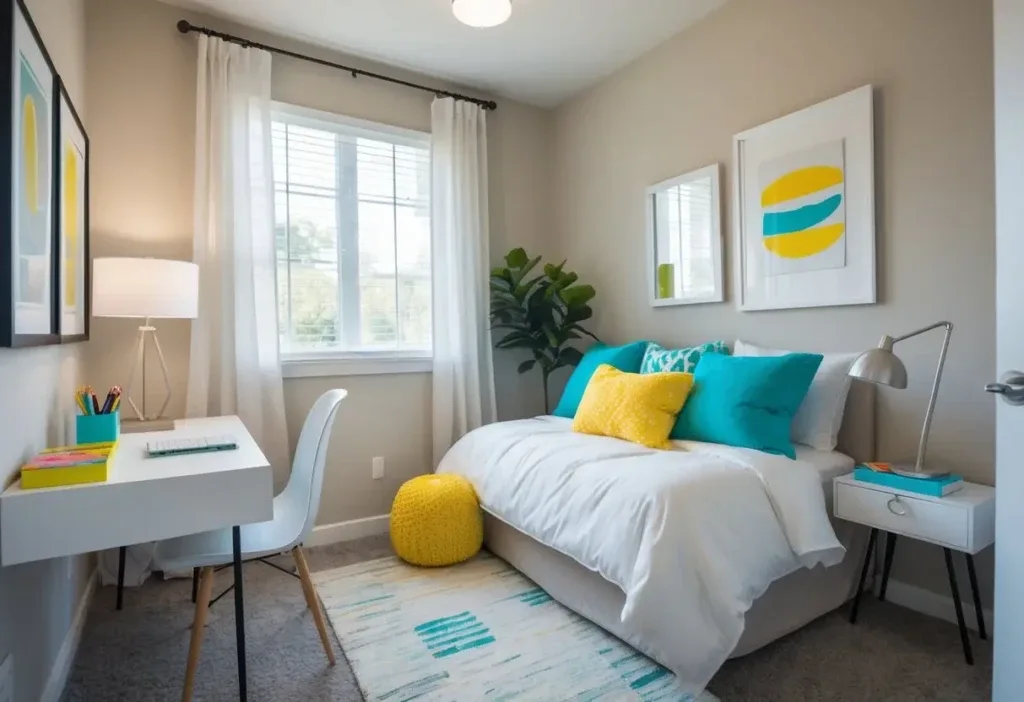
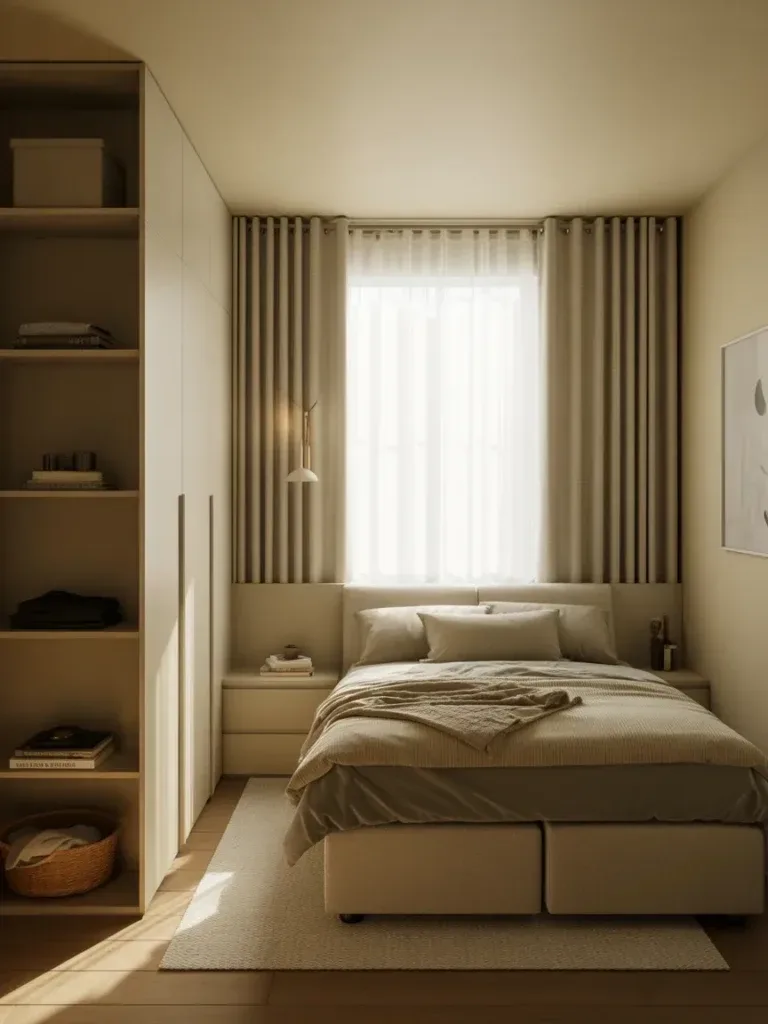
Choose a neutral base—soft greige, warm beige, or pale gray—to make the room feel larger and calmer. Neutrals create visual unity and let your chosen accents stand out without overwhelming the space.
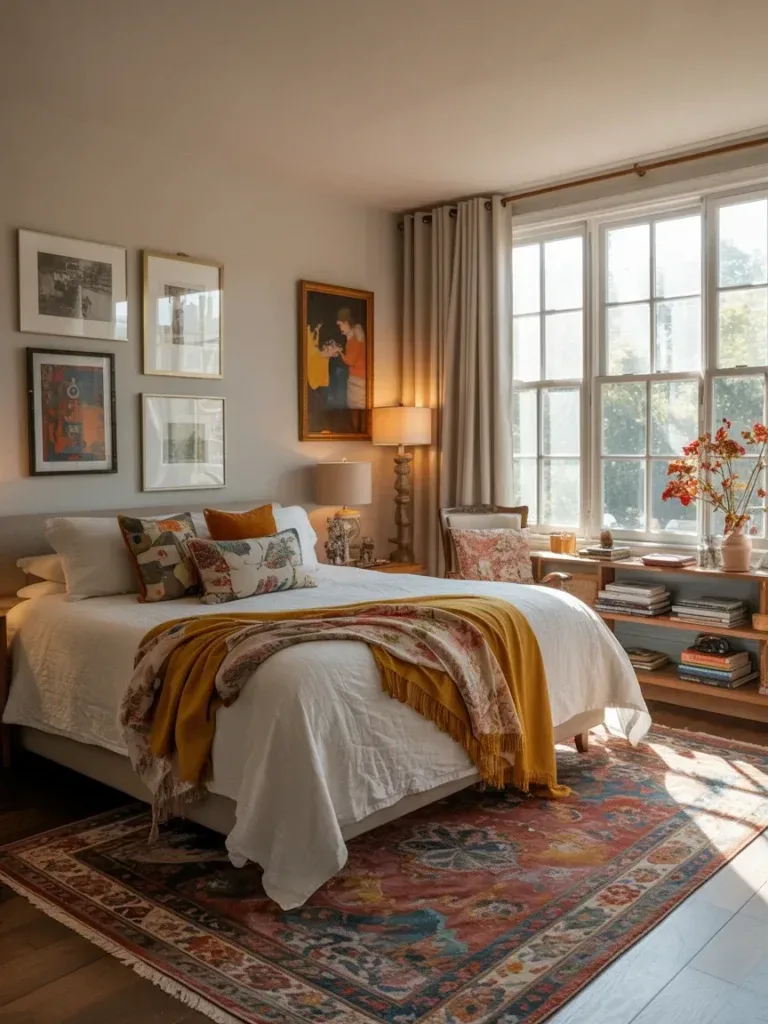
Add bright accents through pillows, a rug, or wall art to inject personality. Pick one or two vivid colors like teal, mustard, or coral and repeat them in small doses for cohesion.
Use texture and tone within the neutral palette to avoid flatness; mix matte paint with a glossy lamp or woven throw. This keeps the room layered and interesting while staying understated.
Keep larger furniture pieces neutral so you can swap accent colors as tastes change. That flexibility makes the room easy to update without a full repaint or new furniture purchase.
6) Add a gallery wall with personalized artwork to enhance personality
A gallery wall lets you display favorite photos, prints, and DIY pieces without taking up floor space. Arrange a mix of frame sizes and orientations to keep the layout dynamic and visually balanced.
Choose artwork that reflects your interests—music, travel, quotes, or original sketches—to make the room feel uniquely yours. Incorporate small shelves or ledges so you can swap pieces easily as your taste changes.
Use a consistent element, like a frame color or mat style, to unify diverse pieces and prevent the wall from feeling cluttered. Plan the layout on the floor or with paper templates on the wall before committing to nails.
Keep lighting and sightlines in mind; a picture light or adjustable wall lamp highlights key pieces and adds depth. If you rent, use damage-free hanging strips for lighter frames to avoid holes.
Maximizing Space and Functionality
Target storage that hides clutter and furniture that performs more than one job. Prioritize vertical solutions, zones for sleeping/studying, and pieces you can reconfigure as needs change.
Smart Storage Solutions
Use under-bed drawers or rolling bins sized to fit your mattress frame for clothes, shoes, or out-of-season items. Add clear-lidded boxes so you can see contents without opening them. Mount floating shelves above the desk and bed at staggered heights to store books, display items, and keep surfaces clear. Install a narrow wall-mounted bookcase or vertical cubby beside the desk to free floor space.
Choose a pegboard or slatwall panel above the desk for headphones, chargers, and small school supplies; label hooks and bins for quick access. Use over-the-door organizers with slim profiles for accessories or toiletries. Keep one visible basket for daily laundry and one hidden bin for extra bedding to prevent piles from building up.
Flexible Furniture Choices
Select a daybed or loft bed to reclaim floor area; a loft creates clear space for a desk, seating, or storage below. If a loft is not possible, choose a bed with built-in drawers or a hydraulic lift mattress for large-volume storage. Pick a desk with adjustable height or a wall-mounted fold-down desk that tucks away when not in use. For seating, use stackable stools or a small ottoman with internal storage so you can add seats without permanent bulk.
Choose modular shelving units with detachable cubes so you can reconfigure as your needs change. Opt for a dresser on casters to slide from closet to room when needed. Prioritize durable finishes and neutral colors so pieces work through growth and style changes.
Color and Lighting Strategies
Choose paint, fixtures, and lamps that increase perceived space and support activities like studying and hanging out. Use light-reflecting finishes, layered lighting, and one or two bold accents to keep the room lively without crowding it.
Optimizing Natural Light
Position the bed and desk to keep the window area clear so sunlight reaches the room’s center. Use sheer curtains or a top-down blind to control glare while preserving daylight; mount the curtain rod a few inches above the window frame to make ceilings feel taller.
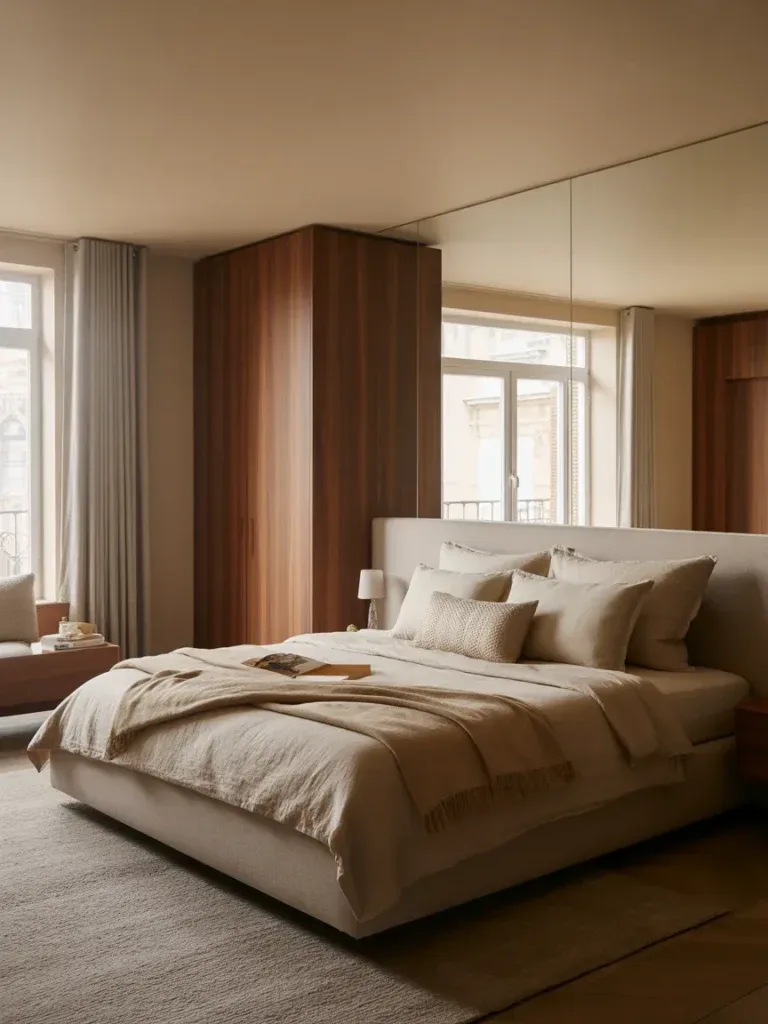
Paint walls in high-LRV (light-reflective value) shades—soft white, pale gray, or warm beige—to bounce light. Keep window trim and ceiling a shade or two lighter than walls for subtle contrast. Place mirrors opposite or adjacent to the window to double daylight; a floor mirror or a grid of small mirrors works well.
For privacy without blocking light, choose frosted film on lower window panes or adjustable slatted blinds. Add a cool-white desk lamp (around 4000K) for focused tasks and a dimmable overhead or track light for general brightness.
Creative Accent Walls
Pick one wall for a strong visual focus so the rest of the room stays light and open. Use a matte or eggshell paint in a saturated color—navy, forest green, or terracotta—on the accent wall behind the bed or workspace to ground the room without shrinking it.
If you prefer patterns, install removable wallpaper or a large-scale mural on the chosen wall only. Stripes that run vertical will raise perceived ceiling height; horizontal stripes can widen a narrow room. Keep adjacent walls neutral to prevent visual clutter.
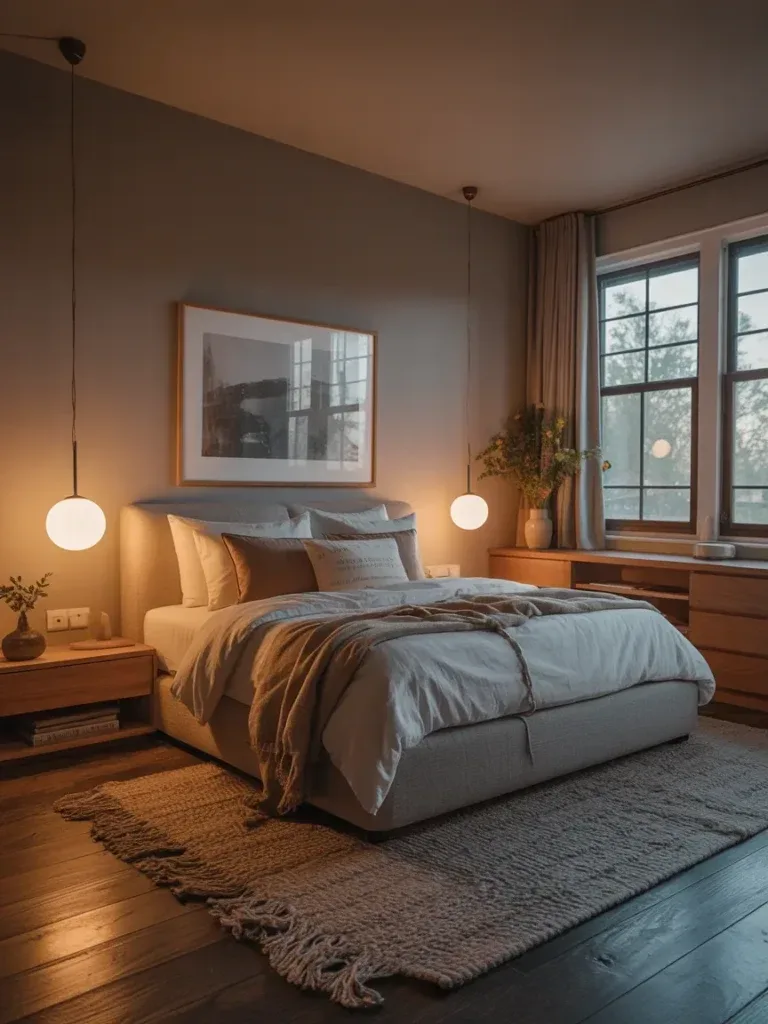
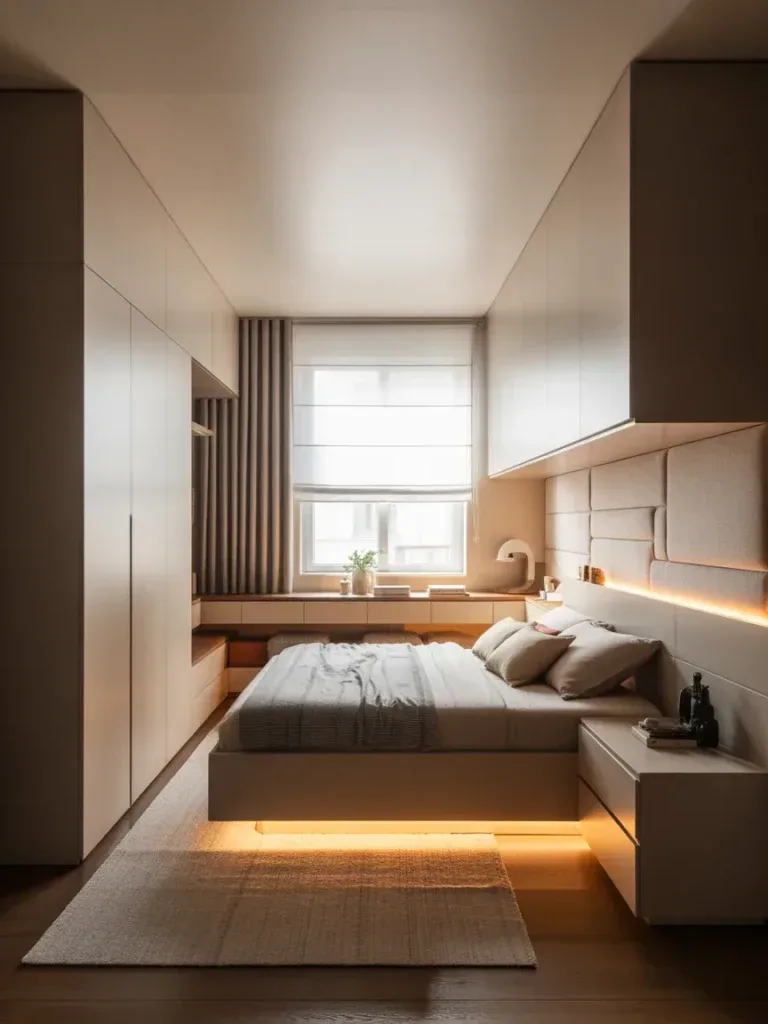
Incorporate accent lighting—picture lights, LED strips behind a headboard, or a wall-mounted sconce—to highlight the wall after dark. This maintains the accent’s impact while allowing you to control mood and brightness independently from the room’s main lights.
Listen to this article 10 10 0:00 / 0:00 Speed 0.75×1×1.25×1.5×2× A small bedroom can feel cozy and stylish… or like a storage closet that lost a fight with your laundry pile. The difference usually comes down to smart planning. When you combine a clever layout with the right wardrobe interior design, even the tiniest…
Listen to this article 10 10 0:00 / 0:00 Speed 0.75×1×1.25×1.5×2× Your bedroom should feel like more than just a place to crash after a long day. It should reflect your personality, tell your story, and make you want to linger a little longer every morning. That’s where eclectic design shines. It mixes colors, textures,…
Listen to this article 10 10 0:00 / 0:00 Speed 0.75×1×1.25×1.5×2× A modern bedroom looks amazing in photos, but living in one? That’s the real challenge. Nobody wants a room that feels like a cold hotel lobby with one sad blanket tossed on the bed for “warmth.” The sweet spot sits right between clean minimalism…
Listen to this article 10 10 0:00 / 0:00 Speed 0.75×1×1.25×1.5×2× Tiny bedroom? No problem. A small shared space can actually feel warmer, calmer, and way more romantic than those giant echoey bedrooms that somehow still look unfinished. The trick comes down to smart layouts, layered textures, and furniture that pulls double duty without making…
Listen to this article 10 10 0:00 / 0:00 Speed 0.75×1×1.25×1.5×2× Bunk beds aren’t just for cramped kids’ rooms anymore. They’ve evolved into smart, stylish solutions that can actually make your space feel bigger (yes, really). Whether you’re dealing with a shoebox-sized bedroom or a roomy layout that still needs flexibility, there’s a bunk setup…
Listen to this article 10 10 0:00 / 0:00 Speed 0.75×1×1.25×1.5×2× Tiny bedroom? Cool, you’re about to make it work harder than a studio apartment in a rom-com. The secret isn’t more space—it’s smarter layouts, clever furniture, and a little design confidence. These ideas prove you can have style, comfort, and storage without sacrificing your…