You want a living room sofa that fits your space, style, and daily habits without guessing. This post shows practical sofa ideas—from choosing the right size and style to picking fabrics and arranging seating—so you can make confident decisions that transform your living room. They’ll explore how different sofa styles (sectionals, loveseats, mid-century, and modern) work with room flow and decor, plus color and material choices that suit family life or a polished look. Expect clear, actionable tips for selecting measurements, arranging pieces for conversation and traffic, and styling the sofa with accessories. Table of ContentsChoosing the Right Sofa for Your Living RoomAssessing Space and LayoutMatching Styles to Interior DesignConsidering Comfort and MaterialsPopular Sofa Styles and DesignsModern and Contemporary OptionsTraditional and Classic ChoicesSectional and Modular SofasMid-Century InspirationsColor and Fabric Ideas for SofasNeutral Tones and Texture PairingsBold Colors and Statement PiecesDurable and Easy-Care FabricsArranging Sofas for Optimal Living Room FlowMaximizing Seating CapacityOpen-Concept Versus Cozy LayoutsDecorating Around Your SofaAccent Pillows and ThrowsCoffee Tables and Rugs Choosing the Right Sofa for Your Living Room A well-chosen sofa balances scale, style, and daily use. Measure the room, pick a fabric that suits household habits, and match the sofa’s lines to the room’s design language. Assessing Space and Layout They should start by measuring the room and doorways. Record the length and width of the intended seating area and the narrowest doorway or stairwell to ensure the sofa can be delivered intact. Sketch a simple floor plan showing the sofa’s footprint, circulation paths (at least 30–36 inches), and relationship to focal points like the TV or fireplace. Scale matters more than absolute size. In small rooms, a slim-profile sofa or a compact sectional with a chaise can provide seating without blocking flow. For open plans, choose modular pieces that can reconfigure for different needs. Place heavier visual pieces against walls and use rugs to define seating zones. SAFAVIEH Natura Collection Area Rug – 6′ x 9′, Ivory, Handmade Mo… Transitionally designed, these rugs can be integrated into any contemporary, modern, Traditional, or bohemian styles of … Meticulously detailed artisan crafted hand-woven Construction Made from plush premium natural wool $153.00 Buy on Amazon Matching Styles to Interior Design They should analyze existing finishes and architectural details before choosing sofa lines. Match a sofa’s silhouette to the room: clean, low profiles for modern spaces; rolled arms and tufting for traditional rooms; textured fabrics and wooden legs for mid-century looks. Coordinate colors with the room’s dominant palette—pick neutral upholstery for flexibility and reserve bold colors for accent pieces. Consider leg height and visible frame as part of the style decision. Exposed legs make a room feel airier and suit mid-century or contemporary interiors. A skirted or fully upholstered base reads as more formal and pairs well with classic or transitional décor. Use throw pillows and a single patterned piece to bridge contrasting styles. Utopia Bedding Throw Pillows (Set of 4, White) – 18 x 18 Inches D… 18 x 18 Pillow Inserts (Set of 4) – Offers a standard fit for 18×18 pillow covers and protectors. For a fuller, fluffed-… High-Rebound Filling – These pillows bounce back into shape every time after use. They are filled with 100% virgin fiber… 2-in-1 Utility – As much as they are decorative throw pillows, these inserts can prove to be quite relieving when placed… $22.46 Buy on Amazon Considering Comfort and Materials They should evaluate cushion fill, suspension, and upholstery based on who uses the sofa daily. Test seat depth (18–22 inches typical) and back support; firmer foam with a down wrap offers support with some softness, while pocketed coils provide long-term resilience. Check suspension—sinuous springs or webbing are common for different budgets. Choose fabric for lifestyle needs. Performance fabrics and leather resist stains and suit homes with kids or pets. Cotton or linen blends feel breathable but may wrinkle; microfiber cleans easily and hides wear. Inspect seams, frame materials (kiln-dried hardwood preferred), and warranty terms to ensure durability aligned with expected use. 79” Leather Sofa Couch with Storage, Mid Century Modern Rolled Ar… Classic Mid-Century Modern Design: eaturing retro-inspired rolled arms, bronze nailhead trim, and tapered wooden legs, t… Bonus Storage Space: Extra large storage space under seat can easily store pillows, blankets, and other miscellaneous it… Comfortable and Spacious: The ergonomic rolled armrests and backrests of this 3 seater sofa bring you a cozy sitting exp… $395.99 Buy on Amazon Popular Sofa Styles and Designs The section breaks down practical options by shape, frame, upholstery, and typical room use so readers can match a sofa to their lifestyle and space. It highlights durable materials, scale, and design cues that most affect comfort and longevity. Modern and Contemporary Options Modern and contemporary sofas emphasize clean lines, low profiles, and minimal ornamentation. They typically use metal or exposed wood legs, tight back cushions, and channel tufting or smooth upholstery to create a streamlined silhouette. Fabric choices focus on performance textiles—stain-resistant weaves, Crypton, or treated linen blends—for everyday use. Leather modern sofas often come in full-grain or top-grain options with a sleek finish that ages with patina. Color palettes skew toward neutrals and bold single-tone statements like charcoal, navy, or forest green to anchor a modern living room. Design features to watch for include seat depth (ideal 20–24 inches for most adults), high-density foam wrapped in a down layer for comfort, and removable cushion covers for cleaning. Scale matters: choose a tighter, armless profile for small spaces and deeper, sectional-friendly pieces for open plans. Traditional and Classic Choices Traditional sofas favor rolled arms, turned wooden legs, and tufted backs or welted seams for a formal look. They often use sturdy hardwood frames and coil or sinuous spring systems that support heavier upholstery and decorative details. Upholstery trends in classic pieces include patterned jacquard, velvet, and high-quality woven cotton blends. Colors stay warm—deep burgundy, olive, or neutral beige—and patterns like damask or subtle stripes remain common. Tufting adds structure and prevents padding from shifting over time. Buyers should assess arm height and seat firmness: a slightly firmer seat and higher armrests suit formal sitting rooms, while down-wrapped cushions create a softer, more loungeable version of the classic sofa. Scale often suits larger rooms; if space is limited, look for loveseats or settees with the same aesthetic. Sectional and Modular Sofas Sectionals break into multiple pieces to form L-shapes, U-shapes, or straight runs, making them ideal for family rooms and open-plan living. Modular variants add flexibility: buyers can reconfigure chaise units, corners, and ottomans to fit changing needs. Materials prioritize durability—performance fabrics and treated leathers that withstand pets and kids—paired with removable covers for maintenance. When planning, measure clearances for walkways and doorways; standard sectional depth runs 36–40 inches, and chaises typically add 60–70 inches of length. Functionality matters: choose modules with built-in storage, sleeper options, or adjustable headrests if the sofa doubles as a media-viewing hub. Ensure the frame uses kiln-dried hardwood and that connectors between modules lock securely to prevent gaps during use. Mid-Century Inspirations Mid-century sofas feature tapered wooden legs, gently sloped arms, and a focus on proportion and simplicity. Designers favor walnut or oak frames paired with upholstery in warm neutrals, mustard, teal, or muted oranges to evoke a period look without feeling dated. Cushioning often balances firm support with a slim profile—ideal for smaller rooms or lofts where visual lightness matters. Channel tufting, single long bench seats, and button tuft details are common accents that preserve the era’s aesthetic. Practical considerations include seat height (usually 16–18 inches) for ease of use and low backs that maintain sightlines in open layouts. For authenticity with modern durability, look for mid-century styled pieces built with contemporary sinuous springs and performance fabrics. Color and Fabric Ideas for Sofas Choose colors that anchor the room and fabrics that match household needs. Focus on combinations that balance appearance with wearability and care. Neutral Tones and Texture Pairings Neutrals like warm beige, greige, charcoal, and soft taupe create a long-lasting base that works with varied decor. They hide everyday wear better than very light fabrics while remaining easy to layer with accent colors. Pair neutral upholstery with textured elements to add depth: consider a boucle or nubby weave for the sofa, linen-blend pillows, and a low-pile wool throw. Use different scales of texture—coarse for a statement throw, fine for pillows—to avoid visual monotony. For legs and trims, select medium-tone wood or matte black metal to ground the piece. If pet hair or stains are a concern, choose mid-toned neutrals and tighter weaves to minimize visible wear. Bold Colors and Statement Pieces Bold sofas—deep navy, forest green, mustard, or terracotta—become focal points and set the room’s palette. Keep surrounding pieces simple: neutral walls, understated rugs, and one or two accent pillows that pick up the sofa color. Use saturation strategically. A saturated velvet reads luxe in a compact apartment, while a matte cotton in the same hue suits casual family rooms. Balance with smaller elements in complementary or analogous hues to avoid color clash. If committing to a bold color, confirm it works in all lighting conditions by viewing the fabric at morning and evening light. For rental situations or resale, consider slipcovers or modular pieces so the bold choice remains reversible. Durable and Easy-Care Fabrics Prioritize fabric performance for high-use rooms: solution-dyed acrylic, performance polyester blends, and Crypton-treated textiles resist stains and fading. These options typically withstand spills and frequent cleaning better than untreated natural fibers. For households with children or pets, look for fabrics rated for heavy commercial use and specify a tight weave. Microfiber and twill offer good abrasion resistance and simple spot-cleaning instructions. Maintenance matters: prefer removable, washable cushion covers or zippers for professional cleaning. Request fabric rub counts and stain-resistance specifications before purchase to match the sofa to the intended lifespan and cleaning routine. Arranging Sofas for Optimal Living Room Flow Place sofas to support movement, define zones, and highlight the room’s focal point. Prioritize clear walkways of at least 30–36 inches, sightlines to the focal element, and balanced visual weight between seating and open space. Maximizing Seating Capacity They should pull a large sofa away from walls to allow side tables and a small walkway behind when space allows. In a 12’×15′ room, a three-seat sofa plus a loveseat opposite creates seating for five to six while keeping a 32–36″ traffic path between pieces. Use modular or sectional sofas where corners need filling; they provide continuous seating without extra chairs. Add two slim occasional chairs or armless stools to increase capacity without blocking flow. Place a narrow console table behind a sofa to hold lamps and free floor space that would otherwise be used for bulky end tables. Stackable ottomans or poufs work as flexible seats and tuck under a coffee table when not used. Keep at least 16–18 inches between seating and the coffee table for comfortable reach. Open-Concept Versus Cozy Layouts In open-concept rooms, they function as informal partitions. Position a sofa with its back to the kitchen or dining area to define the living zone while maintaining circulation on either side. Leave 36–42″ of clear path between the sofa back and adjacent activity zones to prevent bottlenecks. For cozy, enclosed rooms, orient the sofa toward the focal point—fireplace or TV—and bring seating closer for intimacy. A 10′ wide room benefits from a single sofa facing two chairs rather than a large sectional, preserving sightlines and making the space feel balanced. Adjust furniture scale to the room: low-profile sofas suit low ceilings; deeper, plush sofas fit tall, roomy spaces. Use area rugs sized to include the front legs of all major seating to visually anchor the layout. Decorating Around Your Sofa Select a focal color palette, balance textures, and prioritize scale so each piece complements the sofa without crowding the room. Choose durable materials for high-use areas and plan lighting and circulation to keep the seating area functional. Accent Pillows and Throws Accent pillows should mix sizes and shapes to create depth: pair one 24″ lumbar or bolster with two 20″ square pillows for sofas around 78–90″ long. Use a primary pillow fabric that repeats a sofa or curtain color, then add one patterned pillow and one textured solid to introduce contrast without overwhelming the palette. Rotate fabrics by function: removable zip covers in linen or cotton for everyday use, and a wool or velvet pillow as a seasonal accent. Place throws folded over one arm or draped diagonally across a corner; a 50×60″ throw works well on most sofas. For households with pets or kids, pick washable fabrics and darker weaves for hides and spills. Limit total pillow count to three to five on standard sofas to avoid a cluttered look and keep seating comfortable. Stagger heights and angles slightly instead of lining them perfectly to achieve a relaxed, intentional arrangement. Coffee Tables and Rugs Choose a coffee table that sits 16–18 inches from the sofa edge and 14–18 inches high relative to the seat height for easy reach. For a three-seat sofa, a table 40–54 inches long creates good proportion; for sectionals, consider two smaller tables or an ottoman to preserve flow. Rug sizing matters: aim for at least the front legs of the sofa to sit on the rug. For living rooms under 12×15 feet, select a rug roughly 8×10; for larger rooms, size up to keep all major furniture on the rug. Use natural fiber rugs in high-traffic rooms for durability, and layered rugs (jute under a patterned wool) to add texture. Balance function and form when selecting surfaces: a tempered-glass or lacquer table gives a lighter visual weight, while a solid wood table anchors the space. Include a small tray to corral remotes and coasters, which protects fabric and keeps the tabletop tidy.
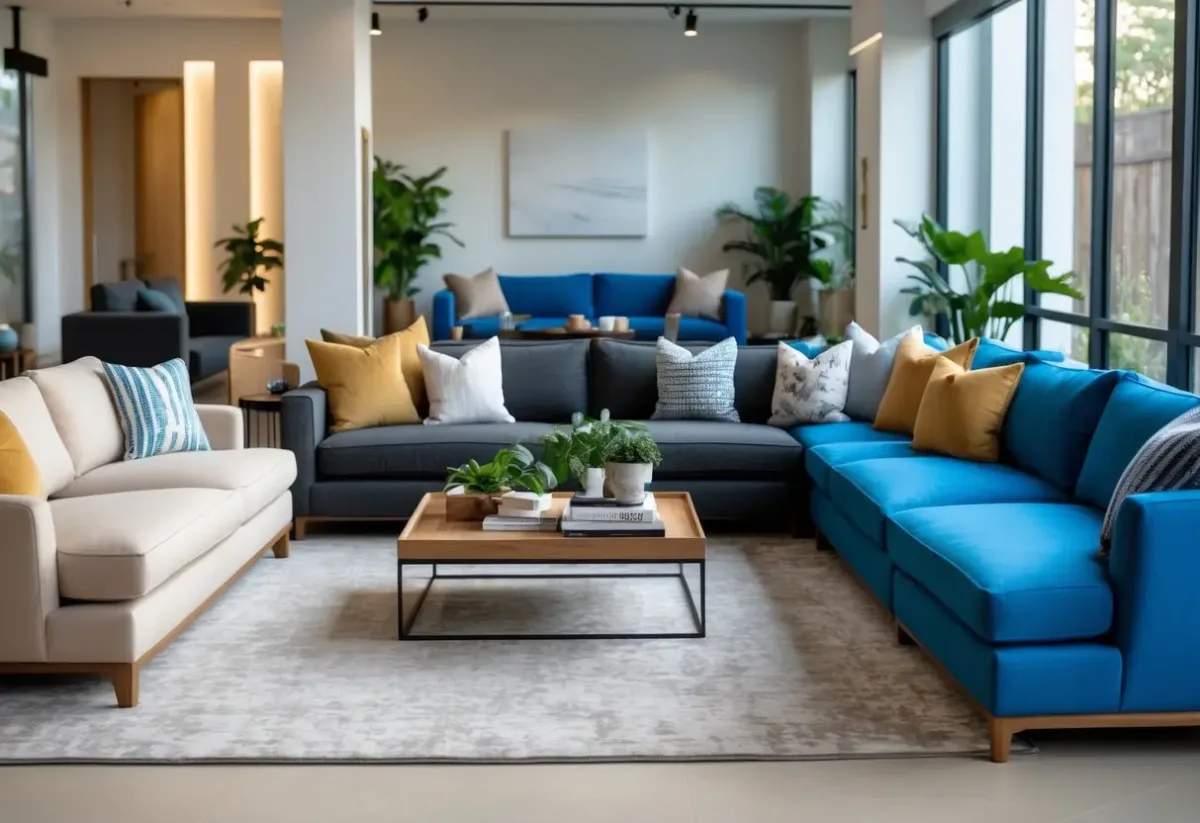
You want a living room sofa that fits your space, style, and daily habits without guessing. This post shows practical sofa ideas—from choosing the right size and style to picking fabrics and arranging seating—so you can make confident decisions that transform your living room.
They’ll explore how different sofa styles (sectionals, loveseats, mid-century, and modern) work with room flow and decor, plus color and material choices that suit family life or a polished look. Expect clear, actionable tips for selecting measurements, arranging pieces for conversation and traffic, and styling the sofa with accessories.
A well-chosen sofa balances scale, style, and daily use. Measure the room, pick a fabric that suits household habits, and match the sofa’s lines to the room’s design language.
Assessing Space and Layout
They should start by measuring the room and doorways. Record the length and width of the intended seating area and the narrowest doorway or stairwell to ensure the sofa can be delivered intact. Sketch a simple floor plan showing the sofa’s footprint, circulation paths (at least 30–36 inches), and relationship to focal points like the TV or fireplace.
Scale matters more than absolute size. In small rooms, a slim-profile sofa or a compact sectional with a chaise can provide seating without blocking flow. For open plans, choose modular pieces that can reconfigure for different needs. Place heavier visual pieces against walls and use rugs to define seating zones.
They should analyze existing finishes and architectural details before choosing sofa lines. Match a sofa’s silhouette to the room: clean, low profiles for modern spaces; rolled arms and tufting for traditional rooms; textured fabrics and wooden legs for mid-century looks. Coordinate colors with the room’s dominant palette—pick neutral upholstery for flexibility and reserve bold colors for accent pieces.
Consider leg height and visible frame as part of the style decision. Exposed legs make a room feel airier and suit mid-century or contemporary interiors. A skirted or fully upholstered base reads as more formal and pairs well with classic or transitional décor. Use throw pillows and a single patterned piece to bridge contrasting styles.
They should evaluate cushion fill, suspension, and upholstery based on who uses the sofa daily. Test seat depth (18–22 inches typical) and back support; firmer foam with a down wrap offers support with some softness, while pocketed coils provide long-term resilience. Check suspension—sinuous springs or webbing are common for different budgets.
Choose fabric for lifestyle needs. Performance fabrics and leather resist stains and suit homes with kids or pets. Cotton or linen blends feel breathable but may wrinkle; microfiber cleans easily and hides wear. Inspect seams, frame materials (kiln-dried hardwood preferred), and warranty terms to ensure durability aligned with expected use.
The section breaks down practical options by shape, frame, upholstery, and typical room use so readers can match a sofa to their lifestyle and space. It highlights durable materials, scale, and design cues that most affect comfort and longevity.
Modern and Contemporary Options
Modern and contemporary sofas emphasize clean lines, low profiles, and minimal ornamentation. They typically use metal or exposed wood legs, tight back cushions, and channel tufting or smooth upholstery to create a streamlined silhouette.
Fabric choices focus on performance textiles—stain-resistant weaves, Crypton, or treated linen blends—for everyday use. Leather modern sofas often come in full-grain or top-grain options with a sleek finish that ages with patina. Color palettes skew toward neutrals and bold single-tone statements like charcoal, navy, or forest green to anchor a modern living room.
Design features to watch for include seat depth (ideal 20–24 inches for most adults), high-density foam wrapped in a down layer for comfort, and removable cushion covers for cleaning. Scale matters: choose a tighter, armless profile for small spaces and deeper, sectional-friendly pieces for open plans.
Traditional and Classic Choices
Traditional sofas favor rolled arms, turned wooden legs, and tufted backs or welted seams for a formal look. They often use sturdy hardwood frames and coil or sinuous spring systems that support heavier upholstery and decorative details.
Upholstery trends in classic pieces include patterned jacquard, velvet, and high-quality woven cotton blends. Colors stay warm—deep burgundy, olive, or neutral beige—and patterns like damask or subtle stripes remain common. Tufting adds structure and prevents padding from shifting over time.
Buyers should assess arm height and seat firmness: a slightly firmer seat and higher armrests suit formal sitting rooms, while down-wrapped cushions create a softer, more loungeable version of the classic sofa. Scale often suits larger rooms; if space is limited, look for loveseats or settees with the same aesthetic.
Sectional and Modular Sofas
Sectionals break into multiple pieces to form L-shapes, U-shapes, or straight runs, making them ideal for family rooms and open-plan living. Modular variants add flexibility: buyers can reconfigure chaise units, corners, and ottomans to fit changing needs.
Materials prioritize durability—performance fabrics and treated leathers that withstand pets and kids—paired with removable covers for maintenance. When planning, measure clearances for walkways and doorways; standard sectional depth runs 36–40 inches, and chaises typically add 60–70 inches of length.
Functionality matters: choose modules with built-in storage, sleeper options, or adjustable headrests if the sofa doubles as a media-viewing hub. Ensure the frame uses kiln-dried hardwood and that connectors between modules lock securely to prevent gaps during use.
Mid-Century Inspirations
Mid-century sofas feature tapered wooden legs, gently sloped arms, and a focus on proportion and simplicity. Designers favor walnut or oak frames paired with upholstery in warm neutrals, mustard, teal, or muted oranges to evoke a period look without feeling dated.
Cushioning often balances firm support with a slim profile—ideal for smaller rooms or lofts where visual lightness matters. Channel tufting, single long bench seats, and button tuft details are common accents that preserve the era’s aesthetic.
Practical considerations include seat height (usually 16–18 inches) for ease of use and low backs that maintain sightlines in open layouts. For authenticity with modern durability, look for mid-century styled pieces built with contemporary sinuous springs and performance fabrics.
Choose colors that anchor the room and fabrics that match household needs. Focus on combinations that balance appearance with wearability and care.
Neutral Tones and Texture Pairings
Neutrals like warm beige, greige, charcoal, and soft taupe create a long-lasting base that works with varied decor. They hide everyday wear better than very light fabrics while remaining easy to layer with accent colors.
Pair neutral upholstery with textured elements to add depth: consider a boucle or nubby weave for the sofa, linen-blend pillows, and a low-pile wool throw. Use different scales of texture—coarse for a statement throw, fine for pillows—to avoid visual monotony.
For legs and trims, select medium-tone wood or matte black metal to ground the piece. If pet hair or stains are a concern, choose mid-toned neutrals and tighter weaves to minimize visible wear.
Bold Colors and Statement Pieces
Bold sofas—deep navy, forest green, mustard, or terracotta—become focal points and set the room’s palette. Keep surrounding pieces simple: neutral walls, understated rugs, and one or two accent pillows that pick up the sofa color.
Use saturation strategically. A saturated velvet reads luxe in a compact apartment, while a matte cotton in the same hue suits casual family rooms. Balance with smaller elements in complementary or analogous hues to avoid color clash.
If committing to a bold color, confirm it works in all lighting conditions by viewing the fabric at morning and evening light. For rental situations or resale, consider slipcovers or modular pieces so the bold choice remains reversible.
Durable and Easy-Care Fabrics
Prioritize fabric performance for high-use rooms: solution-dyed acrylic, performance polyester blends, and Crypton-treated textiles resist stains and fading. These options typically withstand spills and frequent cleaning better than untreated natural fibers.
For households with children or pets, look for fabrics rated for heavy commercial use and specify a tight weave. Microfiber and twill offer good abrasion resistance and simple spot-cleaning instructions.
Maintenance matters: prefer removable, washable cushion covers or zippers for professional cleaning. Request fabric rub counts and stain-resistance specifications before purchase to match the sofa to the intended lifespan and cleaning routine.
Place sofas to support movement, define zones, and highlight the room’s focal point. Prioritize clear walkways of at least 30–36 inches, sightlines to the focal element, and balanced visual weight between seating and open space.
Maximizing Seating Capacity
They should pull a large sofa away from walls to allow side tables and a small walkway behind when space allows. In a 12’×15′ room, a three-seat sofa plus a loveseat opposite creates seating for five to six while keeping a 32–36″ traffic path between pieces.
Use modular or sectional sofas where corners need filling; they provide continuous seating without extra chairs. Add two slim occasional chairs or armless stools to increase capacity without blocking flow. Place a narrow console table behind a sofa to hold lamps and free floor space that would otherwise be used for bulky end tables.
Stackable ottomans or poufs work as flexible seats and tuck under a coffee table when not used. Keep at least 16–18 inches between seating and the coffee table for comfortable reach.
Open-Concept Versus Cozy Layouts
In open-concept rooms, they function as informal partitions. Position a sofa with its back to the kitchen or dining area to define the living zone while maintaining circulation on either side. Leave 36–42″ of clear path between the sofa back and adjacent activity zones to prevent bottlenecks.
For cozy, enclosed rooms, orient the sofa toward the focal point—fireplace or TV—and bring seating closer for intimacy. A 10′ wide room benefits from a single sofa facing two chairs rather than a large sectional, preserving sightlines and making the space feel balanced.
Adjust furniture scale to the room: low-profile sofas suit low ceilings; deeper, plush sofas fit tall, roomy spaces. Use area rugs sized to include the front legs of all major seating to visually anchor the layout.
Select a focal color palette, balance textures, and prioritize scale so each piece complements the sofa without crowding the room. Choose durable materials for high-use areas and plan lighting and circulation to keep the seating area functional.
Accent Pillows and Throws
Accent pillows should mix sizes and shapes to create depth: pair one 24″ lumbar or bolster with two 20″ square pillows for sofas around 78–90″ long. Use a primary pillow fabric that repeats a sofa or curtain color, then add one patterned pillow and one textured solid to introduce contrast without overwhelming the palette.
Rotate fabrics by function: removable zip covers in linen or cotton for everyday use, and a wool or velvet pillow as a seasonal accent. Place throws folded over one arm or draped diagonally across a corner; a 50×60″ throw works well on most sofas. For households with pets or kids, pick washable fabrics and darker weaves for hides and spills.
Limit total pillow count to three to five on standard sofas to avoid a cluttered look and keep seating comfortable. Stagger heights and angles slightly instead of lining them perfectly to achieve a relaxed, intentional arrangement.
Coffee Tables and Rugs
Choose a coffee table that sits 16–18 inches from the sofa edge and 14–18 inches high relative to the seat height for easy reach. For a three-seat sofa, a table 40–54 inches long creates good proportion; for sectionals, consider two smaller tables or an ottoman to preserve flow.
Rug sizing matters: aim for at least the front legs of the sofa to sit on the rug. For living rooms under 12×15 feet, select a rug roughly 8×10; for larger rooms, size up to keep all major furniture on the rug. Use natural fiber rugs in high-traffic rooms for durability, and layered rugs (jute under a patterned wool) to add texture.
Balance function and form when selecting surfaces: a tempered-glass or lacquer table gives a lighter visual weight, while a solid wood table anchors the space. Include a small tray to corral remotes and coasters, which protects fabric and keeps the tabletop tidy.