A great living room should feel calm, warm, and easy to live in — and that’s exactly what mid century modern living room ideas deliver. This style leans on clean lines, honest materials, and a handful of bold accent colors instead of clutter or trend-chasing decor. Below you’ll find eight practical mid century modern living room decor ideas, followed by a deeper look at the materials, colors, and architectural details that define the style, plus a maintenance guide to keep vintage and reproduction pieces looking their best. Table of ContentsQuick-Reference: Key Takeaways1) Incorporate Sleek Mid Century Modern Teak Furniture for Authentic Charm2) Use a Cognac Leather Sofa as a Statement Piece3) Add Starburst or Sunburst Wall Clocks for Vintage Appeal4) Opt for Geometric Patterned Rugs in Muted Tones5) Display an Iconic Eames Lounge Chair and Ottoman6) Choose Pendant Lighting with Brass or Matte Black Finishes7) Incorporate Burnt Orange and Olive Green Accent Cushions8) Use Open Shelving with Clean Lines for StorageCore Elements of Mid Century Modern Living RoomsSignature Materials and FinishesColor Palettes That Complement the StyleCommon Architectural FeaturesComparing Common Wood Tones for a Mid Century Modern UpdateMaintaining and Enhancing the LookPreserving Vintage FurnitureBlending Modern Touches with Classic DesignFrequently Asked QuestionsWhat colors work best in a mid century modern living room?Is teak or walnut better for a mid century modern living room?How do I get the look in a small mid century modern living room apartment?Can I mix brass and matte black finishes in the same room?What's an easy first step for a mid century modern update on a budget?Our Verdict Quick-Reference: Key Takeaways Anchor the room with one or two statement pieces — a teak sofa, a leather chair, or an iconic lounge chair — rather than filling every corner. Stick to a neutral base (white, gray, beige) and layer in warm accent colors like mustard, burnt orange, or olive green. Mix warm wood tones with a single metal finish (brass or matte black) to avoid a mismatched look. Keep furniture low, tapered, and uncluttered so the room’s natural light and architecture can do the work. Use rugs, pendant lighting, and open shelving to tie the whole palette together. 1) Incorporate Sleek Mid Century Modern Teak Furniture for Authentic Charm Teak is one of the defining materials of the era, and it’s still one of the easiest ways to bring authenticity into a modern living room. Look for pieces with tapered legs and clean, unfussy silhouettes — a teak sofa frame, a lounge chair, or a simple coffee table all work well together. Teak’s warm grain naturally photographs and reads as premium without feeling heavy, which is part of why it has stayed popular in mid century modern living room decor ideas for decades. A teak sideboard or media console also solves a practical problem: it hides cords and clutter while keeping the room’s profile low. Finish the look with neutral upholstery and one or two bold accents in rust, mustard, or deep green. That contrast keeps a wood-heavy room from feeling flat or overly brown. 2) Use a Cognac Leather Sofa as a Statement Piece A cognac leather sofa is a shortcut to instant mid-century warmth. Its amber tone brings color into the room without needing bold paint, heavy patterns, or a full furniture overhaul. Place it against a simple backdrop — white, soft gray, or a muted neutral — so the sofa’s silhouette stays the visual anchor. Pair it with wood furniture and slim, tapered legs to reinforce the era’s focus on form and function rather than bulk. Add a couple of textured pillows or a wool throw for contrast, but resist the urge to over-accessorize. Balance the leather’s warmth with a few metal or glass elements, like a slim coffee table or a brass floor lamp, so the room stays light rather than heavy. 3) Add Starburst or Sunburst Wall Clocks for Vintage Appeal A starburst or sunburst clock is one of the most recognizable mid-century decor ideas, and it does a lot of visual work for very little floor space. Hang one above a sofa or mantel to create a clear focal point that ties the rest of the room together. Look for a clock with metal spokes, wood rays, or a mixed-material face to match your existing palette, and scale it to the wall and furniture beneath it — an oversized clock over a small sofa will feel top-heavy. These pieces add sculptural texture without competing for attention the way large art or bold wallpaper might. Keep the surrounding wall and shelving minimal so the clock reads as a deliberate accent rather than one item in a crowded gallery wall. 4) Opt for Geometric Patterned Rugs in Muted Tones A geometric rug with clean, simple shapes reinforces the mid-century look underfoot. Muted tones — warm grays, faded blues, soft ochres — keep the pattern from overwhelming the rest of the room, which matters more than the print itself. Size the rug so your seating area’s front legs sit on it; a rug that’s too small will make an otherwise well-furnished room look unfinished. If bold prints aren’t your style, a tone-on-tone or scaled-down motif still adds texture while reading as calm from across the room. For more on getting proportions right, this mid century modern living room rug buying guide covers sizing and material choices in more depth. Use the rug’s color as a bridge between your cushions, art, and wood tones — it’s often the easiest way to make a room that was assembled piece by piece feel cohesive. 5) Display an Iconic Eames Lounge Chair and Ottoman Few pieces define modern living room design more clearly than the Eames lounge chair and ottoman. Give it a spot where it can actually be used and seen — near a window or against a clean wall — rather than tucking it into a corner. Leather and molded plywood show best against soft grays, creams, or warm wood tones, so keep the surrounding palette simple. Nearby furniture should stay low and uncluttered: a slim side table and a floor lamp are usually all the chair needs. A small rug underneath helps anchor the set and adds texture, but leave breathing room around the edges rather than boxing the chair in. If you own a reproduction rather than an original, the same rules apply — good lighting, careful placement, and restrained accessories keep the look authentic. 6) Choose Pendant Lighting with Brass or Matte Black Finishes Pendant lighting in brass or matte black does double duty: it provides real function and reinforces the room’s mid-century modern living room colors. Brass adds a vintage-warm glow, while matte black offers a cleaner, more graphic contrast. Simple shapes — globes, cones, or slim rods — echo mid-century forms best. Glass diffusers or opal shades soften the light so the fixture reads as cozy rather than clinical. A single statement pendant over a seating area, or two to three fixtures at staggered heights above a console, both work well; aim to hang the fixture just above eye level. Pick one metal finish and stay consistent with it throughout the room. Mixing brass and matte black at random tends to look accidental rather than intentional. For a deeper dive into fixture styles and placement, see this mid century modern living room lighting guide. 7) Incorporate Burnt Orange and Olive Green Accent Cushions Cushions are the fastest, lowest-commitment way to bring in mid century modern living room colors. Burnt orange and olive green are two of the era’s signature tones, and you can swap them seasonally or layer both for a richer effect. Mix textures — velvet, wool, linen — so the cushions add depth rather than reading as flat color blocks. A neutral sofa is the best backdrop for this trick; the cushions become small, deliberate color moments rather than competing with an already-patterned upholstery. Keep any patterns simple, like geometric shapes or subtle stripes, and balance the bold cushions with wood or brass accents elsewhere in the room to keep the overall look grounded. 8) Use Open Shelving with Clean Lines for Storage Open shelving keeps a room feeling light rather than boxed in, which is part of why it shows up so often in mid century modern living room apartment layouts where space is limited. Choose shelves with simple, straight profiles rather than ornate brackets or heavy frames. Mix display items with everyday function — leave visible breathing room between objects so the shelves don’t look crowded, and store frequently used items where they’re easy to reach. Warm woods or matte metal brackets add texture without adding visual weight. A few books, a plant, and one or two sculptural objects, arranged with attention to shape and color, will do more for the room than a shelf packed edge to edge. Core Elements of Mid Century Modern Living Rooms Once you’ve picked a few individual pieces, it helps to understand the materials, colors, and architectural habits that make a room read as genuinely mid century modern rather than just “vintage-adjacent.” Signature Materials and Finishes The style leans on wood, metal, and molded materials working together. Warm woods — teak, walnut, oak — anchor sofas, credenzas, and coffee tables and show off natural grain rather than hiding it under heavy stain. Metal accents in matte black, brass, or chrome typically appear on legs, lamp stems, and hardware. Upholstery favors leather, wool, or tightly woven fabric in solid colors or subtle geometric patterns — busy florals and heavy textures are generally avoided. Color Palettes That Complement the Style Start with a neutral base — warm white, light gray, or beige — on walls and large furniture. That neutral backdrop is what makes accent colors like teal, mustard, burnt orange, and olive green feel intentional rather than overwhelming. Limit bold color to one or two spots in the room: a rug, a set of cushions, or a single accent chair. Warm wood pairs naturally with cool teal, while mustard tends to sit well against mid-gray walls. Common Architectural Features Mid-century rooms typically favor open plans and low, horizontal lines — think low-slung sofas, long credenzas, and unbroken sightlines between the living and dining areas. If you’re extending this look into an adjoining space, these principles carry over well into mid century modern dining room ideas too. Large windows and sliding glass doors bring natural light in and blur the line between indoors and outdoors. Built-in shelving, slatted wood room dividers, and simple fireplace surrounds add structure without visual clutter, while exposed beams or plain ceilings with recessed lighting keep the top of the room quiet. Comparing Common Wood Tones for a Mid Century Modern Update If you’re planning a mid century modern update and trying to choose a primary wood tone, this comparison can help you match it to your existing floors and light levels. Wood ToneLook & FeelBest Paired WithTeakWarm, golden-brown, prominent grainNeutral upholstery, rust or mustard accentsWalnutDeep, rich brown with reddish undertonesCool grays, brass hardwareOakLighter, more casual, visible grainOlive green, soft blues, matte black metal Maintaining and Enhancing the Look Once the room is styled, a little upkeep keeps vintage or reproduction pieces looking sharp and helps you refresh the space over time without losing its character. Preserving Vintage Furniture Dust wood frames and veneered pieces weekly with a soft, dry cloth. Clean spills immediately with a damp cloth and mild soap — avoid harsh chemical cleaners. Blend small scratches with a color-matched wax stick or a walnut rubbed gently over the mark. Check joints, screws, and legs every few months, tightening loose fasteners as needed. Reupholster only when fabric is genuinely worn, and photograph the piece beforehand so proportions and seam lines stay accurate. Store spare cushions and small parts in breathable fabric bags, away from direct sunlight and high humidity. Blending Modern Touches with Classic Design You don’t need to source everything from the era to get an authentic result. Slim-armed, matte-finish lighting with a dimmer switch adds modern function without breaking the visual language of the room. Choose new textiles and tech that fit the existing palette — solid or geometric cushions, a low-profile media cabinet that hides cables, or a new rug with simple patterns that echoes the room’s existing wood tones. Keep new pieces close in proportion to the originals: low profiles, tapered legs, and compact side tables rather than oversized, boxy furniture. Frequently Asked Questions What colors work best in a mid century modern living room? A neutral base — warm white, light gray, or beige — paired with one or two accent colors like mustard, burnt orange, olive green, or teal tends to work best. Keeping bold color limited to a rug, cushions, or a single chair prevents the room from feeling busy. Is teak or walnut better for a mid century modern living room? Both are authentic choices. Teak has a lighter, golden tone that pairs well with rust and mustard accents, while walnut’s deeper, reddish-brown tone tends to suit cooler palettes and brass hardware. The right choice usually comes down to your existing floor and wall colors. How do I get the look in a small mid century modern living room apartment? Favor open shelving over closed cabinets, keep furniture low and tapered, and limit yourself to one or two statement pieces rather than filling every wall. A single accent chair, a geometric rug, and simple pendant lighting can establish the style without crowding a smaller footprint. Can I mix brass and matte black finishes in the same room? It’s best to pick one as the dominant metal finish and use the other sparingly, if at all. Mixing them evenly across lighting, hardware, and furniture legs tends to look unplanned rather than intentional. What’s an easy first step for a mid century modern update on a budget? Swapping in accent cushions in burnt orange or olive green, adding a starburst clock, or introducing a geometric rug are all low-cost ways to shift the room’s character before investing in larger furniture. Our Verdict You don’t need to overhaul a living room all at once to get an authentic mid-century feel. Start with one anchor piece — a teak sofa, a leather chair, or an Eames lounge chair — and build the rest of the room’s color and materials around it. Layer in accent colors through cushions and rugs, keep lighting and metal finishes consistent, and let a few architectural habits — low furniture, open shelving, unobstructed windows — do the rest. Used together, these ideas make it easy to bring warmth and clean, timeless style into almost any space.
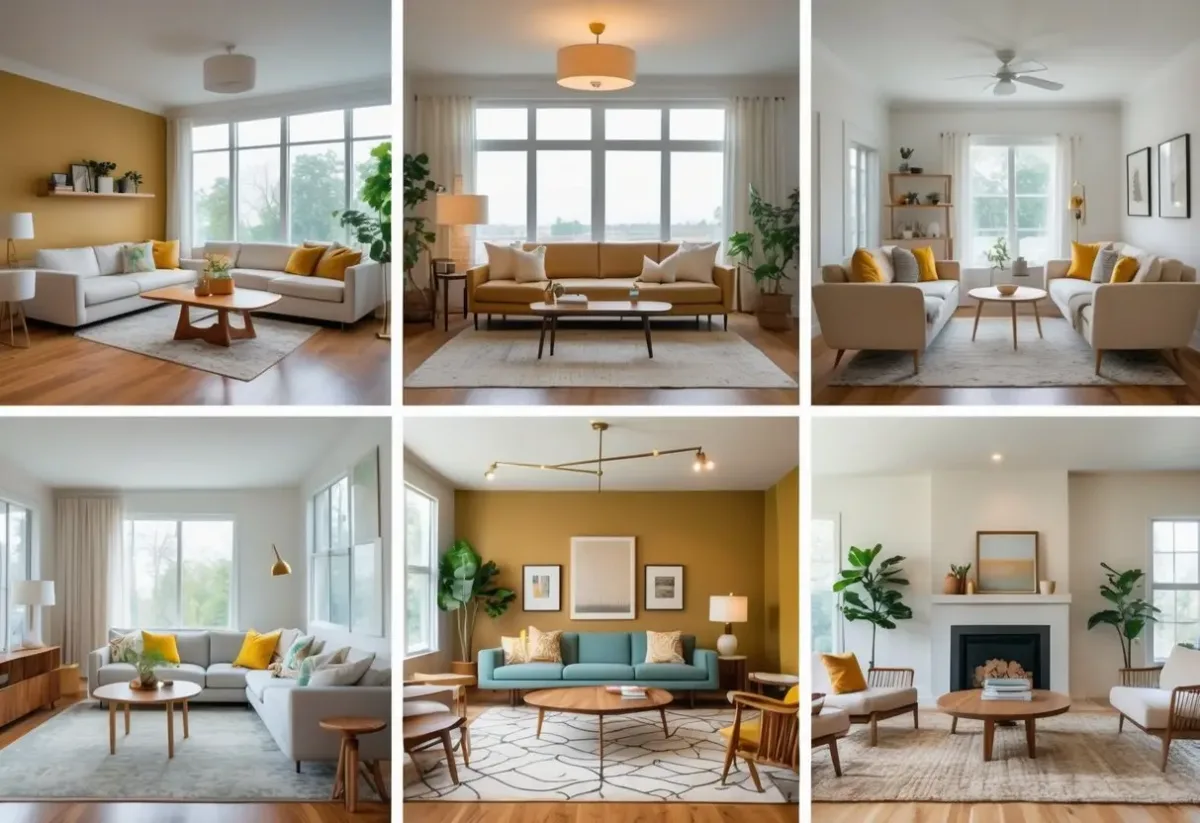
A great living room should feel calm, warm, and easy to live in — and that’s exactly what mid century modern living room ideas deliver. This style leans on clean lines, honest materials, and a handful of bold accent colors instead of clutter or trend-chasing decor.
Below you’ll find eight practical mid century modern living room decor ideas, followed by a deeper look at the materials, colors, and architectural details that define the style, plus a maintenance guide to keep vintage and reproduction pieces looking their best.
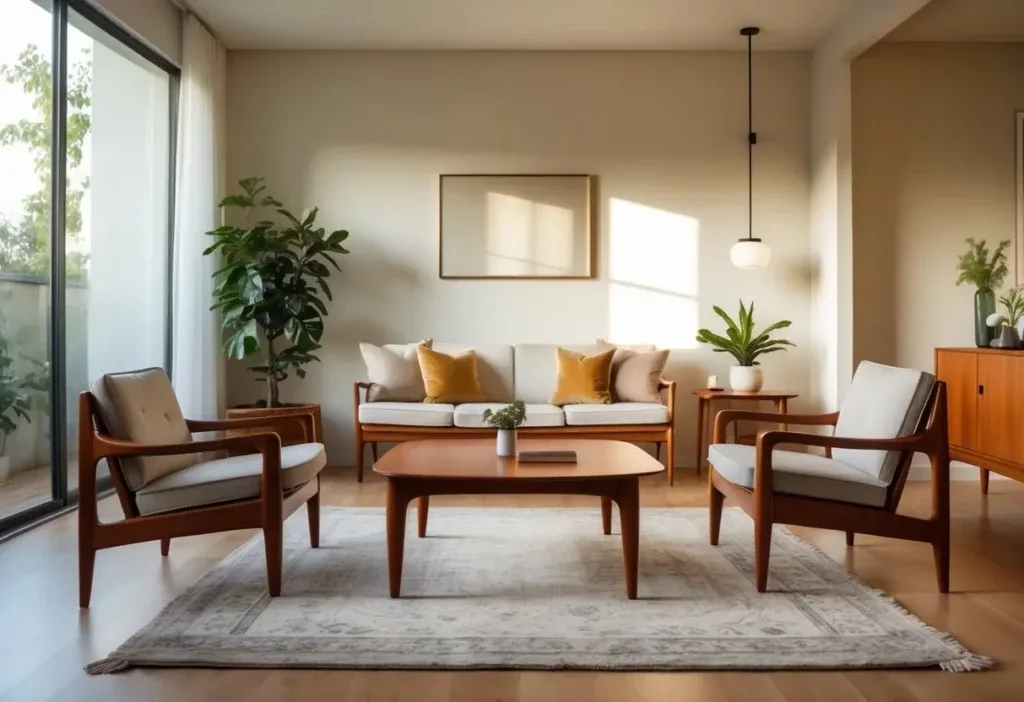
Teak is one of the defining materials of the era, and it’s still one of the easiest ways to bring authenticity into a modern living room. Look for pieces with tapered legs and clean, unfussy silhouettes — a teak sofa frame, a lounge chair, or a simple coffee table all work well together.
Teak’s warm grain naturally photographs and reads as premium without feeling heavy, which is part of why it has stayed popular in mid century modern living room decor ideas for decades. A teak sideboard or media console also solves a practical problem: it hides cords and clutter while keeping the room’s profile low.
Finish the look with neutral upholstery and one or two bold accents in rust, mustard, or deep green. That contrast keeps a wood-heavy room from feeling flat or overly brown.
A cognac leather sofa is a shortcut to instant mid-century warmth. Its amber tone brings color into the room without needing bold paint, heavy patterns, or a full furniture overhaul.
Place it against a simple backdrop — white, soft gray, or a muted neutral — so the sofa’s silhouette stays the visual anchor. Pair it with wood furniture and slim, tapered legs to reinforce the era’s focus on form and function rather than bulk.
Add a couple of textured pillows or a wool throw for contrast, but resist the urge to over-accessorize. Balance the leather’s warmth with a few metal or glass elements, like a slim coffee table or a brass floor lamp, so the room stays light rather than heavy.
3) Add Starburst or Sunburst Wall Clocks for Vintage Appeal
A starburst or sunburst clock is one of the most recognizable mid-century decor ideas, and it does a lot of visual work for very little floor space. Hang one above a sofa or mantel to create a clear focal point that ties the rest of the room together.
Look for a clock with metal spokes, wood rays, or a mixed-material face to match your existing palette, and scale it to the wall and furniture beneath it — an oversized clock over a small sofa will feel top-heavy. These pieces add sculptural texture without competing for attention the way large art or bold wallpaper might.
Keep the surrounding wall and shelving minimal so the clock reads as a deliberate accent rather than one item in a crowded gallery wall.
4) Opt for Geometric Patterned Rugs in Muted Tones
A geometric rug with clean, simple shapes reinforces the mid-century look underfoot. Muted tones — warm grays, faded blues, soft ochres — keep the pattern from overwhelming the rest of the room, which matters more than the print itself.
Size the rug so your seating area’s front legs sit on it; a rug that’s too small will make an otherwise well-furnished room look unfinished. If bold prints aren’t your style, a tone-on-tone or scaled-down motif still adds texture while reading as calm from across the room. For more on getting proportions right, this mid century modern living room rug buying guide covers sizing and material choices in more depth.
Use the rug’s color as a bridge between your cushions, art, and wood tones — it’s often the easiest way to make a room that was assembled piece by piece feel cohesive.
5) Display an Iconic Eames Lounge Chair and Ottoman
Few pieces define modern living room design more clearly than the Eames lounge chair and ottoman. Give it a spot where it can actually be used and seen — near a window or against a clean wall — rather than tucking it into a corner.
Leather and molded plywood show best against soft grays, creams, or warm wood tones, so keep the surrounding palette simple. Nearby furniture should stay low and uncluttered: a slim side table and a floor lamp are usually all the chair needs.
A small rug underneath helps anchor the set and adds texture, but leave breathing room around the edges rather than boxing the chair in. If you own a reproduction rather than an original, the same rules apply — good lighting, careful placement, and restrained accessories keep the look authentic.
6) Choose Pendant Lighting with Brass or Matte Black Finishes
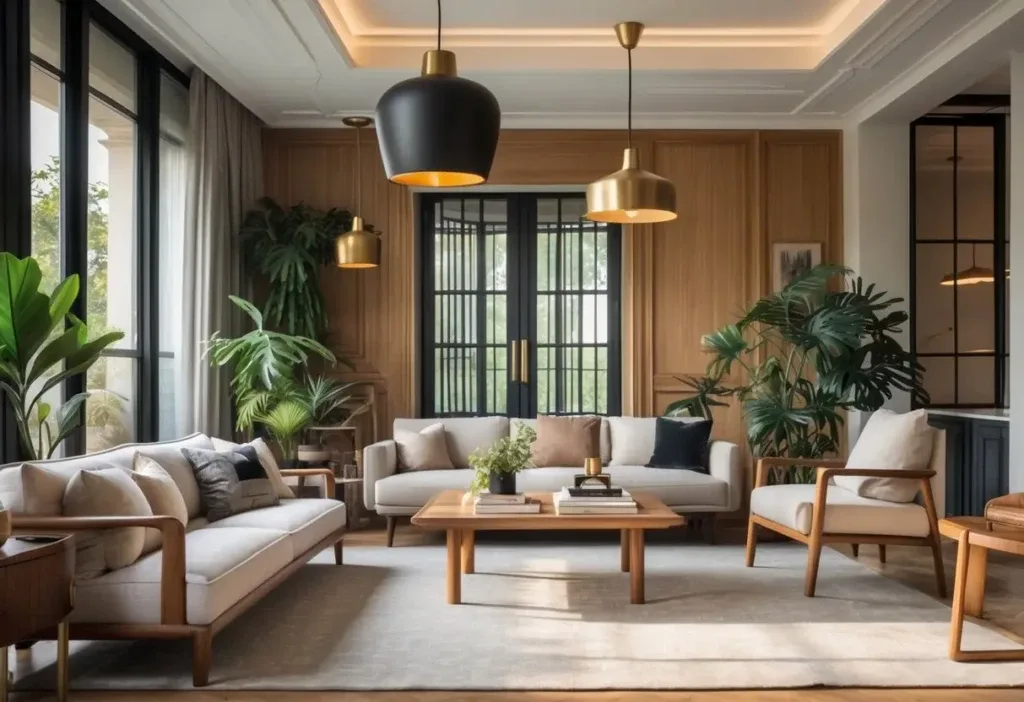
Pendant lighting in brass or matte black does double duty: it provides real function and reinforces the room’s mid-century modern living room colors. Brass adds a vintage-warm glow, while matte black offers a cleaner, more graphic contrast.
Simple shapes — globes, cones, or slim rods — echo mid-century forms best. Glass diffusers or opal shades soften the light so the fixture reads as cozy rather than clinical. A single statement pendant over a seating area, or two to three fixtures at staggered heights above a console, both work well; aim to hang the fixture just above eye level.
Pick one metal finish and stay consistent with it throughout the room. Mixing brass and matte black at random tends to look accidental rather than intentional. For a deeper dive into fixture styles and placement, see this mid century modern living room lighting guide.
7) Incorporate Burnt Orange and Olive Green Accent Cushions
Cushions are the fastest, lowest-commitment way to bring in mid century modern living room colors. Burnt orange and olive green are two of the era’s signature tones, and you can swap them seasonally or layer both for a richer effect.
Mix textures — velvet, wool, linen — so the cushions add depth rather than reading as flat color blocks. A neutral sofa is the best backdrop for this trick; the cushions become small, deliberate color moments rather than competing with an already-patterned upholstery.
Keep any patterns simple, like geometric shapes or subtle stripes, and balance the bold cushions with wood or brass accents elsewhere in the room to keep the overall look grounded.
Open shelving keeps a room feeling light rather than boxed in, which is part of why it shows up so often in mid century modern living room apartment layouts where space is limited. Choose shelves with simple, straight profiles rather than ornate brackets or heavy frames.
Mix display items with everyday function — leave visible breathing room between objects so the shelves don’t look crowded, and store frequently used items where they’re easy to reach. Warm woods or matte metal brackets add texture without adding visual weight.
A few books, a plant, and one or two sculptural objects, arranged with attention to shape and color, will do more for the room than a shelf packed edge to edge.
Once you’ve picked a few individual pieces, it helps to understand the materials, colors, and architectural habits that make a room read as genuinely mid century modern rather than just “vintage-adjacent.”
Signature Materials and Finishes
The style leans on wood, metal, and molded materials working together. Warm woods — teak, walnut, oak — anchor sofas, credenzas, and coffee tables and show off natural grain rather than hiding it under heavy stain.
Metal accents in matte black, brass, or chrome typically appear on legs, lamp stems, and hardware. Upholstery favors leather, wool, or tightly woven fabric in solid colors or subtle geometric patterns — busy florals and heavy textures are generally avoided.
Color Palettes That Complement the Style
Start with a neutral base — warm white, light gray, or beige — on walls and large furniture. That neutral backdrop is what makes accent colors like teal, mustard, burnt orange, and olive green feel intentional rather than overwhelming.
Limit bold color to one or two spots in the room: a rug, a set of cushions, or a single accent chair. Warm wood pairs naturally with cool teal, while mustard tends to sit well against mid-gray walls.
Common Architectural Features
Mid-century rooms typically favor open plans and low, horizontal lines — think low-slung sofas, long credenzas, and unbroken sightlines between the living and dining areas. If you’re extending this look into an adjoining space, these principles carry over well into mid century modern dining room ideas too.
Large windows and sliding glass doors bring natural light in and blur the line between indoors and outdoors. Built-in shelving, slatted wood room dividers, and simple fireplace surrounds add structure without visual clutter, while exposed beams or plain ceilings with recessed lighting keep the top of the room quiet.
Comparing Common Wood Tones for a Mid Century Modern Update
If you’re planning a mid century modern update and trying to choose a primary wood tone, this comparison can help you match it to your existing floors and light levels.
Wood Tone
Look & Feel
Best Paired With
Teak
Warm, golden-brown, prominent grain
Neutral upholstery, rust or mustard accents
Walnut
Deep, rich brown with reddish undertones
Cool grays, brass hardware
Oak
Lighter, more casual, visible grain
Olive green, soft blues, matte black metal
Maintaining and Enhancing the Look
Once the room is styled, a little upkeep keeps vintage or reproduction pieces looking sharp and helps you refresh the space over time without losing its character.
Preserving Vintage Furniture
Dust wood frames and veneered pieces weekly with a soft, dry cloth.
Clean spills immediately with a damp cloth and mild soap — avoid harsh chemical cleaners.
Blend small scratches with a color-matched wax stick or a walnut rubbed gently over the mark.
Check joints, screws, and legs every few months, tightening loose fasteners as needed.
Reupholster only when fabric is genuinely worn, and photograph the piece beforehand so proportions and seam lines stay accurate.
Store spare cushions and small parts in breathable fabric bags, away from direct sunlight and high humidity.
Blending Modern Touches with Classic Design
You don’t need to source everything from the era to get an authentic result. Slim-armed, matte-finish lighting with a dimmer switch adds modern function without breaking the visual language of the room.
Choose new textiles and tech that fit the existing palette — solid or geometric cushions, a low-profile media cabinet that hides cables, or a new rug with simple patterns that echoes the room’s existing wood tones. Keep new pieces close in proportion to the originals: low profiles, tapered legs, and compact side tables rather than oversized, boxy furniture.
Frequently Asked Questions
What colors work best in a mid century modern living room?
A neutral base — warm white, light gray, or beige — paired with one or two accent colors like mustard, burnt orange, olive green, or teal tends to work best. Keeping bold color limited to a rug, cushions, or a single chair prevents the room from feeling busy.
Is teak or walnut better for a mid century modern living room?
Both are authentic choices. Teak has a lighter, golden tone that pairs well with rust and mustard accents, while walnut’s deeper, reddish-brown tone tends to suit cooler palettes and brass hardware. The right choice usually comes down to your existing floor and wall colors.
How do I get the look in a small mid century modern living room apartment?
Favor open shelving over closed cabinets, keep furniture low and tapered, and limit yourself to one or two statement pieces rather than filling every wall. A single accent chair, a geometric rug, and simple pendant lighting can establish the style without crowding a smaller footprint.
Can I mix brass and matte black finishes in the same room?
It’s best to pick one as the dominant metal finish and use the other sparingly, if at all. Mixing them evenly across lighting, hardware, and furniture legs tends to look unplanned rather than intentional.
What’s an easy first step for a mid century modern update on a budget?
Swapping in accent cushions in burnt orange or olive green, adding a starburst clock, or introducing a geometric rug are all low-cost ways to shift the room’s character before investing in larger furniture.
Our Verdict
You don’t need to overhaul a living room all at once to get an authentic mid-century feel. Start with one anchor piece — a teak sofa, a leather chair, or an Eames lounge chair — and build the rest of the room’s color and materials around it.
Layer in accent colors through cushions and rugs, keep lighting and metal finishes consistent, and let a few architectural habits — low furniture, open shelving, unobstructed windows — do the rest. Used together, these ideas make it easy to bring warmth and clean, timeless style into almost any space.
Listen to this article 10 10 0:00 / 0:00 Speed 0.75×1×1.25×1.5×2× You want a living room that feels timeless, warm, and smart. Mid-century modern lighting gives you that by mixing simple shapes, warm finishes, and surprising silhouettes that work with both vintage pieces and new furniture. Choose fixtures that balance form and function—statement pendants or a…
Listen to this article 10 10 0:00 / 0:00 Speed 0.75×1×1.25×1.5×2× A lot of “contemporary” living rooms end up looking like a furniture showroom — clean, expensive-looking, and a little cold. That’s usually not a materials problem. It’s a sequencing problem: people buy the big statement pieces first and try to soften the room afterward,…
Listen to this article 10 10 0:00 / 0:00 Speed 0.75×1×1.25×1.5×2× Open concept living rooms get sold on a promise: more light, more flow, more room to breathe. What nobody tells you is that a wide-open floor plan without any structure just turns into one big room where nothing has a job. If you’ve knocked…
Listen to this article 10 10 0:00 / 0:00 Speed 0.75×1×1.25×1.5×2× Good mid century modern living room furniture does two things at once: it looks sculptural enough to stand on its own, and it works hard for everyday living. Tapered legs, honest materials, and clean silhouettes are the throughline, whether you’re shopping for a sofa,…
Listen to this article 10 10 0:00 / 0:00 Speed 0.75×1×1.25×1.5×2× You want a living room that feels timeless and calm, yet shows off your style. This article guides you through eight midcentury modern decor ideas that help you mix classic pieces, warm woods, clean lines, and a few bold accents to shape a balanced,…
Listen to this article 10 10 0:00 / 0:00 Speed 0.75×1×1.25×1.5×2× Green is one of the few colors that works as both a background and a statement, which is exactly why it’s tricky to get right. Go too dark and a room feels closed in. Go too bright and it reads like a kids’ playroom….