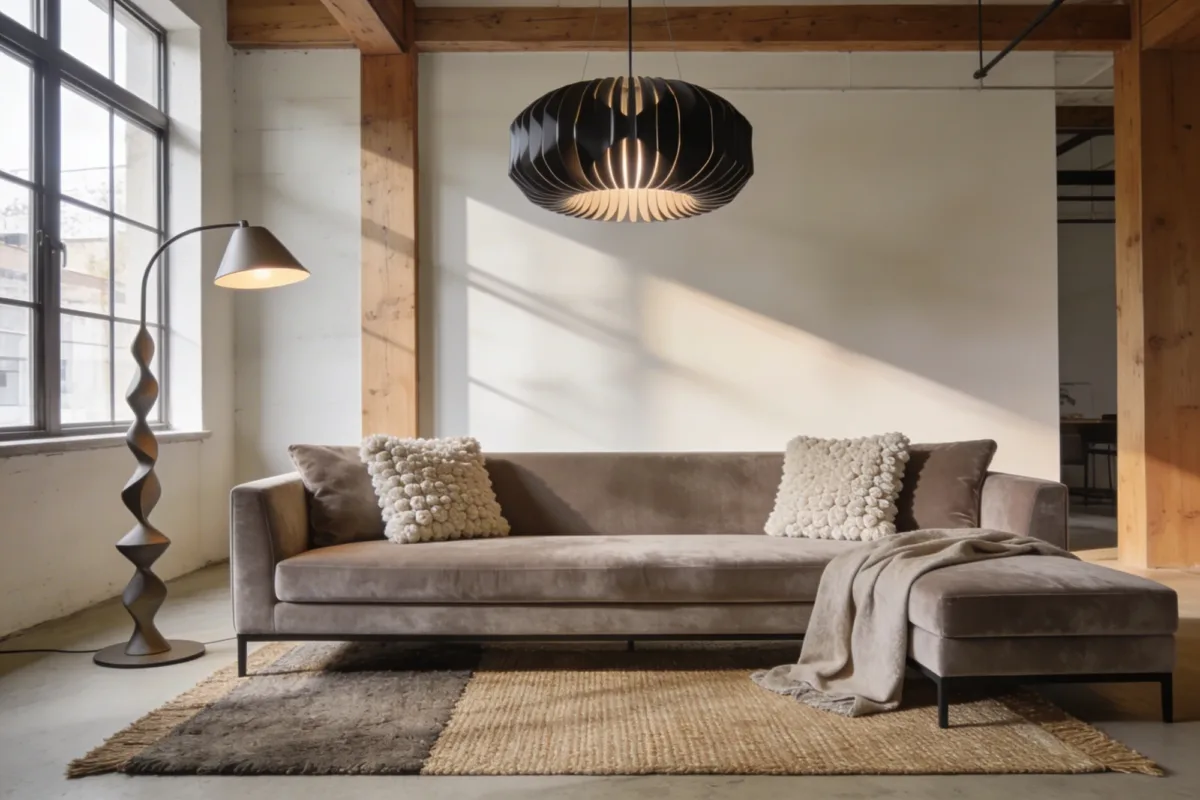
6 Contemporary Living Room Inspiration: Fresh, Cozy, Chic Ideas
A lot of “contemporary” living rooms end up looking like a furniture showroom — clean, expensive-looking, and a little cold. That’s usually not a materials problem. It’s a sequencing problem: people buy the big statement pieces first and try to soften the room afterward, which almost never works. This roundup of contemporary living room inspiration is built the other way around, starting with the layers that make a room feel lived-in and working up to the furniture. If you’re planning a fuller redesign rather than a room refresh, this guide to modern living room design ideas is a good next stop.
None of the six ideas below require a renovation. Most are swaps you can make over a weekend, and a few — like the lighting layering in idea two — cost less than a single piece of new furniture.
Quick Takeaways
- Texture, not color, is usually what makes a modern room feel warm instead of sterile.
- Layered lighting (ambient, task, accent) does more for mood than one bright overhead fixture ever will.
- A single accent color repeated in small doses reads as more intentional than three or four competing ones.
- Modular and multi-function furniture pays off fastest in rooms under 200 square feet.
- Plants and greenery are the cheapest fix for a room that feels “done” but flat.
Things to Consider Before You Start
- Measure your room before buying anything modular — sectional configurations are only flexible if there’s floor space to reconfigure into.
- Decide on your accent color before you shop for cushions and throws, not after — it’s the easiest way to end up with mismatched impulse buys.
- Check your existing bulbs before buying new fixtures. Mixing 2700K and 5000K bulbs in the same room is a common reason a “layered lighting” plan still looks off.
- If you rent, prioritize floor lamps and plug-in sconces over anything that requires rewiring or drilling into walls.
1. Layer Textures Instead of Just Colors
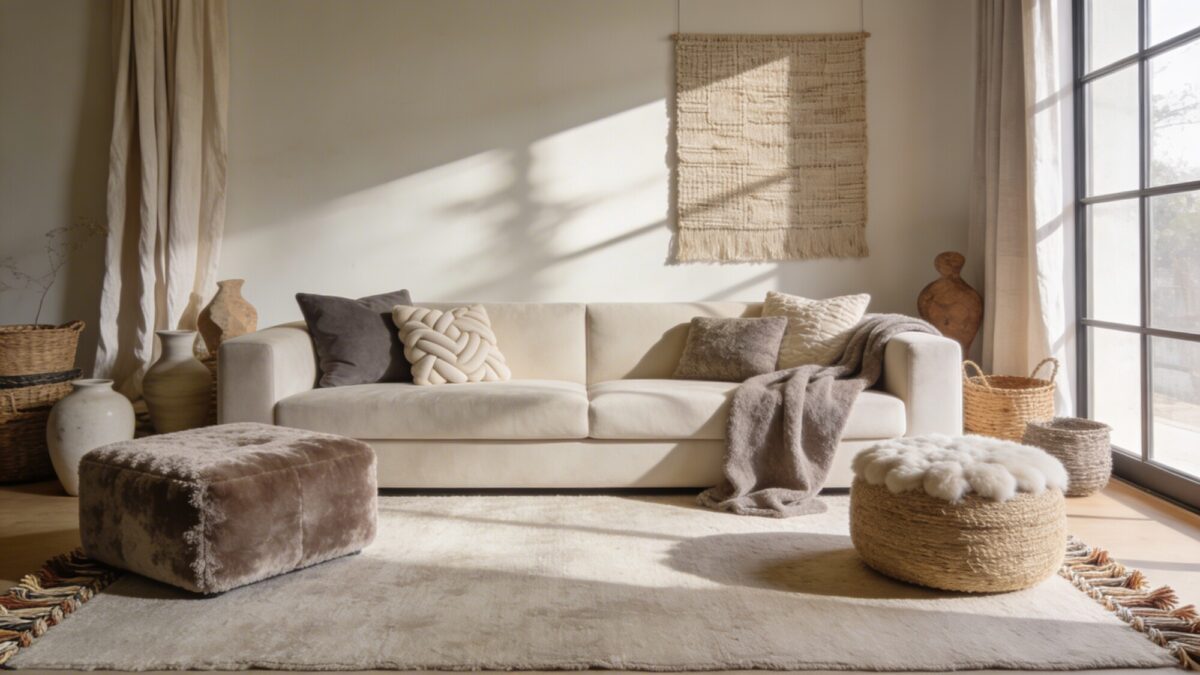
Texture is what separates a contemporary living room from a sparse one. A neutral sofa on its own reads as unfinished; the same sofa with a chunky-weave throw, a boucle accent chair, and a rug with visible pile or fringe reads as designed. This is the fastest fix on this list because it doesn’t touch your furniture layout at all — you’re adding, not replacing.
Start with the rug. A flat, low-pile rug under a plain sofa does very little; a rug with texture (wool, jute, or a woven flatweave with fringe) gives the eye something to register even in a neutral palette. From there, layer in one plush textile (velvet or boucle), one natural fiber (jute, linen, rattan), and one hard-surface texture (a ceramic vase, a wood bowl, a stone coaster set). Three textures is usually the floor for a room to stop feeling flat; six or seven starts to look cluttered unless you’re deliberately going for a maximalist look.
💡 Pro Tip: Put a rug pad under any textured rug you add, especially fringe or high-pile styles. Without one, the rug slides and bunches on hard floors within a few weeks, and the fringe flattens out and stops doing the job you bought it for.
2. Build Layered Lighting Before You Chase a Statement Fixture
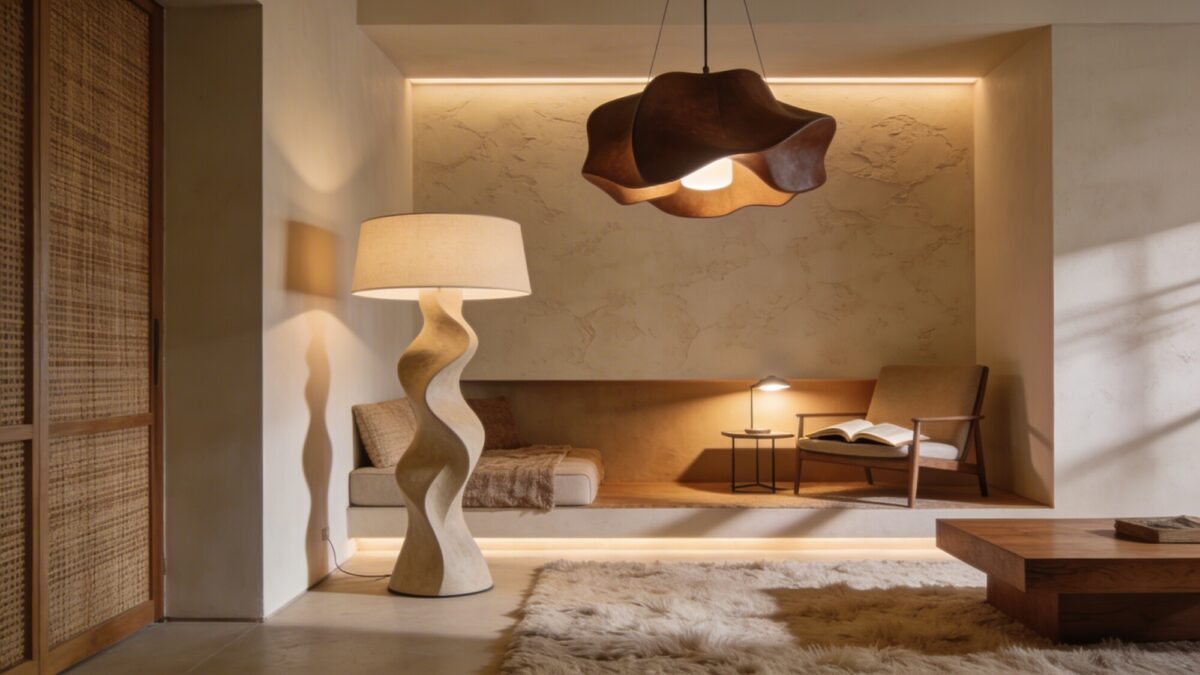
A dramatic pendant looks great in photos and does almost nothing for how a room actually feels to sit in at 9 p.m. What changes that is having at least three light sources at different heights: an ambient source (ceiling or a large floor lamp), a task source (a reading lamp near a chair), and an accent source (a smaller lamp or LED strip highlighting a shelf, art, or textured wall). Warm white bulbs in the 2700–3000K range read as cozy; anything closer to daylight (4000K+) will fight against a warm, neutral palette no matter how good the furniture is.
If you do want one bold piece — a sculptural floor lamp, an oversized pendant — let it be the accent, not the only light source in the room. A single dramatic fixture in an otherwise dim room creates harsh shadows rather than mood. This is also where a dimmer earns its cost; the same fixture can go from a bright working space in the afternoon to a low, warm glow at night without buying two different lamps.
💡 Pro Tip: Before buying a new fixture, swap your current bulbs to a consistent 2700K warm white across the room. It’s a five-dollar fix and it’s often the actual reason a room looks flat under “good enough” lighting.
For more on pairing warmth with a genuinely comfortable seating setup rather than just good lighting, this guide to modern cozy living room ideas covers the seating side of the same problem.
3. Mix Retro Silhouettes With Current Materials
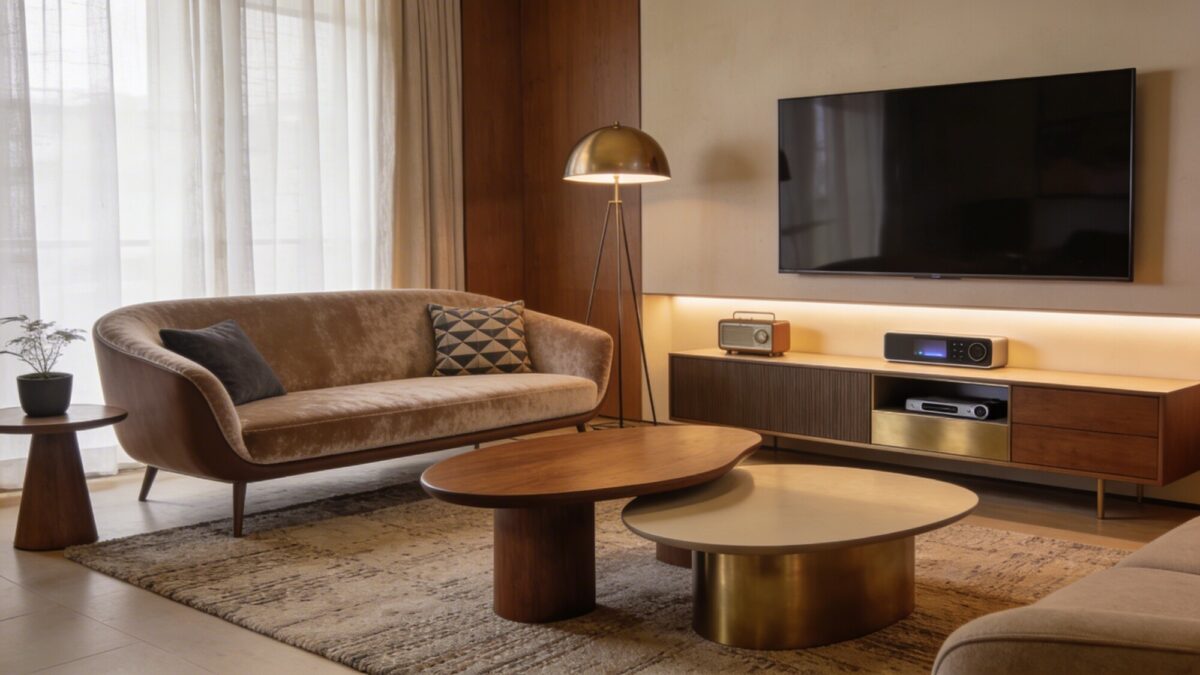
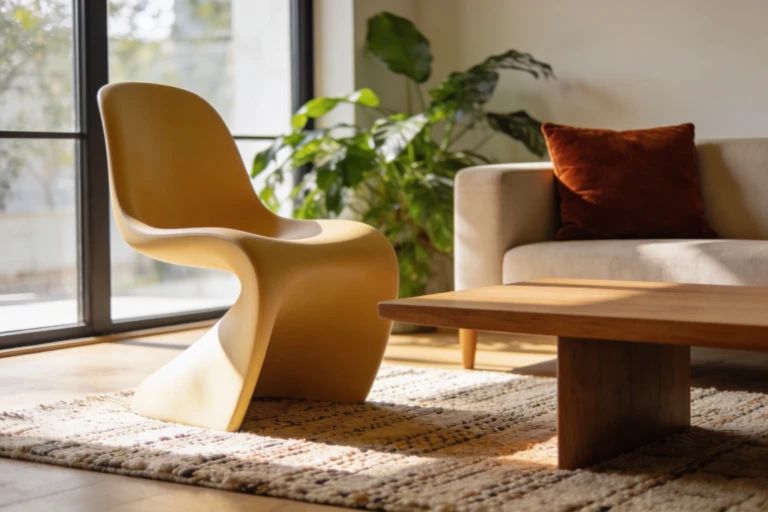
Pure mid-century reproductions can date a room almost as fast as the trends they’re replacing. What holds up longer is borrowing the shape — low-profile sofas, tapered legs, curved coffee tables — and pairing it with current fabrics and finishes: boucle or performance velvet upholstery, matte black or brushed brass hardware instead of polished chrome, and tech built in rather than bolted on (a wall-mounted TV, a hidden charging drawer).
The trade-off most people miss: if you mix wood tones (a warm walnut sideboard next to a cooler gray-toned coffee table, for example), the room reads as unplanned rather than eclectic. Stick to one or two wood tones in the same warmth family, and let contrast come from the metal accents and textiles instead.
💡 Pro Tip: If you’re buying retro-inspired pieces from different brands, bring a sample of your existing wood tone (a drawer front, a photo in daylight) when shopping. Wood “warmth” varies a lot between manufacturers even within the same finish name.
4. Use One Accent Color, Not a Palette
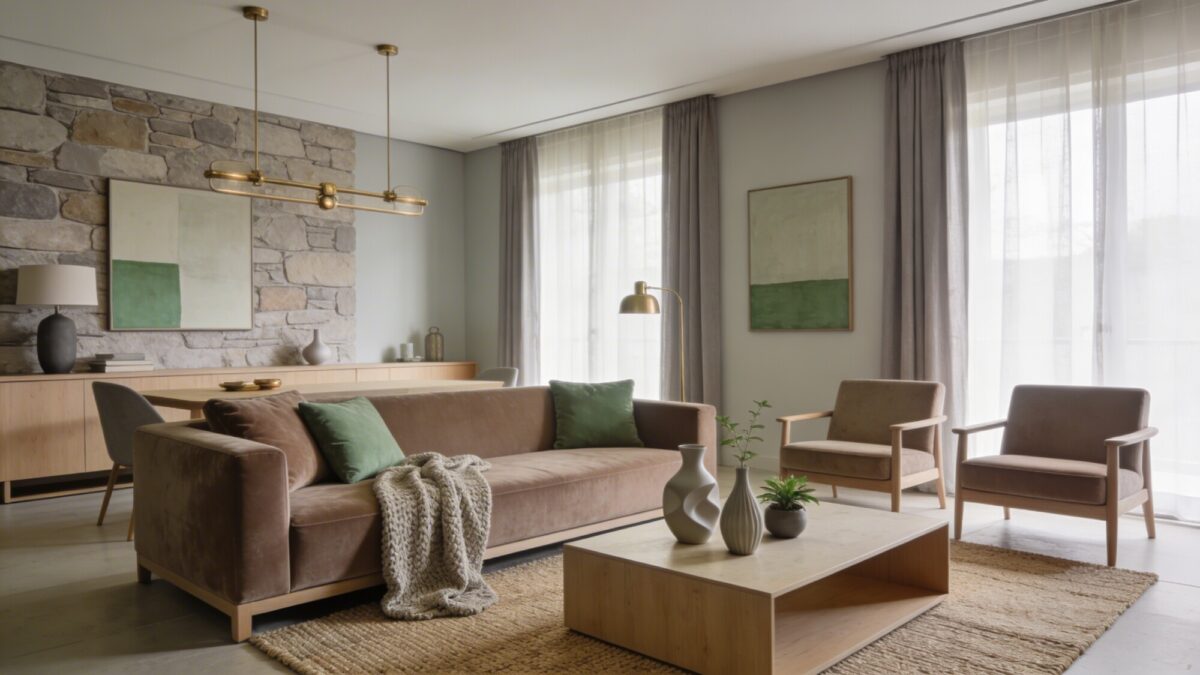
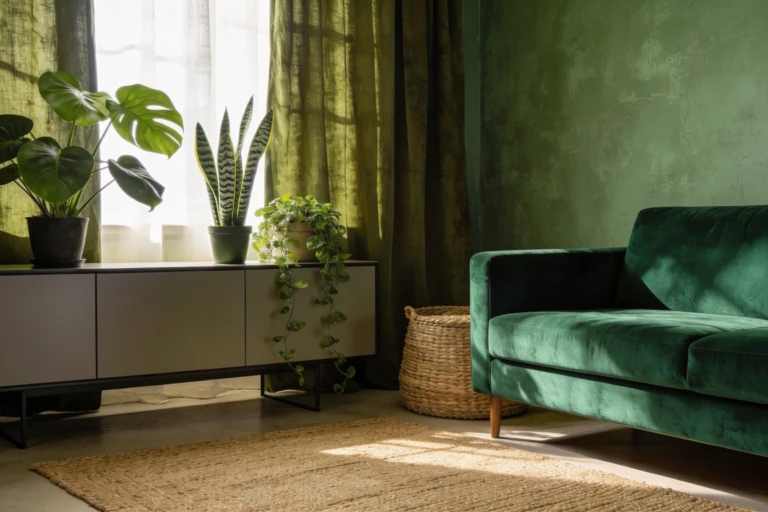
A neutral base — stone, taupe, warm gray — is easy to get right and hard to get wrong. Where rooms go sideways is the accent layer: three or four “complementary” colors in cushions, art, and throws usually reads as indecisive rather than curated. Picking one bold hue (sage, clay, ocean blue) and repeating it in two or three small doses — a cushion, a piece of art, a vase — does more for cohesion than a full secondary palette.
This is also the cheapest way to update a room seasonally. Swap the single accent color twice a year (a deep green for fall, a lighter blue for spring) and the neutral base furniture never has to change. If you want to see how far a restrained, mostly neutral palette can go on its own, this roundup of Scandinavian living room ideas leans even further into that approach.
5. Add Greenery in Tiers, Not as an Afterthought
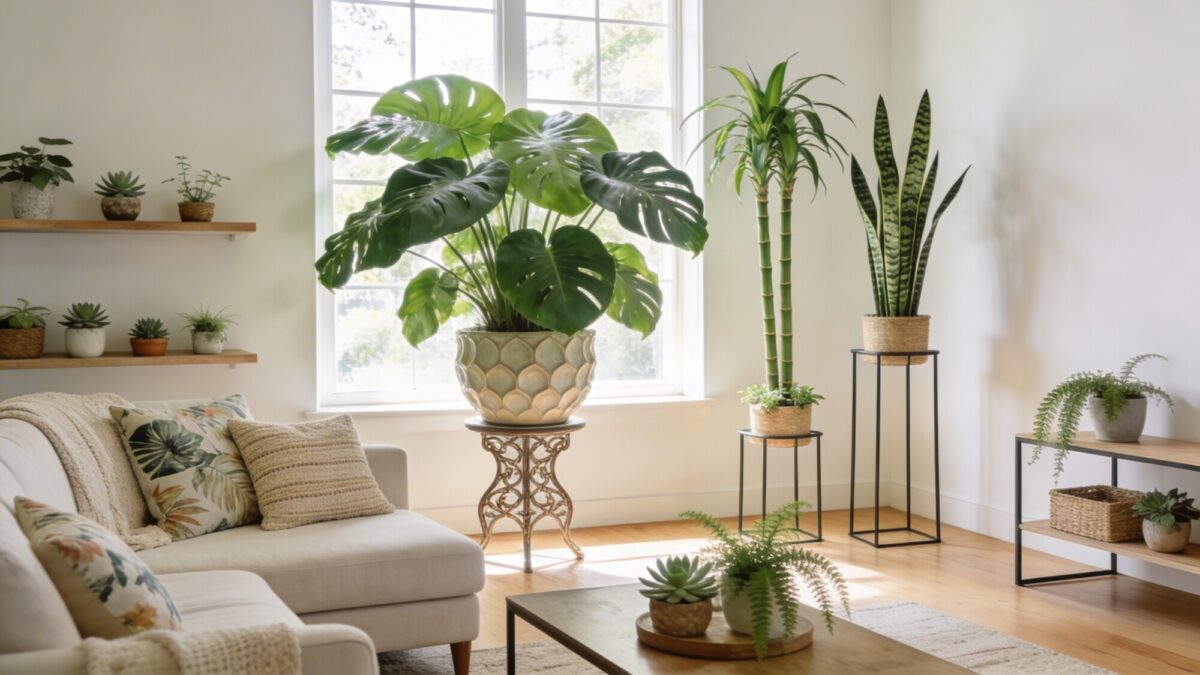
One plant in a corner rarely does much. What actually reads as intentional is height variation: one large statement plant (a monstera or fiddle leaf fig) near a window, two or three mid-height plants on stands at staggered heights, and a couple of small plants or succulents on shelves or a side table. The staggering matters more than the plant count — three plants at three different heights fill a room better than six plants all sitting on the floor.
Real specifics matter here more than most decor advice: a fiddle leaf fig needs bright, indirect light and will drop leaves fast in a dim corner, while snake plants and pothos tolerate low light and irregular watering far better. If your living room doesn’t get strong natural light, skip the fiddle leaf fig and go with snake plants or a pothos on a shelf instead — it’ll look intentional a lot longer than a struggling statement plant will.
💡 Pro Tip: Use a plastic nursery pot inside a decorative planter rather than potting directly into the decorative one. It makes rotating plants toward the light and checking for root rot far easier, and it saves the decorative pot if the plant needs repotting.
6. Choose Seating That Reconfigures
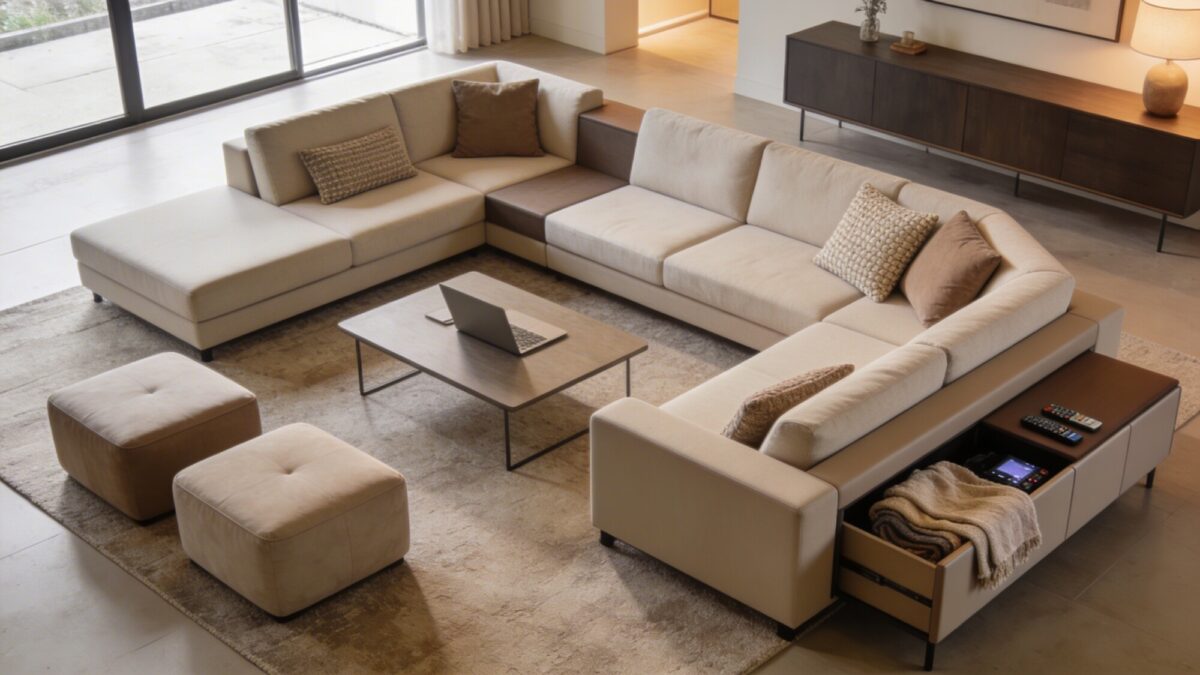
A fixed sectional looks great in the showroom photo and then sits in exactly one configuration for the next ten years. In smaller or multi-purpose rooms, modular seating — pieces that split apart into a sofa, two chairs, and an ottoman, or reconfigure from an L-shape to a straight run — earns its higher price by actually changing with how the room gets used. The trade-off is that modular pieces are usually less structurally solid than a fixed sectional of the same price point, so if you’re not planning to reconfigure often, a well-built fixed sofa may be the better value.
| Setup | Best for | Trade-off |
|---|---|---|
| Fixed sectional | Rooms with one clear seating arrangement and no plans to change it | Sturdier and often cheaper per seat, but stuck in one layout |
| Modular sofa | Small or multi-purpose rooms (living room doubling as a guest space or home office) | More flexible, but generally less structurally solid at the same price point |
| Armchairs + loveseat | Rooms that need to flex between conversation and TV-watching layouts | Easiest to rearrange without tools, but takes up more floor space than a matched sectional |
Ottomans that double as extra seating or a coffee table, and storage benches that hide blankets and remotes, are worth the extra cost in any small room — they’re the difference between scrambling for seats when guests arrive and just pulling the ottoman over. Flow matters as much as the furniture itself here; if you want more on keeping sightlines open in a room that serves multiple functions, this guide to open concept living room inspiration is a useful companion piece.
💡 Pro Tip: Before buying a modular sofa, check how the pieces actually connect — clip-together configurations tend to shift and gap over time more than sofas with a shared internal frame or bracket system.
Frequently Asked Questions
Does contemporary decor mean everything has to be neutral?
No — the base is usually neutral, but that’s a starting point, not a rule. The style comes from restraint in how color is used (one accent hue, repeated), not from avoiding color entirely.
What’s the fastest way to make a room feel less sterile?
Add texture before you add more furniture. A textured rug, one plush textile, and a couple of natural-fiber pieces do more than a new sofa in a room that already has decent bones.
Can I do this in a rented apartment?
Yes. Floor lamps, plug-in sconces, area rugs, and freestanding plant stands cover most of this list without any drilling or wiring work.
How many accent colors is too many?
More than two starts to compete for attention. One accent color repeated in a few spots almost always reads as more deliberate than three or four “complementary” ones.
Is modular furniture worth the extra cost?
Only if you’ll actually reconfigure it. In a single-purpose room with one clear layout, a well-built fixed sectional is usually the better value.
Our Take
If you only do one thing from this list, do texture layering first — it’s the cheapest, it doesn’t require rearranging furniture, and it fixes the most common complaint about contemporary rooms (that they feel cold). Lighting is the second-highest return for the effort involved. Modular seating and a full retro-modern furniture mix are worth planning carefully rather than rushing, since both involve real money and are harder to walk back once you’ve bought in. If your current setup already leans minimalist and you’re trying to decide how far to pare back rather than how much to add, this guide to minimalist living room interior ideas covers that side of the decision.