9 Living Room Inspiration Aesthetic: Cozy to Desert Dream
Most “living room inspiration” roundups show you a styled photo and stop there — no mention of what it costs to get close to that look, what falls apart after six months with a dog or a toddler, or which choices actually suit a small apartment versus a house with 10-foot ceilings. That’s the gap this guide is trying to close. If cost is your main constraint, our cozy living room ideas on a budget post pairs well with anything below.
Below are nine distinct living room aesthetics, what each one actually demands from you (money, upkeep, square footage), and the mistakes people tend to make chasing them. None require a full remodel — most are achievable with furniture swaps, textiles, and lighting changes over a weekend or two.
Quick Take: Key Things to Know Before You Pick One
- Cozy minimalism and Japandi are the most forgiving for small or rented spaces — low commitment, easy to reverse.
- Moody glam and industrial loft need more square footage and ceiling height, or they read as cramped instead of dramatic.
- Eclectic and boho styles are the cheapest to build gradually (thrift, vintage, hand-me-downs) but the easiest to make look messy without one unifying color or rug.
- Lighting temperature matters more than paint color for making any of these feel warm instead of sterile or gloomy.
- If you’re working with a small footprint, ceiling treatment and furniture scale affect the room more than which aesthetic you pick.
Picking a Living Room Inspiration Aesthetic: Where to Actually Start
Before choosing a look, be honest about two things: how much natural light the room gets, and how much daily wear it takes. A moody, dark-walled living room photographs beautifully but can feel like a cave in a north-facing room with one small window. A pale, minimalist palette looks serene in a photo and shows every scuff mark within a month if you have kids or pets. Match the aesthetic to how the room actually gets used, not just how you want it to look on a Saturday afternoon when nobody’s home.
1. Cozy Minimalism With Warm Accents
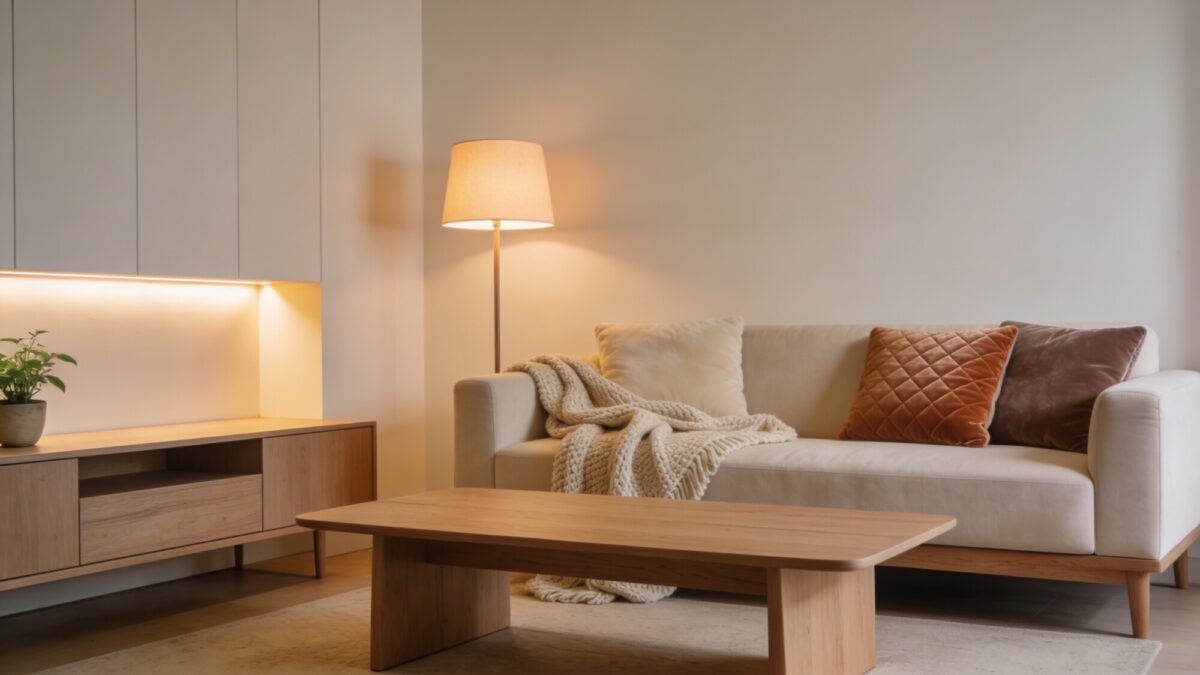
This is the easiest starting point if you’ve never tried a deliberate style before. The idea isn’t “empty room,” it’s “edited room” — fewer things, but each one doing more work. A neutral base of beige, taupe, and ivory keeps the bones simple, while natural wood furniture (a low coffee table, a slim console) and warm textiles stop it from feeling sterile.
This is also the aesthetic behind most searches for a minimalist cozy living room apartment or a cozy minimalist living room, simple setup — it’s the go-to for rentals because almost everything in it is furniture and textiles, not permanent changes to walls or floor.
What to include
- Neutral base palette: beige, taupe, ivory
- Natural wood furniture with clean, low-profile lines
- Plush textiles in warm tones — a chunky knit throw, a quilted velvet cushion
- Warm-temperature lighting (bulbs around 2700K, not the bluish-white 5000K office kind)
The mistake people make here is stopping at “neutral” and never adding the warmth part. A beige room with cool-white overhead lighting and no texture doesn’t read as calm — it reads as unfinished. Add at least one tactile layer (a knit throw, a woven basket, a textured rug) or the room ends up feeling like a waiting area.
💡 Pro Tip: Swap your bulbs before you buy anything else. A warm 2700K bulb in an existing lamp does more to make a stark room feel cozy than a new throw pillow will, and it costs a fraction as much.
For a slightly different take on the same restrained-but-warm idea, our Nordic living room inspiration guide leans a bit cooler and brighter if this palette feels too warm for your taste.
2. Scandinavian Desert Dream
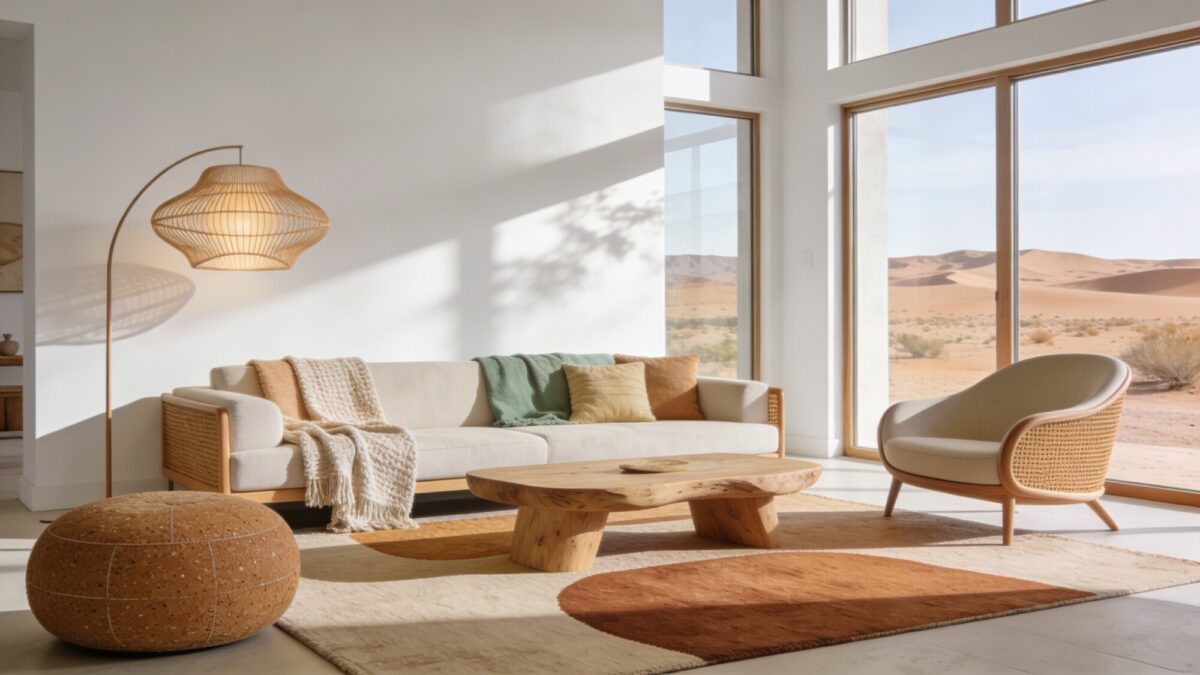
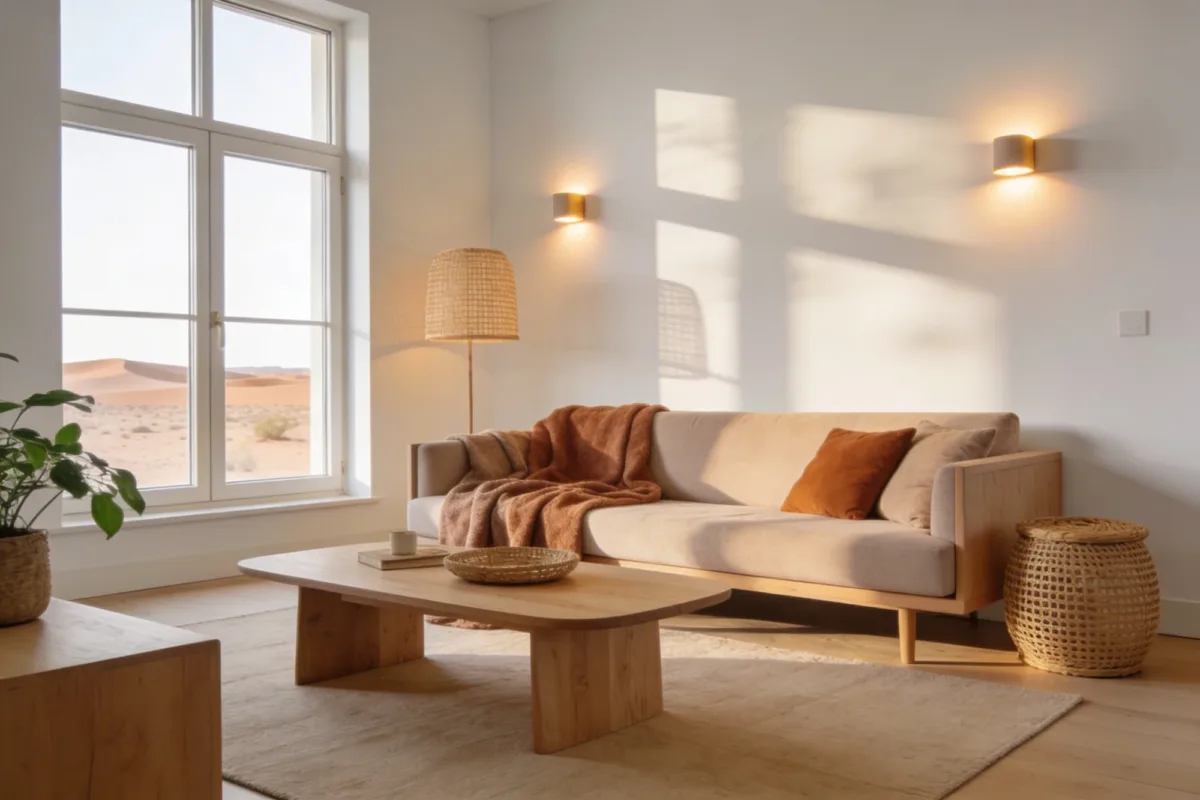
Where cozy minimalism leans warm and enclosed, this one leans bright and open. White walls act as a blank canvas, light wood keeps furniture from feeling heavy, and rattan or cork accents bring in texture without adding visual weight. Throws in sand, sage, and oat colors tie it together.
Mini guide
- White walls as a clean base
- Light wood furniture with minimal ornamentation
- Rattan or cork accent pieces
- Textured throws in earthy neutrals
The trade-off with this look: it needs real daylight to work. In a room with limited natural light, the white-and-light-wood combination can look flat instead of airy. If your living room only gets a couple of hours of direct sun, cozy minimalism or Japandi (below) will likely read better than this one.
Keep one or two statement pieces — a sculptural light fixture, a bold woven rug — so the room doesn’t drift into feeling like a waiting room. That’s the actual function of a “statement piece” here: it’s not decoration, it’s what stops the palette from being too quiet.
3. Moody Glam With Velvet Night
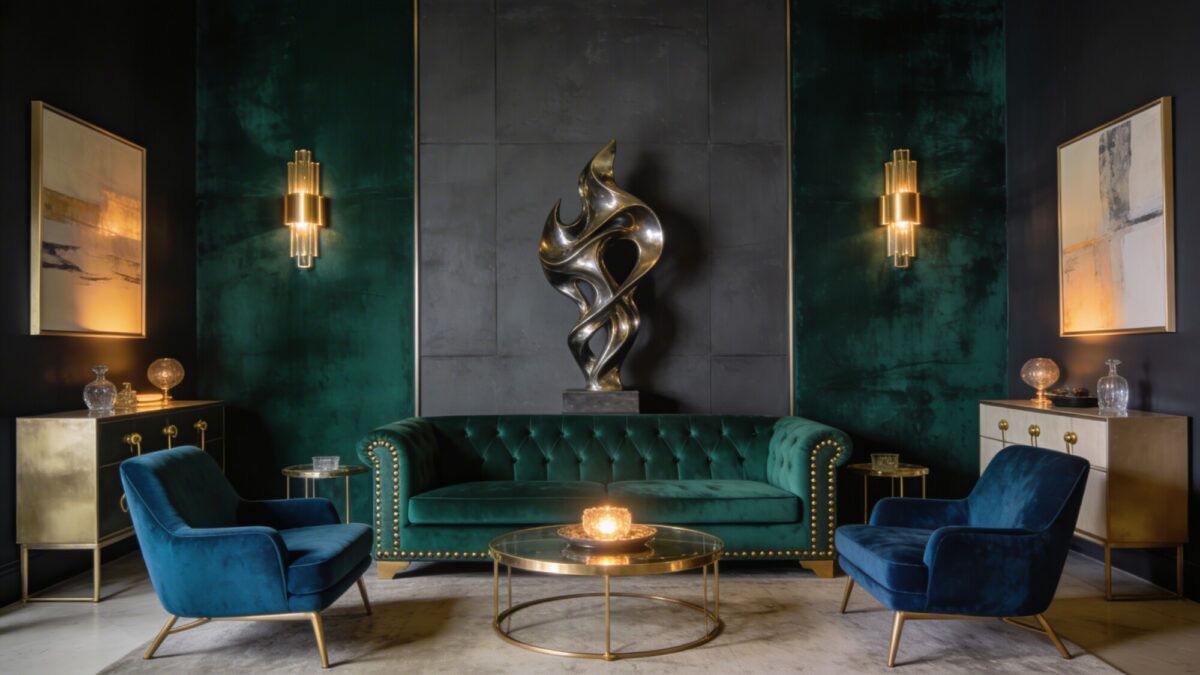
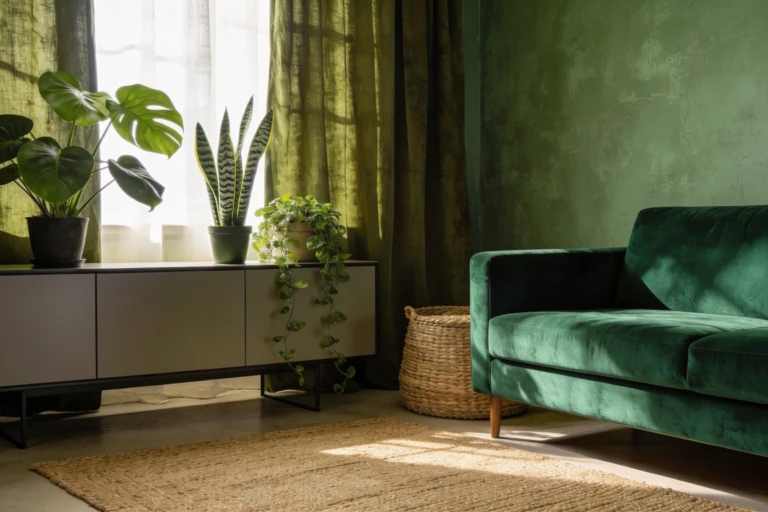
This is the aesthetic for a room you want to feel intentional and a little theatrical — deep emerald or charcoal walls, velvet upholstery, brass or gold hardware, and one bold focal piece like an abstract sculpture or a jewel-toned rug.
Key elements
- Deep emerald, sapphire, or charcoal wall color
- Velvet upholstery on at least one major piece
- Brass or gold hardware and fixtures
- A single bold focal piece — not several competing ones
Here’s the part most people get wrong: dark walls need more artificial light, not less, to avoid feeling like a cave. Pair the dark palette with warm sconces, a low glowing lamp, and at least one lighter-toned art piece so your eye has somewhere to rest. Skipping the light source and just painting the walls dark is the single most common reason this look fails in practice.
💡 Pro Tip: Test the wall color on an actual wall patch under your lamps at night before committing — a lot of “moody” paint colors read as flat and lifeless once you’re relying on lamp light instead of daylight.
Rooms used mainly for entertaining or evening use suit this style best; if your living room doubles as a bright home office by day, the darkness can start to feel heavy rather than dramatic.
4. Japandi Calm: Simplicity With Soul
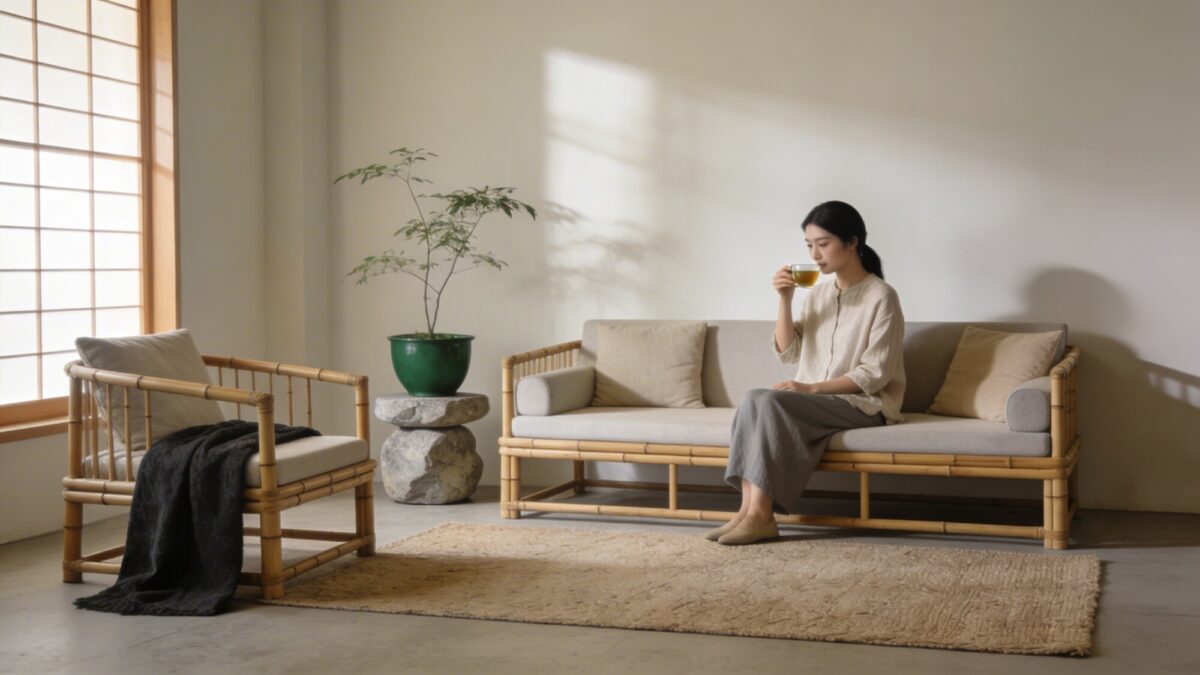
Japandi blends Japanese minimalism with Scandinavian warmth — low-profile seating, natural materials (bamboo, linen, stone), and a neutral base with exactly one bold accent, rather than several competing ones.
Essentials
- Low-profile seating with clean lines
- Natural materials: bamboo, linen, stone
- One bold accent color, used sparingly (a charcoal throw or a deep-green plant)
- A single grounding rug and one plant, not a collection of either
What separates Japandi from generic minimalism is restraint on the accent color — one, not three. People trying this look often add a second and third “pop” color out of habit, which quietly turns it back into cozy minimalism with extra steps. If you’re drawn to this look, pick your one accent color first and let every other decision defer to it.
5. Cozy Eclectic Pop
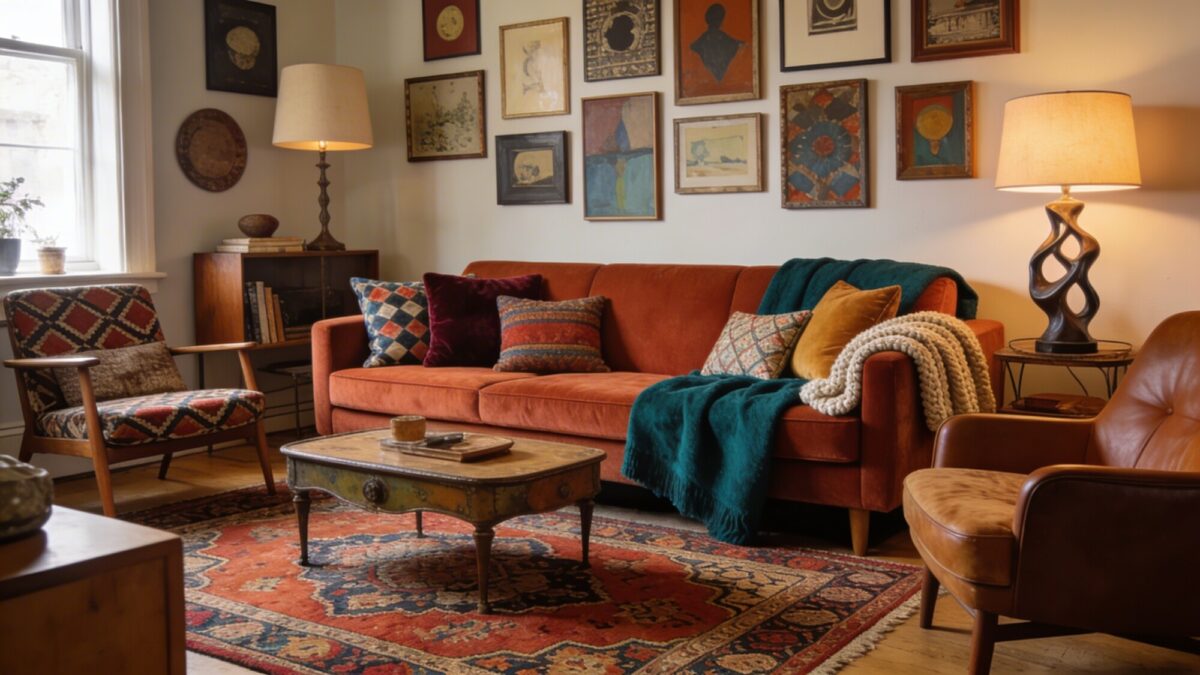
Eclectic doesn’t mean “no plan” — it means mixing patterns, colors, and furniture eras with one unifying thread holding it together, usually a single dominant color repeated across the rug, cushions, and throws.
How to pull it off
- Pick one unifying color or texture and repeat it across at least three items
- Mix a few statement pieces with familiar, comfortable ones — not all statement, not all plain
- Build a gallery wall gradually rather than buying a matched art set
Start with the rug, not the walls. A patterned rug in your chosen unifying color gives you a built-in palette to pull cushions and throws from, which is far easier than trying to match six separate purchases to each other from memory. Our eclectic living room ideas that mix patterns and textures guide has more on building this out piece by piece if you’re starting from scratch.
The failure mode here is buying everything at once. Eclectic rooms that feel curated instead of cluttered are almost always assembled over months, with pieces added only when they genuinely fit — not filled in a single shopping trip.
6. Living Room Inspiration Modern: Mid-Century and Industrial Looks
If “modern” is more your speed than cozy or eclectic, two aesthetics from this list cover most of that territory well: mid-century modern revival and industrial loft.
Mid-Century Modern Revival
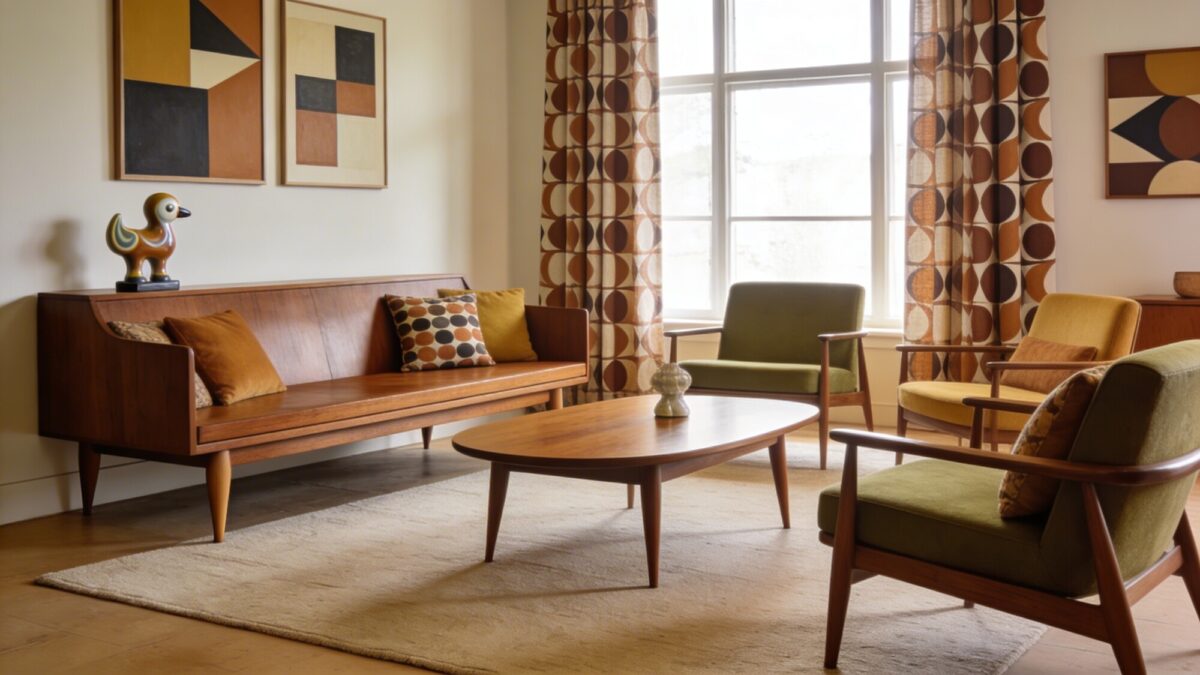
Teak or walnut furniture, tapered legs, low-profile sofas, and geometric patterns in warm browns, caramel, olive, and mustard. It works because the silhouettes are simple enough to age well — closer to a long-term investment style than a seasonal refresh.
- Teak or walnut wood furniture
- Low-profile sofas with tapered legs
- Geometric patterns in art or textiles
Industrial Loft Comfort
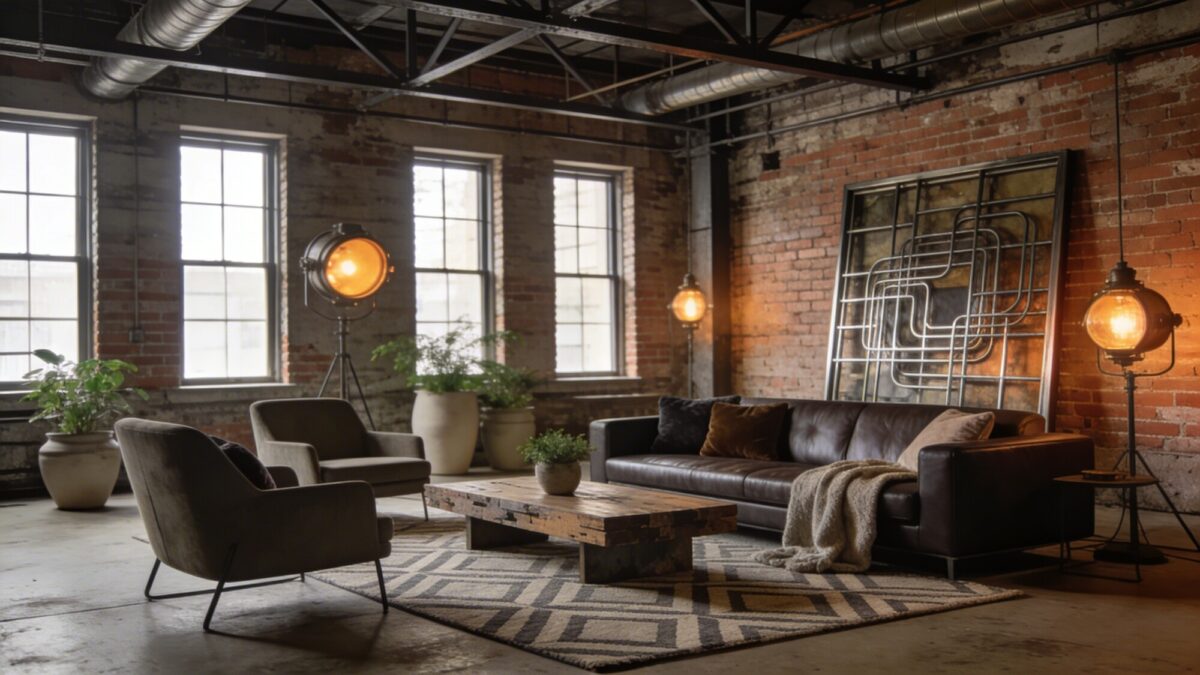
Exposed brick or a faux brick treatment, steel accents, leather or performance-fabric seating, and warm vintage-style bulbs to soften the hard edges. This one genuinely needs high ceilings and either real architectural bones or a very deliberate faux-finish — attempted in a standard 8-foot-ceiling apartment, it tends to look like a themed rental rather than a considered space.
💡 Pro Tip: If you don’t have exposed brick or ductwork to work with, don’t try to fake the whole look with brick wallpaper — it usually reads as a stage set. Borrow just the warm-bulb, leather-and-wood-table part of the aesthetic instead; it works in almost any room.
7. Soft Urban Boho
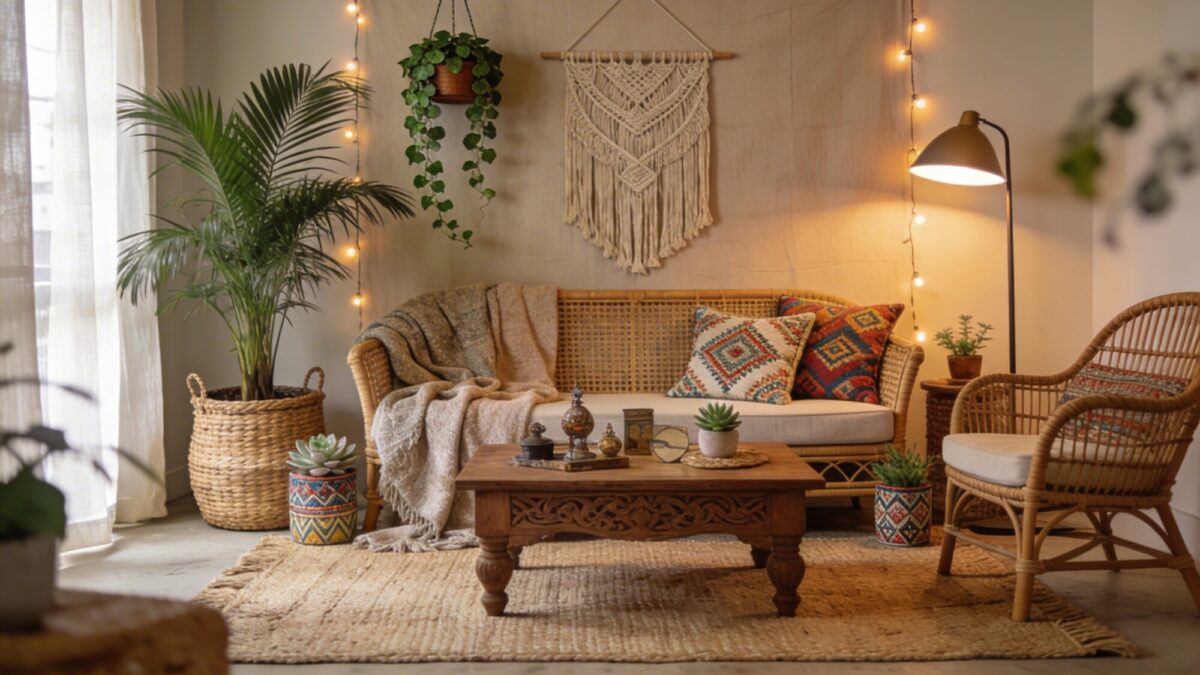
Layered textures — woven throws, embroidered pillows, a woven rug — plus mixed-height greenery and a few global-inspired accents like a macrame wall hanging or a carved wood coffee table.
Ingredients
- Woven textures: rattan, wicker, macrame
- Mixed-height greenery in woven planters
- Global-inspired textiles in warm palettes
Let plants carry part of the visual weight instead of adding more objects. A tall palm, a trailing pothos on a shelf, and a cluster of succulents on the coffee table do more for a boho room than three more throw pillows would, and they’re cheaper to swap out if one doesn’t work. For a more contemporary spin on this same layered-texture idea, see our modern boho living room ideas.
8. Nature-Inspired Zen Space
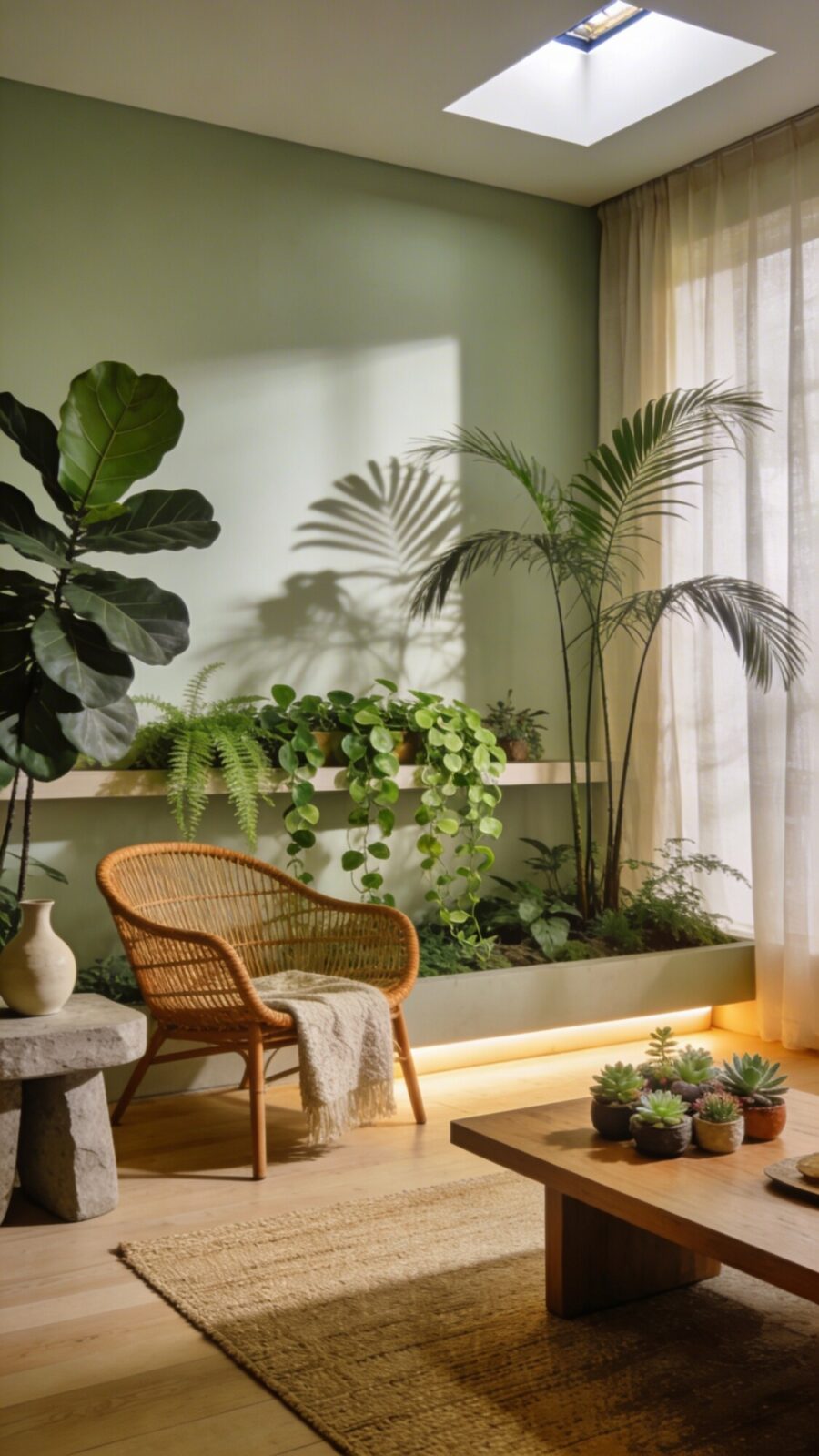
A biophilic approach built around plants at varying heights, natural materials (rattan, stone, wood flooring), and soft, diffused light. Sage greens, warm beiges, and soft creams keep the palette calm.
What to include
- Indoor plants at varying heights — tall, shelf-level, and tabletop
- Rattan, stone, and wood elements
- Soft, diffused lighting rather than harsh overhead light
Be realistic about plant care before committing to this one. A room full of dying or leggy plants undercuts the calm effect faster than almost any other design mistake on this list — if you don’t have reliable light or you travel often, start with two or three low-maintenance plants rather than the full “mini jungle” version.
Working With a Small Living Room: Ceiling and Layout Tricks That Matter
None of the nine aesthetics above are off-limits in a small room, but a few structural choices affect how any of them read in tight square footage more than the style itself does.
A well-planned small living room false ceiling design can make a boxy room feel more intentional without lowering the perceived height the way a poorly planned one can. The safest approach for compact rooms is a partial or perimeter false ceiling — a shallow border with cove lighting — rather than a full drop ceiling, which eats vertical space you likely can’t spare. Among common living room false ceiling designs, simple gypsum coves with warm LED strip lighting tend to suit small rooms better than heavily tiered or textured ceilings, which can visually shrink the space.
Beyond the ceiling, furniture scale is the other big lever. Modern living room designs small spaces tend to favor low-profile sofas, furniture with visible legs (so light passes underneath), and one large rug rather than several small ones — all of which read as more open than a room packed with bulkier, floor-hugging pieces, regardless of which of the nine aesthetics you’re chasing.
💡 Pro Tip: If you’re deciding between a full false ceiling and a partial one, measure your actual ceiling height first. Below roughly 9 feet, a full false ceiling with center dropping usually reads as low and heavy; a shallow perimeter border keeps most of the room’s height while still adding a finished look.
Comparing the Nine Aesthetics
| Aesthetic | Best Room Size | Upkeep Level | Easiest to Get Wrong By |
|---|---|---|---|
| Cozy Minimalism | Small to medium | Low | Skipping warm lighting and texture |
| Scandinavian Desert Dream | Medium, needs daylight | Low | Trying it in a low-light room |
| Moody Glam | Medium to large | Medium | Not adding enough artificial light |
| Japandi | Small to medium | Low | Using more than one accent color |
| Cozy Eclectic Pop | Any size | Medium | Buying everything at once |
| Mid-Century Modern | Medium | Low | Overcrowding with too many statement pieces |
| Industrial Loft | Large, high ceilings | Medium | Attempting it without real architectural bones |
| Soft Urban Boho | Any size | Medium-high | Overloading small greenery instead of a few larger plants |
| Nature-Inspired Zen | Any size, needs light | Medium-high (plant care) | Underestimating plant maintenance |
Things to Consider Before You Commit to a Look
- How much daylight does the room actually get, at the time of day you’ll use it most?
- Do you have pets or young kids? Some fabrics (velvet, light linen) show wear faster than others.
- Is this a rental? If so, favor styles built from furniture and textiles over ones that need wall or ceiling changes.
- What’s your realistic budget for the first pass — and are you okay building it gradually, or do you want it done in one trip?
- Ceiling height: below 9 feet, avoid heavy drop ceilings and oversized furniture regardless of aesthetic.
FAQ
Which living room aesthetic is cheapest to start with?
Cozy minimalism and cozy eclectic pop are the two easiest to build up gradually with secondhand or existing furniture, since neither depends on a specific wall color or permanent change — you’re mostly working with textiles, lighting, and a few key pieces.
Can I mix two of these aesthetics in one room?
Yes, and most real living rooms end up as a blend rather than a pure version of one style. The two that combine most naturally are cozy minimalism and Japandi, since they share the same neutral, low-clutter base — you’re mainly adjusting accent details between them.
Do I need a false ceiling to make a small living room look finished?
No — it’s optional, not required. A false ceiling can add polish, but in many small rooms, better lighting and furniture scale do more for the finished look than a ceiling treatment does, especially if the room already has under 9 feet of height.
Which aesthetic works best if I have kids or pets?
Cozy minimalism, mid-century modern, and industrial loft tend to hold up best, since they lean on more durable materials — wood, leather, performance fabric — rather than light-colored linen or delicate velvet that shows stains and wear quickly.
How long does it typically take to pull one of these looks together?
A minimalist or Japandi refresh can come together in a weekend if you’re mainly swapping textiles and lighting. Eclectic and boho styles usually take longer by design — they’re meant to be assembled gradually, and rushing them tends to produce a cluttered result instead of a curated one.
Our Take
If you’re not sure where to start, begin with cozy minimalism or Japandi. Both are low-risk, reversible, and give you a base you can layer other elements onto later — a bolder rug, a moody accent wall in a nook, a gallery wall — without committing to a full redo. Save moody glam and industrial loft for rooms that genuinely have the light and ceiling height to support them; forcing either into a small, low-ceilinged space is the most common reason a “dramatic” living room ends up looking cramped instead. For more direction on bolder palettes once you’ve got the basics settled, our colorful living room inspiration guide is a natural next stop.