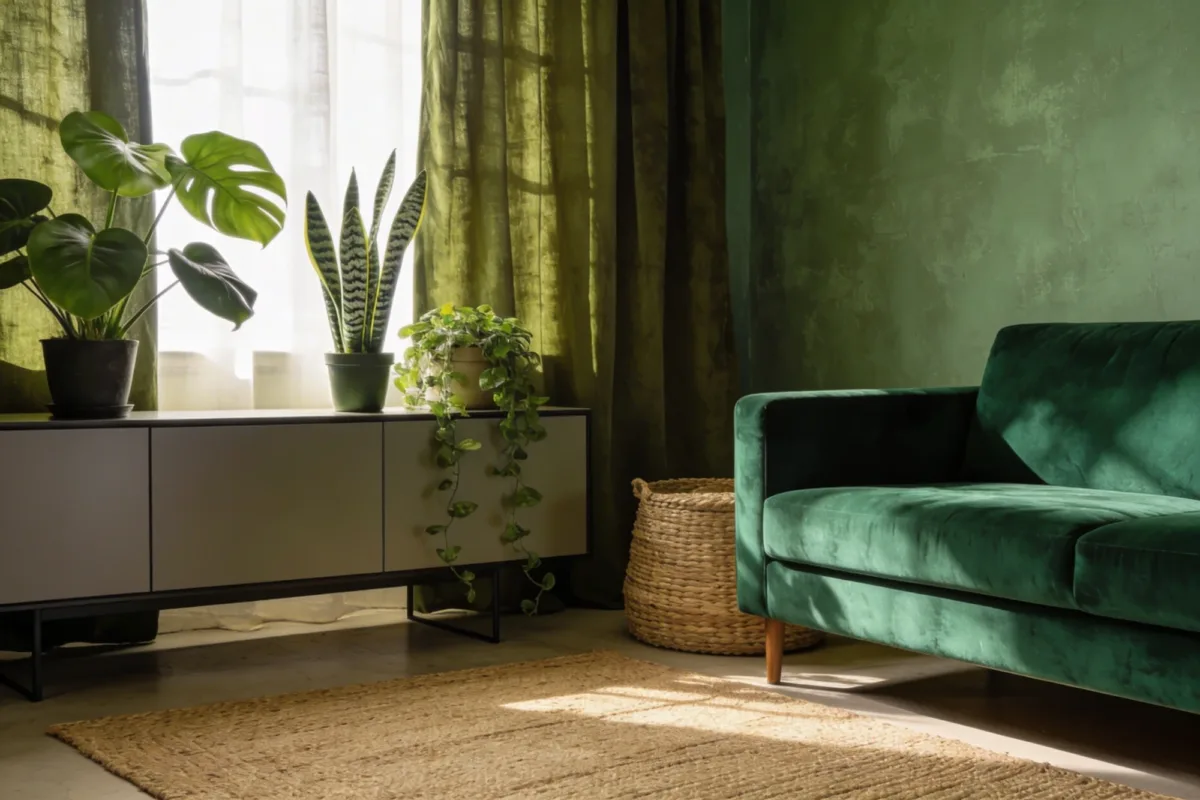
6 Living Room Inspiration Green That Pops with Texture
Green is one of the few colors that works as both a background and a statement, which is exactly why it’s tricky to get right. Go too dark and a room feels closed in. Go too bright and it reads like a kids’ playroom. Good living room inspiration green ideas usually pick one green — one shade, one saturation level — and build the rest of the palette around it, rather than mixing five greens and hoping they cooperate. If you’re comparing it against other bold directions, colorful living room inspiration with bolder hues is a useful reference point for how much color saturation your space can actually handle.
Below are six approaches to a green living room that hold up in real rooms, not just styled photos, starting with the one that requires the least commitment.
Quick Takeaways
- Pick one green family (emerald, olive, or sage) and stay in it — mixing all three in one room is the most common mistake.
- Texture does more work than color variation. A velvet sofa, a jute rug, and linen curtains in the same green family read as intentional; five different fabrics in five different greens read as chaotic.
- Plants are the lowest-cost, lowest-risk way to test a green color scheme living room before painting anything or buying a green sofa.
- Sage and olive are more forgiving in small or low-light rooms than emerald, which needs more natural light to avoid looking murky.
- Layered lighting changes how green reads more than almost any other factor — the same sofa looks different at 2pm versus under a warm lamp at 8pm.
1. Build an Emerald Room Through Texture, Not Just Color
An emerald green living room lives or dies on texture variety, not on how saturated the green itself is. A flat emerald wall with a flat emerald sofa looks like a paint swatch. The same color across velvet, jute, and linen looks layered and considered, because each material catches light differently — velvet gleams, linen diffuses, jute stays matte and grounded.
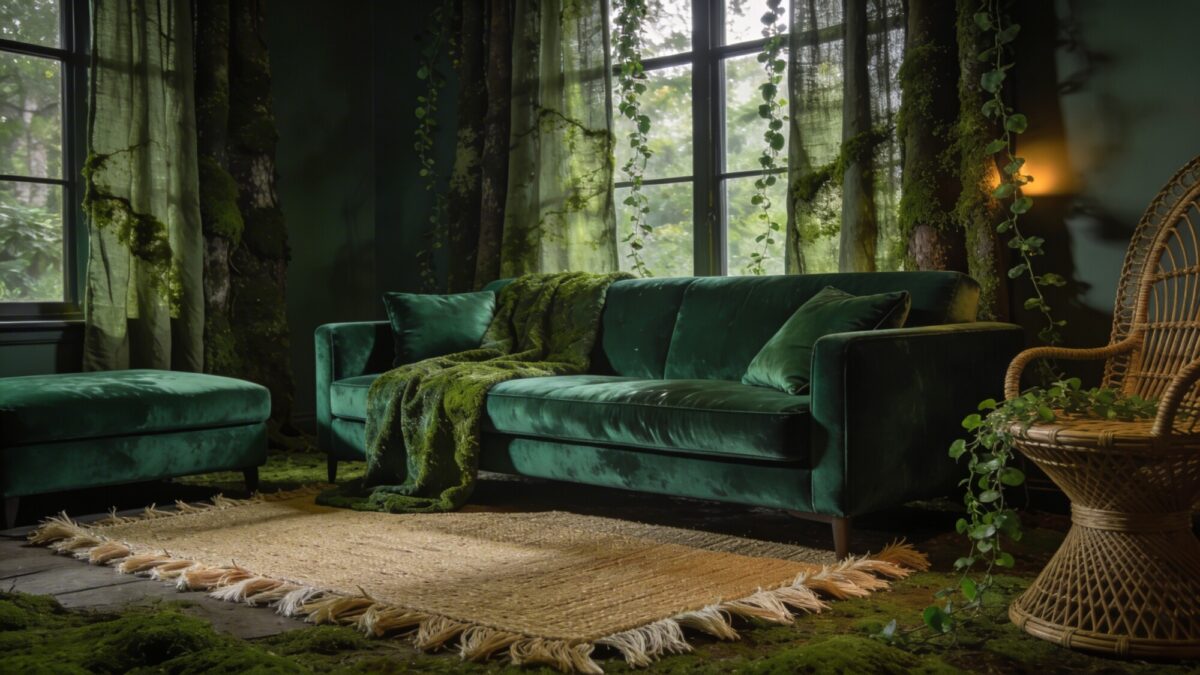
Materials That Pull This Off
- A velvet sofa or ottoman for the main color statement — velvet holds saturated color better than most other fabrics
- A jute or sisal rug with a natural, slightly frayed edge to ground the space
- Linen curtains in a slightly muted, mossy tone rather than matching the sofa exactly
💡 Pro Tip: Don’t match your curtains to your sofa’s exact green. A shade or two lighter or more muted keeps the room from looking like a matched furniture set from a single catalog page — it should look collected, not coordinated.
2. Use Plants as Your Lowest-Risk Test Run
If you’re not ready to commit to a green sofa or a painted accent wall, plants are how you find out whether you actually like living with green before spending real money. This is also the step most people get wrong in the opposite direction — not too little greenery, but too much, all at once, with no plan for keeping it alive.
You don’t need a plant wall to get the effect. Three to five plants at different heights — one tall, one trailing, a couple of small ones for color pops — reads as intentional. Twenty small pots crammed onto every surface reads as clutter, and it’s a maintenance load most people don’t keep up with past month two.
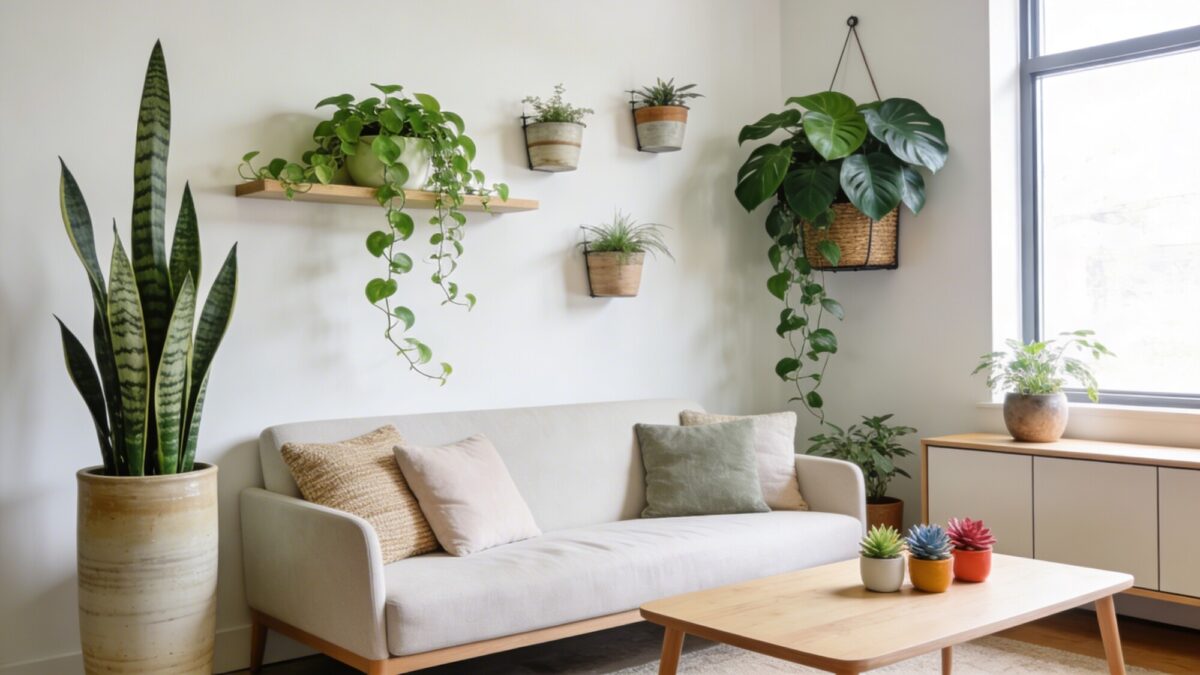
Reliable Picks by Light Level
- Snake plant or pothos — tolerate low light and irregular watering, good for rooms without much direct sun
- Philodendron with trailing vines — works well on a shelf or wall-mounted planter where you want movement
- Small succulents — best on a coffee table with decent light, not as a low-light substitute
One thing that’s easy to miss: a “green wall” made from wall-mounted planters needs actual structural support if you’re using anything larger than a small pot — check what your wall can hold before drilling five brackets into drywall.
3. Go Monochrome With One Green Core
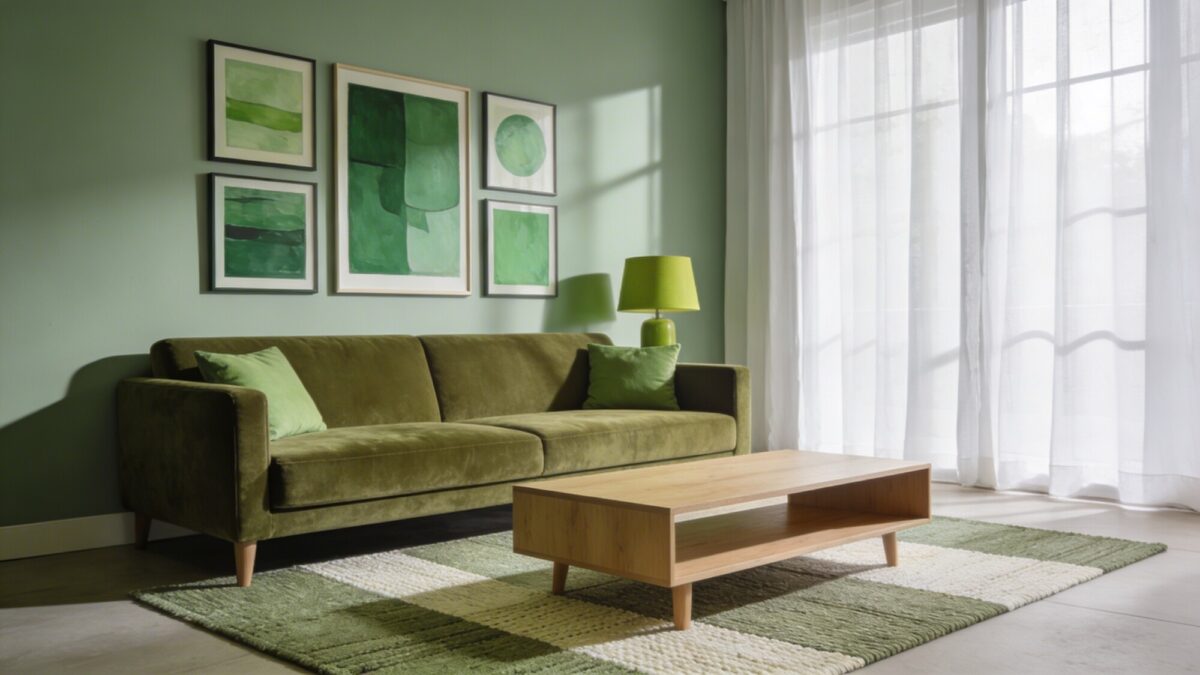
A sage green living room built around a single tonal family tends to photograph and live better than a room with several competing greens. The formula is simple: soft sage on the walls, a slightly deeper olive or emerald on the main upholstery, and one bright accent color used sparingly — lime or chartreuse on a single pillow or lampshade, not spread across the room.
How the Layers Break Down
| Layer | Role | Example |
|---|---|---|
| Base | Largest surface area, most muted tone | Soft sage walls |
| Core | Main furniture piece, medium saturation | Olive or emerald sofa |
| Accent | Smallest surface area, brightest tone | Lime pillow or chartreuse lampshade, kept to one zone |
The trade-off with monochrome is that it’s forgiving but can flatten out if every surface is the same intensity of green. That’s what the bright accent layer is for — it needs to exist somewhere in the room, just not everywhere.
4. Sculpt a Green Nook With Built-In Seating
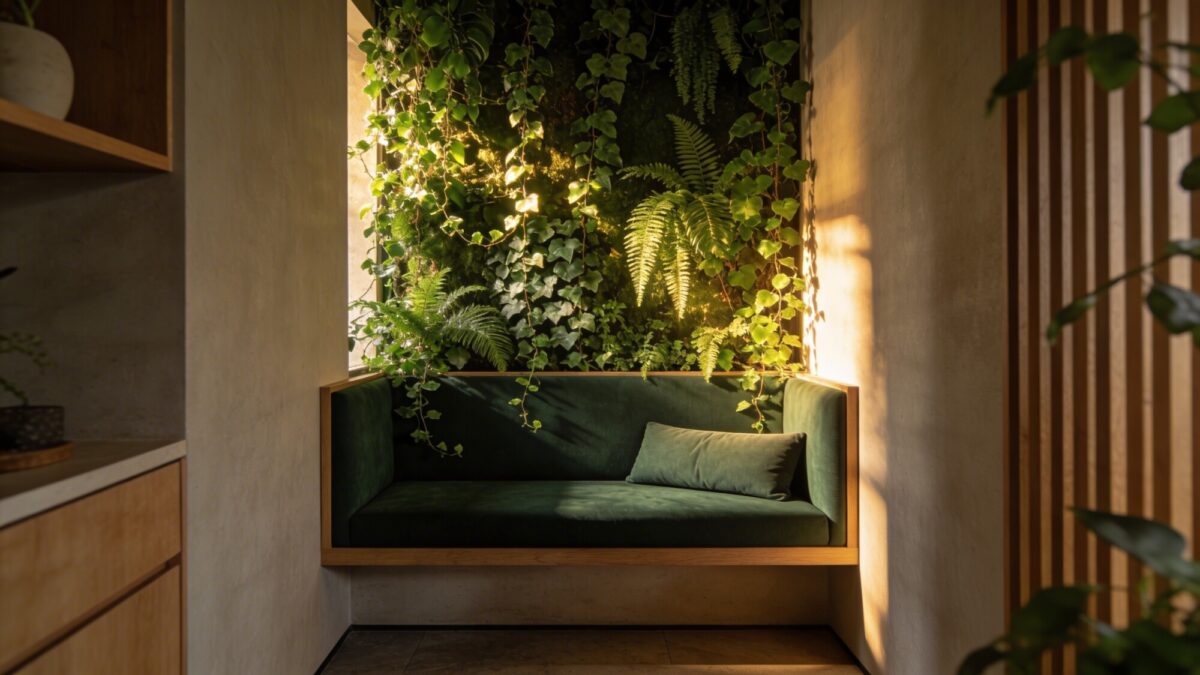
This one takes more effort than the others but gives a room something a green lounge idea rarely has: a genuine focal point that isn’t a TV. A built-in bench with deep green upholstery, backed by a wall of trailing greenery, works especially well in an awkward corner or a window nook that doesn’t know what else to do with itself.
What Makes It Work
- Choose a deep green upholstery for the bench itself — lighter greens tend to show wear faster in a high-traffic seating spot.
- Keep the wall behind the greenery neutral so the plants read as the visual layer, not competing with a patterned wallpaper.
- Add one slim cushion, not a pile — this is meant to read as architectural, not as an extra sofa.
A built-in like this is a bigger commitment than paint or plants, so it’s worth checking whether an organic modern living room approach fits your existing layout before building anything permanent — the styles overlap enough that you might get most of the effect with furniture placement alone.
5. Layer Lighting So the Green Actually Reads Right
Green shifts more under different light than almost any other color in a room. The same olive sofa can look rich and warm under a 2700K lamp in the evening and slightly murky under a cool overhead LED during the day. This is the step people skip, and it’s often why a green room “looks different than the photo.”
A Practical Lighting Layout
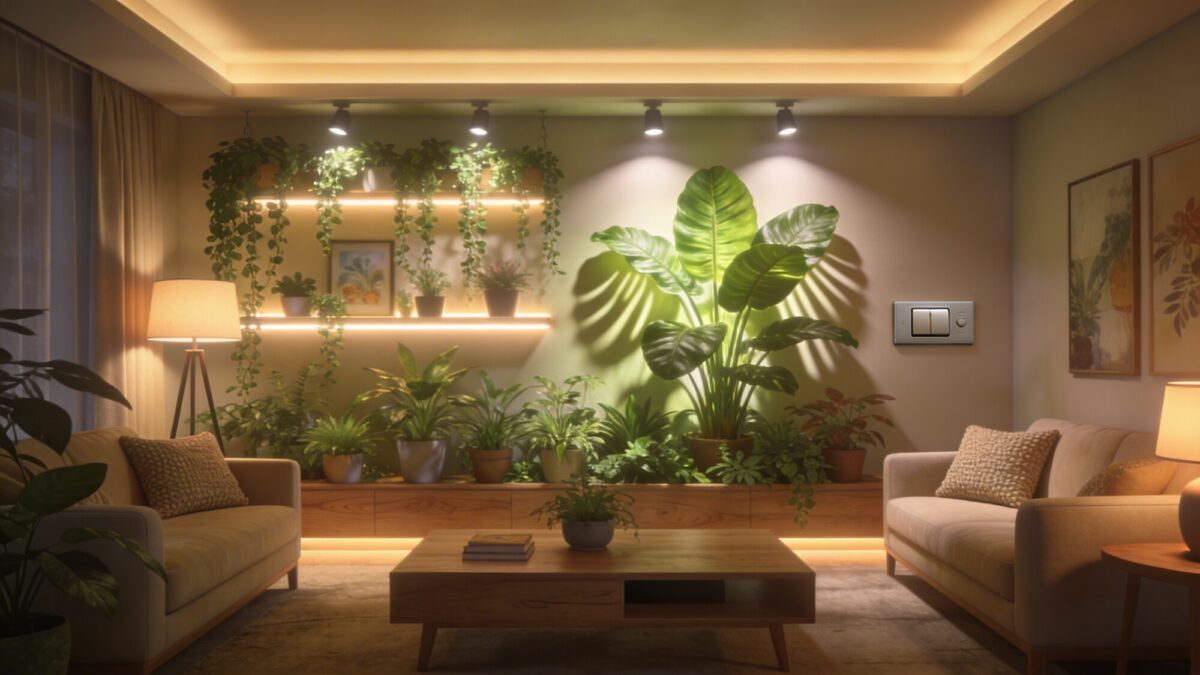
- Warm-toned ceiling light (2700–3000K) for general ambient glow
- A floor lamp near the main seating area for evening reading
- Small spotlights or an LED strip aimed at plants or artwork to add depth after dark
- Dimmers wherever you can install them — full brightness and 40% brightness will make the same green look like two different colors
💡 Pro Tip: Before committing to a green paint color or a green sofa fabric, look at the swatch or sample under your room’s actual evening lighting, not just daylight. A green that looks perfect at noon can go flat or gray once the sun goes down and your lamps take over.
6. Add Green Through Art and Small Decor Instead of Furniture
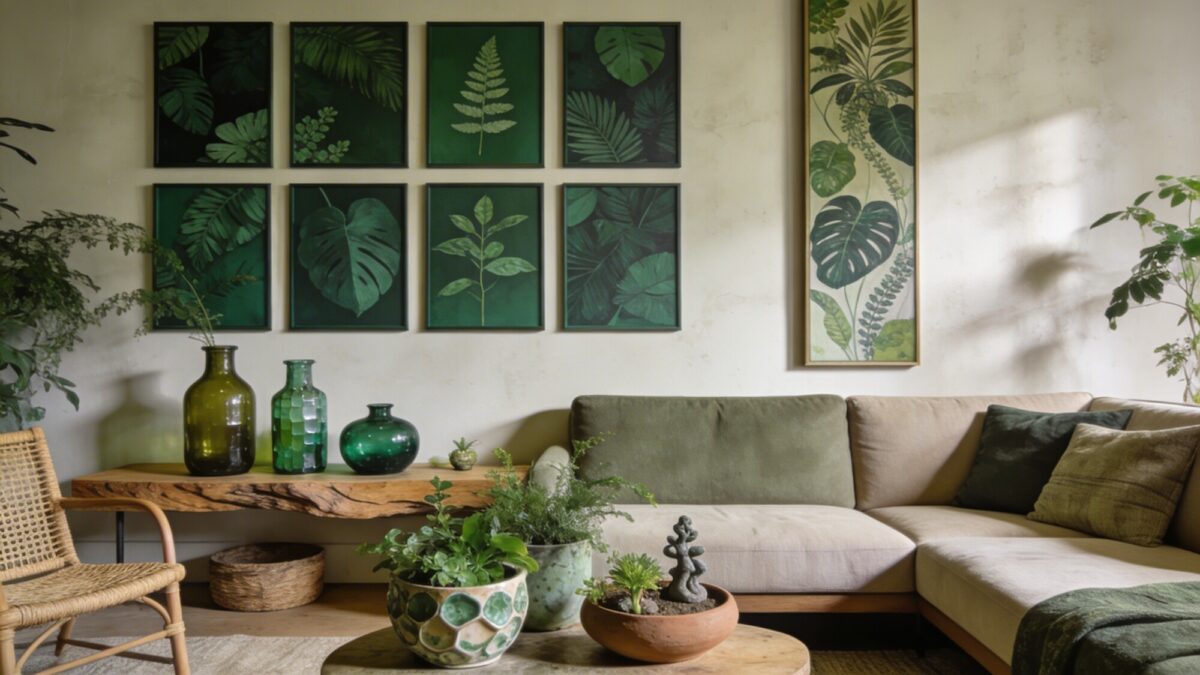
If a full green interior design living room feels like too much commitment, this is the entry point. Botanical prints, a few recycled glass vases in olive or emerald, and ceramic planters with visible texture let you build a green color scheme living room without buying a single new piece of furniture.
Low-Commitment Green Decor
- A grid of botanical prints in varying shades of green on one wall
- Recycled or hand-blown glass vases in olive and emerald tones on a console
- Ceramic planters with visible texture — matte and slightly rough reads more considered than glossy
This is also the easiest step to walk back if it doesn’t work for the room — swapping out art and a few vases costs nothing close to repainting a wall or reupholstering a sofa.
Which Approach Fits Your Room?
| If your room is… | Start with | Why |
|---|---|---|
| Small or low on natural light | Sage monochrome (#3) or plants (#2) | Sage and greenery stay light and airy; deep emerald can feel heavier in dim rooms |
| Large with good natural light | Emerald with texture (#1) or built-in nook (#4) | Bigger, brighter rooms can handle saturated green without feeling closed in |
| A rental or short-term space | Plants (#2) or art and decor (#6) | No painting or built-ins required, fully reversible |
| Already has good bones, needs a focal point | Built-in nook (#4) | Turns an awkward corner into the room’s best feature |
Things to Check Before You Commit to a Green Palette
- How much natural light does the room get during the day, and what does your lighting look like after dark?
- Are you drawn to one green family (sage, olive, emerald) or are you mentally mixing several — because that’s worth settling before you buy anything?
- Do you have a spot in the room that could support a plant cluster or wall-mounted planters without overcrowding foot traffic?
- Is this a rental where paint and built-ins aren’t an option, pointing you toward plants and decor instead?
- What’s the one accent color (if any) you want to pair with the green — lime, chartreuse, a warm neutral?
Pros and Cons of a Green Living Room
- Pro: Green pairs naturally with wood tones and natural fibers, so it tends to age better than trend-driven colors.
- Pro: Scales easily — you can start with a single plant and work up to a full sofa without redoing earlier steps.
- Con: Darker greens (deep emerald or forest) can make a small or dim room feel smaller if used on large surfaces without enough light.
- Con: Mixing too many green shades in one room reads as unintentional rather than layered — this is the single most common styling mistake with green rooms.
FAQ
What’s the easiest way to start with green living room decor?
Plants. Three to five at varying heights costs less than any paint or furniture change and lets you live with green in the room before committing further.
Is sage or emerald better for a small room?
Sage, generally. It’s lighter and more reflective, so it won’t close a small room in the way a deep emerald can, especially if the room doesn’t get much direct light.
Can I mix green with other bold colors?
Yes, but keep the bold second color to accents only — a pillow, a lampshade, a vase — rather than a second large surface. Two saturated colors competing for the same visual weight usually fights rather than complements.
Do I need a green sofa to make this work?
No. Art, plants, and a green rug or throw can carry the look without the biggest and most expensive piece in the room needing to change.
How do I keep a green room from looking dated in a few years?
Lean on natural materials — wood, jute, linen, ceramic — over trend-specific accessories. The green itself has stayed a stable choice for years; what dates a room faster is a specific accent shape or pattern going out of style.
Our Take
Green living room ideas work best when they commit to one shade family and let texture, not color-mixing, do the visual work. If you’re unsure where to start, plants are the honest answer — they cost little, they’re reversible, and they’ll tell you within a few weeks whether green is a color you actually want to live with at scale.
If green ends up being one of several directions you’re weighing, it’s worth looking at how it holds up next to modern living room inspiration with bolder, calmer palettes before you settle on a final direction.