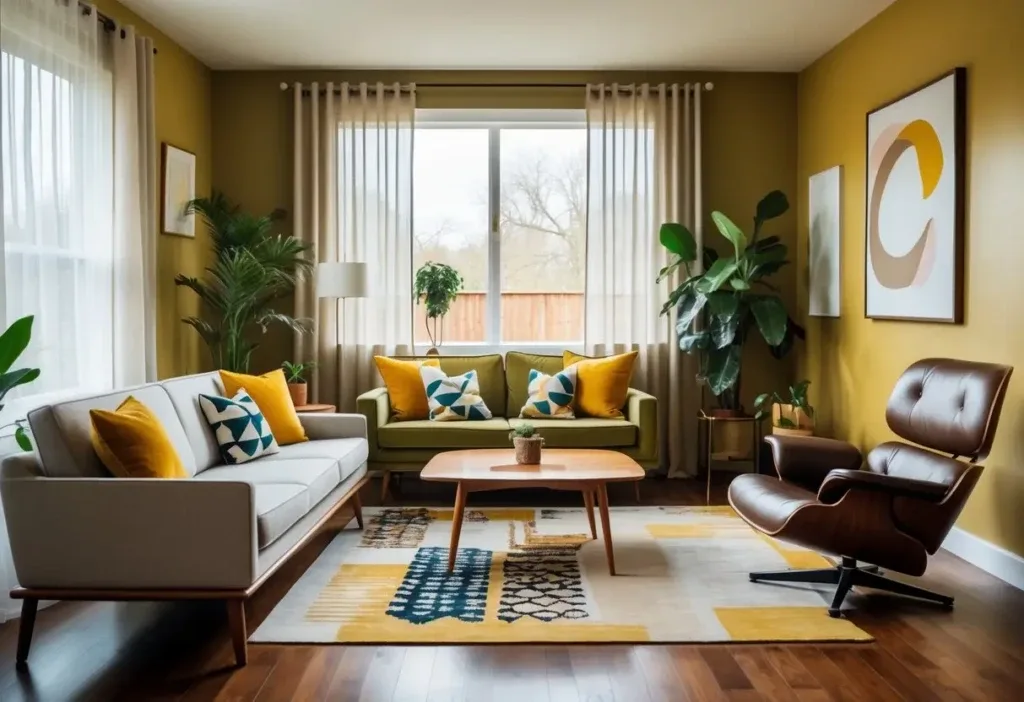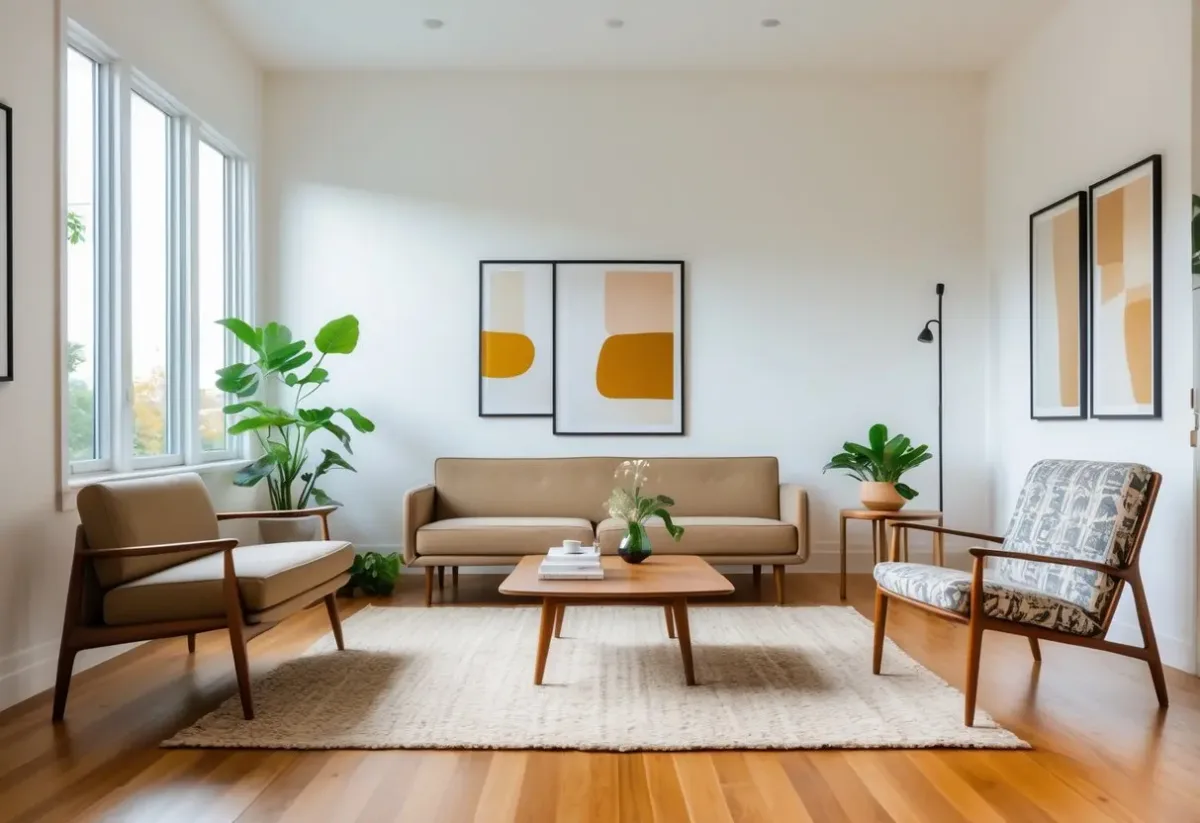
You can make a mid century modern living room that feels timeless and livable by focusing on clean lines, warm woods, and simple, functional pieces. Choose a few iconic shapes, mix tactile materials, and keep clutter out to create a room that looks pulled together and easy to live in. This post will show how to pick the right furniture, colors, and lighting, and how to arrange the space so it flows well and feels balanced. You’ll learn which materials and accents give the style its warmth, and how to add modern touches without losing the classic midcentury feel. Table of ContentsCore Principles of Mid Century Modern Living Room DesignDefining CharacteristicsHistorical ContextEmphasis on FunctionalityEssential Furniture ChoicesIconic Sofa StylesFunctional Coffee TablesAccent Chairs and OttomansMedia and Storage SolutionsColor Palettes and Material SelectionPopular Color SchemesNatural Wood FinishesTextiles and UpholsteryMetal and Glass AccentsSpatial Layout and FlowOpen Floor PlansBalanced ProportionsFurniture ArrangementLighting and Décor ElementsStatement Lighting FixturesDecorative ArtworkHouseplants and GreeneryIncorporating Contemporary TouchesBlending Modern and Vintage PiecesSmart Home Integration Core Principles of Mid Century Modern Living Room Design You’ll find clean lines, practical layouts, and a focus on natural materials. The style values simple furniture, warm woods, and lighting that supports how you use the room. Defining Characteristics Mid-century modern uses simple geometric shapes and low-profile furniture. Look for sofas with straight or gently tapered legs, molded plastic or plywood chairs, and tables with slender, angled legs. Surfaces stay uncluttered; use a few well-chosen accessories like a sculptural lamp or an abstract print. Color palettes pair warm wood tones with muted accent colors such as mustard, teal, or olive. Fabrics lean toward solid weaves or small-scale patterns that don’t compete with furniture silhouettes. Materials often include walnut, teak, leather, brass, and molded fiberglass. Lighting matters: choose floor lamps with arc arms, pendant lights with clean domes, or sputnik chandeliers. These pieces act as focal points and add sculptural interest without excess ornament. Historical Context Mid-century modern grew from 1940s–1960s design trends after World War II. Designers focused on mass-producible furniture that combined comfort with modern materials like bent plywood and molded plastics. Key figures included Charles and Ray Eames, Eero Saarinen, and George Nelson, who created pieces that remain widely produced and copied today. Postwar housing needs shaped the aesthetic: open plans, large windows, and indoor-outdoor flow became common. You’ll often see living rooms designed to connect visually to patios or gardens. The movement borrowed ideas from Scandinavian design—simplicity, functionality, and craftsmanship—which helps explain the warm, human scale of many pieces. Emphasis on Functionality Every piece in a mid-century living room should serve a purpose. Choose furniture that supports how you live: a lounge chair that invites reading, a sofa deep enough for naps, and a coffee table at the right height for drinks and magazines. Avoid purely decorative items that add clutter. Storage solutions stay integrated and minimal. Use sideboards, low media consoles, and built-in shelving to hide electronics and keep surfaces clear. Arrange seating to support conversation and traffic flow, and position lighting for tasks like reading or playing games. Durability matters: select quality woods and performance fabrics so your furniture lasts. Function and form work together so the room feels useful, calm, and inviting. Essential Furniture Choices Choose pieces that balance clean lines, warm wood, and functional use. Prioritize scale, leg height, and material when picking each item so your living room looks cohesive and stays comfortable. Iconic Sofa Styles Pick a sofa with a low profile, tapered wooden legs, and a simple silhouette. Look for a tight back or single long seat cushion in fabrics like wool, tweed, or leather for authentic mid-century character.Measure the room first: a 76–90 inch sofa fits most living rooms, while a smaller 60–72 inch loveseat works for tight spaces. Seat height near 17–18 inches keeps proportions true to the style and feels comfortable for most people. Choose muted base colors—charcoal, olive, mustard, or warm tan—and add a single bold accent pillow if you want contrast. If you need extra durability, pick performance fabric rated for heavy use. For visual lightness, avoid skirted bases; exposed legs and a clear under-seat space make the room feel airy. Functional Coffee Tables Select a coffee table that complements the sofa’s scale and lets traffic flow around it. Round or kidney-shaped tables work well in smaller or busy layouts because they reduce sharp corners. For larger, rectangular layouts, a long low table (14–16 inches high) aligns with mid-century proportions. Materials matter: solid walnut, teak veneers, or walnut-stained MDF feel period-correct. Look for integrated storage like a lower shelf or a small drawer if you need to hide remotes and magazines. Keep clearance of 14–18 inches between the sofa seat and table edge so people can reach drinks but still move comfortably. Mix finishes sparingly. If your sofa is leather, choose a wood table; if the sofa is neutral fabric, a glass-topped table with wood legs can add lightness. Avoid overly ornate details; favor clean edges and subtle curves. Accent Chairs and Ottomans Use accent chairs to add color, texture, or geometry without crowding the room. Classic options include lounge chairs with a winged back, a shell chair with a curved plywood frame, or a minimalist slipper chair. Pick one statement piece or two matching chairs depending on your seating needs. Ottomans should match the chair scale and serve multiple roles: extra seating, a footrest, or a tray surface. Standard ottoman height should sit within 1–2 inches of the sofa or chair seat height for comfort. Choose durable upholstery if the ottoman will double as a coffee table. Place chairs to create a conversational triangle with the sofa and coffee table. Keep 24–36 inches between chairs and the table for easy movement. If you add patterned fabric, limit pattern use to one or two pieces to avoid visual clutter. Media and Storage Solutions Choose low, long media consoles with raised legs and simple hardware to keep a mid-century look. Typical widths range from 48–72 inches, depending on TV size. Keep the console depth shallow (14–18 inches) so it doesn’t dominate the room. Look for pieces with a mix of open shelves and closed compartments. Open shelving lets you display books or records; cabinets hide cables, games, or extra throws. Built-in cable management and cutouts at the back make wiring cleaner. If you need extra storage, add a narrow sideboard or wall-mounted floating shelves rather than bulky bookcases. Match wood tones across major furniture pieces or use one dominant wood with small accents in metal or glass for contrast. Color Palettes and Material Selection Choose colors that balance warm neutrals with one or two bold accents. Pick materials that show grain and texture, and mix soft fabrics with sleek metals and glass for contrast. Popular Color Schemes Mid-century palettes pair warm neutrals with saturated accents. Start with a base of warm white, cream, or soft beige for walls. Add a dominant wood tone in furniture to anchor the room. For accents, use mustard yellow, olive green, teal, or burnt orange on pillows, a rug, or an armchair. Limit bold colors to one or two areas so they read as intentional, not busy. Include a deep navy or chocolate brown for depth in drapery or a sofa. Use paint sheens strategically: matte walls, eggshell for trim, and satin on high-touch surfaces. Test swatches in natural and artificial light before committing. Natural Wood Finishes Select woods with visible grain: walnut, teak, and oak suit mid-century style. Choose a consistent wood tone for large pieces—media console, dining table, or bookshelf—to create cohesion. Go for satin or low-sheen finishes that highlight texture without high gloss. Maintain contrast by pairing darker walnut pieces with lighter oak accents or a pale wood floor. Keep joinery clean: tapered legs and simple edges define the look. Protect surfaces with clear finishes or oil that deepens color and resists wear. Refinish vintage pieces to restore grain rather than strip their character. Textiles and Upholstery Pick textiles with solid colors, subtle geometrics, or low-contrast patterns. Use tightly woven fabrics like wool blends, boucle, leather, or durable tweed for sofas and chairs. These hold shape and fit the era’s look. Combine textures: a smooth leather sofa, a nubby wool rug, and linen curtains add tactile interest. Choose upholstery colors that support your accent palette—teal sofa with mustard pillows, or neutral sofa with an olive armchair. Consider wear and cleaning: opt for removable cushion covers or stain-resistant treatments in high-traffic homes. Add throw pillows and a patterned rug to introduce color without long-term commitment. Metal and Glass Accents Introduce metals sparingly to keep the room light. Brass, matte black, and brushed steel work well for lighting, table bases, and hardware. Choose warm brass for vintage warmth or black for modern contrast. Use glass for coffee and side tables to preserve sightlines and showcase wood legs. Tempered glass tops paired with slim metal frames maintain the clean mid-century silhouette. Keep metal finishes consistent across fixtures and hardware to avoid visual clutter. Use small decorative objects—mirrors, lamps, vase—to repeat metal tones and tie the room together. Spatial Layout and Flow You will focus on creating clear paths, balanced proportions, and purposeful furniture groupings. These choices control how you move through the room and how the space feels during everyday use. Open Floor Plans Keep sightlines clear between the living area, dining space, and entry. Use low-profile furniture like a mid-century sofa or a console table to define zones without blocking light or movement. Place rugs to anchor seating areas; rugs should be large enough that at least the front legs of major pieces sit on them. Use partial dividers—like a narrow shelving unit or a low credenza—if you need separation. These let air and light flow while giving visual boundary. Maintain a minimum circulation path of 30–36 inches between furniture edges so two people can pass comfortably. Balanced Proportions Match furniture scale to room size. In a 12×15 foot room, choose a sofa around 72–84 inches and pair it with a lounge chair and compact coffee table to keep proportions right. Tall pieces belong against walls; low, long pieces work along sightlines. Balance visual weight across the room. If you place a heavy wooden media console on one wall, counter it with a cluster of slim-legged chairs or a vertical plant on the opposite side. Keep window areas free of bulky items to preserve natural light and maintain the airy mid-century feel. Furniture Arrangement Arrange seating to promote conversation and face the room’s focal point—fireplace, window, or media wall. Create a main seating group with the sofa and two chairs placed 8–12 feet apart for comfortable talking. Keep coffee tables about 14–18 inches from the sofa for reachability. Leave space behind furniture for flow. Back-to-back arrangements work in open plans: a sofa back can subtly divide living and dining without a wall. Use symmetry sparingly; asymmetrical groupings often feel more relaxed in mid-century rooms. Lighting and Décor Elements Choose lighting that doubles as art, pick a few bold pieces of wall art, and add low-maintenance plants to bring warmth and life to the room. Statement Lighting Fixtures Pick one or two focal light pieces rather than many small lamps. A sputnik chandelier or an arched floor lamp with a large shade works well over seating areas. Aim for clean metal finishes like brass, matte black, or aged bronze to match wood tones and leather. Use layered lighting: a bright overhead for tasks, a dimmable main fixture for mood, and a floor or table lamp for reading. Install a dimmer on the central fixture so you can shift the room from bright to cozy without changing lamps. Position floor lamps beside sofas or chairs with 18–24 inches of clearance for easy use. Choose bulbs with warm color temperature (2700–3000K). That gives natural skin tones and warms wood furniture. If you like vintage style, add an exposed filament LED to keep the retro look with low energy use. Decorative Artwork Select 2–4 art pieces that use simple shapes, geometric patterns, or abstract mid-century motifs. Large-scale prints or framed original art make a stronger statement than many small prints. Keep frames slim and simple—wood or black metal works best. Balance art placement with furniture height. Hang a piece so its center sits about 56 inches from the floor, or align a gallery arrangement with the back of a sofa. Use one piece above the sofa as an anchor and smaller works on adjacent walls. Mix materials—ceramic wall sculptures, framed prints, and a sculptural mirror—to add texture without clutter. Stick to a restrained palette that ties into your textiles and rugs for cohesion. Houseplants and Greenery Choose plants with clear shapes and low fuss. Rubber plants, snake plants, fiddle-leaf figs, and pothos fit mid-century style and are easy to care for. Place a tall plant near a window or in a corner to add vertical interest. Use simple planters: tapered ceramic, teak, or woven baskets that echo your furniture tones. Group smaller plants on side tables or a credenza in odd numbers (3 or 5) to create a natural vignette. Mind light needs and watering routines. Put sun-loving plants near bright windows and low-light varieties in shaded corners. Rotate plants monthly so growth stays even and keep pots on trays to protect floors from water. Incorporating Contemporary Touches Use clean, current elements to update the mid-century look without losing its warmth. Focus on scale, materials, and tech that fit the room’s lines and wood tones. Blending Modern and Vintage Pieces Place vintage anchors like a teak credenza or an Eames-style lounge near modern items to create balance. Match heights and visual weight: pair a low vintage sofa with a slim modern coffee table, or swap in a contemporary lamp with a retro side table. Keep finishes cohesive. If you have walnut or teak wood, add matte black or brushed brass accents to tie pieces together. Limit patterns to one or two areas—throw pillows or a rug—so grain and shape remain the focus. Use scale thoughtfully. Avoid oversized modern sofas that overpower mid-century profiles. Instead, choose streamlined silhouettes and open-leg furniture to maintain the airy, uncluttered feel. Smart Home Integration Add smart features that sit quietly in the room. Choose in-wall smart switches or dimmers with simple faces so controls don’t compete with vintage hardware. Hide hubs and routers in a low cabinet or behind a credenza. Pick devices with neutral finishes. A smart speaker in fabric or matte black blends with wood tones better than glossy plastic. Integrate smart lighting scenes that mimic warm incandescent light in the evening to keep the era’s cozy feel. Plan wiring early. If you want a wall-mounted TV, route cables inside the wall or through a slim raceway painted to match the wall so the clean lines stay intact.
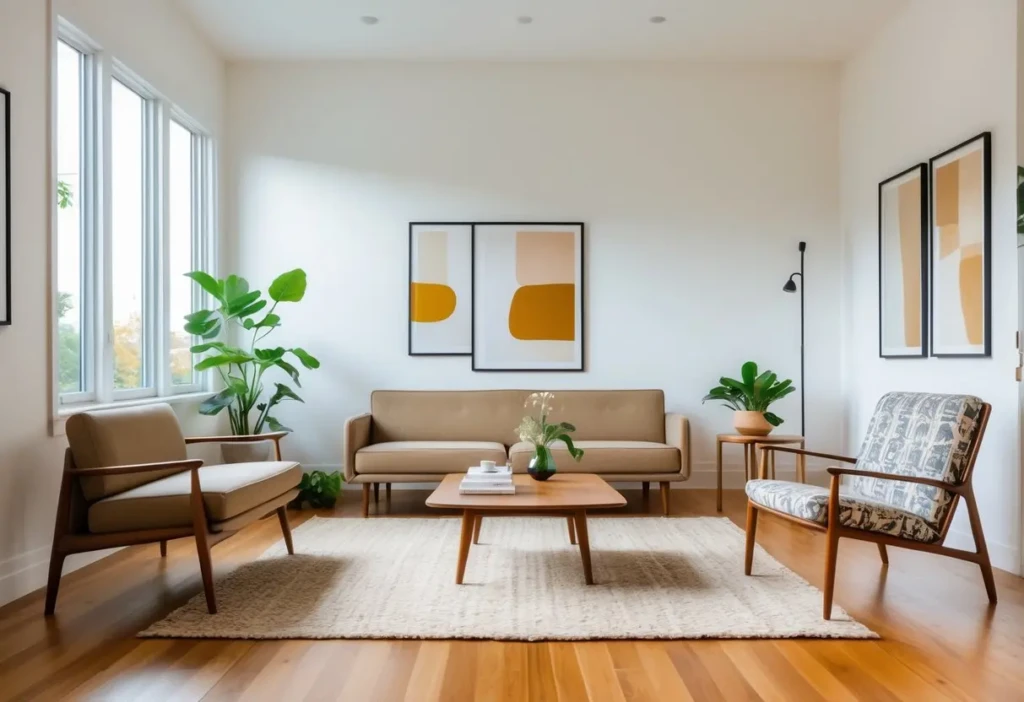
You can make a mid century modern living room that feels timeless and livable by focusing on clean lines, warm woods, and simple, functional pieces. Choose a few iconic shapes, mix tactile materials, and keep clutter out to create a room that looks pulled together and easy to live in.
This post will show how to pick the right furniture, colors, and lighting, and how to arrange the space so it flows well and feels balanced. You’ll learn which materials and accents give the style its warmth, and how to add modern touches without losing the classic midcentury feel.
Core Principles of Mid Century Modern Living Room Design
You’ll find clean lines, practical layouts, and a focus on natural materials. The style values simple furniture, warm woods, and lighting that supports how you use the room.
Defining Characteristics
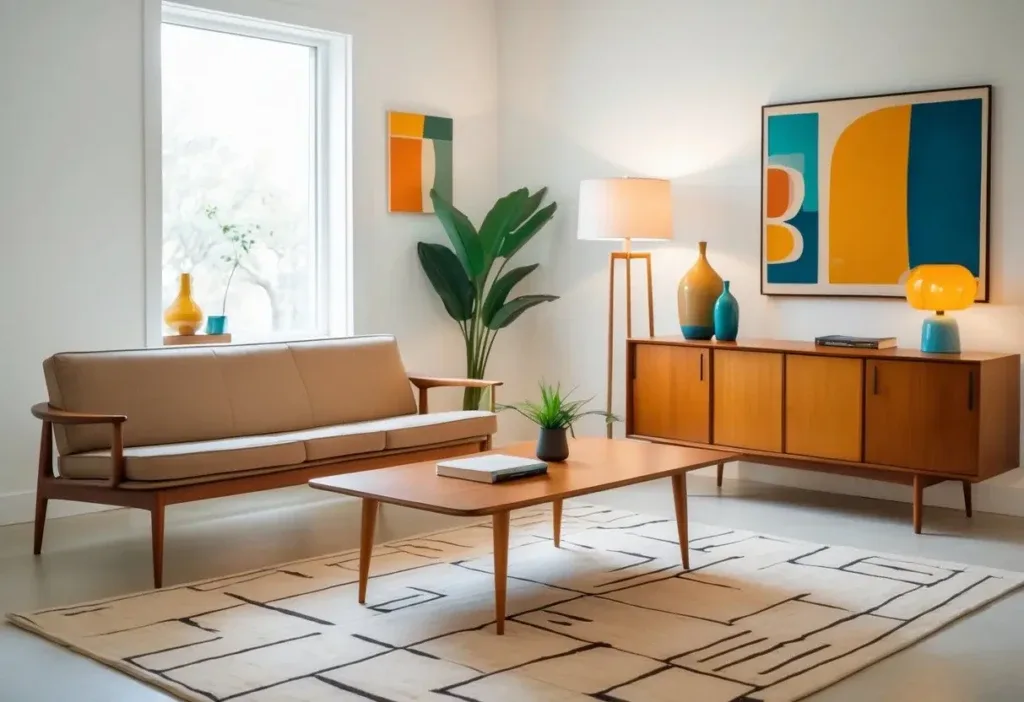
Mid-century modern uses simple geometric shapes and low-profile furniture. Look for sofas with straight or gently tapered legs, molded plastic or plywood chairs, and tables with slender, angled legs. Surfaces stay uncluttered; use a few well-chosen accessories like a sculptural lamp or an abstract print.
Color palettes pair warm wood tones with muted accent colors such as mustard, teal, or olive. Fabrics lean toward solid weaves or small-scale patterns that don’t compete with furniture silhouettes. Materials often include walnut, teak, leather, brass, and molded fiberglass.
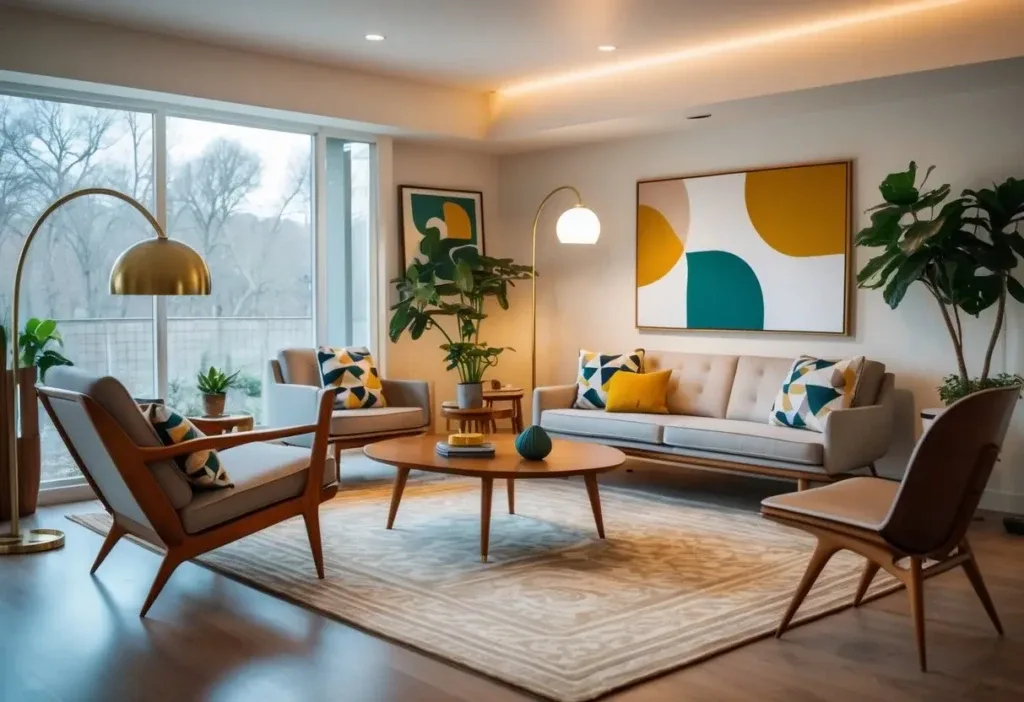
Lighting matters: choose floor lamps with arc arms, pendant lights with clean domes, or sputnik chandeliers. These pieces act as focal points and add sculptural interest without excess ornament.
Historical Context
Mid-century modern grew from 1940s–1960s design trends after World War II. Designers focused on mass-producible furniture that combined comfort with modern materials like bent plywood and molded plastics. Key figures included Charles and Ray Eames, Eero Saarinen, and George Nelson, who created pieces that remain widely produced and copied today.
Postwar housing needs shaped the aesthetic: open plans, large windows, and indoor-outdoor flow became common. You’ll often see living rooms designed to connect visually to patios or gardens. The movement borrowed ideas from Scandinavian design—simplicity, functionality, and craftsmanship—which helps explain the warm, human scale of many pieces.
Emphasis on Functionality
Every piece in a mid-century living room should serve a purpose. Choose furniture that supports how you live: a lounge chair that invites reading, a sofa deep enough for naps, and a coffee table at the right height for drinks and magazines. Avoid purely decorative items that add clutter.
Storage solutions stay integrated and minimal. Use sideboards, low media consoles, and built-in shelving to hide electronics and keep surfaces clear. Arrange seating to support conversation and traffic flow, and position lighting for tasks like reading or playing games.
Durability matters: select quality woods and performance fabrics so your furniture lasts. Function and form work together so the room feels useful, calm, and inviting.
Essential Furniture Choices
Choose pieces that balance clean lines, warm wood, and functional use. Prioritize scale, leg height, and material when picking each item so your living room looks cohesive and stays comfortable.
Iconic Sofa Styles
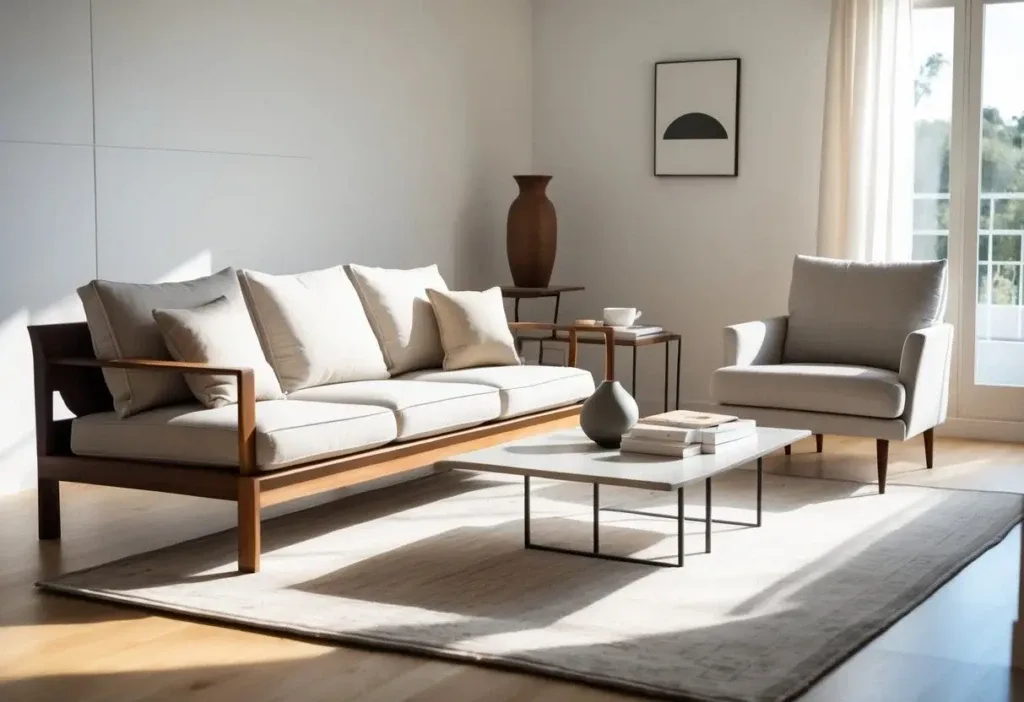
Pick a sofa with a low profile, tapered wooden legs, and a simple silhouette. Look for a tight back or single long seat cushion in fabrics like wool, tweed, or leather for authentic mid-century character. Measure the room first: a 76–90 inch sofa fits most living rooms, while a smaller 60–72 inch loveseat works for tight spaces. Seat height near 17–18 inches keeps proportions true to the style and feels comfortable for most people.
Choose muted base colors—charcoal, olive, mustard, or warm tan—and add a single bold accent pillow if you want contrast. If you need extra durability, pick performance fabric rated for heavy use. For visual lightness, avoid skirted bases; exposed legs and a clear under-seat space make the room feel airy.
Functional Coffee Tables
Select a coffee table that complements the sofa’s scale and lets traffic flow around it. Round or kidney-shaped tables work well in smaller or busy layouts because they reduce sharp corners. For larger, rectangular layouts, a long low table (14–16 inches high) aligns with mid-century proportions.
Materials matter: solid walnut, teak veneers, or walnut-stained MDF feel period-correct. Look for integrated storage like a lower shelf or a small drawer if you need to hide remotes and magazines. Keep clearance of 14–18 inches between the sofa seat and table edge so people can reach drinks but still move comfortably.
Mix finishes sparingly. If your sofa is leather, choose a wood table; if the sofa is neutral fabric, a glass-topped table with wood legs can add lightness. Avoid overly ornate details; favor clean edges and subtle curves.
Accent Chairs and Ottomans
Use accent chairs to add color, texture, or geometry without crowding the room. Classic options include lounge chairs with a winged back, a shell chair with a curved plywood frame, or a minimalist slipper chair. Pick one statement piece or two matching chairs depending on your seating needs.
Ottomans should match the chair scale and serve multiple roles: extra seating, a footrest, or a tray surface. Standard ottoman height should sit within 1–2 inches of the sofa or chair seat height for comfort. Choose durable upholstery if the ottoman will double as a coffee table.
Place chairs to create a conversational triangle with the sofa and coffee table. Keep 24–36 inches between chairs and the table for easy movement. If you add patterned fabric, limit pattern use to one or two pieces to avoid visual clutter.
Media and Storage Solutions
Choose low, long media consoles with raised legs and simple hardware to keep a mid-century look. Typical widths range from 48–72 inches, depending on TV size. Keep the console depth shallow (14–18 inches) so it doesn’t dominate the room.
Look for pieces with a mix of open shelves and closed compartments. Open shelving lets you display books or records; cabinets hide cables, games, or extra throws. Built-in cable management and cutouts at the back make wiring cleaner.
If you need extra storage, add a narrow sideboard or wall-mounted floating shelves rather than bulky bookcases. Match wood tones across major furniture pieces or use one dominant wood with small accents in metal or glass for contrast.
Color Palettes and Material Selection
Choose colors that balance warm neutrals with one or two bold accents. Pick materials that show grain and texture, and mix soft fabrics with sleek metals and glass for contrast.
Popular Color Schemes
Mid-century palettes pair warm neutrals with saturated accents. Start with a base of warm white, cream, or soft beige for walls. Add a dominant wood tone in furniture to anchor the room.
For accents, use mustard yellow, olive green, teal, or burnt orange on pillows, a rug, or an armchair. Limit bold colors to one or two areas so they read as intentional, not busy. Include a deep navy or chocolate brown for depth in drapery or a sofa.
Use paint sheens strategically: matte walls, eggshell for trim, and satin on high-touch surfaces. Test swatches in natural and artificial light before committing.
Natural Wood Finishes
Select woods with visible grain: walnut, teak, and oak suit mid-century style. Choose a consistent wood tone for large pieces—media console, dining table, or bookshelf—to create cohesion.
Go for satin or low-sheen finishes that highlight texture without high gloss. Maintain contrast by pairing darker walnut pieces with lighter oak accents or a pale wood floor. Keep joinery clean: tapered legs and simple edges define the look.
Protect surfaces with clear finishes or oil that deepens color and resists wear. Refinish vintage pieces to restore grain rather than strip their character.
Textiles and Upholstery
Pick textiles with solid colors, subtle geometrics, or low-contrast patterns. Use tightly woven fabrics like wool blends, boucle, leather, or durable tweed for sofas and chairs. These hold shape and fit the era’s look.
Combine textures: a smooth leather sofa, a nubby wool rug, and linen curtains add tactile interest. Choose upholstery colors that support your accent palette—teal sofa with mustard pillows, or neutral sofa with an olive armchair.
Consider wear and cleaning: opt for removable cushion covers or stain-resistant treatments in high-traffic homes. Add throw pillows and a patterned rug to introduce color without long-term commitment.
Metal and Glass Accents
Introduce metals sparingly to keep the room light. Brass, matte black, and brushed steel work well for lighting, table bases, and hardware. Choose warm brass for vintage warmth or black for modern contrast.
Use glass for coffee and side tables to preserve sightlines and showcase wood legs. Tempered glass tops paired with slim metal frames maintain the clean mid-century silhouette.
Keep metal finishes consistent across fixtures and hardware to avoid visual clutter. Use small decorative objects—mirrors, lamps, vase—to repeat metal tones and tie the room together.
Spatial Layout and Flow
You will focus on creating clear paths, balanced proportions, and purposeful furniture groupings. These choices control how you move through the room and how the space feels during everyday use.
Open Floor Plans
Keep sightlines clear between the living area, dining space, and entry. Use low-profile furniture like a mid-century sofa or a console table to define zones without blocking light or movement. Place rugs to anchor seating areas; rugs should be large enough that at least the front legs of major pieces sit on them.
Use partial dividers—like a narrow shelving unit or a low credenza—if you need separation. These let air and light flow while giving visual boundary. Maintain a minimum circulation path of 30–36 inches between furniture edges so two people can pass comfortably.
Balanced Proportions
Match furniture scale to room size. In a 12×15 foot room, choose a sofa around 72–84 inches and pair it with a lounge chair and compact coffee table to keep proportions right. Tall pieces belong against walls; low, long pieces work along sightlines.
Balance visual weight across the room. If you place a heavy wooden media console on one wall, counter it with a cluster of slim-legged chairs or a vertical plant on the opposite side. Keep window areas free of bulky items to preserve natural light and maintain the airy mid-century feel.
Furniture Arrangement
Arrange seating to promote conversation and face the room’s focal point—fireplace, window, or media wall. Create a main seating group with the sofa and two chairs placed 8–12 feet apart for comfortable talking. Keep coffee tables about 14–18 inches from the sofa for reachability.
Leave space behind furniture for flow. Back-to-back arrangements work in open plans: a sofa back can subtly divide living and dining without a wall. Use symmetry sparingly; asymmetrical groupings often feel more relaxed in mid-century rooms.
Lighting and Décor Elements
Choose lighting that doubles as art, pick a few bold pieces of wall art, and add low-maintenance plants to bring warmth and life to the room.
Statement Lighting Fixtures
Pick one or two focal light pieces rather than many small lamps. A sputnik chandelier or an arched floor lamp with a large shade works well over seating areas. Aim for clean metal finishes like brass, matte black, or aged bronze to match wood tones and leather.
Use layered lighting: a bright overhead for tasks, a dimmable main fixture for mood, and a floor or table lamp for reading. Install a dimmer on the central fixture so you can shift the room from bright to cozy without changing lamps. Position floor lamps beside sofas or chairs with 18–24 inches of clearance for easy use.
Choose bulbs with warm color temperature (2700–3000K). That gives natural skin tones and warms wood furniture. If you like vintage style, add an exposed filament LED to keep the retro look with low energy use.
Decorative Artwork
Select 2–4 art pieces that use simple shapes, geometric patterns, or abstract mid-century motifs. Large-scale prints or framed original art make a stronger statement than many small prints. Keep frames slim and simple—wood or black metal works best.
Balance art placement with furniture height. Hang a piece so its center sits about 56 inches from the floor, or align a gallery arrangement with the back of a sofa. Use one piece above the sofa as an anchor and smaller works on adjacent walls.
Mix materials—ceramic wall sculptures, framed prints, and a sculptural mirror—to add texture without clutter. Stick to a restrained palette that ties into your textiles and rugs for cohesion.
Houseplants and Greenery
Choose plants with clear shapes and low fuss. Rubber plants, snake plants, fiddle-leaf figs, and pothos fit mid-century style and are easy to care for. Place a tall plant near a window or in a corner to add vertical interest.
Use simple planters: tapered ceramic, teak, or woven baskets that echo your furniture tones. Group smaller plants on side tables or a credenza in odd numbers (3 or 5) to create a natural vignette.
Mind light needs and watering routines. Put sun-loving plants near bright windows and low-light varieties in shaded corners. Rotate plants monthly so growth stays even and keep pots on trays to protect floors from water.
Incorporating Contemporary Touches
Use clean, current elements to update the mid-century look without losing its warmth. Focus on scale, materials, and tech that fit the room’s lines and wood tones.
Blending Modern and Vintage Pieces
Place vintage anchors like a teak credenza or an Eames-style lounge near modern items to create balance. Match heights and visual weight: pair a low vintage sofa with a slim modern coffee table, or swap in a contemporary lamp with a retro side table.
Keep finishes cohesive. If you have walnut or teak wood, add matte black or brushed brass accents to tie pieces together. Limit patterns to one or two areas—throw pillows or a rug—so grain and shape remain the focus.
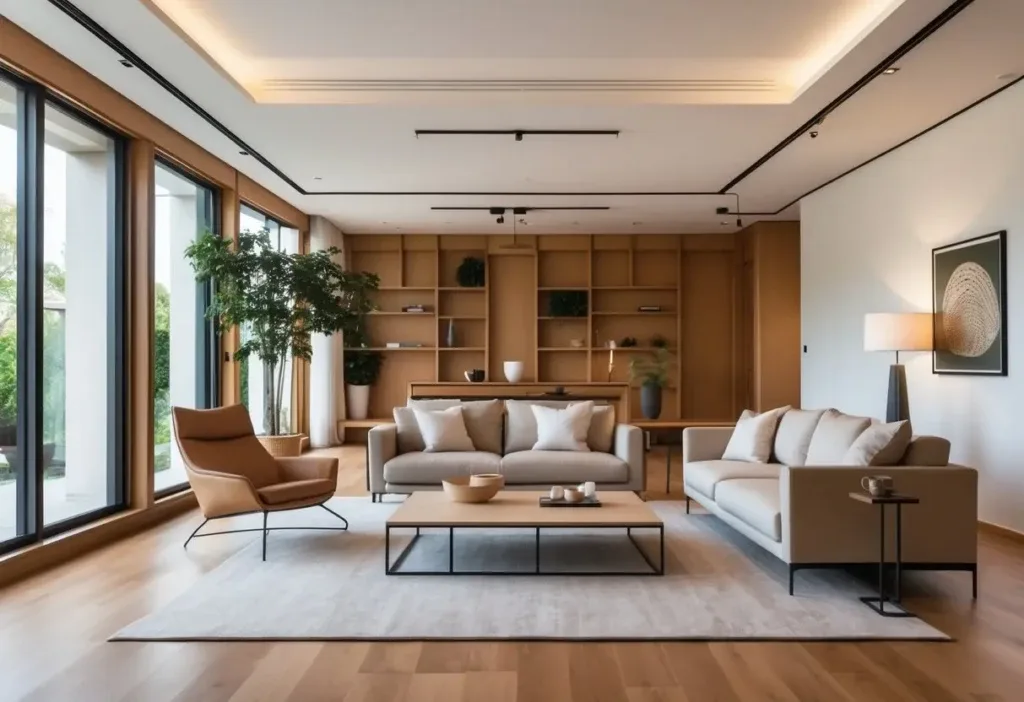
Use scale thoughtfully. Avoid oversized modern sofas that overpower mid-century profiles. Instead, choose streamlined silhouettes and open-leg furniture to maintain the airy, uncluttered feel.
Smart Home Integration
Add smart features that sit quietly in the room. Choose in-wall smart switches or dimmers with simple faces so controls don’t compete with vintage hardware. Hide hubs and routers in a low cabinet or behind a credenza.
Pick devices with neutral finishes. A smart speaker in fabric or matte black blends with wood tones better than glossy plastic. Integrate smart lighting scenes that mimic warm incandescent light in the evening to keep the era’s cozy feel.
Plan wiring early. If you want a wall-mounted TV, route cables inside the wall or through a slim raceway painted to match the wall so the clean lines stay intact.
Listen to this article 10 10 0:00 / 0:00 Speed 0.75× 1× 1.25× 1.5× 2× A fresh breath of air hits your room the moment you walk in. No heavy drama, just clean lines, cozy vibes, and a space that actually sparks joy. Let’s ditch clutter, embrace comfort, and remix your bedroom into something you’ll…
Listen to this article 10 10 0:00 / 0:00 Speed 0.75×1×1.25×1.5×2× Your living room should feel like a deep exhale, not a furniture showroom fighting for attention. That’s exactly why the organic modern style keeps showing up everywhere lately. It blends clean modern lines with warm, earthy textures so your space feels stylish without looking…
Listen to this article 10 10 0:00 / 0:00 Speed 0.75×1×1.25×1.5×2× You want a living room that feels stylish, warm, and uncluttered. This article shows seven simple ways to bring mid-century modern style into your space so it looks fresh and balanced without feeling like a museum. You’ll learn practical ideas for furniture, lighting, color, and textures that…
Listen to this article 10 10 0:00 / 0:00 Speed 0.75×1×1.25×1.5×2× A white bed frame does something magical to a bedroom. It instantly brightens the space, makes everything feel calmer, and somehow tricks you into thinking your life feels organized too. Whether you love cozy farmhouse vibes, sleek modern spaces, or bedrooms that look straight…
Listen to this article 10 10 0:00 / 0:00 Speed 0.75×1×1.25×1.5×2× Sharing a small bedroom with another person can feel romantic… until someone steals all the blanket space and the room starts looking like a storage unit. The good news? You don’t need a giant master suite to create a cozy, stylish, and functional space…
Listen to this article 10 10 0:00 / 0:00 Speed 0.75×1×1.25×1.5×2× Tiny bedroom? No problem. Sharing it with another human (and their stuff)? That’s where things get interesting. The good news: a small space can feel insanely stylish and functional if you nail the layout. These ideas prove you don’t need more square footage—you just…