6 Elegant Living Room Decor with Roses: Timeless Charm
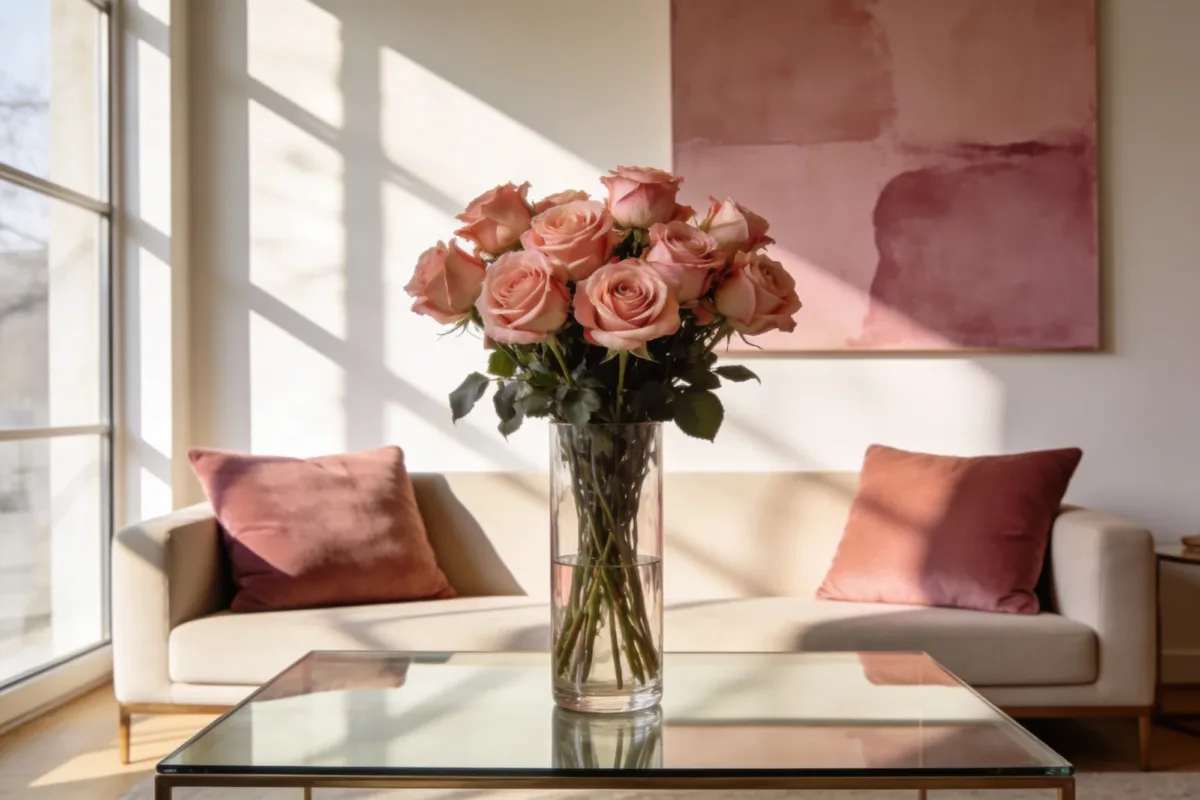
Roses in a living room can go one of two ways. Done well, they read as elegant living room decor with roses that feels collected over time — a bouquet here, a dusty-rose throw there, nothing shouting for attention. Done poorly, the room starts to look like a greeting card. The difference usually comes down to restraint: pick one or two rose-adjacent moves per room, not six at once, and keep everything else in the space quiet enough to let them work. If you’re starting from a blanker canvas, it’s worth browsing a few modern luxe living room layouts first, since the base furniture and lighting plan matters more than any single accent.
Below are six ways to bring rose pink decor into a living room without tipping into theme-park territory, plus the mistakes I see most often and what to check before you commit to any of them.
Quick-Reference: What Actually Moves the Needle
- One fresh bouquet in the right spot does more visual work than three matching accent pillows.
- Rose gold and metallics should stay under about 10–15% of visible surfaces, or the room starts to look staged.
- Pair rose tones with a neutral base (cream, greige, warm wood) — rose next to rose reads flat.
- Warm bulbs (2700K–3000K) matter more than any single decor item for making pink tones feel romantic instead of cold.
- Textiles are the lowest-risk, lowest-cost entry point if you’re not sure you want to commit to the look yet.
1. Build a Rosy Focal Point with a Fresh Bouquet
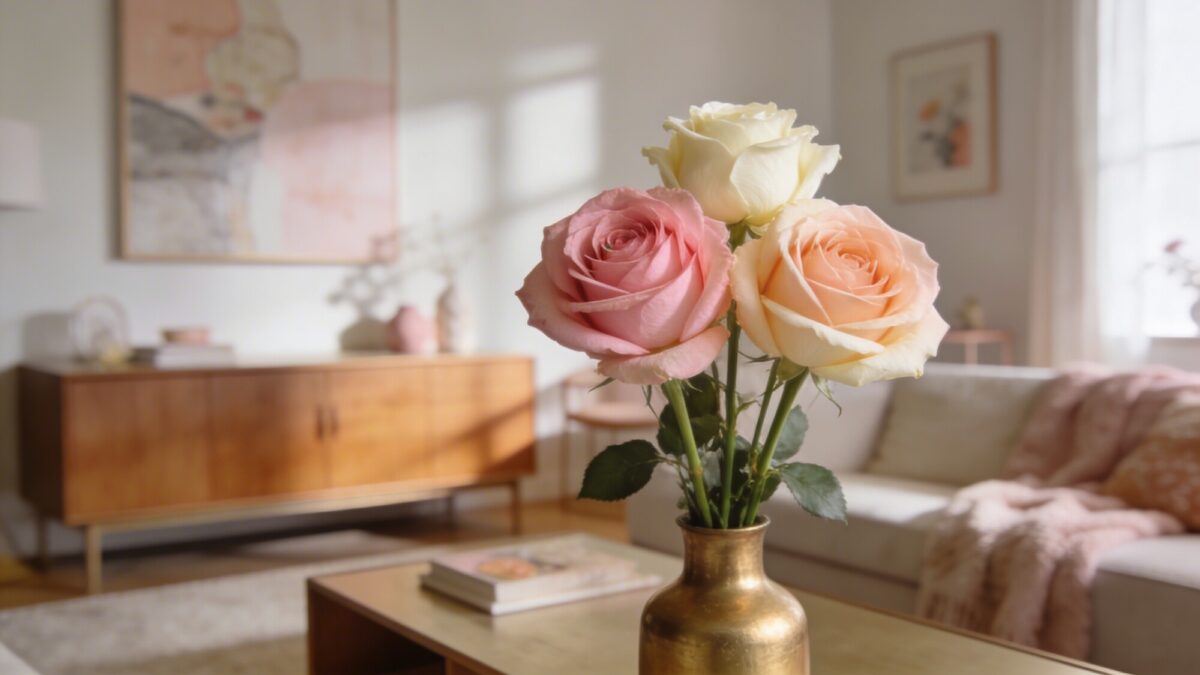
A single well-placed bouquet changes a room faster than almost anything else you can buy. The trick is treating it like a design decision, not an afterthought — pick two complementary rose colors rather than one flat shade, vary the stem heights so the arrangement has a silhouette instead of a dome, and choose a vase that echoes a finish already in the room, whether that’s brushed gold, warm wood, or matte ceramic.
Put the bouquet somewhere you actually pass by — a coffee table or sideboard in your normal sightline — rather than a spot that only gets seen when guests arrive. You’ll notice the scent and color more, and it stops feeling like styling and starts feeling like part of how you live in the room.
💡 Pro Tip: Cut two inches off the stems and change the water every two to three days. Roses in a warm living room (versus a cool kitchen) wilt noticeably faster, and most of the “my roses only lasted two days” complaints trace back to stagnant water, not a bad batch of flowers.
2. Choose Rose-Themed Wall Art That Reads Sophisticated, Not Kitschy
This is where a lot of pink and cream living room ideas go wrong. Literal, botanical-illustration-style rose prints tend to date a room fast and can tip feminine sitting room ideas into overly sweet territory. Abstract petals, painterly florals, or large-scale prints in muted dusty-rose tones with taupe, cream, or warm gray accents hold up much better over time.
Scale matters as much as subject. One large-scale piece anchors a wall in a way that three small matching prints never quite manages. If you want contrast without clutter, mix matte frames throughout the grouping and let a single shiny accent frame do the work of catching light.
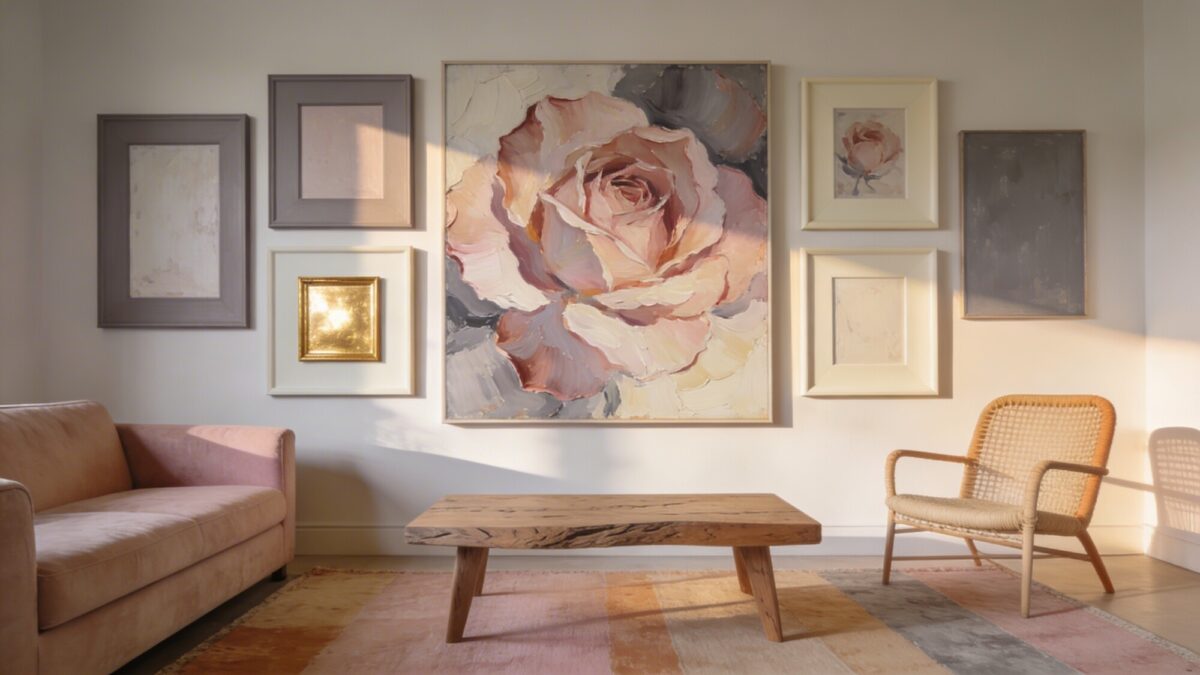
Coordinate the art’s palette with your rug rather than your sofa. Rugs cover more visual real estate, so pulling a soft blush, warm beige, or greige tone from the rug into the artwork does more to unify the room than matching the couch fabric would.
3. Layer in Rose-Infused Textiles for Cozy, Low-Commitment Elegance
If you’re not ready to commit to a full pink sofa chair or a cranberry velvet sectional, textiles are the entry point. A throw blanket, a few cushions in rose or dusty pink, and one velvet accent seat can shift a room’s mood without touching anything structural — and you can undo it in an afternoon if it’s not working.
| Textile Approach | Commitment Level | Best For |
|---|---|---|
| Throw blanket + 2 cushions | Low — swap anytime | Testing the look before buying furniture |
| One velvet accent chair | Medium — a real purchase, but self-contained | A pink lounge corner or reading nook |
| Full sofa reupholstery or new pink sofa chair | High — sets the room’s direction | Rooms fully committing to shabby chic house interior or princess home aesthetic styling |
Texture variety matters more than color matching here. Wool, linen, and a single satin-fringed pillow read as intentional; three pillows in the exact same fabric and shade read as a matching set from a catalog, which is the opposite of the collected-over-time look most people are after.
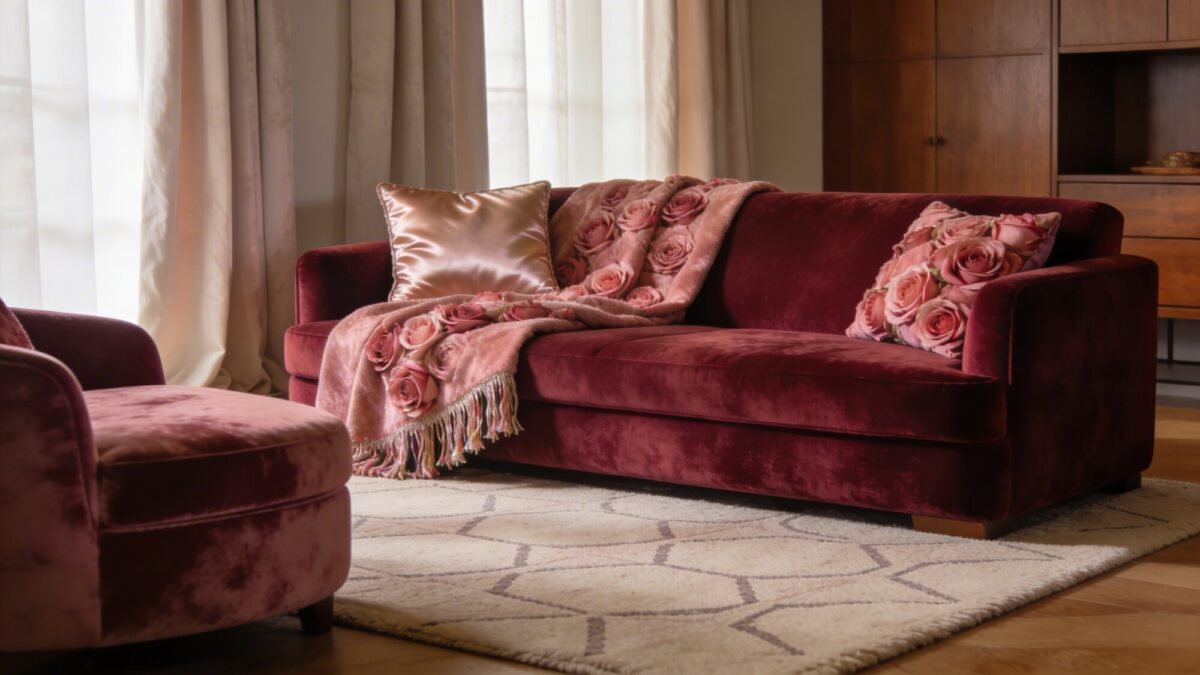
💡 Pro Tip: Buy one velvet cushion cover first and live with it for a week before ordering more. Velvet reads differently under your actual room lighting than it does in a product photo, and rose-toned velvet in particular can skew more mauve or more coral than expected depending on your bulbs.
4. Use Rose Gold Accents for Restraint, Not Sparkle for Its Own Sake
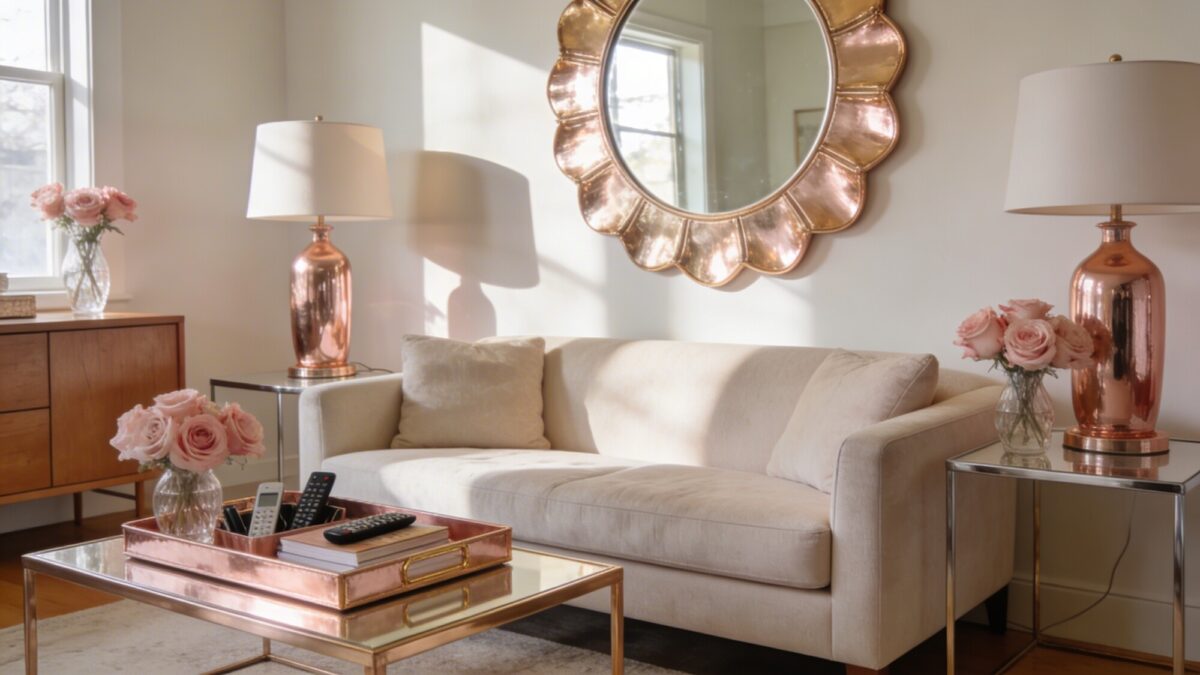
Rose gold works when it’s a supporting player: a lamp base, a picture frame, a tray on the coffee table for corralling remotes and books, or a single statement mirror with a rose-gold edge. It stops working the moment every metal surface in the room matches — that’s when a pink and gold living room ideas board starts looking like a hotel lobby instead of someone’s actual home.
Keep the metalwork balanced against natural wood and matte finishes. If you already have brass or nickel fixtures elsewhere, don’t fight them — rose gold doesn’t need to be the only metal in the room, just a noticeable accent within it.
5. Skip the Matching Vase Set — Use Everyday Objects Instead
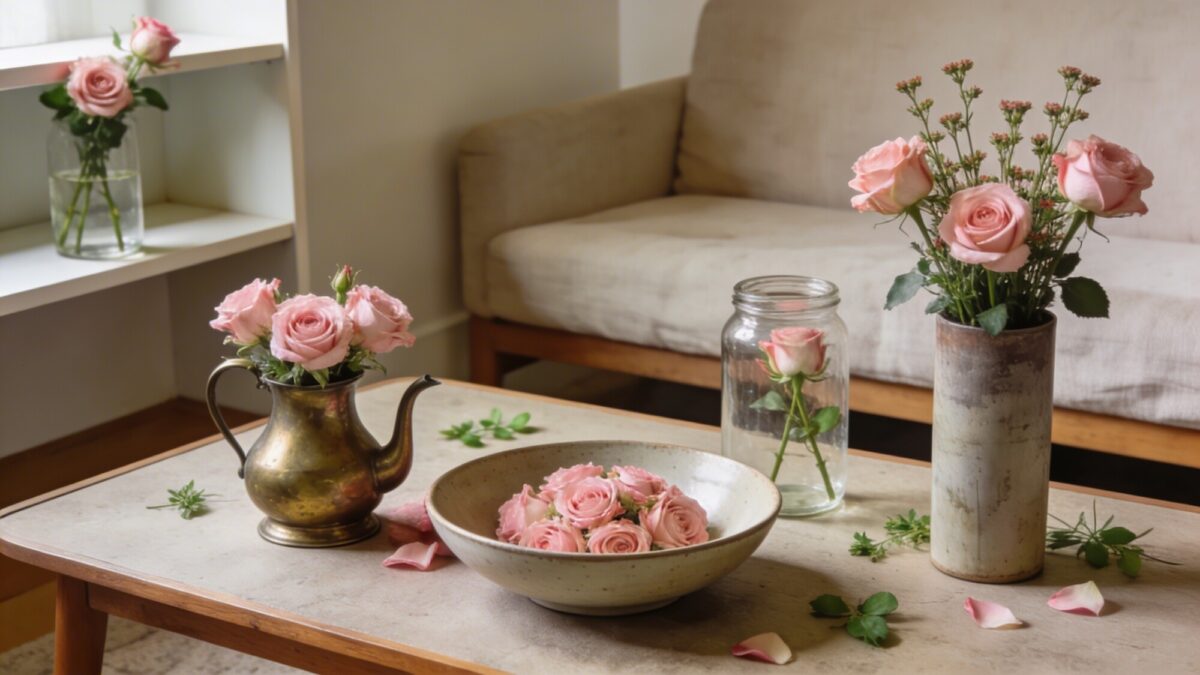
One mistake I see constantly in pink nook and pink cream living room styling: buying a matched trio of vases and filling all three with identical rose stems. It looks like a display, not a home. A more convincing approach mixes containers you already own — a vintage brass teapot for a few stems, a shallow ceramic bowl for a compact cluster, a plain glass jar with two or three stems on a shelf.
Varying the container height and material does more visual work than varying the rose color. Combine a tall vase with short sprigs in a separate low container nearby, and the whole grouping reads as gathered rather than purchased as a set.
6. Get the Lighting Right — It Matters More Than Any Single Piece
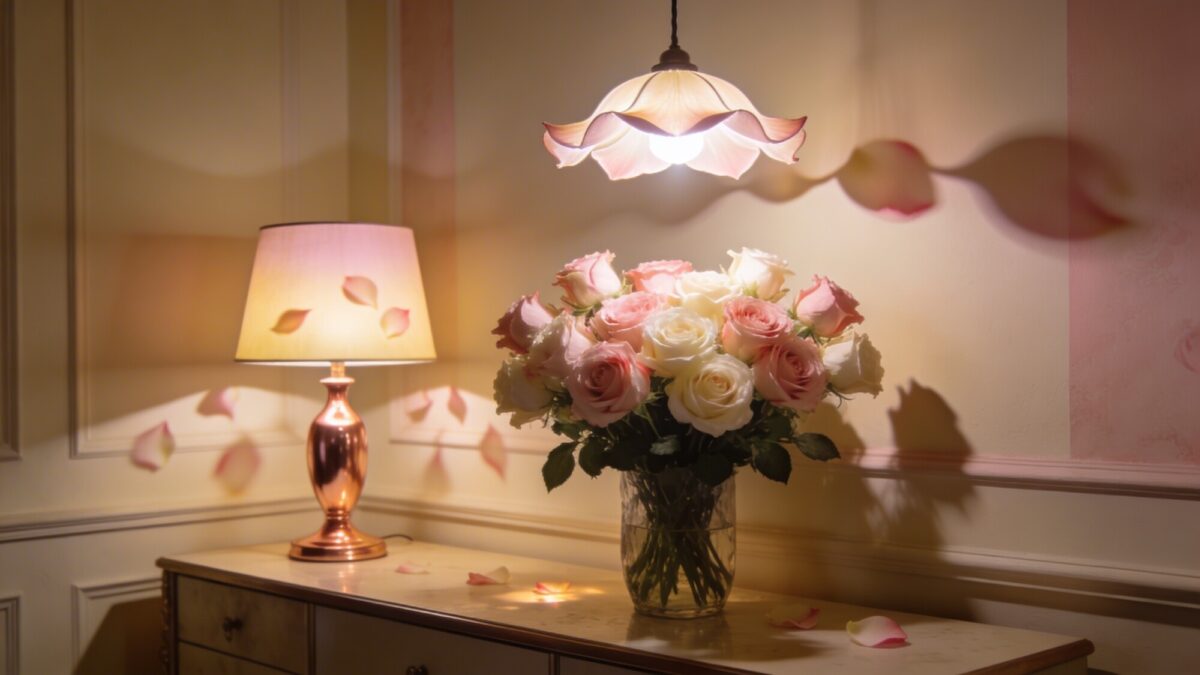
This is the step people skip, and it’s the one that actually determines whether the rest of the room reads as an elegant pink lamp decor scheme or just looks pink. Cool white bulbs (4000K and above) flatten rose and blush tones and can make them look dusty or gray instead of warm. Warm white bulbs in the 2700K–3000K range are what give romantic pink lamp decor its glow — closer to candlelight than office lighting.
A cream or blush lampshade diffuses that warm light further and softens shadows, which is part of why a good elegant pink lamp does more for the room’s mood than an equivalent amount spent on wall art. If you’re overhauling the lighting plan alongside the decor, it’s worth looking at chandelier and overhead lighting options built for this kind of warm, layered look rather than relying on a single lamp to carry the whole room.
💡 Pro Tip: Check a bulb’s Kelvin rating on the box before buying, not just the “warm white” label — some brands print “warm white” on bulbs that are closer to 3500K, which reads noticeably cooler than the 2700K–3000K range that actually flatters rose and blush tones.
Things to Consider Before You Commit to a Rose Theme
- Do you already own warm-wood or brass furniture? Rose tones pair more naturally with warm finishes than with cool grays or stainless steel.
- Are you renting? Textiles and fresh flowers are fully reversible; reupholstering a sofa or painting walls is not.
- How much natural light does the room get? North-facing rooms with less warm light will need more help from bulb temperature to keep rose tones from looking muted.
- Is anyone else in the household going to live with this daily? A pink and beige living room ideas palette reads differently to different people — worth a quick gut-check before a big purchase.
Pros and Cons of a Rose-Forward Living Room
- Pro: Highly reversible if you start with textiles and flowers rather than furniture or paint.
- Pro: Pairs well with most existing neutral furniture — you’re rarely starting from scratch.
- Con: Easy to overdo; the difference between elegant and overly sweet is often just quantity, not quality of items.
- Con: Fresh rose arrangements are an ongoing cost and require upkeep, unlike a one-time decor purchase.
FAQ
Will a rose theme make my living room feel too feminine for a shared space?
Not if you lean on dusty, muted rose tones and pair them with warm wood, cream, and matte metals rather than bright pink and lots of shine. The palette reads as warm and elegant rather than overtly feminine when it’s balanced against neutral, textural pieces.
What’s the fastest, cheapest way to test if I like this look?
Buy one bouquet and one throw pillow in a rose or dusty-pink tone. Live with just those two things for a week under your actual lighting before buying anything else — it tells you more than a mood board will.
How do I keep rose gold accents from looking dated?
Keep it to one or two pieces — a lamp base or a mirror frame, not both plus a tray plus picture frames — and mix it with matte or wood finishes rather than pairing it with other shiny metals.
Do fresh roses actually last long enough to be worth it?
With fresh water changed every two to three days and stems trimmed at an angle, a good bouquet typically holds up for about a week indoors. If that upkeep isn’t realistic for your routine, lean more heavily on textiles and art for the rose tone and treat fresh flowers as an occasional addition rather than a permanent fixture.
Our Take
The living rooms that pull off elegant living room decor with roses convincingly are almost never the ones with the most rose-colored items in them. They’re the ones that pick one dominant move — usually lighting or textiles — and let one or two smaller touches, like a bouquet or a single rose-gold accent, support it. If you’re only making one change this month, fix your bulb temperature before you buy anything pink. If you’re ready to go further, start with textiles, since they’re the easiest to undo if the look doesn’t hold up once it’s actually in your space. For more ways to round out the room once the rose elements are in place, this guide to subtle glam surfaces covers the finishing touches that keep a themed room from tipping into costume territory, and this look at pattern-heavy, texture-rich living rooms is a useful comparison if you want warmth without leaning on pink at all.