Floating Shelf Decor: Style Your Wall in Minutes
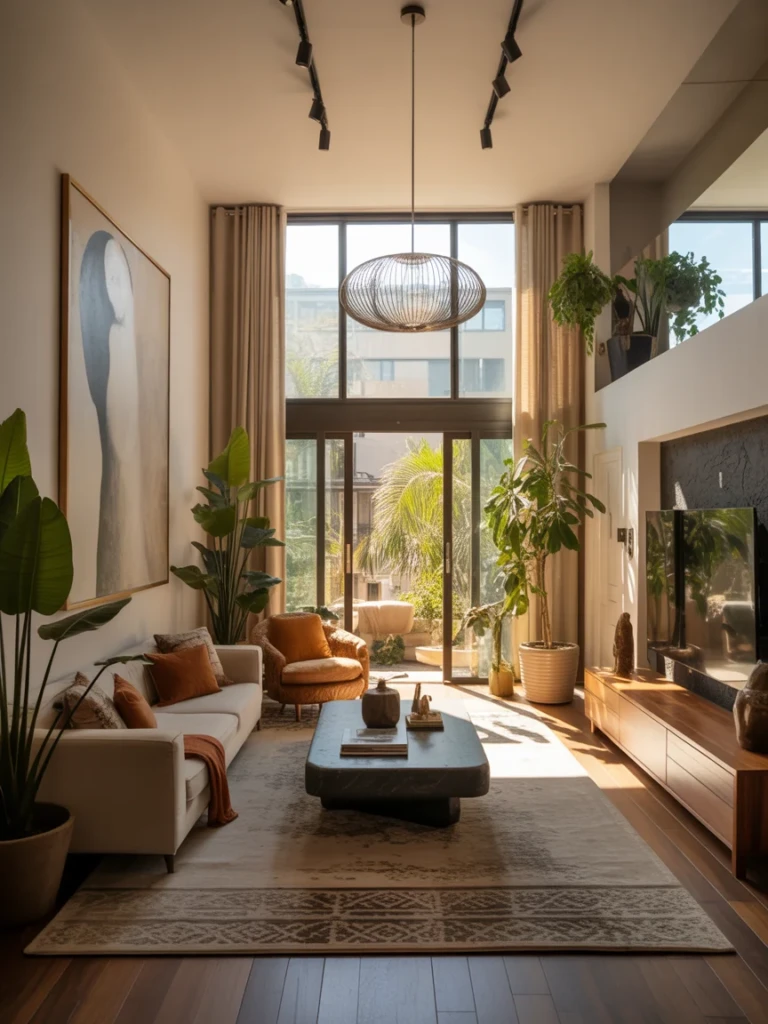
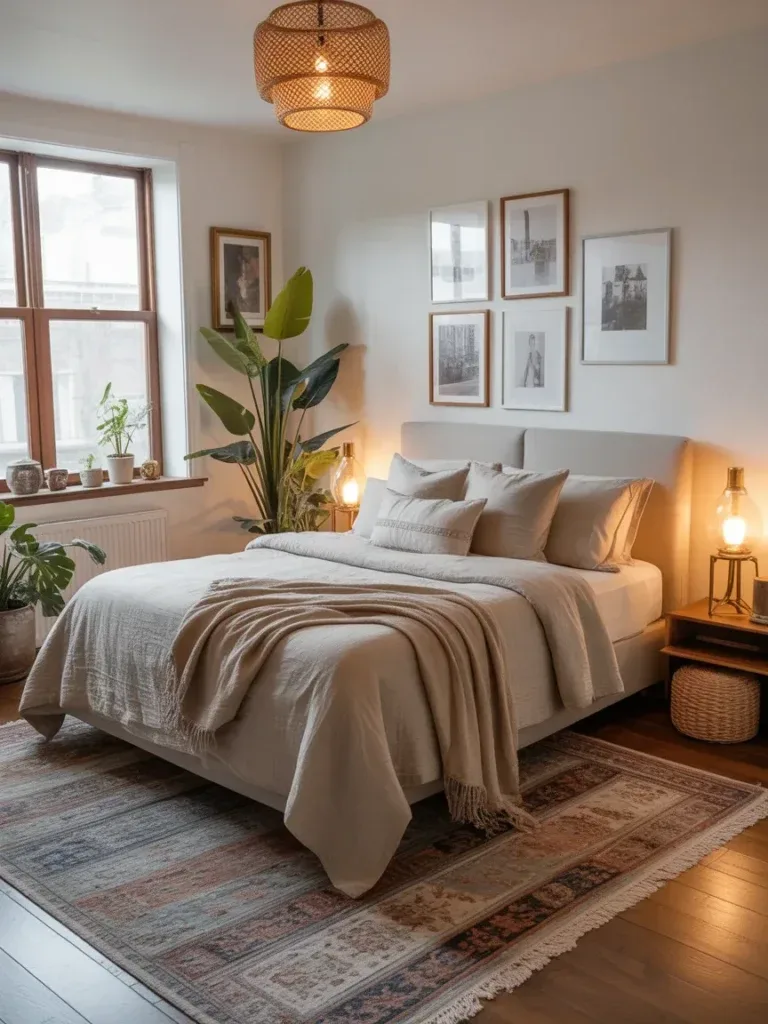
A floating shelf is one of the cheapest ways to add personality to a wall, but most of them end up either bare and forgotten or crammed with knickknacks that read as clutter instead of decor. Good floating shelf decor sits in the middle — enough on the shelf to feel intentional, enough negative space to let each piece breathe. If you’re working on a full wall plan rather than a single shelf, our floating shelf decor living room ideas guide covers layout at a bigger scale.
This guide covers the parts that actually determine whether a shelf looks styled or just stocked: height, spacing, what to put on it, and the small installation details people skip until the shelf is already crooked.
Quick Takeaways
- Eye level for most rooms lands around 60 inches from the floor — but kitchens, offices, and bathrooms each have their own logic (covered below).
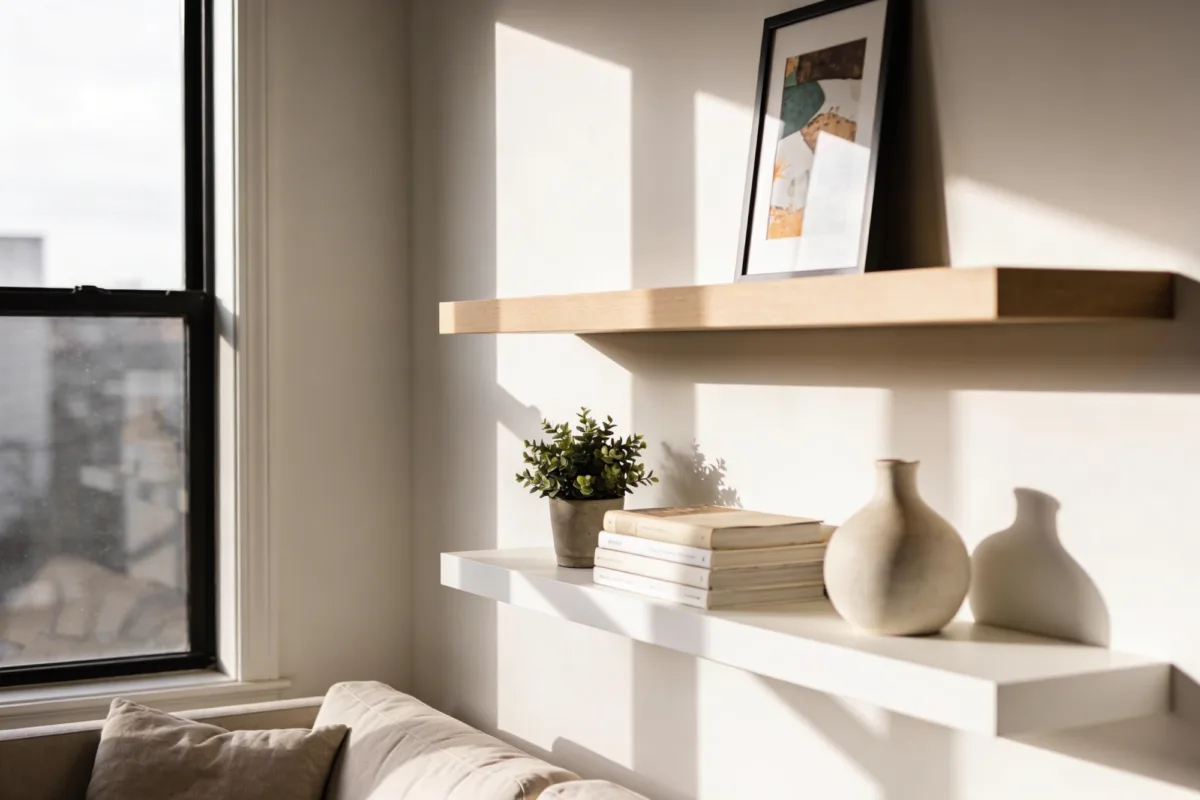
- The reliable styling ratio is one tall anchor item, one or two medium pieces, and a small accent to fill gaps — not five items of the same size lined up.
- Stud location, not the wall anchor, is what actually determines how much weight a shelf can hold safely.
- Odd-numbered groupings and varied height read as intentional; identical spacing between identical objects reads as a display shelf in a store.
Why Floating Shelf Decor Works So Well
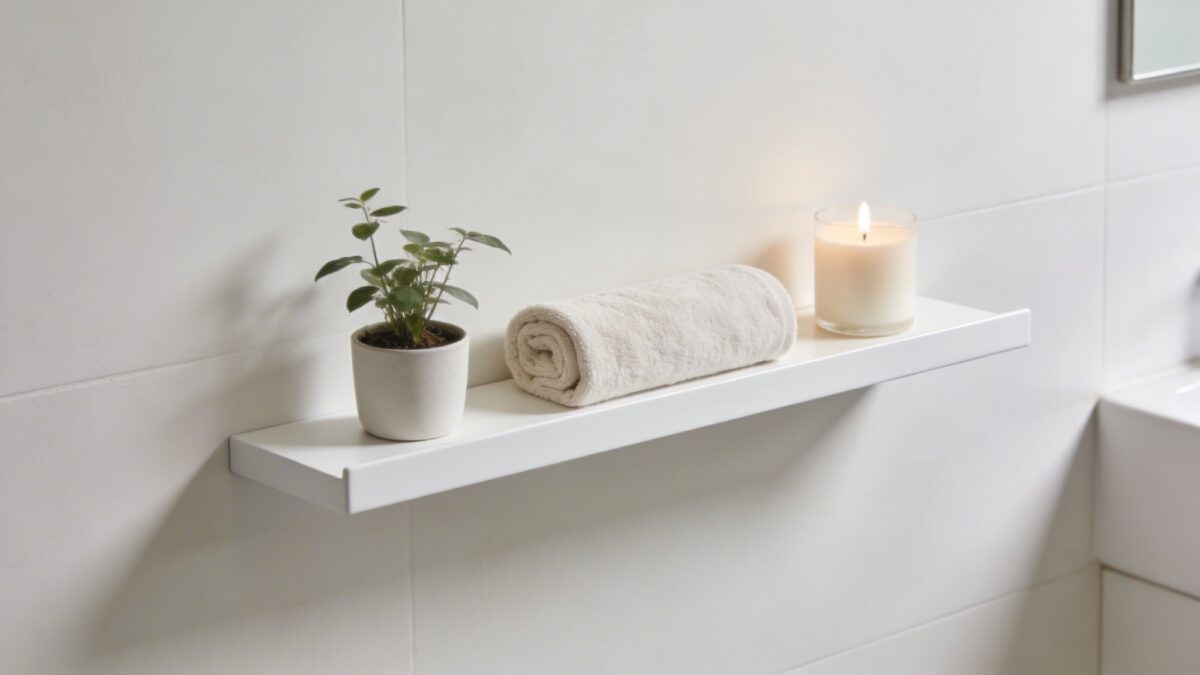
A floating shelf does the job of a bookcase or console table without eating any square footage — no legs, no frame, nothing in front of it to trip over. That’s the whole appeal, and it’s why they show up everywhere from bathrooms to hallways: they add storage and display space to a wall that would otherwise be doing nothing.
The trade-off is that a floating shelf has nowhere to hide a bad decision. A cabinet can absorb a mismatched item because it’s mostly closed doors; a shelf puts everything on display at once. That’s the real reason so many floating shelves end up looking cluttered — not the shelf itself, but everything sitting on it with no editing.
Choosing the Right Style of Floating Shelf
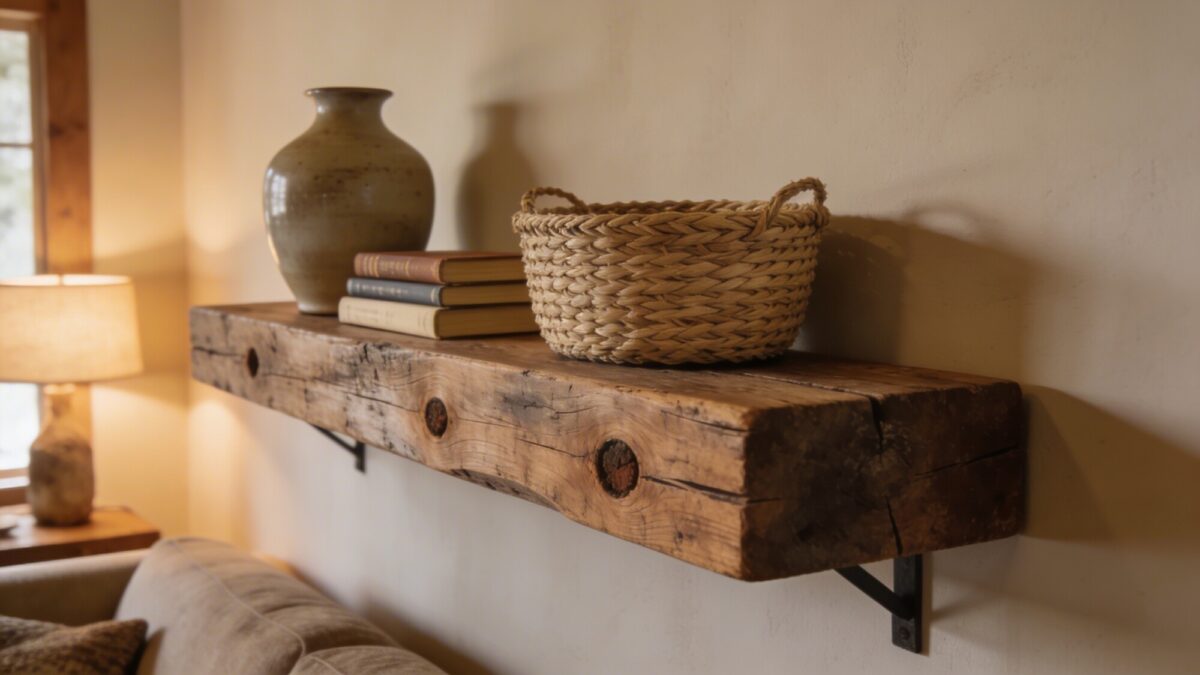
The shelf material and bracket style set the tone before you’ve put anything on it. Match it to what’s already in the room rather than picking a shelf you like in isolation — a sleek matte-white shelf in a room full of warm wood furniture will look like it wandered in from a different house.
- Minimalist: Slim profiles, matte finishes, no visible brackets — best when you want the objects on the shelf to be the focus, not the shelf itself.
- Rustic: Reclaimed wood, visible grain, warm tones, exposed hardware.
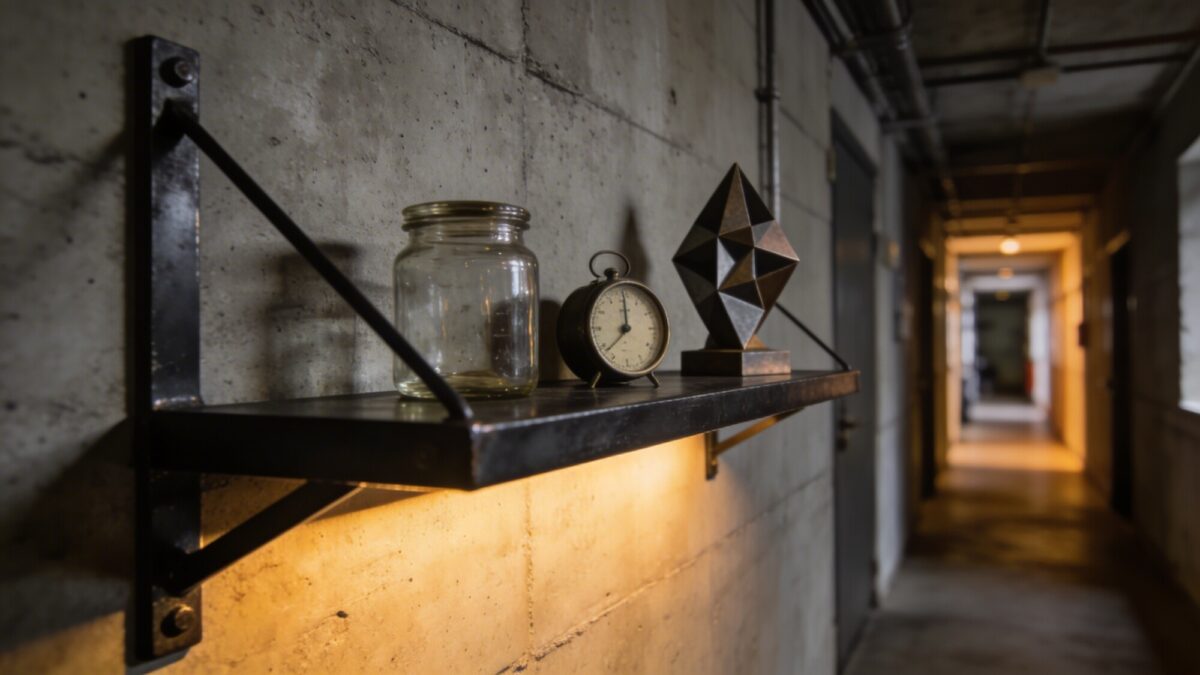
- Industrial: Metal brackets left visible on purpose, dark or raw-metal finishes, bold contrast against the wall.
- Scandi: Light wood, generous spacing between shelves, soft neutral styling — this pairs well if the rest of your floating shelf living room decor is already leaning Scandinavian.
💡 Pro Tip: If you’re not sure which style fits, look at your existing light fixtures before your furniture. Warm-toned metal fixtures usually pair better with rustic or industrial shelves; cool-toned or matte black fixtures lean minimalist or Scandi.
Placement: How High and Where to Mount
Sixty inches from the floor to the shelf is the standard eye-level reference for most rooms, but it’s a starting point, not a rule. In a hallway people pass through quickly, a slightly higher mount reads better. Above a sofa or console, the shelf usually looks right sitting 6 to 10 inches above the furniture below it, not at a fixed height regardless of what’s underneath.
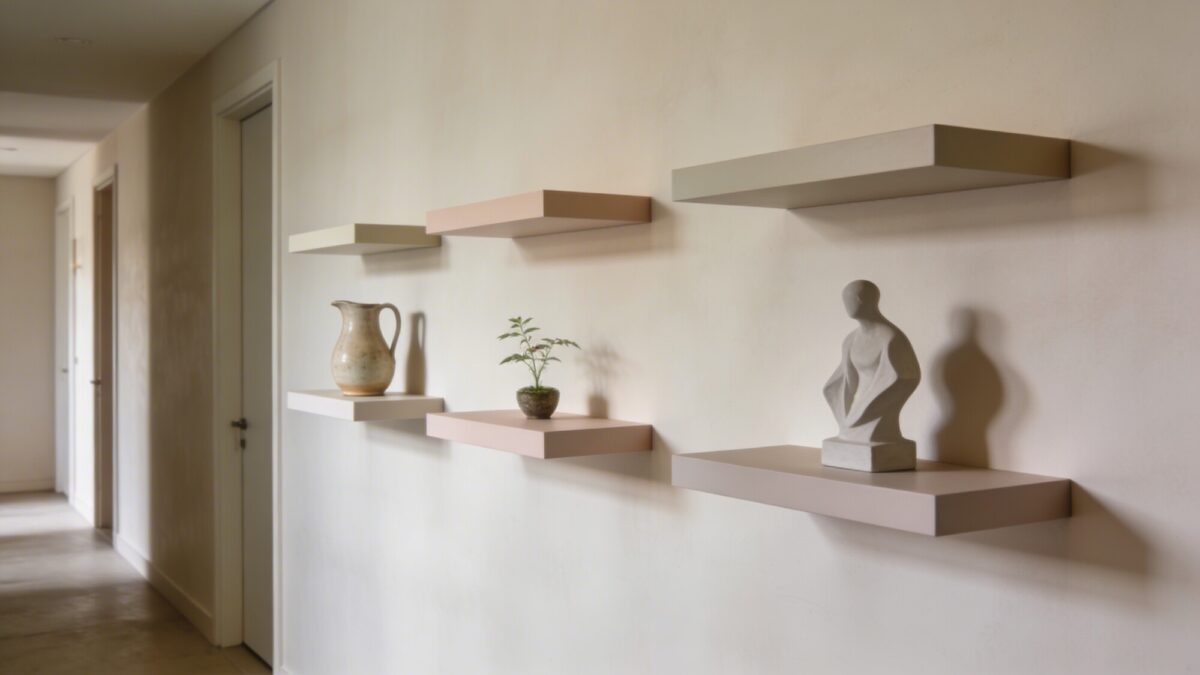
Skip the perfectly even grid. A single row of identically spaced shelves at matching heights looks like a display case, not a decorated wall. Staggering heights, or grouping shelves in a cluster of two or three at slightly different levels, is what makes an arrangement look considered instead of installed by a formula.
Leave room for negative space. Not every inch of a shelf needs an object on it — a shelf with breathing room around each piece reads as styled; a shelf packed edge to edge reads as storage that ran out of room elsewhere.
💡 Pro Tip: Before drilling anything, tape the shelf outline to the wall with painter’s tape and live with it for a day. It’s the fastest way to catch a height that looked right on paper but feels off next to a doorway or light switch.
Floating Shelves Arrangement Ideas: What to Put Where
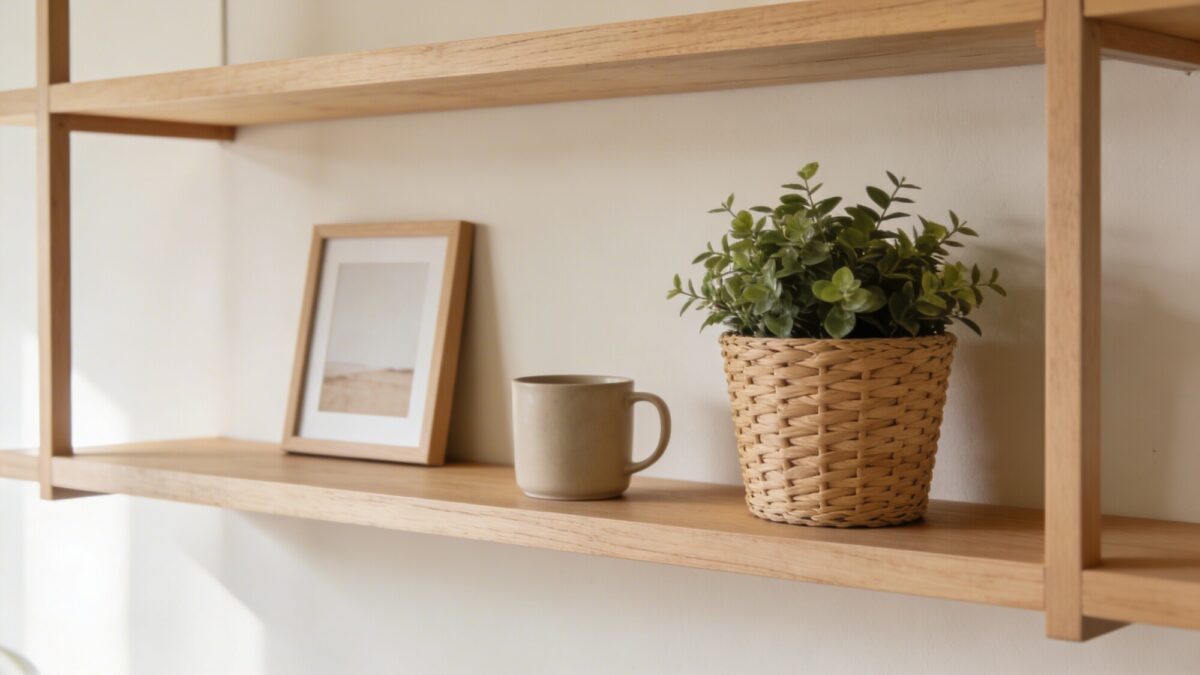
The most reliable styling formula for floating shelves arrangement ideas is a size ratio, not a specific object list:
- Tall anchor: a plant, a tall vase, or a candle — something that gives the eye a starting point.
- Medium piece: a stack of books, a framed photo leaned rather than hung flat, or a small sculpture.
- Small accent: a bowl, a trinket, or a small candle to fill the gap without competing with the anchor.
Two or three objects per shelf is usually the ceiling before it starts looking busy. If you’re styling a longer shelf, group items in twos or threes with visible gaps between clusters rather than spreading everything out in one continuous line.
Color-wise, the easiest way to keep a shelf from looking chaotic is to limit the palette to two or three tones repeated across the objects — pick your wood tone and one accent color, and let every other piece on the shelf relate back to those two choices.
Living Room Floating Shelves
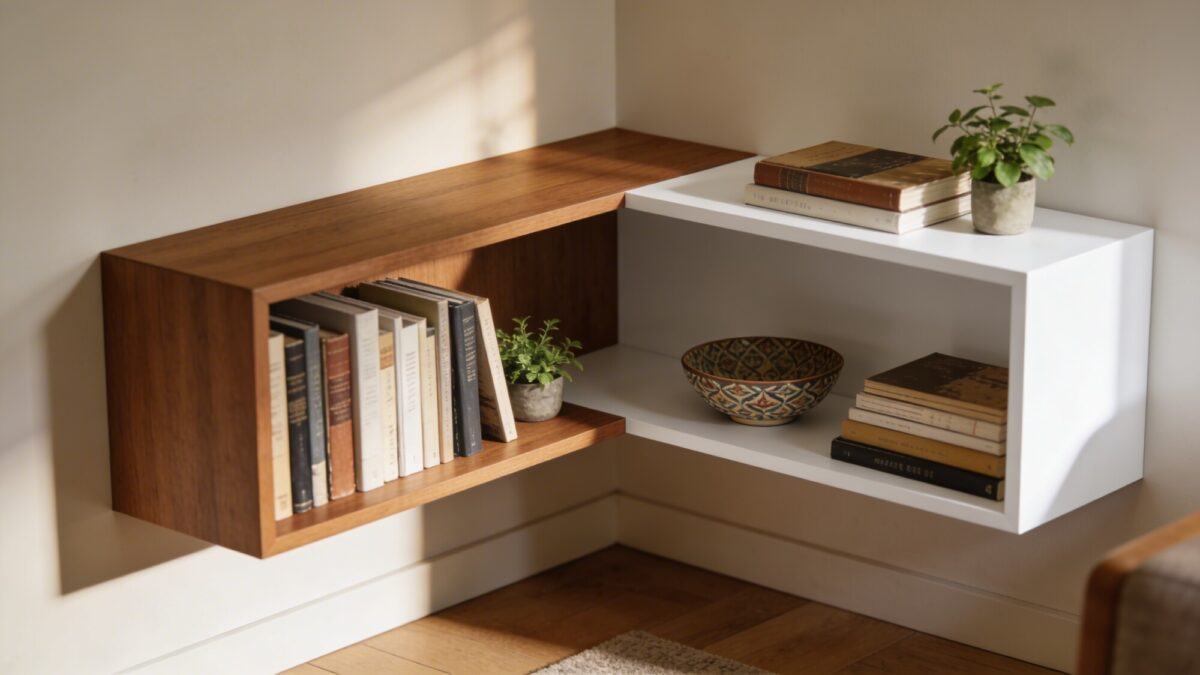
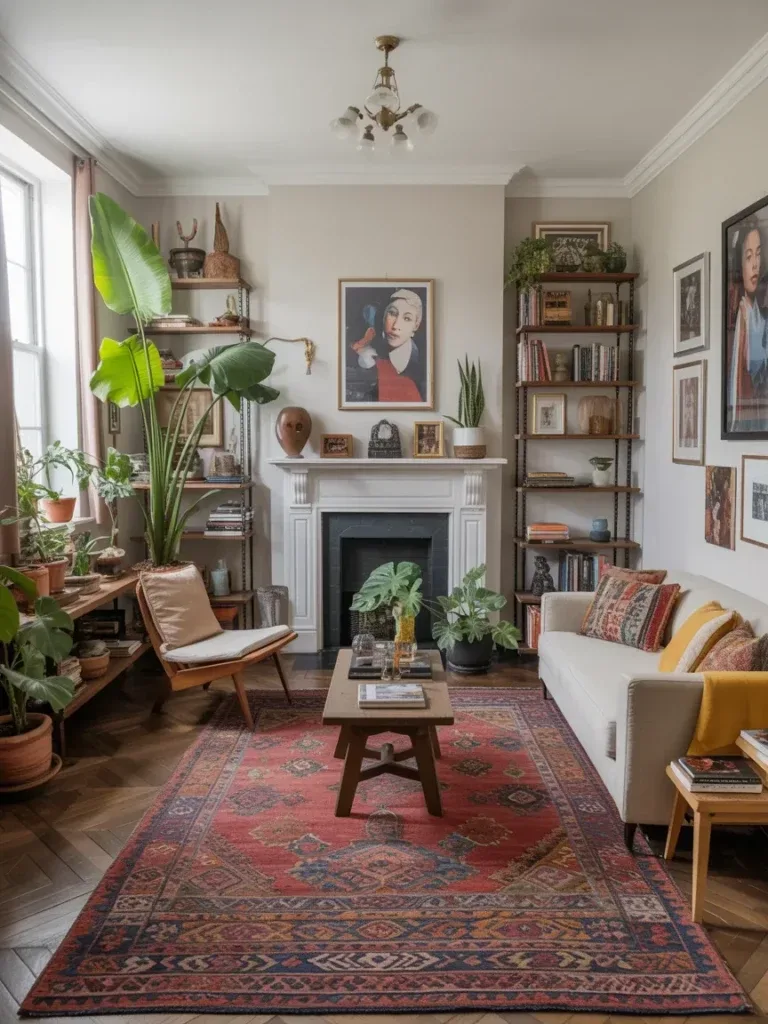
In a living room, floating shelves usually work best flanking a TV, filling an awkward corner, or replacing a bookcase in a smaller space. An L-shaped pairing — one shelf running along one wall, a second turning the corner — fills a corner that would otherwise sit empty, and it gives you two surfaces to balance against each other rather than one shelf trying to do everything.
The common mistake in a living room specifically is treating the shelf like a mini bookcase and lining up a full row of spines. A few books stacked flat with an object on top reads as styled; a full vertical row of spines reads as a shelf that ran out of ideas. For more layout options at the room scale, see the floating shelf decor living room ideas guide.
Office Floating Shelves
An office shelf has a different job than a living room shelf — it needs to hold things you’ll actually reach for, not just look good. The practical fix is splitting the shelf mentally in half: one section for function (a small stack of notebooks, a pen cup, a charging dock) and one section for a single decorative anchor, like a plant or a framed print.
Office floating shelves decor that skips the functional half tends to get colonized by loose papers and cables within a week, which undoes the point of styling it in the first place. If you’re mounting more than one shelf above a desk, keep the lowest shelf for daily-use items and push the purely decorative pieces to the shelf above eye level, where they won’t get knocked by your elbow.
💡 Pro Tip: Mount office shelves slightly higher than the living-room 60-inch guideline if there’s a desk directly underneath — you want clearance for your monitor and arm movement, not just a nice-looking wall.
Materials and Finishes: How They Age
| Finish | Best For | Ages Like |
|---|---|---|
| Natural wood | Living rooms, offices, rooms with plants | Warms and darkens slightly over time; shows water rings if unsealed |
| White / light neutral | Small or dark rooms needing brightness | Shows scuffs and dust more visibly; needs more frequent wiping |
| Dark wood or metal | Rooms wanting contrast and drama | Hides fingerprints and dust better; can visually shrink a small room if overused |
None of these is objectively “better” — the finish is a maintenance and lighting decision as much as a style one. A bright white shelf in direct kitchen light will show grease and dust fast; a dark metal shelf in a small windowless hallway can make the space feel tighter than it is.
DIY vs. Store-Bought: Which to Choose
Installing Without a Drama Moment
The single most common floating-shelf failure isn’t the styling — it’s the mount. A shelf anchored only into drywall, without hitting a stud, can hold a few light decorative items but will sag or pull loose under any real weight (books, plants in ceramic pots, anything beyond a candle). Locate the studs first, mark a level line, and if the studs don’t land where you want the shelf, use rated drywall anchors sized for the actual weight you’re planning to put on it — not just whatever anchors came in the box.
- Locate studs with a stud finder and mark them lightly in pencil.
- Mark a level line for the shelf position, checking with an actual level rather than eyeballing it.
- Install anchors or hit the studs directly, depending on shelf weight and material.
- Mount the shelf and let it sit unloaded for a few hours before adding weight, especially with adhesive-assisted brackets.
- Paint or stain to match the room once you’ve confirmed the shelf is secure.
Store-bought shelves save time and usually come with adjustable brackets, which matter if you’re not confident about your stud spacing. Sets with staggered heights built in are worth the extra cost if you want a layered look without measuring three separate installs yourself.
Lighting Your Floating Shelves
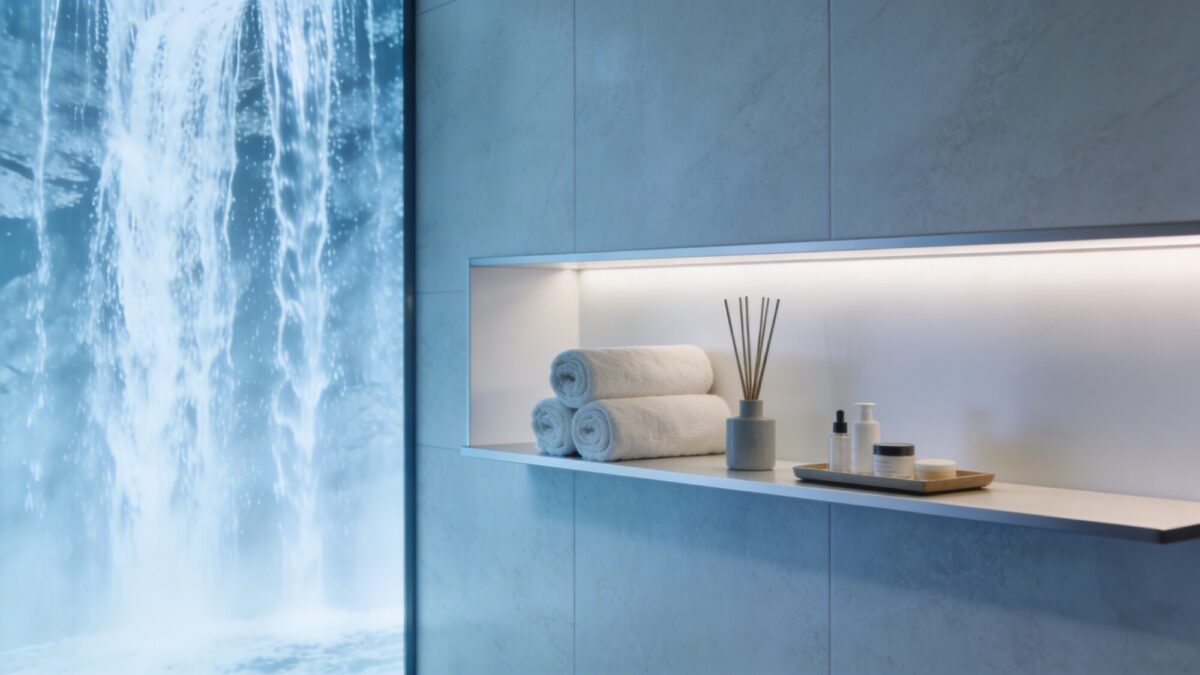
Lighting is what separates a shelf that photographs well from one that only looks good in daylight. LED strip lighting mounted underneath or behind the shelf gives a soft glow that works day and night without adding a visible fixture. Pillar candles add warmth cheaply, but skip them if the shelf is anywhere near kids, pets, or curtains — the risk isn’t worth the ambiance. A single spotlight or picture light from above works well if you have one genuine centerpiece you want to highlight rather than an even wash across the whole shelf.
Keeping It Looking Fresh
- Dust weekly — open shelves collect more visible dust than closed storage, simply because nothing’s blocking it.
- Rotate a few items every month or two. Swapping one or two pieces keeps the shelf from fading into the background, without needing a full restyle.
- Check brackets every few months, especially if the shelf holds anything heavy or if you live somewhere with humidity swings that can loosen wall anchors over time.
Modern Floating Shelves Decor Ideas to Try This Weekend
- Plant trio: one tall plant, one medium, one small succulent, kept to a single pot-color family.
- Books-as-art: stack two or three books flat, top with a small sculpture or bookend object instead of standing the spines up.
- Entryway catch-all: a small tray, a bowl for keys, and one decorative object — functional and styled at the same time.
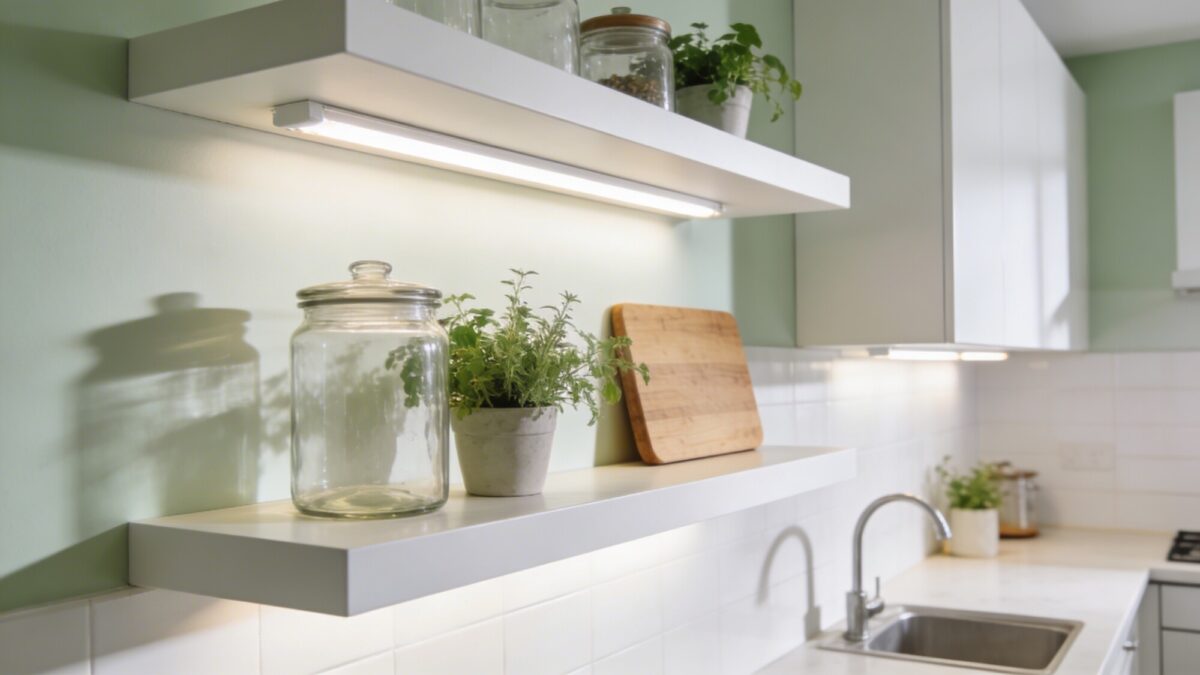
If you want more ideas scaled to a single small shelf rather than a full wall, the small floating shelf decor roundup is a good next stop, and the kitchen floating shelf decor guide covers the moisture and grease considerations specific to that room.
Things to Check Before You Commit to a Layout
- Have you confirmed stud locations, or are you relying on anchors alone for a heavier load?
- Does the shelf height account for furniture underneath it, not just a flat 60-inch rule?
- Are you repeating a wood tone or color across the objects, or is every piece competing for attention?
- Is there a functional need for this shelf (office, kitchen) that should take priority over pure decoration?
FAQ
Are floating shelves easy to install for beginners?
Yes, for a single light-duty shelf with basic tools — a stud finder, level, and drill cover most installs. The part beginners usually get wrong is skipping the stud check and relying on drywall anchors for a shelf that ends up holding books or ceramics, which is heavier than the anchors are typically rated for.
What weight can floating shelves typically hold?
It depends entirely on the bracket, the mounting method, and whether it’s anchored into studs — there’s no single number that applies across brands and installs. Check the specific weight rating on the bracket or shelf packaging rather than assuming; mounting into studs will always hold more than anchors alone.
How do I mix decor on a floating shelf without it looking cluttered?
Stick to the tall-medium-small ratio, limit yourself to two or three objects per shelf section, and repeat a color or material across the pieces so they read as a set instead of random items placed together.
Can floating shelves work in bathrooms?
Yes, but material matters more there than in any other room. Sealed wood, matte white finishes, or metal hold up better against humidity than raw or unsealed wood, which can warp or discolor over time near a shower or bath.
How do I style shelves that are visible from multiple rooms?
Keep the styling simpler than you would for a shelf viewed from one angle only — busy arrangements that look fine head-on can look chaotic from a side angle. A single strong anchor item per shelf, rather than several small pieces, usually reads better from multiple sightlines.
Our Take
If you’re only installing one shelf, spend your effort on the mount, not the decor — a securely anchored plain shelf beats a beautifully styled one that’s pulling away from the wall. Beyond that, the tall-medium-small ratio and a limited color palette will get a decent-looking shelf further than any specific object list. For a broader set of styled examples across different rooms, our floating shelf decor ideas roundup is worth a look next.