6 Living Room Inspiration Modern: Fresh, Bold, Calm Vibes
A modern living room isn’t really about a specific color or furniture shape — it’s about restraint. The rooms that read as effortlessly modern usually have fewer decisions in them, not more: one accent color, one statement piece, one bold wall. If your space is on the smaller side, that restraint matters even more, which is why a lot of minimalist living room principles overlap so closely with good modern design for small footprints.
Below are six approaches that hold up whether you’re working with a full apartment or a single awkward corner, starting with the one that requires the least furniture.
Quick Takeaways
- Modern doesn’t mean empty — it means one focal point per zone (one bold wall, one statement light, one textured chair) instead of five competing ideas.
- In small spaces, ceiling treatment and lighting do more visual work than floor space ever will — a well-planned false ceiling design can make a cramped room feel taller.
- Texture is the cheapest way to add depth to a neutral modern palette without adding clutter or color.
- Flexible, moveable furniture matters more in small apartments than in large rooms, since the same square footage needs to do double or triple duty.
- Test any bold color choice — wall paint or an accent fabric — under your actual evening lighting before committing, since color reads differently under warm lamp light than daylight.
1. Minimalist Luxury: Clean Lines, One Statement Piece
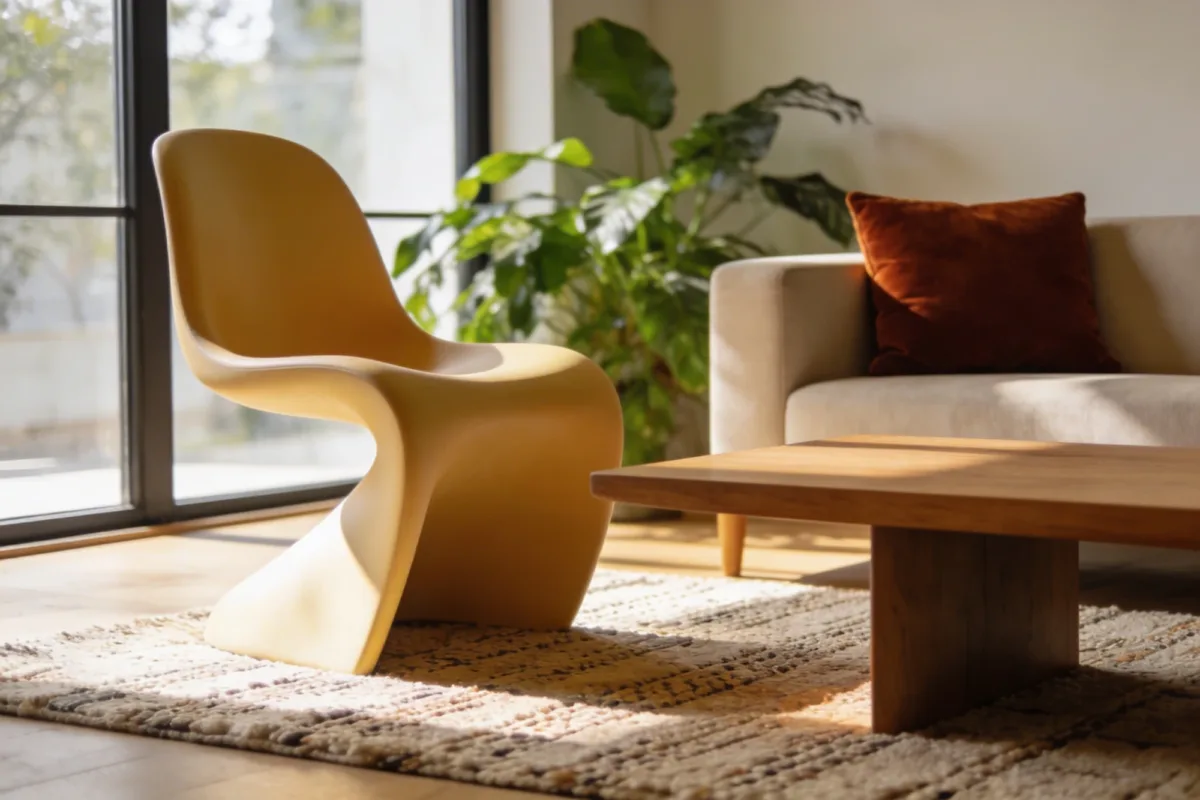
Minimalist doesn’t mean bare. It means picking a neutral base — warm cream or cool grey — and letting one sculptural piece carry the room’s personality: a striking floor lamp, an architectural coffee table, or a single bold rug. Everything else stays quiet so that piece actually gets noticed.

Why This Works in Small Rooms Specifically
- A neutral base with one accent color visually expands a small space more than a busy multi-color scheme
- Uncluttered surfaces make a room feel calmer without requiring more square footage
- Easy to update seasonally by swapping one accessory rather than reworking the whole room
💡 Pro Tip: If you’re not sure where to start, buy the neutral furniture first and hold off on the statement piece for a few weeks. Living in the room briefly before adding the bold accent usually makes it obvious what the space actually needs, rather than guessing from a mood board.
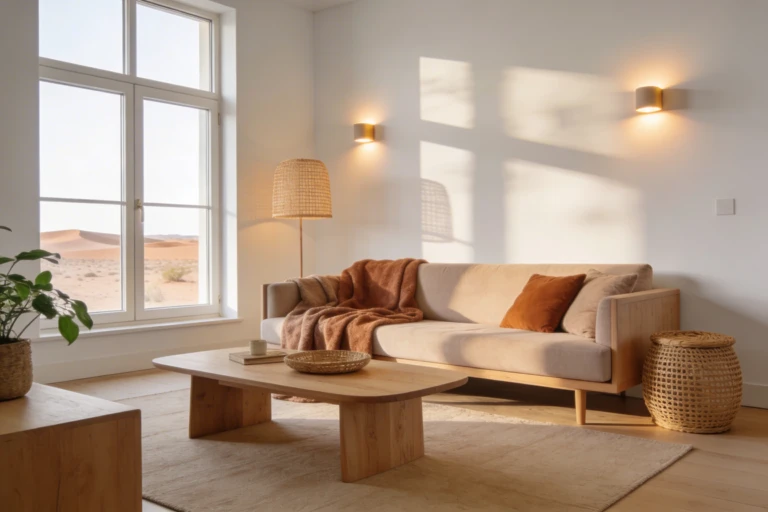
2. Warmth Through Wood Tones
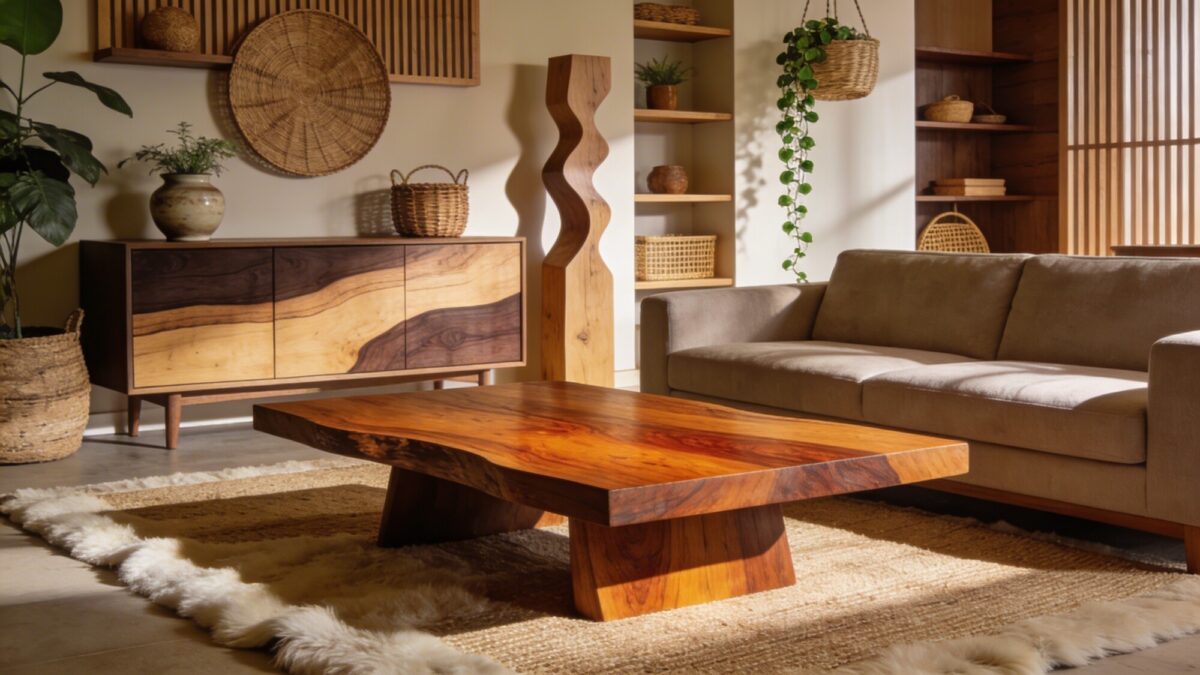
Pure minimalism can tip into feeling cold if every surface is white, grey, or glass. Wood tones fix that without breaking the modern look — a wood coffee table, a sideboard, or open shelving in mixed light and dark woods adds warmth while keeping lines clean.
Key Elements
- A wood-toned coffee table or sideboard as the main anchor piece
- Natural woven textures — a rattan basket or jute rug — layered in for texture without adding color
- One or two plants to keep the room from feeling static
The trade-off worth knowing: mixing too many different wood tones in a small room (a dark floor, a medium coffee table, a light shelf) can look accidental rather than layered. Pick two wood tones maximum and repeat them across the room rather than introducing a third.
3. Statement Lighting — and Where a False Ceiling Fits In
Lighting is the fastest, cheapest change that actually shifts how a room feels. A single bold pendant or a sculptural chandelier does more for a modern living room’s identity than most furniture purchases, especially paired with layered ambient, task, and accent lighting on a dimmer.
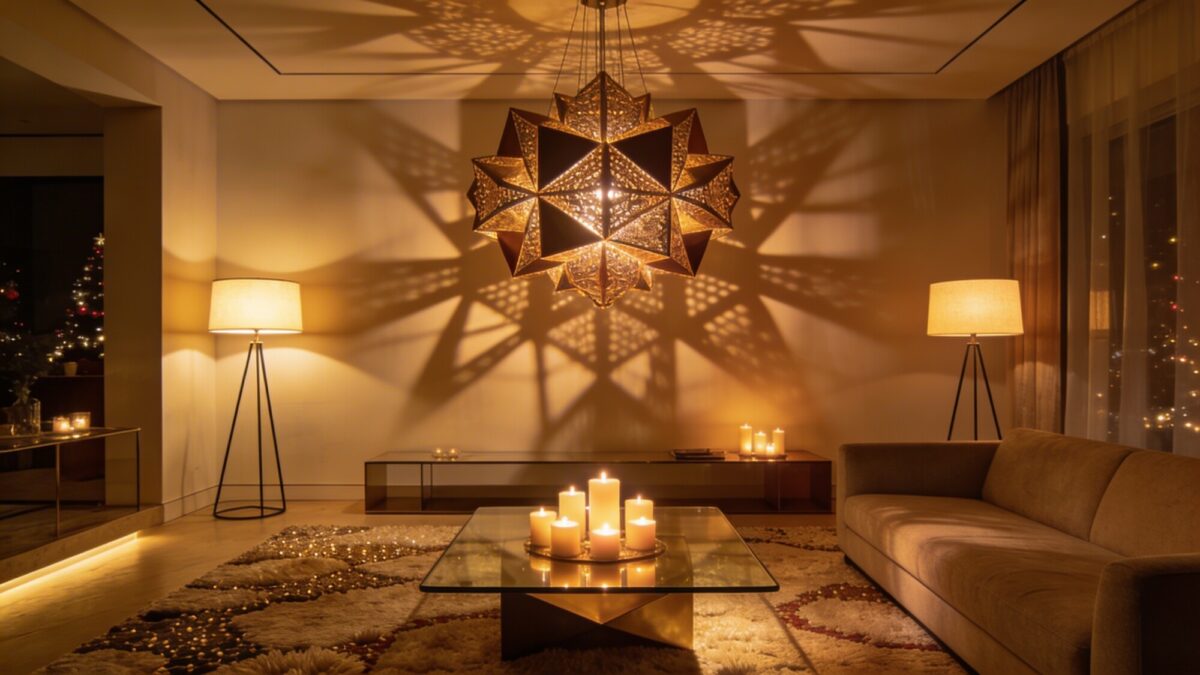
This is also where small living room false ceiling design decisions come in. A dropped or coffered ceiling section can hide wiring for recessed or cove lighting and give a room visual height it doesn’t have from floor to ceiling — but in a genuinely small room, a full false ceiling across the entire space can lower the perceived ceiling height and make the room feel more cramped, not less. The more common approach in modern living room false ceiling designs for smaller apartments is a partial treatment: a recessed strip around the room’s perimeter, or a small coffered section only around the main light fixture, rather than a full second ceiling layer.
💡 Pro Tip: If your ceiling height is under roughly 9 feet, skip a full false ceiling and go with a perimeter LED cove or a single small coffered detail instead. A full drop can eat 4–6 inches of height you can’t spare in a smaller room.
How to Layer Lighting Without a Full Ceiling Renovation
- Start with one strong overhead fixture as the visual anchor — pendant, chandelier, or a sculptural flush-mount.
- Add a floor lamp near the main seating area for evening ambient light.
- Use a couple of candles or small accent lamps on side tables for a third, lower layer of light.
- Put whatever you can on a dimmer — the difference between full brightness and 40% changes the room’s whole mood.
4. Textural Richness Without Adding Color
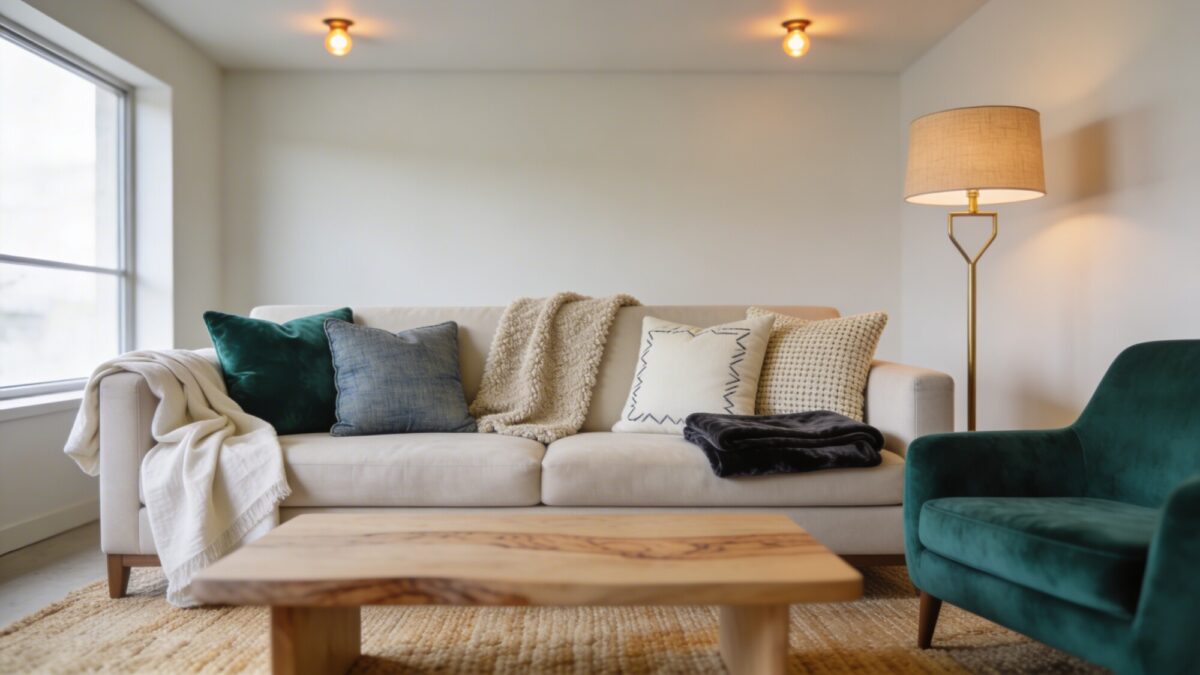
When you’re keeping a room neutral, texture is what stops it from feeling flat. Mixing velvet, linen, denim, and boucle in the same neutral-to-muted color family gives a room depth that a single fabric never will, even if nothing about the color scheme has changed.
What to Blend
- A smooth-fabric sofa paired with one velvet accent chair
- Throws in varying weights — a lightweight linen and a heavier boucle
- Textured pillows in subtle patterns rather than bold prints
The mistake to avoid: matching every fabric too closely. A room where the sofa, chair, and pillows are all the exact same beige reads as flat regardless of how many textures you’ve technically used. Keep a loose color thread running through the pieces, not an exact match.

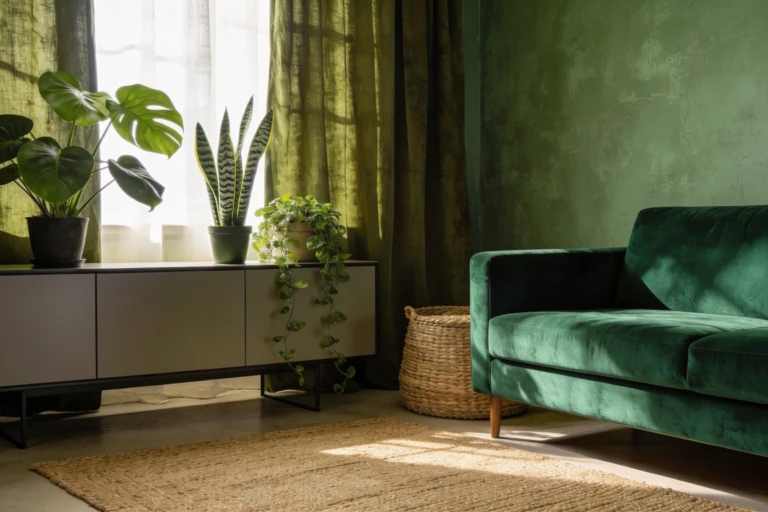
5. One Bold Color Wall, Not a Full Repaint
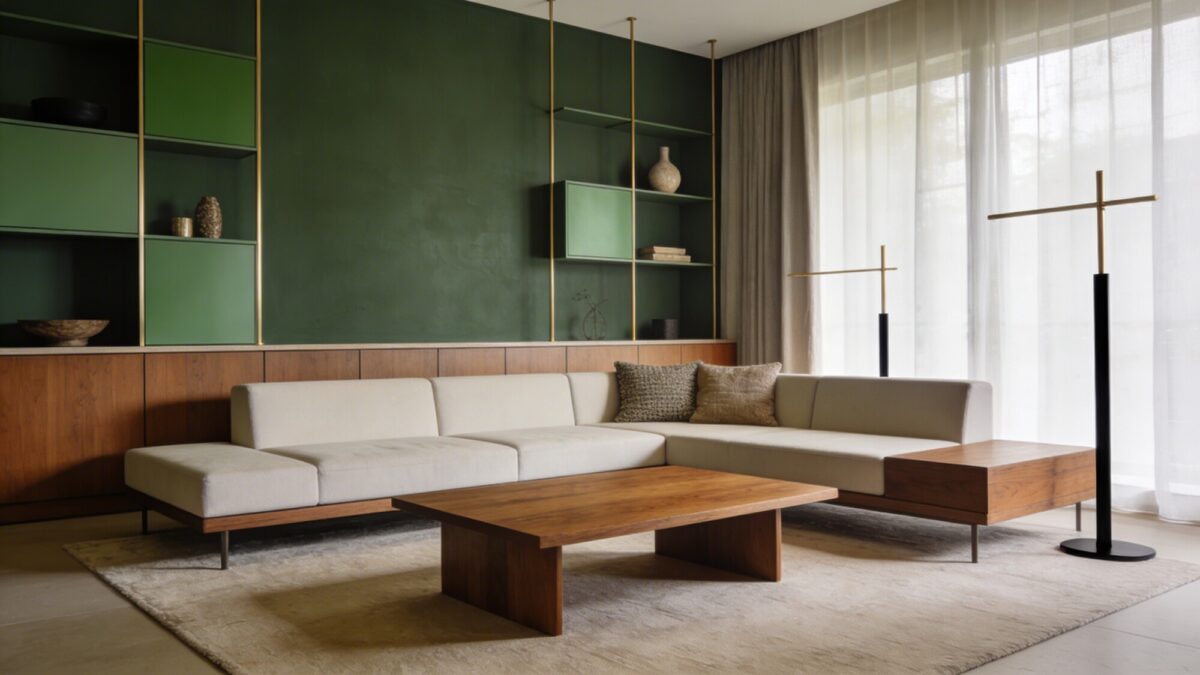
A single feature wall in a saturated color — deep sage, navy, terracotta — gives a modern living room personality without the commitment or cost of repainting the whole space. The rest of the room stays calm so the one wall does the work.
Smart Color Hacks
- Pick one saturated hue for a single wall or a built-in niche, not multiple walls
- Keep everything else — sofa, floor, remaining walls — in a calm neutral to balance the intensity
- Test paint swatches under both daylight and your evening lamp light before committing, since color shifts noticeably between the two
If a full wall feels like too much of a leap, painting the inside of a built-in cabinet or a single alcove is a lower-risk way to test the same idea before scaling up.
6. Flexible Seating for Small Living Room Designs
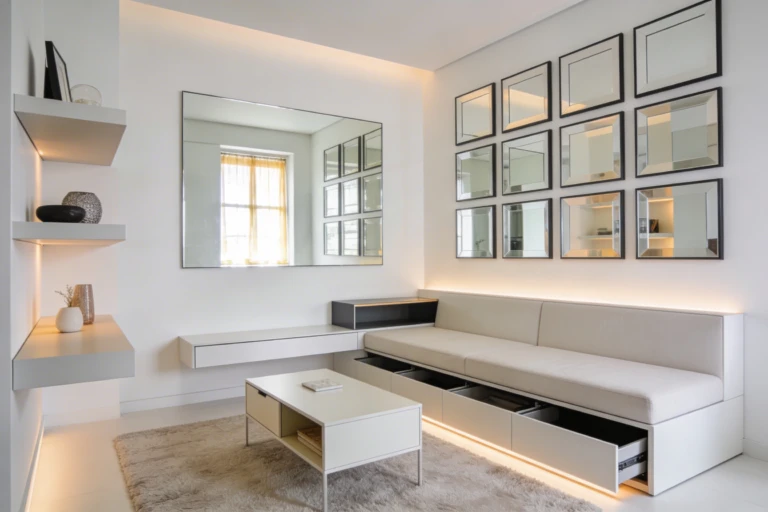
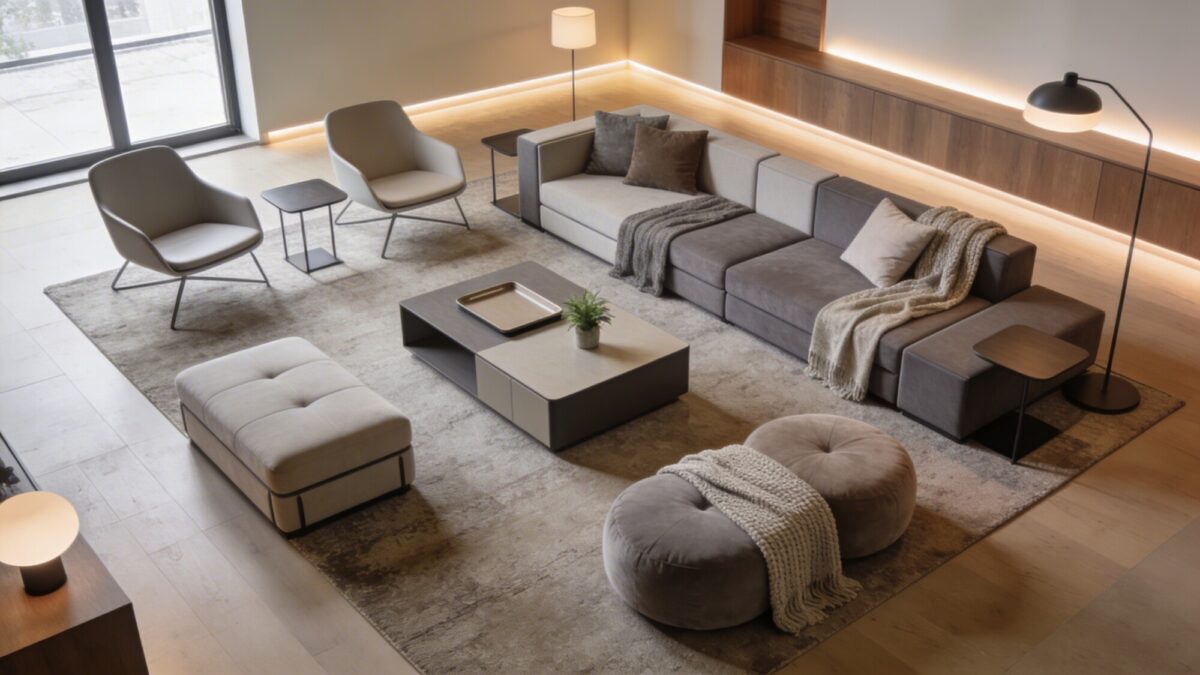
In a genuinely small apartment, seating that can move or reconfigure matters more than seating that just looks good. A modular sectional, a couple of lightweight accent chairs, and poufs that double as extra seats let the same square footage handle movie nights, hosting, and solo lounging without needing separate furniture for each.
Smart Setup Ideas
- A modular sofa or two lightweight chairs instead of one large fixed sectional
- Poufs that function as footrests, extra seats, or side tables depending on the day
- An ottoman with a tray top that doubles as a coffee table
This is the piece of a cozy minimalist living room, simple as the goal sounds, that people underestimate. A room can look styled in photos and still be frustrating to actually live in if nothing moves. Prioritize function here even if it means a slightly less “finished” look on day one.
Which Approach Fits Your Space?
| If your living room is… | Start with | Why |
|---|---|---|
| A small apartment with low ceilings | Statement lighting (#3) + flexible seating (#6) | Skips a full false ceiling that would eat height, while making the space work harder functionally |
| Already neutral but feels flat | Textural richness (#4) | Adds depth without introducing new colors or furniture |
| Large with good natural light | Color pop wall (#5) or wood tones (#2) | Bigger rooms can absorb a bold wall or richer wood tones without feeling closed in |
| A rental where major changes aren’t allowed | Minimalist luxury (#1) or flexible seating (#6) | Both rely on furniture and accessories rather than permanent changes |
Things to Check Before You Start
- What’s your actual ceiling height? Under 9 feet generally rules out a full false ceiling drop.
- Do you have one wall that makes sense as a bold color focal point, or would a bold color compete with existing built-ins?
- How many functions does this room need to serve in a week — lounging, hosting, working — and does your current furniture flex for all of them?
- Are you working with rented walls or a space where painting and lighting changes are limited?
- What’s the one wood tone or metal finish you want repeated throughout, so new pieces don’t clash with what you already own?
FAQ
Is a false ceiling worth it in a small living room?
Usually only a partial one. A full false ceiling can lower a room’s perceived height in a way that hurts a small space more than it helps. A perimeter LED cove or a single small coffered detail around the main light fixture gets most of the visual benefit without sacrificing height.
How do I make a small modern living room feel bigger without knocking down walls?
Stick to a neutral base with one accent color, keep furniture legs visible rather than fully upholstered to the floor, and prioritize lighting layers over ceiling treatments. Visual clutter shrinks a room faster than actual furniture size does.
Can a cozy living room still look modern, or do those work against each other?
They don’t conflict. A minimalist cozy living room apartment usually just swaps heavy, ornate textiles for cleaner-lined furniture with warmer textures layered in — think a boucle throw on a streamlined sofa rather than a tufted, traditional armchair.
What’s the single highest-impact change for a modern look on a tight budget?
Lighting. A statement pendant or a few well-placed lamps with warm bulbs changes a room’s entire feel for less than the cost of a new sofa.
Should I paint an entire room or just one wall?
One wall, in most cases — especially in a modern living room designs small spaces scenario where a full-color room can feel heavier and more closed in than a single accent wall against calm neutrals.
Our Take
The modern living rooms that actually work long-term are the restrained ones — one bold move, everything else quiet. In a small space, that restraint isn’t optional: overdo the ceiling, the color, and the furniture all at once and the room will feel busier than a much larger space with the same three elements spread out and toned down.
If you’re drawn to a slightly softer take on this look, it’s worth comparing it against modern cozy living room ideas before finalizing your palette — the two styles share most of the same bones, just with warmer, more textured execution. And if flexible, multi-purpose furniture is the piece you’re missing most, this modern living room design guide goes deeper into layout options for smaller footprints.