7 Kitchen Floating Shelf Decor: Tiny Shelf, Big Charm
A kitchen shelf has a harder job than a living room shelf — it’s near heat, steam, and grease, and it usually needs to hold something you actually reach for daily, not just look good in a photo. Good kitchen floating shelf decor balances both: styled enough to feel intentional, practical enough to survive a Tuesday night dinner rush. If you’re deciding whether shelves or cabinets make more sense for your kitchen in the first place, our floating shelves vs. cabinets guide is worth reading before you commit to open shelving at all.
Below are seven ways to style kitchen floating shelves, with the trade-offs and mistakes attached to each — not just the finished-photo version.
1. Layer Texture and a Color Pop
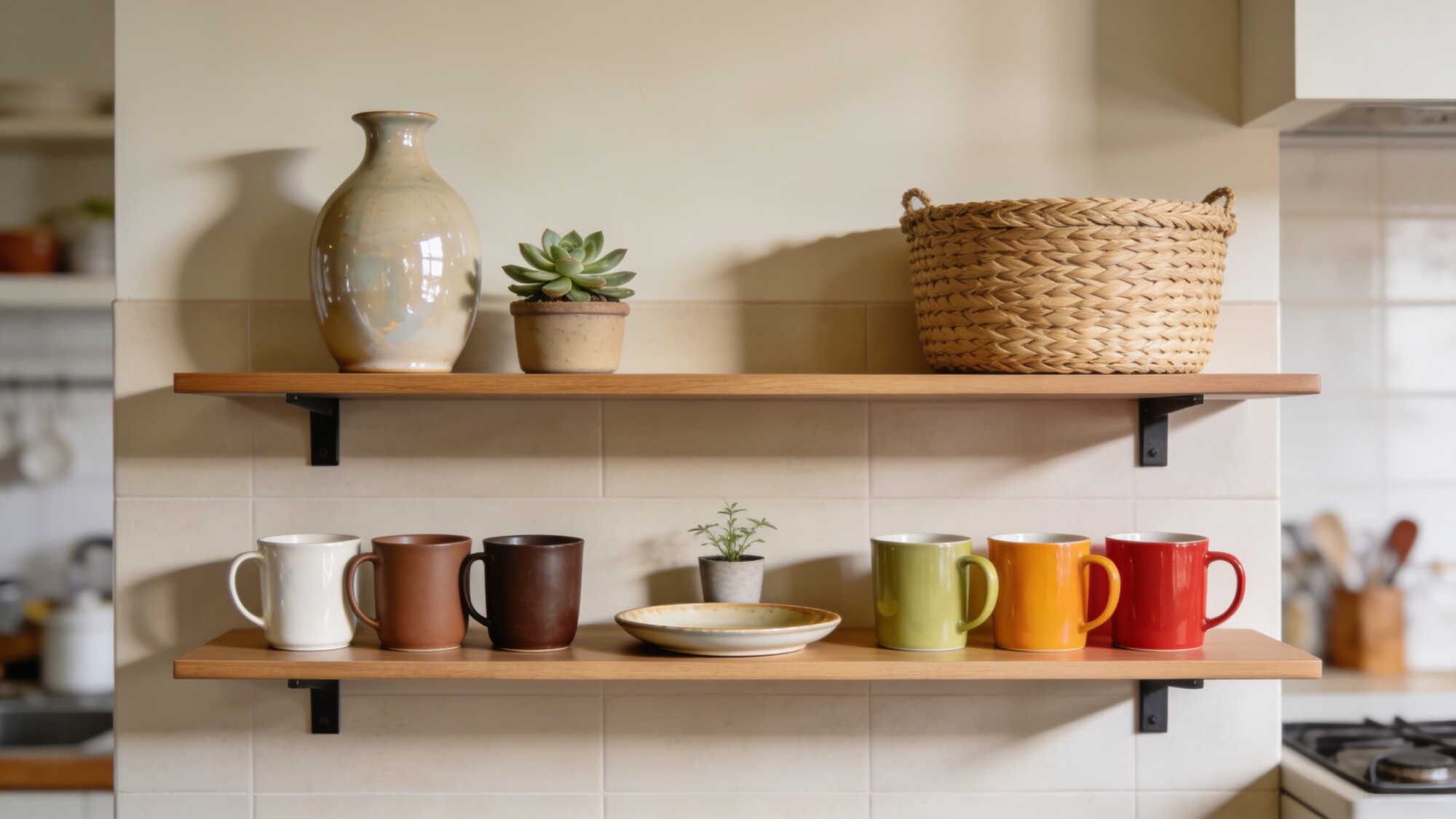
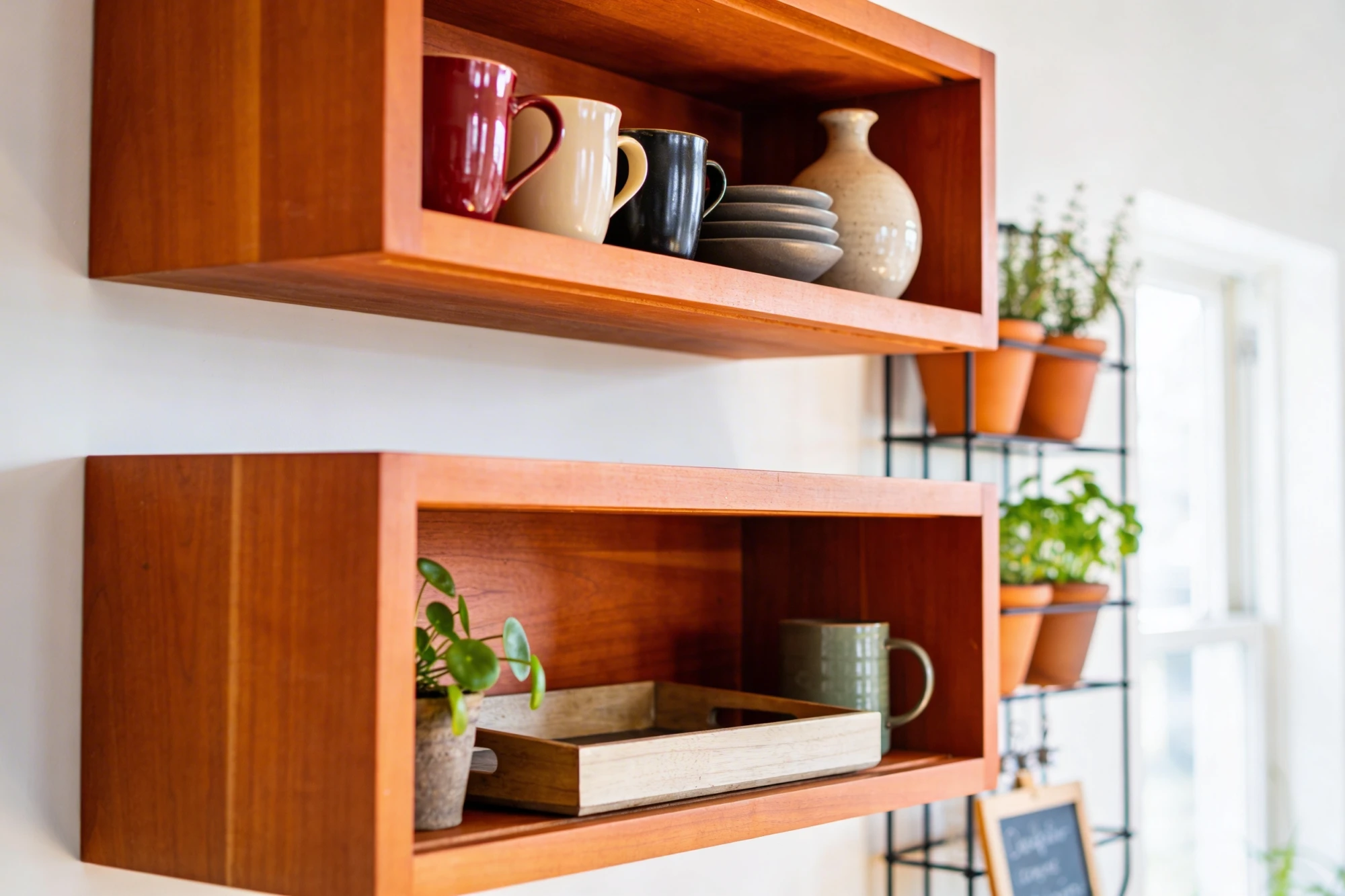
An all-wood or all-white shelf tends to disappear into the backsplash. Mixing a glossy ceramic vase, a woven basket, and a small run of mugs with a splash of color gives the eye more to catch on, especially in a kitchen where most surfaces are already neutral tile or countertop.
Key elements
- A mix of glossy and matte ceramics, not all one finish
- A small, low-maintenance succulent or plant
- One tray or shallow bowl centered to anchor the display
💡 Pro Tip: Group mugs and small objects in odd numbers — threes read as arranged, pairs read as leftover. It’s a small shift but it’s the difference between “styled” and “these are just the mugs I own.”
Keep this shelf within reach of daily use, not purely decorative — objects that get picked up and put back regularly stay dust-free without extra effort.
2. The Herb Corner That Grows With You
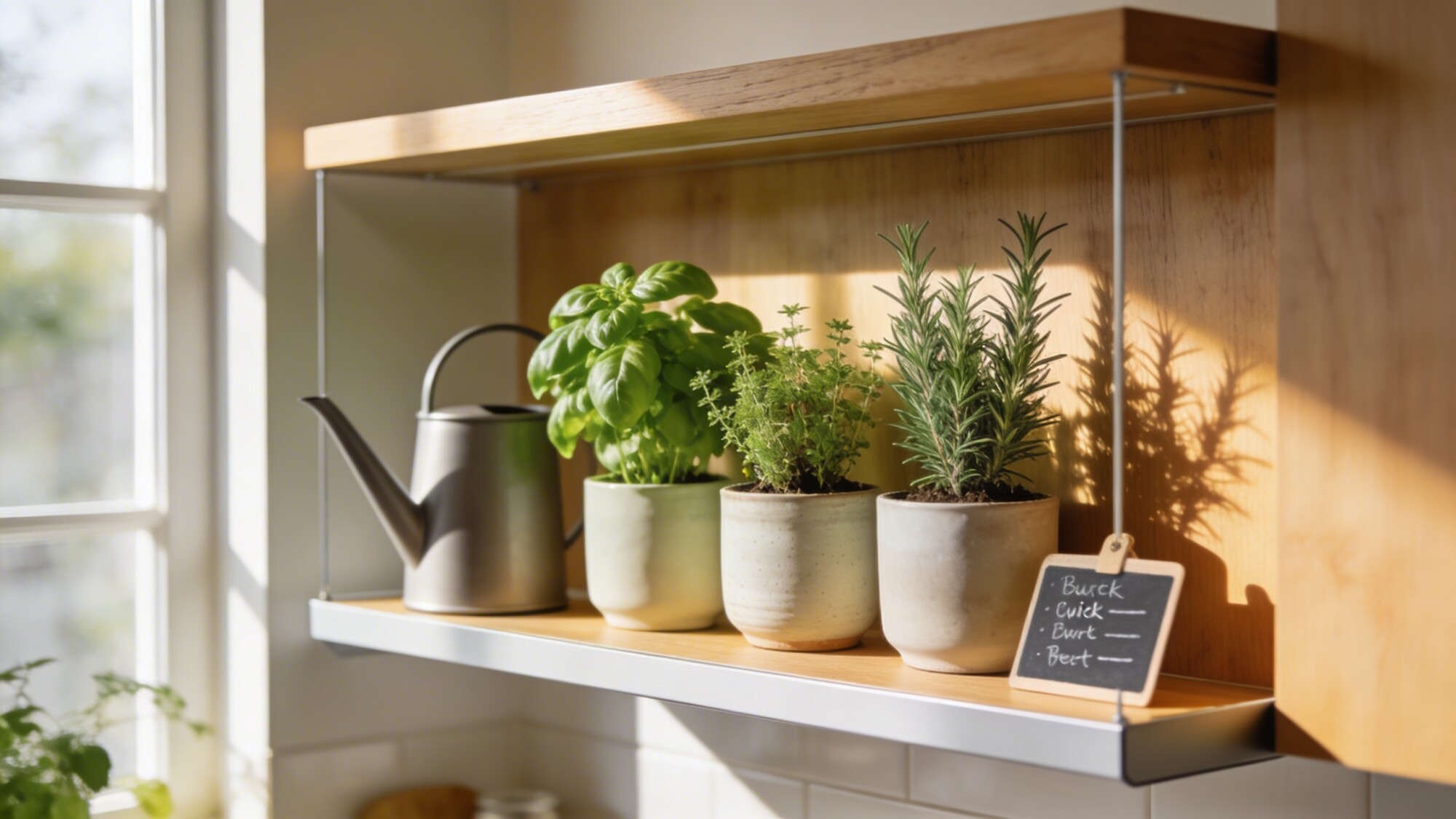
Fresh herbs make a real difference in cooking, and a shelf near a window is the easiest place to grow a few without giving up counter space. Basil, thyme, and rosemary are the standard trio because they tolerate kitchen conditions — inconsistent watering, some temperature swing — better than more delicate herbs like cilantro.
Tips
- Choose sun-loving herbs: basil, thyme, rosemary
- Use labeled pots so you’re not guessing which is which mid-recipe
- Keep a small chalkboard or tag nearby for quick notes (watering schedule, last trim)
This only works if the shelf actually gets several hours of direct light. A herb shelf on an interior wall or a north-facing window will look fine for a couple of weeks and then quietly die — if that’s your situation, a ZZ plant or another low-light plant will hold up far better than herbs will.
3. Display Cookware Without the Clutter
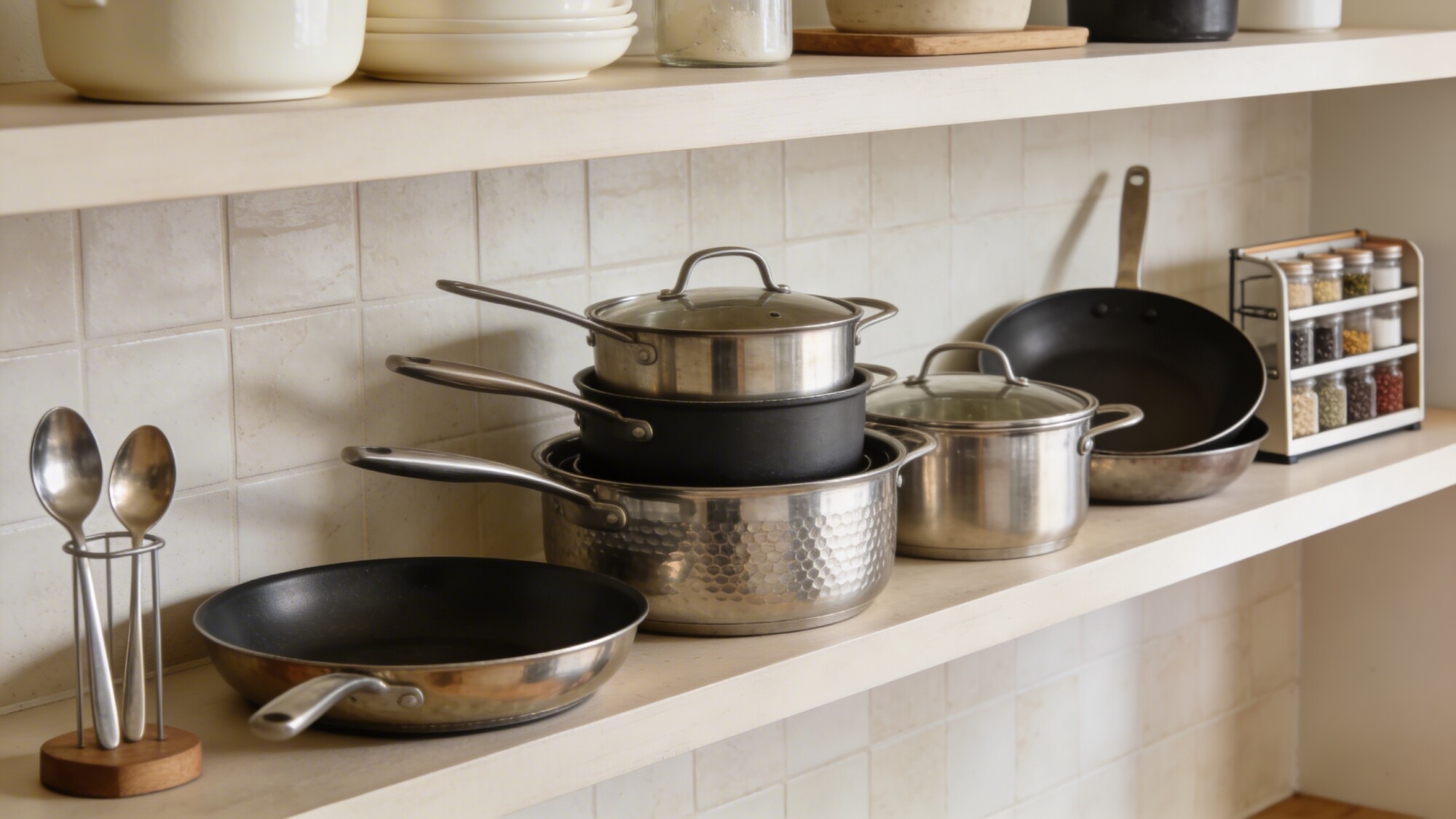
Open shelving can hold your actual cookware, not just decorative objects, if you’re deliberate about which shelf and which pieces. A shallow, wide shelf keeps pots and pans easy to grab, and putting lighter pieces on top avoids the visual (and physical) weight sitting too high.
Organizational notes
- Hang or stack frequently used pans in a simple, consistent order
- Pair with a small utensil stand or spice rack for quick reach
- Leave gaps between groupings — a fully packed shelf reads as storage overflow, not display
This approach works best with pieces you actually use weekly. Cookware you rarely touch collects grease dust faster on an open shelf than in a closed cabinet, since nothing’s blocking the kitchen air from settling on it.
4. Artful Pots and Bold Patterns
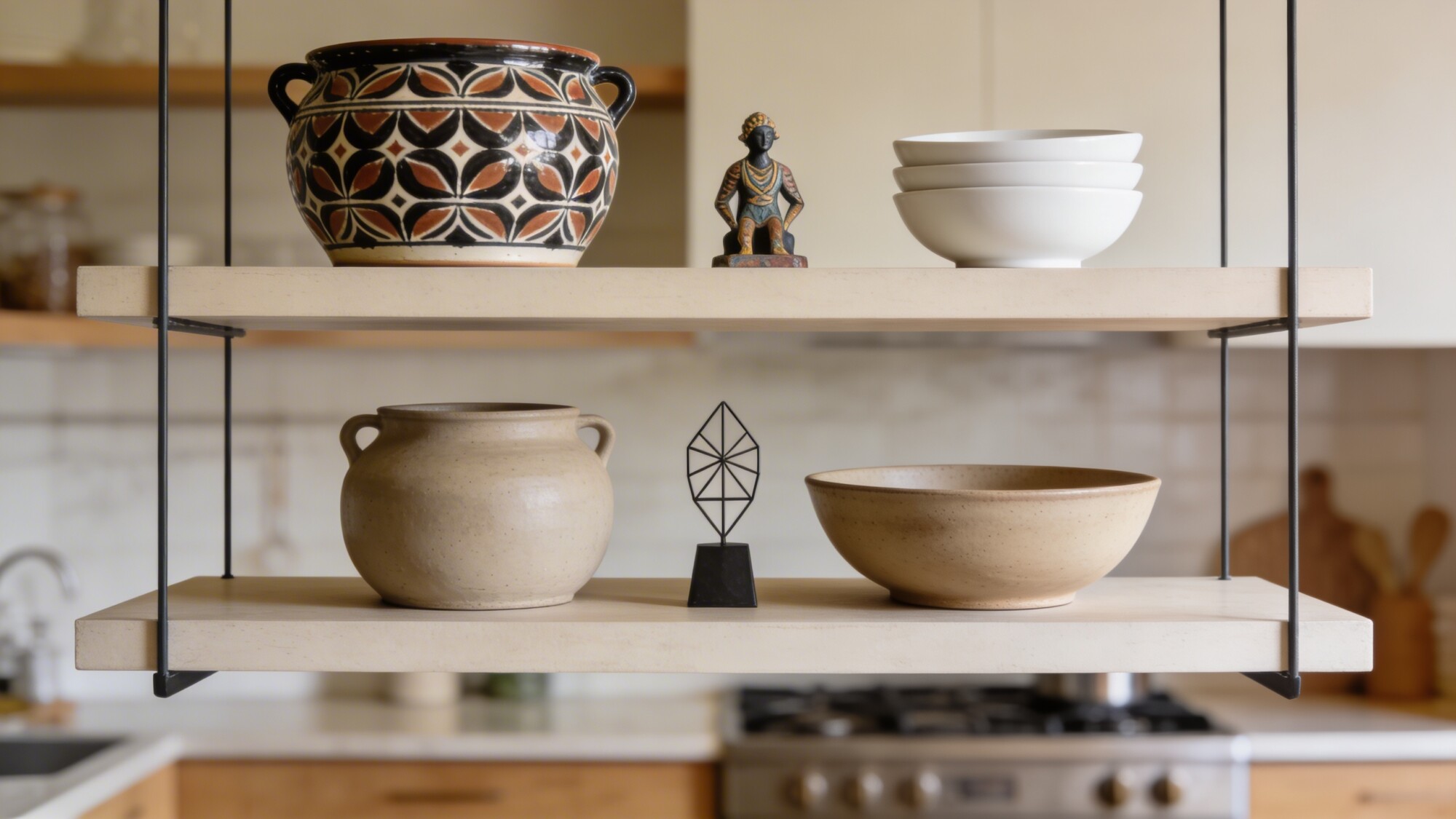
A kitchen shelf can double as a small display case if you treat it that way. One bold-patterned or textured ceramic piece as the statement, balanced by two or three plain, neutral pieces, keeps the shelf from looking like a mismatched collection.
What to include
- One statement ceramic piece — bold pattern or a distinct glaze
- Two neutral pieces to ground the display
- A small sculpture or figurine for a bit of personality
Rotate the statement piece every few weeks if you have more than one you like — it keeps the shelf from becoming background noise you stop noticing.
5. Functional Jars That Double as Decor
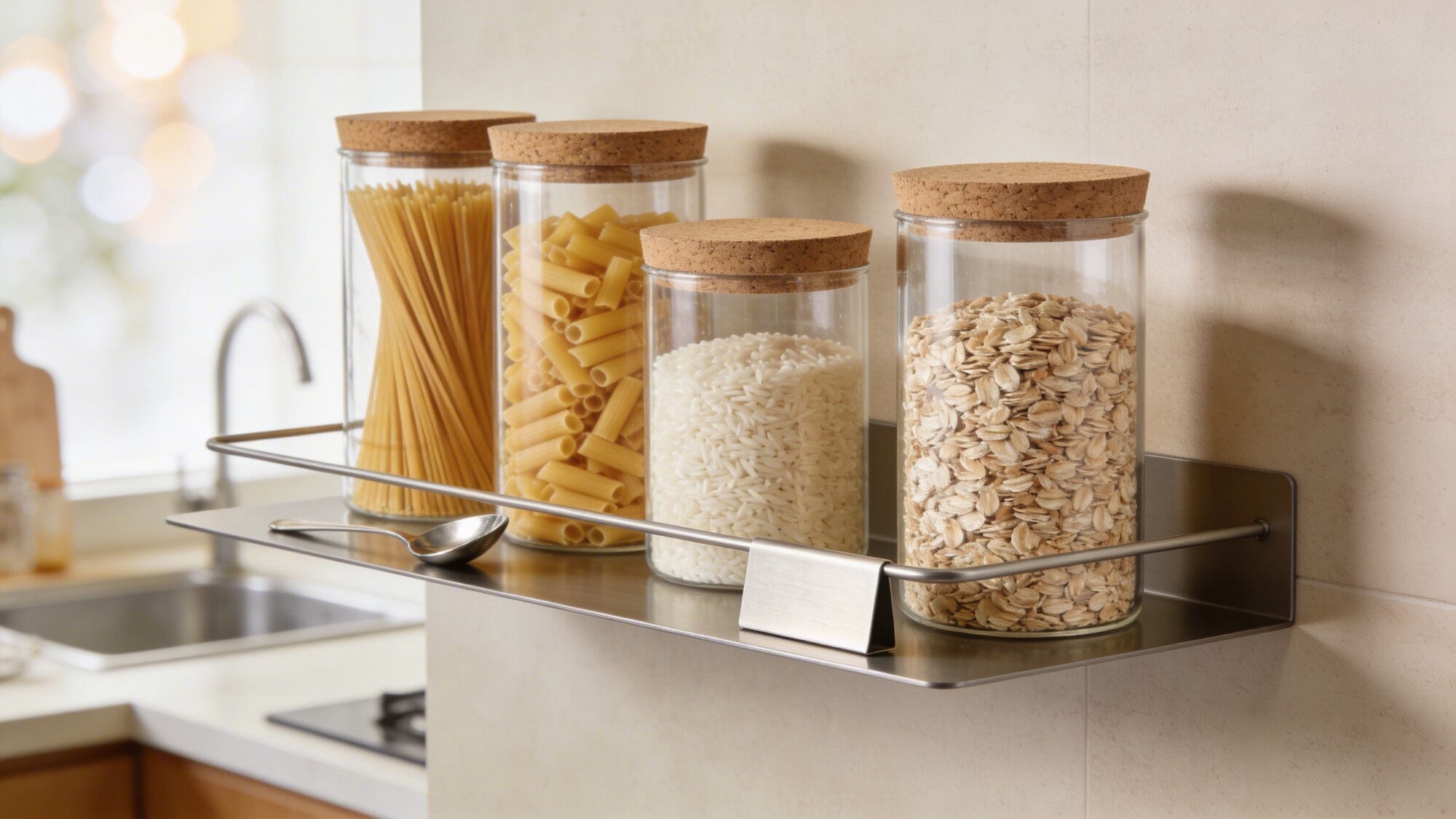
Clear jars filled with pantry staples — pasta, rice, oats — do double duty: you can see what you have at a glance, and the uniform shape reads as intentional rather than a shelf of mismatched packaging. This is one of the most practical ideas on this list because it replaces clutter you already have (open bags, half-used boxes) instead of adding new objects.
Quick setup
- Match jar sizes and lid styles so the row reads as a set
- Add label tags for quick recognition, especially for similar-looking dry goods
- Layer in a metallic accent — a small spoon rest or a slim label holder — without overdoing it
💡 Pro Tip: Buy the jars before you decide on shelf spacing — jar height and width should drive how far apart you mount multiple shelves, not the other way around. Measuring the jars first avoids a shelf that’s a half-inch too short for the lids.
6. Lighting That Elevates the Moment
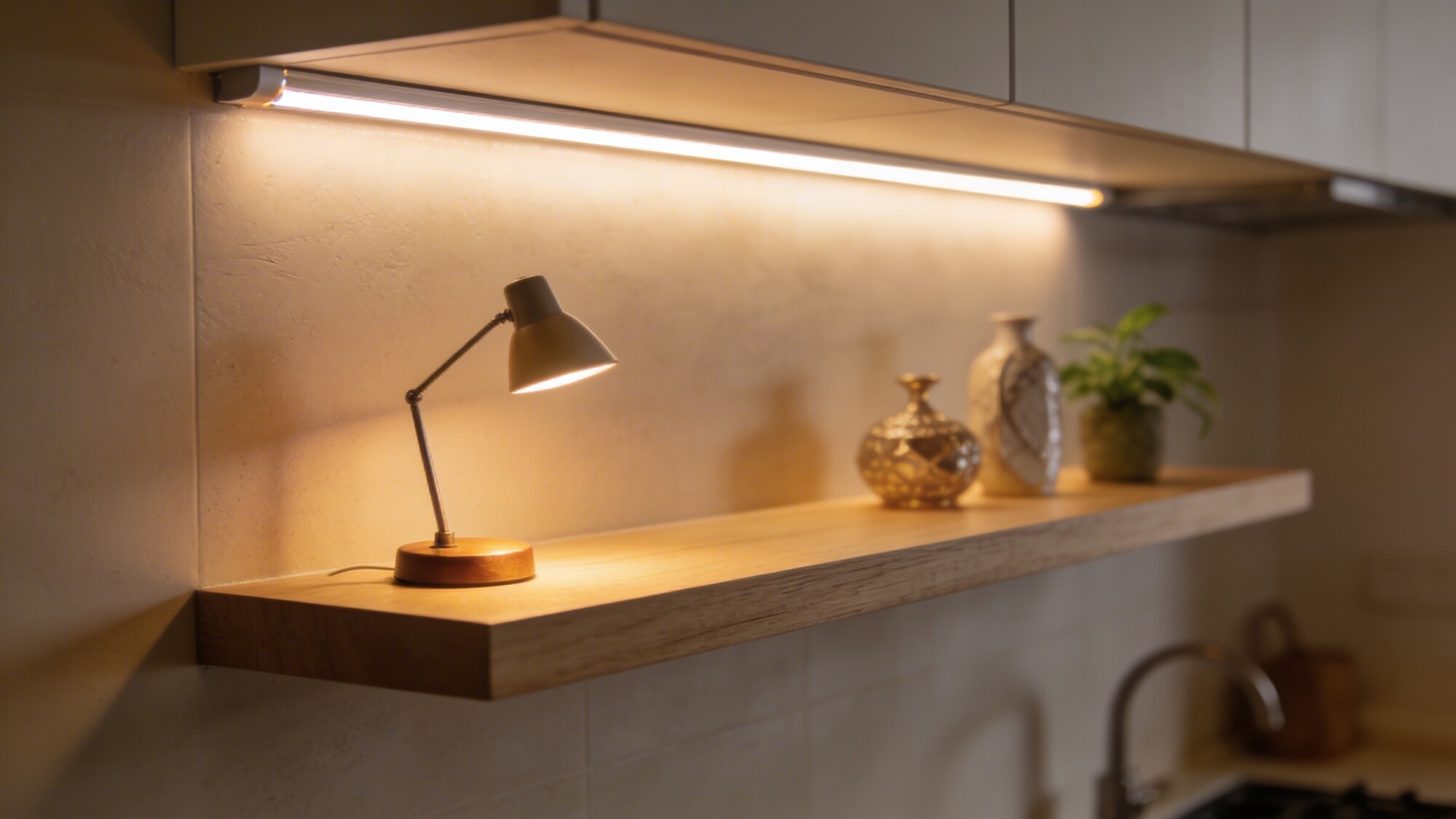
Lighting is what makes a kitchen shelf usable after dark, not just in daylight photos. A slim LED strip tucked under the shelf edge, or a couple of battery-powered puck lights, adds enough glow to see what’s on the shelf without turning on the overheads.
Lighting ideas
- Warm white, roughly 2700K–3000K, for a cozy rather than clinical feel
- Motion-activated strips if you don’t want to bother with a switch
- A small weighted-base lamp for a bit of personality, if the shelf has room
Steer clear of bright white (5000K+) strips in a kitchen shelf setting — they tend to wash out warm-toned ceramics and wood and make the shelf feel more like task lighting than ambiance.
7. Minimalist Zen — One Rule, Big Impact
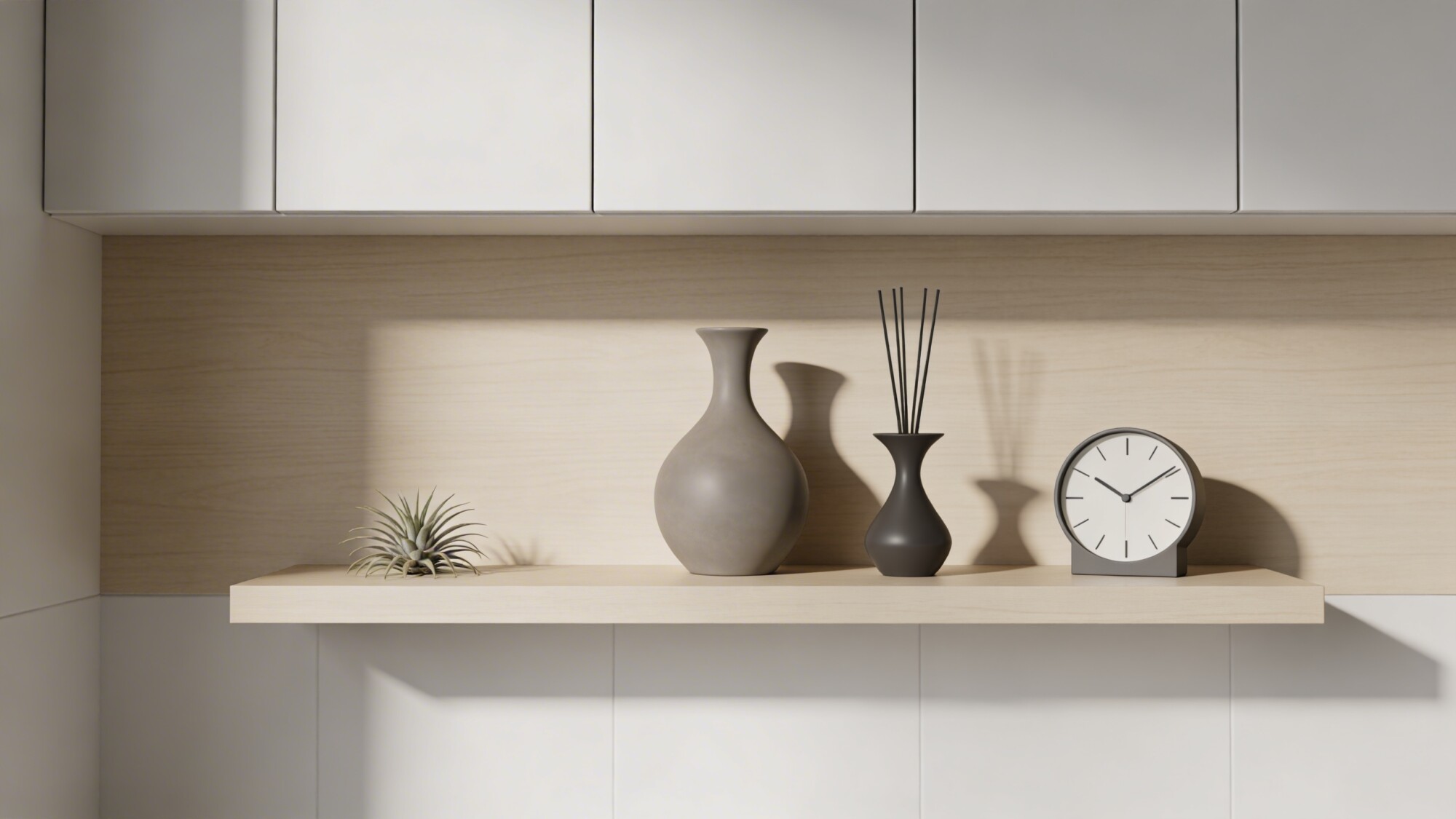
Sometimes the strongest move on a small kitchen shelf is restraint. One well-chosen piece — a sculptural vase, a diffuser, a simple clock — with real space around it can read as more considered than a shelf packed with five smaller objects.
Keep it simple
- One statement item per shelf, nothing competing with it
- Neutral tones that complement your existing cabinetry
- A small plant or textured object nearby to keep it from feeling sterile
This idea works best on a small, single shelf rather than a long run — the negative space is the point, and it’s harder to pull off convincingly across several feet of shelving.
Which Idea Fits Your Kitchen
| Idea | Best If | Upkeep |
|---|---|---|
| Texture and color pop | You want the shelf to feel styled without much daily effort | Low |
| Herb corner | The shelf gets several hours of direct sun | Medium (watering, trimming) |
| Cookware display | You want the shelf to replace cabinet storage for daily-use pieces | Medium (dusting more often) |
| Artful pots and patterns | You want a rotating, gallery-style focal point | Low |
| Functional jars | You already have loose pantry staples to organize | Low |
| Under-shelf lighting | The kitchen gets used after dark and feels flat under overheads alone | Low (one-time install) |
| Minimalist single piece | You have one small shelf and want it to feel calm, not busy | Low |
Things to Consider Before You Style a Kitchen Shelf
- Is the shelf near the stove or in a grease-and-steam path? That affects material choice and how often you’ll need to clean it.
- Does it get real daylight — enough to support herbs — or would a low-light plant or no plant at all be more realistic?
- Will this shelf hold things you use daily, or is it purely decorative? Mixing both roles on one small shelf usually looks cluttered.
- If you’re weighing shelves against upper cabinets for the whole kitchen, that’s a bigger decision than styling — see the open shelf kitchen vs. upper cabinets breakdown before committing.
FAQ
Do open kitchen shelves get greasy faster than cabinets?
Yes, especially the shelf closest to the stove. Anything on open shelving is exposed to cooking steam and airborne grease constantly, while a closed cabinet blocks most of it. If the shelf is near the range, plan on wiping items down more often than you would in a cabinet.
What’s the best material for a kitchen floating shelf specifically?
Sealed wood or a wipeable finish (painted, laminated, or metal) holds up better near cooking heat and moisture than raw or unsealed wood, which can warp or stain over time.
Can I mix decorative and functional items on the same kitchen shelf?
You can, but it works best when the functional items are also visually decent — matching jars, a nice cutting board — rather than mixing genuinely utilitarian clutter with styled decor pieces. If the functional items look messy, give them their own shelf.
How many plants or herbs should I put on one kitchen shelf?
Two or three is usually the ceiling before it starts crowding a typical kitchen shelf, especially once you account for jars, cookware, or other objects sharing the space. Prioritize the herbs you actually cook with regularly over a full windowsill collection.
Our Take
Start with whichever idea solves a problem you already have — jars if your pantry is a mess of open bags, a herb corner if you’re buying fresh herbs and tossing half of them, cookware display if your cabinets are overstuffed. The purely decorative ideas (artful pots, minimalist single piece) are worth adding once the functional side of the shelf is sorted, not before. For more on choosing wood versus metal shelving for a kitchen specifically, our wood vs. metal open shelves comparison is a useful next read.