6 Large Wall Decor Living Room Floating Shelves Shelf Ideas That Wow
Most floating shelf advice tells you to “style in odd numbers” and stops there, which is why so many shelves end up with three random candles on them and nothing else. Good wall decor living room floating shelves shelf ideas are less about a styling trick and more about picking a layout that matches how you actually use the wall — gallery space, book storage, a plant corner, or a spot for the things you don’t want jammed in a drawer. If you’re still deciding between open shelving and closed storage for the room in general, it’s worth reading through our floating shelves vs. cabinets comparison before you commit to a wall of open shelving you can’t easily undo.
What follows are six layouts that get used in real living rooms, plus what tends to go wrong with each one. None of them require knocking down a wall or hiring someone for a weekend.
Quick Takeaways
- Symmetry reads as calm; asymmetry reads as energetic — pick based on how busy the rest of the room already is.
- Corner shelves solve dead space but need a color plan or they turn into visual clutter fast.
- A bank of 3–5 shelves is the easiest layout to get right for a first attempt at open wall storage.
- Dark shelves on a light wall create more contrast per square foot than any amount of extra decor.
- Weight-bear items (books, ceramics) belong on studs or heavy-duty anchors — not just the included plastic hardware.
1. Gallery-Style Symmetry for Wall Decoration Ideas That Feel Curated
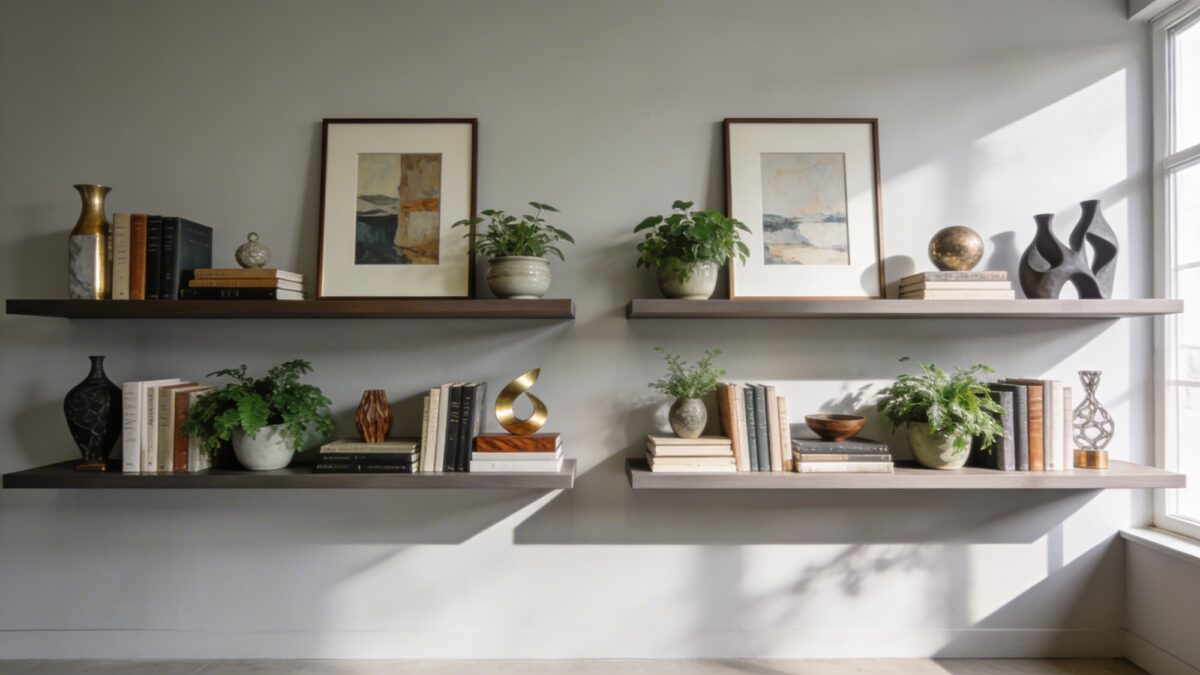
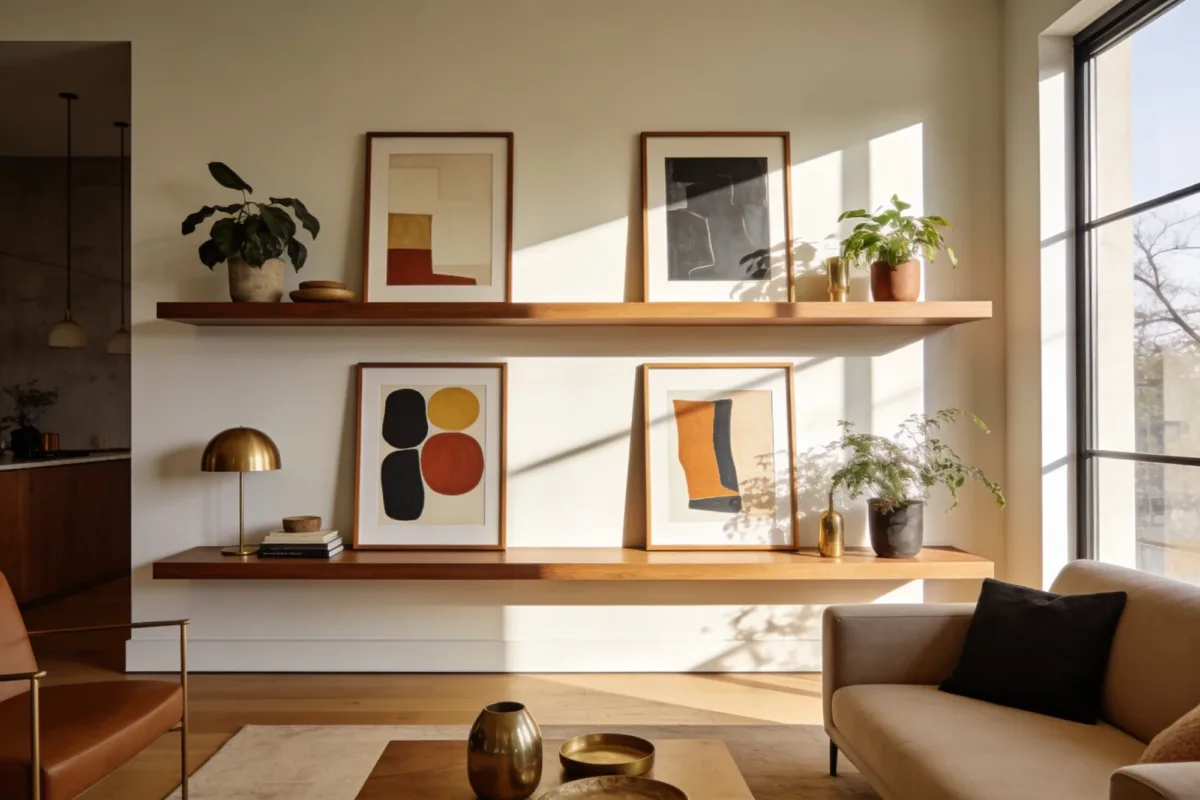
Two matching shelves, mounted level and centered on a wall, are the safest starting point if you’ve never styled open shelving before. The symmetry does most of the visual work for you — it’s why this layout shows up so often in wall decoration ideas for rental living rooms, where you want the space to look finished without a huge investment.
The mistake people make here is treating both shelves identically, item for item. That reads as staged rather than lived-in. Instead, mirror the weight and color balance loosely — a stack of books on one side answered by a plant and a sculptural object on the other, rather than a book-for-book match.
💡 Pro Tip: Hang gallery shelves at 60–66 inches from the floor to center of shelf, which is standard picture-hanging height. Go lower and the display competes visually with your sofa back; go higher and you’ll be squinting at it from the couch.
What to Put on Each Shelf
- Framed art or a small mirror leaned (not hung) against the wall at eye level
- A short stack of hardcover books, spines out, no more than 4–5 deep
- One plant in a ceramic pot, and one non-plant object with real height
2. Asymmetric Stacking for Rooms That Feel Too Flat
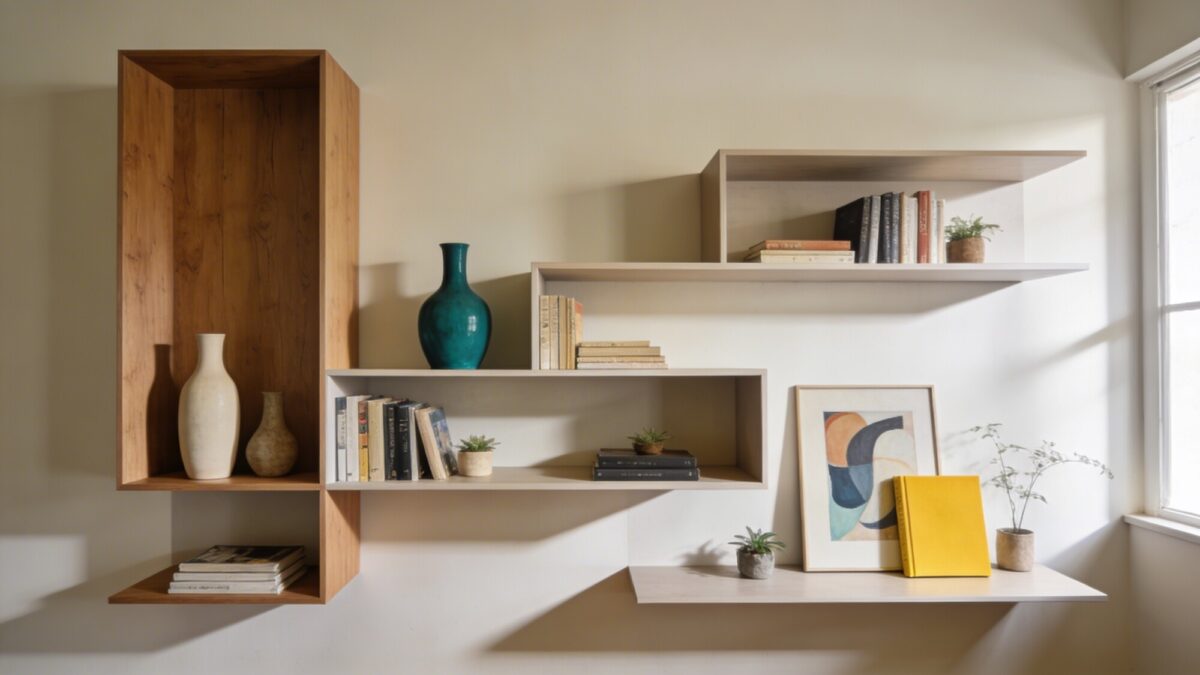
Symmetry is safe, but a room with high ceilings or a lot of straight lines already — think a rectangular sofa, a rectangular coffee table, a TV mounted flush to the wall — can end up feeling flat. Staggering three or four shelves at different heights and offsets breaks that rhythm without adding furniture.
This layout takes more trial and error than the gallery version. Cut your shelf positions out of kraft paper first and tape them to the wall before you drill a single hole — it sounds fussy, but it’s the difference between a wall that looks intentional and one that looks like you ran out of shelves and kept going.
3. Corner Shelf Ideas for Dead Space
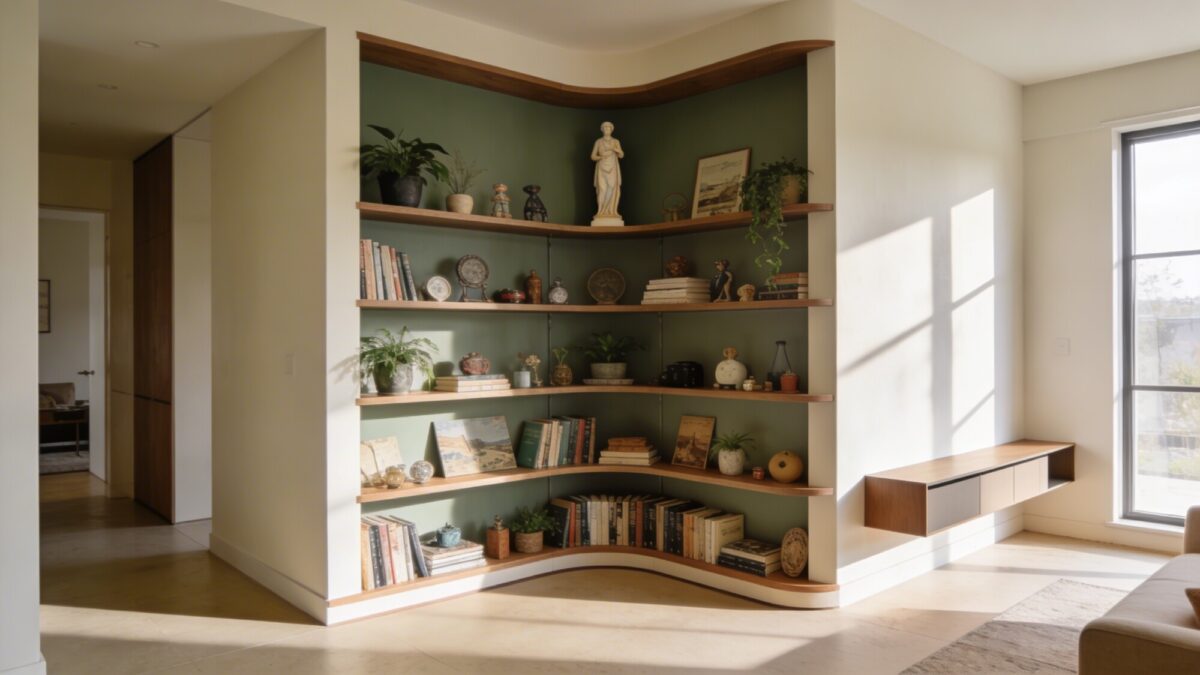
Every living room has at least one corner that’s just there — too small for furniture, too awkward for art. An L-shaped or corner-leaning floating shelf is one of the few genuinely useful corner decoration ideas that doesn’t involve buying a specialty corner cabinet. The same logic scales down nicely if you’re working on a corner shelf bedroom setup rather than a living room; the bracket math is identical, just at a smaller footprint.
The trade-off with corner shelves is installation. Standard L-brackets often don’t sit flush in a true 90-degree corner unless the walls are perfectly square, and older houses rarely are. Measure both walls of the corner separately before ordering hardware, not just the shelf length.
Corner Shelf Checklist
- Measure both walls of the corner independently — they’re rarely identical
- Put your tallest piece deepest into the corner to draw the eye in
- Stick to one color story so the corner doesn’t compete with the rest of the room
- Confirm stud locations on both walls before drilling, not just one
4. The Floating Shelf Bank: Easiest Layout for Plant Shelves and Books
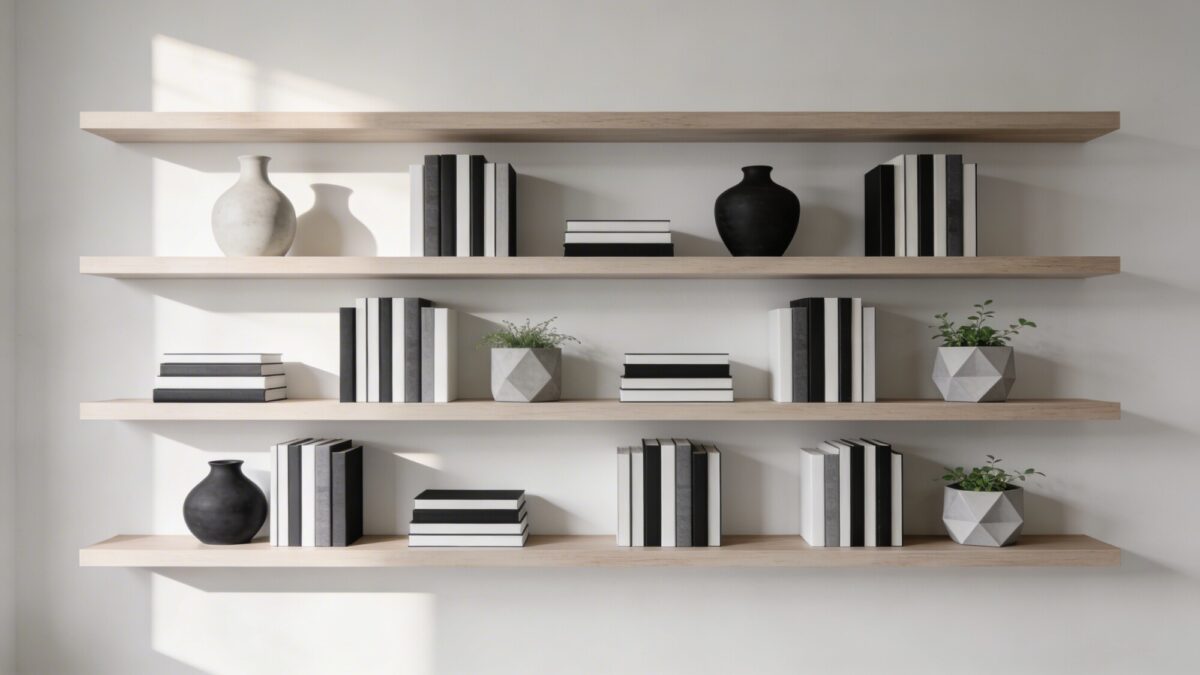
Three to five evenly spaced horizontal shelves, all the same length, mounted in a straight vertical line — this is the layout to reach for if you want plant shelves living room wall storage that doesn’t require a design background to pull off. Evenly spaced shelves are forgiving because the structure itself is doing the organizing; you don’t have to solve for asymmetry at all.
It also happens to be the best format for a wall book shelf that still reads as decor rather than a library. Keep spine colors loosely grouped (all warm tones on one shelf, cooler tones on another) instead of alphabetizing — alphabetized spines almost never look intentional from across a room.
💡 Pro Tip: Leave the bottom shelf about 30% emptier than the others. A shelf bank that’s uniformly full top to bottom looks like storage; one with breathing room at eye level or below reads as styled.
This layout also works well for a small office wall decor setup — swap a few of the plants for a small speaker or a stack of notebooks and the same evenly-spaced bank does double duty as a workspace. For more variations on this exact format, our roundup of floating shelf decor ideas has two dozen more combinations to pull from.
5. Layered Textures With Plant Shelf Decorating Ideas
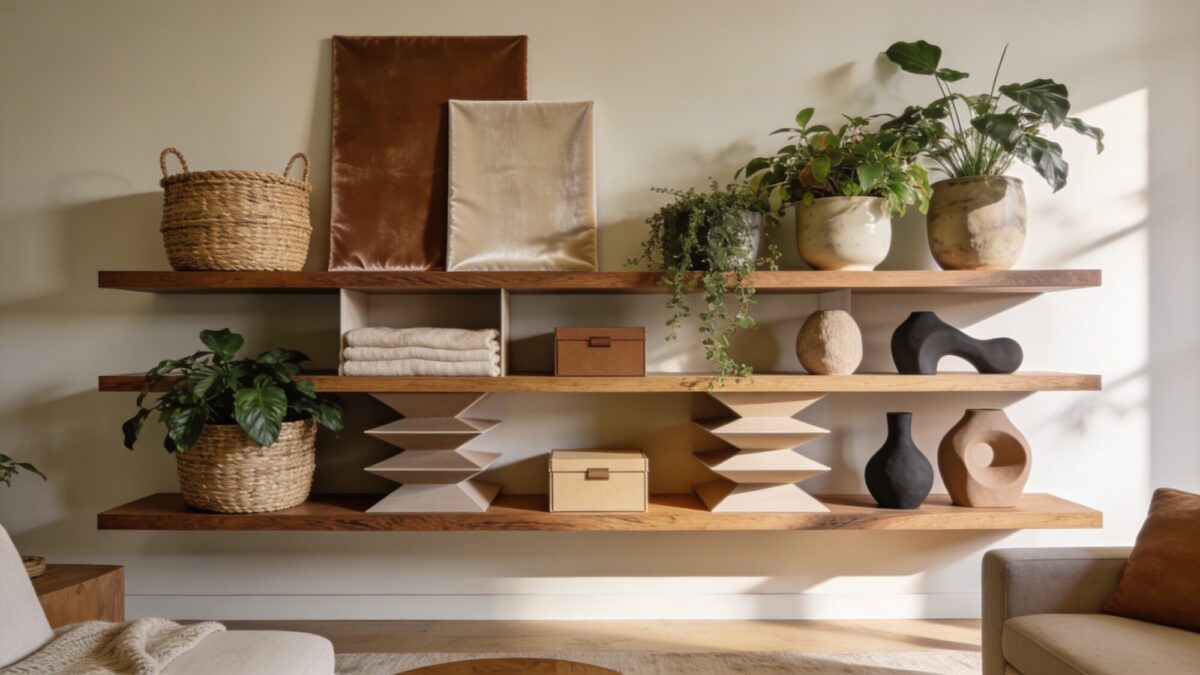
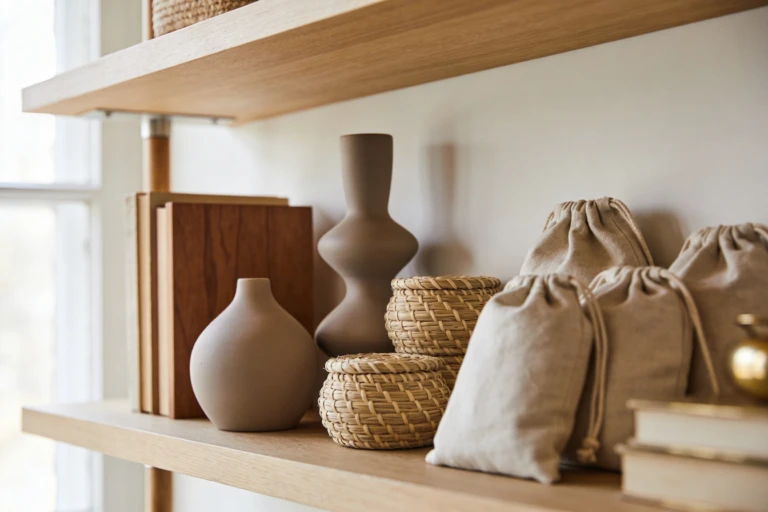
One deep, oversized shelf can carry a lot more than a narrow one because you have room to layer front-to-back instead of laying everything flat in a single row. Woven baskets, a low ceramic planter, a stack of linen-covered books, and a taller sculptural piece behind them — that’s the layered approach, and it’s one of the more reliable plant shelf decor ideas for anyone who wants greenery without a full plant wall.
Depth is what makes this work. A shelf under about 10 inches deep won’t hold two rows of objects without things toppling forward, so if layering is the goal, look for shelving closer to 12–14 inches deep rather than the slim 6–8 inch shelves made for a narrow hallway.
6. Bold Contrast: Dark Shelves as Wall Shelves for Plants and Objects
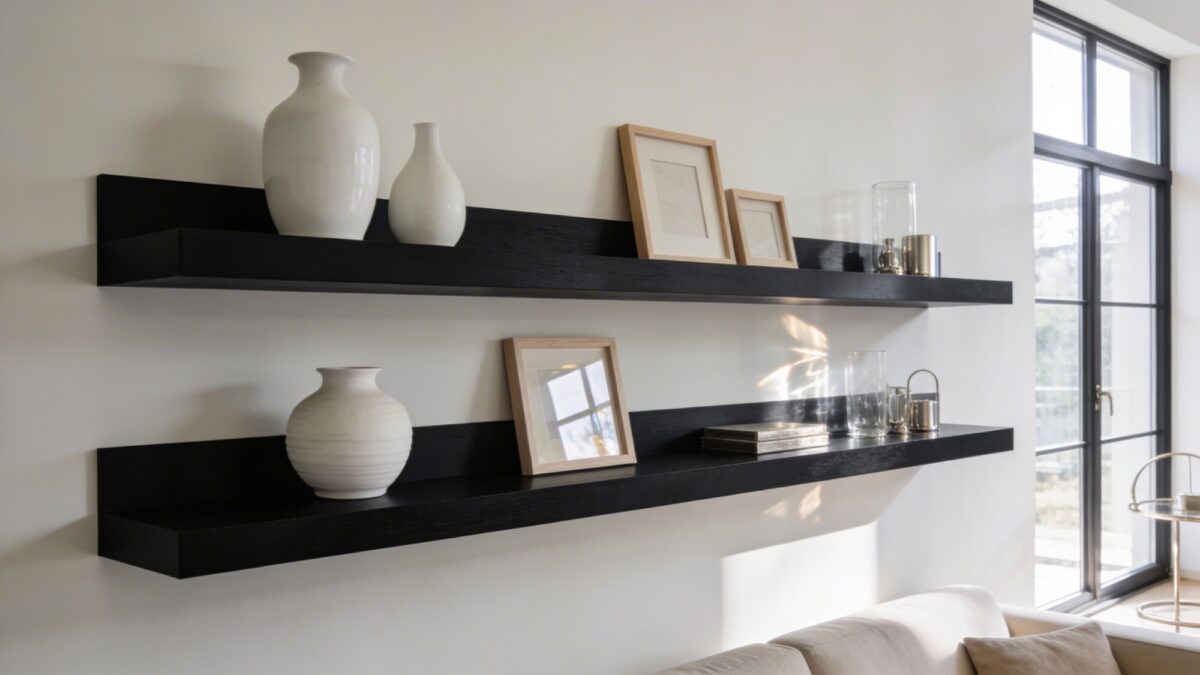
Painted or stained dark shelves against a light wall create contrast without adding a single extra object — the shelf itself becomes part of the decor instead of just a surface for it. This is a good move if you’ve already got a lot of pattern or color elsewhere in the room and don’t want to compete with it; the dark shelf line does the visual work quietly.
Keep the palette to two tones — dark shelf, light objects, or the reverse — because three or more competing colors on a shelf this visually loud tends to look busy rather than intentional. If you’re deciding between wood tones and darker painted finishes for shelving generally, this comparison of wood vs. metal open shelving covers durability trade-offs that apply outside the kitchen too.
💡 Pro Tip: If you’re staining rather than painting the shelf dark, do a test board first. Many “walnut” stains pull redder or more orange than the sample chip once they’re under your room’s actual lighting, and it’s a lot easier to fix a test board than a shelf already on the wall.
Which Floating Shelf Layout Fits Your Wall
| Layout | Best For | Skill Level | Main Trade-Off |
|---|---|---|---|
| Gallery-style symmetry | Rentals, first-time open shelving | Beginner | Can look flat without color/height variation |
| Asymmetric stacking | High ceilings, open-plan rooms | Intermediate | Takes trial and error to get spacing right |
| Corner shelf | Dead corners, small footprints | Intermediate | Corners are rarely square; hardware needs care |
| Shelf bank | Books, plants, small office setups | Beginner | Needs restraint or it looks like storage |
| Layered texture | Plant lovers, tactile styling | Intermediate | Requires a deeper shelf (12″+) to layer properly |
| Bold contrast (dark shelves) | Rooms with busy patterns elsewhere | Intermediate | Stain color can shift under real lighting |
Things to Check Before You Drill
- Find your studs with a stud finder, not by knocking — drywall anchors alone won’t hold a loaded book shelf long-term
- Weigh what you plan to display; most floating shelf brackets are rated for 15–50 lbs depending on the model, so check the listed weight rating, not just the shelf’s dimensions
- Decide on hanging height relative to your sofa back or the top of a doorway, not just a fixed inch measurement
- If you’re going asymmetric or corner-style, mock up the layout with paper templates before drilling
FAQ: Wall Decor Living Room Floating Shelves Shelf Ideas
How high should living room floating shelves be mounted?
For shelves above a sofa, 60–66 inches from the floor to the center of the shelf is the standard starting point — the same rule used for hanging framed art. Adjust down slightly if your ceilings are under 8 feet, since a shelf mounted at gallery height in a low room can look like it’s floating too close to the ceiling.
What’s the strongest way to mount a heavy floating shelf?
Mount into wall studs whenever the layout allows it. When a stud isn’t available where you need the shelf, use rated toggle bolts rather than standard plastic anchors — they distribute weight across a wider area of drywall and hold significantly more than the anchors that ship in most shelf kits.
How many floating shelves is too many for one wall?
There’s no fixed number, but a good gut check is whether the wall still has visible negative space once everything’s up. If the shelves cover more than roughly 60–70% of the wall’s visual field, the room starts to feel like a display case rather than a living room.
Can I mix wood and painted shelves on the same wall?
Yes, but pick one to be dominant. A wall that’s half natural wood and half painted in equal measure tends to look unplanned. Let one finish lead — say, three wood shelves and one painted accent shelf — rather than splitting it evenly.
Are floating shelves a good substitute for a bookshelf?
For smaller collections, yes. Once you’re past roughly 40–50 books, a dedicated bookshelf usually holds up better structurally and looks less crowded than trying to force that volume onto floating shelves rated for lighter loads.
Our Take
If this is your first time adding open shelving to a living room, start with the shelf bank or the gallery-symmetry layout — both are forgiving, both use standard-length shelves you can find without a custom order, and both give you room to fix mistakes as you go. Save the corner shelf and layered-texture layouts for a second wall once you’ve got a feel for how your specific room’s light and traffic flow interact with open storage. For more layout inspiration once you’re ready to expand past one wall, browse our floating shelf decor ideas for chic spaces for additional combinations worth trying.