9 Floating Shelf Decor Kitchen: Chic Ideas for Your Space
A kitchen floating shelf gets used differently than a living room one — it’s within reach of steam, splatter, and whatever you grab at 7am without looking. Good floating shelf decor kitchen ideas have to survive that, not just photograph well once. If you’re still weighing whether open shelving makes sense for your kitchen at all, our floating shelves vs. cabinets breakdown is worth reading before you commit wall space to it.
The nine ideas below aren’t ranked by difficulty — they’re organized by what they solve, whether that’s clutter, dead wall space, or a kitchen that just feels flat. Pick based on the problem you actually have.
Quick Takeaways
- Shelves you use daily (mugs, spices, cookbooks) should sit at or below eye level; display-only items can go higher.
- Odd-numbered groupings and mixed materials (wood, ceramic, glass) read as curated; matched sets read as a display case.
- Open shelves near a stove collect grease film faster than closed cabinets — factor that into what you leave uncovered.
- Herb shelves need direct or near-direct light; a shelf on an interior wall will underperform no matter how nice the pots are.
- Rotate one shelf seasonally rather than redoing the whole wall — it’s less work and keeps the kitchen feeling current.
1. Layer Everyday Essentials for Real Visual Impact
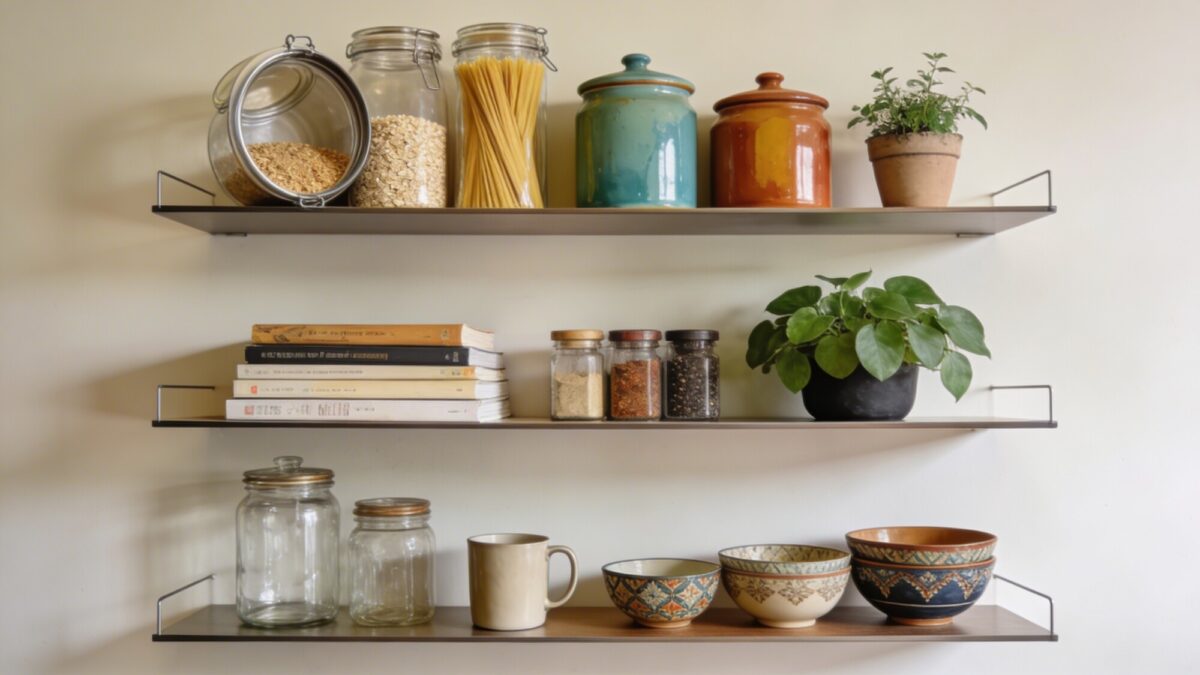
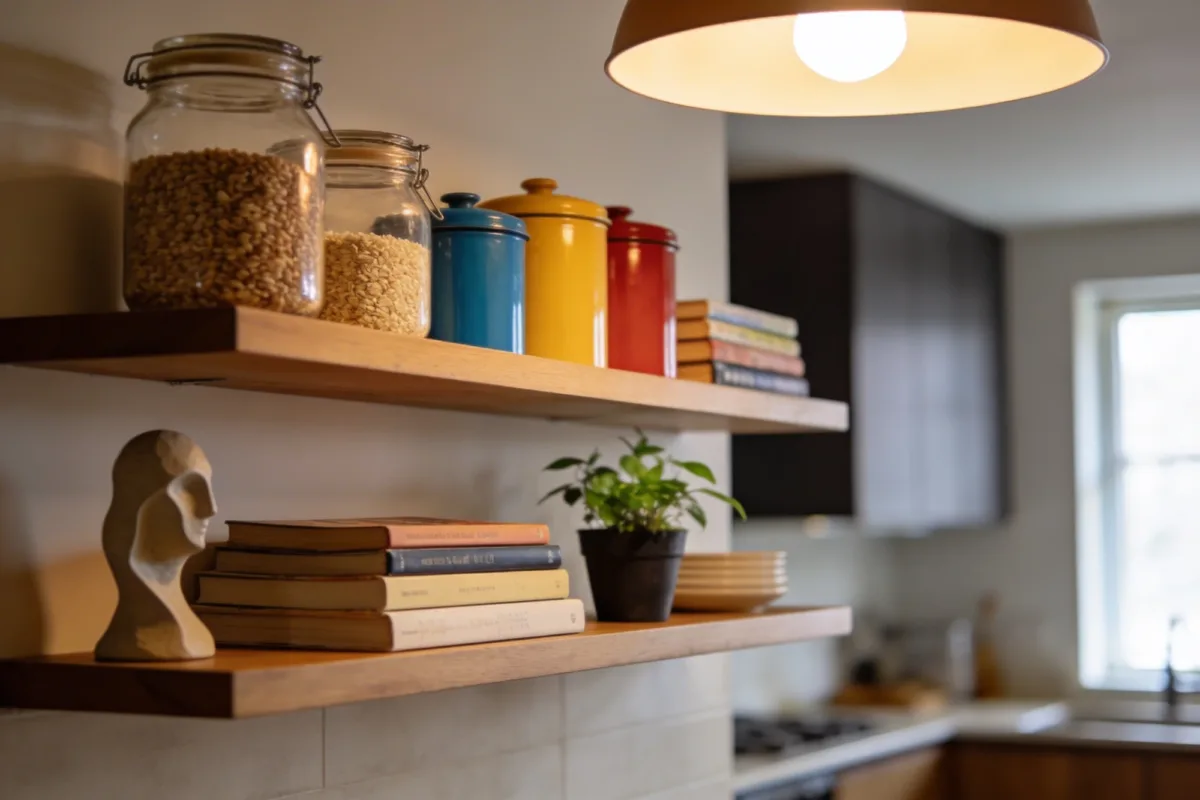
The shelves that actually stay looking good over time are the ones holding things you reach for daily — open jars of pasta or grains, a couple of colorful canisters, cookbooks you actually cook from. Decorative-only shelves tend to gather dust and get skipped when you’re deciding what to style next; shelves in the flow of daily use get refreshed by default because you’re touching them anyway.
Group items in odd numbers — three jars, not four — and vary height across the grouping. A row of identical-height jars looks like inventory; staggered heights look intentional even with the same three jars.
💡 Pro Tip: Keep the items you use most within a 12-inch reach of where you actually stand to use them — spices near the stove, mugs near the coffee maker. A beautifully styled shelf across the room from where you need the item just means you’ll stop using it within a month.
2. Go Minimal With One Strategic Focal Piece
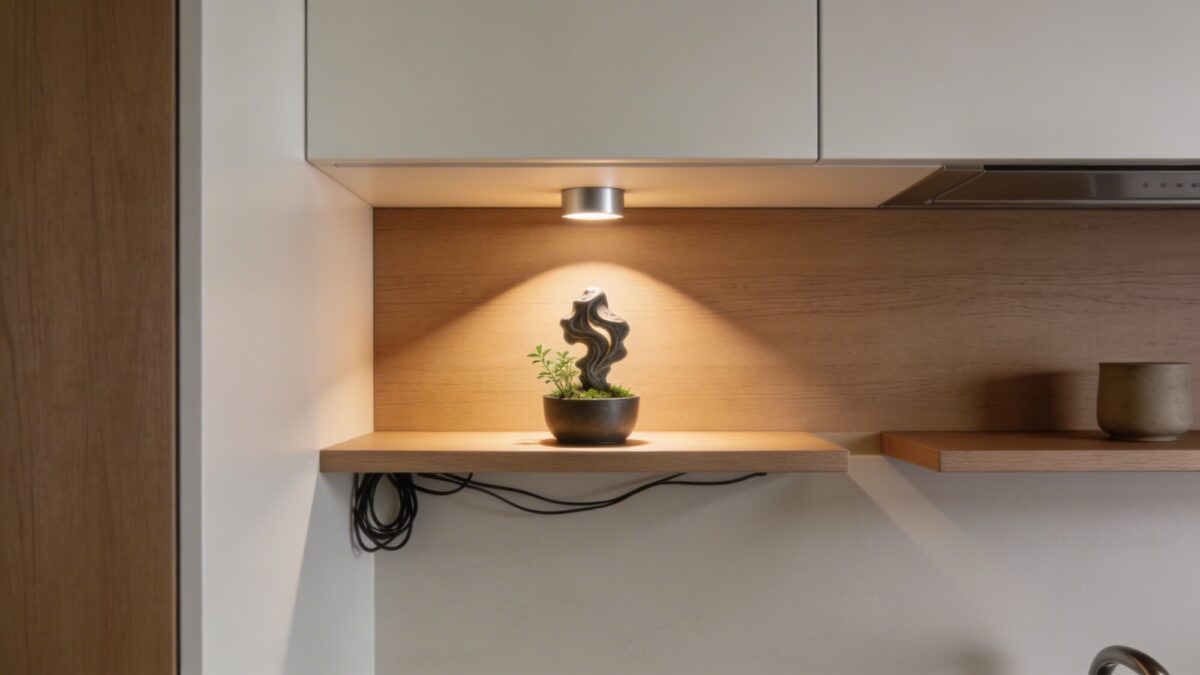
Not every kitchen needs a fully styled shelf. If your cabinetry or backsplash already has a lot going on, one slim shelf with a single sculptural object or small herb pot can be the better move — restraint reads as confident, not empty.
The trade-off here is that a single-object shelf shows every flaw. If the piece is dusty, off-center, or the wrong scale for the shelf, there’s nothing else to distract from it. This layout only works if you’re willing to actually maintain it.
3. Mix Materials for Texture Without Adding Clutter
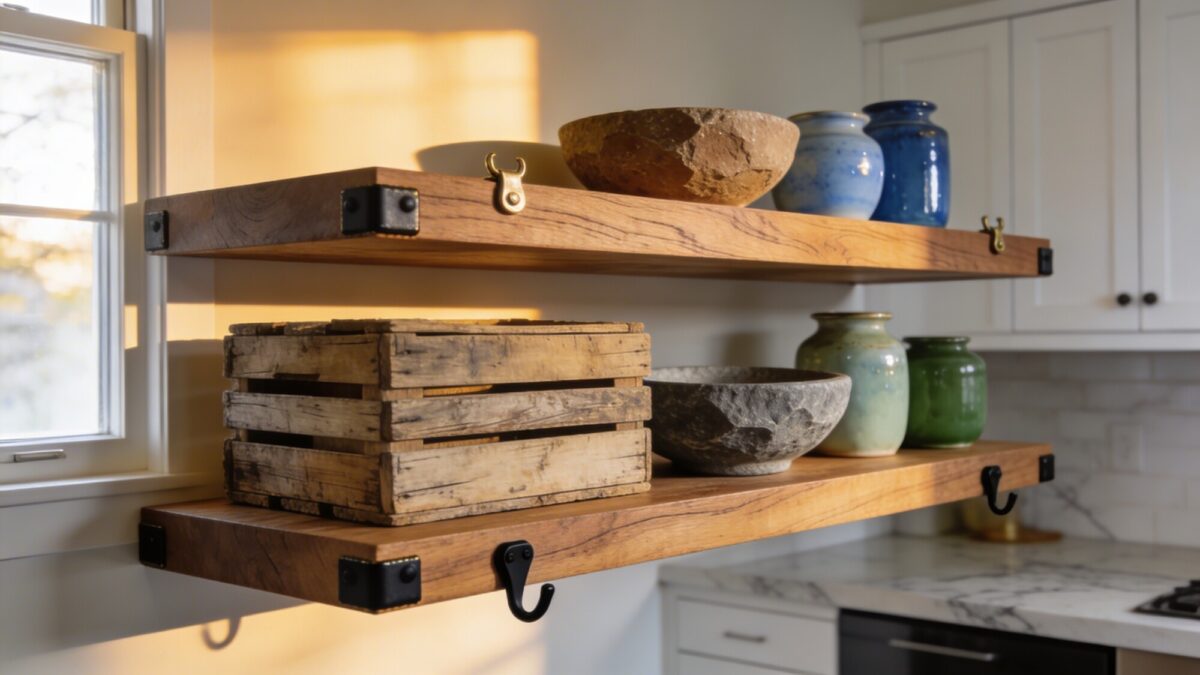
Wood, ceramic, stone, and a bit of metal on the same shelf create depth without adding more objects — it’s a texture solve, not a quantity solve. This matters more in kitchens with a lot of hard, flat surfaces (quartz counters, glossy cabinet fronts) where everything is otherwise smooth.
The easiest way to get this right: pick one warm material (wood, brass) and one cool material (stone, matte black metal) and build around those two anchors instead of grabbing five random textures.
4. Build a Small Herb Station on the Wall
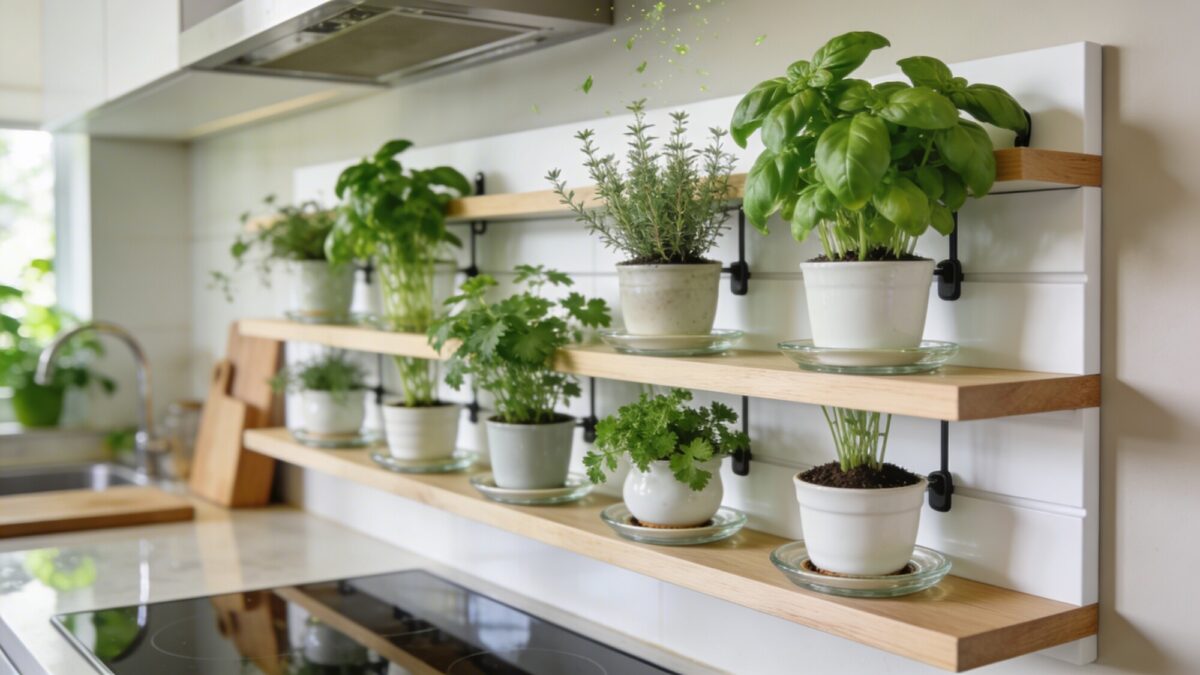
A wall-mounted herb shelf works when it’s near a light source and near your prep zone — not just because it looks good in photos, but because herbs you have to walk across the kitchen for don’t get used. Basil, thyme, and parsley are the most forgiving starter herbs for a kitchen shelf since they tolerate the temperature swings near a stove better than something like cilantro.
Use saucers under every pot. Floating shelves don’t have raised edges like a countertop, and a watering mistake on an open shelf drips straight onto whatever’s below it — or onto the floor.
💡 Pro Tip: If your kitchen doesn’t get at least a few hours of direct or bright indirect light, skip live herbs on the shelf and use dried bundles or a faux arrangement instead. A dying herb plant on display does more damage to the look than no plant at all.
5. Add Color With Dishes and Textiles
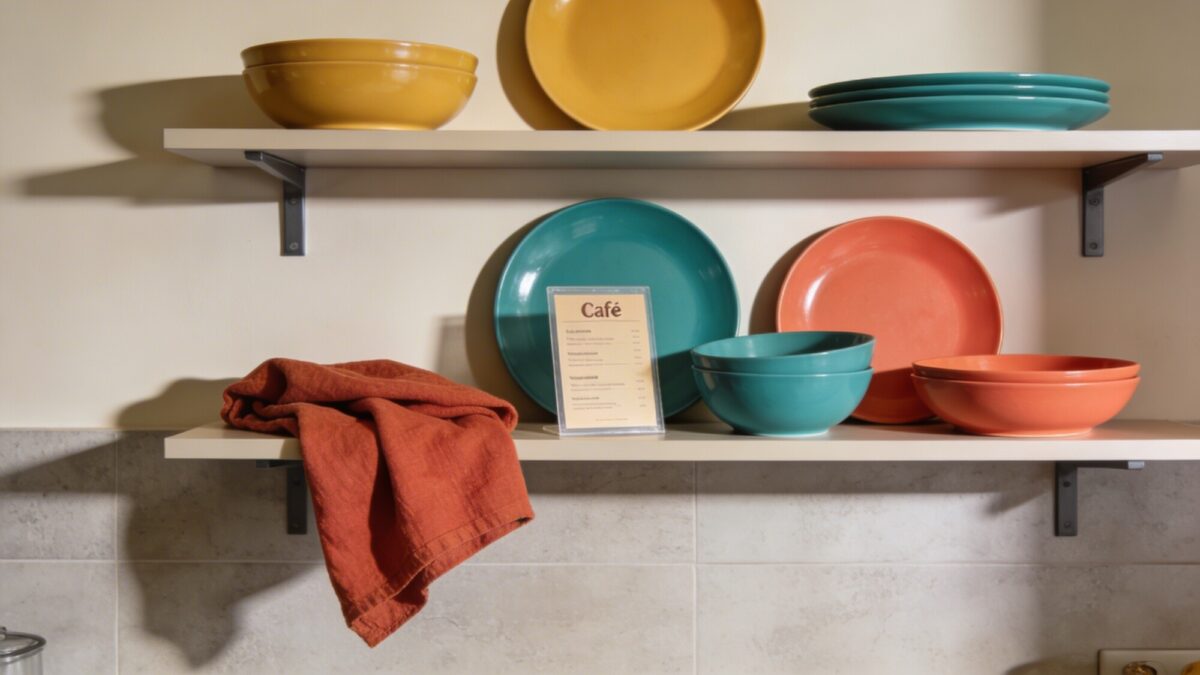
A neutral kitchen can take a color hit from a few bold plates or a folded runner without needing a full repaint. This is one of the cheapest wall decoration ideas going, since you’re likely repurposing dishes you already own rather than buying new decor.
Stick to 3–4 colors that share an undertone (all warm, or all cool) so the shelf reads as coordinated rather than mismatched. Swapping these out seasonally is also one of the lowest-effort ways to keep the kitchen wall from feeling static.
6. Use Slim Bins and Small Jars for Hidden Storage
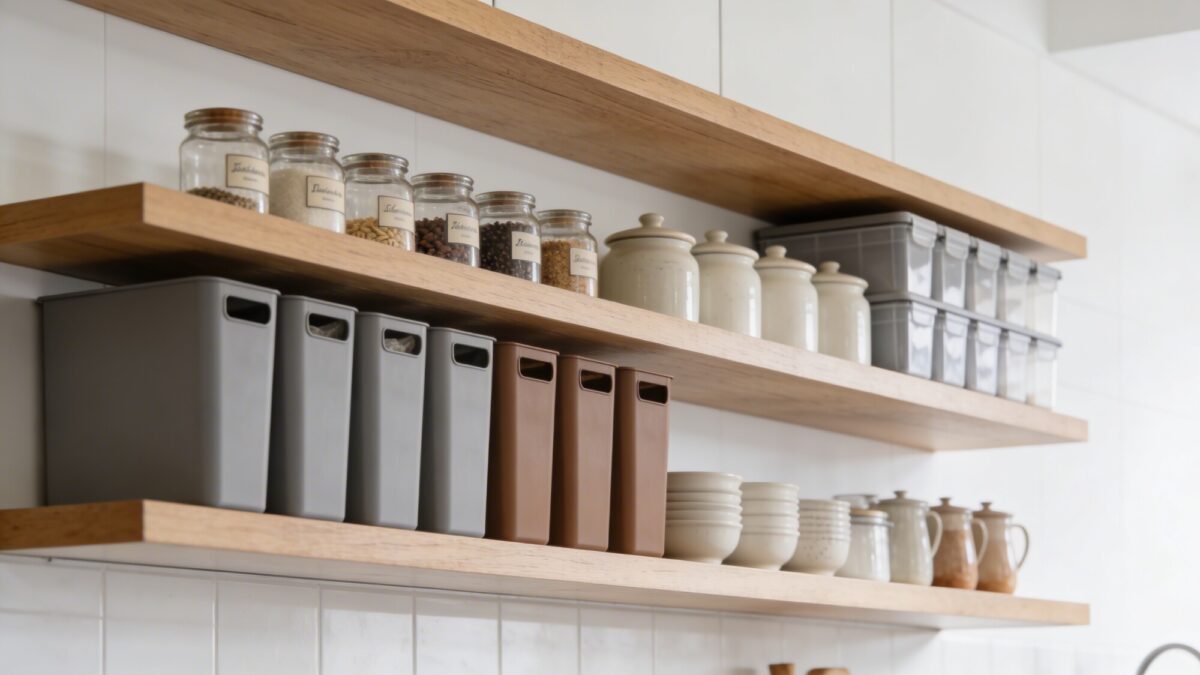
Open shelving has one real downside compared to cabinets: everything is visible, including the stuff you don’t want visible. Slim, uniform-height bins in neutral tones solve this by hiding contents while keeping the shelf’s silhouette clean. It’s a genuine trade-off — you’re not getting the “chic clutter” look here, you’re getting a tidier one, and which you want depends on your kitchen’s overall style.
Reserve one shelf, not all of them, for overflow or backup stock. A shelf bank that’s entirely storage bins loses the decor function of open shelving in the first place.
7. Run a Small Art Gallery on the Shelf
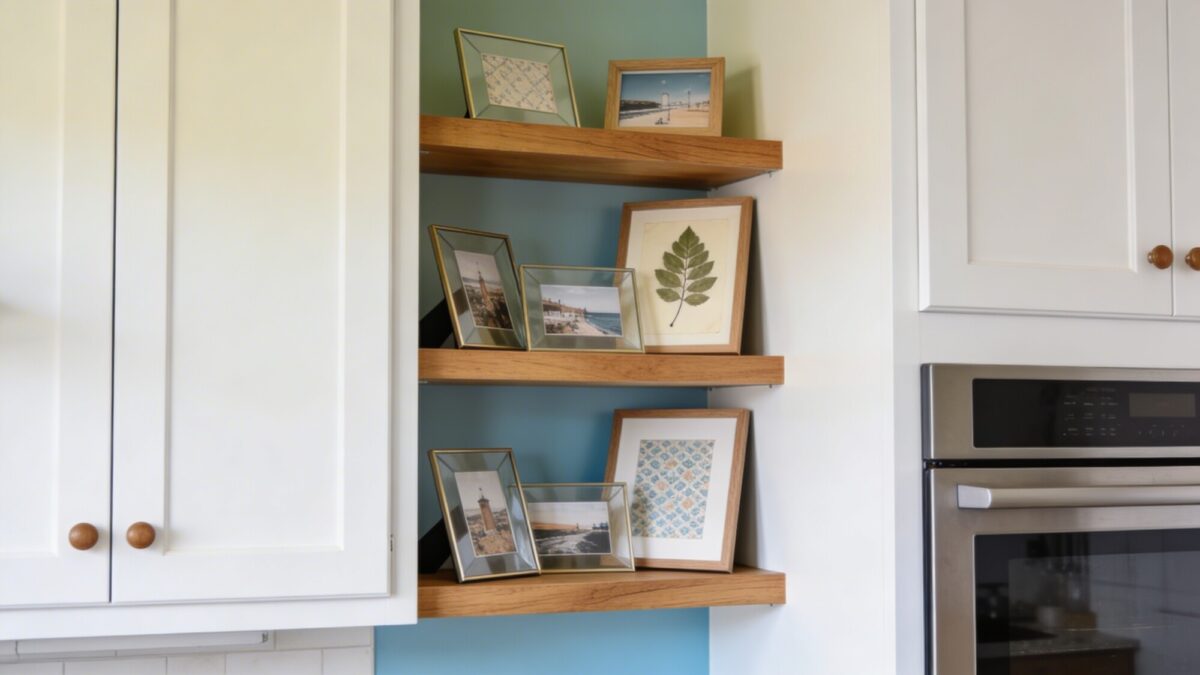
Framed prints, travel photos, or a pressed botanical leaned against the wall on a kitchen shelf turn it into a low-stakes gallery — no nail holes, easy to swap out. This works especially well on a shelf that isn’t doing daily-use duty, since art doesn’t need to be within arm’s reach the way a spice jar does.
Keep frames in one color family and let a couple lean or overlap slightly rather than lining them up perfectly straight. A too-perfect row of frames on an open shelf tends to look like a display at a frame shop rather than a kitchen wall. For more layout options once you’ve settled on a gallery approach, the full roundup of floating shelf decor ideas covers variations on this same theme.
8. Light the Shelf, Not Just the Room
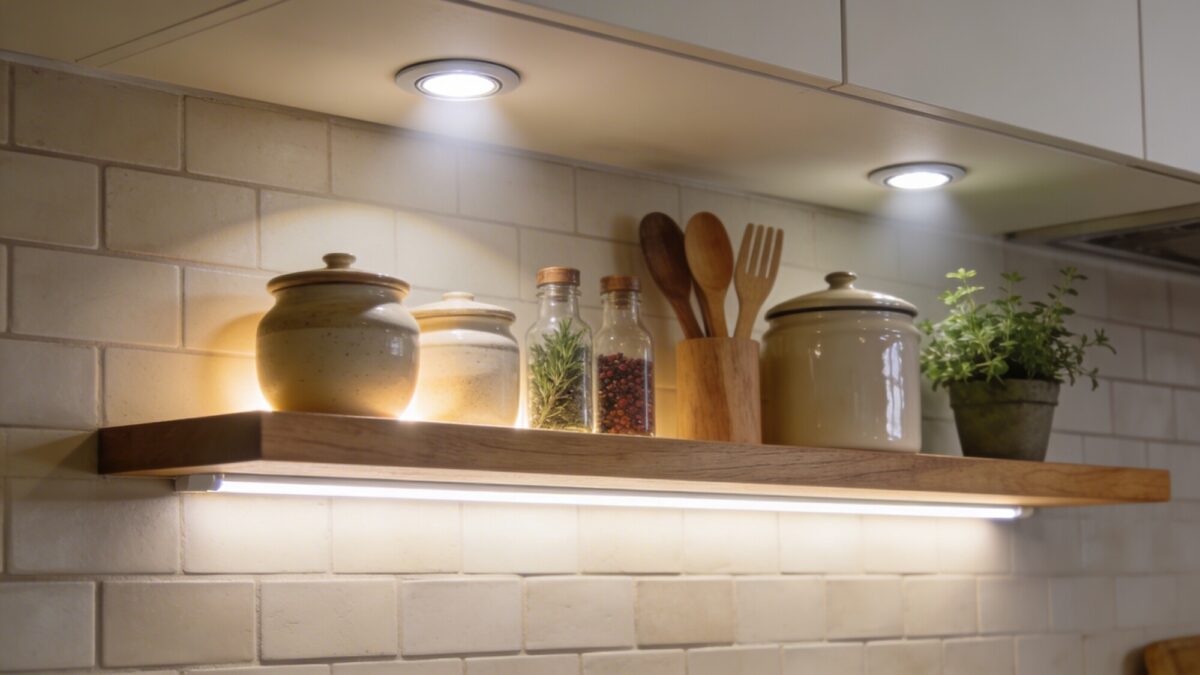
A shelf lit only by the room’s overhead lighting tends to look flat, especially at night. A slim LED strip mounted under the shelf’s front lip throws light down onto the shelf below it and adds a visible glow line along the wall — it’s a small addition that changes how the whole wall reads after dark.
Stick to warm white (2700K–3000K) rather than daylight-toned strips in a kitchen; cooler light tends to make wood tones and ceramics look washed out rather than highlighted.
9. Rotate Seasonal Touches Instead of Redoing the Whole Wall
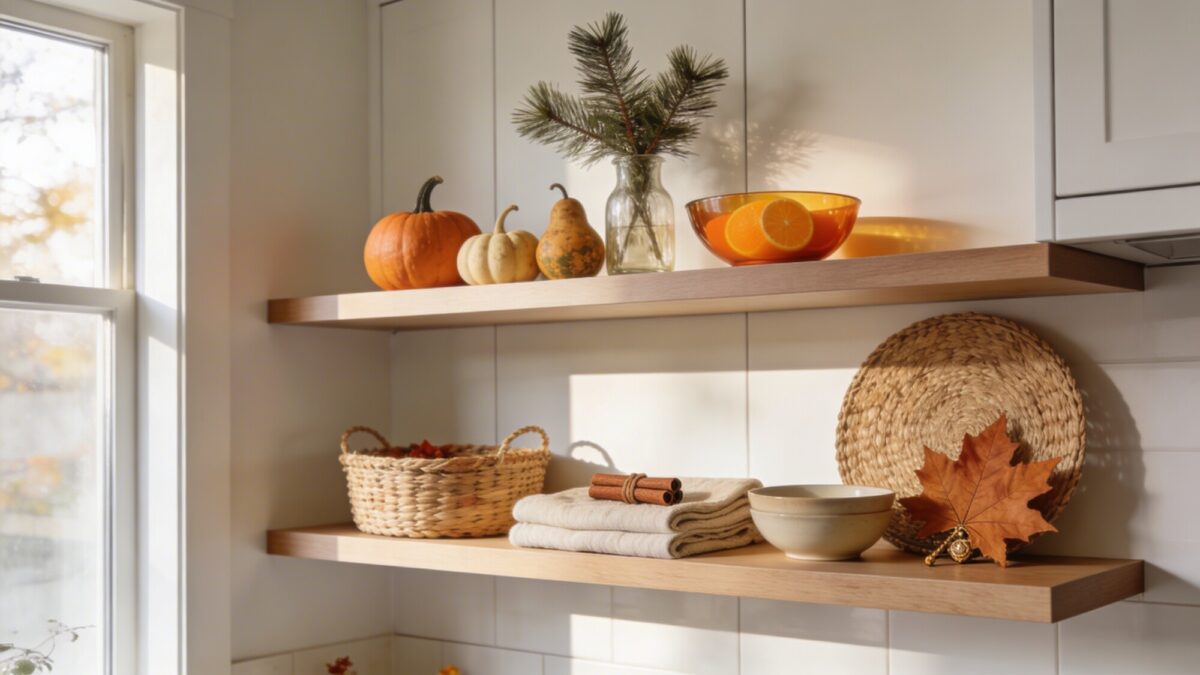
Full shelf makeovers are a lot of effort for something you’ll change again in a few months. Swapping one shelf’s accent pieces — citrus in summer, gourds and pine in fall, nothing at all in a slow month — keeps the kitchen feeling current without touching the rest of the display.
A 4–6 week rotation on a single shelf is realistic for most people; trying to rotate the whole wall on that schedule usually means it stops happening within a season or two.
Things to Check Before You Style a Kitchen Shelf
- Is the shelf within reach of grease or steam from the stove? If so, keep it to closed containers or easy-to-wipe materials, not porous wood or unglazed ceramic
- Does the wall get natural light, for herb or plant shelves specifically
- Are your daily-use items within arm’s reach of where you’ll actually use them
- Is the shelf mounted into a stud or rated anchor if you’re loading it with jars, cookbooks, or dishware
FAQ: Floating Shelf Decor Kitchen
How do I keep open kitchen shelves from looking cluttered?
Limit each shelf to one “job” — display, storage, or daily-use — instead of mixing all three on the same shelf. Odd-numbered groupings with varied height also read as curated rather than crowded, even with the same number of items as a cluttered shelf.
Are floating shelves practical near a stove?
They work, but expect more upkeep than a shelf across the kitchen. Grease film settles on anything open and uncovered near heat, so favor closed jars, glass, or wipeable ceramic over porous wood or fabric in that zone.
What’s the biggest mistake people make styling kitchen shelves?
Styling for photos instead of use. A shelf that looks great in a picture but puts your everyday mugs out of reach gets abandoned within weeks — you’ll stop maintaining the display because using the shelf has become inconvenient.
Do herb shelves actually work in most kitchens?
Only with enough light. A north-facing or interior-wall shelf without direct or bright indirect light will struggle to keep basil or parsley alive past a few weeks, regardless of how nice the pots are. Check your light before buying the plants.
How often should I restyle a kitchen shelf?
Full restyles aren’t necessary often — every season is plenty for most kitchens. Rotating one shelf’s accent pieces every 4–6 weeks keeps things feeling fresh without the effort of redoing the whole wall.
Our Take
Start with idea #1 (layering everyday essentials) if you’re new to open shelving — it’s the lowest-risk option because the shelf earns its keep even on a day you don’t feel like styling anything. Save the art-gallery and minimalist-spotlight approaches for a second shelf once you know how much upkeep you’re actually willing to do near a working stove. If you’re deciding on shelf material before you buy, our wood vs. metal open shelving comparison is a good next stop, and if you’re still torn on open shelving versus cabinets generally, the open shelf vs. upper cabinets showdown lays out the practical trade-offs in more detail.