7 Single Floating Shelf Decor That Wowf with Style
A single floating shelf is an easy thing to get wrong. Put too much on it and it looks like a junk drawer that escaped the kitchen. Put the wrong three things on it and it looks like nothing at all — just a plank on a wall. The good news is that single floating shelf decor is one of the cheapest, lowest-commitment ways to change how a room feels, and you don’t need design training to do it well. If you want the bigger picture first, we’ve also rounded up a wider set of floating shelf decor ideas across different room types.
This guide walks through seven layouts that hold up in an actual home — not a staged photo — along with the material and spacing decisions that make or break a single shelf.
Quick Takeaways
- One shelf works best with 3–5 objects, not a full collection — negative space is doing half the work.
- Vary height and shape before you vary color; that’s what keeps a sparse shelf from looking empty.
- Hang at 60–66 inches from the floor for eye-level viewing, or lower (42–48 inches) if it’s functional, like a desk or entry shelf.
- Wood shelves (oak, walnut veneer, or a painted pine) read warmer; floating shelves with a matte black or white bracket-free bracket system read more modern.
- A shelf that’s trying to do a job — hold keys, charge a phone, display three books — almost always looks better than one that’s purely decorative.
Why a Single Shelf Beats a Full Gallery Wall
Floating shelf design works because it commits to restraint. A gallery wall asks you to balance a dozen frames and objects against each other; a single shelf only asks you to balance three or four things against a flat wall. That’s a much easier problem to solve, and it’s why single shelf decor ideas photograph so well even when the room around them is ordinary. The trade-off is that every item on the shelf is doing more visual work — there’s nowhere to hide a weak choice.
1. Minimalist Monochrome
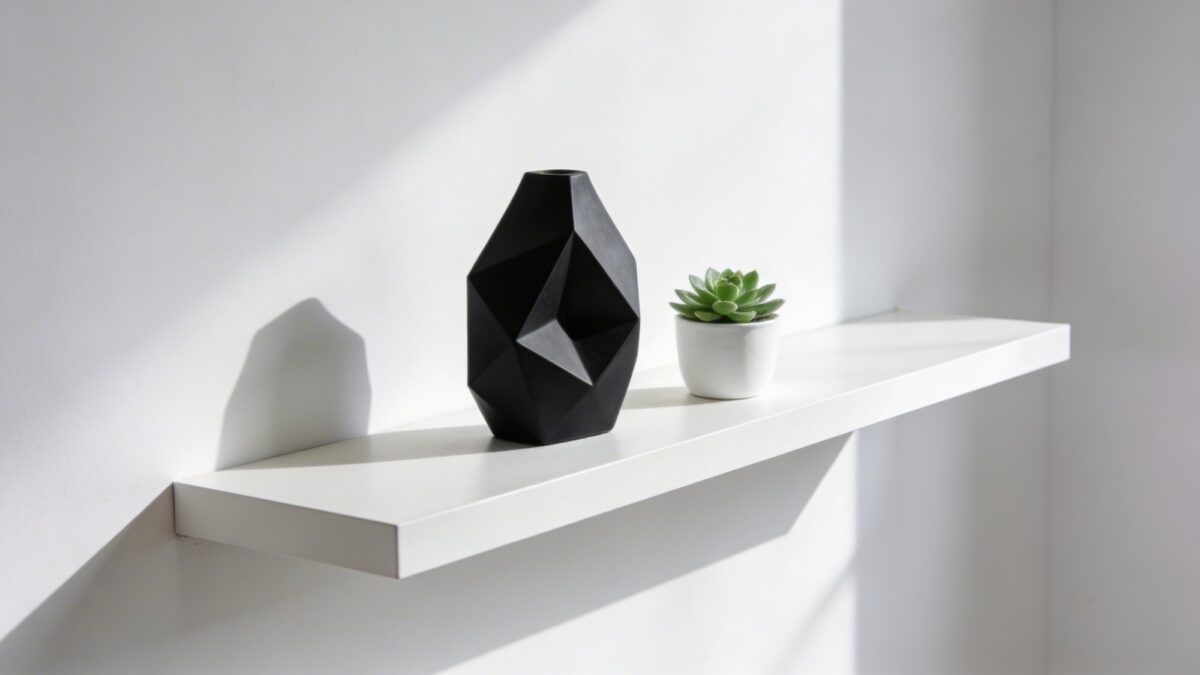
Pick two tones — almost always black and white — and let one bold object anchor the shelf. A matte black ceramic vase or a small geometric sculpture works because it reads as a shape first, an object second. Add one small plant, a succulent or a compact fern in a plain white pot, to soften the hard edges. That’s it. Resist adding a third “in case it looks empty” item; the emptiness is the point.
💡 Pro Tip: If the shelf still looks stark after two items, don’t add a third object — extend the shelf’s shadow instead by mounting it with a slightly deeper bracket. An extra half-inch of depth reads as more considered than clutter does.
This pairs well in a living room where the wall is already doing a lot of the talking — if that’s your space, see our living room floating shelf layouts for how it scales to a bigger wall.
2. A Small Book Nook
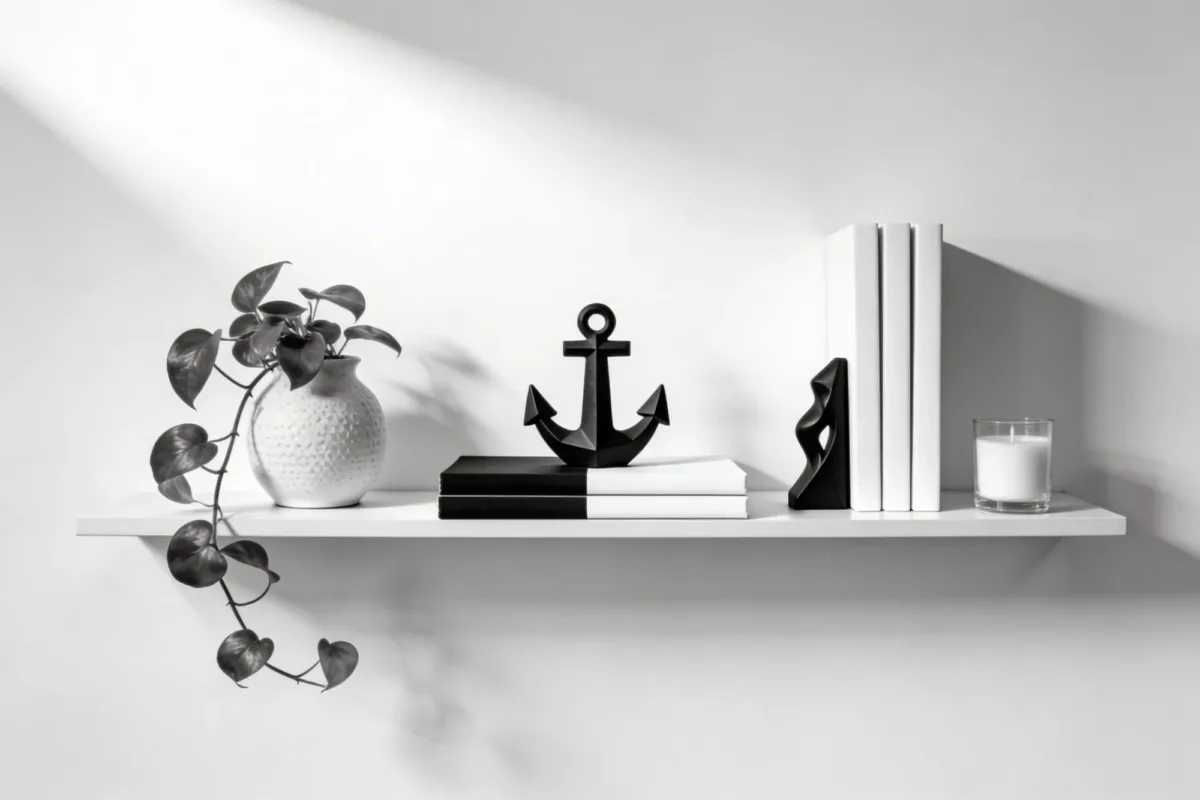
A single shelf can’t hold a library, but it can hold a reading habit. Lay two or three hardcovers flat and stack another two or three vertically leaning against the wall — the mixed orientation is what keeps it from looking like a display case. Add one bookend or small sculpture, and a candle if the shelf sits somewhere you’ll actually notice the scent. Skip anything you haven’t read; a book nook built entirely from unread spines looks staged because it is.
If you’re doing this near a bed, the same logic scales up nicely — check the bedroom floating shelf gallery ideas for how to add a second tier without it feeling busy.
3. A Plant on a Ledge
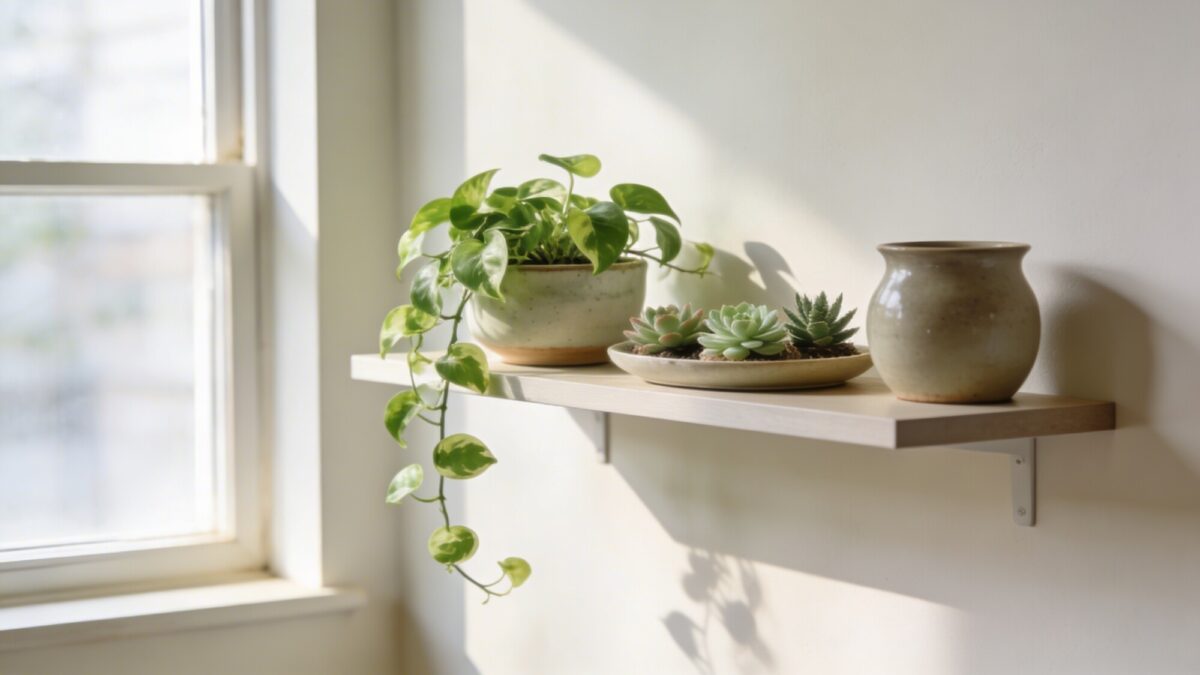
This is the easiest floating shelf idea to execute badly, because “plants on a shelf” sounds foolproof and isn’t. A trailing pothos looks dramatic on a single shelf because the vine has somewhere to go — down the wall, past the shelf’s edge. A round, bushy plant with nowhere to trail just sits there. Pair it with two or three succulents in a shallow dish rather than separate pots; grouped small plants read as one composition instead of three unrelated items.
💡 Pro Tip: Skip shelves in direct afternoon sun for anything other than succulents — a pothos on a west-facing shelf will scorch by midsummer even a few feet back from the glass. North or east-facing walls are far more forgiving.
4. A Tiny Functional Desk
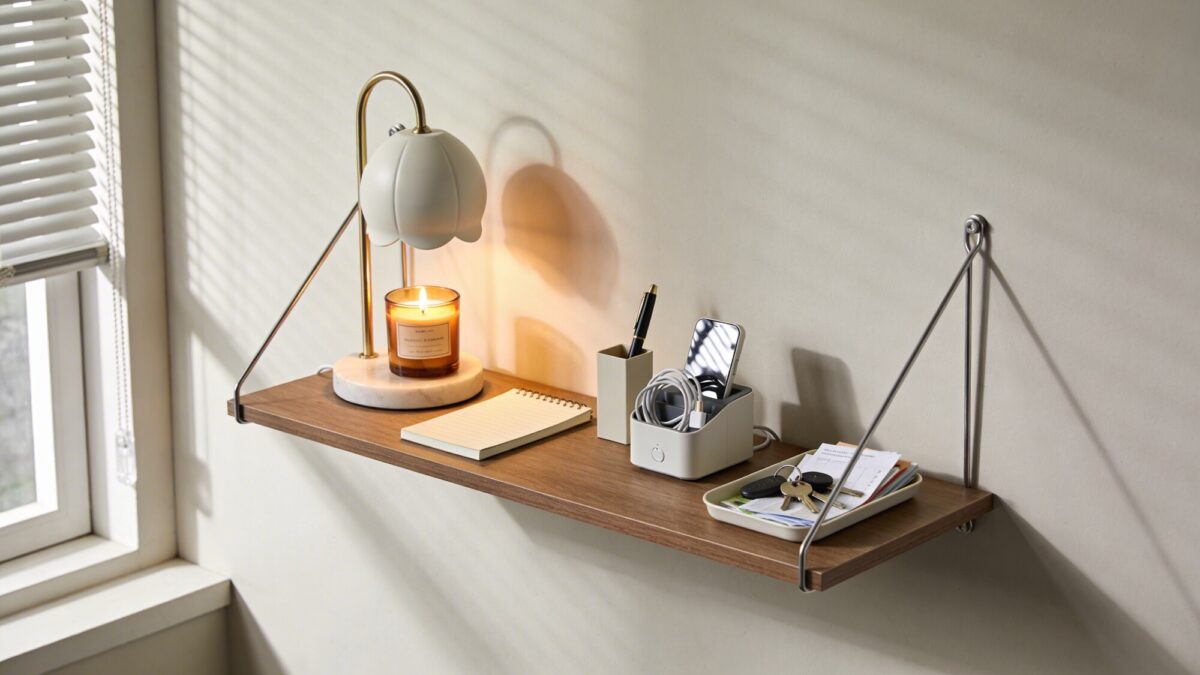
Not every shelf needs to be purely decorative. A single shelf near an entryway or a desk chair can hold a small lamp, a notepad and pen, a shallow tray for keys and mail, and a compact charging block with the cord tucked behind rather than draped across the front. This is the layout most likely to actually get used daily, which matters — a shelf you touch every morning stays curated on its own, because clutter gets noticed and removed instead of accumulating.
For more on making a small shelf pull double duty without looking like a junk drawer, our quick styling guide covers a few five-minute swaps worth trying first.
5. One Bold Color Pop
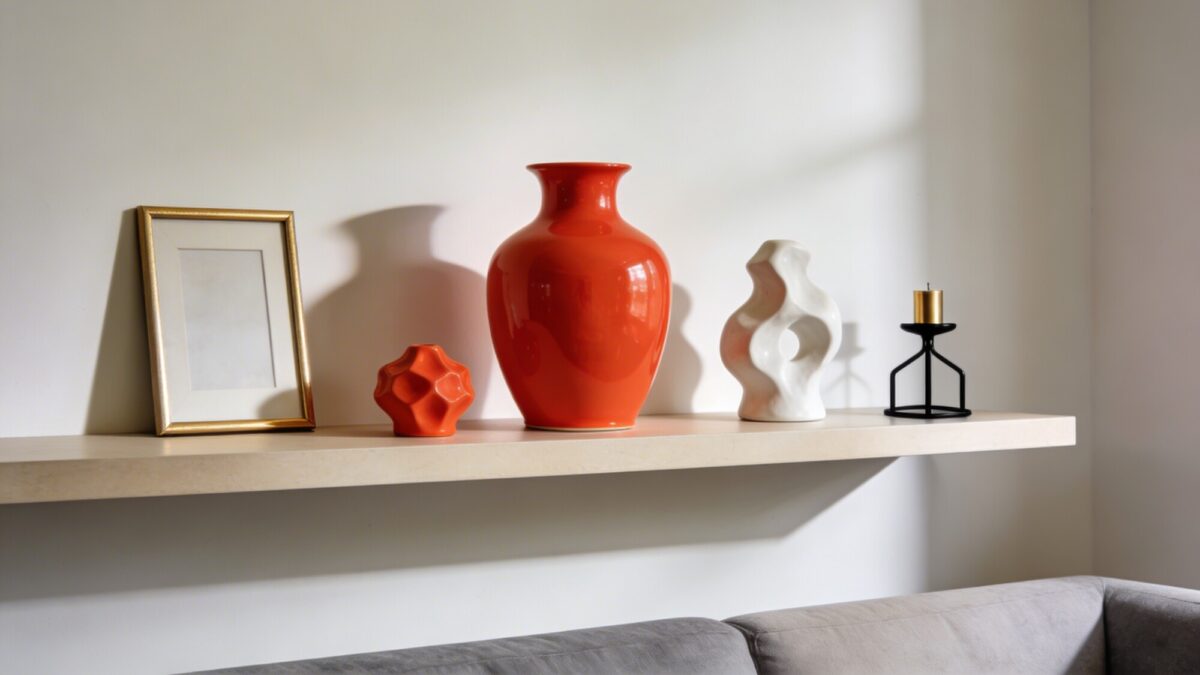
If repainting isn’t on the table, a single saturated object does a surprising amount of work. One vivid vase — coral, cobalt, or a deep emerald — paired with a small object in the same hue, surrounded by everything else neutral, makes the shelf feel intentional rather than random. Match your metal accents (brass, matte black, or chrome) across the frame, candle holder, or bracket hardware so the color doesn’t have to compete with mismatched finishes.
6. Layered Texture
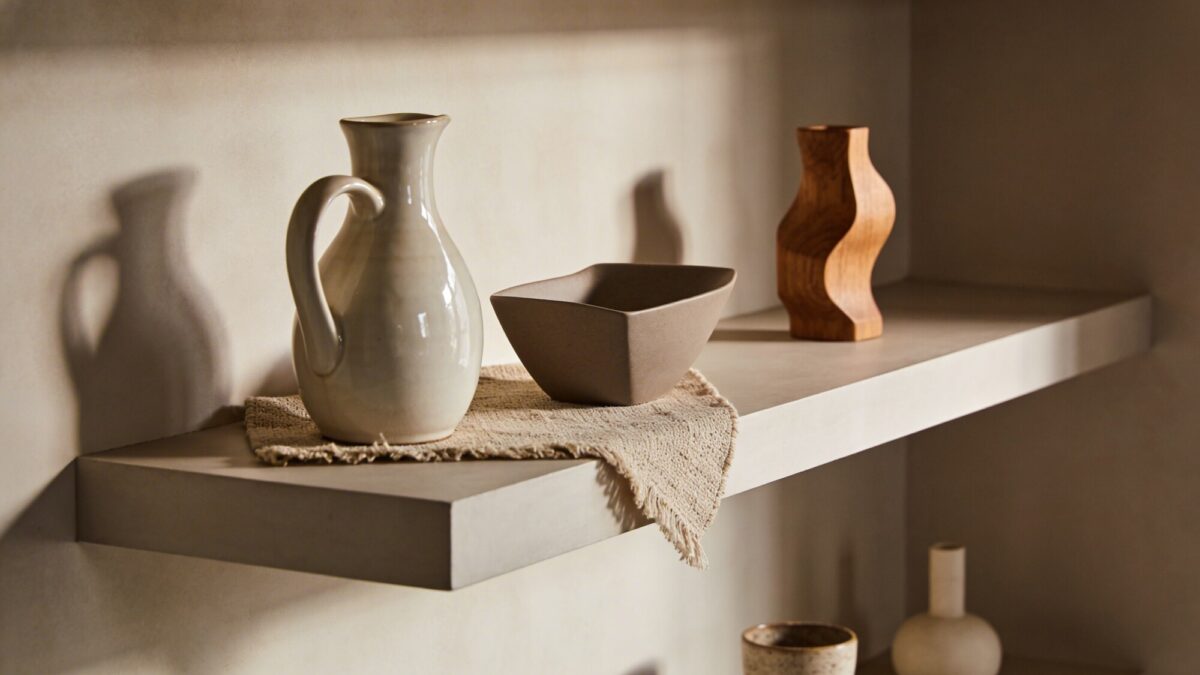
Texture is the cheapest way to make a shelf with only neutral-colored objects still feel rich. Pair a glossy glazed vase with a matte ceramic bowl, tuck a small piece of woven linen under one object so an edge peeks out, and add something in wood for warmth. Vary the heights — nothing kills texture play faster than three objects at the same eye line.
7. A Personal Memo Shelf
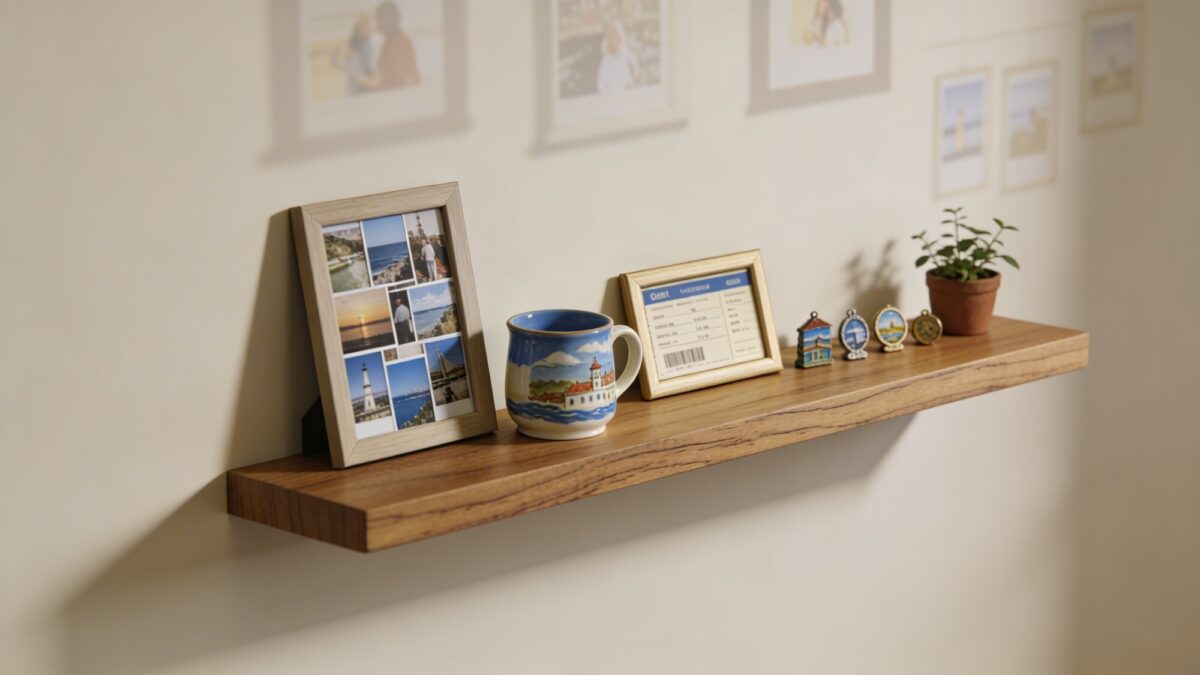
The most-skipped single shelf decor idea is the one that’s actually about you: a small framed photo leaning rather than hung flat, a mug from a trip, a ticket stub in a slim frame. It doesn’t need to be symmetrical or color-coordinated to work, because the appeal is that it’s obviously yours. This is the layout worth using in a hallway or landing — somewhere you pass daily rather than a formal sitting room.
Choosing Your Material and Wall
Floating shelves wood is the default for a reason — it holds weight well, takes a bracket cleanly, and works with almost any color scheme once it’s painted or stained. A raw or lightly stained pine shelf reads casual; a walnut or oak veneer reads more formal. If you’re set on metal or glass, know that both show fingerprints and dust faster, which matters more on a shelf you’re touching daily (see: the desk layout above) than one that’s purely decorative.
One room that gets overlooked for this treatment: wall shelves for bathroom storage. A single narrow shelf above a towel bar or beside a mirror can hold rolled hand towels, a small plant that tolerates humidity, and a single glass jar — moisture-resistant finishes matter more here than anywhere else in the house, so skip raw wood unless it’s been properly sealed. For a full room-specific breakdown, see our bathroom floating shelf hacks.
💡 Pro Tip: In a bathroom, mount the bracket into a stud or use a rated toggle anchor even for a “light” shelf — steam cycles loosen adhesive-mounted brackets faster than people expect, usually within a year in a shower-adjacent spot.
Which Layout Fits Which Room
| Layout | Best Room | Upkeep |
|---|---|---|
| Minimalist Monochrome | Living room, hallway | Low — dust occasionally |
| Book Nook | Bedroom, reading corner | Low |
| Green Thumb Ledge | Near a window, kitchen | Medium — watering, pruning |
| Functional Desk | Entryway, home office | Medium — needs daily tidying |
| Bold Color Pop | Living room, dining nook | Low |
| Layered Texture | Living room, bedroom | Low |
| Personal Memo Shelf | Hallway, landing | Low |
Things to Check Before You Hang One
- Confirm stud location, or use a rated wall anchor for drywall-only mounting.
- Weigh your heaviest planned object and check it against the shelf’s rated load — most 8-inch-deep floating shelves top out around 15–25 lbs.
- Measure eye level for the room’s main seating or standing position before drilling.
- Decide the shelf’s job first (functional vs. purely decorative) — it changes what belongs on it.
- Pick a finish that matches the room’s humidity level, not just its color scheme.
Frequently Asked Questions
How many items should go on a single floating shelf?
Three to five, generally. Fewer than three tends to look unfinished; more than five starts to look like storage rather than display.
What height should I mount a single floating shelf?
For a purely decorative shelf, 60–66 inches from the floor keeps it near eye level for most adults. For a functional shelf near a desk or entry, 42–48 inches is more practical to actually reach.
Is floating shelf decor still in style for 2026?
Yes — it’s shifted from all-white minimalist displays toward more personal, mixed-texture arrangements, but the format itself (a single unbracketed-looking shelf with a curated few objects) hasn’t gone out of favor.
Can I put a floating shelf in a bathroom?
Yes, but use a sealed or moisture-resistant material and anchor into a stud where possible — steam and humidity are harder on adhesive mounts than most other rooms in the house.
Wood or metal floating shelf — which is easier for a beginner?
Wood. It’s more forgiving to drill into, easier to patch or repaint if you change your mind, and pairs with more color schemes than a fixed metal finish.
Our Verdict
If you’re only doing one shelf in the house, put it somewhere you pass daily rather than somewhere purely for guests — the functional desk or personal memo layouts hold up better over time because they get touched, adjusted, and kept current. The purely decorative layouts (monochrome, texture, color pop) look best in photos on day one but need more deliberate upkeep to avoid going stale. For a next step once you’ve got the first shelf right, our long floating shelf layouts guide covers what changes once you’re working with more linear feet of wall.