Elevate Your Space with 8 Floating Tv Shelf Decor
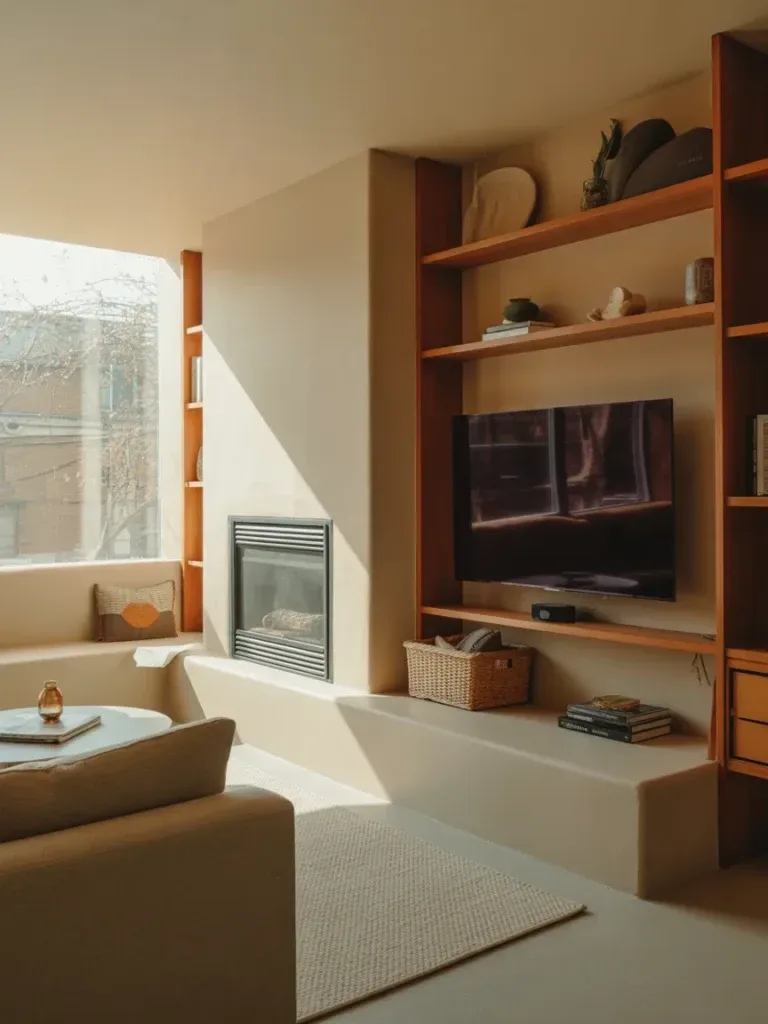
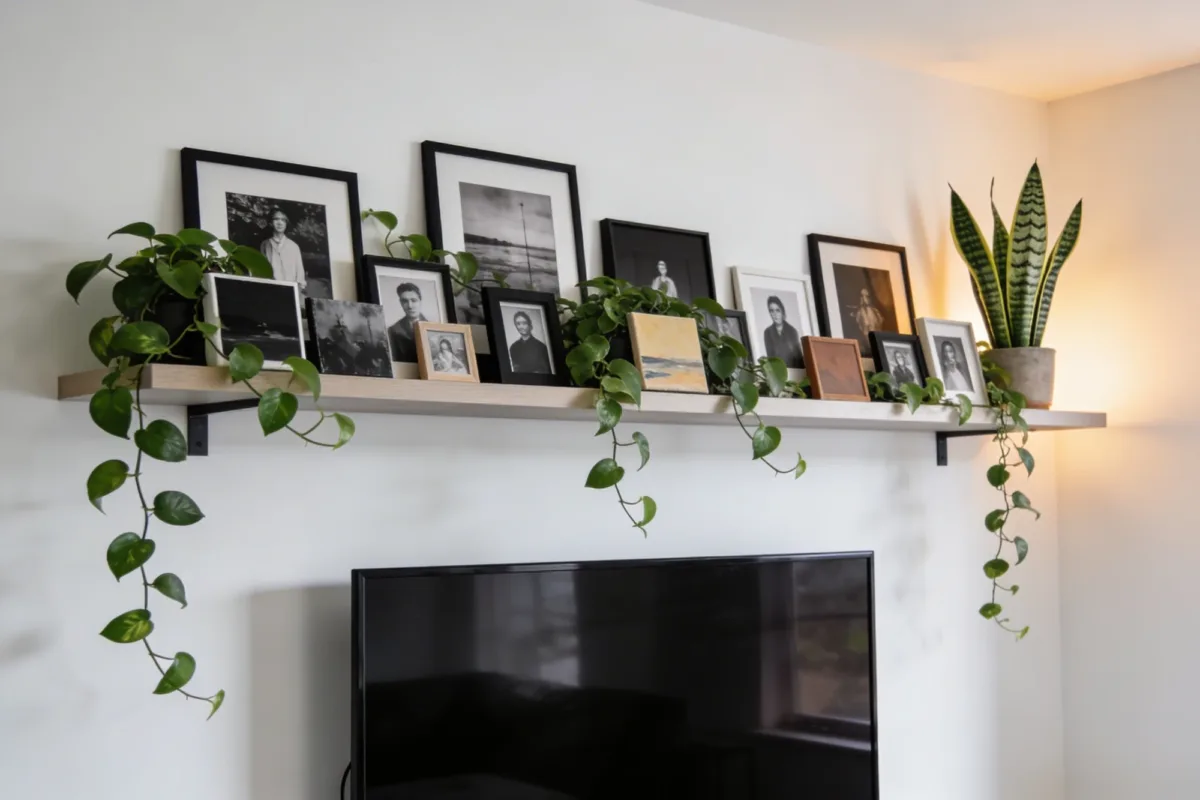
A floating TV shelf does more work than a regular floating shelf living room setup, because it’s not just decor — it’s also cable management, remote storage, and a frame for the biggest object in the room. Get the styling wrong and the whole wall reads like an electronics store display. Get it right and the TV almost disappears into the design instead of dominating it.
The tricky part with a floating tv cabinet or floating media shelf is balance. You need enough on the shelf to make the TV feel intentional rather than mounted-and-forgotten, but not so much that you’re fighting the screen for attention every time it’s off. These eight approaches to floating tv shelf decor cover both the styling side and the practical side — where the plants go, what to do with the cords, and where people usually get the proportions wrong.
Quick Takeaways
- Keep decor at 60–70% of the shelf’s visible width when the TV is centered — a fully packed shelf competes with the screen instead of framing it.
- Group items on either side of the TV rather than spreading them evenly across the whole shelf — the TV itself is already the visual center.
- Cable management is not optional on a floating tv stand modern setup — it’s the difference between “styled” and “just mounted.”
- Height variation matters more here than on a regular shelf, since everything is competing with one large flat rectangle for attention.
- Pick one accent finish (metal, color, or texture) to repeat near the TV — it visually ties the screen into the rest of the arrangement instead of leaving it isolated.
1. Frame the TV With a Small Gallery Wall
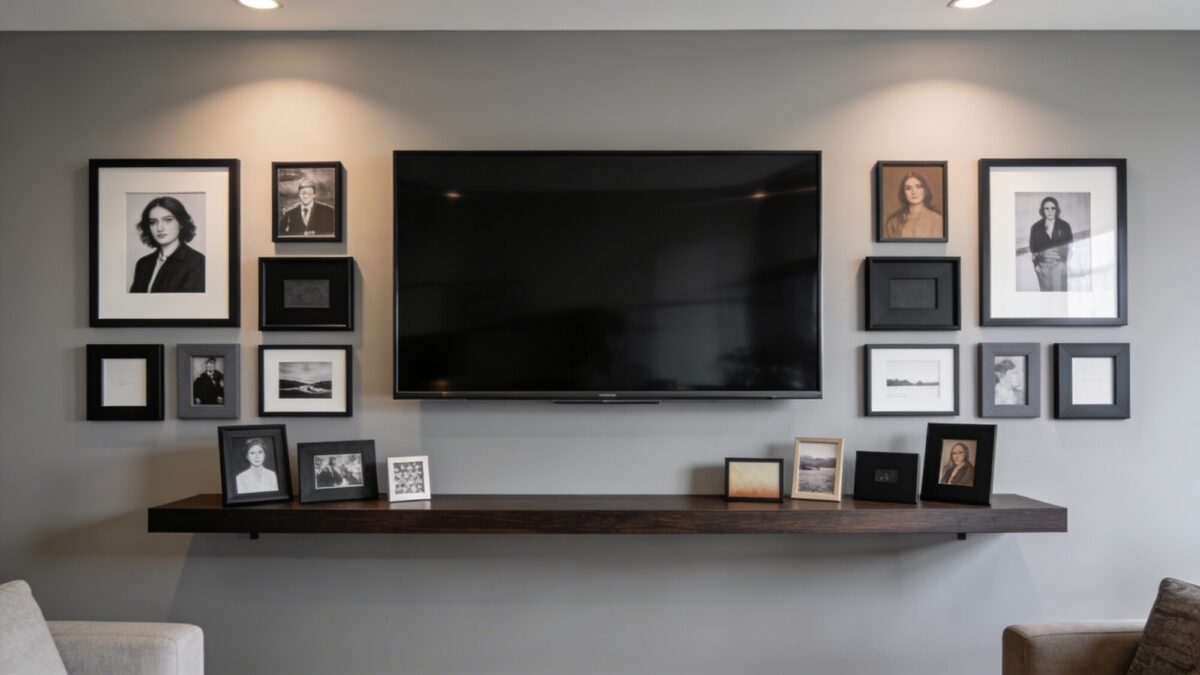
This is the fastest way to make a mounted TV look like part of a designed wall instead of an appliance stuck on drywall. Frame a handful of photos or small prints and arrange them on either side of the screen — not above or below it, since anything directly over a TV usually just looks like it’s trying to hide the TV.
Stick to one color family for the frames — black, charcoal, and matte black together, for example — so the gallery reads as one cohesive block rather than a scattered mix. Leave real gaps between frames. The instinct is to fill space around a big blank TV, but overcrowding the sides makes the whole wall feel busier, not more finished.
- Keep frames off the direct top and bottom of the screen — flank it on the sides instead
- Mix a couple of portrait and landscape orientations for rhythm
- Leave at least as much empty wall as filled wall around the gallery
💡 Pro Tip: Measure your TV’s exact width and keep your gallery frames within that same footprint on each side — going wider than the screen makes the TV look like an afterthought instead of the anchor.
2. Add Plants for Instant Freshness
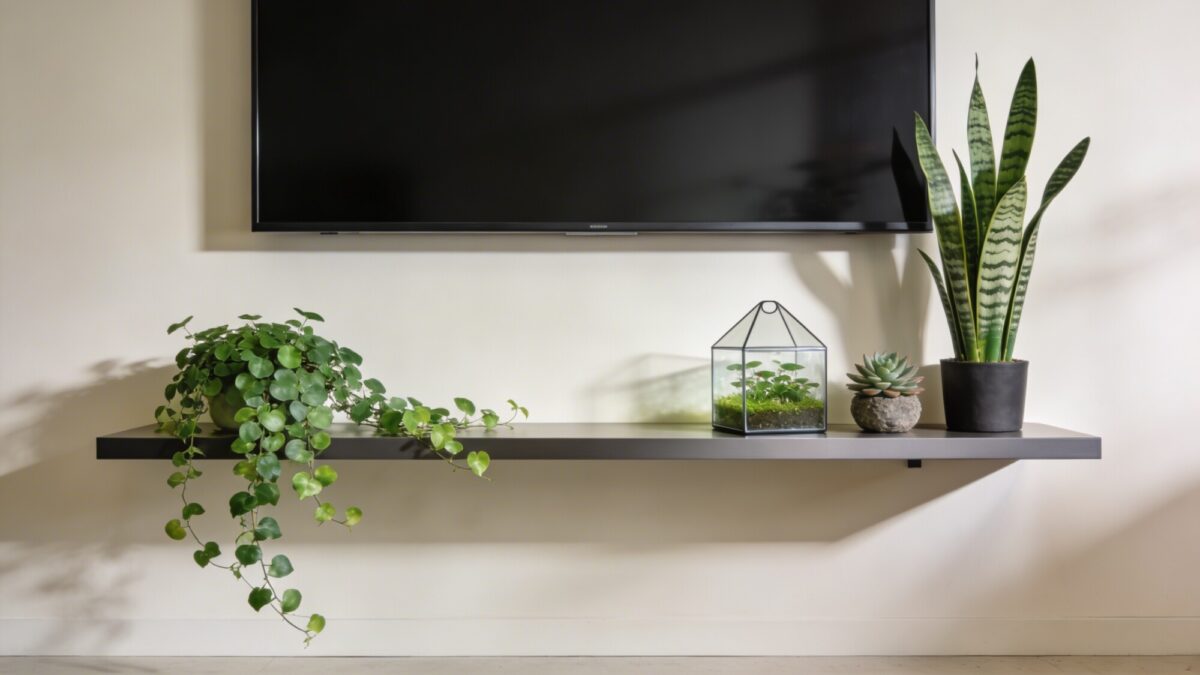
Plants soften the hard edges of a screen and a media console faster than almost anything else you could add. The key on a floating shelves above tv setup is placement: one plant, positioned at one end, does more than three plants spread across the whole shelf, because you’re not trying to fill space evenly — you’re trying to give the eye somewhere to land that isn’t the screen.
A trailing pothos or ivy cascading down one side reads as intentional. Snake plants and ZZ plants work well on the opposite end if you want height without daily watering. If you’re worried about soil mess near electronics, a small glass-enclosed hydroponic planter solves that specific problem, though it’s a pricier route than a standard pot.
- Trailing pothos or ivy on one end for movement
- Snake plant or ZZ plant for height without upkeep
- Hydroponic planters if you want to keep soil away from cables
3. Build a Color Story Around the Shelf’s Finish
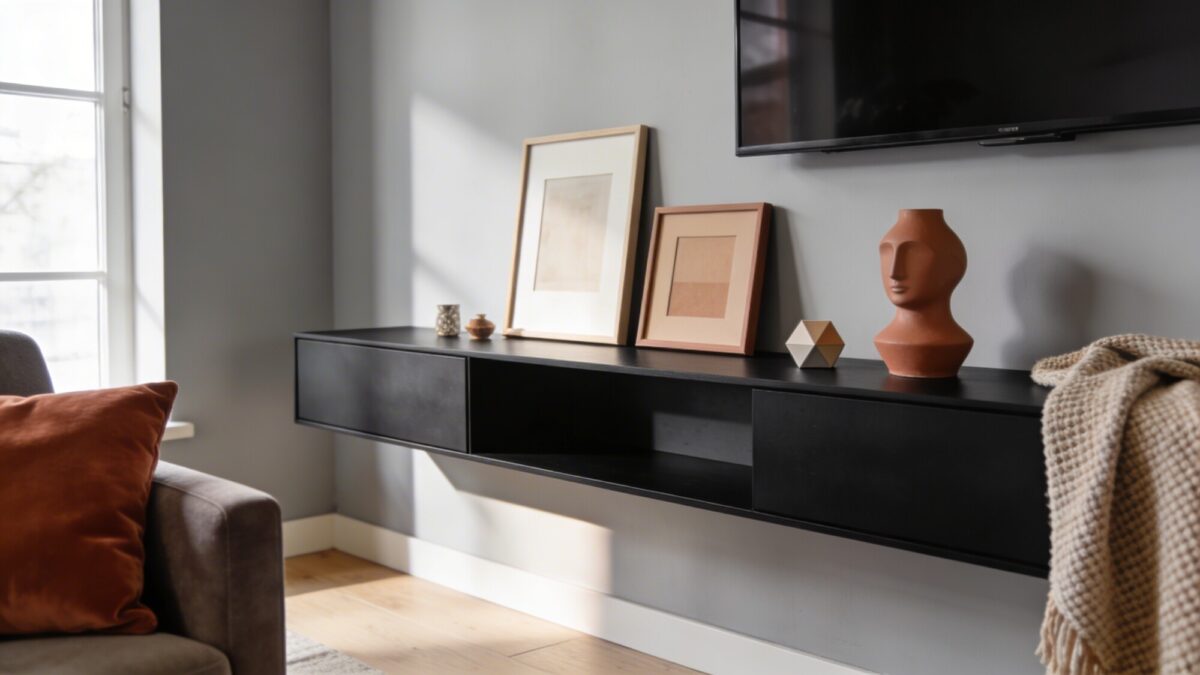
Picking 2–3 colors and repeating them across frames, trinkets, and a vase or two is what separates a shelf that looks planned from one that looks like leftover decor. Let the shelf’s own finish set the direction — a matte black shelf pulls toward cooler neutrals and one bold accent like teal, while a warm wood shelf leans naturally toward terracotta or rust tones.
Where people get this wrong: they treat the color story as “everything matches,” which ends up flat. The better version is neutrals doing most of the work — 80% of the palette — with one accent color showing up two or three times across the shelf so the eye catches the repetition without it screaming for attention.
- Pick neutrals first, then one accent color to repeat 2–3 times
- Let the shelf’s own finish (matte black, wood, white) anchor the palette
- Bring in one soft textile — a small throw or cushion nearby — to echo the accent without adding another hard object
4. Bring in a Touch of Metallic Shine
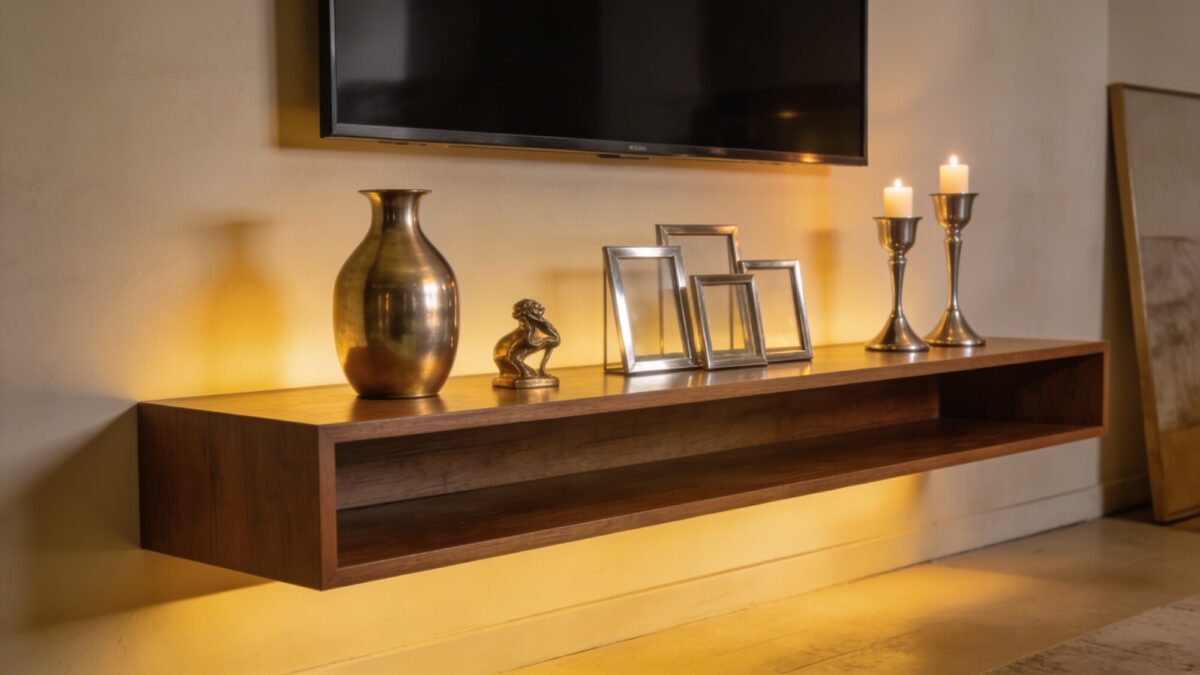
Metal accents catch light in a way flat matte decor can’t, which matters more here than on a regular shelf because a TV screen itself is glossy and reflective — a little metallic warmth nearby actually complements that instead of clashing with it. Brass, copper, and brushed nickel all work; the mistake is mixing more than one of them on the same shelf.
Pick a single metal tone and repeat it two or three times — a vase, a pair of candle holders, one picture frame — rather than scattering brass, gold, and nickel pieces together. Mixed metals can work in some rooms, but on a shelf this visually busy already (TV, cables, remote, decor), one consistent metal tone reads as deliberate instead of accidental.
- One metallic vase or small sculpture as the anchor piece
- Matching candle holders in the same metal tone
- A metallic-framed photo to tie the vignette together
💡 Pro Tip: If your TV bezel is black, brushed nickel or chrome tends to blend better than brass — brass next to a glossy black screen can look like two competing finishes rather than a coordinated pair.
5. Go Minimal With a Few Functional Objects
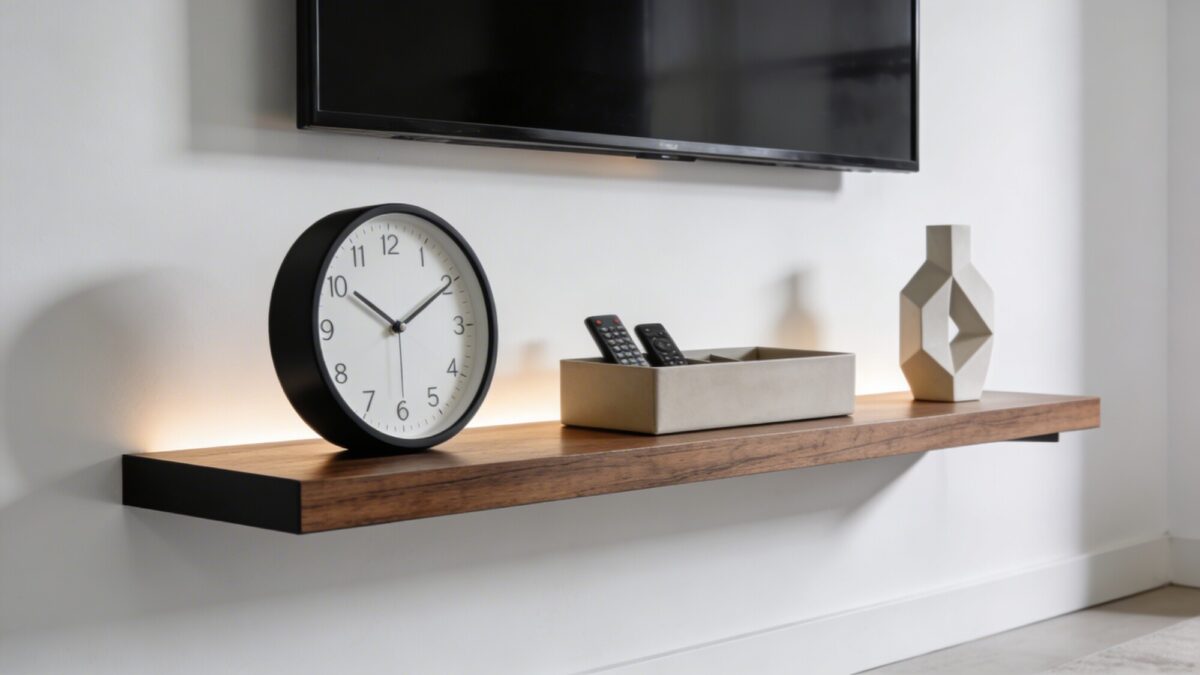
A floating tv unit doesn’t need much to look finished — sometimes it needs less than you’d think. A large-faced clock, a tray to corral remotes, and one sculptural object with clean lines is genuinely enough, especially in a room where the TV itself is already the dominant visual element.
This is the option I’d point toward if you’re someone who lets remotes and charging cables pile up — the tray isn’t decorative filler, it’s solving an actual daily annoyance. A shelf that looks calm and stays calm week to week beats one that looked great on day one and turned into a junk drawer by week three.
- A clock with a large, legible face rather than a small decorative one
- A shallow tray or box specifically for remotes and small electronics
- One geometric sculpture or vase — nothing else
6. Mix Textures Through Materials
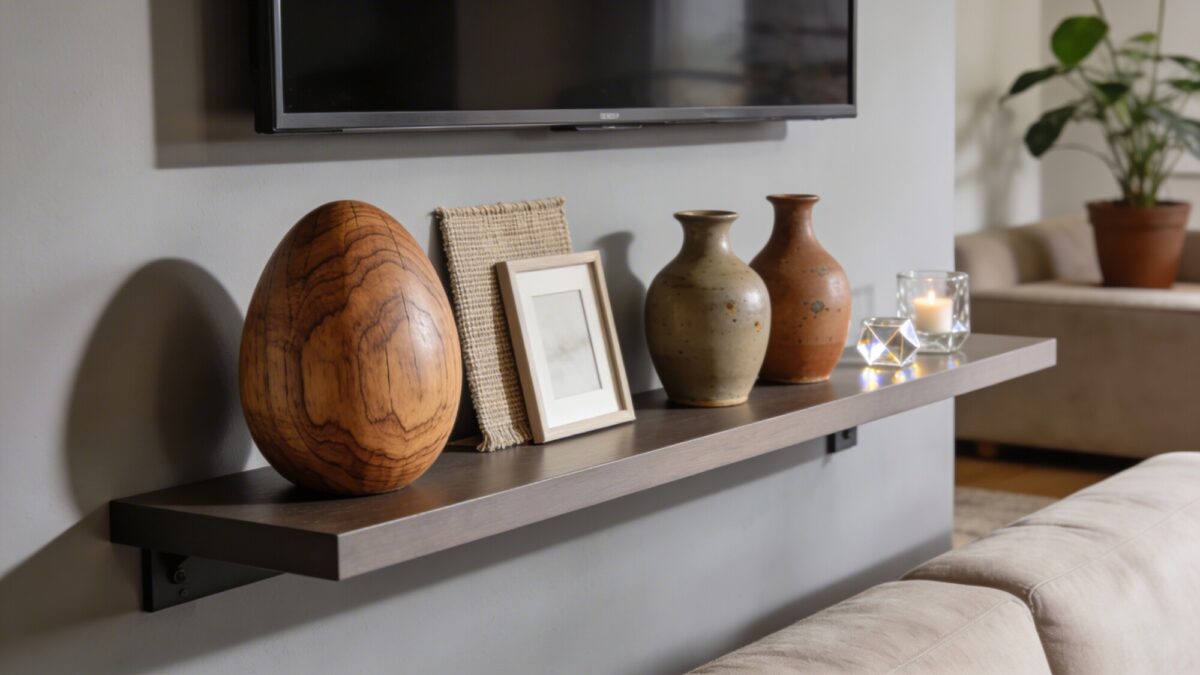
Wood, ceramic, fabric, and glass together give a shelf depth that a single-material approach can’t, especially useful around a TV since the screen itself is flat, hard, and glossy — texture is what keeps the whole wall from feeling cold. A carved wooden object, a matte ceramic vase, and a small fabric swatch tucked behind a frame cover three different textures without needing many pieces.
Pick one dominant texture and treat the rest as accents, the same rule that applies to color. If wood is your dominant material, let ceramic and fabric show up in smaller doses rather than in equal amounts — equal amounts of four different textures usually reads as cluttered rather than layered.
- A carved wooden object or wood block as the dominant texture
- Matte ceramic vases for contrast against the glossy screen
- A small textured fabric swatch tucked behind a frame, not laid flat on the shelf
7. Add Personal Keepsakes for Character
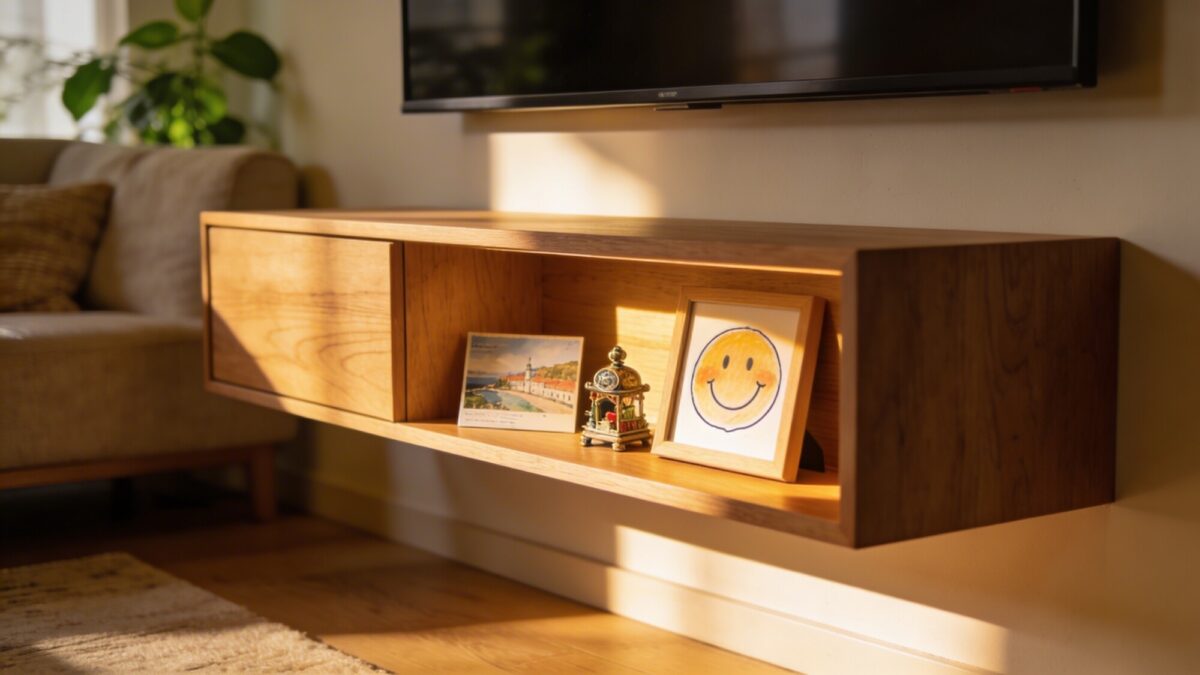
This is the section that keeps a floating shelf console from looking like a catalog photo. A travel memento, a small hobby-related object, a framed note — these are the details that make people ask about the shelf instead of just glancing past it on the way to the couch.
Keep it to two or three pieces, not a shrine. The purpose is a conversation starter, not a full display case, and too many small sentimental objects around a TV starts competing with the screen the same way too much generic decor does.
- One travel memento — a postcard, a small shell, a ticket stub
- A small object tied to a hobby
- A framed note or doodle, swapped out every couple of months
💡 Pro Tip: Rotate keepsakes on the same schedule you rotate seasonal decor elsewhere in the room — it keeps the shelf feeling current without you having to think about it as a separate task.
8. Handle Cable Management Before You Style Anything
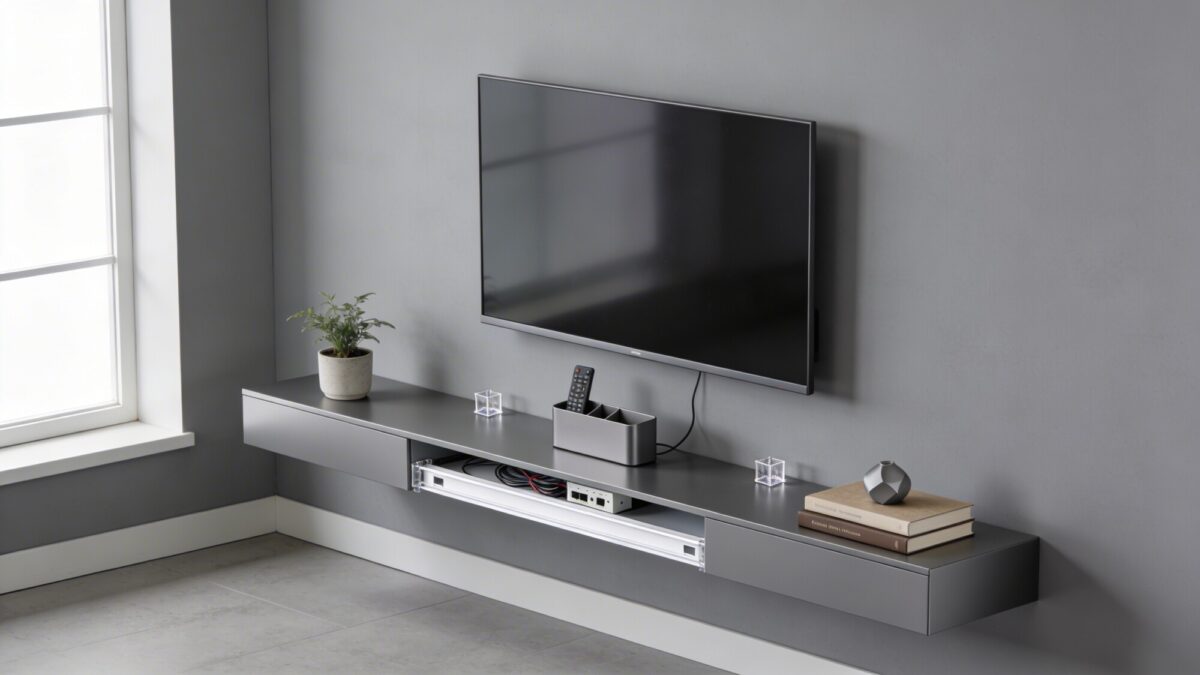
This is the step people skip because it’s not the fun part, and it’s also the one that makes or breaks how finished the whole setup looks. No amount of good styling above the shelf offsets a visible tangle of cords hanging below it — the eye goes straight to the mess, every time.
A low-profile cable raceway run down the wall behind the shelf, a couple of clear cable clips to keep cords from drifting into view, and a slim power strip tucked behind the shelf itself will handle most setups. If you’re not comfortable running cable channels yourself, this is one of the few line items in TV styling actually worth hiring out — it usually takes an electrician or handyman under an hour.
- Low-profile raceway or channel to route the main cable bundle
- Clear cable clips for anything that needs to stay visible but tidy
- A slim power strip mounted behind the shelf, not sitting on top of it
Which Floating TV Shelf Style Fits Your Room?
| Approach | Best For | Effort Level | Watch Out For |
|---|---|---|---|
| Gallery Wall (Idea 1) | Living rooms wanting a personal, curated look | Medium — frame sourcing and hanging | Frames placed above/below the screen instead of beside it |
| Plants (Idea 2) | Bright rooms, anyone wanting freshness fast | Low | Overwatering near outlets and cables |
| Minimalist (Idea 5) | Households prone to remote/cable clutter | Very low | Going so minimal it looks unfinished |
| Metallic Accents (Idea 4) | Modern or glam-leaning rooms | Low | Mixing more than one metal tone |
| Cable Management (Idea 8) | Every setup, regardless of style | Medium — may need a raceway install | Skipping it and letting styling above hide a mess below |
Things to Consider Before You Style Yours
- Shelf weight rating: a floating tv console typically needs to support more than a decor-only shelf — confirm the bracket rating covers your TV weight plus soundbar and decor combined, not just the TV alone.
- Viewing height: decor above or beside the shelf shouldn’t sit at a height that catches your eye every time you glance at the screen — keep taller pieces to the outer edges, not centered near eye level.
- Glare: avoid glossy or reflective decor directly across from a window or bright lamp — it’ll throw glare onto the screen exactly when you’re trying to watch something.
- Soundbar clearance: if you’re running a soundbar on or near the shelf, leave enough clearance in front that decor doesn’t block audio output.
Frequently Asked Questions
How much decor is too much on a floating TV shelf?
If decor takes up more visual width than the TV itself on either side, it’s competing with the screen instead of framing it. Aim for decor grouped in the space equal to or narrower than the TV’s own footprint.
Should I put anything directly above the TV?
Generally no — anything centered directly above a mounted TV tends to look like it’s trying to disguise the screen rather than complement it. Flanking the sides works better than stacking above.
What’s the best way to hide TV cables on a floating shelf?
A cable raceway behind the wall or a paintable cord channel run down to the outlet is the most permanent fix. For a lighter-touch option, clear cable clips along the back edge of the shelf keep cords from hanging in view without any wall modification.
Can plants go directly next to a TV?
Yes, as long as watering doesn’t risk dripping toward outlets or cables below. Keep pots slightly back from the shelf’s front edge and avoid overwatering plants positioned directly above a power strip.
Is a floating TV shelf strong enough to hold decor plus the TV?
It depends entirely on the bracket system and stud placement — check the manufacturer’s total weight rating before assuming there’s room for anything beyond the TV and soundbar. A shelf rated tight to your TV’s weight isn’t the place to add heavy ceramics or books.
Our Take
If you’re setting up a floating TV shelf for the first time, handle cable management before you buy a single decorative object — Idea 8 is the one that actually determines whether the finished result looks styled or just mounted. Once that’s sorted, Idea 5 (minimalist, functional objects) is the safest starting point, and you can layer in a gallery wall or metallic accents later once you know how much visual weight the space can actually hold next to a screen.
For more ways to build out the wall around your setup, our large wall decor floating shelf ideas guide covers pairing a TV shelf with a bigger wall arrangement, and the living room wall inspiration roundup has more gallery-style layouts if Idea 1 is the direction you want to take. For the broader styling fundamentals that apply beyond just TV walls, the full floating shelf decor idea collection is worth a look too.