You can make a guest room feel roomy, cozy, and stylish with two twin beds arranged to suit how you host. This article shows simple, smart ways to place and style twin beds so your guests feel comfortable and the room stays practical. You’ll find ideas on layout, bedding, headboards, lighting, and color that work together to balance comfort and function. Use these tips to create a guest space that adapts to couples, friends, or solo visitors while staying easy to keep and inviting to stay in. Table of Contents1) Place twin beds parallel with a shared nightstand to maximize space and accessibility2) Use bold patterned bedding and complementary curtains to create visual interest3) Incorporate upholstered headboards for added comfort and a polished look4) Install vintage-style wall sconces to free up bedside table space5) Choose neutral wall colors to create a calming, versatile backdrop6) Add layered lighting with a mix of overhead, task, and accent lightsDesign Principles for Twin Bed Guest RoomsOptimizing Space and LayoutColor Schemes for a Welcoming AtmosphereMaximizing Comfort and FunctionalitySelecting the Right Bedding and MattressesIncorporating Storage Solutions 1) Place twin beds parallel with a shared nightstand to maximize space and accessibility Position the twin beds with their headboards against the same wall and a nightstand between them. This layout keeps the center of the room open, which helps with movement and makes the space feel less cramped. Choose a narrow nightstand with both open and closed storage so you can share lamp space and store small items. A taller nightstand can create visual separation and add privacy without taking up much floor area. Place bedside lamps or a single shared lamp on the nightstand for balanced lighting. That gives each guest easy access to light and a place to set a phone or glass of water. PoKat 23” Bedside Table Lamp for Bedroom Nightstands, Birthday G… FINIAL and LAMP POLE are SILVER, NOT GOLD. They may appear GOLDEN due to the WARM LIGHT, as shown in the picture. ( BULB… INSTALLATION REQUIRED FOR LAMPSHADE: To minimize unnecessary packaging waste and to save transport fees, we have meticul… Superior Quality & Modern Chic Design: Crafted with carefully selected high-quality ceramic, this desk lamp is designed … $39.99 Buy on Amazon Keep a clear path at the foot of the beds so you can walk through comfortably. If you need extra storage, add under-bed drawers or storage boxes to avoid crowding the room with extra furniture. 2) Use bold patterned bedding and complementary curtains to create visual interest Pick bedding with a strong pattern to give each twin bed a clear focal point. Floral, geometric, or large-scale stripes work well because they read easily across a bed and draw the eye. Choose curtains that pick up one or two colors from the bedding. This ties the room together without matching exactly, and it keeps the look fresh rather than too uniform. If the bedding is very busy, use simpler curtains in a single color or a subtle texture to balance the room. Conversely, if the bedding is mostly solid, try patterned curtains that echo a bedding color to add depth. Estelar Textiler Navy Blue and Greyish White Blackout Curtains fo… PACKAGE INCLUDES: 2 panels per package. Each package includes two ombre blackout curtain panels of 52″W x 84″L,one set m… OMBRE AND LINE DESIGN: The decorative blackout bedroom curtains are made of 100% high quality polyester fabric. The room… 100% BLACKOUT EFFECT: Our ombre total blackout curtains with black back can completely block out 100% sunlight and UV ra… $23.99 Buy on Amazon Mixing patterns can feel risky, but you can make it work by keeping scale and color in mind. Use a large-scale pattern on the bedding and a smaller, less busy pattern on the curtains so each element stands out. Consider fabric weight for function as well as style. Sheer curtains soften light and contrast nicely with bold bedding, while heavier drapes add privacy and a cozier feel. Finally, repeat small accents from the bedding in pillows or a throw to reinforce the connection between the beds and the window treatments. This small repetition makes the whole guest room feel intentional and welcoming. 3) Incorporate upholstered headboards for added comfort and a polished look Choose upholstered headboards to make your twin beds feel cozier and more finished. They add soft support when you sit up to read or watch TV, and they give the room a cleaner, pulled-together appearance. Pick a fabric that matches your room’s style and is easy to clean. Neutral tones work well with most decor, while a patterned or colored fabric can become a focal point without overwhelming the space. Consider tufted or padded designs for extra cushioning. Slim, wall-mounted headboards save floor space and keep the layout open, which helps small guest rooms feel larger. If you like DIY, reupholstering an old headboard is a simple, budget-friendly option. You can also upholster matching headboards to create a cohesive look between the two beds. 4) Install vintage-style wall sconces to free up bedside table space Choose wall sconces with a vintage look to add character and save room on each nightstand. You get the charm of classic lighting without clumsy lamps taking up surface space. Mount sconces so they sit at eye level when you’re seated on the bed. That gives you good reading light and prevents glare while keeping the top of your bedside table clear for essentials. Pick hardwired or plug-in models depending on your budget and skill level. Hardwiring looks cleaner, but plug-in sconces let you avoid rewiring and still gain the same space-saving benefit. Look for adjustable arms or swivel heads if you want targeted light for each twin bed. That makes the sconces more useful for reading, phone use, or winding down without lighting the whole room. Match the sconce finish to your room’s style—aged brass or oil-rubbed bronze works well with vintage decor. Keep the bulbs warm (2700–3000K) to create a cozy, welcoming feel for guests. 5) Choose neutral wall colors to create a calming, versatile backdrop Pick a neutral paint color to make the room feel calm and open. Neutrals like soft white, warm beige, or muted gray give you a simple base that helps twin beds share the space without clashing. Neutral walls let you change bedding, rugs, or art without repainting. You can use different patterns and colors on each twin bed and still keep the room cohesive. Consider the room’s light when choosing tone. North-facing rooms often feel cooler, so a warmer beige or greige adds warmth, while sunlit rooms handle cooler grays and crisp whites. Add texture and contrast through textiles and finishes. A woven rug, layered bedding, or a wood headboard brings depth without adding bright color. If you want subtle interest, choose a slightly warm or cool neutral rather than pure white. That small shift helps the space feel intentional and more inviting. 6) Add layered lighting with a mix of overhead, task, and accent lights Use three lighting types: ambient, task, and accent. Ambient light fills the room and makes it usable at night. Choose a soft overhead fixture like a flush mount or dimmable pendant. A dimmer helps you change the mood without extra fixtures. Put task lights near the beds for reading. Wall-mounted sconces or adjustable swing-arm lamps save floor space and give focused light. Add accent lights to highlight art, shelves, or architectural details. Small LED strips or picture lights add depth and make the room feel finished. Mix warm bulbs around 2700–3000K to keep the bedroom cozy. Keep consistent color temperature so the light looks natural and calm. Wire controls so each layer works independently. Independent switches or smart bulbs let you combine lights for different needs and keep guests comfortable. Design Principles for Twin Bed Guest Rooms Focus on making the room feel roomy, calm, and easy to use. Think about bed placement, storage, walking space, light sources, and a color plan that feels restful. Optimizing Space and Layout Place twin beds along the longest wall or opposite walls to keep a clear central path at least 30–36 inches wide. If the room is narrow, push beds against one wall with a shared nightstand between them to save floor space. Use slim bed frames or platform beds to lower visual bulk and create storage room underneath with rolling bins. Keep a small landing area near the door so guests can set down bags. Add a wall-mounted shelf or hooks instead of a bulky dresser to free floor area. Position lighting for each bed—wall sconces or swing-arm lamps—so guests can read without climbing over each other. Color Schemes for a Welcoming Atmosphere Pick two main colors: a soft neutral for walls and one accent color for bedding or pillows. Neutrals like warm gray, soft beige, or pale blue make the room feel larger and calmer. Use the accent color in textiles and one small decor piece to create cohesion without clutter. Balance warm and cool tones: if you choose a cool wall color, add warm wood or brass accents to avoid a cold feel. Keep patterns limited to one or two elements, such as a patterned throw and solid sheets, so the room reads tidy and restful. Maximizing Comfort and Functionality Focus on sleep quality and usable space. Choose mattresses and bedding that suit a range of guests, and add smart storage to keep the room tidy without crowding it. Selecting the Right Bedding and Mattresses Pick mattresses that balance comfort, support, and durability. A pair of 8–10-inch hybrid or memory-foam mattresses works well for most adults. If you expect older guests, choose firmer support and a thicker profile for easier getting in and out of bed. Use mattress toppers to adjust feel without replacing mattresses. A 2–3 inch memory-foam topper adds softness; a latex topper increases responsiveness. Protect mattresses with waterproof, breathable encasements to guard against spills and allergens. Choose easy-care sheets and layered bedding. Use cotton or cotton-blend percale sheets in a neutral color and a medium-weight duvet with a removable cover. Keep one extra set of sheets, a spare blanket, and an extra pillow stored nearby. Incorporating Storage Solutions Use under-bed drawers or rolling bins to store extra bedding and guest items. Choose shallow drawers for linens and deeper ones for luggage or seasonal items. Label bins so you can find things fast. Add bedside storage for small items. Narrow nightstands with a drawer and open shelf give guests a place for phones, water, and books. Wall-mounted shelves or a small floating shelf work if floor space is tight. Think vertical and multiuse. A tall dresser, a slim armoire, or hooks behind the door frees floor space. Include a luggage rack or foldable bench that doubles as storage space when not in use.
You can make a guest room feel roomy, cozy, and stylish with two twin beds arranged to suit how you host. This article shows simple, smart ways to place and style twin beds so your guests feel comfortable and the room stays practical.
You’ll find ideas on layout, bedding, headboards, lighting, and color that work together to balance comfort and function. Use these tips to create a guest space that adapts to couples, friends, or solo visitors while staying easy to keep and inviting to stay in.
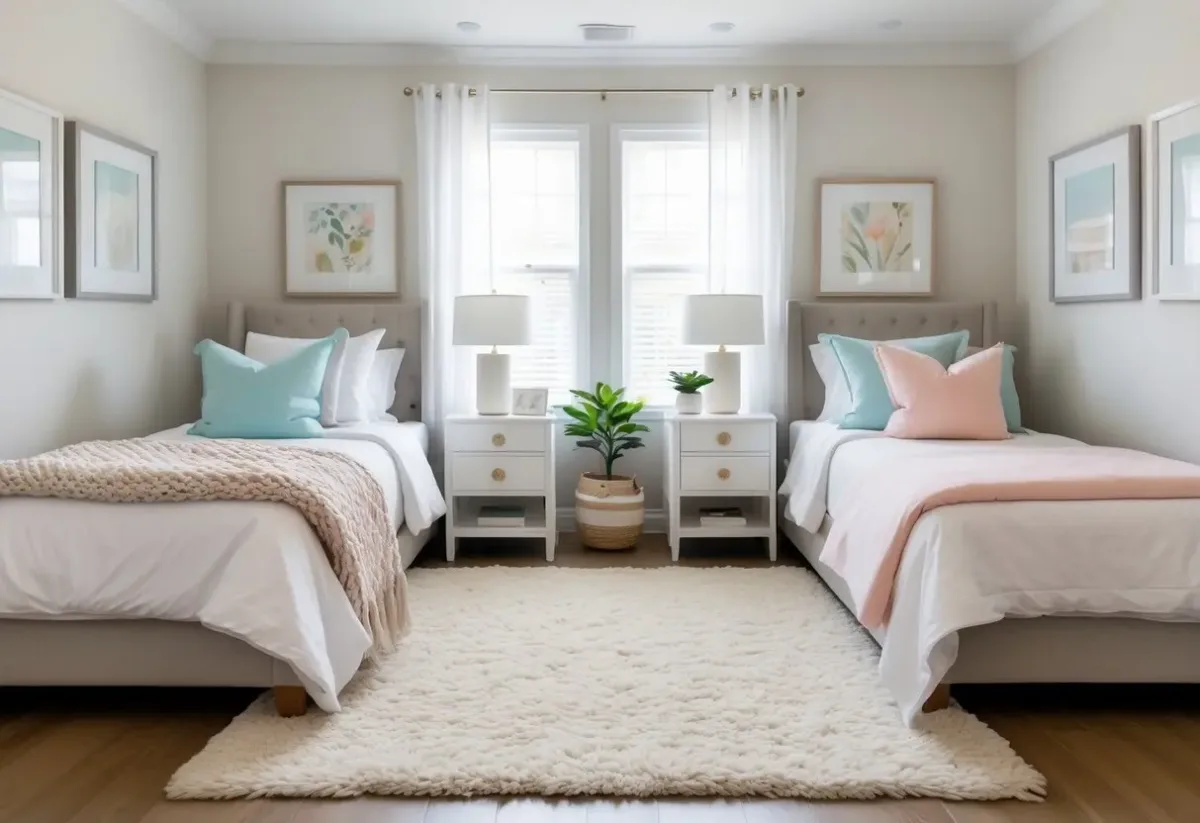
Position the twin beds with their headboards against the same wall and a nightstand between them. This layout keeps the center of the room open, which helps with movement and makes the space feel less cramped.
Choose a narrow nightstand with both open and closed storage so you can share lamp space and store small items. A taller nightstand can create visual separation and add privacy without taking up much floor area.
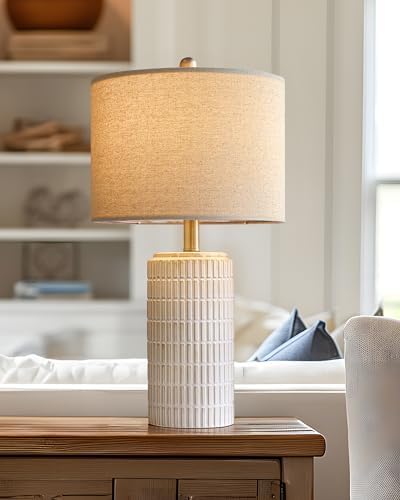
Place bedside lamps or a single shared lamp on the nightstand for balanced lighting. That gives each guest easy access to light and a place to set a phone or glass of water.
Keep a clear path at the foot of the beds so you can walk through comfortably. If you need extra storage, add under-bed drawers or storage boxes to avoid crowding the room with extra furniture.
2) Use bold patterned bedding and complementary curtains to create visual interest
Pick bedding with a strong pattern to give each twin bed a clear focal point. Floral, geometric, or large-scale stripes work well because they read easily across a bed and draw the eye.
Choose curtains that pick up one or two colors from the bedding. This ties the room together without matching exactly, and it keeps the look fresh rather than too uniform.
If the bedding is very busy, use simpler curtains in a single color or a subtle texture to balance the room. Conversely, if the bedding is mostly solid, try patterned curtains that echo a bedding color to add depth.
Mixing patterns can feel risky, but you can make it work by keeping scale and color in mind. Use a large-scale pattern on the bedding and a smaller, less busy pattern on the curtains so each element stands out.
Consider fabric weight for function as well as style. Sheer curtains soften light and contrast nicely with bold bedding, while heavier drapes add privacy and a cozier feel.
Finally, repeat small accents from the bedding in pillows or a throw to reinforce the connection between the beds and the window treatments. This small repetition makes the whole guest room feel intentional and welcoming.
3) Incorporate upholstered headboards for added comfort and a polished look
Choose upholstered headboards to make your twin beds feel cozier and more finished. They add soft support when you sit up to read or watch TV, and they give the room a cleaner, pulled-together appearance.
Pick a fabric that matches your room’s style and is easy to clean. Neutral tones work well with most decor, while a patterned or colored fabric can become a focal point without overwhelming the space.
Consider tufted or padded designs for extra cushioning. Slim, wall-mounted headboards save floor space and keep the layout open, which helps small guest rooms feel larger.
If you like DIY, reupholstering an old headboard is a simple, budget-friendly option. You can also upholster matching headboards to create a cohesive look between the two beds.
4) Install vintage-style wall sconces to free up bedside table space
Choose wall sconces with a vintage look to add character and save room on each nightstand. You get the charm of classic lighting without clumsy lamps taking up surface space.
Mount sconces so they sit at eye level when you’re seated on the bed. That gives you good reading light and prevents glare while keeping the top of your bedside table clear for essentials.
Pick hardwired or plug-in models depending on your budget and skill level. Hardwiring looks cleaner, but plug-in sconces let you avoid rewiring and still gain the same space-saving benefit.
Look for adjustable arms or swivel heads if you want targeted light for each twin bed. That makes the sconces more useful for reading, phone use, or winding down without lighting the whole room.
Match the sconce finish to your room’s style—aged brass or oil-rubbed bronze works well with vintage decor. Keep the bulbs warm (2700–3000K) to create a cozy, welcoming feel for guests.
5) Choose neutral wall colors to create a calming, versatile backdrop
Pick a neutral paint color to make the room feel calm and open. Neutrals like soft white, warm beige, or muted gray give you a simple base that helps twin beds share the space without clashing.
Neutral walls let you change bedding, rugs, or art without repainting. You can use different patterns and colors on each twin bed and still keep the room cohesive.
Consider the room’s light when choosing tone. North-facing rooms often feel cooler, so a warmer beige or greige adds warmth, while sunlit rooms handle cooler grays and crisp whites.
Add texture and contrast through textiles and finishes. A woven rug, layered bedding, or a wood headboard brings depth without adding bright color.
If you want subtle interest, choose a slightly warm or cool neutral rather than pure white. That small shift helps the space feel intentional and more inviting.
6) Add layered lighting with a mix of overhead, task, and accent lights
Use three lighting types: ambient, task, and accent. Ambient light fills the room and makes it usable at night.
Choose a soft overhead fixture like a flush mount or dimmable pendant. A dimmer helps you change the mood without extra fixtures.
Put task lights near the beds for reading. Wall-mounted sconces or adjustable swing-arm lamps save floor space and give focused light.
Add accent lights to highlight art, shelves, or architectural details. Small LED strips or picture lights add depth and make the room feel finished.
Mix warm bulbs around 2700–3000K to keep the bedroom cozy. Keep consistent color temperature so the light looks natural and calm.
Wire controls so each layer works independently. Independent switches or smart bulbs let you combine lights for different needs and keep guests comfortable.
Focus on making the room feel roomy, calm, and easy to use. Think about bed placement, storage, walking space, light sources, and a color plan that feels restful.
Optimizing Space and Layout
Place twin beds along the longest wall or opposite walls to keep a clear central path at least 30–36 inches wide. If the room is narrow, push beds against one wall with a shared nightstand between them to save floor space. Use slim bed frames or platform beds to lower visual bulk and create storage room underneath with rolling bins.
Keep a small landing area near the door so guests can set down bags. Add a wall-mounted shelf or hooks instead of a bulky dresser to free floor area. Position lighting for each bed—wall sconces or swing-arm lamps—so guests can read without climbing over each other.
Color Schemes for a Welcoming Atmosphere
Pick two main colors: a soft neutral for walls and one accent color for bedding or pillows. Neutrals like warm gray, soft beige, or pale blue make the room feel larger and calmer. Use the accent color in textiles and one small decor piece to create cohesion without clutter.
Balance warm and cool tones: if you choose a cool wall color, add warm wood or brass accents to avoid a cold feel. Keep patterns limited to one or two elements, such as a patterned throw and solid sheets, so the room reads tidy and restful.
Focus on sleep quality and usable space. Choose mattresses and bedding that suit a range of guests, and add smart storage to keep the room tidy without crowding it.
Selecting the Right Bedding and Mattresses
Pick mattresses that balance comfort, support, and durability. A pair of 8–10-inch hybrid or memory-foam mattresses works well for most adults. If you expect older guests, choose firmer support and a thicker profile for easier getting in and out of bed.
Use mattress toppers to adjust feel without replacing mattresses. A 2–3 inch memory-foam topper adds softness; a latex topper increases responsiveness. Protect mattresses with waterproof, breathable encasements to guard against spills and allergens.
Choose easy-care sheets and layered bedding. Use cotton or cotton-blend percale sheets in a neutral color and a medium-weight duvet with a removable cover. Keep one extra set of sheets, a spare blanket, and an extra pillow stored nearby.
Incorporating Storage Solutions
Use under-bed drawers or rolling bins to store extra bedding and guest items. Choose shallow drawers for linens and deeper ones for luggage or seasonal items. Label bins so you can find things fast.
Add bedside storage for small items. Narrow nightstands with a drawer and open shelf give guests a place for phones, water, and books. Wall-mounted shelves or a small floating shelf work if floor space is tight.
Think vertical and multiuse. A tall dresser, a slim armoire, or hooks behind the door frees floor space. Include a luggage rack or foldable bench that doubles as storage space when not in use.
Listen to this article 10 10 0:00 / 0:00 Speed 0.75×1×1.25×1.5×2× A spare room doesn’t have to sit empty most of the year while your laptop lives on the kitchen table. With the right layout, you can turn one room into two: a calm, productive workspace on weekdays and a welcoming retreat for overnight visitors…
Listen to this article 10 10 0:00 / 0:00 Speed 0.75×1×1.25×1.5×2× Ever stayed somewhere so cozy you didn’t want to leave? That’s the goal here. A great guest bedroom isn’t just a place to crash—it’s a whole vibe that makes people feel cared for. Whether you host often or just want to impress that one…
Listen to this article 10 10 0:00 / 0:00 Speed 0.75×1×1.25×1.5×2× Ever walked into a guest room and thought… wow, I might “accidentally” extend my stay? That’s the energy we’re going for here. Small spaces don’t have to feel cramped or forgettable—they can feel thoughtful, stylish, and seriously cozy. Whether you’re working with a tiny…
Listen to this article 10 10 0:00 / 0:00 Speed 0.75×1×1.25×1.5×2× A guest room usually gets whatever furniture didn’t fit anywhere else in the house. The dresser with the sticky drawer, a lamp that’s too dim to read by, sheets that have gone thin from a decade of washes. Guests notice, even if they’re too…
Listen to this article 10 10 0:00 / 0:00 Speed 0.75×1×1.25×1.5×2× Turning a spare room into a welcoming retreat doesn’t require a big renovation budget. With a few smart choices in color, layout, and furniture, you can create guest bedroom ideas on a budget that feel intentional and warm rather than thrown together. This guide…
Listen to this article 10 10 0:00 / 0:00 Speed 0.75×1×1.25×1.5×2× You want a guest bedroom that feels calm, modern, and easy to maintain. This article shows simple ways to blend neutral colors, clean furniture, layered bedding, and small touches so guests feel cared for without a lot of clutter. You will learn seven practical…