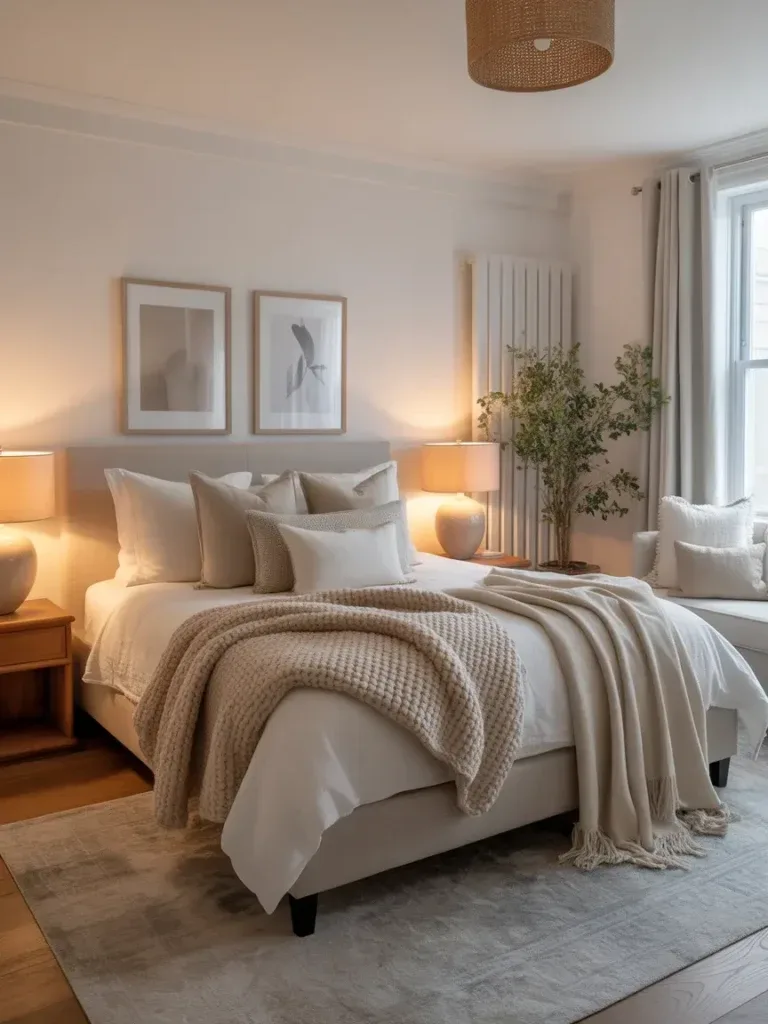
7 Modern Guest Bedroom Ideas You’Ll Lovetonight
A guest room usually gets whatever furniture didn’t fit anywhere else in the house. The dresser with the sticky drawer, a lamp that’s too dim to read by, sheets that have gone thin from a decade of washes. Guests notice, even if they’re too polite to say so. The good news is that turning a leftover room into something guests actually look forward to sleeping in doesn’t require a renovation. It takes a handful of deliberate choices, made in the right order.
These modern guest bedroom ideas cover the parts that matter most: where things get stored, what the bed feels like, how the lighting behaves at 6 a.m. and 11 p.m., and which colors keep a small room from feeling like a waiting room. There’s also a look at why a mid-century modern bedroom aesthetic works particularly well for guest spaces, if you want a specific direction rather than a grab-bag of ideas.
Quick-Reference: What Actually Moves the Needle
- Storage first: a bed with drawers or an ottoman solves more problems than a second dresser ever will.
- Bedding over furniture: percale sheets and a well-chosen duvet do more for guest comfort than a new headboard.
- Light guests can control: a dimmer or a three-way bulb beats a single harsh overhead fixture every time.
- One accent color, not five: a calm base palette with two or three accent pieces reads as intentional, not empty.
- A charging spot within arm’s reach of the bed: this is the single most-requested feature guests never ask for out loud.
1. Smart Zoning With Hidden Storage
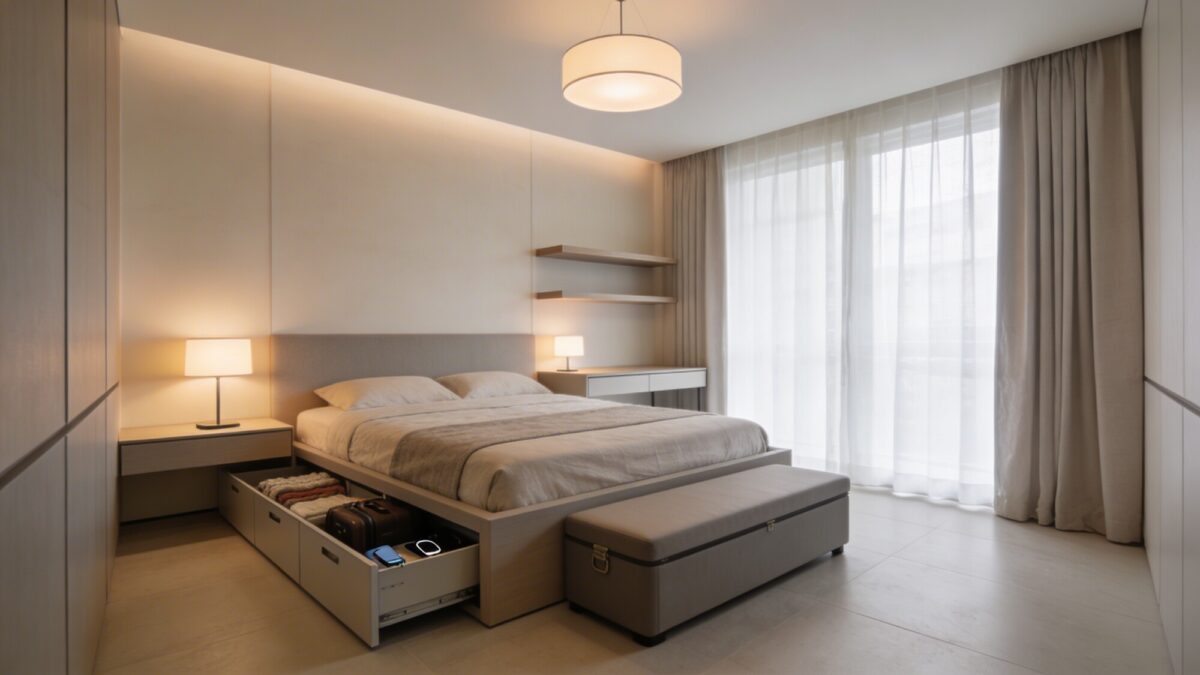
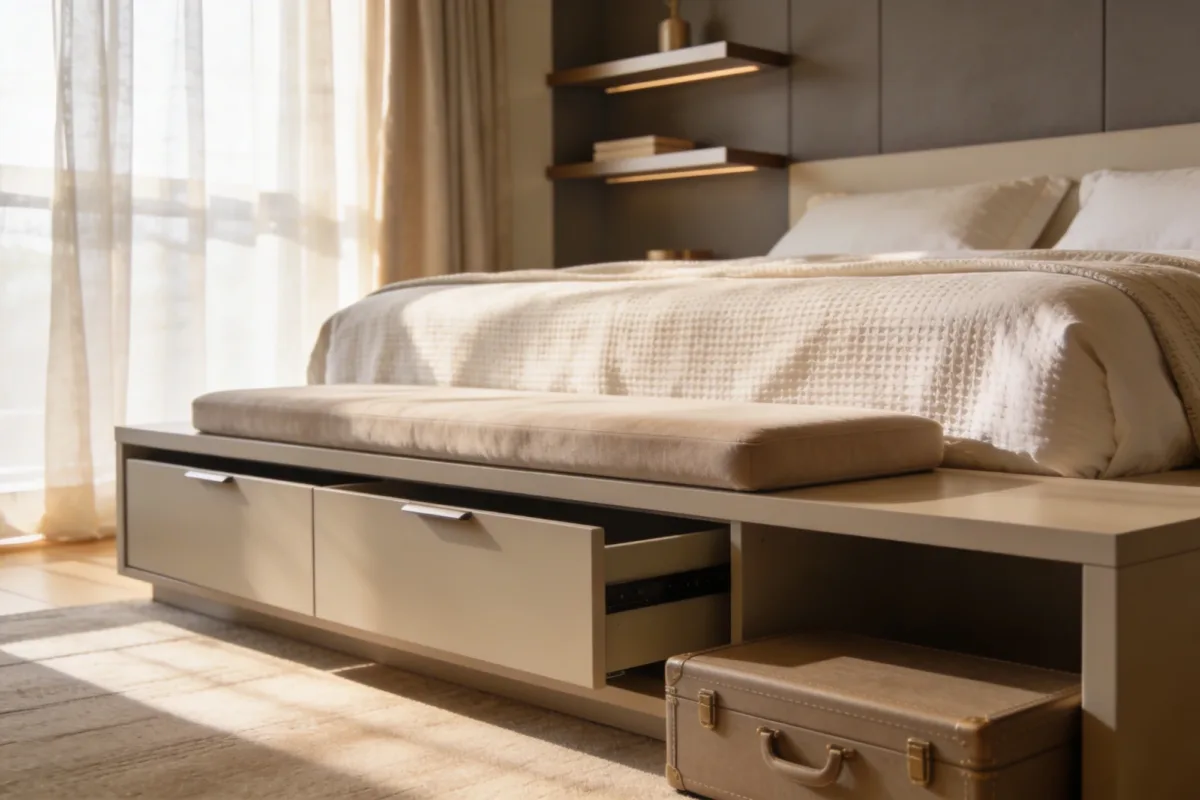
Most guest rooms are small, which means every piece of furniture has to earn its floor space twice: once for what it does, and once for what it hides. A platform bed with built-in drawers, or a storage ottoman at the foot of the bed, gives guests somewhere to stash luggage without living out of a suitcase on the floor for a week.
Floating nightstands and wall-mounted shelves help too, mostly by keeping the floor visually clear. A room can be objectively small and still feel roomy if nothing is sitting directly on the floor except the bed and maybe a chair.
Common mistake: buying a storage bed and then filling the drawers with your own off-season clothes. If the room is a guest room, the storage needs to stay empty and ready — otherwise you’ve just built yourself a second closet that happens to have a mattress on top of it.
When you’re shopping, look for soft-close hinges and hardware rated for daily use, not the cheapest option at the price point. A storage bed frame in the $400–$700 range from a retailer like West Elm or Article will usually hold up better over five years of guest turnover than a $150 particleboard version that starts sagging after a year. If the budget doesn’t stretch that far, a solid trunk from a secondhand shop does the same job for less. For more layout tricks when square footage is tight, this guide to small guest bedroom ideas covers zoning approaches specifically for rooms under 100 square feet.
2. Bedding Worth Actually Sleeping In
Furniture gets noticed on the way in. Bedding gets judged at 2 a.m. when a guest can’t figure out why they’re sweating under a duvet meant for a Minnesota winter, or why the sheets feel like a burlap sack. This is the cheapest upgrade on this list and the one with the biggest payoff.
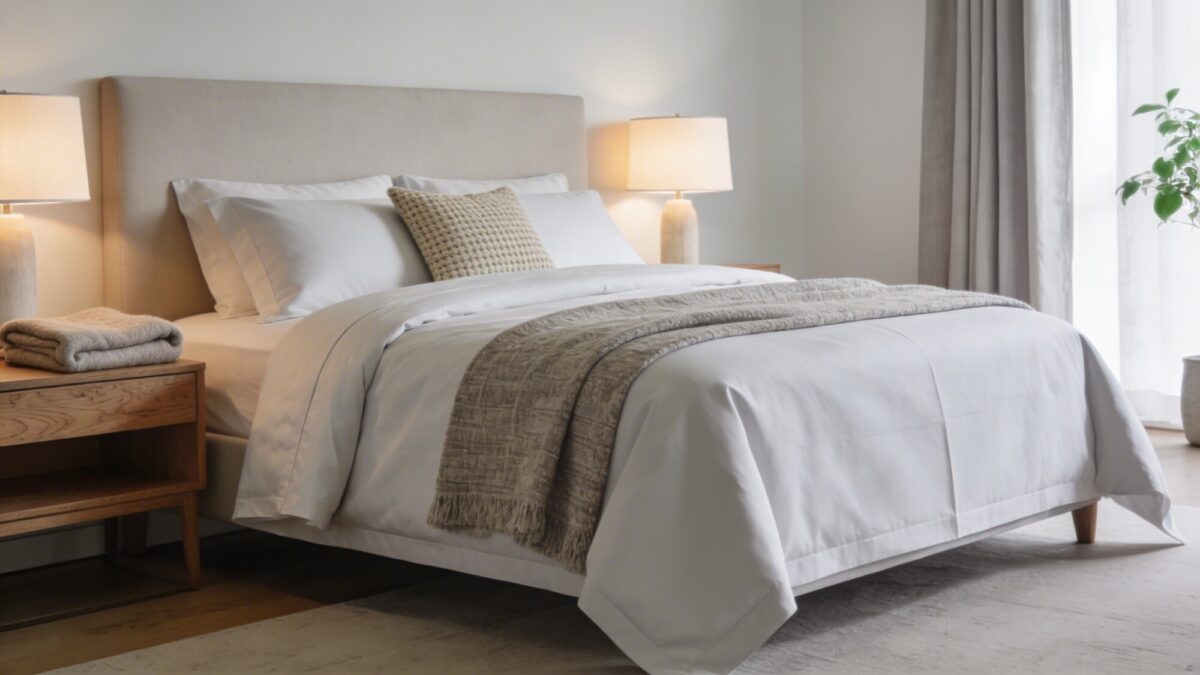
Percale cotton sheets (crisp, breathable, similar to what you’d find in a good hotel) outperform sateen for guest rooms because they don’t trap heat the way sateen can. A 300-thread-count percale set runs somewhere between $60 and $150 depending on the brand, and it will outlast a cheaper 800-thread-count set that’s really just marketing math. Pair it with a lightweight down-alternative duvet plus one folded throw at the foot of the bed, so guests who run cold have an easy option without digging through a closet.
The trade-off worth knowing: white bedding photographs beautifully and is the easiest thing in the world to bleach clean between guests, but it shows every stain immediately. A soft dove gray or oatmeal does almost as well in photos and hides the inevitable coffee mishap a little better.
3. Flexible Seating for Work or Just Winding Down
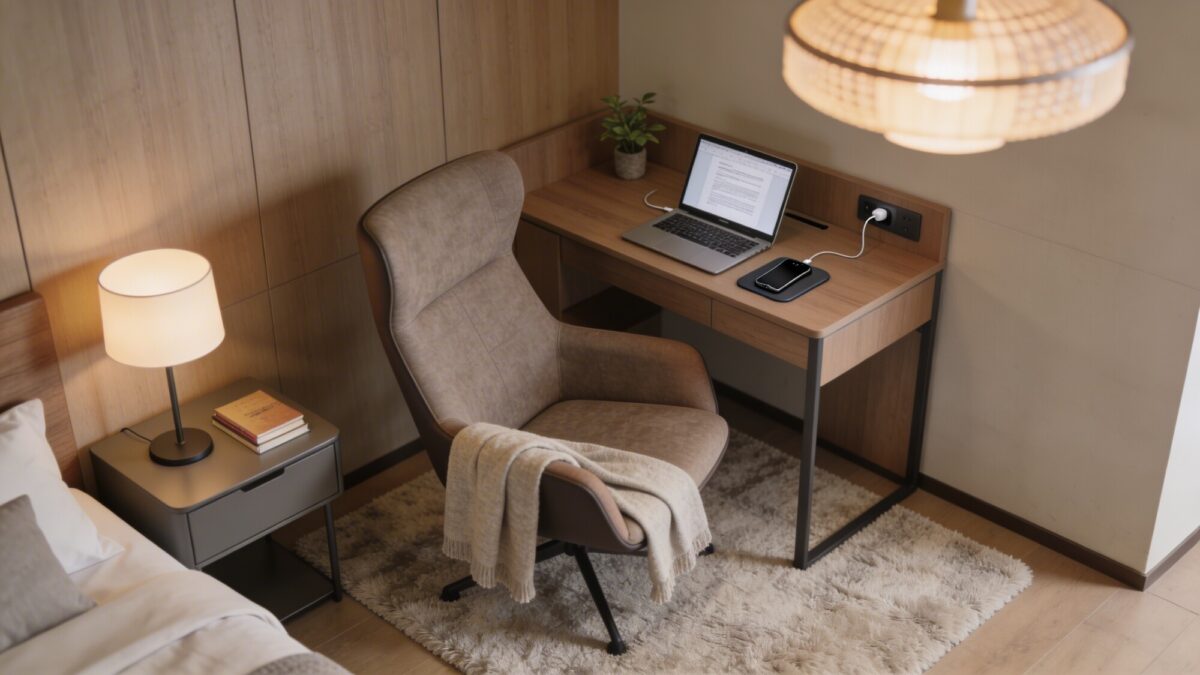
Not every guest wants to lie in bed scrolling their phone the whole visit. Some need to answer email for twenty minutes; others just want a chair that isn’t the bed to read in. One upholstered accent chair with a small side table covers both, and it does it without turning the room into an office.
If there’s a genuine need for a workspace — a guest who works remotely, a college kid home for the summer — a compact desk with a wired outlet and a USB port solves it. In rooms too small for a permanent desk, a fold-down wall-mounted table takes up almost no space when it’s not in use, which matters more than it sounds like it would in a 10-by-11 room.
For a deeper look at balancing a real workspace with a room that still needs to feel like a bedroom, see this breakdown of guest bedroom home office design.
4. Lighting That Works at 6 a.m. and 11 p.m.
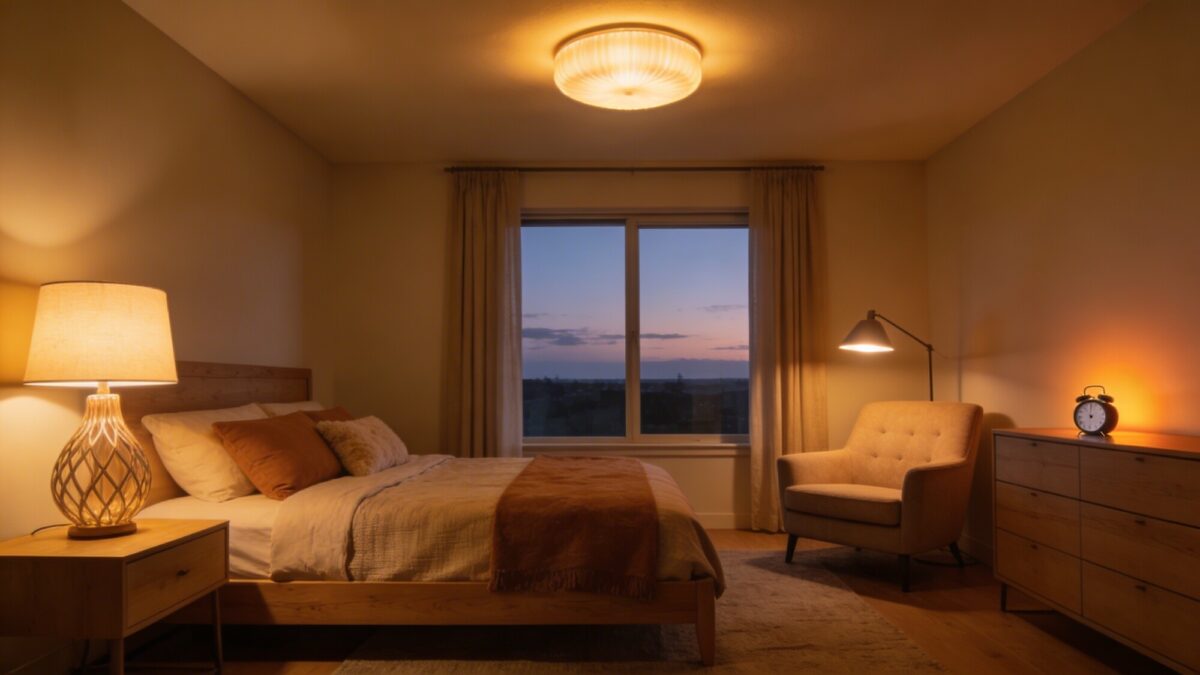
A single ceiling fixture forces an all-or-nothing choice: blazing bright or pitch dark. Neither is what a guest actually wants at 6 a.m. when they’re trying to find their shoes without waking the rest of the house, or at 11 p.m. when they just want enough light to read ten pages before sleep.
Layer it instead: a ceiling fixture for general light, a table lamp on the nightstand, and ideally a dedicated reading lamp if there’s a chair in the room. Put the main fixture on a dimmer if the wiring allows it, and choose warm bulbs in the 2700–3000K range rather than the cooler 4000K+ bulbs meant for kitchens and garages — the difference in how a room feels at night is bigger than the numbers suggest.
Small detail with outsized effect: a sunrise-simulating alarm clock on the dresser helps guests coming from a different time zone adjust faster than blackout curtains alone. It’s a $30–$50 item that consistently gets mentioned in thank-you texts.
5. Color Stories That Actually Help Guests Sleep
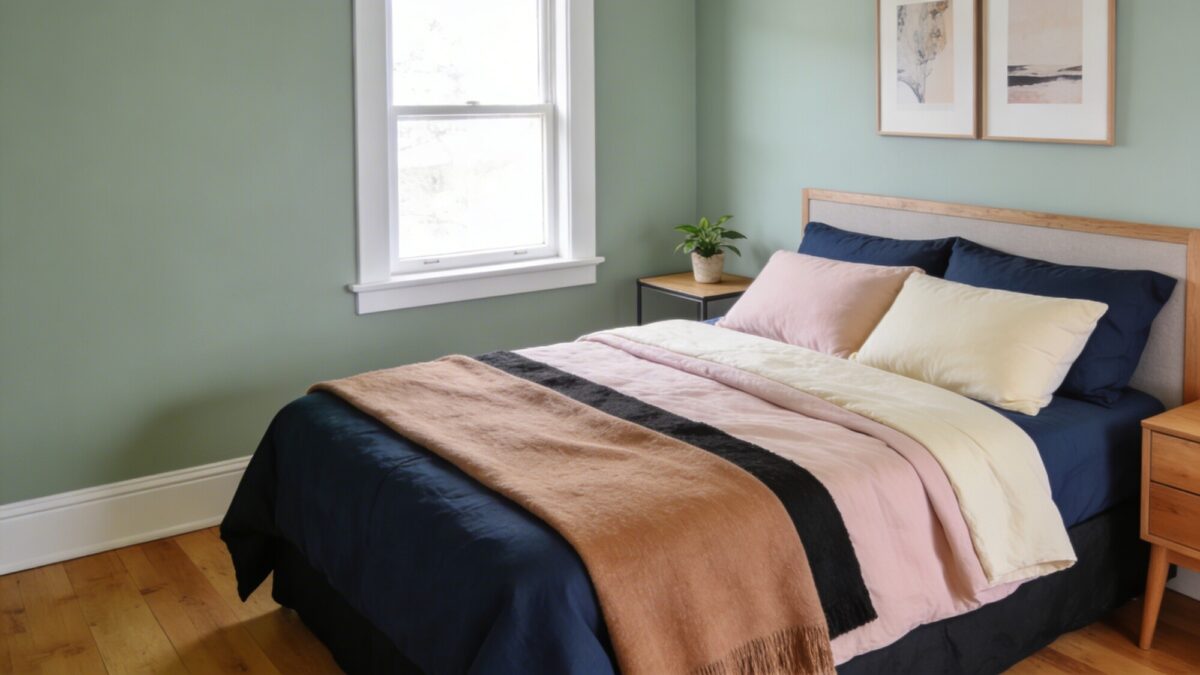
Color does more work than most people give it credit for. A high-contrast, high-saturation room can look great in photos and still feel stimulating to sleep in. A guest bedroom benefits from restraint: one calm wall color, natural wood tones, and two or three accent colors carried through textiles rather than paint.
A few combinations that hold up well in a guest room, in person and not just in photos:
| Palette | Wall Color Direction | Best For |
|---|---|---|
| Soft sage + white trim | Muted green with natural wood accents | Rooms with good natural light |
| Warm taupe + charcoal | Neutral base with darker textile accents | North-facing or lower-light rooms |
| Muted navy + blush | One deeper accent wall, rest kept pale | Rooms where you want a focal point |
Put the boldest color on the smallest surfaces — a throw pillow, a piece of art, a lampshade — rather than the walls. It’s far easier and cheaper to swap out a pillow cover in two years than to repaint an entire room because the color started to feel dated.
Mid-Century Modern: A Style Direction Worth Considering
If the seven ideas above sound right but you want a specific aesthetic to build around rather than assembling pieces one at a time, a mid-century modern bedroom is one of the more forgiving styles for a guest room specifically. It reads as intentional without demanding a full remodel, and most of the furniture shapes it relies on — tapered legs, low profiles, warm wood — are widely available at a range of price points.
A mid-century modern bedroom design leans on a few repeatable choices rather than a long shopping list:
- Low, tapered-leg furniture. A platform bed frame with exposed wooden legs and a headboard with clean, unfussy lines is the anchor piece of the whole look.
- A mid-century modern bedside table with function to match. Look for a small two-drawer table in walnut or teak-toned wood — enough surface for a lamp and a book, with drawer storage for chargers and glasses. Brands like West Elm and even IKEA’s Idanäs or Malm lines carry approximations in the $100–$250 range; true vintage or reproduction pieces from a dealer run higher, closer to $300–$600.
- Warm wood tones as the visual constant. Walnut and teak finishes tie the room together even if the rest of the furniture is mismatched in origin — a modern bed frame and a thrifted mid-century dresser can sit in the same room without clashing, as long as the wood tones are in the same family.
Mid-century modern bedroom paint colors tend to run warmer and more muted than a strictly Scandinavian-minimalist palette: think mustard, burnt orange, olive, or a deep teal used as an accent wall, paired with a warm white or greige as the base. Benjamin Moore’s “Kendall Charcoal” or “Guilford Green” and Sherwin-Williams’ “Roycroft Bronze Green” are common go-tos in this style, though any warm, slightly muted tone in that family will read correctly.
For a mid-century modern bedroom setup on a real budget, prioritize in this order: bed frame and bedside table first (they set the silhouette of the whole room), a single statement light fixture second (a sputnik or arc floor lamp does a lot of visual work), and decor last. A common mistake is buying the decor — the ceramic vases, the abstract art, the throw pillows — before the furniture silhouette is settled, which usually means redoing the decor once the bigger pieces arrive and don’t match the mood you built around them.
The trade-off with a full mid-century modern bedroom aesthetic: it’s a strong, recognizable look, which means it dates a room to a specific style era in a way that a more neutral modern approach doesn’t. If you expect to sell the house or re-decorate within a few years, keep the boldest mid-century modern bedroom decor choices — the accent wall, the statement light — in the cheapest, easiest-to-change elements.
6. Thoughtful Tech, Kept Out of Sight
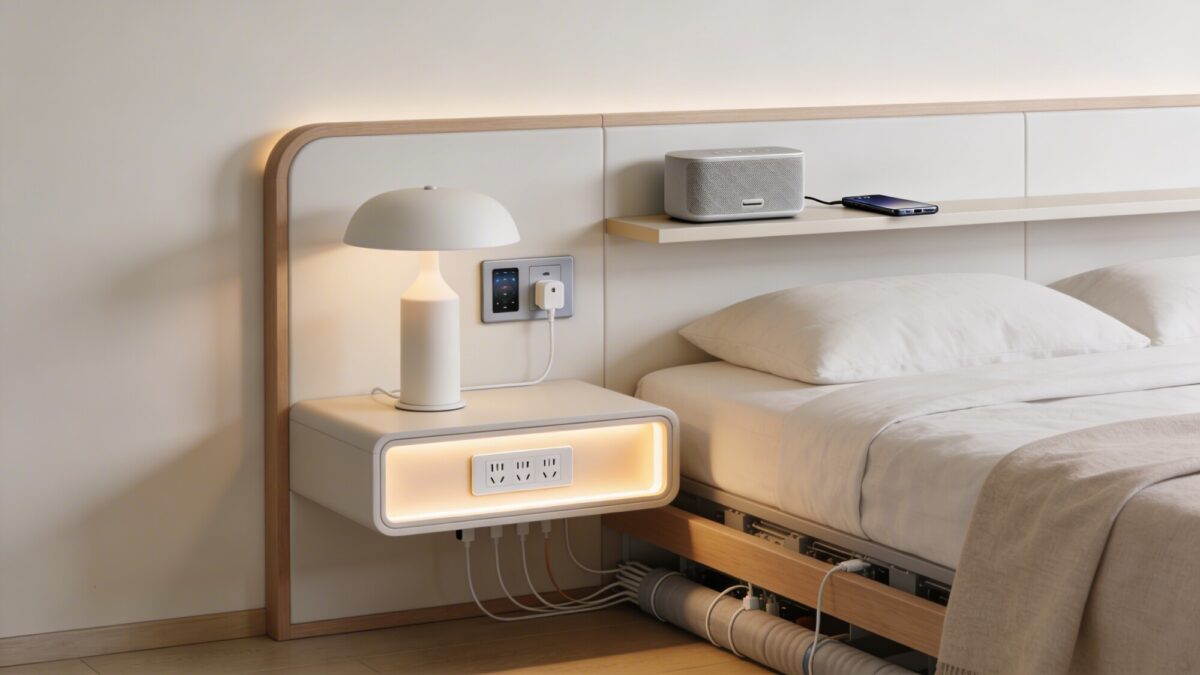
Guests need to charge a phone, and increasingly a laptop and a smartwatch too. The room should make that easy without looking like a charging station at an airport gate. A nightstand with a built-in USB port, or a small charging cable tucked into a cable sleeve and run along the back of the nightstand, solves the practical problem while keeping the surface clear.
A smart plug on the bedside lamp is a nice touch if the household already uses that ecosystem, but it’s not worth setting up for a guest who’ll be there two nights and doesn’t know the app. Simpler is usually better here: a lamp with an accessible switch, an outlet within reach of the bed, and cables that aren’t visible from the doorway. For more on pairing a pared-back tech setup with an overall minimalist look, this guide on minimalist modern bedroom ideas is a useful next stop.
7. A Small Bedside Welcome
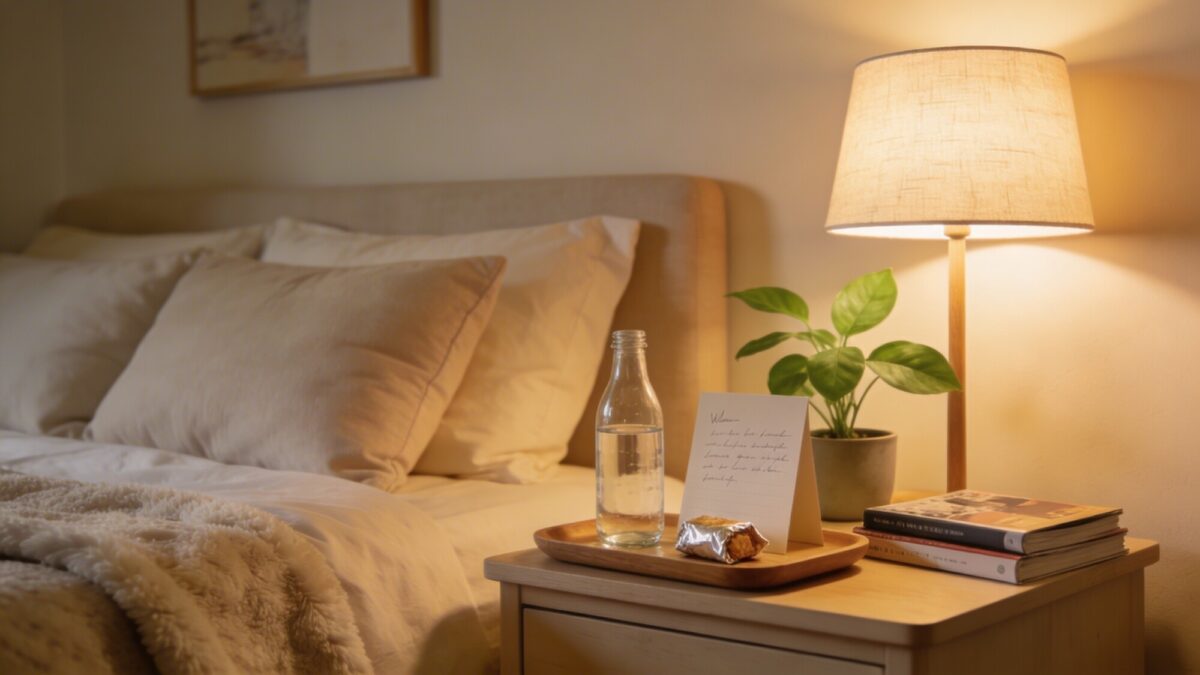
This is the cheapest item on the list and consistently the one guests mention. A small tray on the nightstand with a bottle of water, one wrapped snack, and a short handwritten note takes five minutes to put together and signals, more than any piece of furniture can, that the room was set up for them specifically.
Add one or two books that suit the guest, not just whatever’s lying around — a novel for a friend who reads on vacation, a local guidebook for someone visiting the area for the first time. It’s a small detail, but it’s the difference between a room that was cleaned for guests and a room that was set up for a guest. For more ways to build that same sense of welcome throughout the room, see this list of cozy guest bedroom ideas.
Things to Consider Before You Start
- Measure the room before buying a bed frame with storage — drawer clearance needs walking space on at least one side, which not every small guest room has.
- Decide your budget ceiling before you start browsing furniture, not after; storage beds and mid-century pieces both have a wide price range and it’s easy to overspend by chasing a look.
- Wash new sheets before the first guest arrives — new percale can feel stiff for the first wash or two.
- Test the lighting at night, not just during the day, before deciding it’s “done.”
- If you’re short on funds, prioritize storage and bedding over decor — this order has the biggest guest-comfort payoff per dollar. This budget guest bedroom guide walks through the same trade-offs in more detail.
Frequently Asked Questions
What’s the single biggest upgrade for a guest bedroom on a tight budget?
New bedding. A good percale sheet set and a lightweight duvet cost less than most furniture and have the most direct effect on how well a guest actually sleeps.
Is a mid-century modern bedroom hard to pull off in a small guest room?
No — if anything, it tends to work better in a small room than a maximalist or heavily layered style, because the furniture silhouettes are low and simple. The main risk is over-buying accent pieces before the core furniture (bed and bedside table) is settled.
Should I use white or colored bedding in a guest room?
White is easiest to bleach clean between guests but shows stains fastest. A soft neutral like oatmeal or dove gray hides minor stains better while still photographing well.
Do I need a desk in a modern guest bedroom?
Only if guests regularly need to work. A fold-down wall-mounted table is a better use of space than a permanent desk if the need is occasional.
What bulb temperature should I use in a guest room?
Stick to warm white, 2700–3000K. Cooler bulbs above 4000K read as clinical and work against the relaxed feel a guest room needs.
How do I keep a mid-century modern room from looking dated in five years?
Keep the boldest, most style-specific choices — an accent wall color, a statement light fixture — on the cheapest, easiest-to-replace elements, and let the furniture (bed frame, nightstand) stay closer to timeless.
Our Take
Start with storage and bedding. Those two changes affect a guest’s actual experience more than anything else on this list, and they’re the cheapest to get right. Lighting and color come next — both are one-afternoon projects with an outsized payoff. Save the mid-century modern furniture overhaul for last, and only commit to it if the look genuinely appeals to you, not because it photographs well. A guest room that’s comfortable in a plain, unstyled way will always beat a guest room that looks great in a photo and sleeps poorly.