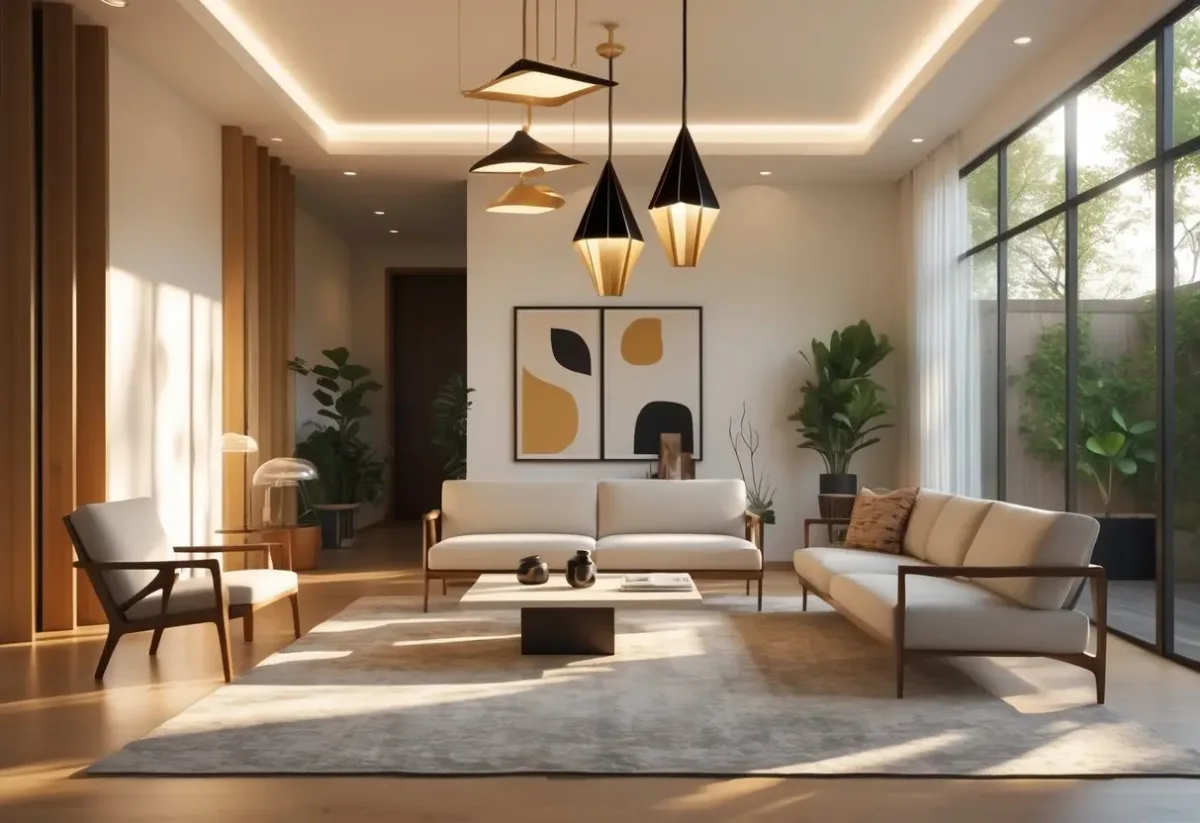
You want a living room that feels timeless, warm, and smart. Mid-century modern lighting gives you that by mixing simple shapes, warm finishes, and surprising silhouettes that work with both vintage pieces and new furniture. Choose fixtures that balance form and function—statement pendants or a sculptural floor lamp can set the tone while layered lighting keeps the room comfortable for everyday life. This article will show what makes mid-century lighting distinct, which fixture types create the right mood, and how to pick and place lights so your space looks intentional and livable. It will also offer styling tips and where to find and care for authentic pieces so you can build a cohesive look without guesswork. Table of ContentsKey Characteristics of Mid Century Modern Living Room LightingDefining Mid Century Modern AestheticsCommon Lighting Materials and FinishesSignature Lighting Shapes and FeaturesTypes of Mid Century Modern Lighting FixturesPendant LightsFloor LampsTable LampsSconcesHow to Choose the Right Lighting for Your Living RoomAssessing Natural LightBalancing Ambient and Task LightingColor Temperature ConsiderationsStyling Tips for Incorporating Mid Century Modern LightingFocal Point Lighting PlacementPairing with Furniture and DecorMixing Vintage and Modern PiecesSourcing and Maintaining Mid Century Modern LightingWhere to Find Authentic and Replica PiecesBasic Cleaning and Care Key Characteristics of Mid Century Modern Living Room Lighting Mid-century modern living room lighting balances form and function. It mixes clean shapes, warm light, and practical placement to shape mood and use. Defining Mid Century Modern Aesthetics Mid-century modern lighting emphasizes simple, uncluttered lines and practical design. Fixtures avoid excess ornament and favor geometric forms that complement furniture silhouettes. Lamps often serve as focal points while remaining functional for reading or ambient light. Designers used layered lighting: overhead pendants for general light, floor lamps for task lighting, and sconces for accent or wall wash. Color stays restrained—muted tones, black, white, and warm metallics—so the lighting supports the room without competing with it. Scale matters; fixtures are sized to proportionally fit low-profile sofas and open layouts common to the style. Common Lighting Materials and Finishes Materials focus on durability and visual warmth. Wood bases and accents pair with metal arms or shades to add texture and contrast. Brass and brushed bronze finishes warm a room and age gracefully. Glass shades—often opal or frosted—soften light and reduce glare. Painted metal in matte black or muted colors appears on pendants and task lamps. Fabric shades appear less often but provide a softer, diffused glow when used. These material choices help fixtures feel both modern and inviting. 12.4” Boho Rattan Chandelier Light Fixture, 1-Light Hand Woven Pe… [BOHO CHIC] This Boho Rattan Chandelier is handwoven by skilled artisans. The light gently filters through the woven rat… [VERSATILITY & E26 BULB] Equipped with a standard E26 socket, our Rattan Chandelier Light Fixture is adaptable to variou… [EASY INSTALLATION] With its high-quality integrated structure that requires no assembly, setting up this rattan chandel… $64.99 Buy on Amazon Signature Lighting Shapes and Features Mid-century pieces show recognizable silhouettes: sweeping arc floor lamps, multi-arm sputnik chandeliers, and conical pendant shades. These shapes create visual interest without ornate detail. Key features include adjustable arms or swiveling heads for task flexibility. Clustered bulbs and sputnik forms provide balanced ambient light while sculptural pendants offer focused illumination over seating or tables. Shades often direct light down or diffuse it evenly, supporting layered lighting strategies that suit living room activities. Q&S Modern Gold Crystal Chandelier Amber Crystal Pendant Light 6 … Design & Glamour: This modern crystal chandelier offers a unique & shimmering with colored refraction amber gold real cr… Versatile Lighting Solution:With dimensions of D17 IN x H28.74 IN also with 47.3 IN chain and 6 E12 bulb sockets,this go… Ideal for Any Room: Whether you’re looking to add a touch of luxury to your dining area or kitchen island, create a rela… $125.99 Buy on Amazon Types of Mid Century Modern Lighting Fixtures Mid-century modern lighting favors clean shapes, mixed materials, and practical placement. Fixtures often act as focal points while providing layered, usable light for tasks and ambiance. Pendant Lights Pendant lights in this style often show simple geometric shapes: domes, globes, cones, or multi-arm clusters. Materials like brass, matte metal, blown glass, and teak details are common. These pendants hang low over dining tables or seating groups to create task light and a visual anchor. Choose single large pendants for a bold statement, or cluster several smaller globes at staggered heights for a sculptural look. Adjustable-height models and swivel canopies help with proportional balance in rooms with varying ceiling heights. Warm white bulbs and coated glass shades reduce glare and preserve the period look. Floor Lamps Floor lamps serve both task and ambient roles and often feature slim, sculptural profiles. Look for arc lamps with sweeping arms, tripod bases, or multi-headed designs that direct light where needed. Finishes typically include brass, black metal, or walnut wood accents. Place an arc lamp next to a sofa for reading, or use a tripod lamp in a corner to fill dark zones. Multi-head floor lamps provide layered illumination without ceiling work. Lamps with adjustable heads or dimmers give practical control for reading, TV time, or mood lighting. Table Lamps Table lamps provide focused light on side tables, consoles, or bedside tables and often show ceramic, glass, or metal bases with compact drum or tapered shades. Patterned pottery bases, globe bulbs, and lampholders with visible hardware nod to the era. Pick lamps with base heights that suit the seating height—typically 24–30 inches for living room side tables. Paired lamps on a console or flanking a sofa create symmetry. Choose fabric or frosted glass shades to soften light and keep eye comfort while maintaining mid-century proportions. Sconces Sconces add wall-level illumination and serve as sculptural accents. Expect arm-mounted single shades, backplates with radial arms, or adjustable swing-arm designs. Finishes often include brass, satin nickel, or blackened metal paired with opal glass or cone shades. Install sconces beside artwork, above sideboards, or to frame a fireplace. Adjustable sconces work well for reading nooks or near seating. Hardwired models create cleaner lines; plug-in versions offer easier placement and flexibility. How to Choose the Right Lighting for Your Living Room Focus on how much daylight reaches the room, where people sit and read, and the bulb color that best suits wood tones and brass finishes. Measure window sizes, map common seating zones, and decide on warm or neutral LEDs to match mid-century materials. Assessing Natural Light They should note how sunlight moves through the room across the day. Check window orientation: south- and west-facing rooms get stronger, warmer light; north-facing rooms stay cool and diffuse. Record bright, dim, and shadowed spots at midday and late afternoon. Measure window size and glass type. Add numbers: single-pane, double-pane, or low-E glass affect brightness and glare. Consider nearby trees or buildings that block light and plan artificial sources for those shaded areas. Use simple tools: a smartphone camera helps judge glare and contrast. Also consider window treatments that filter rather than block light—sheer curtains or blinds with adjustable slats keep the mid-century look while controlling sun angles. Balancing Ambient and Task Lighting They should layer light: start with a central ambient fixture, add task lights for reading and hobbies, then include accent lights for art or architecture. For ambient light, choose a fixture that suits mid-century scale—an eight-armed chandelier or a low-profile ceiling light for lower ceilings. Place task lighting near seating and work areas. Use adjustable floor lamps or table lamps with directional heads beside sofas and chairs. Aim for 300–500 lux at reading spots; LED bulbs of 8–12 watts (equivalent to 60–100W incandescent) usually work. Add accent lighting to highlight wall art, a media console, or a textured wall. Small wall washers or picture lights with warm output reinforce the mid-century palette without overpowering the room. Use dimmers to control brightness for each layer. Color Temperature Considerations They should match bulb color to wood tones, brass, and fabric. Warm white (2700K–3000K) complements walnut, teak, and brass finishes common in mid-century pieces. Cooler white (3500K–4000K) can work for contemporary inserts but may clash with warm woods. Decide on consistent temperature across fixtures to avoid mixed color casts. If a specific task needs clearer light—like needlework—use a single lamp with slightly higher K, but keep surrounding lights warm to maintain cohesion. Choose LEDs with CRI 90+ for accurate color rendering of upholstery and artwork. Use dimmable LEDs and set dimmer ranges so brightness and color remain pleasing at low levels. Styling Tips for Incorporating Mid Century Modern Lighting Place lights where they balance function and shape. Choose fixtures that add sculptural interest, warm light, and clear sightlines. Focal Point Lighting Placement Place a statement pendant or chandelier over the main seating area or coffee table so it anchors the room visually. Hang pendants 28–34 inches above a table in a standard ceiling room; raise by 3–6 inches for taller ceilings. For seating areas, center the fixture over the main sofa or rug to draw the eye. Use floor lamps to create layered zones. Position an arc or tripod floor lamp beside a reading chair or behind the sofa to add height and direct task light. Keep at least 18–24 inches clearance between lamp base and side table edge to avoid crowding. Balance scale and sightlines. Large Sputnik or sputnik-style fixtures suit high ceilings; smaller multi-arm or globe fixtures work in compact rooms. Aim for even light distribution with a mix of ambient, task, and accent sources. Pairing with Furniture and Decor Match fixture finish and form to key furniture pieces for cohesion. Warm walnut or teak pairs well with brass, matte black, and frosted glass. If the room has a walnut media console, choose a lamp base with warm metal tones or wood accents for visual harmony. Contrast shapes to add interest. Pair a round globe pendant with a rectangular coffee table, or a slim arc lamp with chunky lounge chairs. Keep color accents in pillows or art to echo a fixture’s hue, tying the scheme together without matching everything. Consider scale and proportion. A low-profile sofa needs lower-hanging pendants; a club chair invites a taller task lamp. Place small table lamps on narrow side tables; use taller fixtures where furniture sits off the wall. Mixing Vintage and Modern Pieces Start with one authentic vintage fixture as the anchor. Let that piece set the era and mood for the room. Pair it with simpler, modern lighting to avoid a cluttered or costume-like result. Use consistent finishes to unify old and new. If the vintage lamp has brass, choose contemporary fixtures with brass accents or complementary metals. Alternatively, mix metals deliberately but keep one dominant finish to prevent visual conflict. Mind condition and wiring for safety. Have vintage wiring inspected or rewired by a pro before installation. If the exact vintage look is needed but safety is a concern, choose reproduction pieces that copy mid-century forms with up-to-date electrical standards. Sourcing and Maintaining Mid Century Modern Lighting This section explains where buyers can locate authentic or reproduction mid-century fixtures and how to keep them working and looking their best. It covers trusted sources, what to check before buying, and simple cleaning and upkeep steps to protect finishes and wiring. Where to Find Authentic and Replica Pieces Buyers can find authentic mid-century lighting at reputable antique shops, auction houses, and specialized vintage dealers. Look for makers’ marks, original wiring, and period-appropriate materials like brass, blown glass, and teak. Ask the seller for provenance, photos of close-up details, and any restoration records. For quality replicas, check well-known design brands and licensed reissues. Read product specifications to confirm solid metal parts, tempered glass, and UL listing for safety. Avoid cheap knockoffs with thin sheet metal or brittle plastic shades. Online marketplaces work well, but inspect listings closely. Request clear measurements, return policies, and photos of the socket, canopy, and fasteners. When possible, buy from sellers who offer local pickup or insured shipping. Basic Cleaning and Care Start by turning off power and removing bulbs before cleaning. Dust shades and arms with a soft microfiber cloth or a soft-bristled brush to avoid scratching painted or plated surfaces. Use mild soap and warm water for glass and ceramic parts. Dry immediately with a lint-free cloth to prevent water spots. For brass or chrome, use a non-abrasive metal cleaner and follow the product instructions; test on a small area first. Check wiring every few years, especially on vintage pieces. If insulation looks brittle or cloth-covered cords fray, have a licensed electrician rewire the fixture. Replace old sockets with new UL-rated parts when necessary. Tighten loose screws and check mounting hardware regularly. Use felt pads when placing metal bases on wood to prevent scratches. Store extra shades and small parts in a labeled box to avoid damage or loss.
You want a living room that feels timeless, warm, and smart. Mid-century modern lighting gives you that by mixing simple shapes, warm finishes, and surprising silhouettes that work with both vintage pieces and new furniture. Choose fixtures that balance form and function—statement pendants or a sculptural floor lamp can set the tone while layered lighting keeps the room comfortable for everyday life.
This article will show what makes mid-century lighting distinct, which fixture types create the right mood, and how to pick and place lights so your space looks intentional and livable. It will also offer styling tips and where to find and care for authentic pieces so you can build a cohesive look without guesswork.
Mid-century modern living room lighting balances form and function. It mixes clean shapes, warm light, and practical placement to shape mood and use.
Defining Mid Century Modern Aesthetics
Mid-century modern lighting emphasizes simple, uncluttered lines and practical design. Fixtures avoid excess ornament and favor geometric forms that complement furniture silhouettes. Lamps often serve as focal points while remaining functional for reading or ambient light.
Designers used layered lighting: overhead pendants for general light, floor lamps for task lighting, and sconces for accent or wall wash. Color stays restrained—muted tones, black, white, and warm metallics—so the lighting supports the room without competing with it. Scale matters; fixtures are sized to proportionally fit low-profile sofas and open layouts common to the style.
Common Lighting Materials and Finishes
Materials focus on durability and visual warmth. Wood bases and accents pair with metal arms or shades to add texture and contrast. Brass and brushed bronze finishes warm a room and age gracefully.
Glass shades—often opal or frosted—soften light and reduce glare. Painted metal in matte black or muted colors appears on pendants and task lamps. Fabric shades appear less often but provide a softer, diffused glow when used. These material choices help fixtures feel both modern and inviting.
Mid-century pieces show recognizable silhouettes: sweeping arc floor lamps, multi-arm sputnik chandeliers, and conical pendant shades. These shapes create visual interest without ornate detail.
Key features include adjustable arms or swiveling heads for task flexibility. Clustered bulbs and sputnik forms provide balanced ambient light while sculptural pendants offer focused illumination over seating or tables. Shades often direct light down or diffuse it evenly, supporting layered lighting strategies that suit living room activities.
Mid-century modern lighting favors clean shapes, mixed materials, and practical placement. Fixtures often act as focal points while providing layered, usable light for tasks and ambiance.
Pendant Lights
Pendant lights in this style often show simple geometric shapes: domes, globes, cones, or multi-arm clusters. Materials like brass, matte metal, blown glass, and teak details are common. These pendants hang low over dining tables or seating groups to create task light and a visual anchor.
Choose single large pendants for a bold statement, or cluster several smaller globes at staggered heights for a sculptural look. Adjustable-height models and swivel canopies help with proportional balance in rooms with varying ceiling heights. Warm white bulbs and coated glass shades reduce glare and preserve the period look.
Floor Lamps
Floor lamps serve both task and ambient roles and often feature slim, sculptural profiles. Look for arc lamps with sweeping arms, tripod bases, or multi-headed designs that direct light where needed. Finishes typically include brass, black metal, or walnut wood accents.
Place an arc lamp next to a sofa for reading, or use a tripod lamp in a corner to fill dark zones. Multi-head floor lamps provide layered illumination without ceiling work. Lamps with adjustable heads or dimmers give practical control for reading, TV time, or mood lighting.
Table Lamps
Table lamps provide focused light on side tables, consoles, or bedside tables and often show ceramic, glass, or metal bases with compact drum or tapered shades. Patterned pottery bases, globe bulbs, and lampholders with visible hardware nod to the era.
Pick lamps with base heights that suit the seating height—typically 24–30 inches for living room side tables. Paired lamps on a console or flanking a sofa create symmetry. Choose fabric or frosted glass shades to soften light and keep eye comfort while maintaining mid-century proportions.
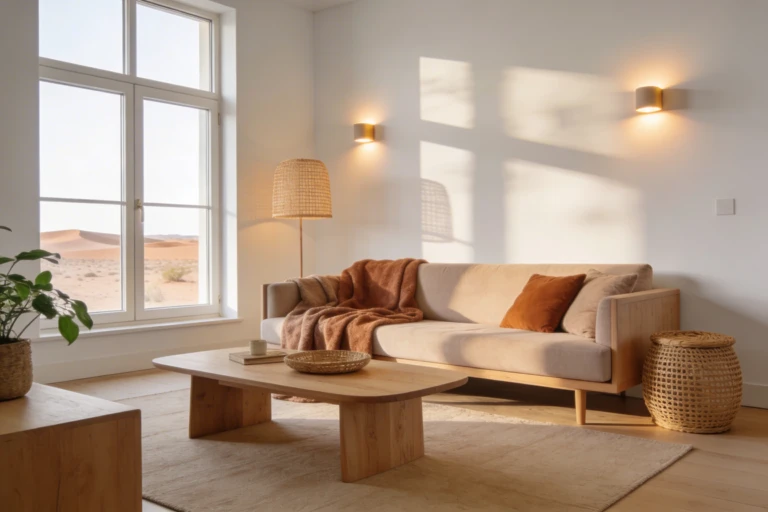
Sconces add wall-level illumination and serve as sculptural accents. Expect arm-mounted single shades, backplates with radial arms, or adjustable swing-arm designs. Finishes often include brass, satin nickel, or blackened metal paired with opal glass or cone shades.
Install sconces beside artwork, above sideboards, or to frame a fireplace. Adjustable sconces work well for reading nooks or near seating. Hardwired models create cleaner lines; plug-in versions offer easier placement and flexibility.
How to Choose the Right Lighting for Your Living Room
Focus on how much daylight reaches the room, where people sit and read, and the bulb color that best suits wood tones and brass finishes. Measure window sizes, map common seating zones, and decide on warm or neutral LEDs to match mid-century materials.
Assessing Natural Light
They should note how sunlight moves through the room across the day. Check window orientation: south- and west-facing rooms get stronger, warmer light; north-facing rooms stay cool and diffuse. Record bright, dim, and shadowed spots at midday and late afternoon.
Measure window size and glass type. Add numbers: single-pane, double-pane, or low-E glass affect brightness and glare. Consider nearby trees or buildings that block light and plan artificial sources for those shaded areas.
Use simple tools: a smartphone camera helps judge glare and contrast. Also consider window treatments that filter rather than block light—sheer curtains or blinds with adjustable slats keep the mid-century look while controlling sun angles.
Balancing Ambient and Task Lighting
They should layer light: start with a central ambient fixture, add task lights for reading and hobbies, then include accent lights for art or architecture. For ambient light, choose a fixture that suits mid-century scale—an eight-armed chandelier or a low-profile ceiling light for lower ceilings.
Place task lighting near seating and work areas. Use adjustable floor lamps or table lamps with directional heads beside sofas and chairs. Aim for 300–500 lux at reading spots; LED bulbs of 8–12 watts (equivalent to 60–100W incandescent) usually work.
Add accent lighting to highlight wall art, a media console, or a textured wall. Small wall washers or picture lights with warm output reinforce the mid-century palette without overpowering the room. Use dimmers to control brightness for each layer.
Color Temperature Considerations
They should match bulb color to wood tones, brass, and fabric. Warm white (2700K–3000K) complements walnut, teak, and brass finishes common in mid-century pieces. Cooler white (3500K–4000K) can work for contemporary inserts but may clash with warm woods.
Decide on consistent temperature across fixtures to avoid mixed color casts. If a specific task needs clearer light—like needlework—use a single lamp with slightly higher K, but keep surrounding lights warm to maintain cohesion.
Choose LEDs with CRI 90+ for accurate color rendering of upholstery and artwork. Use dimmable LEDs and set dimmer ranges so brightness and color remain pleasing at low levels.
Styling Tips for Incorporating Mid Century Modern Lighting
Place lights where they balance function and shape. Choose fixtures that add sculptural interest, warm light, and clear sightlines.
Focal Point Lighting Placement
Place a statement pendant or chandelier over the main seating area or coffee table so it anchors the room visually. Hang pendants 28–34 inches above a table in a standard ceiling room; raise by 3–6 inches for taller ceilings. For seating areas, center the fixture over the main sofa or rug to draw the eye.
Use floor lamps to create layered zones. Position an arc or tripod floor lamp beside a reading chair or behind the sofa to add height and direct task light. Keep at least 18–24 inches clearance between lamp base and side table edge to avoid crowding.
Balance scale and sightlines. Large Sputnik or sputnik-style fixtures suit high ceilings; smaller multi-arm or globe fixtures work in compact rooms. Aim for even light distribution with a mix of ambient, task, and accent sources.
Pairing with Furniture and Decor
Match fixture finish and form to key furniture pieces for cohesion. Warm walnut or teak pairs well with brass, matte black, and frosted glass. If the room has a walnut media console, choose a lamp base with warm metal tones or wood accents for visual harmony.
Contrast shapes to add interest. Pair a round globe pendant with a rectangular coffee table, or a slim arc lamp with chunky lounge chairs. Keep color accents in pillows or art to echo a fixture’s hue, tying the scheme together without matching everything.
Consider scale and proportion. A low-profile sofa needs lower-hanging pendants; a club chair invites a taller task lamp. Place small table lamps on narrow side tables; use taller fixtures where furniture sits off the wall.
Mixing Vintage and Modern Pieces
Start with one authentic vintage fixture as the anchor. Let that piece set the era and mood for the room. Pair it with simpler, modern lighting to avoid a cluttered or costume-like result.
Use consistent finishes to unify old and new. If the vintage lamp has brass, choose contemporary fixtures with brass accents or complementary metals. Alternatively, mix metals deliberately but keep one dominant finish to prevent visual conflict.
Mind condition and wiring for safety. Have vintage wiring inspected or rewired by a pro before installation. If the exact vintage look is needed but safety is a concern, choose reproduction pieces that copy mid-century forms with up-to-date electrical standards.
Sourcing and Maintaining Mid Century Modern Lighting
This section explains where buyers can locate authentic or reproduction mid-century fixtures and how to keep them working and looking their best. It covers trusted sources, what to check before buying, and simple cleaning and upkeep steps to protect finishes and wiring.
Where to Find Authentic and Replica Pieces
Buyers can find authentic mid-century lighting at reputable antique shops, auction houses, and specialized vintage dealers. Look for makers’ marks, original wiring, and period-appropriate materials like brass, blown glass, and teak. Ask the seller for provenance, photos of close-up details, and any restoration records.
For quality replicas, check well-known design brands and licensed reissues. Read product specifications to confirm solid metal parts, tempered glass, and UL listing for safety. Avoid cheap knockoffs with thin sheet metal or brittle plastic shades.
Online marketplaces work well, but inspect listings closely. Request clear measurements, return policies, and photos of the socket, canopy, and fasteners. When possible, buy from sellers who offer local pickup or insured shipping.
Basic Cleaning and Care
Start by turning off power and removing bulbs before cleaning. Dust shades and arms with a soft microfiber cloth or a soft-bristled brush to avoid scratching painted or plated surfaces.
Use mild soap and warm water for glass and ceramic parts. Dry immediately with a lint-free cloth to prevent water spots. For brass or chrome, use a non-abrasive metal cleaner and follow the product instructions; test on a small area first.
Check wiring every few years, especially on vintage pieces. If insulation looks brittle or cloth-covered cords fray, have a licensed electrician rewire the fixture. Replace old sockets with new UL-rated parts when necessary.
Tighten loose screws and check mounting hardware regularly. Use felt pads when placing metal bases on wood to prevent scratches. Store extra shades and small parts in a labeled box to avoid damage or loss.
Listen to this article 10 10 0:00 / 0:00 Speed 0.75×1×1.25×1.5×2× Modern farmhouse living room inspiration gets reduced to shiplap and a barn-door TV console more often than it should. The style holds up a lot better than that when it’s built on the actual fundamentals — texture, natural materials, warm lighting, and a layout…
Listen to this article 10 10 0:00 / 0:00 Speed 0.75×1×1.25×1.5×2× Most “living room inspiration” roundups show you a styled photo and stop there — no mention of what it costs to get close to that look, what falls apart after six months with a dog or a toddler, or which choices actually suit a…
Listen to this article 10 10 0:00 / 0:00 Speed 0.75×1×1.25×1.5×2× You want a living room rug that lifts your space and ties together furniture, color, and texture with a clear mid-century modern vibe. This article helps you find seven strong mid-century modern rugs and shows how to pick and style the right one for your room. You’ll…
Listen to this article 10 10 0:00 / 0:00 Speed 0.75×1×1.25×1.5×2× A brown couch gets an unfair reputation as the boring default — the thing you buy because it hides stains and goes with everything, not because it’s exciting. That’s actually its strength. A brown sofa is a neutral in disguise, which means the room…
Listen to this article 10 10 0:00 / 0:00 Speed 0.75×1×1.25×1.5×2× Open concept living rooms get sold on a promise: more light, more flow, more room to breathe. What nobody tells you is that a wide-open floor plan without any structure just turns into one big room where nothing has a job. If you’ve knocked…
Listen to this article 10 10 0:00 / 0:00 Speed 0.75×1×1.25×1.5×2× An empty wall in a living room is one of the cheapest problems to fix and one of the most avoided. People will reupholster a sofa before they’ll commit to a wall, mostly because a bad paint choice feels permanent in a way that…