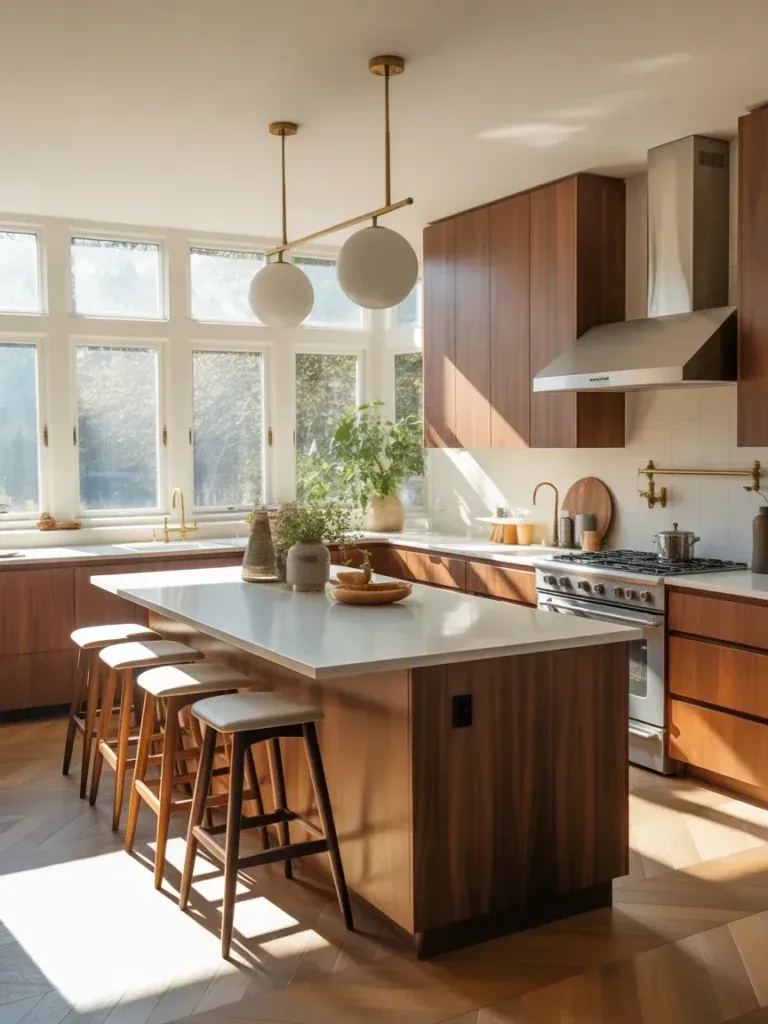
Farmhouse Kitchen Small Space House: Cozy Tech & Charm
Planning a farmhouse kitchen small space house project usually starts with the fun part — cabinet colors, hardware, a Pinterest board — and skips the part that actually decides whether the room works: the daily route between fridge, sink, and stove. Get that wrong and no amount of styling fixes it. Before picking finishes, it’s worth reading through this guide on making a farmhouse kitchen small space feel bigger, since layout decisions here are hard to reverse once cabinets are ordered.
This rundown follows the order most people tackle a small kitchen project in: layout first, then color and light, then furniture, storage, farmhouse details, appliances, and a short plan for getting it done without a full renovation.
Smart Layouts That Make a Big Difference

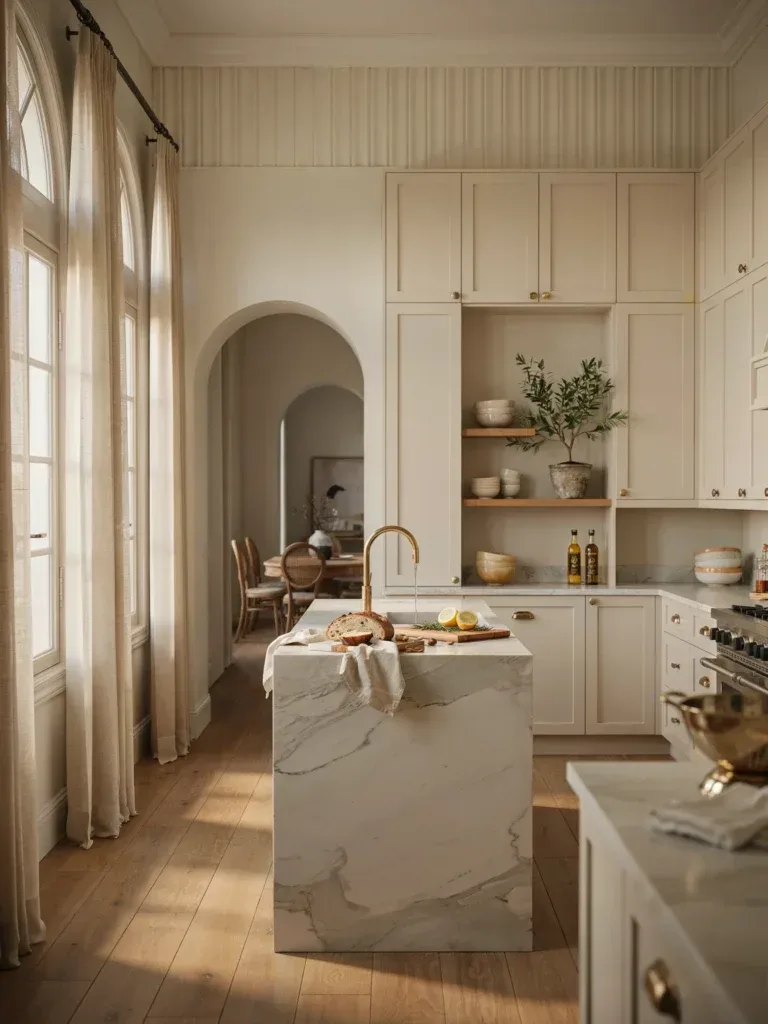
An L-shaped layout with a slim island down the center works in kitchens as narrow as 8 feet wide, provided the island itself is under 24 inches deep — anything wider starts eating the walkway on both sides. White shaker cabinets are the safest starting point if you’re not sure which direction of farmhouse you want yet; they read as small kitchen ideas white cabinets territory without locking you into a specific era of hardware or countertop.
Zones You’ll Actually Use
Map the kitchen into three working zones — prep, cook, clean — before you decide where anything decorative goes. A pendant light over the island isn’t just a style choice here; it marks the prep zone visually, which matters in a small kitchen where there’s no physical separation between zones the way a larger kitchen might have.
💡 Pro Tip: Walk your actual cooking routine — fridge to counter to stove to sink — before finalizing where anything permanent goes. Most small-kitchen layout complaints trace back to one appliance being installed a few feet from where the workflow actually needs it, not to a lack of space.
Color, Texture, and Light: It Feels Bigger When It Feels Fresh

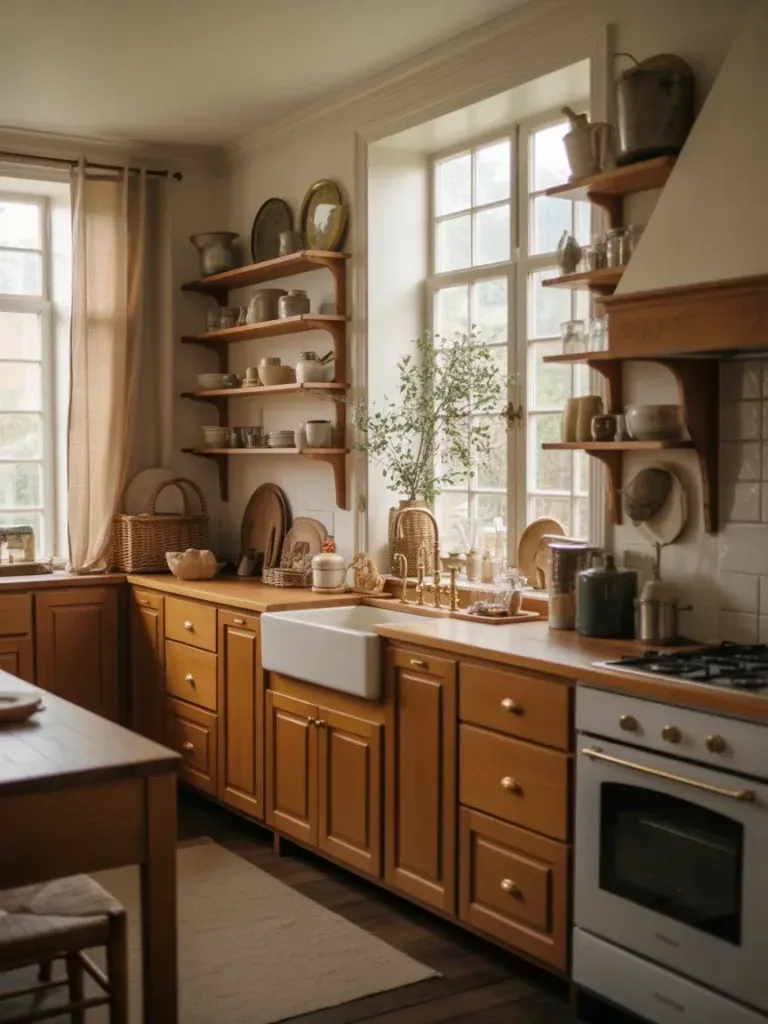
A galley layout with open shelving mounted directly above the counter — rather than full-depth upper cabinets — keeps sightlines open across the room, which is most of what makes a warm farmhouse kitchen feel less boxed-in. Marble or marble-look quartz countertops brighten a galley more than a darker stone would, simply by reflecting more of whatever light is already in the room.
Tile and Countertop Combinations
Pair a light countertop with a textured but light-colored backsplash tile — subway tile in a soft off-white, or a simple beadboard panel — rather than a high-contrast dark tile. High contrast reads dramatic in a large kitchen and busy in a small one.
Furniture That Frees Up Space, Not Clutters It

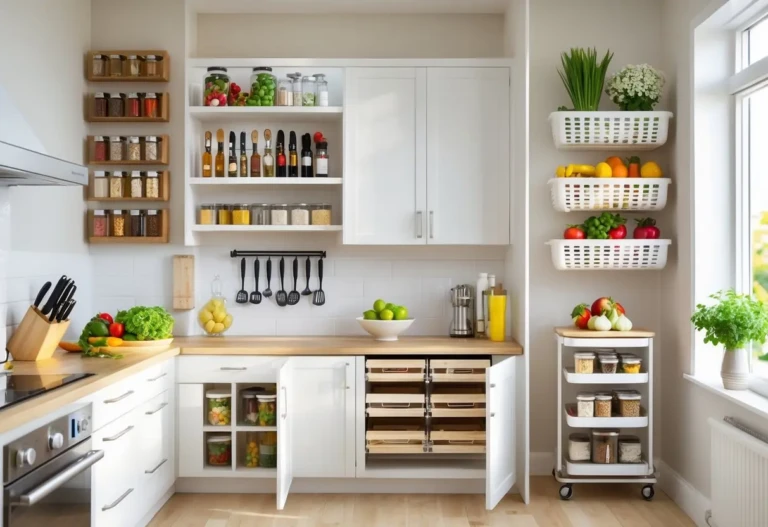
A pegboard mounted near the prep zone does double duty: knives, measuring cups, and small tools hang in view instead of taking up drawer space, and it’s one of the few storage upgrades in a small charming kitchen that costs under $50 and requires no cabinet modification. A pull-out trash can integrated into a lower cabinet is worth the retrofit if you’re currently working around a freestanding bin — it reclaims floor space that matters more in a small kitchen than almost anywhere else in the house.
Seating That Serves Dual Purpose
If you want a farmhouse kitchen with table but don’t have room for a standalone dining set, a narrow drop-leaf table against a wall, raised or lowered as needed, gets you seating for two without a permanent footprint. It’s a compromise, not a full solution — but in genuinely tight square footage, it beats no seating at all.
Storage Hacks So You Never Feel Claustrophobic

Corner cabinets are the most wasted storage in almost every small kitchen — the back third of a standard corner cabinet is functionally unreachable without a lazy Susan or pull-out organizer. Adding one is a modest cost relative to the storage it recovers, and it’s usually the single highest-value retrofit available if your kitchen already has corner cabinetry installed.
Hidden Drawers and Pull-Outs
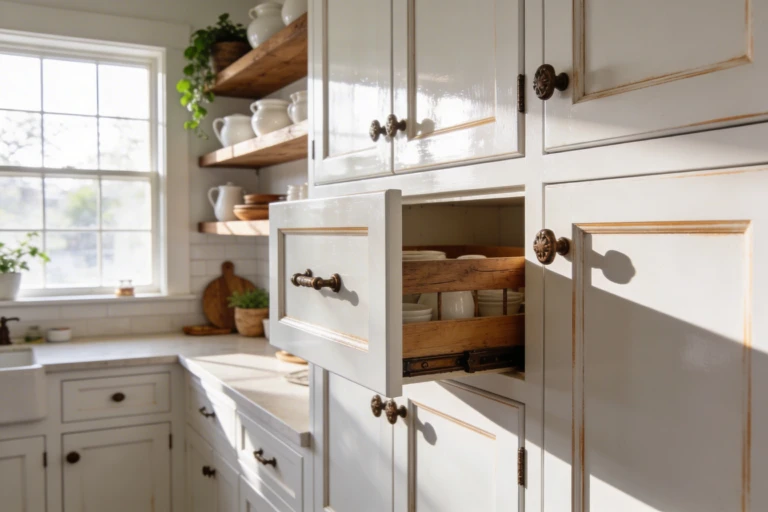
Toe-kick drawers — the thin drawer built into the base of a cabinet at floor level — are easy to overlook but genuinely useful for flat items: baking sheets, cutting boards, a step stool. It’s storage that would otherwise be entirely wasted space.
💡 Pro Tip: Prioritize corner cabinet organizers and toe-kick drawers before adding any new shelving. Both recover storage you’re already paying for in square footage but not currently using — new shelves add storage you’re paying for twice.
Farmhouse Details That Make It Feel Like Home

A two-tier dish rack mounted above the sink instead of sitting on the counter is a small change with an outsized effect in a tight cleanup zone — it clears counter space permanently rather than just when the dishes happen to be done. Pair it with a slim under-sink organizer and the cleanup zone stops being the part of the kitchen that always looks messy.
Hardware and Accents
Warm brass or black iron hardware, kept consistent across every cabinet and drawer, does more to establish farmhouse kitchen with wood floors character than almost any other single detail — hardware finish is one of the few things your hand touches every time you use the kitchen, so inconsistency there stands out more than it would on, say, a light switch cover.
Appliances That Don’t Clash With the Aesthetic

Panel-ready appliances — fridge and dishwasher fronts that match your cabinetry — cost more upfront but solve the single biggest aesthetic problem in a small farmhouse kitchen: a large stainless-steel fridge dominating a room that doesn’t have the square footage to visually absorb it. If that’s not in budget, a slim counter-depth fridge in white or black at least avoids adding extra depth to an already tight walkway.
Energy-Saving Tips
Compact appliances sized for the room — rather than full-size units squeezed into a space that wasn’t built for them — use less energy and leave more actual counter and floor clearance, which in a small kitchen is worth more than the extra capacity most households never fully use anyway.
Lighting That Makes It Feel Open

Layered lighting — ambient overhead, task lighting under the cabinets, and one warm accent fixture — outperforms a single bright ceiling light in every small kitchen aesthetic direction, farmhouse included. If you’re only adding one thing, make it under-cabinet lighting; it removes the shadow cast across the counter by your own body when you’re standing at the sink or stove, which a ceiling fixture alone can’t fix.
How to Implement This Week: A Quick-Start Plan
- Map your three work zones (prep, cook, clean) and note anything currently misplaced relative to how you actually cook.
- Add under-cabinet lighting — a plug-in LED strip kit requires no electrician for most setups.
- Install a corner cabinet organizer or toe-kick drawer if either applies to your layout.
- Swap cabinet hardware to one consistent finish across every door and drawer.
- Clear counters down to daily-use items only, then reassess what actually needs a permanent spot.
Budget-Friendly Fixes
Hardware, under-cabinet lighting, and a pegboard for the prep zone are the three cheapest changes on this list, and they’re also the three most likely to actually get finished in a weekend rather than stalling out. For a longer sequence of budget upgrades ranked by cost versus impact, see this guide to a small farmhouse kitchen on a tight budget.
Frequently Asked Questions
Can a farmhouse kitchen fit in a studio or tiny house?
Yes, with adjusted expectations — a full farmhouse kitchen with table and island isn’t realistic under roughly 60 square feet, but the color palette, hardware, and lighting choices that define the style scale down fine even in a galley or single-wall kitchenette.
What’s the best color palette for a small farmhouse kitchen?
Two to three colors total: a light cabinet color (white or soft cream), a warm wood or brass accent, and one countertop tone. More than that starts to visually shrink the room rather than add character to it.
How can I maximize storage without sacrificing style?
Prioritize corner cabinet organizers and toe-kick drawers first — they recover space you’re already paying for. After that, open shelving for daily-use items, kept edited, adds storage that doubles as display.
Are farmhouse countertops durable enough for everyday cooking?
Quartz and marble-look quartz hold up to daily cooking with minimal maintenance. Real marble is more porous and stains more easily, so it’s a better fit for a lower-use kitchen than a household cooking daily.
What lighting setup truly enhances a small kitchen?
Layered lighting — ambient, task, and one accent source — beats a single ceiling fixture every time. Under-cabinet lighting specifically is the highest-value single addition if you can only do one thing.
Any quick wins to tone down clutter fast?
Clear counters down to what you use daily, and put everything else behind a cabinet door or in a drawer organizer. It’s not a design change, but it has more visual impact than most actual design changes.
Our Take
The kitchens in this category that actually feel warm and functional get their zones and lighting right before they get their hardware and paint right — style choices amplify a good layout, they don’t fix a bad one. If you’re deciding where to spend your first weekend of work, put it into under-cabinet lighting and corner storage before a single decorative purchase. For the layout groundwork this all depends on, revisit small farmhouse kitchen layout strategies before finishing your plan.