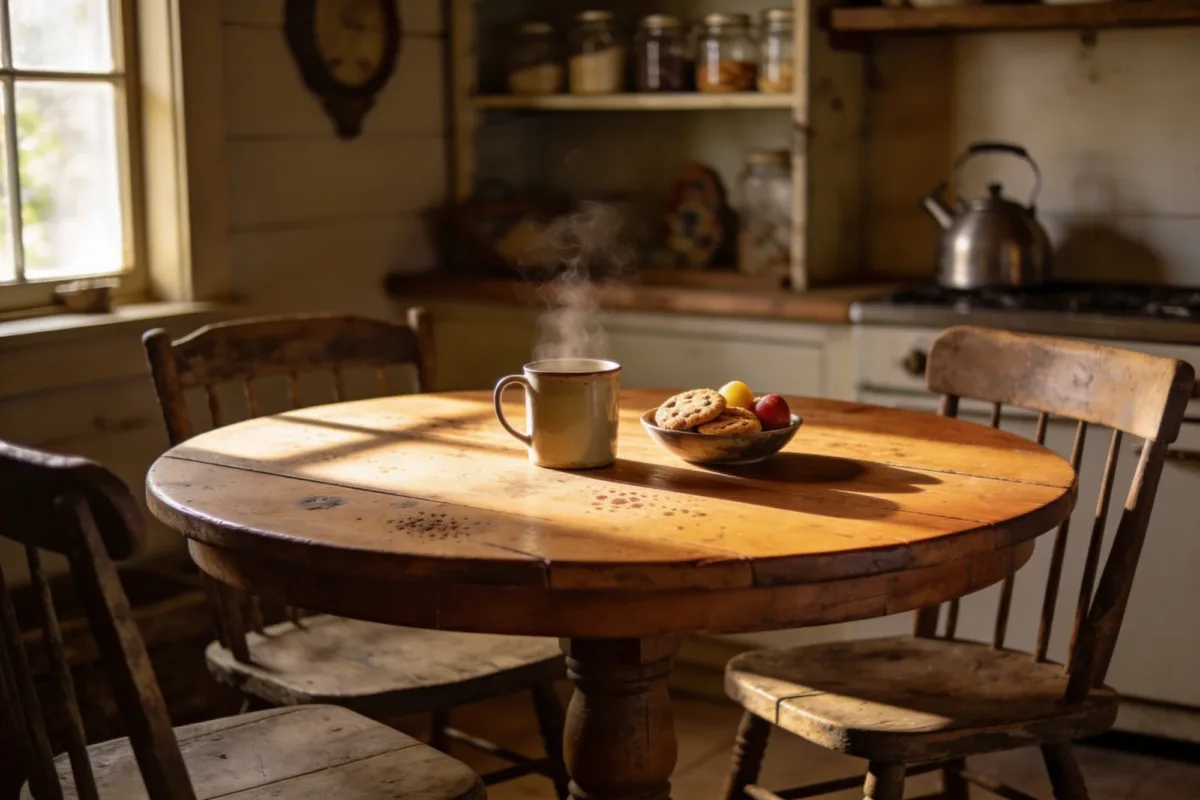
Small Round Farmhouse Kitchen Table: Cozy Heart of the Kitchen
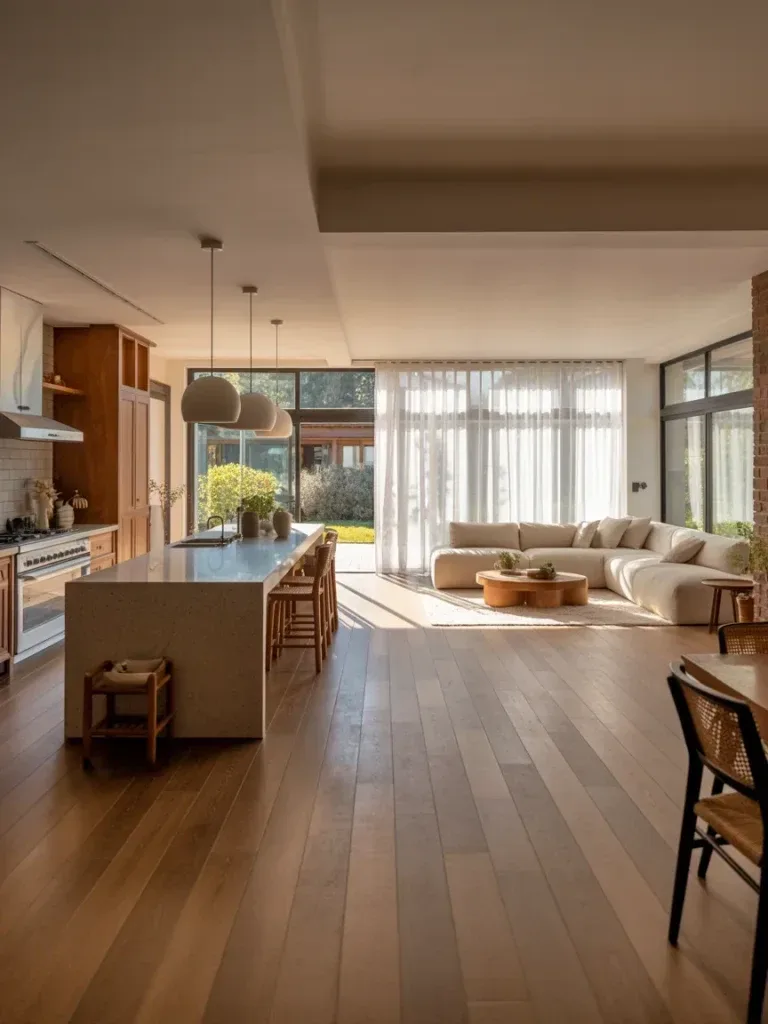
A small round farmhouse kitchen table solves a problem square tables create in tight rooms: corners you have to navigate around every time you walk past. Round shapes tuck into a kitchen without a hard edge sticking into the walkway, and they seat people without anyone getting stuck at an awkward “end” position. If you’re still working out where a table even fits in your layout, this guide to small farmhouse kitchen layout strategies is worth reading before you shop for the table itself.
What follows covers sizing, wood choice, design details, seating, everyday use, upkeep, and styling — in that order, because size and wood are the two decisions everything else depends on.
Why a Small Round Table Wins in a Farmhouse Kitchen
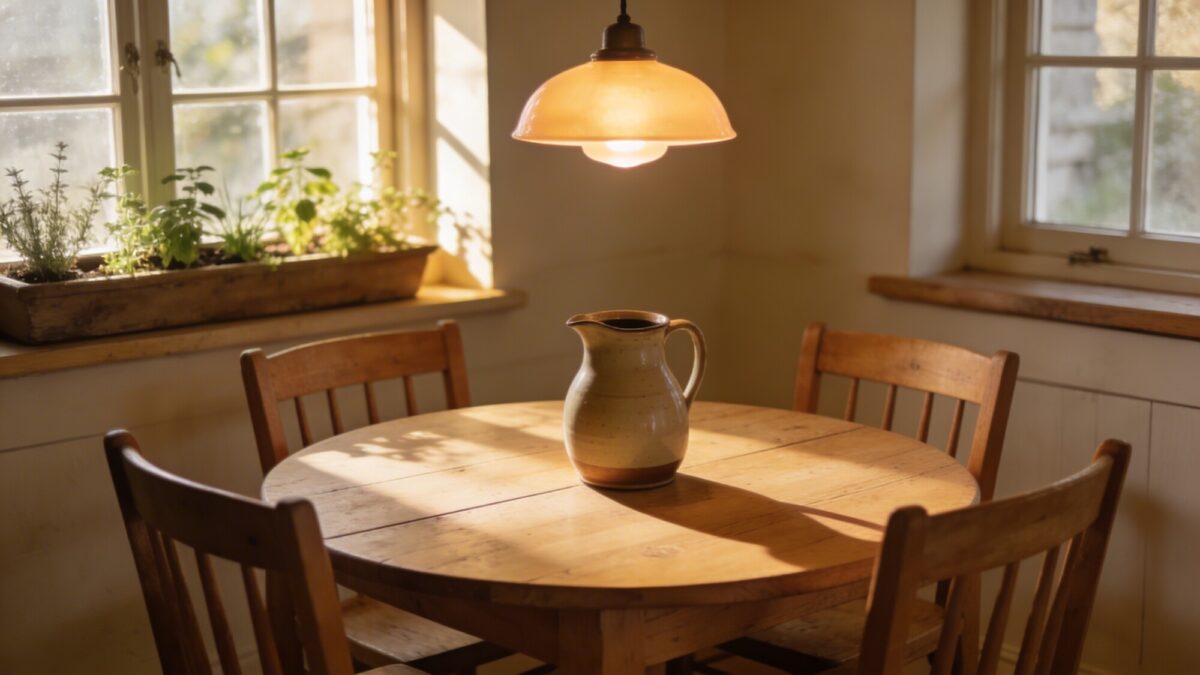
Round tables have no head seat, which sounds like a small thing until you’ve hosted a meal at a rectangular table and watched people hesitate over who sits where. In a compact kitchen, the bigger practical win is corner clearance — a round table’s edge curves away from traffic paths instead of jutting a 90-degree corner into them, which matters most in a kitchen where the table sits close to a doorway or a walkway to the sink.
Choosing the Right Size and Wood for Your Space
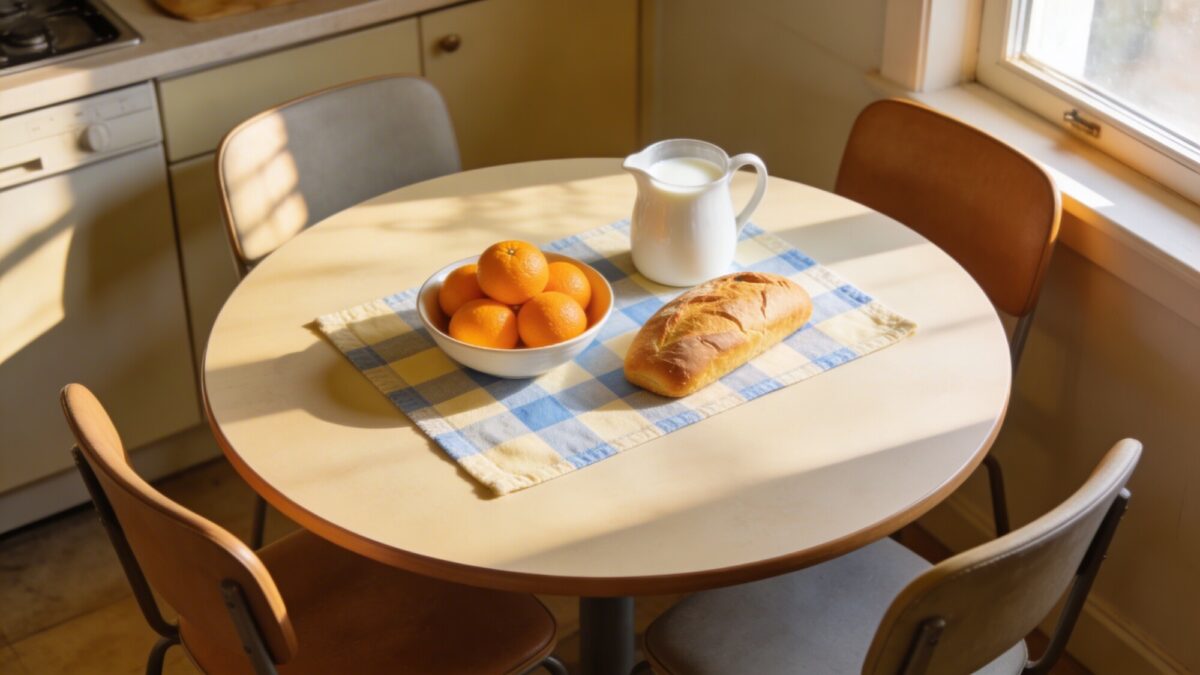
A 36- to 42-inch diameter is the standard range for a round farmhouse table and chairs set seating four people comfortably, with enough clearance to push chairs back without hitting a counter behind them. Go to 48 inches if you regularly seat six, but measure your actual floor space first — a 48-inch table needs roughly 8 to 9 feet of clear diameter around it (table plus pulled-out chairs) to avoid feeling cramped, which rules it out in a lot of genuinely small kitchens.
💡 Pro Tip: Measure from the table’s edge to the nearest fixed obstacle — counter, doorway, appliance — with a chair pulled fully out, not pushed in. People measure the table’s footprint and forget that a pulled-out chair adds another 18–20 inches of required clearance on that side.
Wood choice changes the character more than most people expect. Reclaimed pine brings visible grain and character marks that read as “story,” but it’s softer than oak and dents more easily under daily use — a dropped mug or a dragged plate leaves a mark that oak generally shrugs off. Maple splits the difference: durable, a bit brighter in tone, and less rustic-looking than pine or oak if you’re leaning toward a small round kitchen table with a slightly cleaner farmhouse look rather than a heavily distressed one.
Design Details That Elevate the Look
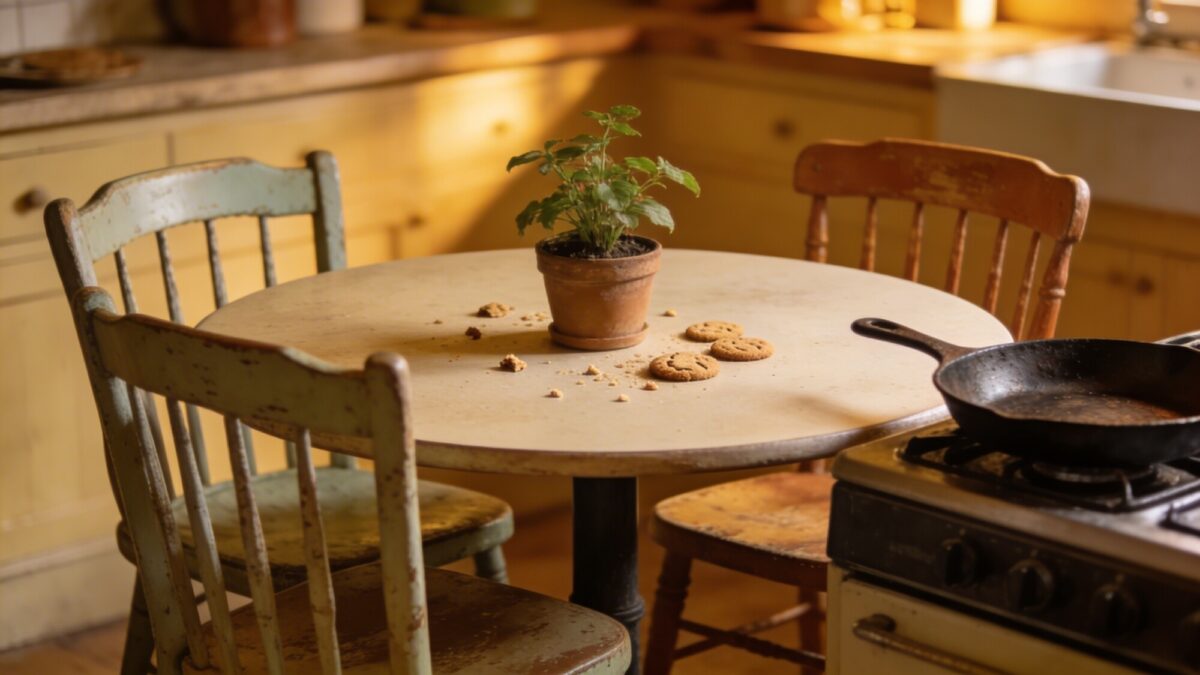
A pedestal base is worth the extra cost over four straight legs in almost every small-kitchen scenario, because it removes the leg clutter that causes knee-bumping when chairs are pushed close together around a tight table. The trade-off is stability at larger sizes — a single pedestal base on a 48-inch or larger tabletop needs a wide enough foot to avoid tipping under uneven weight, so check the base’s actual footprint before buying, not just the tabletop diameter.
Edge profile is a smaller decision but a real one: a beveled edge reads a little more finished, while a live edge (the natural, unmilled edge of the board) leans more rustic and works especially well with reclaimed pine. Either is fine — it’s a style call, not a functional one.
Chairs or Stools: Finding the Right Pairing
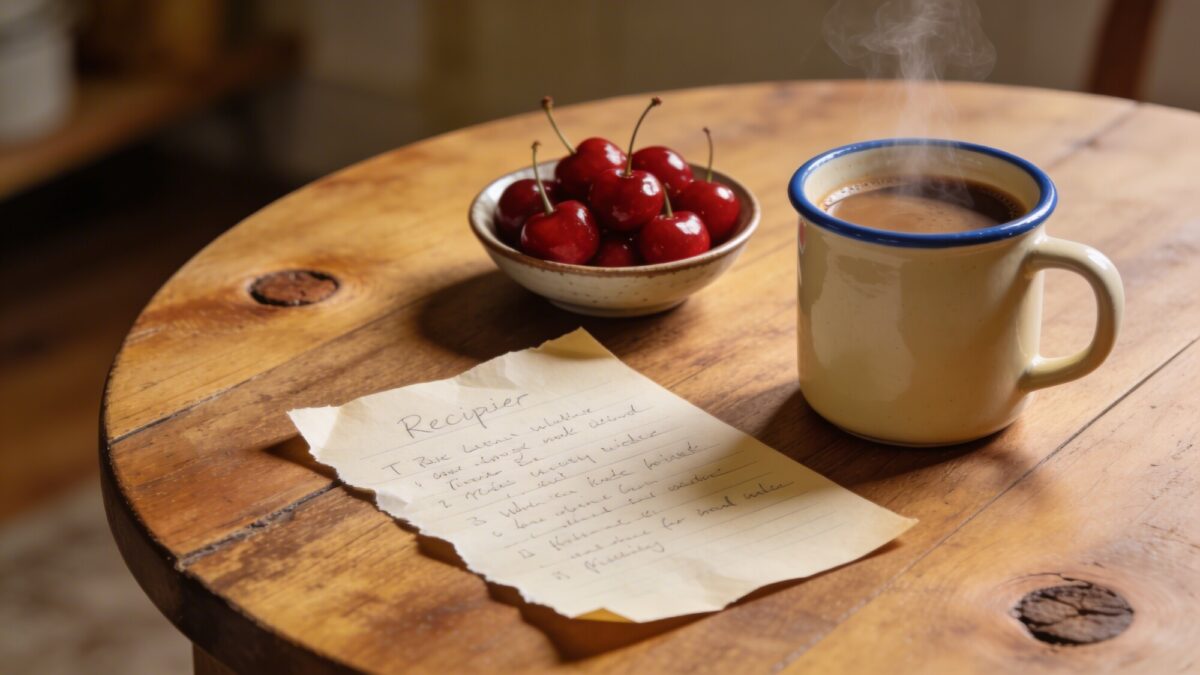
Backless stools are the space-saving choice if your kitchen is genuinely tight — they tuck fully under the table’s edge with no armrests sticking out, which a chair with arms can’t do. The trade-off is comfort for longer meals; a stool works fine for a quick breakfast but gets uncomfortable fast if people are lingering over coffee for half an hour.
Mixing chair styles — a couple of painted wood chairs with a couple of natural wood ones — is a genuinely practical farmhouse move, not just a look: it means you can replace or add a single chair later without having to match a discontinued set exactly.
Comfort Details Worth Getting Right
Standard counter-height seating runs about 17 to 19 inches from floor to seat, which fits most farmhouse round table and chairs sets sold as matched pieces — but measure your specific table before buying stray chairs separately, since farmhouse-style seat heights vary more than standard dining chairs do.
Function Beyond Meals: Everyday Versatility
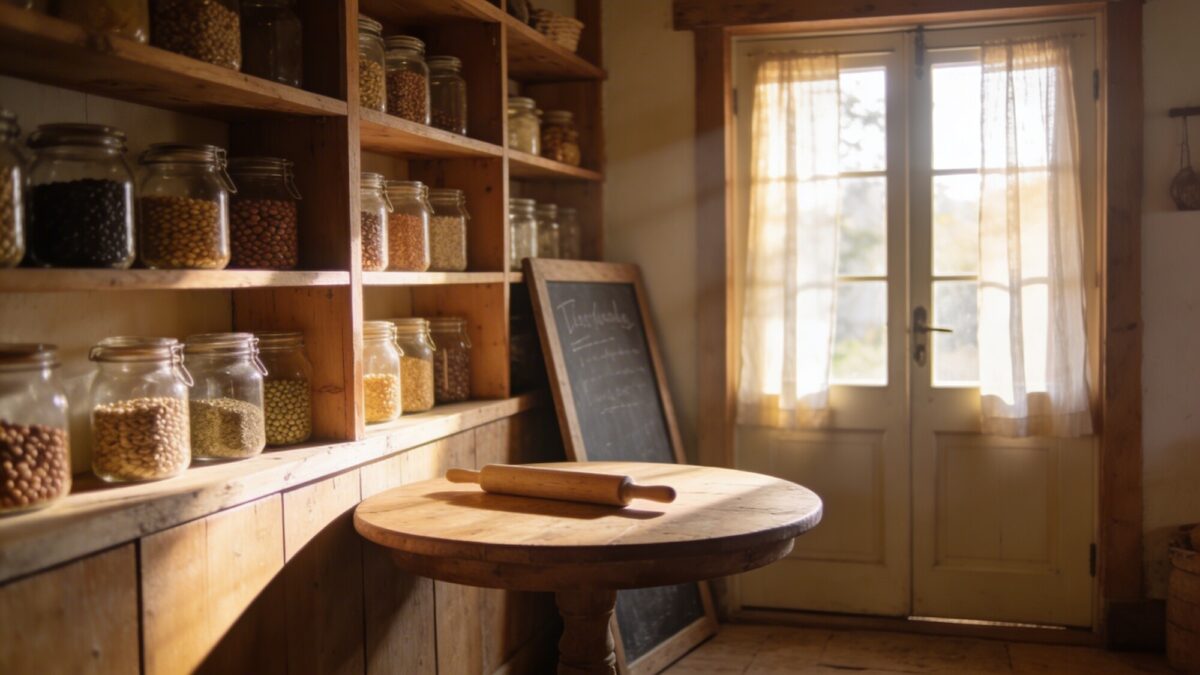
A round farmhouse kitchen table works as a laptop station, a homework spot, or a prep surface for a project that’s overflowed the counter — the lack of corners matters here too, since you’re not bumping a hip against a hard edge every time you lean over to grab something from a nearby shelf. If you’re deciding where in the kitchen to place it, tucking it against a wall of open shelving keeps the center of the room clear for cooking traffic, which is worth reviewing alongside these farmhouse small kitchen decor ideas for shelving that pairs well with a nearby table.
Storage and Accessories Worth Adding
A shallow tray on the tabletop for napkins and everyday utensils, or a small basket underneath for chargers and loose items, keeps a multi-use table from accumulating clutter between uses. Skip anything permanently mounted to the table itself — the whole point of this kind of storage is that it can be cleared in one motion when the table needs to go back to being a table.
Maintenance That Keeps It Looking Good
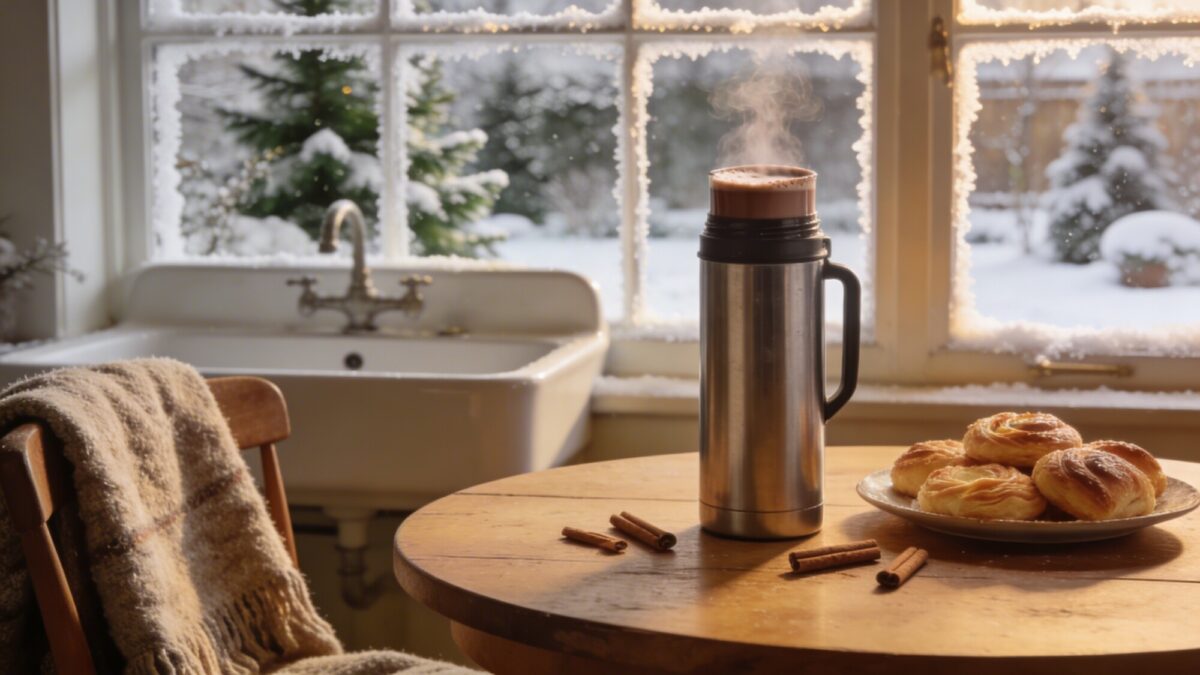
- Wipe spills immediately, especially on lighter or raw-wood finishes — a lightly sealed pine top stains faster than a fully sealed oak one.
- Clean with mild soap and water; skip anything abrasive or ammonia-based, which can dull a wax or oil finish over time.
- Reseal a raw or lightly finished wood top every couple of years — how often depends on how much daily use and direct sun the table gets.
- Use a runner or trivet under hot dishes; even a sealed top can show heat rings from a pan set down directly.
💡 Pro Tip: If you go with a live-edge or lightly distressed top, don’t try to sand out every mark that shows up in the first few months. Those small dents and color shifts are what make a reclaimed-wood table look earned rather than artificially distressed — over-sanding it flat defeats the reason most people choose that wood in the first place.
How to Style It Without Overdoing It
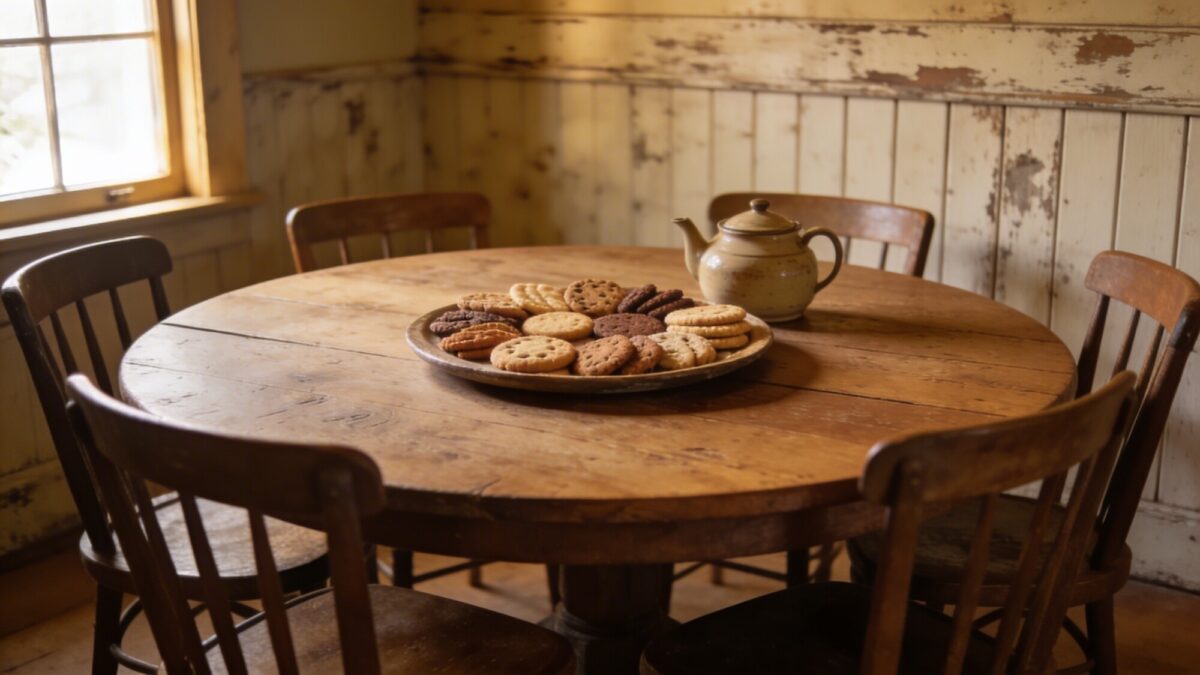
One centerpiece — a vase of flowers, a bowl of fruit, a small terrarium — is enough for a small round table. Layering in a linen runner and a handful of mismatched ceramic mugs adds texture without crowding the surface, but resist adding a second decorative object competing for the same visual space; a small round tabletop has less real estate than a rectangular one, and it shows faster when it’s overstyled.
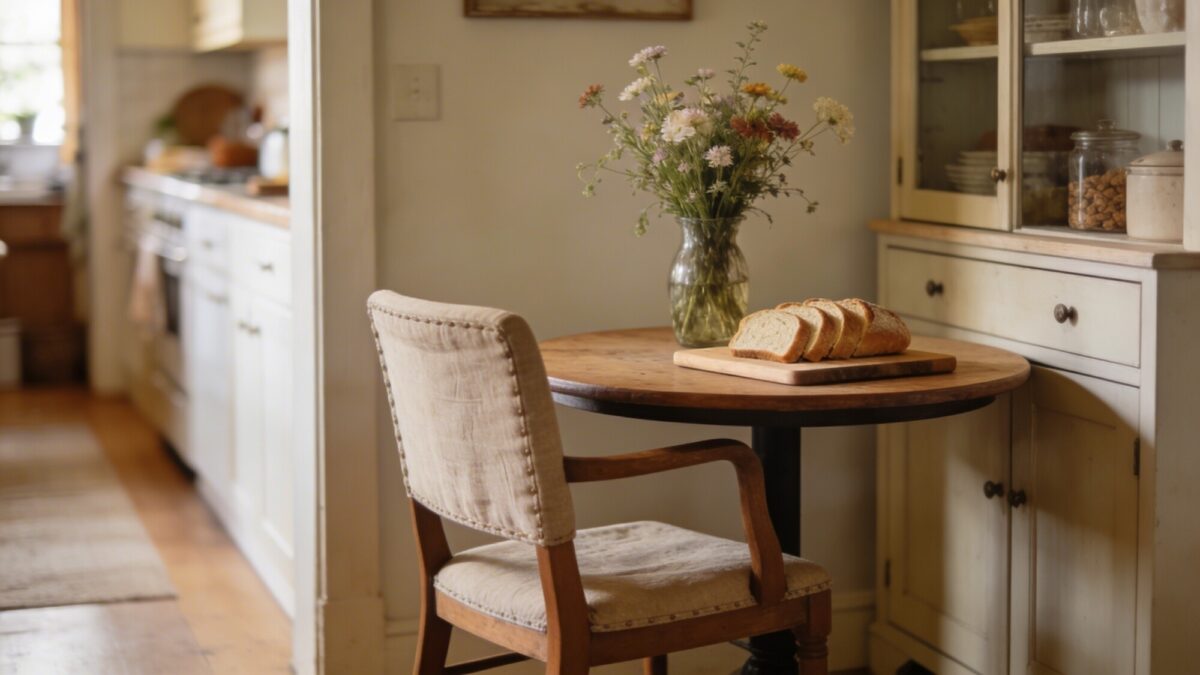
Table Size Quick Reference
| Diameter | Comfortably seats | Best for |
|---|---|---|
| 30–34 inches | 2 | Apartment kitchens, breakfast nooks, very tight footprints |
| 36–42 inches | 4 | Most small farmhouse kitchens — the standard sweet spot |
| 48 inches | 6 | Larger small-kitchen layouts with 8–9 feet of clear space around the table |
Frequently Asked Questions
How big should a small round farmhouse table be for a family of four?
A 36- to 42-inch diameter fits four people with reasonable elbow room. If your kitchen is especially tight, lean toward 36 inches and pair it with lightweight or backless seating to keep the space feeling open.
What wood finish is best for high-traffic kitchens?
Oak or maple with a durable, wipeable sealed finish holds up best to daily wear. A lightly distressed pine with a good seal is a reasonable middle ground if you want more character and can accept it showing marks a bit sooner.
Can I mix chairs around a round table?
Yes — pick one unifying element (wood tone, color family, or cushion fabric) so the mismatch reads as intentional rather than like leftover furniture from different rooms.
How do I care for a live-edge round table?
Wipe with a soft, slightly damp cloth and dry it right away. Apply a food-safe conditioner periodically, and always use a trivet for hot cookware — the natural edge doesn’t need to be “fixed,” the marks and irregularities are part of what you bought it for.
Is a pedestal base better than legs for a round table?
For a small kitchen, generally yes — a pedestal removes the leg clutter that causes knee-bumping around a tight table. Four-leg tables can feel more traditional and stable at larger sizes, but check clearance carefully if you go that route.
Our Take
Get the diameter right before anything else — a table that’s a few inches too large is the single most common mistake with this kind of purchase, and no amount of styling fixes a table you can’t comfortably walk around. For most small kitchens, a 36- to 42-inch round table on a pedestal base, paired with a mix of chairs and one simple centerpiece, hits the mark without overcrowding the room. Once the table’s settled, this roundup of small farmhouse kitchen essentials covers the rest of the room it needs to sit in.