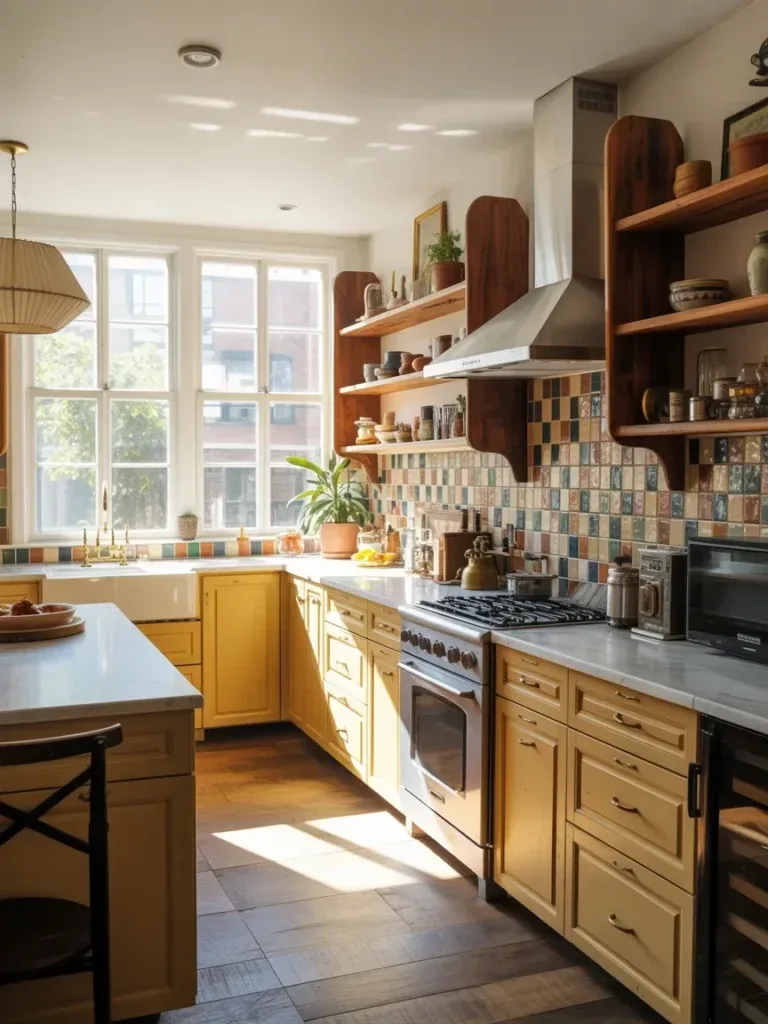
6 Small Farmhouse Kitchen Remodel: Tiny Tweaks, Big Charm
A full gut renovation isn’t the only way to pull off a real small farmhouse kitchen remodel — most of what actually reads as “farmhouse” comes from six changes you can do without moving a single wall. Cabinet finish, shelving, storage, lighting, backsplash, and hardware account for most of the visual impact in a small kitchen, and none of them require a permit. If you’re weighing whether to go further into a structural remodel first, this guide on small farmhouse kitchen layout strategies is worth reading before you commit to anything load-bearing.
These six tweaks build on each other loosely, but you don’t need to do them in order — pick the one or two that address your kitchen’s biggest weak point first.
1. Cozy Cabinet Redo: Paint, Glaze, and Warm Wood Touches
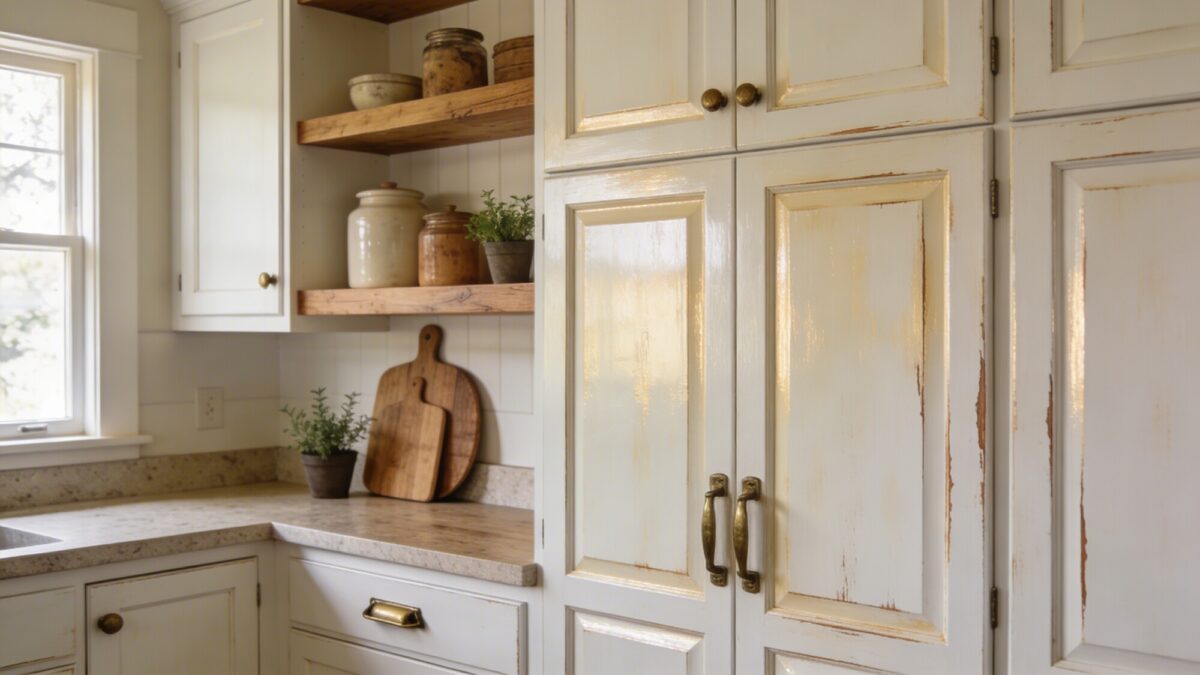
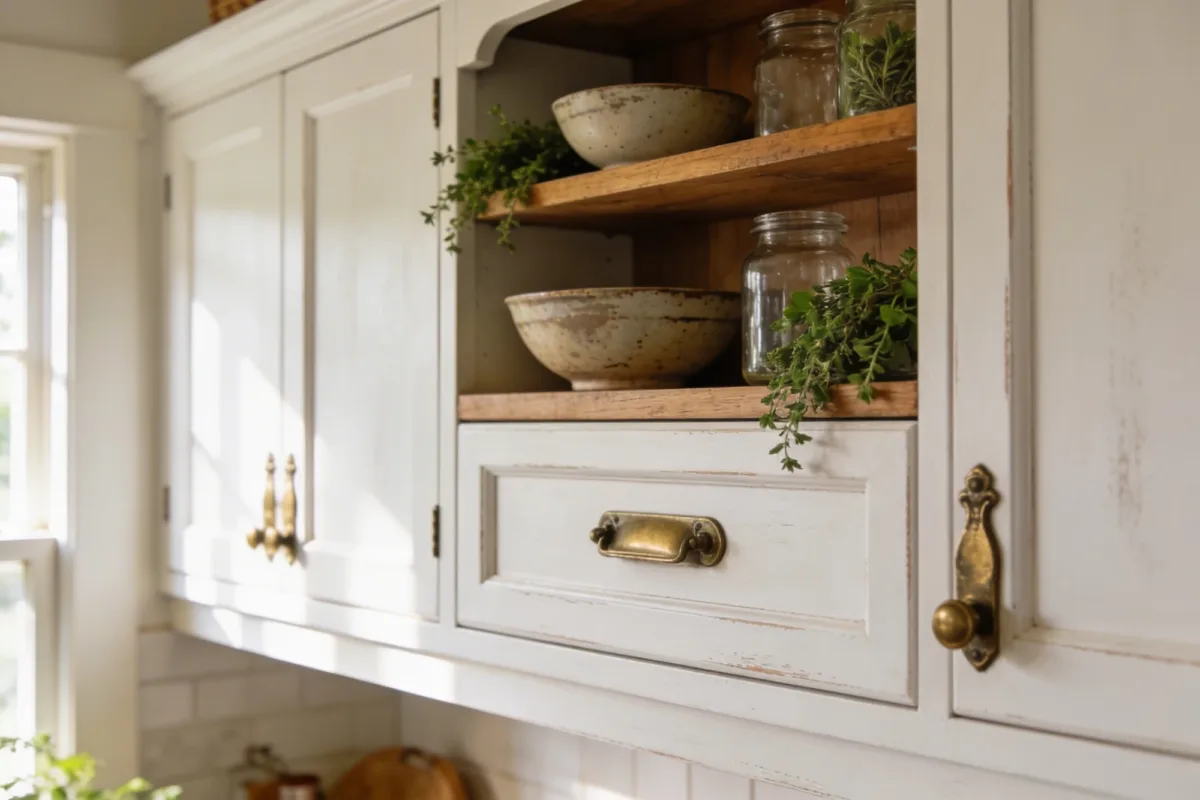
Cabinets set the tone for the whole room, and a repaint gets you most of the way to a full replacement’s visual impact for a fraction of the cost. Soft white, cream, or pale gray in a semi-gloss finish holds up to kitchen grease and steam better than a flat or matte sheen — matte looks nicer on day one but shows fingerprints and grease splatter faster around handles and near the stove.
A glaze applied over the base coat — a thin, wiped-back layer that settles into corners and panel edges — adds the kind of depth that usually reads as “aged” rather than “cheap paint job,” and it’s a technique most people can learn from a single trial door before committing to the full set. If you’re leaning toward wood colored cabinets kitchen styling instead of paint, swapping in a few natural wood open shelves alongside painted uppers gets you that mixed-material look without refinishing every door.
💡 Pro Tip: Test your glaze technique on the inside of a cabinet door or a spare panel before doing the visible faces. Glaze dries faster than it looks like it will while you’re working, and the difference between “aged patina” and “streaky mistake” often comes down to how quickly you wipe back after application.
2. Open Shelving: Show Off the Good Stuff Without the Clutter
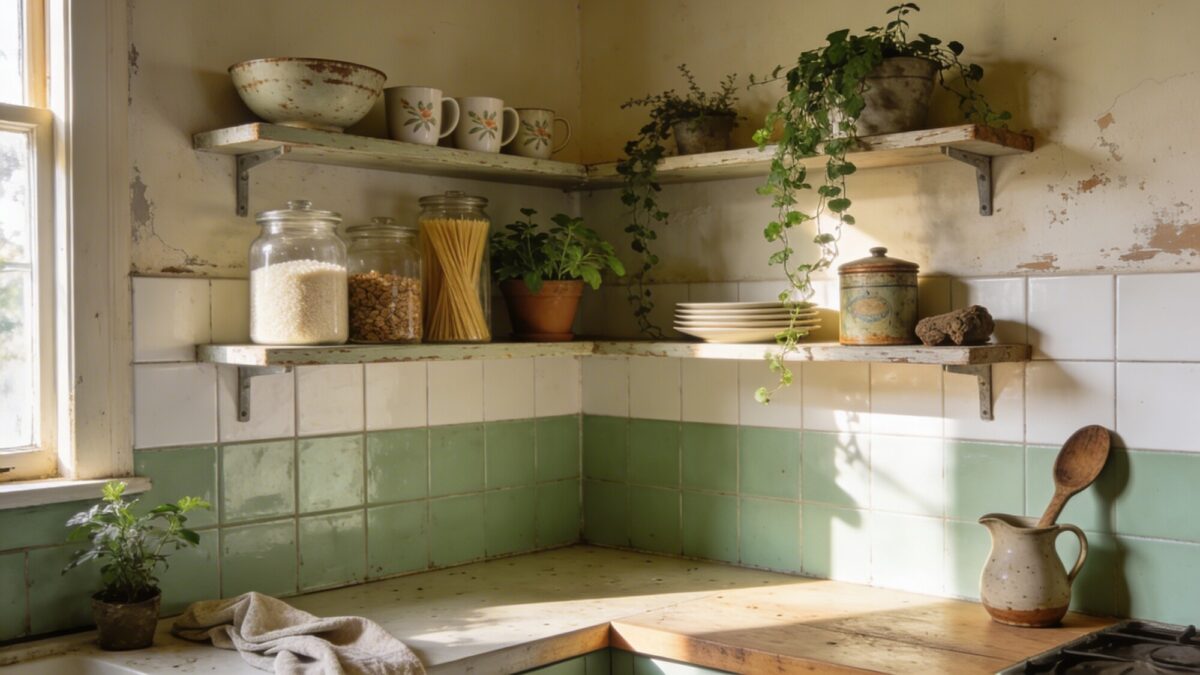
Farmhouse kitchen with floating shelves is one of the more forgiving remodel upgrades available, because floating brackets mount directly to studs without the box construction a full cabinet requires — a weekend job in most kitchens, not a multi-day one. Stock the shelves with things you’d actually reach for: everyday bowls and mugs, a couple of labeled glass jars for dry goods, and one or two plants for texture.
The upside beyond looks is real: open shelving means you see what you have at eye level instead of digging through a deep cabinet at dinnertime trying to find the one canister you actually need.
3. Countertop Nook Makeover: Smart Storage That Actually Works
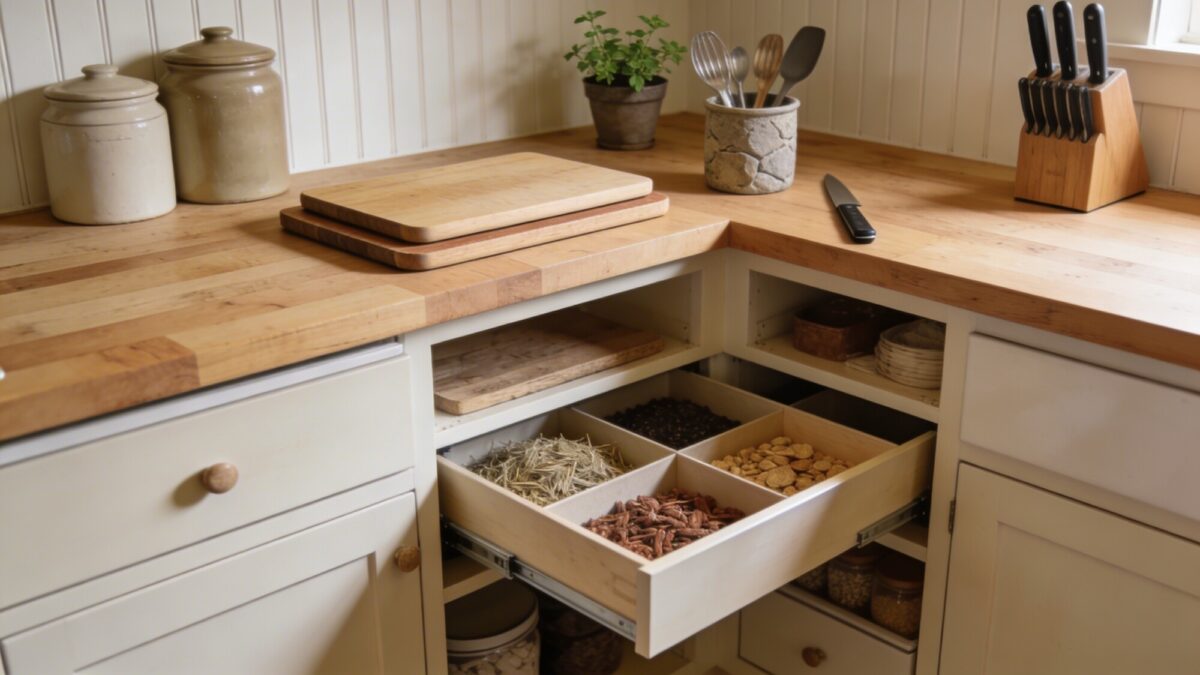
Reclaiming counter space in a small kitchen usually isn’t about adding storage — it’s about moving storage below the counter line instead of on top of it. Shallow pull-out organizers for dry goods, a slim knife block instead of a bulky one, and a stacked pair of cutting boards instead of three loose ones all shrink the counter footprint without cutting anything from your actual kitchen inventory.
The rule that makes this work long-term: only daily-use items stay out. Everything else goes in a drawer or cabinet, even if it means a slightly longer reach once a week instead of a cluttered counter every day.
💡 Pro Tip: If you’re not sure what counts as “daily use,” track it for a week instead of guessing — leave a sticky note pad on the counter and jot down what you actually pick up each day. Most people overestimate how much needs to live on the counter and end up decluttering more than they expected once they see the real list.
4. Lighting That Feels Like Home: Warm, Layered, and Bright Enough
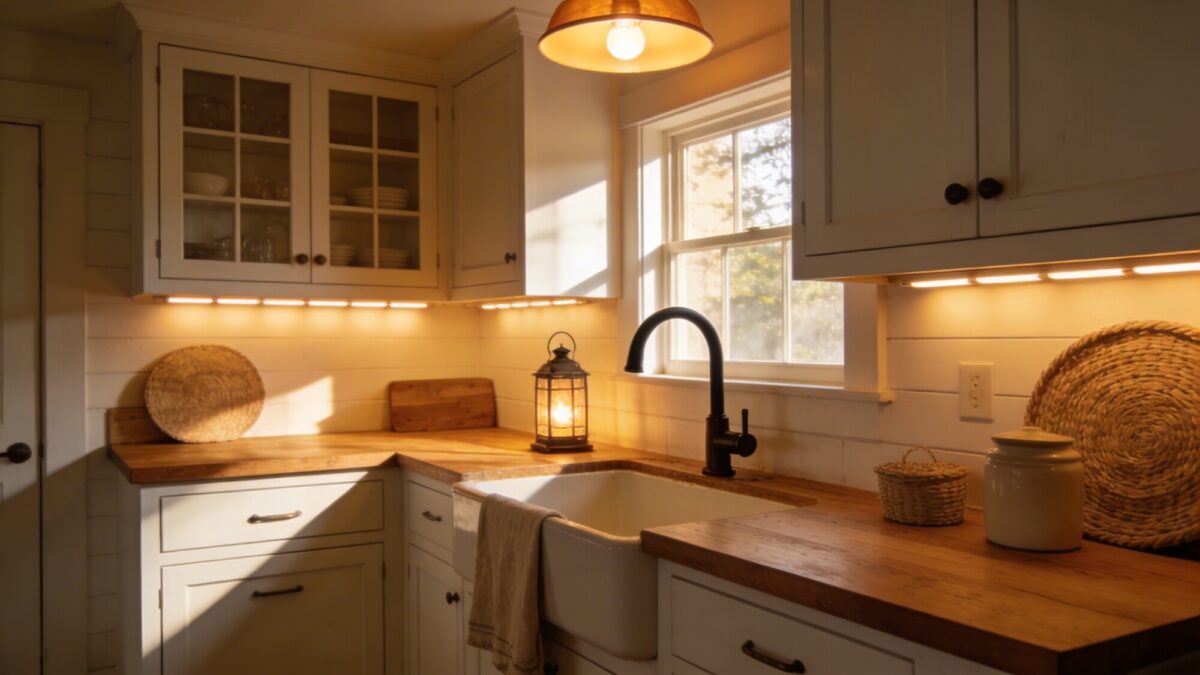
Three light sources beat one every time in a small farmhouse kitchen: a warm-toned overhead fixture (2700–3000K), under-cabinet task lighting for the counter, and a small pendant or lantern near the sink for evening ambiance. A single central fixture, no matter how nice, tends to cast flat light with hard shadows exactly where you’re chopping vegetables — layering fixes that without adding a single new circuit in most cases.
A dimmer on the overhead fixture is a small add during this kind of remodel and it’s genuinely worth it — cooking light and evening light are different needs, and one switch position rarely serves both well.
5. Backsplash and Wall Texture: Simple Tiles, Real Impact
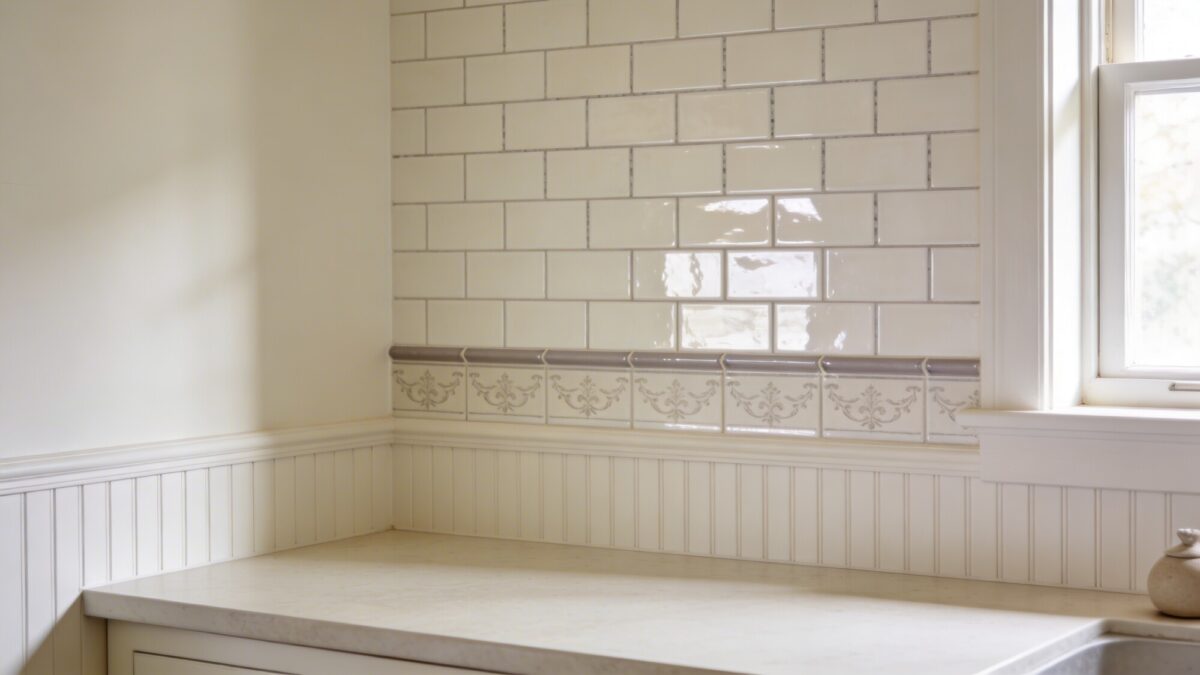
A backsplash update doesn’t require tearing into cabinetry, and it’s one of the highest-visibility changes on this list relative to the labor involved. Beveled subway tile gives you gentle depth and shadow lines without an aggressive pattern; a single row of stenciled tile as a border adds character without covering the whole wall in it. If tile installation isn’t in the budget, beadboard wainscoting on the lower wall is a cheaper, largely DIY-friendly stand-in that still reads unmistakably farmhouse kitchen shiplap wall adjacent, without the full plank installation.
Keep the palette light — cream, ivory, soft greige — so the backsplash adds texture without visually shrinking the room the way a dark, high-contrast tile can in a tight kitchen.
6. Hardware and Accents: Small Details, Real Impact
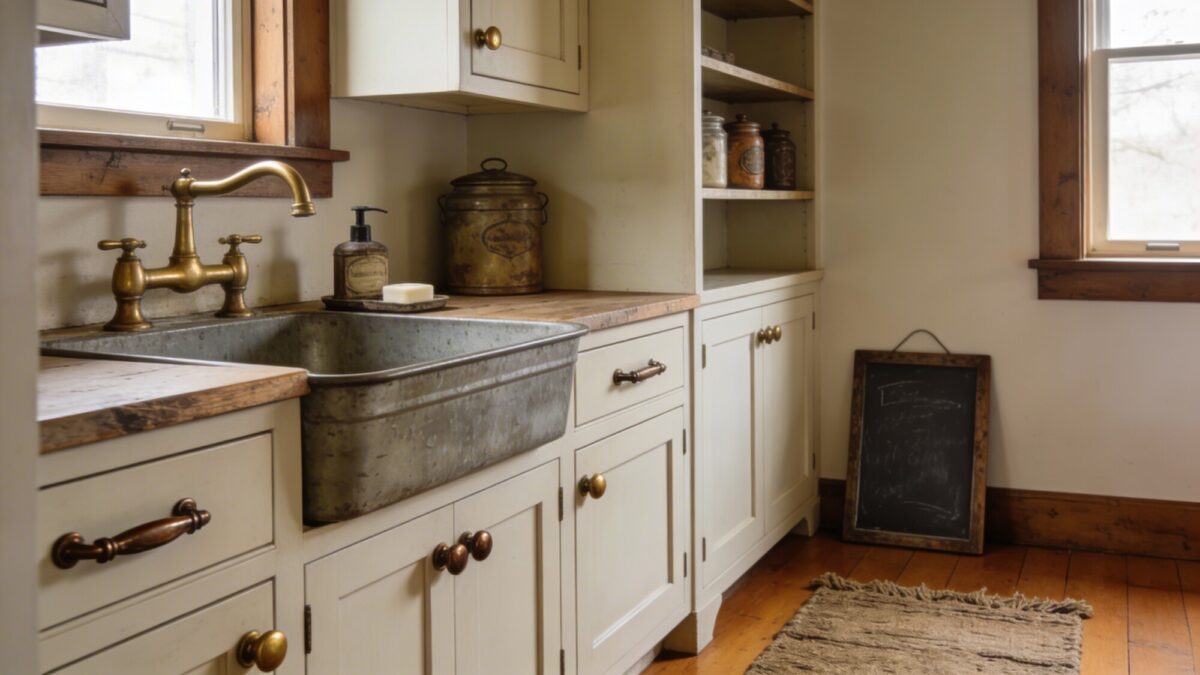
Cabinet hardware is the cheapest line item on this entire list and often the one people notice fastest, because it’s what your hand touches every time you open a drawer. Brushed brass or aged bronze pulls on shaker-style cabinets shift the whole room’s character in an afternoon. A galvanized sink basin insert or a vintage-style soap dispenser, plus a simple rug runner over a cold floor, round out the small-detail layer without touching anything structural.
Comparing the Six Tweaks by Cost and Effort
| Tweak | Rough effort | Relative cost | Best if… |
|---|---|---|---|
| Cabinet paint & glaze | 1–2 weekends | Low–moderate | Your cabinet boxes are solid, just outdated in color |
| Open/floating shelving | 1 weekend | Low | You want visual openness and easier daily access |
| Countertop nook storage | A few hours | Low | Counters feel cluttered but cabinets have room |
| Layered lighting | 1 weekend | Low–moderate | The kitchen feels flat or dim at night |
| Backsplash/beadboard | 1–2 weekends | Moderate | Walls are the most dated-looking element |
| Hardware & accents | An afternoon | Low | You want fast, visible change on a tight budget |
Things to Check Before You Start
- Are your existing cabinet boxes structurally sound, or does this remodel actually need new cabinetry rather than a repaint?
- Do you have stud locations marked for any floating shelf installation?
- Is your current lighting on a single circuit, or can you add under-cabinet lighting without rewiring?
- Have you picked one cohesive hardware finish before ordering pulls and knobs?
Our Take
Start with cabinet paint and hardware if your budget or weekend time is limited — together they change more of the room’s visual character per hour of labor than anything else on this list. Open shelving and lighting are the next tier, worth doing once the cabinets and hardware are settled. Save backsplash work for when you’re ready to commit a full weekend, since it’s the most labor-intensive of the six. If you’re looking for even more clever budget stretches, this guide to a small farmhouse kitchen on a tight budget sequences upgrades by cost-to-impact ratio in more detail than we have room for here.