7 Diy Small Farmhouse Kitchen: Cozy, Diy Upgrade Ideas
A DIY small farmhouse kitchen makeover works best when you stop thinking about it as one project and start treating it as seven separate ones. Cabinet paint, lighting, a backsplash, and a rolling island don’t have to happen in the same weekend — in fact, spacing them out is usually the difference between a project that gets finished and one that sits half-done for six months. If you’re weighing a full gut renovation against DIY upgrades, it’s worth reading this guide to small farmhouse kitchen remodels first to see where the line actually is between what you can DIY and what needs a contractor.
The seven projects below are ordered roughly by effort, from a single afternoon to a full weekend. None require moving plumbing or electrical, which is the practical boundary between a DIY farmhouse kitchen makeover and an actual remodel.
Quick-Reference: Effort vs. Payoff
- Cabinet refinishing takes the most prep time (cleaning, sanding, priming) but changes the room more than any other single project on this list.
- A peg rail is the cheapest, fastest project here — most of an afternoon, minimal tools.
- Lighting layering is the project people skip that they shouldn’t; it changes how every other upgrade looks.
- Peel-and-stick backsplash tile is fully reversible, which matters if you’re renting.
- A rolling butcher-block cart gives you island function without any of the commitment or cost of a built-in island.
DIY Small Farmhouse Kitchen Projects That Don’t Require a Contractor
1. Layer Textures Like a Pro
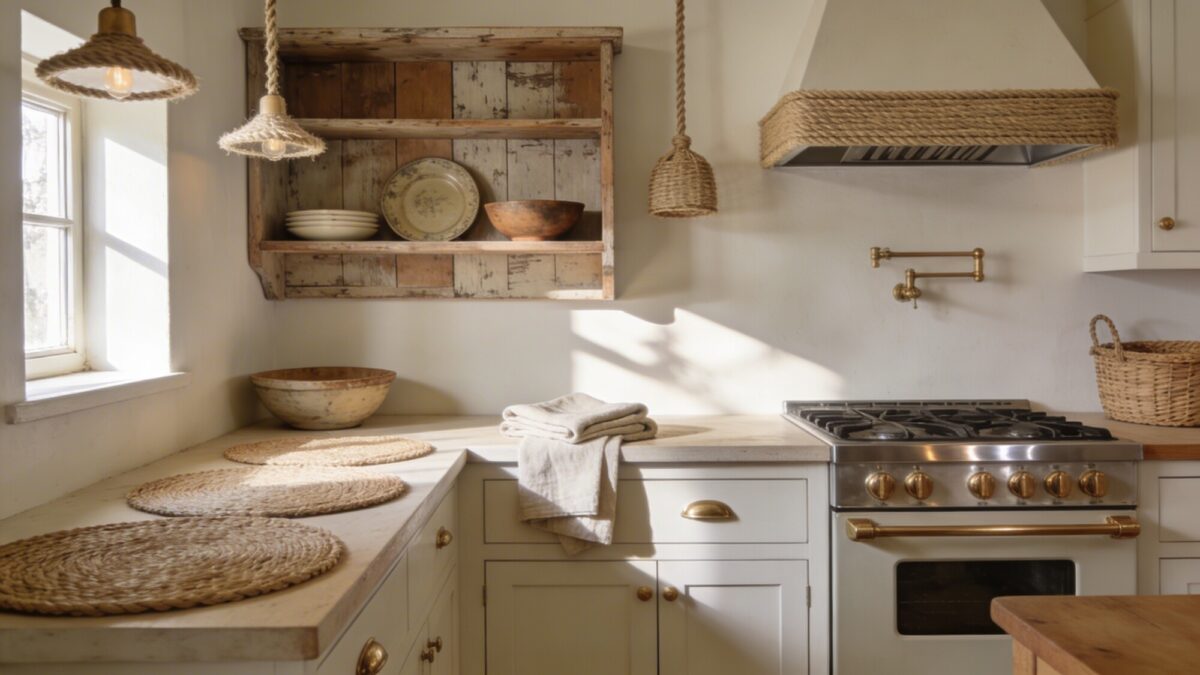
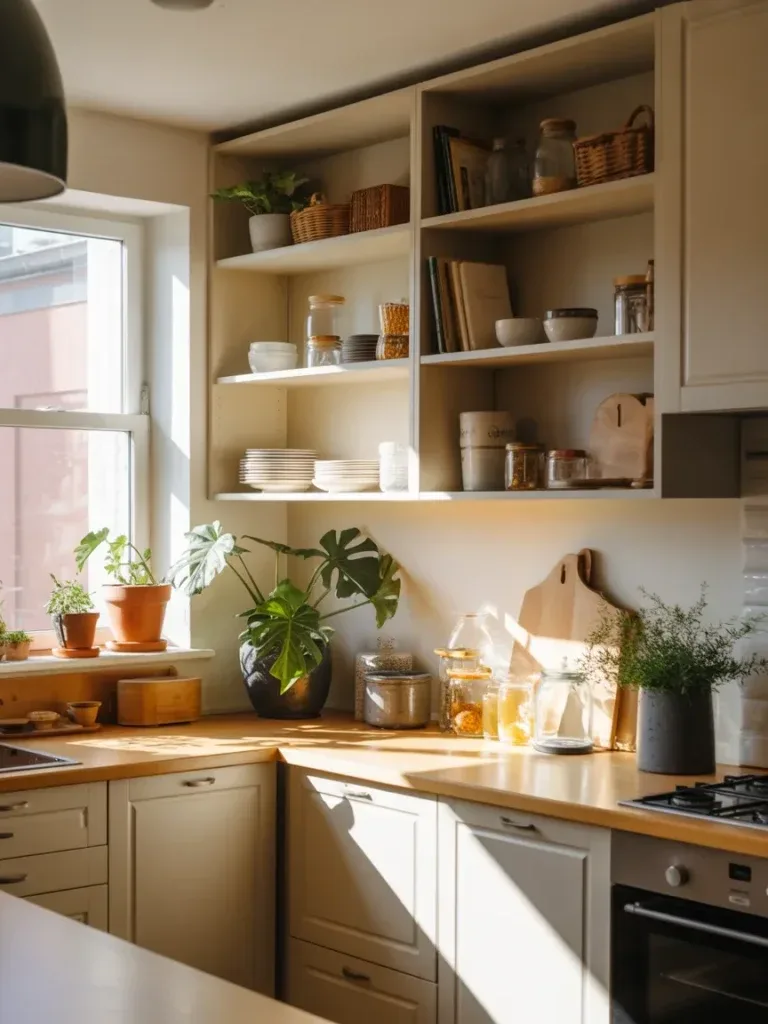
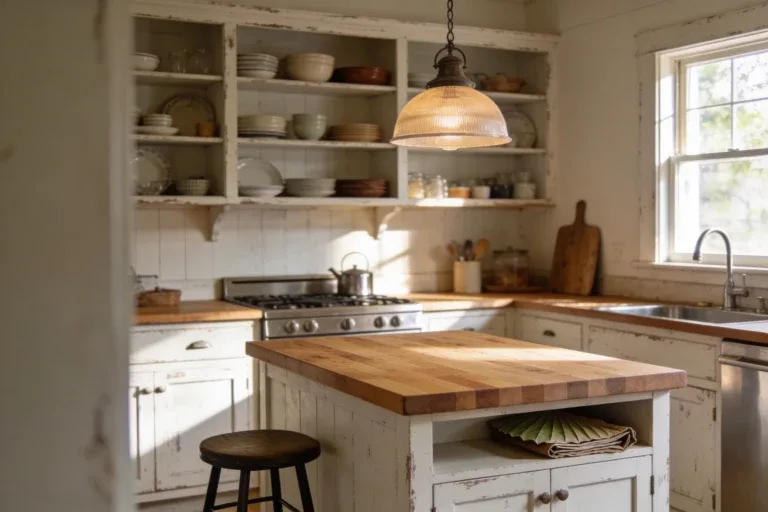
Texture is the fastest way to make a small kitchen feel farmhouse rather than just “white and empty,” and it’s the cheapest project on this list because most of it comes from things you already own or can find secondhand. Weathered wood shelving, a linen towel folded on the counter, a woven basket, and a couple of heirloom dishes on open shelves do more work than a single big decor purchase would.
The mistake people make here is displaying too much. Farmhouse kitchen decor reads as curated when there are five or six deliberate items on a shelf, not fifteen. Pick your best pieces and store the rest.
💡 Pro Tip: Start texture layering before you commit to a backsplash or paint color — it’s reversible and cheap, and seeing how the room feels with texture added often changes what color you end up choosing for the bigger projects.
2. Refinish Cabinets, Not Rebuild Them
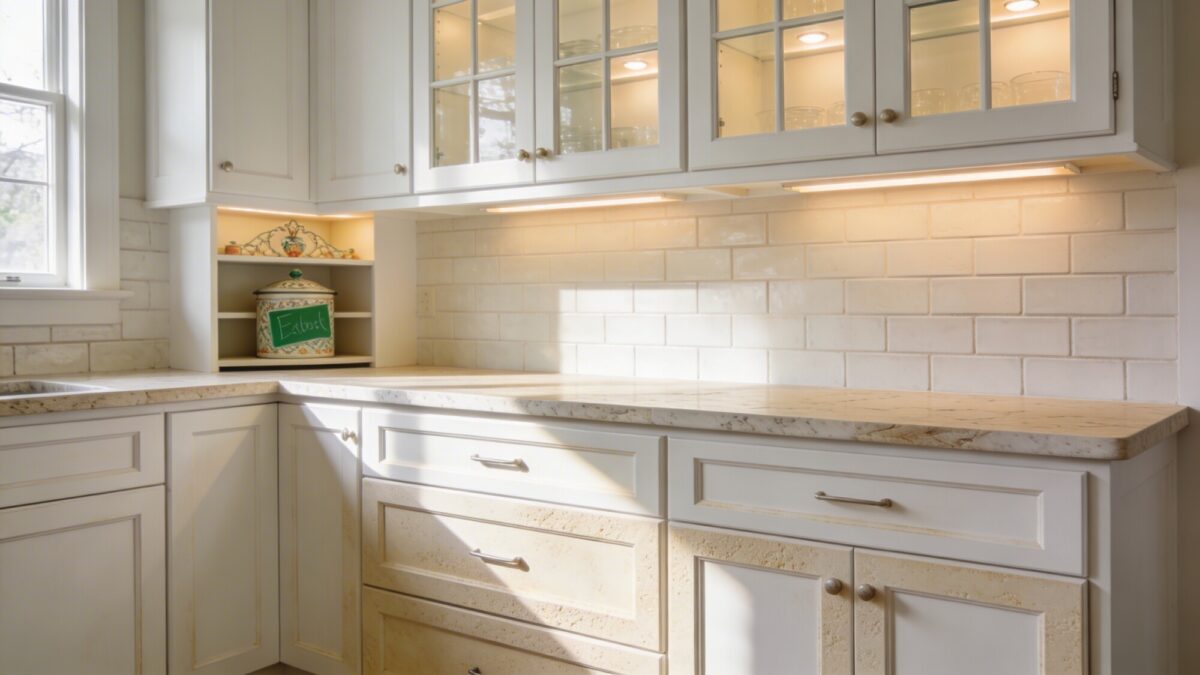
Cabinet refinishing is the highest-effort project in this list, and it’s the one that changes the room the most. The process is straightforward but not fast: clean the cabinets thoroughly to remove grease, scuff-sand lightly so the primer actually grips, prime, then paint or stain, then seal with a satin or matte topcoat for durability. Skipping the scuff-sand step is the most common mistake — paint over a glossy factory finish without sanding it first and it chips within months, not years.
Soft white or warm gray are the safest farmhouse choices because they age well and don’t date the kitchen the way a trend color can. A chalky sage or muted green works if you want something more distinct, but treat it as a longer commitment — repainting a full cabinet run a second time is a much bigger job than doing it once.
💡 Pro Tip: Plan for the primer and paint to need at least 24 hours of cure time between coats, and keep the cabinet doors off their hinges the whole time. Rushing recoat times is the single biggest reason a DIY cabinet refinish looks tacky instead of professional.
3. Build a Statement Peg Rail Wall
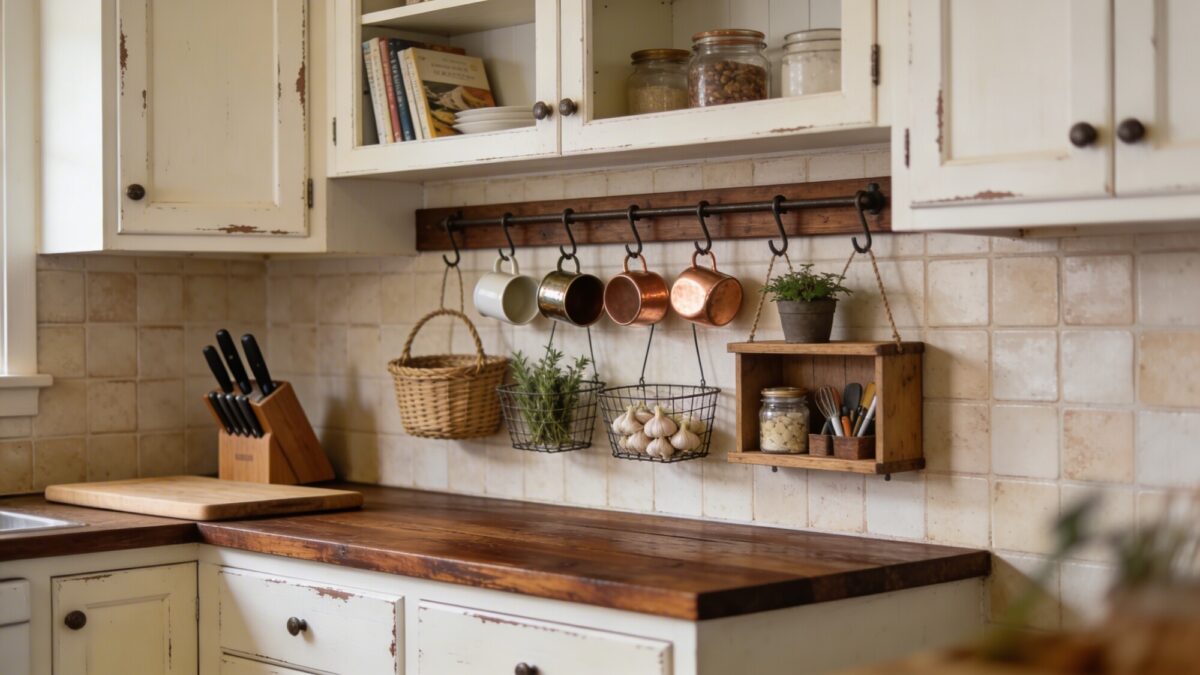
A peg rail is the single fastest project here — mount a rail near your prep zone, add a mix of hooks, a small shelf, and a couple of wire baskets, and you’ve freed up drawer and counter space while adding real farmhouse character. Stain or paint the rail to match your cabinet finish so it reads as built-in rather than added on.
Rotate what’s hanging by season — mugs and everyday tools in winter, lighter baskets and herbs in summer — and the same rail keeps feeling fresh without any additional cost.
4. Create a Cozy Lighting Plan
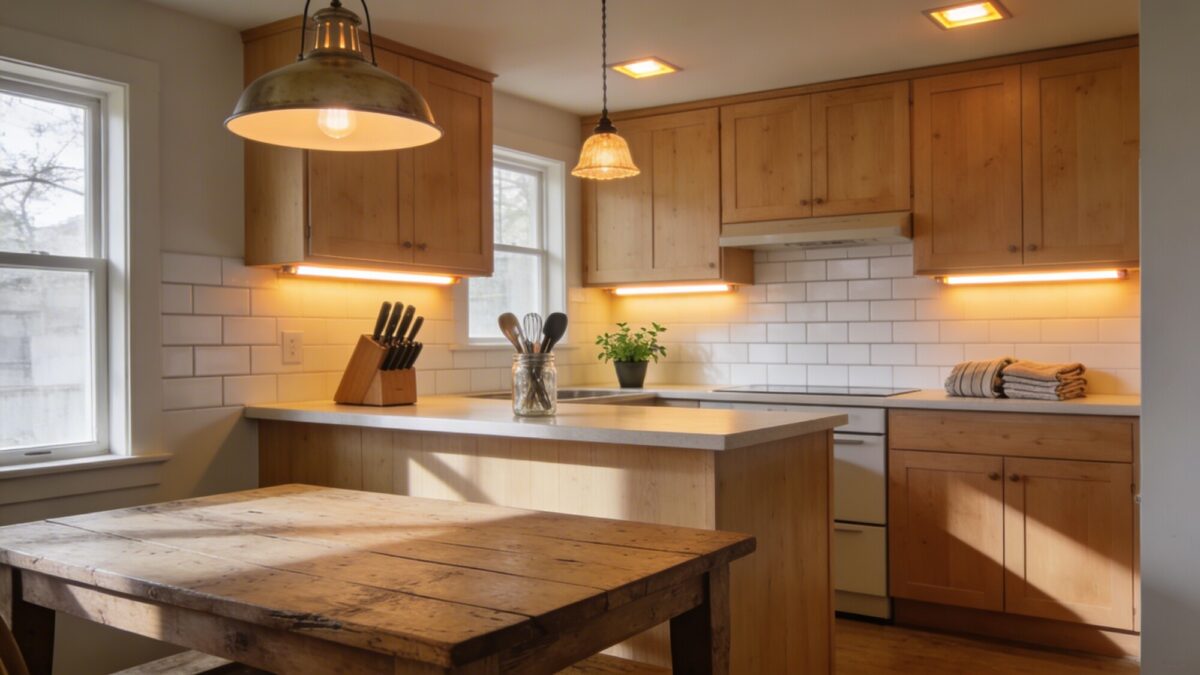
Lighting is the project most DIY farmhouse kitchen makeovers skip, and it’s a mistake — a fresh coat of cabinet paint under bad lighting still looks flat. Warm LED bulbs in the 2700K–3000K range read as cozy rather than clinical; under-cabinet LED strips (battery or plug-in kits install without an electrician) light the actual work surface instead of leaving it in shadow; a farmhouse pendant over any small prep area anchors the whole look.
If you can only do one lighting upgrade, make it the under-cabinet strips. They’re the cheapest of the three and the one that actually changes how the kitchen functions, not just how it looks.
5. Create a Centerpiece Island on a Budget
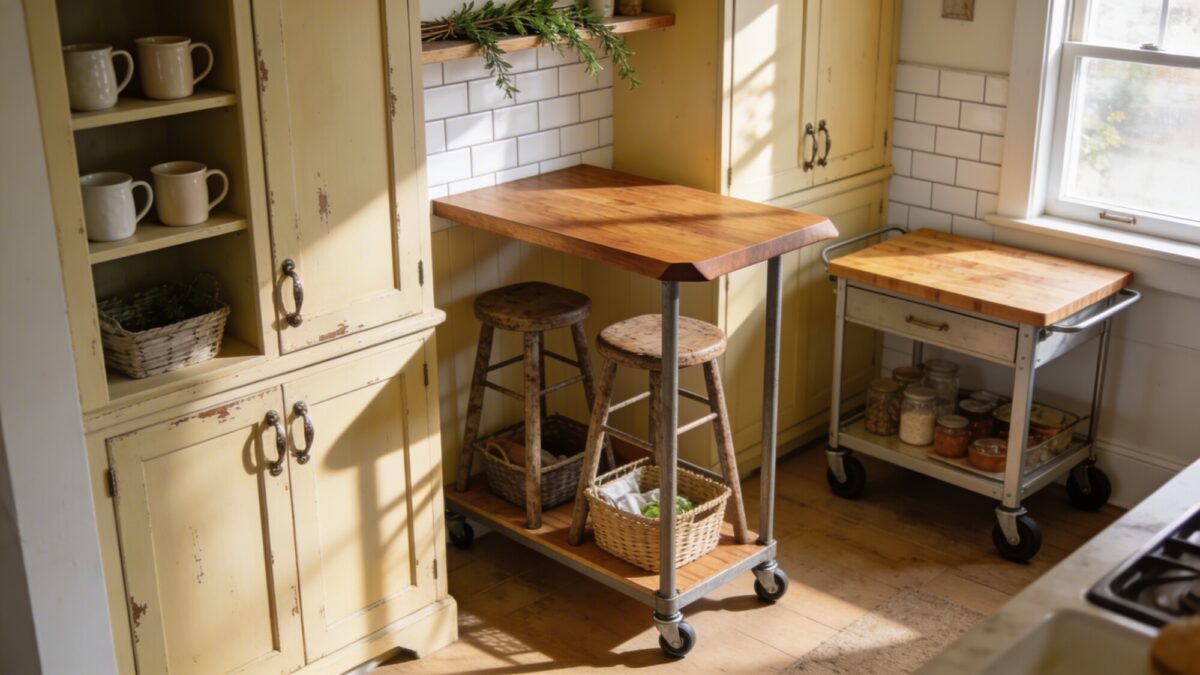
A slim butcher-block table on casters, or a proper rolling kitchen cart, gives you the function of an island — extra prep space, a spot for morning coffee, occasional bar-height seating — without the cost or permanence of a built-in one. It’s also the right call if you’re renting or your kitchen genuinely can’t fit a fixed island; you can push it against a wall when you need the floor space back.
If your kitchen actually has room for a permanent island and you’re weighing that against a cart, this guide to small farmhouse kitchens with an island covers sizing and clearance in more depth.
6. Farmhouse-Style Backsplash on a Dime
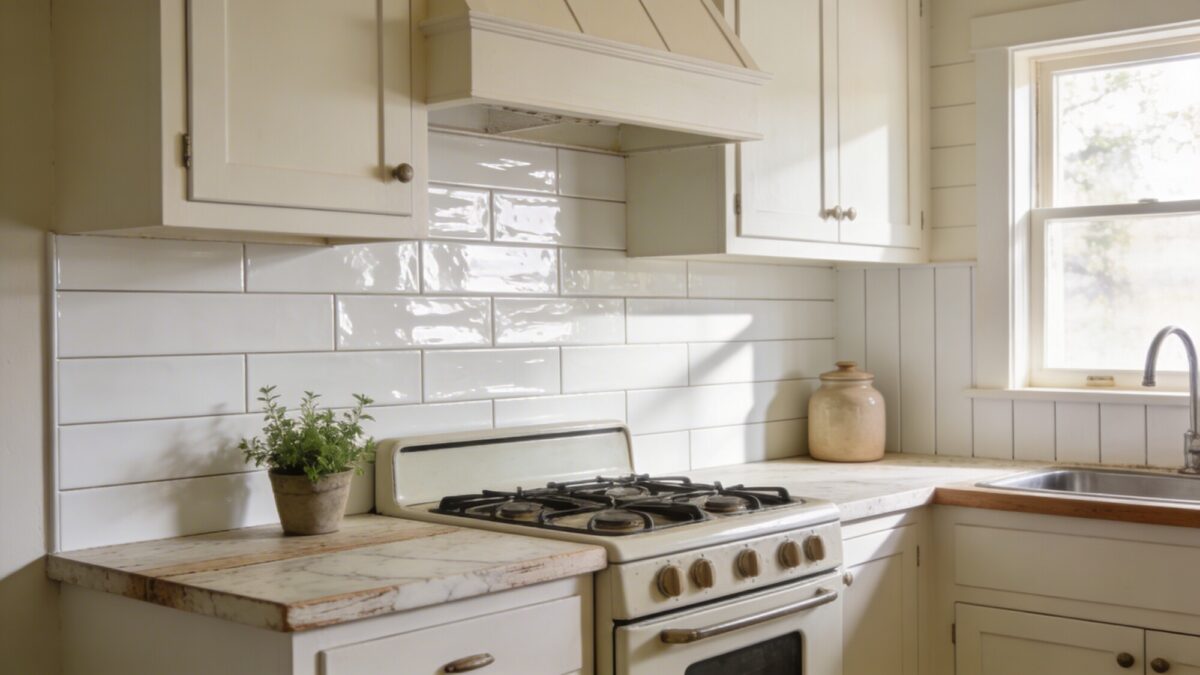
A full tile install isn’t necessary to get a farmhouse-kitchen-rustic backsplash look. Peel-and-stick ceramic-look tiles go up in an afternoon and come back off cleanly if you move. Shiplap panels on a water-resistant backing give you the classic farmhouse texture at a lower cost than tile. Textured paint is the cheapest option of the three, though it’s also the least durable near the stove and sink — reserve it for the sections of wall furthest from splashes.
💡 Pro Tip: If you’re renting, peel-and-stick tile is the only one of the three options that’s fully reversible without patching or repainting the wall underneath — check that before committing to shiplap or paint in a rental kitchen.
7. Personalize With Practical Accessories
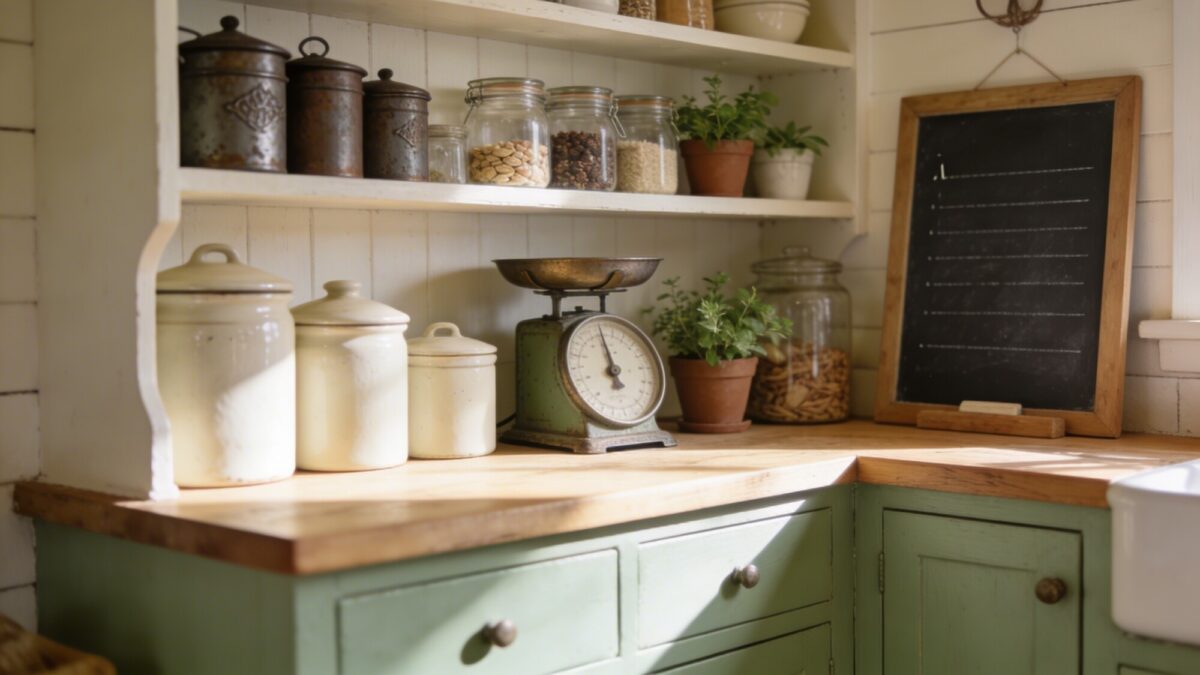
The last 10% of a farmhouse kitchen’s character comes from the small, functional stuff: labeled canisters for flour and sugar, a few mason jars of pantry staples, a small chalkboard for the week’s menu. Pick a palette — cream, sage, natural wood — and repeat it across three or four pieces rather than buying decor piece by piece with no plan; that repetition is what makes a kitchenette or small kitchen read as pulled-together instead of assembled from a dozen unrelated purchases.
Which Project Should You Tackle First?
| Your Situation | Start Here |
|---|---|
| Renting, want a reversible refresh | Peel-and-stick backsplash (#6) and texture layering (#1) |
| Own the home, want the biggest visual change | Cabinet refinishing (#2) — highest effort, highest payoff |
| Kitchen feels dark even with lights on | Lighting plan (#4) before any cosmetic project |
| No counter space, no island | Peg rail (#3) plus a rolling cart (#5) |
| Everything’s done but it still feels generic | Practical accessories (#7) — the finishing layer |
Things to Consider Before You Start
- Budget for primer and sealant, not just paint — skipping either shortens how long a cabinet refinish actually lasts.
- Under-cabinet lighting kits are widely available in plug-in or battery versions that don’t require an electrician.
- Peel-and-stick tile and textile-based projects are the right call if you’re renting; shiplap and paint are harder to reverse.
- A rolling cart is the lower-commitment choice if you’re not sure your kitchen has room for a permanent island.
- Space out the seven projects — trying to do cabinets, lighting, and a backsplash in one weekend is how projects stall half-finished.
FAQ
What’s the single best first project for a DIY small farmhouse kitchen makeover?
Texture layering. It’s free or nearly free, fully reversible, and it helps you see the room clearly before you commit to a paint color or backsplash material.
Do I need to remove cabinet doors to refinish them?
Yes, take them off their hinges. It’s the only way to get an even coat on all edges, and it’s much easier to sand and paint a door flat on a table than hanging vertically.
Is peel-and-stick backsplash tile durable enough for daily cooking?
For a small kitchen with light-to-moderate cooking, yes. It’s less heat- and scratch-resistant than real tile, so keep it away from direct contact with hot pans.
Can a rolling cart really replace a built-in island?
For prep space and casual seating, yes. It won’t give you plumbing or a cooktop, but for the workflow most small kitchens need — extra counter and a coffee station — it does the job at a fraction of the cost.
How long does a full cabinet refinish realistically take?
Plan for a full weekend at minimum, and closer to two if you’re doing multiple coats with proper cure time between them. Rushing the dry time is the most common reason DIY cabinet paint jobs don’t hold up.
Our Take
If you’re doing a DIY small farmhouse kitchen makeover on a tight timeline, start with lighting and texture — they’re the fastest, cheapest, and most reversible, and they’ll tell you a lot about what the rest of the room actually needs. Save cabinet refinishing for when you have a genuine free weekend, since it’s the project most likely to stall if you start it without enough time to finish properly.
For more budget-focused ideas beyond these seven, this guide to small farmhouse kitchens on a budget is a good next stop.