6 Small Kitchen Remodel Farmhouse Modern: Cozy on a Budget
A small kitchen remodel farmhouse modern style works because it borrows from two directions at once — the warmth of traditional farmhouse materials and the restraint of modern lines — without asking you to gut the room to get there. The six updates below range from a weekend cabinet refresh to a full countertop swap, and none require moving walls. If your kitchen’s real problem is the floor plan rather than the finishes, it’s worth reading layout-specific fixes for a small farmhouse kitchen before you spend on any of these.
Treat this as a menu, not a checklist. Pick the update that solves your kitchen’s actual weak point first, and use the ones you skip as future projects rather than trying to do all six in one remodel.
Quick-Reference: Cost vs. Impact
- Cabinet painting is the highest-impact, lowest-cost update on this list — it changes the room’s whole tone for the price of paint and a weekend.
- Countertop replacement is the most expensive item here and the hardest to reverse — get it right the first time.
- Lighting swaps (shades and hardware only, not new wiring) are a fast, budget-friendly win.
- Backsplash height matters as much as material — stopping at the upper cabinet line keeps a small kitchen design farmhouse look from feeling heavy.
- Sink and faucet upgrades have outsized visual impact for their cost because they’re used and seen constantly.
Small Kitchen Design Farmhouse: Where Modern Meets Traditional
1. Open Shelving With Warm Wood Accents
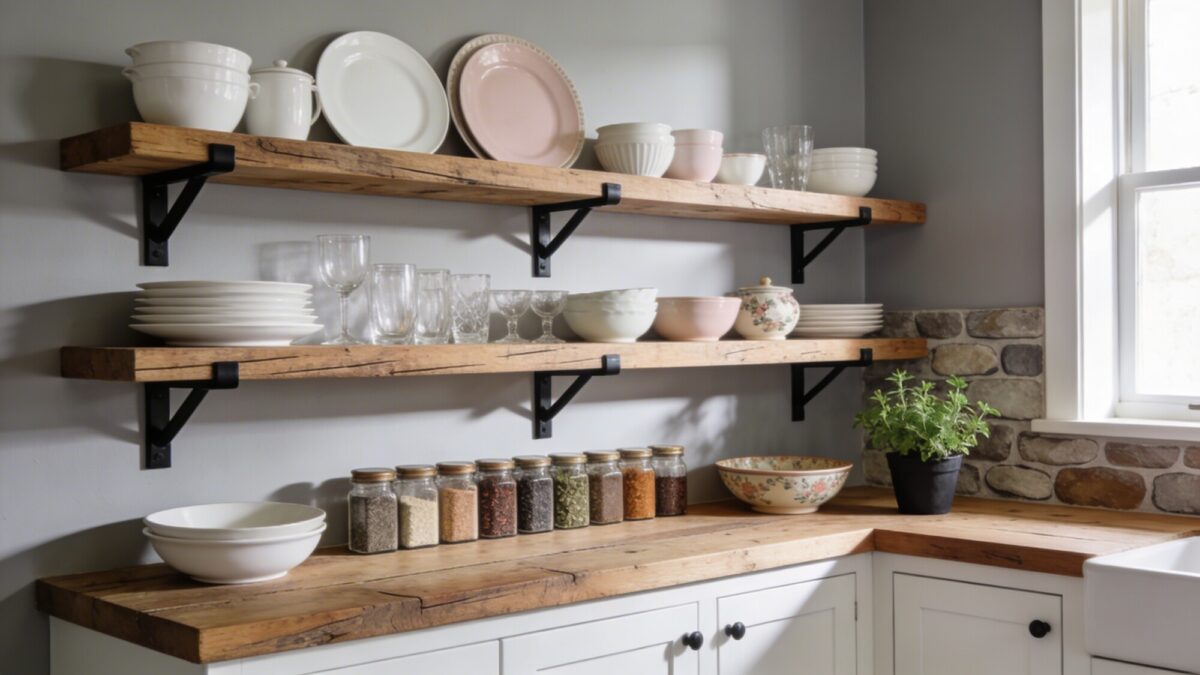
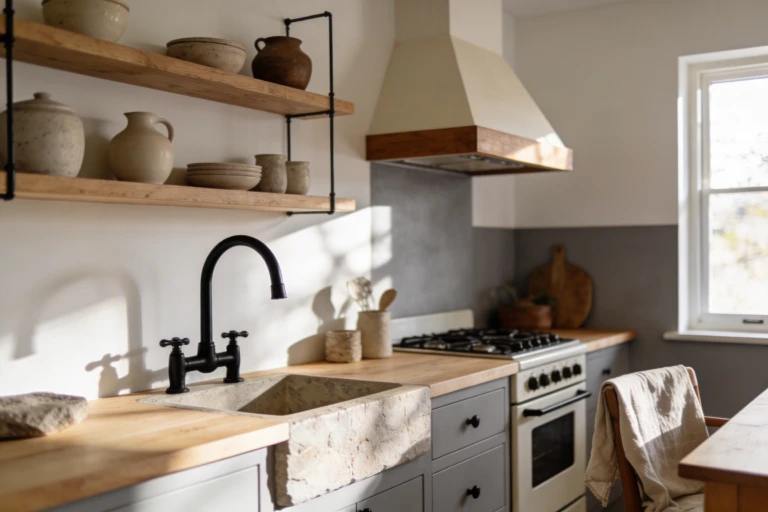
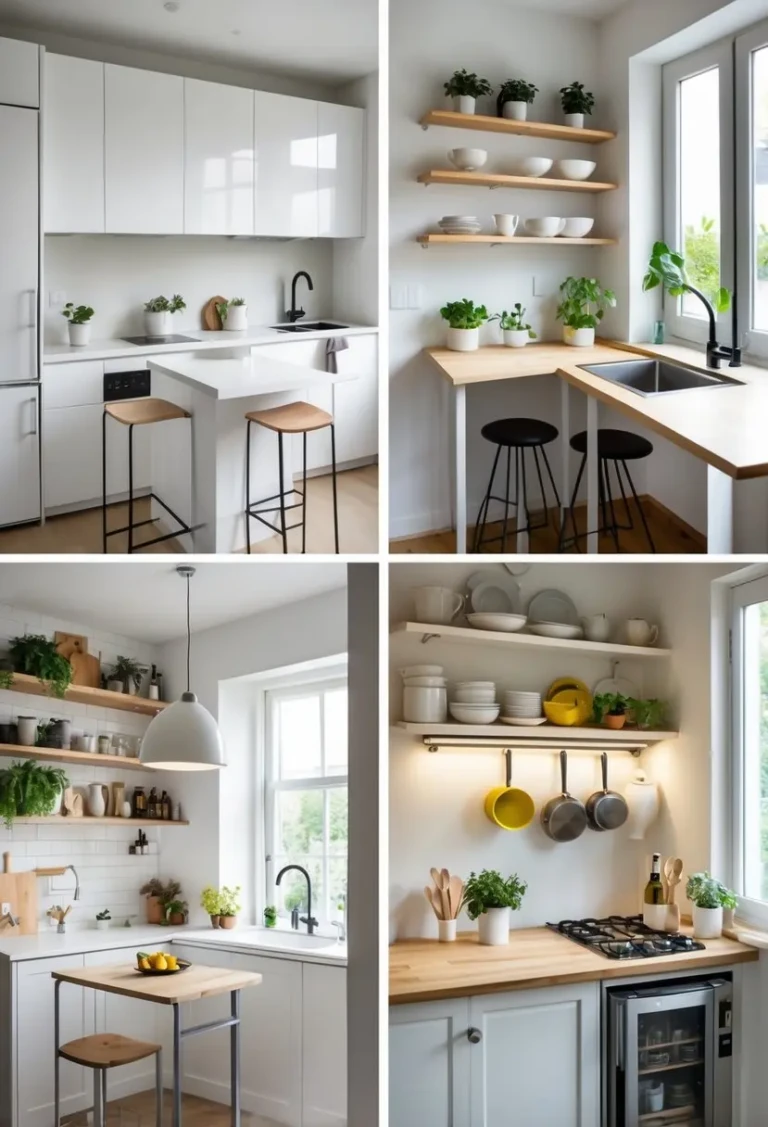
Rustic wood shelving against a soft gray or white wall, held up with matte black brackets, does two things at once: it adds vertical visual interest in a room that doesn’t have much floor space to spare, and it keeps your most-used dishes actually within reach instead of behind a cabinet door. A curated collection of white and pastel dishes reads intentional; a fully loaded shelf reads like storage overflow that ran out of cabinet space.
The mistake people make with open shelving in a modern farmhouse kitchen is treating it as extra storage instead of display. If you need the storage, it belongs behind a door — open shelving works best with roughly a third of what it could physically hold.
2. Refinish Cabinets or Paint With Matte White or Sage
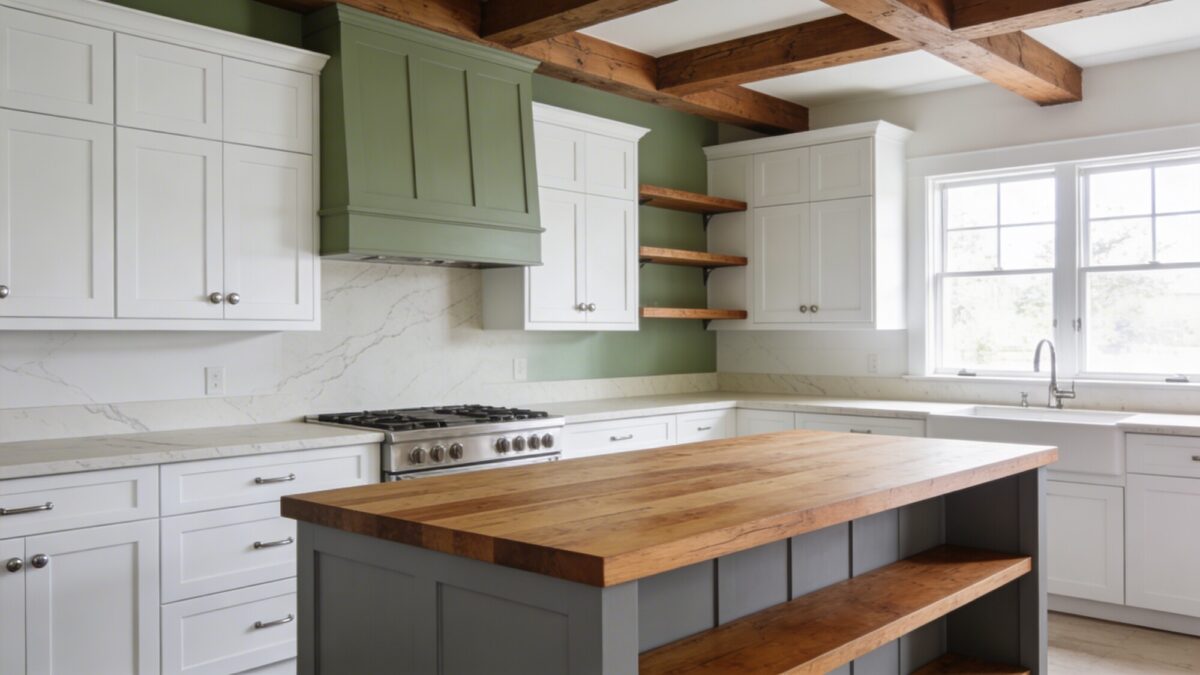
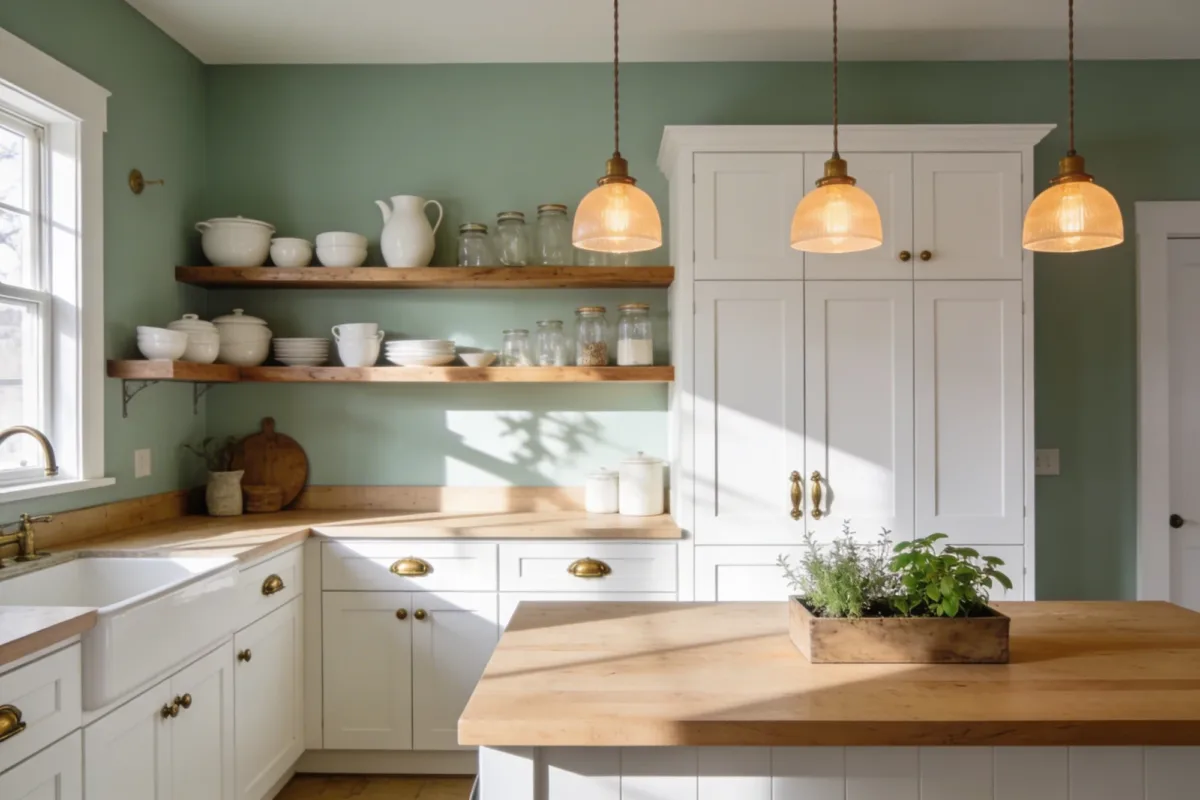
Cabinets set the tone for the entire kitchen, and repainting them is the single highest-impact, lowest-cost move on this list. Flat-panel or shaker doors in matte white or sage read as timeless rather than trendy, which matters if you don’t want to repaint again in five years. Leave some natural timber exposed — an island top or a floating shelf — so the room doesn’t tip fully into an all-white showroom look.
💡 Pro Tip: The prep work — cleaning, sanding, priming — takes longer than the actual painting, and skipping it is the number one reason a DIY cabinet refinish looks amateur within a year. Budget more time for prep than for paint.
3. Farmhouse-Style Lighting With Modern Geometry
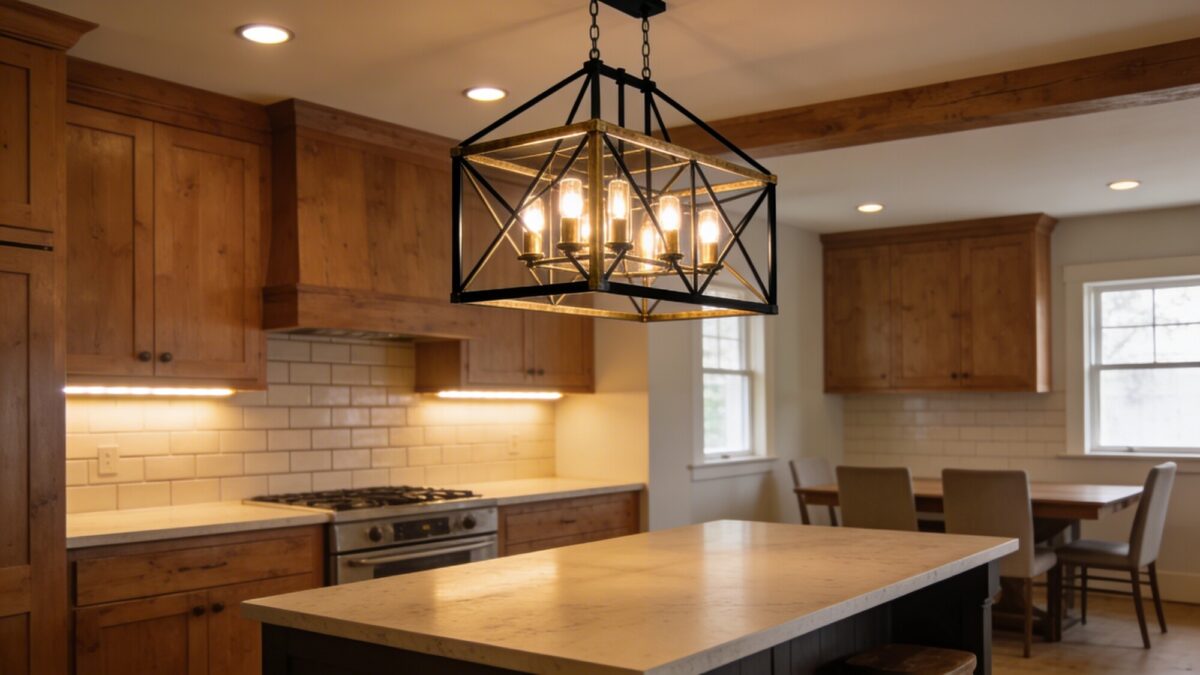
A caged or multi-arm pendant in aged brass or black metal over the island is the fixture that does the most to signal “modern farmhouse kitchen” without any structural work. Pair it with under-cabinet LED strips for actual task lighting and slim recessed cans elsewhere so the ceiling doesn’t get visually crowded.
If your budget doesn’t stretch to new fixtures, swap the shades and hardware on your existing lights first. It’s a smaller move than most people expect, and it changes the character of a fixture more than people assume before trying it.
4. Durable Countertops That Handle Real-Life Cooking
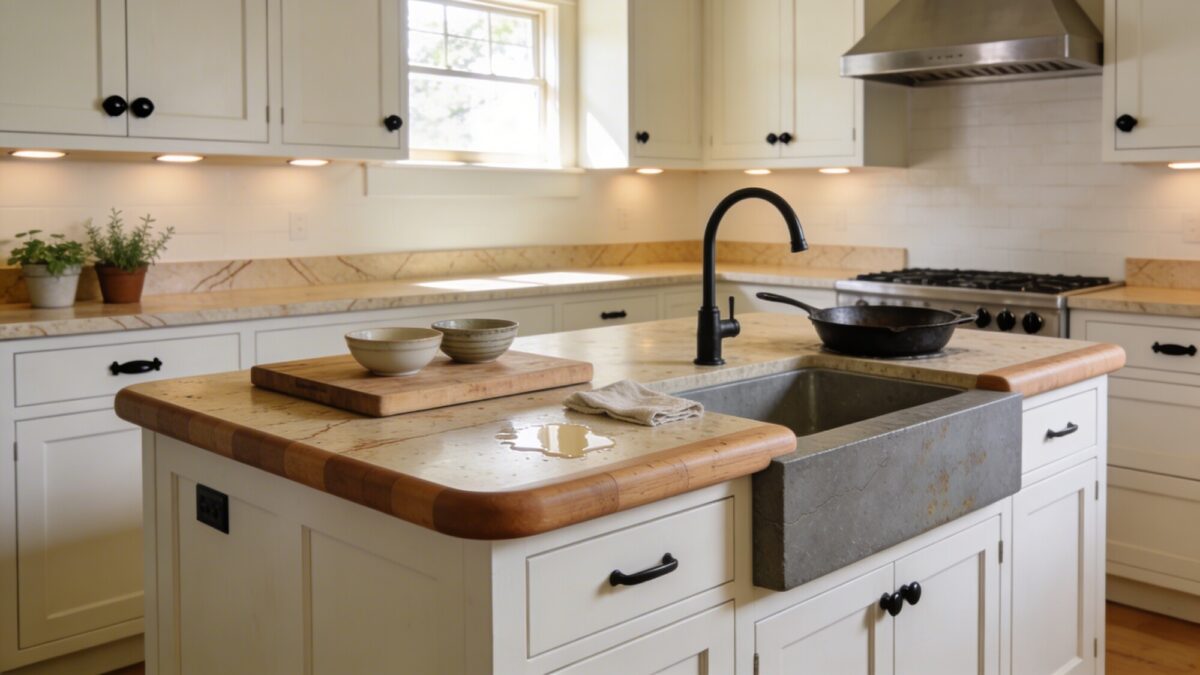
Warm-veined quartz, butcher-block edging, or soapstone all fit a farmhouse kitchen design aesthetic, but they behave differently day to day. Quartz resists staining and heat better than butcher block and needs no sealing; soapstone develops a patina over time that some people love and others find looks worn rather than aged. Butcher block is the warmest-looking option and the one that needs the most maintenance — regular oiling, and it’s not forgiving of standing water near the sink.
If a full countertop swap is outside your remodel budget for now, a butcher-block edge detail or a small waterfall panel at the island gets you some of the material change without replacing the whole surface. For more on how island sizing interacts with countertop choice in a tight kitchen, see this guide to small farmhouse kitchens with an island.
💡 Pro Tip: Don’t choose soapstone if you want a countertop that looks the same in year five as it does on install day — patina is the whole point of the material, and it can’t be avoided with regular use, only slowed with mineral oil.
5. Charming Backsplash With Subtle Texture
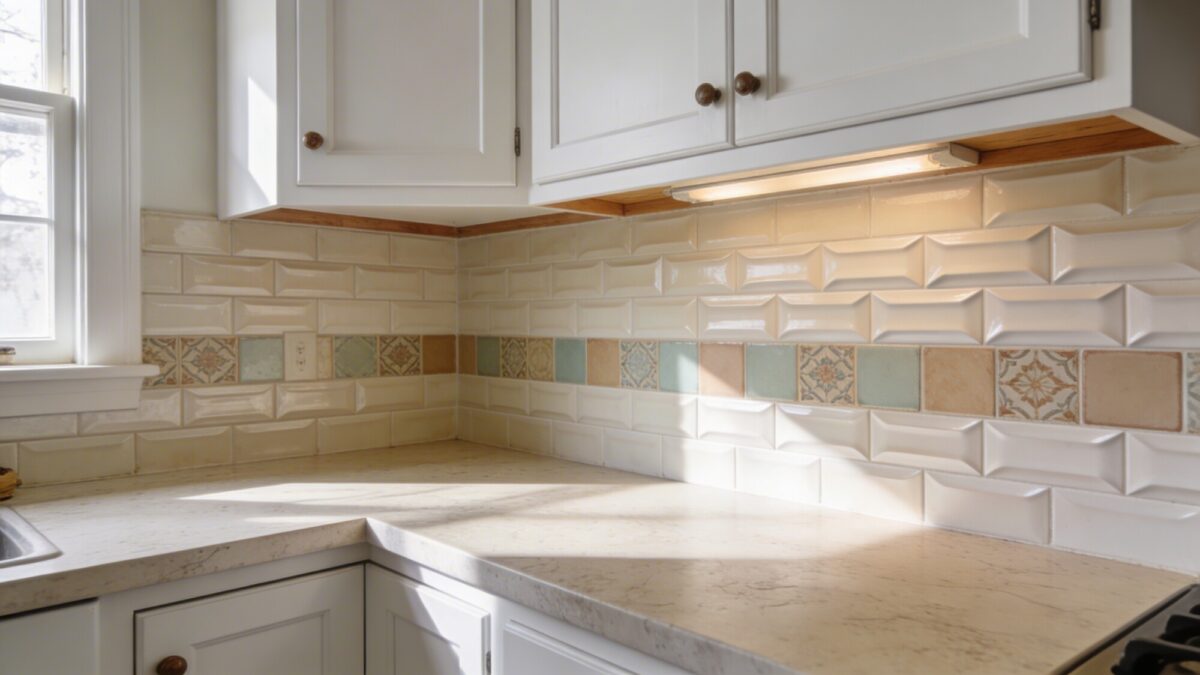
Beveled subway tile in a neutral glaze is the safest, most timeless backsplash choice for a small farmhouse-modern kitchen, and it’s forgiving to wipe down. The detail that actually matters is height: stopping the tile at the bottom of the upper cabinets keeps the wall from feeling heavy in a small room, where floor-to-ceiling tile can visually shrink the space rather than open it up.
6. Sink, Faucets, and Hardware With Subtle Drama
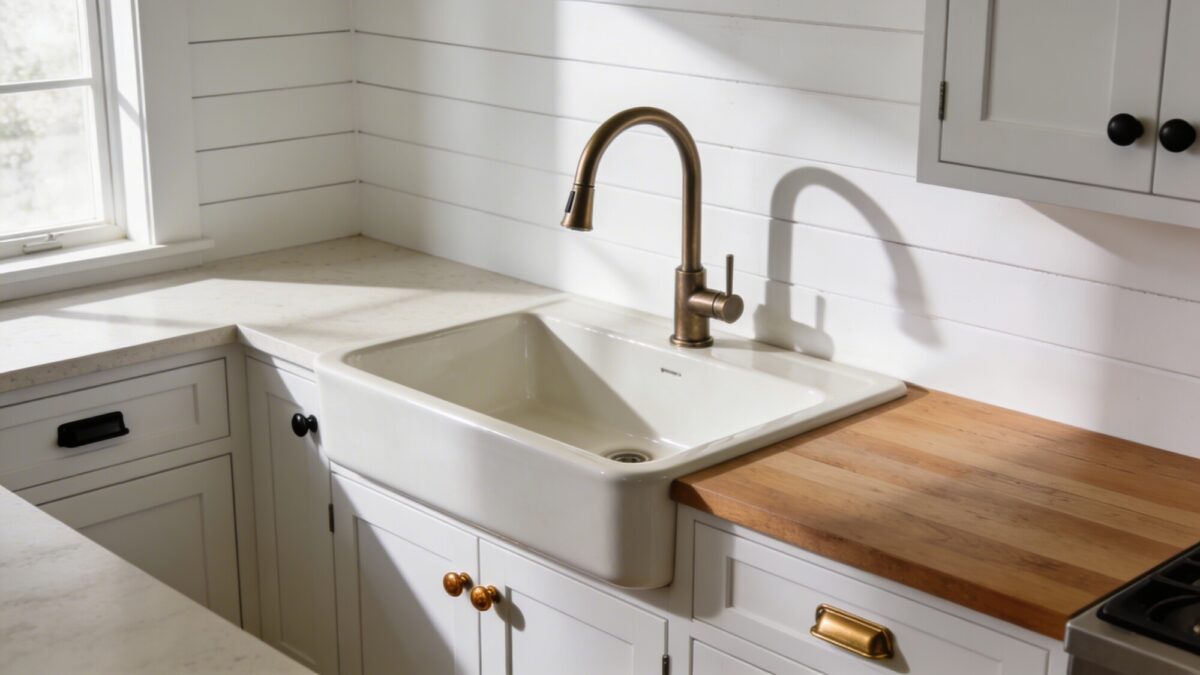
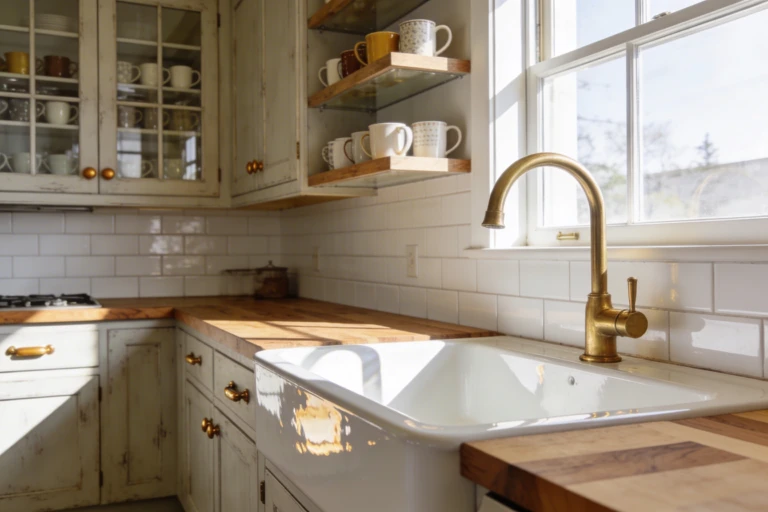
A wide, deep farmhouse sink in fireclay paired with a brushed oil-rubbed bronze or matte black pull-down faucet is the finishing detail that ties a farmhouse kitchen remodel together. Keep cabinet hardware simple and low-profile so it doesn’t compete with the statement faucet — one dramatic fixture per kitchen is usually the right number, not two.
A single deep basin also changes daily use more than people expect: fewer trips to rearrange dishes around a divider, easier to fit a sheet pan flat for soaking.
Ranking the Six Updates by Cost and Impact
| Update | Relative Cost | Relative Impact |
|---|---|---|
| Cabinet paint refresh | Low | High |
| Lighting (shades/hardware swap) | Low | Medium |
| Backsplash tile | Medium | Medium |
| Sink and faucet | Medium | High |
| Open shelving | Low | Medium |
| Countertop replacement | High | High |
Things to Consider Before You Start
- Sequence updates so wet-work (sink, backsplash) happens before or alongside cabinet painting, not after — protecting fresh paint from plumbing work is harder than doing it in the right order.
- Choose countertop material based on maintenance tolerance, not just look — soapstone and butcher block both require upkeep quartz doesn’t.
- Stop backsplash tile at the upper cabinet line in a small kitchen to avoid visual heaviness.
- Budget separately for prep work (sanding, priming) on any cabinet project — it takes longer than the painting itself.
- Limit yourself to one dramatic fixture (faucet or pendant) per kitchen so nothing competes for attention.
FAQ
What’s the single best first update for a small kitchen remodel farmhouse modern style?
Cabinet painting. It’s the lowest-cost, most DIY-friendly project on this list and changes the room’s whole feel more than any other single update.
Is soapstone or quartz better for a small farmhouse kitchen?
Quartz if you want low maintenance and a consistent look over time. Soapstone if you want the material to age and don’t mind occasional oiling to slow the patina.
How high should backsplash tile go in a small kitchen?
Stop at the bottom of the upper cabinets. Full-height tile in a small room tends to feel heavier rather than more finished.
Can I update lighting without rewiring anything?
Yes — swapping shades and hardware on existing fixtures gets a real visual change without touching wiring. Save a full fixture replacement for when you’re ready for an electrician anyway.
Do I need to do all six updates for the remodel to look finished?
No. Cabinets, lighting, and the sink/faucet combination cover most of what people notice. Countertops and backsplash can follow later as budget allows.
Our Take
If you’re sequencing a small kitchen remodel farmhouse modern style on a budget, start with cabinet paint and the sink/faucet swap — they’re the two updates with the best cost-to-impact ratio, and neither requires touching plumbing lines or walls. Save the countertop replacement for last; it’s the most expensive and least reversible decision here, so it’s worth living with the rest of the remodel first to confirm your material choice still feels right.
For a broader look at budget sequencing across a full remodel, this guide to small farmhouse kitchen remodels is a good next stop.