9 Small Farmhouse Kitchen Ideas That Wow in a Weekend
Most “small farmhouse kitchen ideas” lists read like they were written by someone who’s never actually stood at a countertop with a screwdriver in one hand and a paint chip in the other. This one isn’t that. Every idea below is something you can start on a Saturday morning and have wrapped up by Sunday dinner, and none of them require gutting your kitchen down to the studs.
If you’re working with a tight footprint, the goal isn’t to cram in more stuff — it’s to make the space feel intentional. For a broader look at how layout affects all of this, our guide to small-space kitchen essentials is a good companion read before you start pulling out tools.
Quick-Reference: Key Takeaways
- Hardware swaps and lighting changes give you the most visual impact per hour of labor.
- Cabinet color and wood type (maple, knotty pine, painted shaker) set the tone for whether a kitchen reads “farmhouse,” “cabin,” or somewhere in between.
- Open shelving only works if you’re willing to keep it edited — it’s storage that’s always on display.
- Apron-front sinks and reclaimed wood surfaces are the two upgrades most likely to need a second person or a contractor, depending on your plumbing and structural setup.
- Pick two or three projects, not all nine, and finish them properly before moving to the next.
1. Swap Cabinet Hardware for Cottage Charm
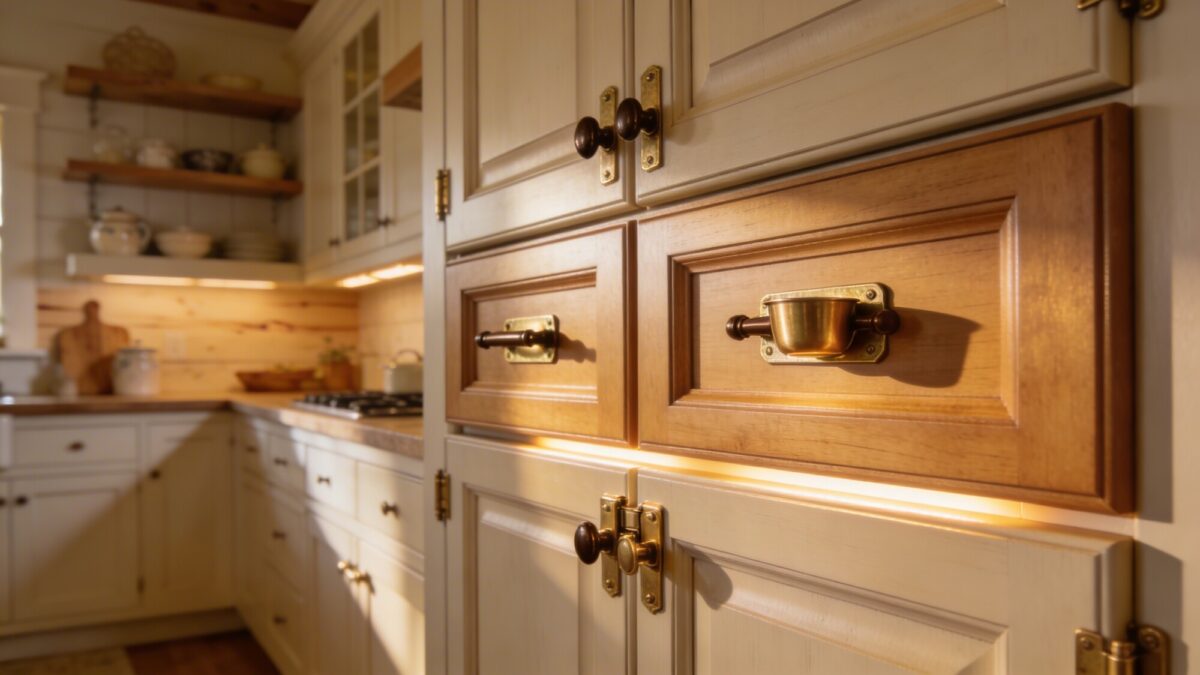
Hardware is the cheapest, fastest way to change how a kitchen reads. A shaker cabinet with a plain modern pull looks like a builder-grade rental; the same door with an oil-rubbed bronze cup pull looks like it’s been there for decades. The visual weight of the hardware does more work than people expect.
A few things worth knowing before you buy a full set:
- Measure your existing hole spacing (center-to-center) before ordering pulls, or you’ll be filling and re-drilling holes.
- Mixing knobs on doors with pulls on drawers is a common farmhouse convention — it’s not a mistake, it’s intentional variation.
- Backplates aren’t just decorative; they cover old screw holes if you’re changing spacing, which saves you a wood-filler step.
💡 Pro Tip: Before you commit to a finish, hold one pull up against your cabinet in both morning and evening light. Oil-rubbed bronze can read almost black under warm bulbs and noticeably brown in daylight — it’s the single most common reason people end up reordering.
This is genuinely a one-afternoon project for most kitchens under 15 cabinets, and it’s the one I’d recommend starting with if you’ve never done a DIY kitchen update before — the risk of messing it up badly is low, and the payoff is immediate.
2. Choose Wood Cabinets That Fit a Small Farmhouse (or Cabin) Kitchen
If hardware isn’t enough and you’re staring down a full cabinet decision, wood species matters more than most people budget time for. This is where kitchen design ideas with wood cabinets start to split into a few clear directions, and each one pulls the room toward a slightly different feel.
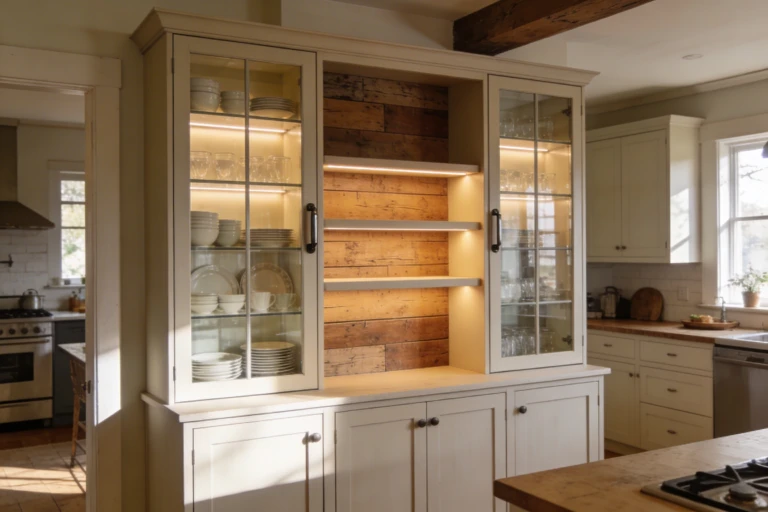
- Maple cabinets have a tight, subtle grain and take stain evenly, which is why kitchen ideas with maple cabinets tend to look clean and slightly more polished than other woods — a good fit if you want “farmhouse” without tipping into “rustic cabin.”
- Knotty pine kitchen cabinets go the opposite direction: visible knots, warmer tone, and a look that reads more like a small cabin kitchen than a classic white farmhouse. It’s the right call if your house already leans toward cabin-style architecture — exposed beams, board-and-batten walls, that kind of thing.
- Painted shaker over either wood splits the difference — you get the clean lines of the shaker profile with the option to go warm and neutral instead of stark white.
The trade-off nobody mentions: knotty pine and other small cabin kitchens hide daily wear better than a smooth painted finish, but they also make the space feel busier if the rest of your kitchen already has a lot of visual texture (open shelving, patterned tile, exposed hardware). If you’re already leaning rustic elsewhere, a quieter wood like maple keeps the room from feeling cluttered.
💡 Pro Tip: If you’re not ready to commit to new cabinet boxes, refacing or refinishing existing doors in a different wood tone gets you most of the visual change at a fraction of the cost and disruption — worth asking a local cabinet shop about before you assume a full replacement is the only option.
3. Open Shelving With a Purpose
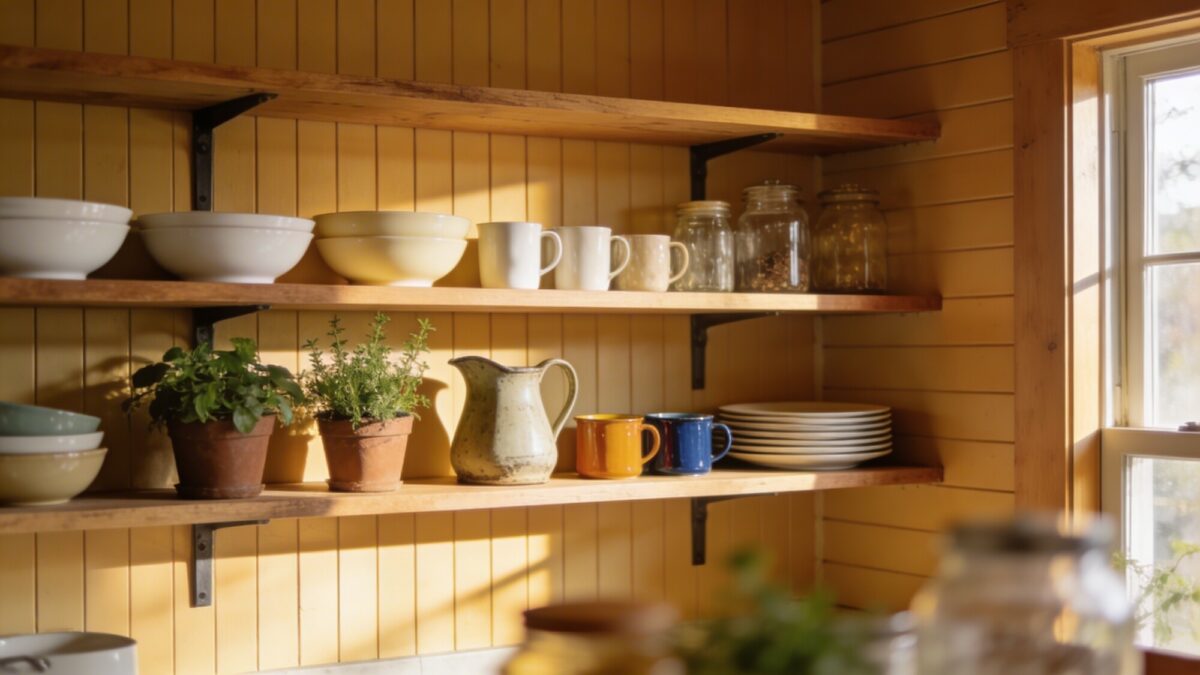
Open shelving gets recommended constantly, and it’s genuinely one of the better small-kitchen moves — but it only works if you treat it like a display, not overflow storage. The mistake people make is moving everything out of a crowded cabinet onto open shelves and wondering why the kitchen suddenly feels busier, not calmer.
What actually works:
- Group by color or material, not by function — a shelf of all-white dishware reads as intentional; a shelf of mismatched everyday items reads as clutter.
- Keep the top shelf sparse. It’s the first thing the eye hits when you walk in.
- Only put things up that you’d be fine dusting weekly, because open shelving in a kitchen — especially near a stove — collects grease film faster than closed cabinets.
For anchoring that look with dishware and finishes throughout the room, it’s worth browsing our farmhouse kitchen cabinet ideas for pairing suggestions.
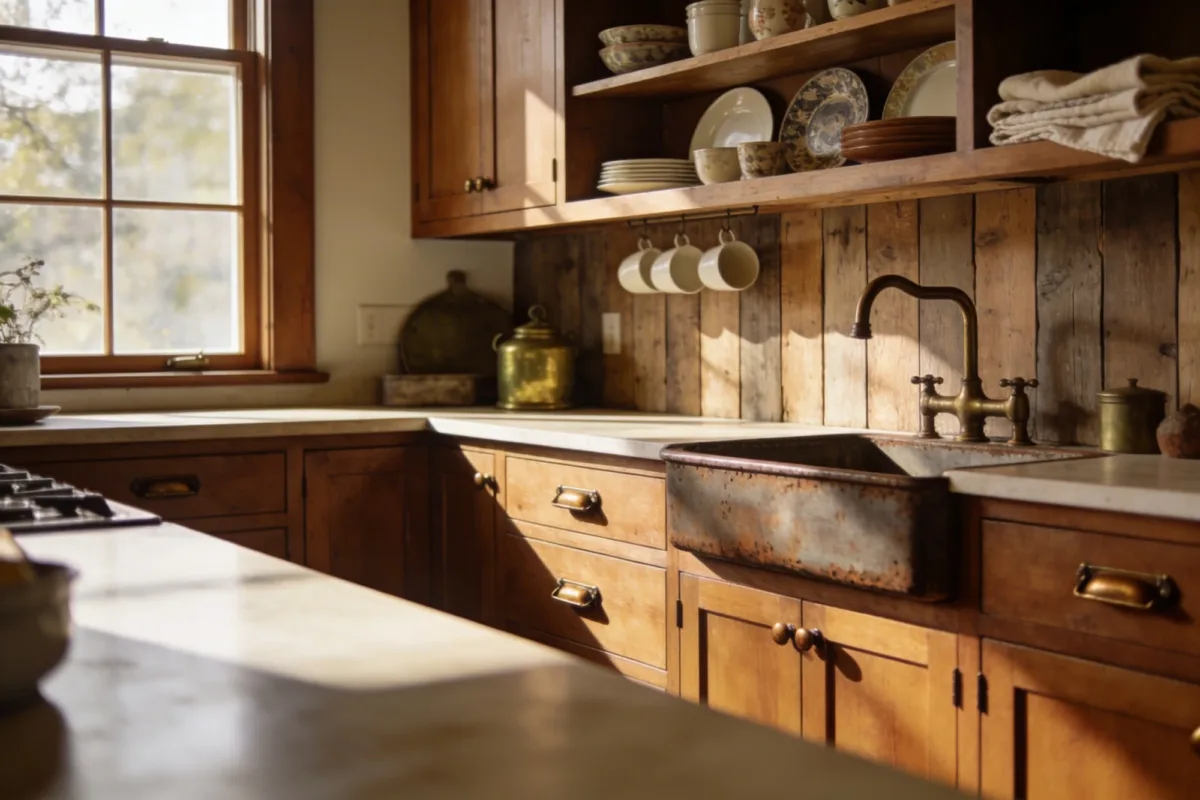
4. Sink-Front Planks for Rustic Texture
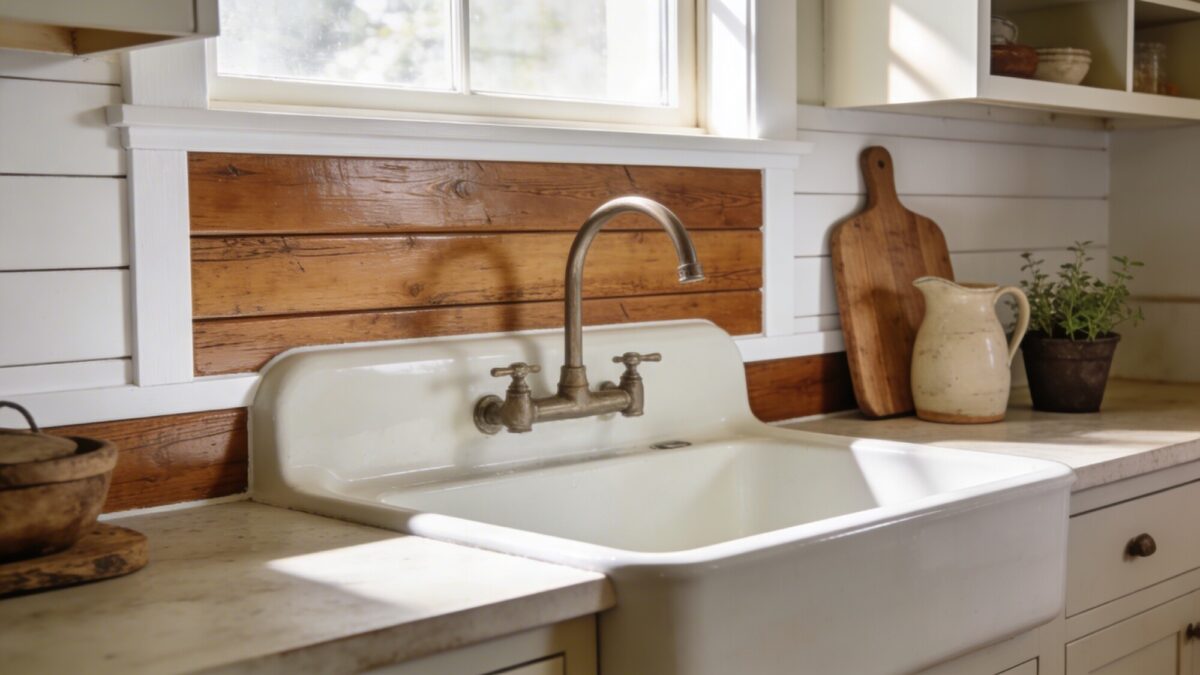
This is one of the better cost-to-impact upgrades on this list. Faux wood paneling or shiplap cut to fit behind and around the sink area covers a wall that usually gets ignored, and it’s the kind of detail that makes a kitchen look considered rather than default.
- Measure the wall area around your sink and choose faux wood paneling or shiplap cut to size.
- Install the planks, keeping seams tight against the wall.
- Seal with a matte polyurethane — this area gets splashed, so skipping the sealer is asking for water damage.
- Paint the plank edges white (optional) if you want more contrast against the wood tone.
💡 Pro Tip: Don’t skip the sealer coat even if the planks are “pre-finished” — most pre-finished faux wood is sealed on the face only, not the cut edges, and that’s exactly where water gets in over time near a sink.
5. Brighten With Milk-Glass and Whiteware
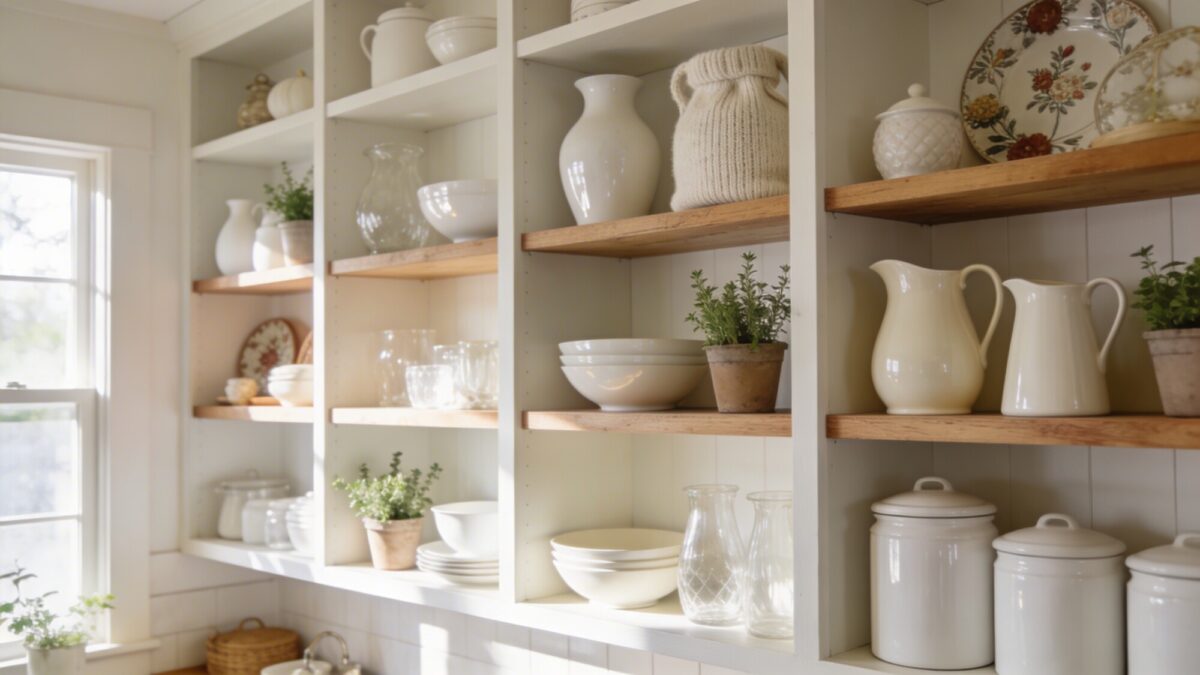
White ceramic and milk-glass pieces are a low-risk way to soften a small kitchen without adding clutter — they bounce available light instead of absorbing it, which matters in a room that often has one small window and a lot of hard surfaces.
- Vary shapes and heights so the grouping doesn’t look like a matched set from a catalog.
- Mix in a small potted herb or two for contrast against the white.
- Rotate one or two statement pieces seasonally instead of buying new decor every few months.
The practical upside: a shelf of white ceramic collects visible dust the same as anything else, but it’s far easier to spot-clean than a shelf of mismatched colored items, since smudges and grease show up clearly against white.
6. Reclaimed Wood Tabletops on Island or Table
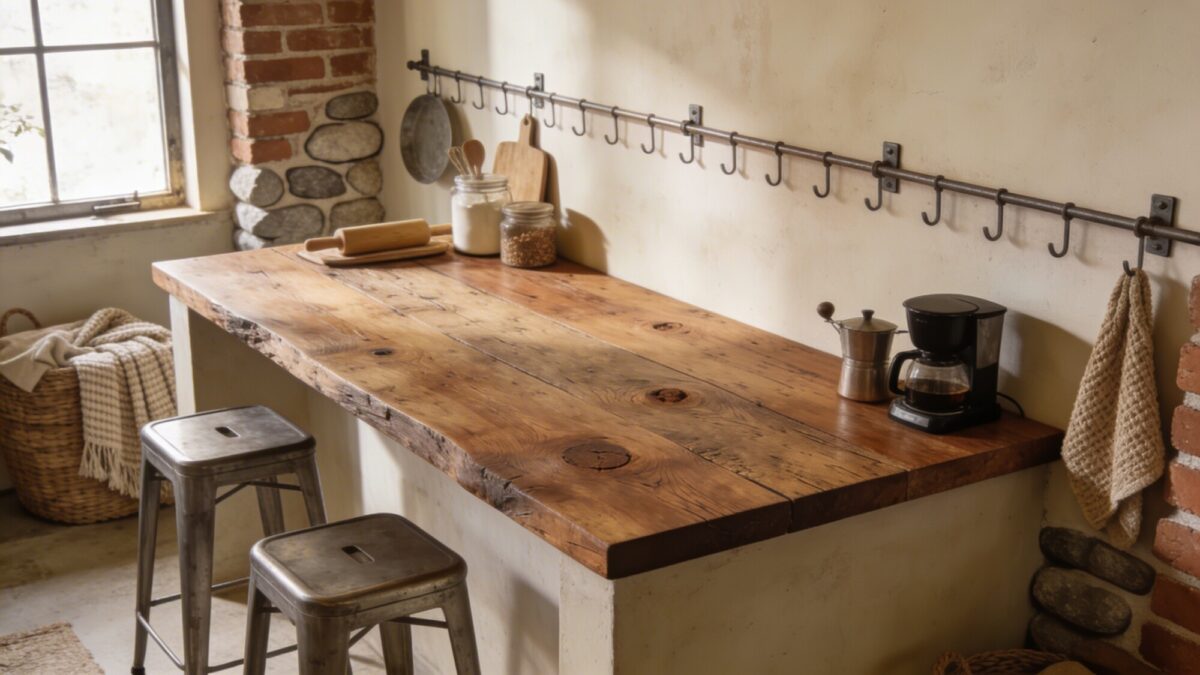
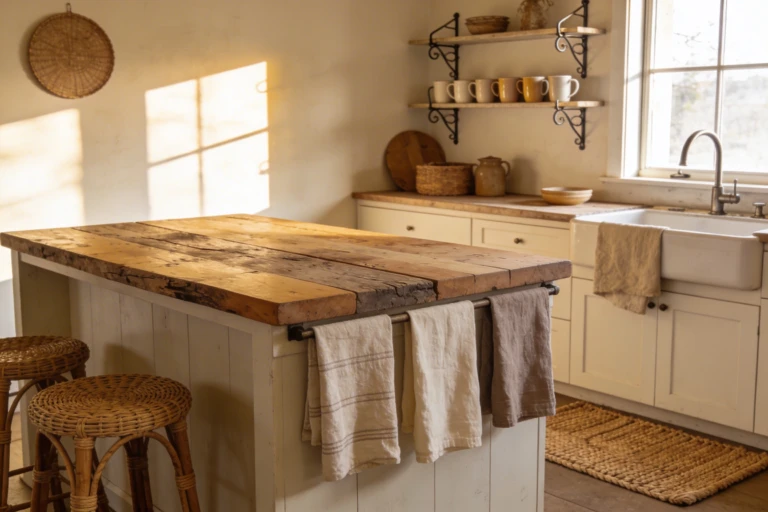
A reclaimed wood surface — whether it’s a full island top or just a small farmhouse table pushed against a wall — does more to anchor a room than almost any other single piece. It’s the one item in the kitchen that looks intentionally imperfect, which contrasts well against smoother cabinetry.
- Seal with a matte finish rated for kitchen use so it can handle spills without staining permanently.
- Pair with a peg rail or simple metal stools if you want to blend farmhouse with a slightly more industrial edge.
- Size it to your actual footprint — an oversized reclaimed top in a small kitchen turns a warm feature into a traffic obstacle.
Trade-off worth knowing going in: reclaimed and live-edge wood surfaces need more regular resealing than engineered butcher block, because the wood is often less dense and more prone to absorbing moisture at the grain. If you’re not up for occasional maintenance, ask about a reclaimed-look finish on engineered wood instead of true salvaged lumber.
7. Vintage-Inspired Lighting That Sets the Mood
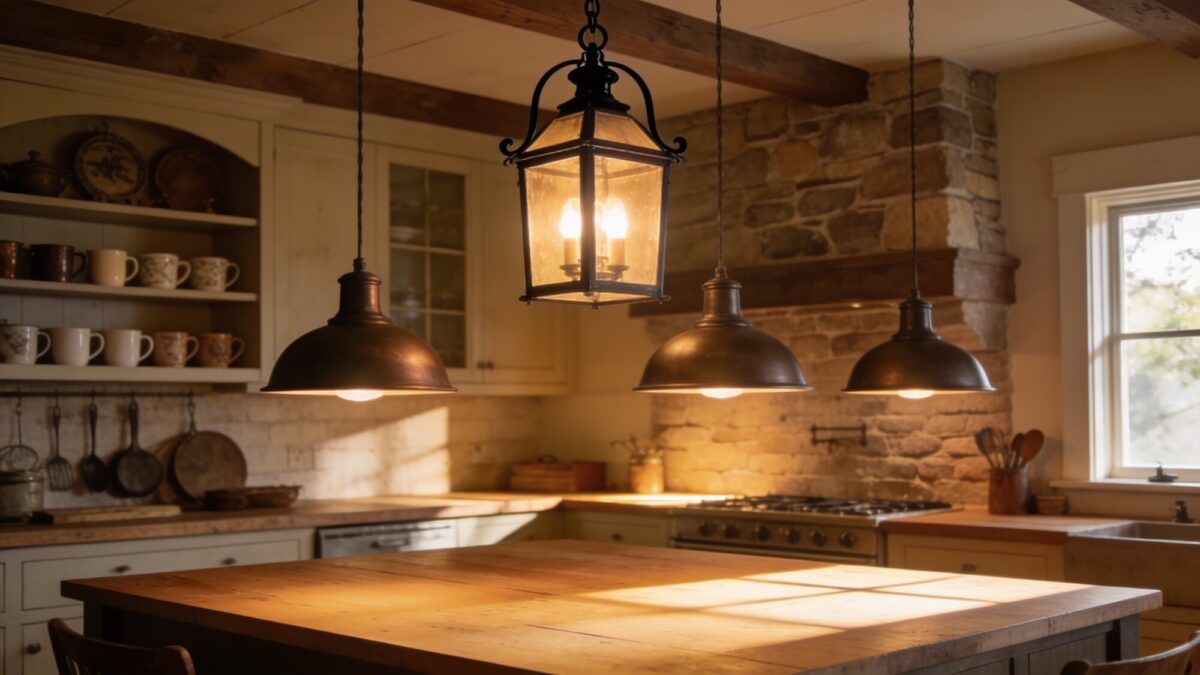
Lighting changes the feel of a kitchen faster than paint, and it’s one of the most underused upgrades on lists like this. A pendant or lantern-style fixture in the right finish shifts the whole room from “functional” to “considered” in a single afternoon of work.
- Oil-rubbed bronze or black metal finishes read as classic farmhouse without looking dated.
- Shaded pendants over an island or peninsula give you actual task lighting, not just ambiance.
- Warm bulbs in the 2700K–3000K range avoid the stark, clinical look that cooler bulbs create in a wood-heavy room.
💡 Pro Tip: Add a dimmer even if you think you won’t use it. The single biggest lighting mistake in small kitchens is having one bright setting that’s either too harsh for evening use or too dim for prep work — a dimmer solves both without buying a second fixture.
8. Farmhouse Sink With Classic Details
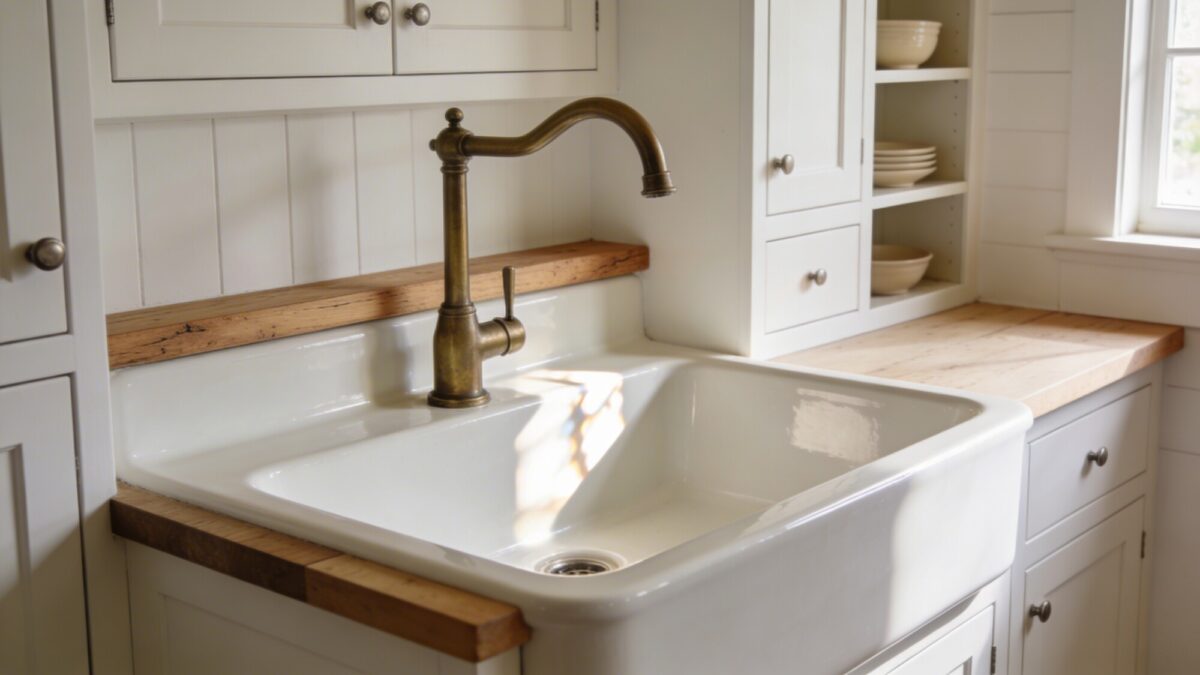
An apron-front (farmhouse) sink is the one item on this list that’s more than a weekend project for most kitchens — it usually means new base cabinetry or at least a modified cabinet front to expose the apron, plus a plumber if your drain or supply lines need to move. That said, if you’re already planning a fuller update, it’s worth the swap for both looks and function.
| Material | Durability | Weight | Best For |
|---|---|---|---|
| Fireclay | Very high resistance to chips and stains | Heavy — needs solid cabinet support | Long-term daily use, classic white look |
| Cast Iron (enameled) | Durable, but enamel can chip over time | Very heavy | Traditional farmhouse look, budget-conscious buyers |
| Stainless Steel Apron | Dent-resistant, doesn’t stain | Lighter than fireclay/cast iron | Cabin-style or industrial-leaning farmhouse kitchens |
Single-basin styles are worth considering over double-basin in a small kitchen — you lose the divider that eats up usable washing space, and a long, shallow front does a better job of hiding water spots between cleanings than a deep basin does.
If a sink swap is part of a bigger plan rather than a standalone project, our small farmhouse kitchen remodel guide covers how to sequence bigger changes like this one without tearing everything out at once.
9. Cast-Iron Skillet Display as Decor and Tool
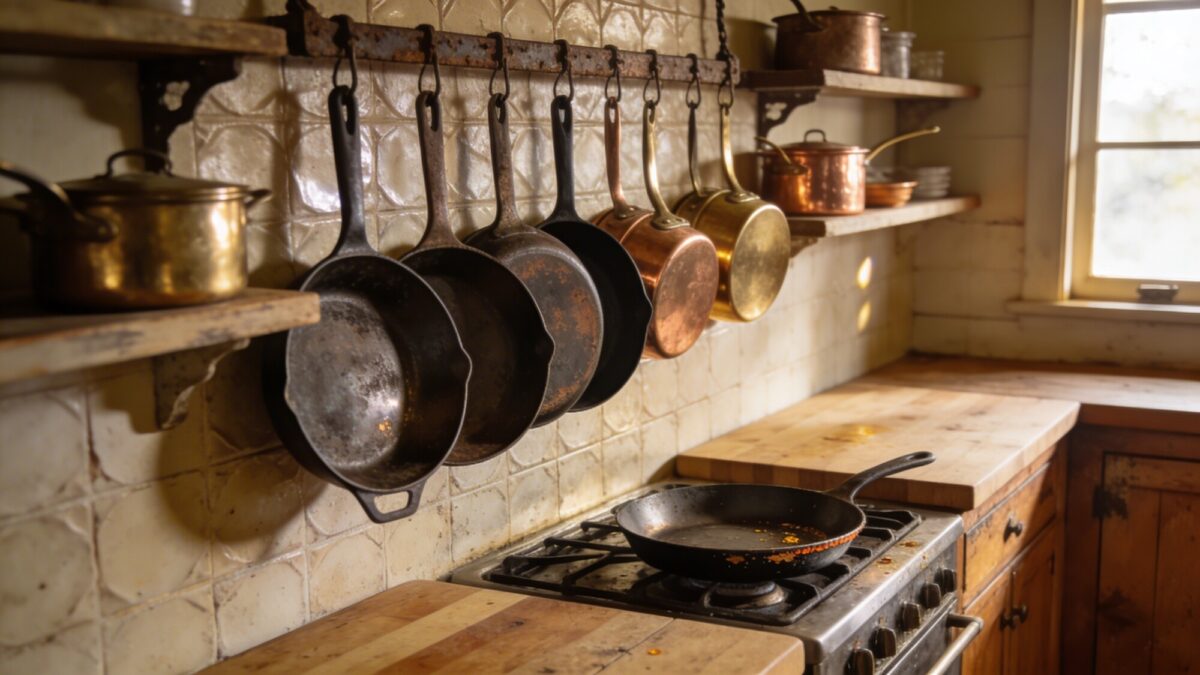
Cookware you already own can double as decor, and cast iron is the obvious candidate — it looks intentional hanging on a rack, and unlike most wall decor, it earns its spot by actually getting used. A hanging rack or hook rail near the stove keeps your most-used pans within reach instead of stacked in a cabinet.
- Group two or three sizes together for visual rhythm rather than one lonely skillet.
- Mix in a copper or brass pot for tonal variety against the dark cast iron.
- Keep skillets seasoned — a well-maintained cast-iron finish looks better on display than a dull, under-seasoned one.
One thing to plan around: hanging cast iron needs real structural support, not just a decorative hook stuck into drywall. A stud-mounted rail or a ceiling-mounted rack anchored into a joist is the difference between a nice display and a skillet on the floor.
Bonus: Cozy Seating Nook or Mini Breakfast Area
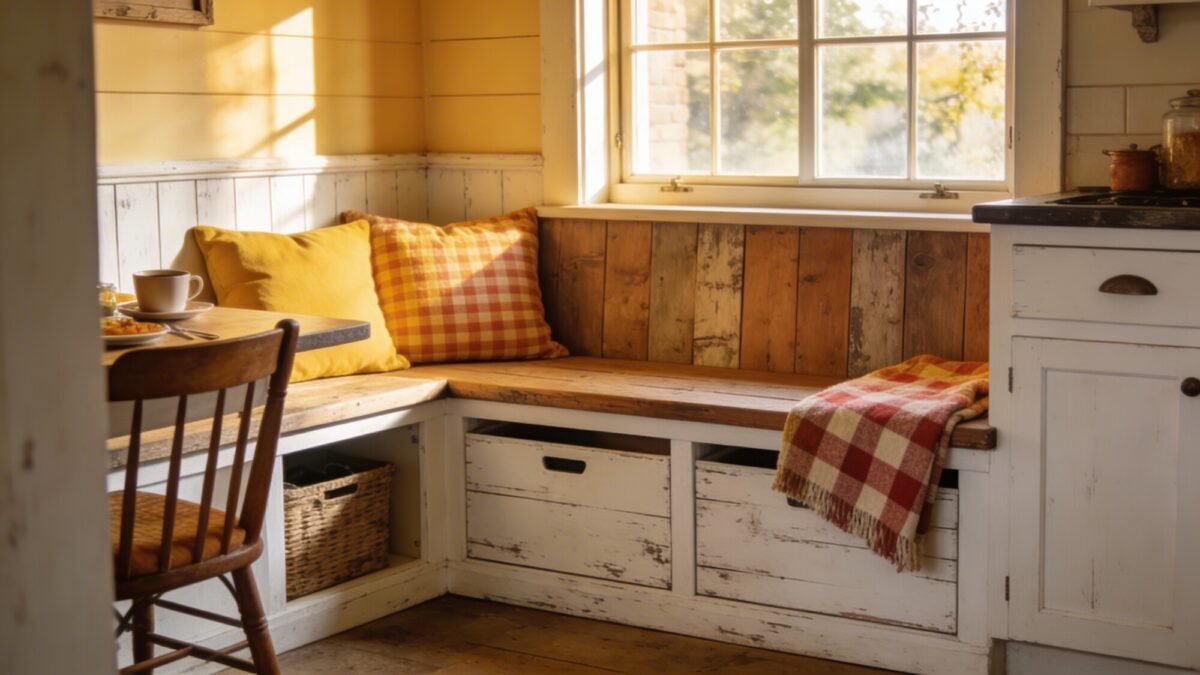
If you don’t have room for a full dining table, a built-in bench with hidden storage under the seat solves two problems at once — you get a spot for quick meals, and you get storage that a freestanding table never offers. Weathered or white-painted wood keeps it in line with the rest of a farmhouse or small cabin kitchen aesthetic.
Weekend Project Planner
Not every idea on this list takes the same amount of time or skill. Use this as a rough guide for sequencing your weekend:
| Project | Typical Time | Skill Level | Relative Cost |
|---|---|---|---|
| Cabinet hardware swap | 2–4 hours | Beginner | Low |
| Open shelving install | Half a day | Beginner–Intermediate | Low–Medium |
| Sink-front planking | Full day | Intermediate | Low–Medium |
| Lighting fixture swap | 2–5 hours | Intermediate (electrical) | Medium |
| Reclaimed wood tabletop | Full day, plus curing time for sealant | Intermediate | Medium |
| Apron-front sink | Multi-day, likely needs a plumber | Advanced / Professional | Medium–High |
| Built-in bench nook | 1–2 weekends | Advanced (carpentry) | Medium–High |
A reasonable weekend plan is one low-effort project (hardware or shelving) paired with one medium project (lighting or planking) — trying to knock out a sink swap and a bench build in the same two days is how projects stall out half-finished.
Small Farmhouse vs. Small Cabin Kitchen: What’s the Actual Difference?
These two styles overlap more than most articles admit, and the line between “farmhouse small kitchen ideas” and “small cabin kitchen ideas” often comes down to two things: wood tone and hardware finish.
- Small farmhouse kitchens lean toward white or painted cabinetry, brushed brass or bronze hardware, and lighter wood accents (a table, an island top) against mostly neutral surfaces.
- Small cabin kitchens tend to keep more wood visible throughout — knotty pine cabinets, exposed wood walls or ceilings, darker iron hardware — and use less white as a base color.
If your house already has cabin-style architecture — log or timber construction, low ceilings, exposed beams — pushing hard toward an all-white farmhouse look can fight the bones of the room. In that case, leaning into a cabin style kitchen with knotty pine or stained wood cabinets usually looks more cohesive than forcing a farmhouse palette onto it.
Pros and Cons of a Full Small Farmhouse Kitchen Refresh
- Pro: Most of the highest-impact changes (hardware, lighting, shelving) don’t require permits or contractors.
- Pro: Farmhouse style tolerates mixed textures and imperfect finishes well, which is forgiving for DIY work.
- Con: Open shelving and displayed cookware require ongoing upkeep — this isn’t a “set it and forget it” style.
- Con: The bigger-ticket items (sink, cabinets, built-in seating) can snowball into a larger project once you start.
Things to Consider Before You Start
- Do you rent or own? Hardware and lighting swaps are usually reversible; sink and cabinet changes are not.
- What’s your existing wood tone? Adding maple or pine accents against existing oak or walnut cabinetry can clash if you don’t test a sample first.
- How much daily wear does the kitchen see? A busy family kitchen may not be the place for open shelving with breakable ceramics at kid height.
- Is your electrical panel and wiring up to date if you’re adding a new pendant fixture? Older homes sometimes need a junction box relocated.
FAQ
Do I need a contractor for a farmhouse sink swap?
Usually, yes, at least for the plumbing connection. If your new sink is a different depth or basin count than the old one, your drain and supply lines may need to move, and the base cabinet often needs modification to expose the apron front.
What’s the fastest way to make a small kitchen feel more farmhouse without spending much?
Hardware and lighting, in that order. Both are reversible, both take under a day, and both change the room’s overall feel more than most people expect from something so small.
Is knotty pine outdated for a kitchen?
Not inherently — it depends on the rest of the room. Knotty pine paired with dark countertops and black hardware reads current and cabin-inspired; knotty pine paired with a lot of other warm-toned wood and clutter can feel dated fast.
Should I choose maple or knotty pine cabinets for a small kitchen?
Maple if you want a cleaner, more farmhouse-formal look with less visual texture. Knotty pine if your home already leans cabin-style and you want the cabinets to match that architecture rather than fight it.
Is open shelving actually practical, or just for photos?
It’s practical if you’re genuinely willing to keep it edited and dust it regularly. If your daily habit is to shove dishes wherever there’s space, closed cabinets will serve you better long-term.
Our Verdict
If you’re only doing one thing this weekend, do the cabinet hardware. It’s the lowest-risk, highest-visibility change on this list, and it tells you almost immediately whether you like the direction you’re heading before you spend real money on cabinets, sinks, or lighting. From there, layer in lighting, then shelving, and treat the bigger structural items — the sink, full cabinet replacement, a built-in bench — as a separate, planned project rather than something to squeeze into the same weekend.
For a full walkthrough of sequencing a larger update once you’re past the small tweaks, see our small farmhouse kitchen on a budget guide.