Small spaces get a bad reputation. People act like you need a mansion-sized floor plan just to breathe comfortably. You don’t. A smart small kitchen living room open concept can feel airy, cozy, stylish, and way more functional than a giant room stuffed with random furniture nobody uses. The trick? Stop fighting the size of the room and start designing with it. Once you lean into smart layouts, visual flow, and a little restraint (yes, even with throw pillows), everything changes. Start With a Layout That Actually Makes Sense Before you buy furniture or paint walls, figure out how people move through the space. Open concepts work best when traffic flows naturally. Nobody wants to squeeze sideways past a coffee table every morning just to make coffee. Photo by Pickawood on Unsplash Think in “zones” instead of separate rooms: Cooking zone Dining zone Relaxing zone Each area should feel connected without blending into one giant blob of furniture. A simple rule? Keep walkways clear. Aim for at least a couple feet of breathing room between major pieces. Your shins will thank you later. Photo by Pickawood on Unsplash Avoid the “Wall-Hugging” Mistake People love pushing every piece of furniture against the walls in small rooms. Sounds logical, right? Weirdly, it often makes the room feel smaller. Instead: Float the sofa slightly away from the wall Use a rug to define the living area Let furniture create structure naturally Even a few inches of space can make the room feel intentional instead of cramped. Photo by POOJAN THANEKAR on Unsplash SAFAVIEH Natural Fiber Collection Area Rug – 6′ x 9′, Natural & I… These rugs are made of natural materials such as jute, sisal, and sea grass Each rug is Hand made and Hand Woven Great for any home, from a beach house to a City apartment $214.39 Buy on Amazon Choose Light Colors — But Don’t Make It Boring Yes, light colors help open up a room. No, that doesn’t mean your apartment needs to look like a hospital waiting room. Stick with warm whites, soft beige, pale greige, muted sage, or light taupe. These shades reflect light beautifully while still feeling cozy. Then layer in texture: Wood accents Linen curtains Woven baskets Matte black hardware Soft rugs Texture adds depth without visual clutter. IMO, that’s the real secret to a beautiful small space. Keep the Color Palette Tight Too many colors create chaos fast. Open concepts already combine multiple functions in one room, so your palette needs consistency. Try this formula: 2 main neutral colors 1 accent color 1 metal finish That’s it. Resist the urge to add “just one more fun color.” That’s how rooms end up looking like a clearance aisle. MIULEE Pinch Pleated Thick Linen Curtains 90 Inches 4 Panels Set … LUXURIOUS HEAVY LINEN BLEND FABRIC: Crafted from a premium blend of 30% linen and 70% polyester, our thick curtains feat… PINCH PLEATED DESIGN WITH MULTIPLE HANGING OPTIONS: Featuring an elegant pinch pleated top design, these curtains offer … HEAT-SET MEMORY PLEATS FOR LONG-LASTING SHAPE: Our curtains are heat-set at high temperatures to ensure the pleats retai… $76.85 Buy on Amazon Use Multifunctional Furniture Everywhere In a small open-concept space, every piece should earn its spot. Your furniture should work overtime: Storage ottomans Nesting tables Extendable dining tables Benches with hidden storage Slim kitchen islands with seating A bulky sectional might look amazing online, but if it eats half the room, it’s not the one. Look for furniture with: Exposed legs Slim silhouettes Open bases Compact proportions Visually lighter furniture makes the room feel bigger because your eyes can travel underneath and around it. Don’t Oversize the Rug This one surprises people. Tiny rugs make spaces feel awkward and disconnected. Use a rug large enough for at least the front legs of your sofa and chairs to sit on it. A properly sized rug anchors the space and creates visual unity. Tiny rug = floating furniture chaos. Let Lighting Do the Heavy Lifting Bad lighting shrinks a room instantly. One lonely ceiling light in the middle of the space? Brutal. Layer your lighting instead: Pendant lights over the kitchen area Floor lamps near seating Under-cabinet kitchen lighting Table lamps for warmth Multiple light sources create depth and make the entire room feel larger. Natural light matters too. Avoid heavy curtains that block windows like they owe you money. Mirrors Still Work — Because Science Okay, not science exactly, but mirrors reflect light and create visual depth. Designers use them constantly for a reason. Place a large mirror: Across from a window Behind a dining table Near a light source Instant brightness boost. And no, mirrors aren’t “outdated.” They’re just effective. Create Separation Without Closing the Space Open concept doesn’t mean everything should visually melt together. You still need subtle boundaries between areas. Try using: Rugs Lighting changes Open shelving Different textures A small kitchen island These elements define spaces without blocking sightlines. Use Vertical Space Smartly When floor space feels tight, go upward. Install: Tall shelving Floating shelves Vertical cabinets Wall hooks Slim pantry storage Just don’t overstuff every wall with decor. A little negative space keeps the room feeling open and calm. Think curated, not cluttered. Keep Decor Minimal but Personal Minimal doesn’t mean sterile. It means intentional. Instead of displaying 47 tiny objects everywhere, choose a few meaningful pieces: One large artwork A couple plants A textured vase Cozy pillows A statement light fixture Large decor often works better than lots of tiny items because it reduces visual noise. Plants Make Everything Better Seriously. Even one plant softens a space instantly. Great options for small open concepts: Snake plants Pothos Rubber plants Olive trees Small herbs in the kitchen Plants add life without taking up much visual weight. Plus, they make you look like you totally have your life together. Make the Kitchen Blend With the Living Area One of the biggest mistakes in a small kitchen living room open concept? Treating the kitchen like a completely separate world. The kitchen should visually connect with the living area through: Matching tones Similar materials Coordinated hardware Consistent flooring That doesn’t mean everything needs to match perfectly. You’re decorating a home, not building a showroom. Open Shelving: Yes or No? Open shelving looks amazing in photos. In real life? Depends on your habits. If you can keep shelves neat, they help a small kitchen feel airy. If clutter magically appears in your home overnight, maybe stick with closed cabinets. No shame. Closed storage exists for a reason. FAQ How do you make a small open-concept space feel bigger? Use light colors, layered lighting, multifunctional furniture, and clear walkways. Keep clutter low and maintain visual consistency across the space. What colors work best for small kitchen living room combos? Warm neutrals work best: Soft white Beige Light gray Sage green Taupe These shades reflect light and help the room feel open without looking cold. Should the kitchen and living room match? They should coordinate, not perfectly match. Use similar tones, materials, or finishes so the space feels connected and balanced. Is open shelving good for small kitchens? It can work well if you keep it organized. Open shelves create an airy look, but clutter becomes very noticeable quickly. What type of sofa works best in a small open-concept room? Choose a compact sofa with clean lines and raised legs. Avoid oversized sectionals unless the layout truly supports them. How do you separate spaces without walls? Use rugs, lighting, furniture placement, shelving, or a kitchen island to define zones while keeping the room visually open. Conclusion Designing a small kitchen living room open concept comes down to balance. You want openness without emptiness, comfort without clutter, and style without squeezing every inch to death. Focus on flow, light, smart furniture, and a cohesive look. Keep only what serves the space, and don’t underestimate the power of good lighting and a well-placed rug. Small spaces can feel incredible when you stop trying to make them bigger and start making them smarter.
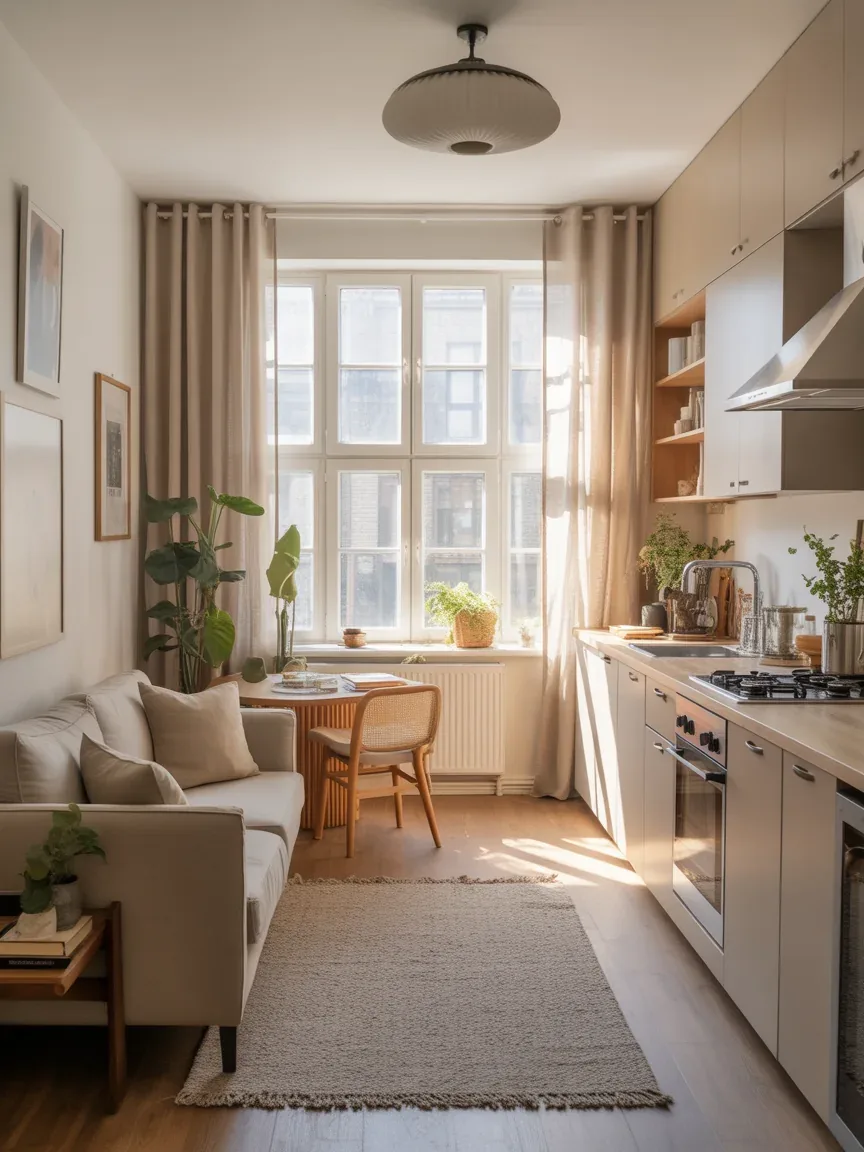
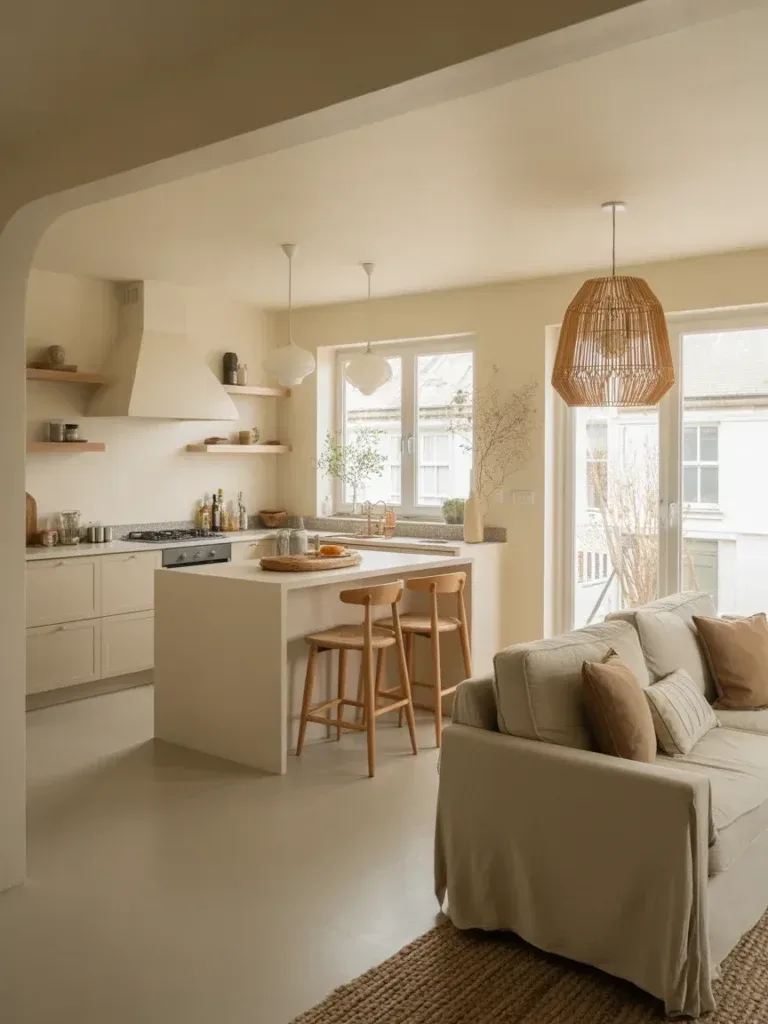
Small spaces get a bad reputation. People act like you need a mansion-sized floor plan just to breathe comfortably. You don’t. A smart small kitchen living room open concept can feel airy, cozy, stylish, and way more functional than a giant room stuffed with random furniture nobody uses.
The trick? Stop fighting the size of the room and start designing with it. Once you lean into smart layouts, visual flow, and a little restraint (yes, even with throw pillows), everything changes.
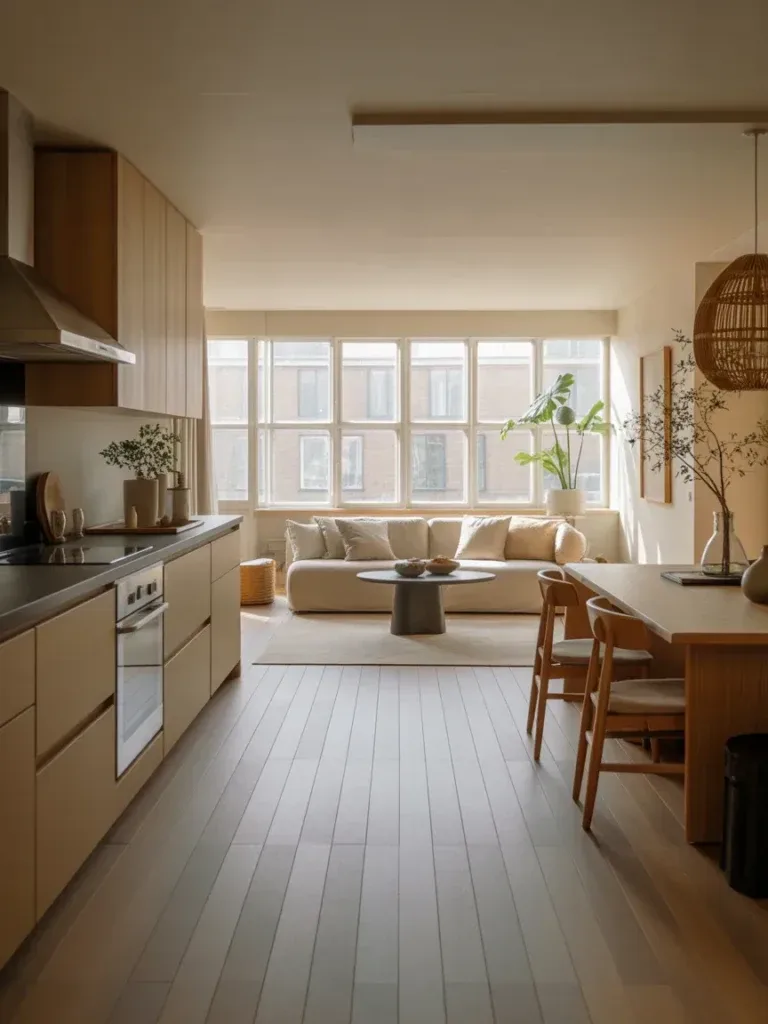
Before you buy furniture or paint walls, figure out how people move through the space. Open concepts work best when traffic flows naturally. Nobody wants to squeeze sideways past a coffee table every morning just to make coffee.
Use a rug large enough for at least the front legs of your sofa and chairs to sit on it. A properly sized rug anchors the space and creates visual unity.
One of the biggest mistakes in a small kitchen living room open concept? Treating the kitchen like a completely separate world.
The kitchen should visually connect with the living area through:
Matching tones
Similar materials
Coordinated hardware
Consistent flooring
That doesn’t mean everything needs to match perfectly. You’re decorating a home, not building a showroom.
Open Shelving: Yes or No?
Open shelving looks amazing in photos. In real life? Depends on your habits.
If you can keep shelves neat, they help a small kitchen feel airy. If clutter magically appears in your home overnight, maybe stick with closed cabinets.
No shame. Closed storage exists for a reason.
FAQ
How do you make a small open-concept space feel bigger?
Use light colors, layered lighting, multifunctional furniture, and clear walkways. Keep clutter low and maintain visual consistency across the space.
What colors work best for small kitchen living room combos?
Warm neutrals work best:
Soft white
Beige
Light gray
Sage green
Taupe
These shades reflect light and help the room feel open without looking cold.
Should the kitchen and living room match?
They should coordinate, not perfectly match. Use similar tones, materials, or finishes so the space feels connected and balanced.
Is open shelving good for small kitchens?
It can work well if you keep it organized. Open shelves create an airy look, but clutter becomes very noticeable quickly.
What type of sofa works best in a small open-concept room?
Choose a compact sofa with clean lines and raised legs. Avoid oversized sectionals unless the layout truly supports them.
How do you separate spaces without walls?
Use rugs, lighting, furniture placement, shelving, or a kitchen island to define zones while keeping the room visually open.
Conclusion
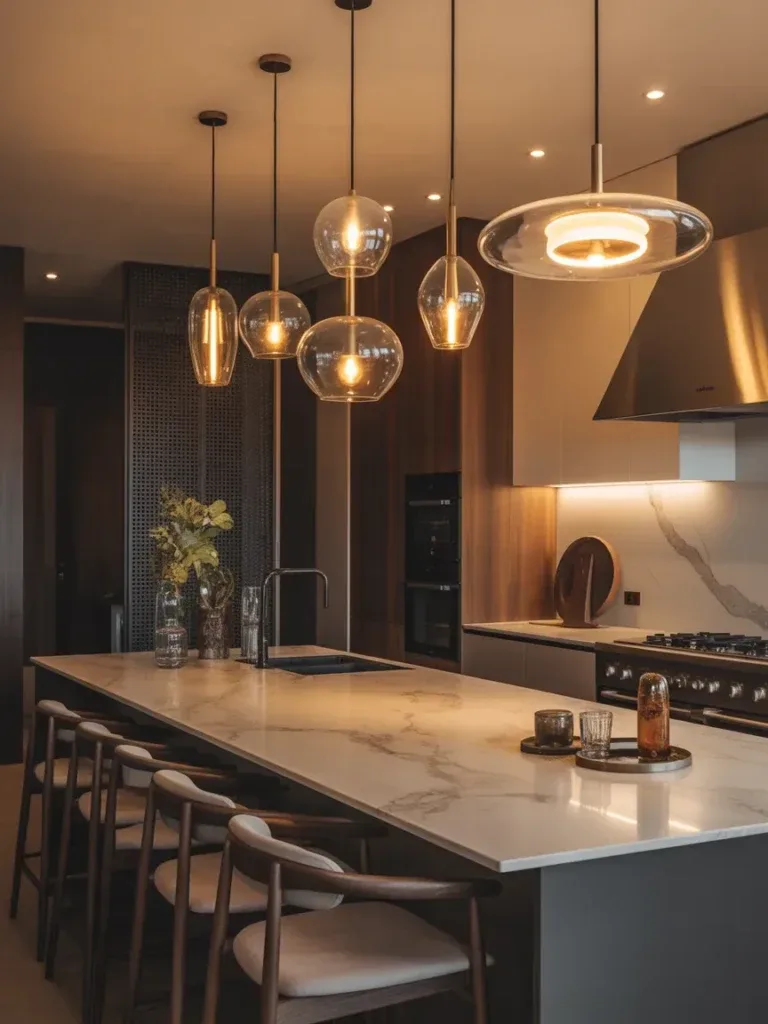
Designing a small kitchen living room open concept comes down to balance. You want openness without emptiness, comfort without clutter, and style without squeezing every inch to death.
Focus on flow, light, smart furniture, and a cohesive look. Keep only what serves the space, and don’t underestimate the power of good lighting and a well-placed rug.
Small spaces can feel incredible when you stop trying to make them bigger and start making them smarter.
Listen to this article 10 10 0:00 / 0:00 Speed 0.75×1×1.25×1.5×2× Tight space? No problem. A small open concept kitchen living room can feel bigger, brighter, and way more stylish—if you design it right. The trick isn’t cramming more in; it’s making every inch work smarter. Let’s break down how to create a seamless layout…
Listen to this article 10 10 0:00 / 0:00 Speed 0.75×1×1.25×1.5×2× Your kitchen island deserves better than that one sad light fixture you grabbed on impulse. Seriously—lighting over your island can make or break the entire vibe. It’s the jewelry of your kitchen, and when you get it right, everything suddenly feels intentional, expensive, and…
Listen to this article 10 10 0:00 / 0:00 Speed 0.75×1×1.25×1.5×2× Tiny space, big dreams? You’re not alone. Open concept layouts can either feel like a breath of fresh air… or like your entire life got shoved into one corner. The trick is all in the design, and these ideas prove you don’t need square…
Listen to this article 10 10 0:00 / 0:00 Speed 0.75×1×1.25×1.5×2× A small kitchen can feel cozy, charming, and surprisingly spacious—if you get the lighting right. The wrong fixture, on the other hand, can leave countertops in the shadows and make the whole room feel cramped. The good news? You don’t need a huge renovation…
Listen to this article 10 10 0:00 / 0:00 Speed 0.75×1×1.25×1.5×2× Most small kitchen farmhouse decor ideas fail for one reason: they’re sized for a kitchen with 40 linear feet of counter, not the 8 feet you’re actually working with. The ideas below are the ones that hold up in a genuinely small kitchen —…
Listen to this article 10 10 0:00 / 0:00 Speed 0.75×1×1.25×1.5×2× A DIY small farmhouse kitchen makeover works best when you stop thinking about it as one project and start treating it as seven separate ones. Cabinet paint, lighting, a backsplash, and a rolling island don’t have to happen in the same weekend — in…