Small Farmhouse Kitchen: Cozy Essentials for Tiny Spaces
A small farmhouse kitchen lives or dies on decisions most people don’t think about until they’re standing in the room with a tape measure — where the trash can goes, how far the fridge door swings, whether the open shelf over the sink is actually reachable without a step stool. Pinterest boards full of beautiful kitchen ideas rarely show you that part. If you’re still deciding on the overall shape of the room before you get into finishes, it’s worth reading through this rundown of small-space farmhouse kitchens that don’t feel cramped first — layout decisions are hard to undo once cabinets are installed.
Everything below is organized the way you’d actually tackle a small kitchen: define the style direction first, then layout, then storage, surfaces, lighting, and the small details that make it feel finished instead of half-done.
1. Define Your Farmhouse DNA Before You Buy Anything
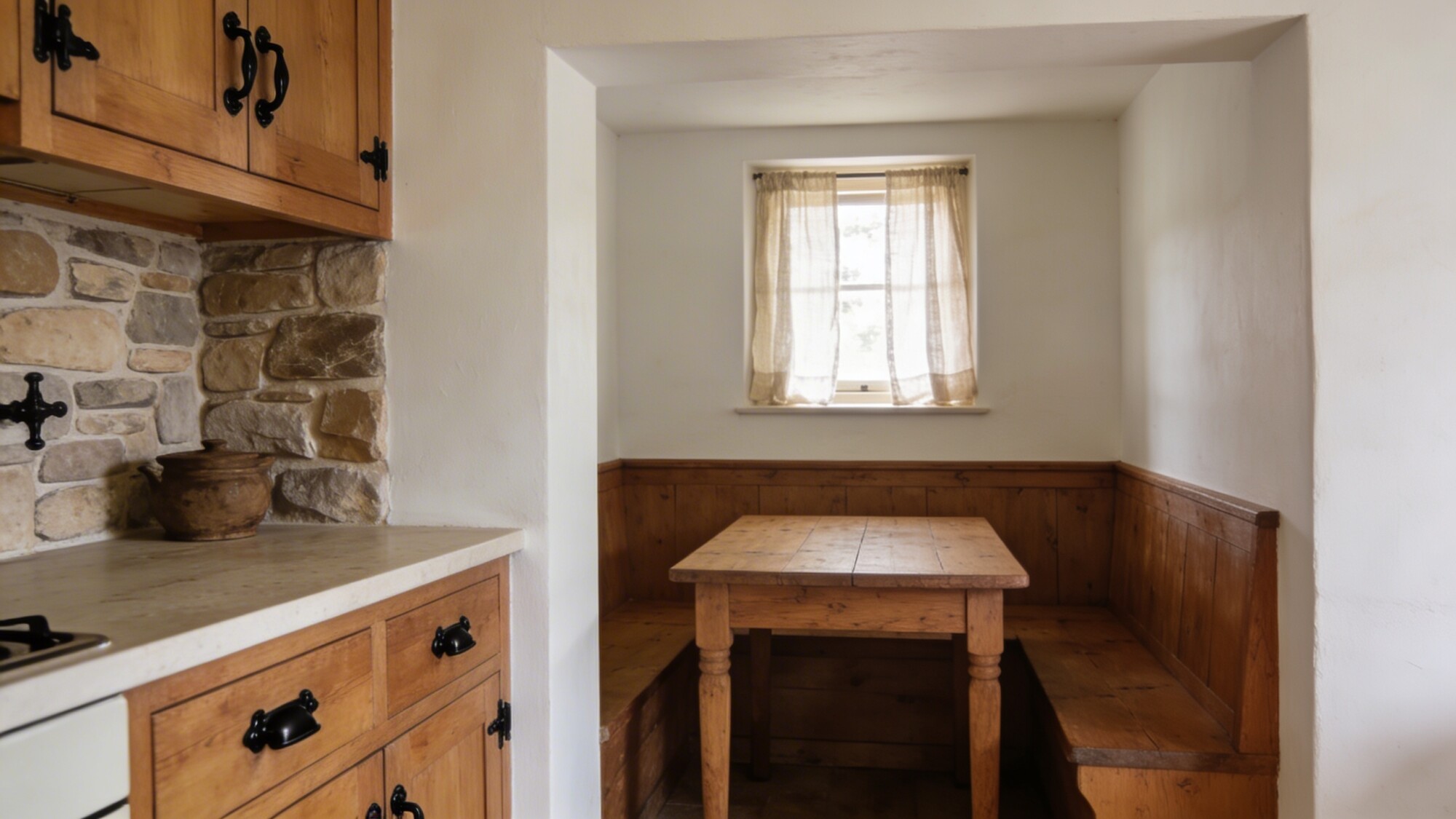
“Farmhouse” covers a wide range, and in a small kitchen that range matters more than it does in a big one — there’s less visual room to correct course if you mix directions. Traditional farmhouse leans into aged wood, visible grain, and warm off-whites. Modern farmhouse trims that back with flatter cabinet fronts, black hardware, and cooler whites. Small cottage core kitchen styling sits somewhere in between, softer and more floral, with more pattern in the textiles.
Pick one lane before you order cabinet fronts or paint. The most common mistake in a tight kitchen isn’t picking the “wrong” farmhouse style — it’s blending traditional wood tones with modern black-and-white finishes in roughly equal amounts, which in a small room reads as indecision rather than eclectic.
💡 Pro Tip: Pick your cabinet color and hardware finish first, then choose everything else — countertop, backsplash, textiles — to match those two decisions. Reversing the order (falling in love with a countertop, then hunting for cabinets to match) is how most small-kitchen palettes end up feeling disjointed.
2. Smart Layouts That Make a Small Kitchen Feel Bigger
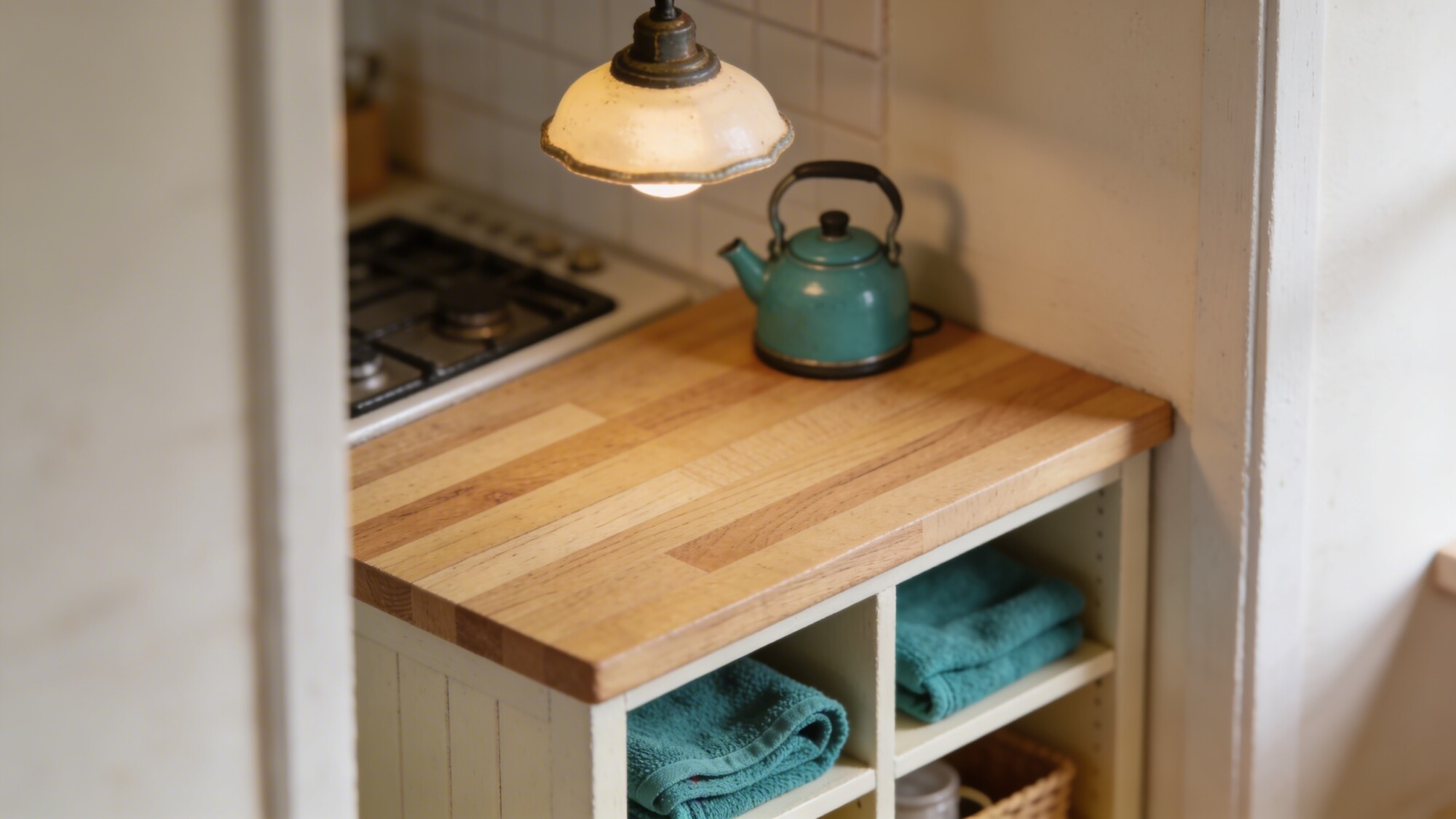
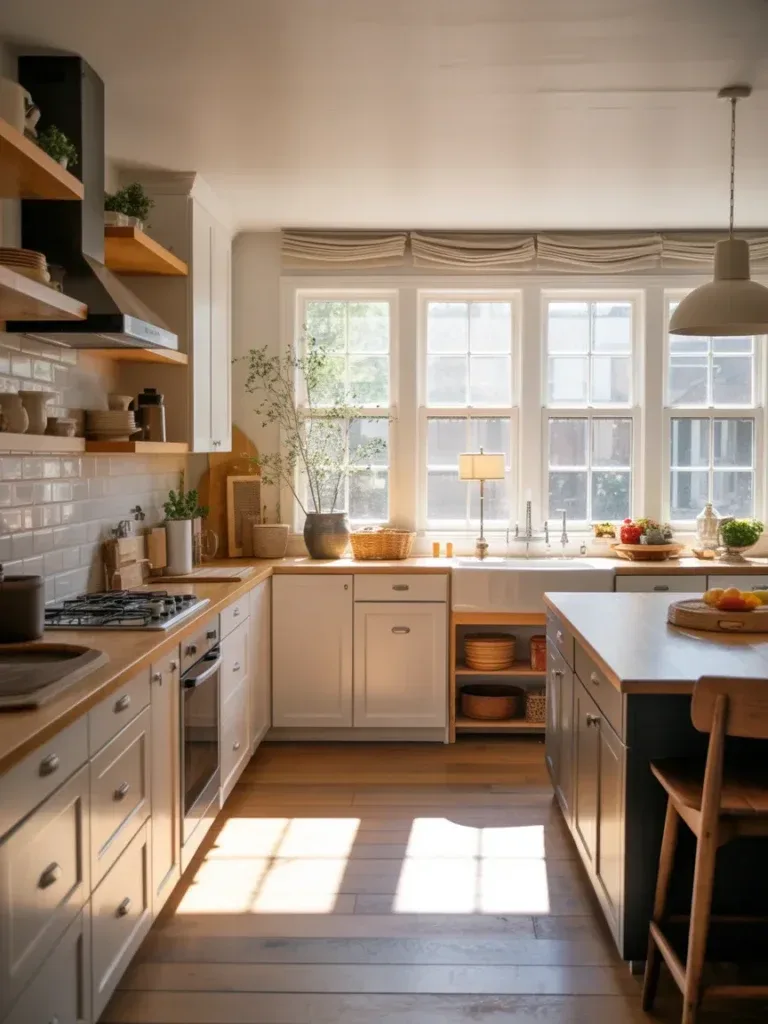
Layout does more for a small farmhouse kitchen’s livability than any single decor choice. If you’re working with a galley or one-wall footprint, an L kitchen design is usually the better call the moment you have two adjacent walls to work with — it opens up a corner for a small table or a rolling cart, and it breaks the “hallway” feeling a straight galley layout tends to create.
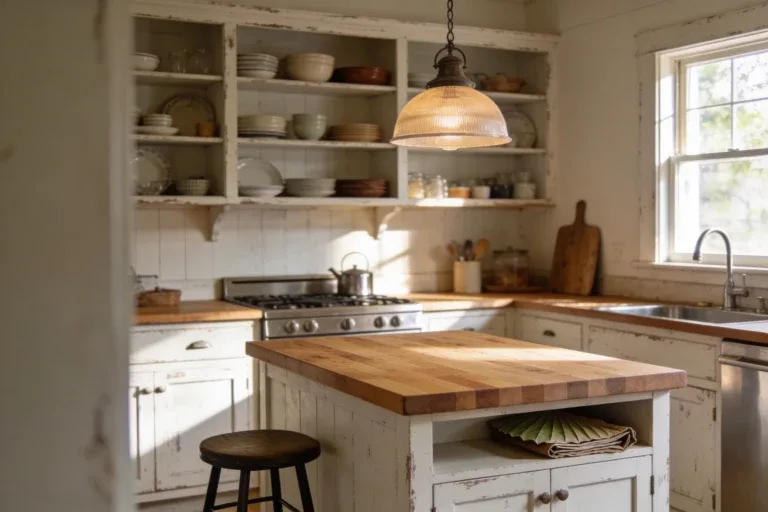
A narrow rolling island with a butcher-block top and open shelving underneath is worth the floor space if your kitchen is at least six feet wide at its narrowest point. Below that, skip it — a stationary island in a kitchen that tight just becomes another obstacle between the fridge and the stove. For kitchens on the larger end of “small” (say, 100+ square feet), it’s also worth looking at how compact farmhouse kitchens with islands handle clearance, since the standard 36-inch walkway rule gets tight fast once a cart or island is in the mix.
3. Cabinetry and Storage Hacks That Save Inches
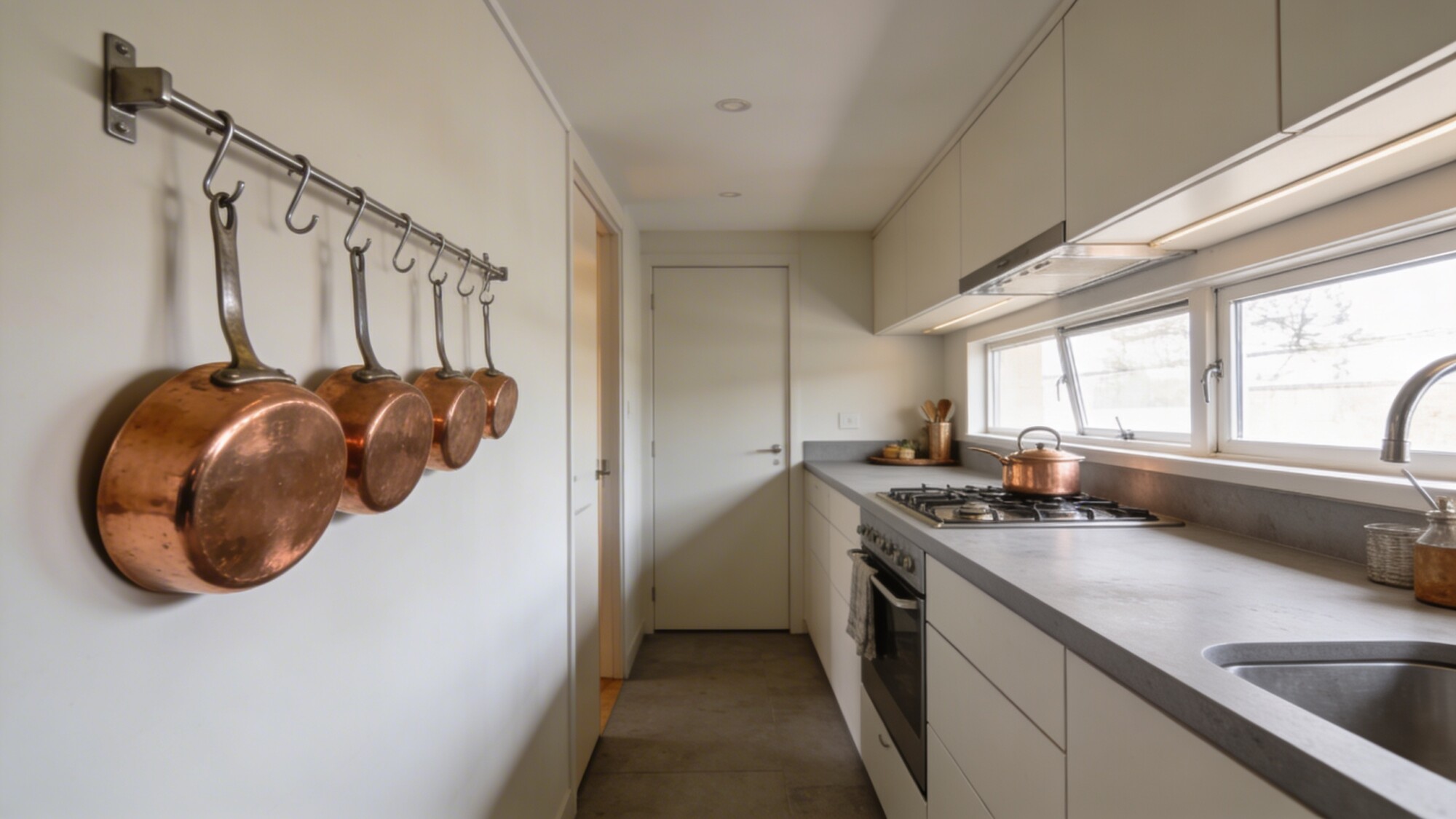
Storage in a small kitchen is a math problem before it’s a style problem. Wall hooks for pots and utensils reclaim cabinet space that would otherwise go to bulky items you use every day — a rail of copper pans or cast-iron pieces near the stove keeps them within reach without eating a drawer. This is also where tiny house kitchen shelves earn their reputation: shallow, single-depth open shelves (8–10 inches deep) hold more usable items per square foot of wall than a deep upper cabinet, because you’re not stacking things two rows deep where the back row never gets used.
If you’re planning a full cabinet refresh rather than just adding shelving, it’s worth comparing options against this guide to small farmhouse kitchen cabinet styles before committing — cabinet depth and door swing direction matter more in a tight galley than they do anywhere else in the house.
💡 Pro Tip: Before adding any new shelving, empty one cabinet completely and see what you actually use weekly versus what’s been sitting untouched for months. Small kitchens don’t usually have a storage shortage — they have a “too much stuff that doesn’t need to be there” problem, and no amount of clever shelving fixes that on its own.
4. Countertops and Surfaces That Hold Up to Real Cooking
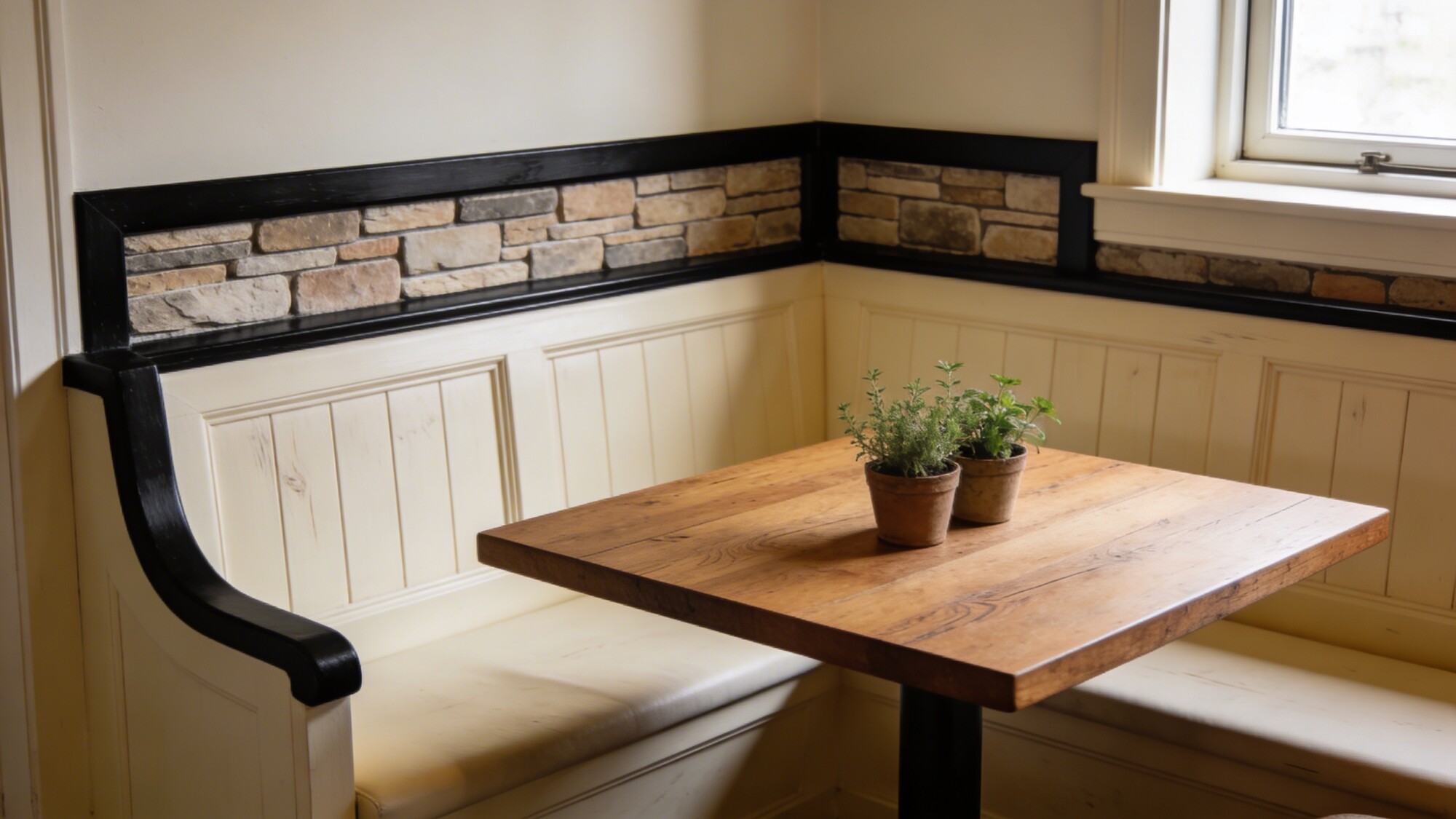
Small kitchens get harder use per square foot than large ones — there’s less counter to spread out on, so every inch takes more abuse. Butcher block looks right in almost any farmhouse direction, but it needs oiling every few weeks if it’s near the sink, and it will show knife marks and water rings if you treat it like a cutting board instead of a countertop. Quartz costs more upfront but needs none of that maintenance, and it reads farmhouse just fine in a warm white or a soft veined pattern — the material itself isn’t what makes a kitchen look modern or rustic, the edge profile and surrounding finishes are.
| Material | Farmhouse look | Maintenance | Best for |
|---|---|---|---|
| Butcher block | Strong — warm, natural grain | Regular oiling, avoid standing water | Kitchens with moderate daily use, away from the main sink |
| Quartz | Good with the right edge and color | Low — wipe clean, no sealing | High-use kitchens, families, sink-adjacent counters |
| Soapstone | Strong — traditional, ages well | Moderate — periodic mineral oil | Anyone who likes visible patina over time |
5. The Little Details That Make It Feel Like Home
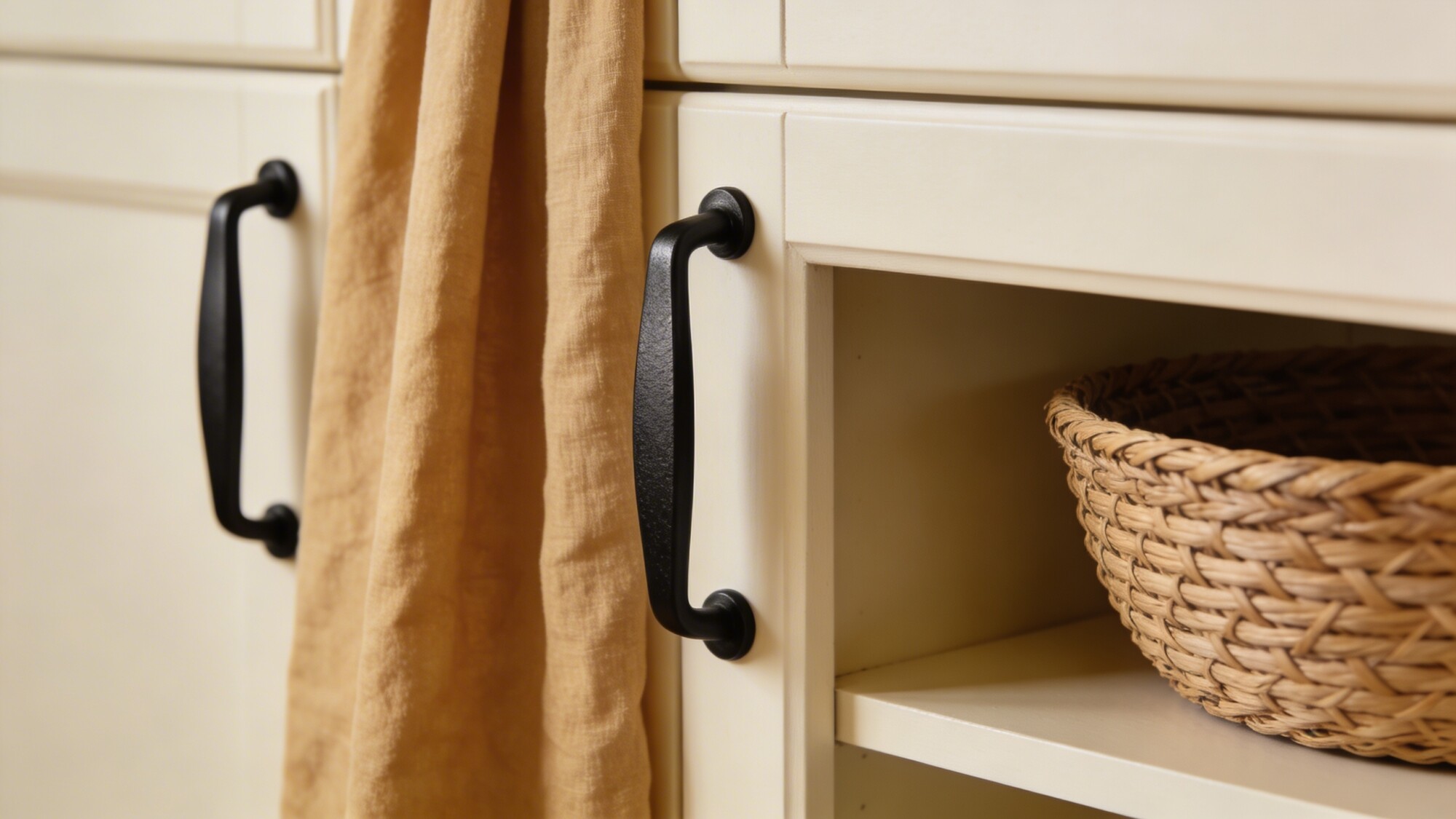
Hardware and textiles are the cheapest way to shift a small kitchen’s whole personality without touching cabinetry. Brushed black pulls read more modern-farmhouse; unlacquered brass or cast iron reads more traditional. A simple linen curtain under the sink — on a tension rod, no hardware required — hides cleaning supplies without the visual weight of a cabinet door, which matters in a room where every closed surface makes the space feel a little smaller.
For more ways to layer in personality without a renovation, this collection of farmhouse small kitchen decor ideas covers shelving styling and counter accessories in more depth than we have room for here.
6. Lighting That Makes a Small Kitchen Feel Larger
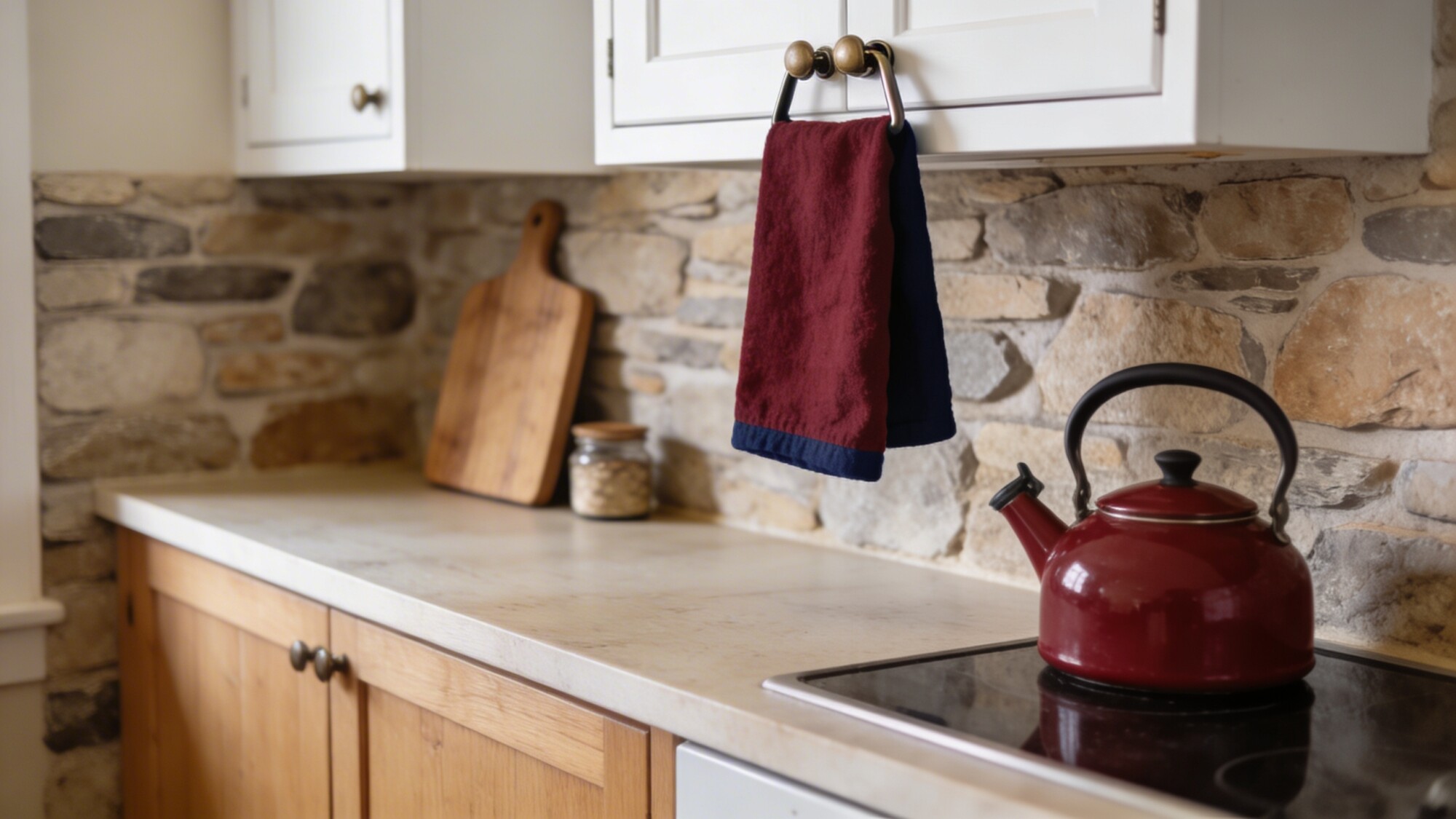
Layered lighting beats a single ceiling fixture in every small kitchen, without exception. You want three sources doing different jobs: overhead ambient light, under-cabinet task lighting aimed at the counter, and one warmer accent — a small pendant or a plug-in sconce — that softens the room after dark. Under-cabinet LED strips are the single highest-value addition here; they cost relatively little, install without an electrician in most cases, and remove the shadow you’d otherwise be chopping vegetables in.
Unlike a modern open kitchen design, where a single large fixture can wash the whole room evenly because there’s so much ceiling to work with, a small farmhouse kitchen usually has one central fixture serving a room that’s really two or three functional zones. Layering fixes that mismatch.
7. Take It Personal: Small Touches That Make a Big Difference
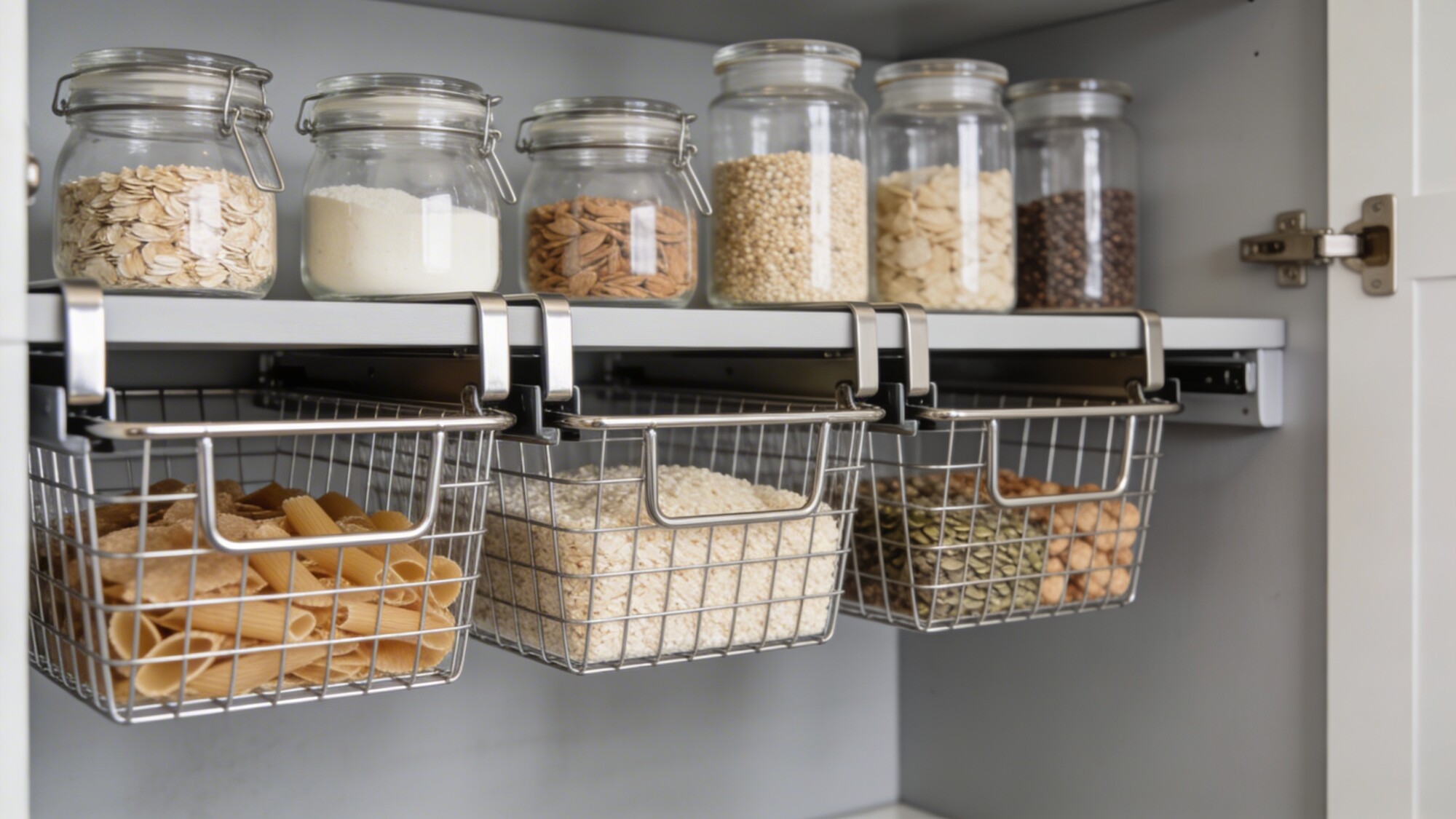
A pantry nook doesn’t need to be a full room to function like one. Pull-out wire baskets in an existing lower cabinet, paired with glass canisters for dry goods on an open shelf, turns dead cabinet space into something you can see into at a glance — no digging past three unlabeled bags to find the one you need. A small chalkboard label on a canister or a shelf edge is a minor touch, but it’s the kind of detail that makes a kitchen feel considered rather than assembled from a catalog.
8. Smart DIY Upgrades for Budget-Friendly Farmhouse Charm
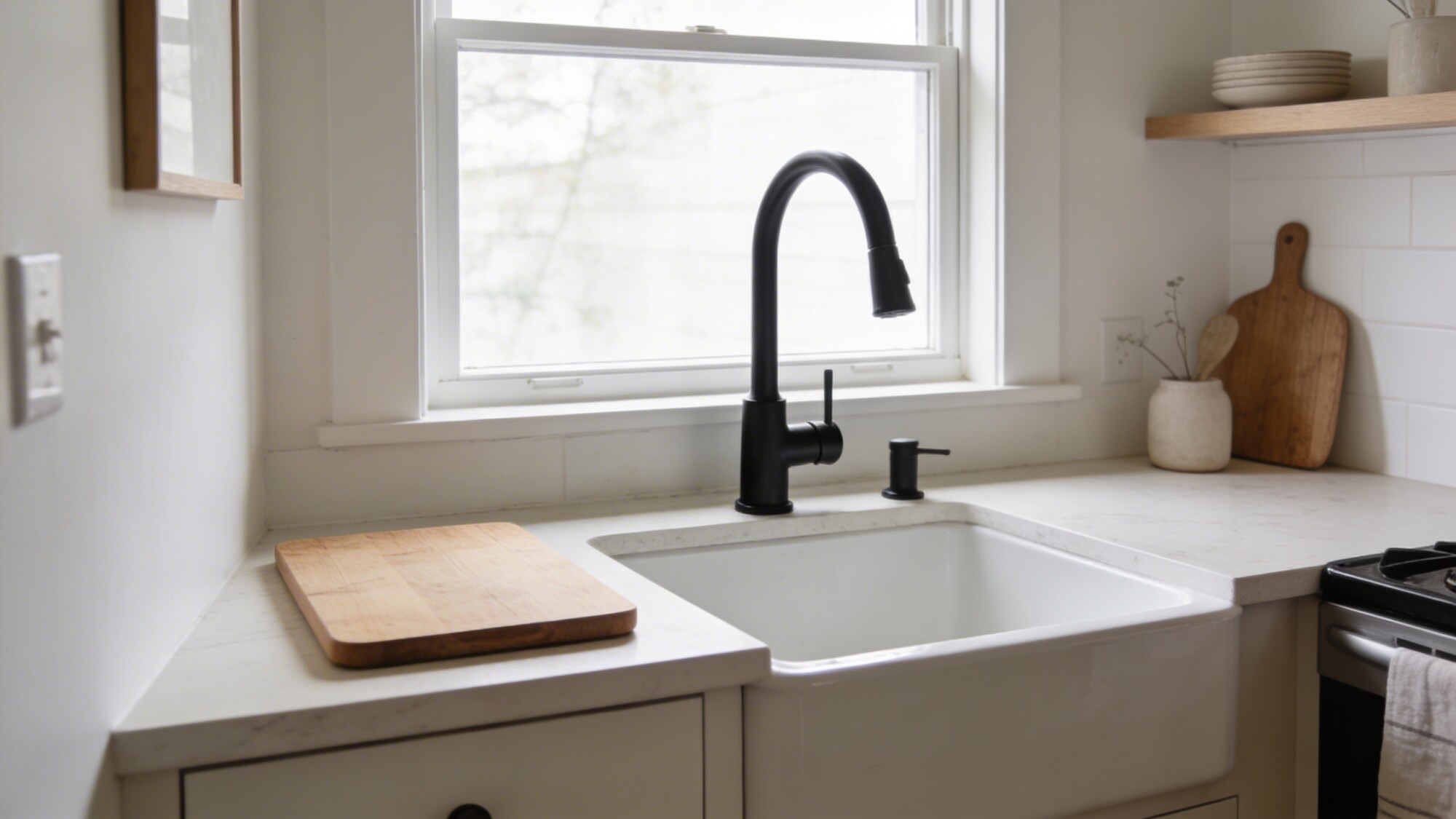
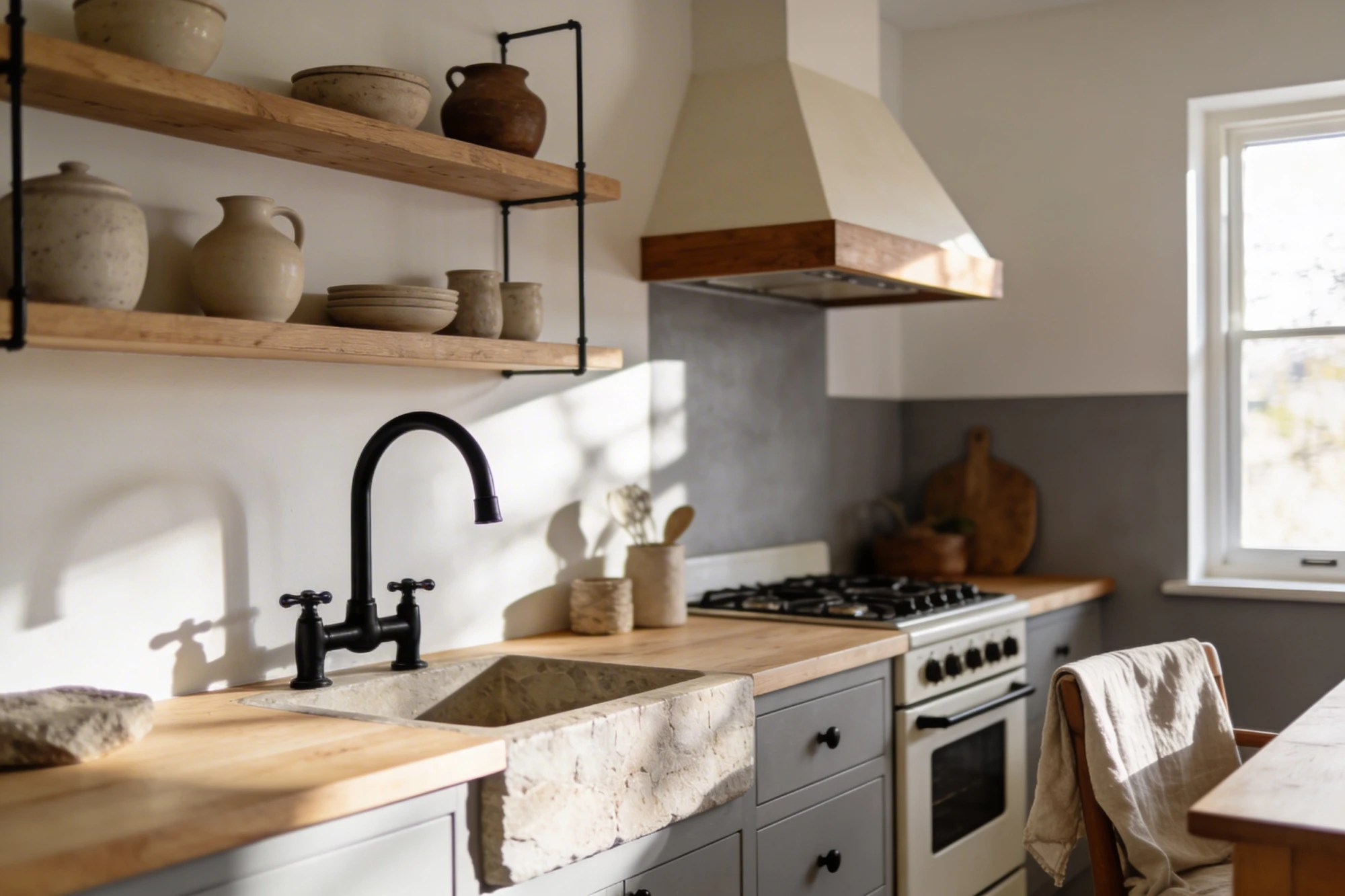
A farmhouse (apron-front) sink is one of the most requested upgrades for this style, and it’s also one of the more involved ones — it usually requires a cabinet modification, not just a drop-in swap, because the apron front needs to sit flush with the cabinet face. If a full sink replacement isn’t in the budget right now, a rustic kitchen sink with shelves built around the existing sink — open shelving flanking it instead of upper cabinets — gets you most of the visual effect for a fraction of the cost and labor.
A black or matte-finish faucet and a simple wood cutting board left out on the counter (rather than stored) round out the look without requiring a single trade to show up. If budget is the main constraint driving your decisions, this breakdown of a small farmhouse kitchen on a tight budget sequences upgrades by cost-to-impact ratio, which is worth reading before you spend on anything structural.
💡 Pro Tip: If you’re set on an apron-front sink but not ready for the cabinet work, buy the sink now and store it — prices on farmhouse sinks fluctuate less than labor costs do, and having it on hand makes it easy to fold into a future cabinet swap instead of a standalone project.
9. Small Kitchen, Big Flavor: Cooking in a Cozy Space
Working a tight kitchen changes how you cook, not just how the room looks. Prep in stages instead of laying everything out at once — chop what you need for the first step, clear the board, then move to the next. A magnetic knife strip frees up a drawer and keeps your most-used tools visible instead of buried. And if your stove sits close to a wall or cabinet, an over-the-range hood isn’t optional in a small kitchen the way it might be in a larger one with more air volume to dilute cooking smoke and heat.
Things to Check Before You Start
- Have you picked one farmhouse direction (traditional, modern, or cottage core) before choosing finishes?
- Is your walkway at least 36 inches wide if you’re adding an island or cart?
- Do your open shelves sit within comfortable reach — no step stool required for daily items?
- Have you planned under-cabinet lighting, or are you relying on one ceiling fixture for the whole room?
- If you want an apron-front sink, have you confirmed your cabinet base can accommodate it, or budgeted for the modification?
Frequently Asked Questions
Is a small farmhouse kitchen still functional for families?
Yes, but layout matters more than it does in a larger kitchen. An L kitchen design with a narrow rolling cart or island tends to handle multiple people better than a straight galley, where only one person can really work at a time.
What are the best materials for a budget-friendly farmhouse look?
Butcher block for counters and open shelving instead of upper cabinets are the two lowest-cost changes that still deliver real kitchen interiors impact. Both avoid the labor cost of full cabinetry work.
How can I maximize storage in a tiny kitchen?
Start by auditing what’s already in your cabinets before adding anything new — most small kitchens have more unused storage than they realize. After that, wall hooks and shallow open shelving add usable storage without the wasted depth of a standard upper cabinet.
Are open shelves a good idea for small kitchens?
Generally yes, with one caveat: they only look good if you’re willing to keep them edited. If you tend to let counters and shelves accumulate clutter, closed cabinets with good hardware will serve you better long-term.
What lighting setup makes a small kitchen feel bigger?
Layered lighting — ambient overhead, task lighting under the cabinets, and one warm accent fixture — does more than any single bright light. A single harsh overhead fixture tends to flatten a small room and make it feel smaller, not bigger.
Our Take
If you only make three changes to a small farmhouse kitchen, make them lighting, storage editing, and hardware — in that order. They’re the least expensive, least disruptive, and have the most noticeable effect on how the room actually functions day to day. Bigger moves like an apron-front sink or a full cabinet swap are worth doing eventually, but they’re not what makes a tiny kitchen feel workable in the meantime. For the next step once you’ve nailed the basics, this guide to small farmhouse galley kitchens goes deeper into layout-specific storage solutions for the tightest footprints.