6 Small White Farmhouse Kitchen: Bright, Cozy & Simple Makeover
A small white farmhouse kitchen has one predictable failure mode: it goes so white that it starts reading like a clinic instead of a home. White is still the right call in a tight footprint — it bounces the light you have and makes the walls recede — but it needs counterweight from texture, wood, and warm-finish hardware, or the brightness turns cold. If you’re deciding between this and a warmer wood-forward palette, our guide to small modern farmhouse kitchen ideas lays out that comparison.
Six ideas below, each aimed at keeping the white-kitchen brightness without losing the farmhouse warmth that makes it feel lived-in.
Key Takeaways: Small White Farmhouse Kitchen
- A light glaze in cabinet recesses adds depth to flat white paint without darkening the room.
- White kitchen cabinets with black hardware is the highest-contrast, lowest-cost way to keep white from looking flat.
- Wood counters, a butcher block island, or open shelving with wood accents are what keep an all-white kitchen from feeling sterile.
- Texture — brick, linen, concrete — matters more in a white kitchen than in a colored one, since there’s no color doing visual work for you.
- Warm-temperature lighting (2700–3000K) is non-negotiable in a white kitchen; cool bulbs push it toward clinical fast.
1. Painted Shaker Cabinets With a Light Glaze
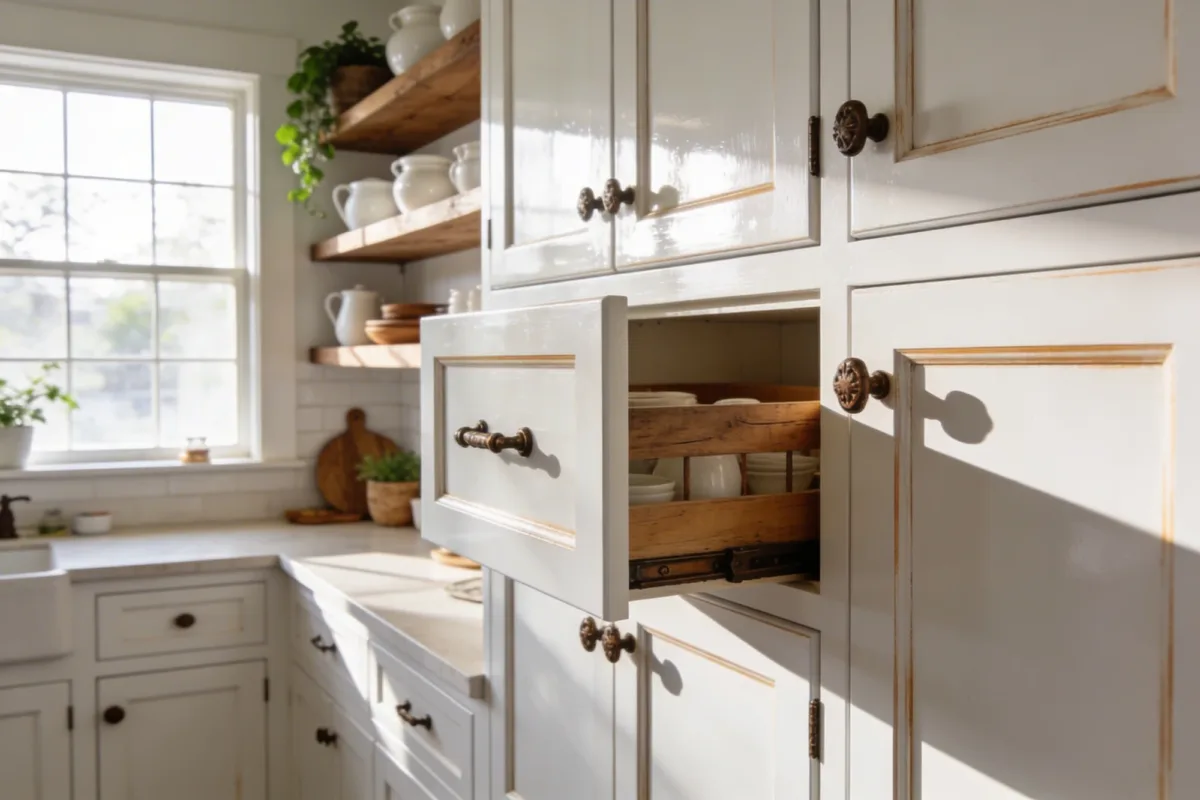
Flat white paint on shaker cabinets can look good in photos and flat in person, because shaker panels have recessed detail that a single coat of paint doesn’t show off. A light coffee-toned glaze wiped into those recesses catches shadow and gives the door actual dimension instead of a uniform white block.
Snow white and warm linen are both safe base colors — warm linen especially, since it has a hint of warmth that keeps a small room from feeling stark under overhead light. Test the glaze on one door first; it reacts differently depending on your kitchen’s actual light, not the store’s.
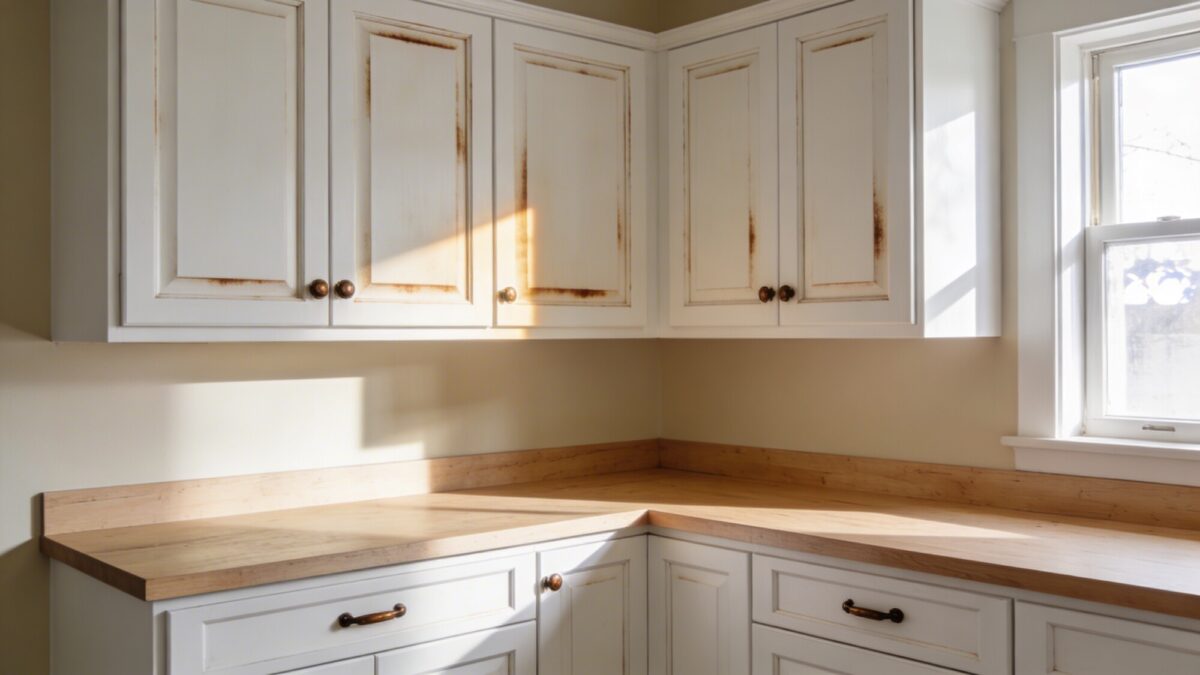
💡 Pro Tip: Glaze shows fingerprints and wear differently than flat paint — it tends to hide minor scuffs in the recessed panel lines better than flat white does, which matters on lower cabinets that take daily contact.
2. Open Shelving Styled With Everyday Pieces
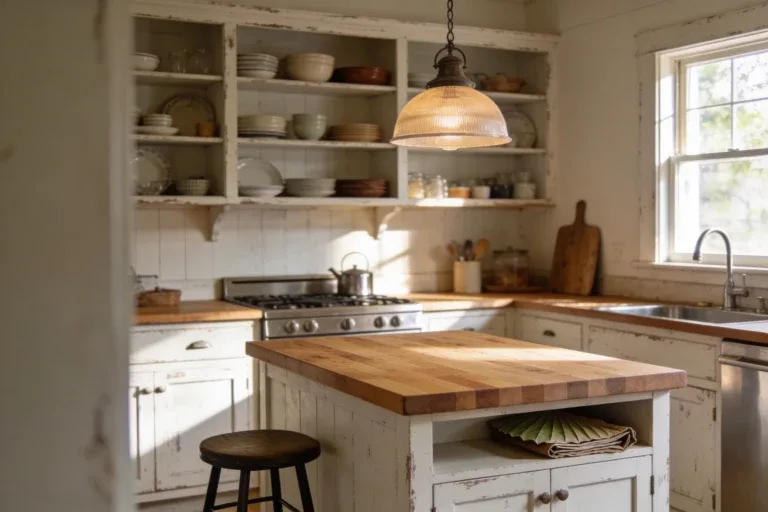
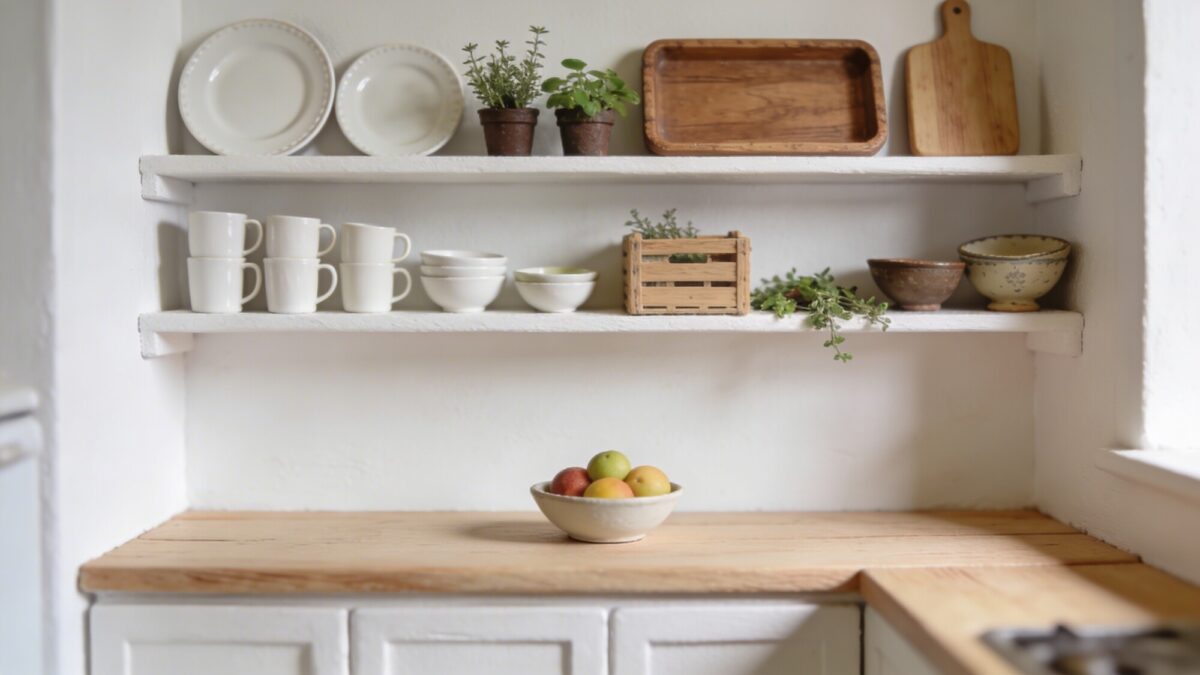
White open shelving against a white wall can disappear entirely if there’s nothing to break it up. Natural wood accents — a wooden tray, a cutting board, a small crate — are what keep the shelf from reading as one flat white surface. Group white ceramics in odd numbers and leave visible negative space; a shelf packed edge to edge undoes the airiness white was supposed to give you.
This is also where a few actual weekend-market finds do more than anything bought new. A mismatched vintage bowl or a mug with a chip in the glaze reads as collected, not staged.
3. Layer in Texture: Brick, Linen, and Concrete
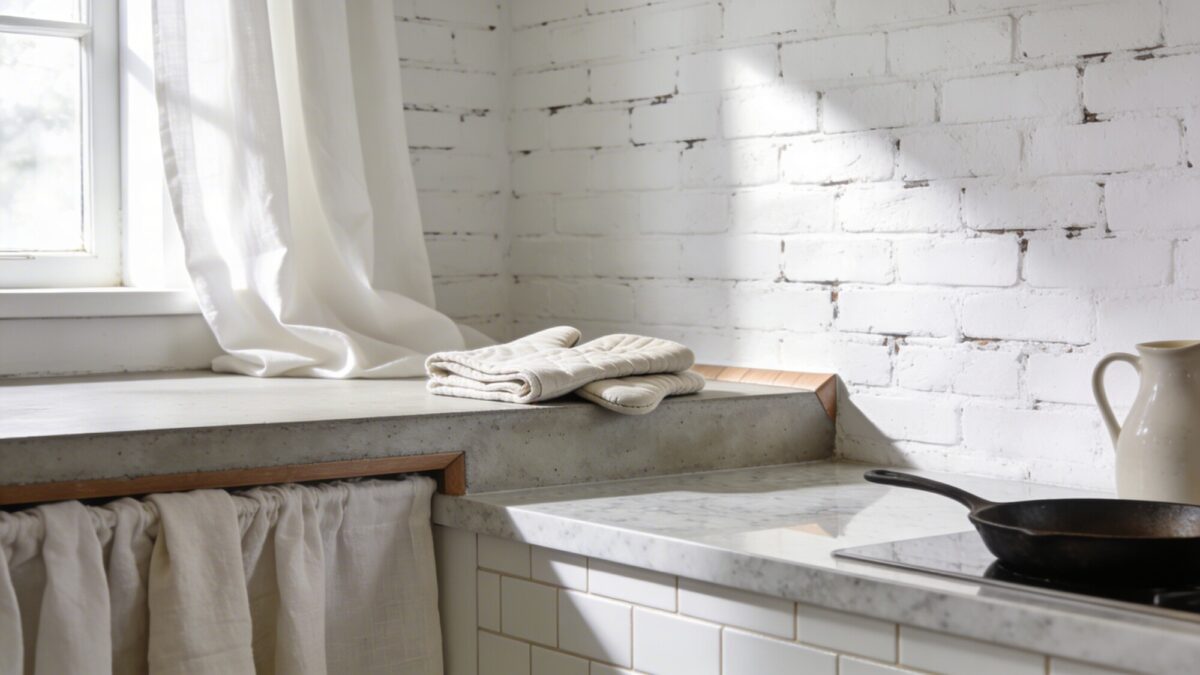
An all-white kitchen with no texture variation is the fastest route to sterile. A white brick or faux-brick accent wall gives the eye shadow lines and grain to read even though the color stays neutral. Linen curtains or a linen textile on the counter add a soft, matte surface next to the harder white cabinetry.
A concrete or quartz countertop edge with a soft bevel adds a third texture without introducing a new color into the palette. Keep grout lines thin and light if you’re doing brick — heavy dark grout is the detail that most often tips a white-brick accent from farmhouse-fresh toward industrial-cold.
4. Warm Wood Accents That Don’t Fight the White
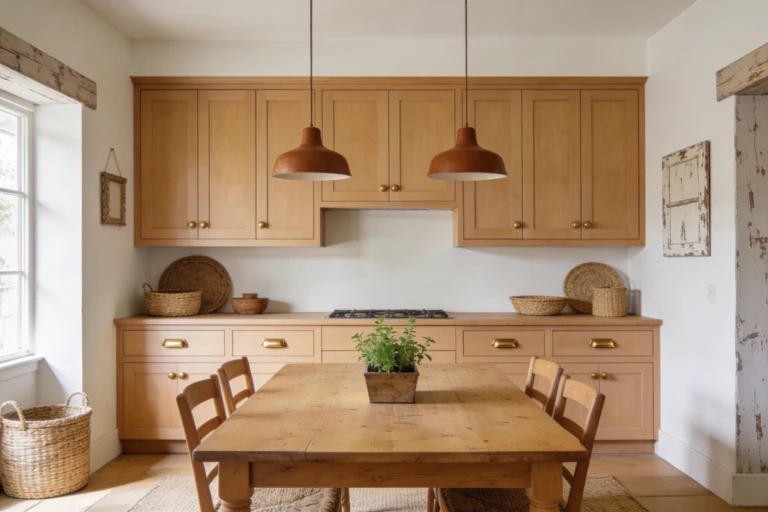
This is the single biggest lever for keeping a white kitchen with wooden countertop details from feeling flat: a butcher block island top, a few oak stools, a honeyed cutting board leaned against the backsplash. None of it needs to be a large surface — a little wood against a lot of white does more visual work than an equal split would.
Seal or oil any wood surface near water or heat. A white farmhouse sink with a butcher block counter nearby looks great in photos, but unsealed wood right next to a sink will water-stain within weeks, not months.
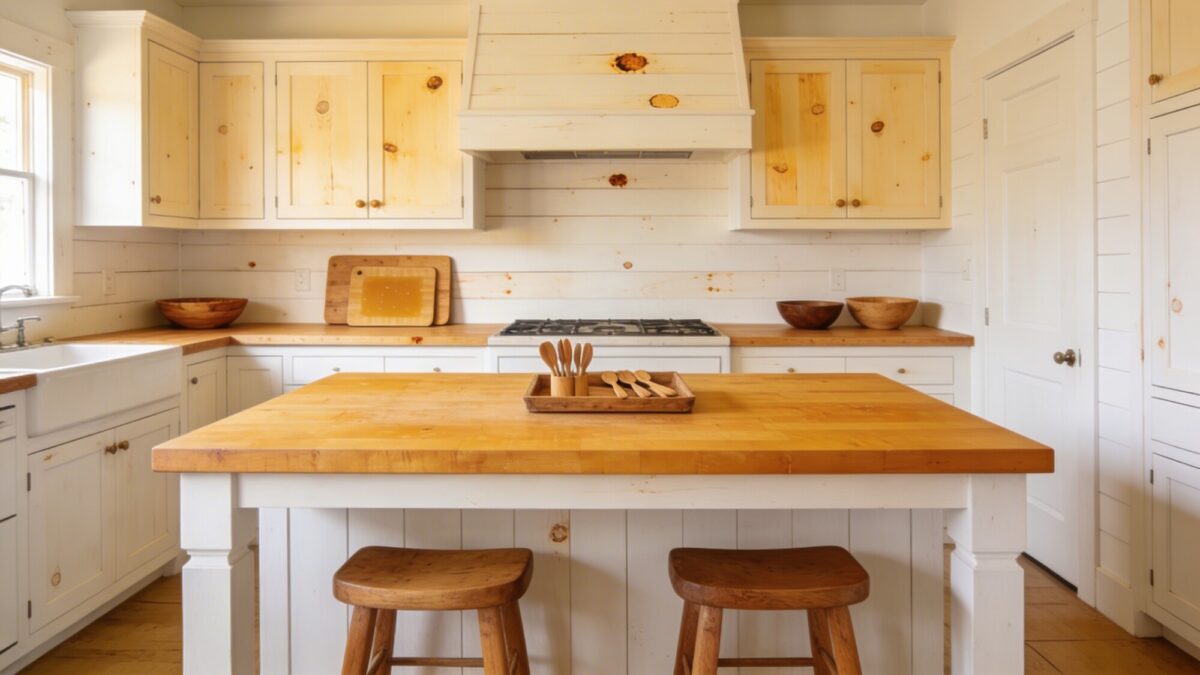
💡 Pro Tip: Pick wood accents with a slight yellow or peach undertone rather than a gray-washed wood if you want warmth — gray-toned wood next to white cabinets reads cooler overall, which works against the “not sterile” goal here.
5. Heritage Hardware in a Contrasting Finish
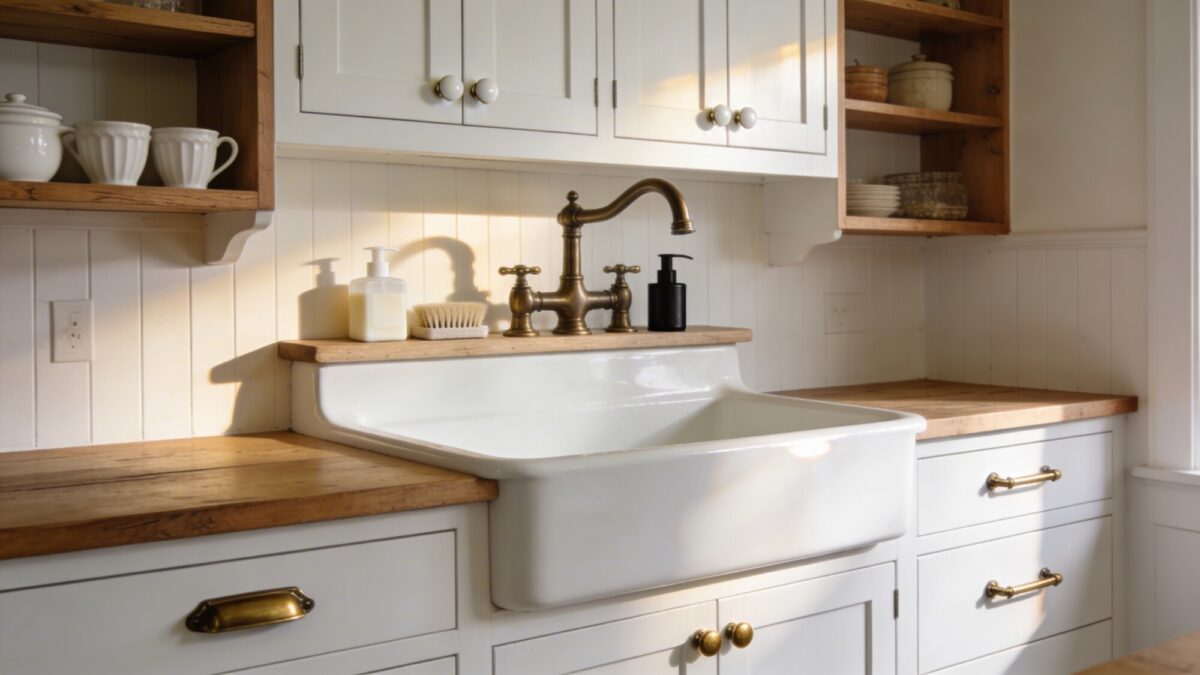
White kitchen cabinets with black hardware is the single highest-contrast, lowest-cost move in this entire list — porcelain knobs or cup pulls in black, brushed nickel, or oil-rubbed bronze against white shaker doors give the eye a clear point of definition that flat white-on-white doesn’t provide. It’s a small kitchen white cabinets black hardware combination that shows up in almost every white farmhouse kitchen for a reason: it works, and it’s a straightforward hardware swap, not a paint job.
A farmhouse sink with a slight ledge for soap and brushes reinforces the same heritage feel. Coordinate the faucet finish to the cabinet hardware rather than treating them as separate decisions — mismatched metal finishes are one of the more common small errors in an otherwise well-planned white kitchen.
6. Soft, Warm Lighting After Dark
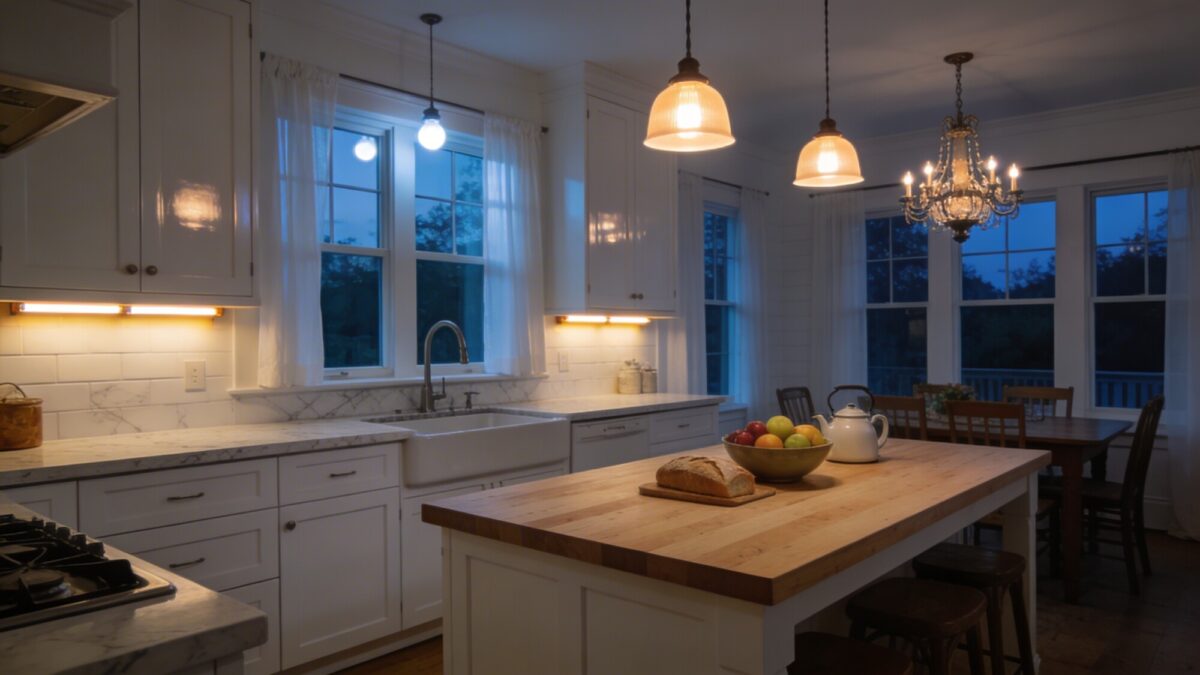
Daylight is a white kitchen’s best asset, but once the sun goes down, cool-temperature bulbs will make the same room feel closer to a clinic than a home. Warm LED pendants over the island or sink, paired with under-cabinet strips for task light, keep the glow consistent through the evening. A vintage-style chandelier or flush mount anchors the room without needing to compete with the white cabinetry for attention.
Dimmers are worth the extra cost here specifically — a white kitchen shows lighting changes more visibly than a darker one, so being able to dial brightness down for evening makes a bigger visible difference.
Frequently Asked Questions
Is white kitchen cabinets with black hardware still in style?
Yes — it’s less of a trend and more of a durable pairing at this point, since the contrast does real visual work rather than relying on a passing color trend. It works whether the rest of the kitchen leans modern farmhouse or more traditional.
How do I stop a white kitchen from feeling cold or sterile?
Add texture and warm wood in at least two places — a countertop, an island top, open shelving accents — and make sure your evening lighting is warm-temperature (2700–3000K), not daylight bulbs.
Should I glaze my white cabinets or leave them flat?
Glaze if your cabinets have recessed shaker-style panel detail — it adds dimension that flat paint won’t show. If your doors are flat-slab with no recess, glazing won’t have much to catch, so flat paint is the simpler, equally valid choice.
Is a butcher block counter practical next to a white farmhouse sink?
Yes, if it’s sealed or oiled regularly. Unsealed wood near a sink will water-stain quickly — that’s a maintenance trade-off, not a reason to avoid the look entirely.
Our Take
Start with hardware and lighting — they’re the cheapest changes on this list and the ones most responsible for whether a white kitchen reads as warm or clinical. Cabinets, wood accents, and texture are worth doing, but they’re bigger projects, and a white kitchen with the right hardware and lighting already looks intentional even before you touch the bigger-ticket items. For more on shelving and cabinet-specific styling in a small kitchen, see our small farmhouse kitchen cabinet ideas, and if you’re planning the full room from scratch, our small farmhouse kitchen essentials guide is the right starting point.