8 Small Modern Farmhouse Kitchen Ideas for Wow-Worthy Spaces
Small modern farmhouse kitchen ideas fail most often for one reason: people pick either “modern” or “farmhouse” and go all-in, and the result is either a cold showroom or a cluttered barn. The version that actually works splits the difference — clean lines and low-maintenance surfaces doing the heavy lifting, with warm wood and a couple of farmhouse touches keeping it from feeling sterile. If you’re weighing this style against a more traditional farmhouse look, our small kitchen design ideas for a cozy-but-chic farmhouse look is a useful side-by-side.
Eight ideas below, roughly in the order they matter for a small kitchen specifically — cabinets and hardware first, because they’re the largest surface area in the room, decor last.
Key Takeaways: Small Modern Farmhouse Kitchen Ideas
- Stick to one wood species for cabinets — mixing two competes for attention in a small room.
- Quartz gives you the stone look with none of the yearly sealing that natural stone needs.
- Mixed metals work with two or three finishes max, and one warm metal as the anchor.
- Under-cabinet lighting is a bigger functional upgrade than most people budget for it to be.
- A soft accent color on one surface — an island or feature wall — reads as more modern farmhouse than an all-white or all-wood room.
1. Warm Wood Cabinets With Sleek, Restrained Hardware
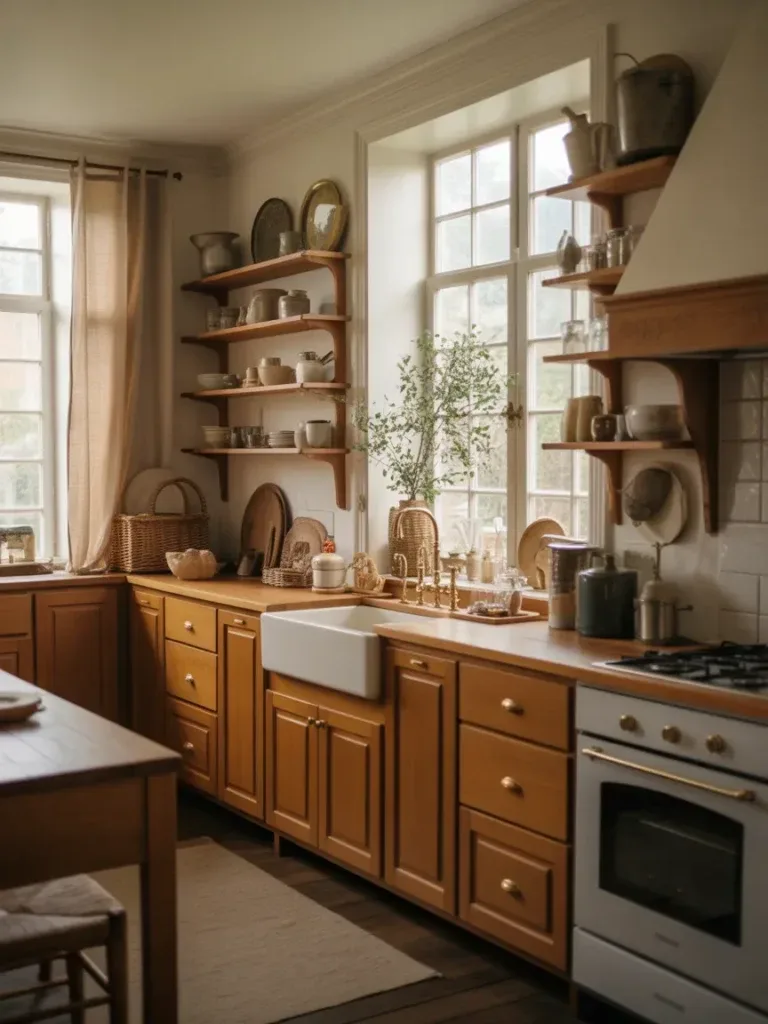
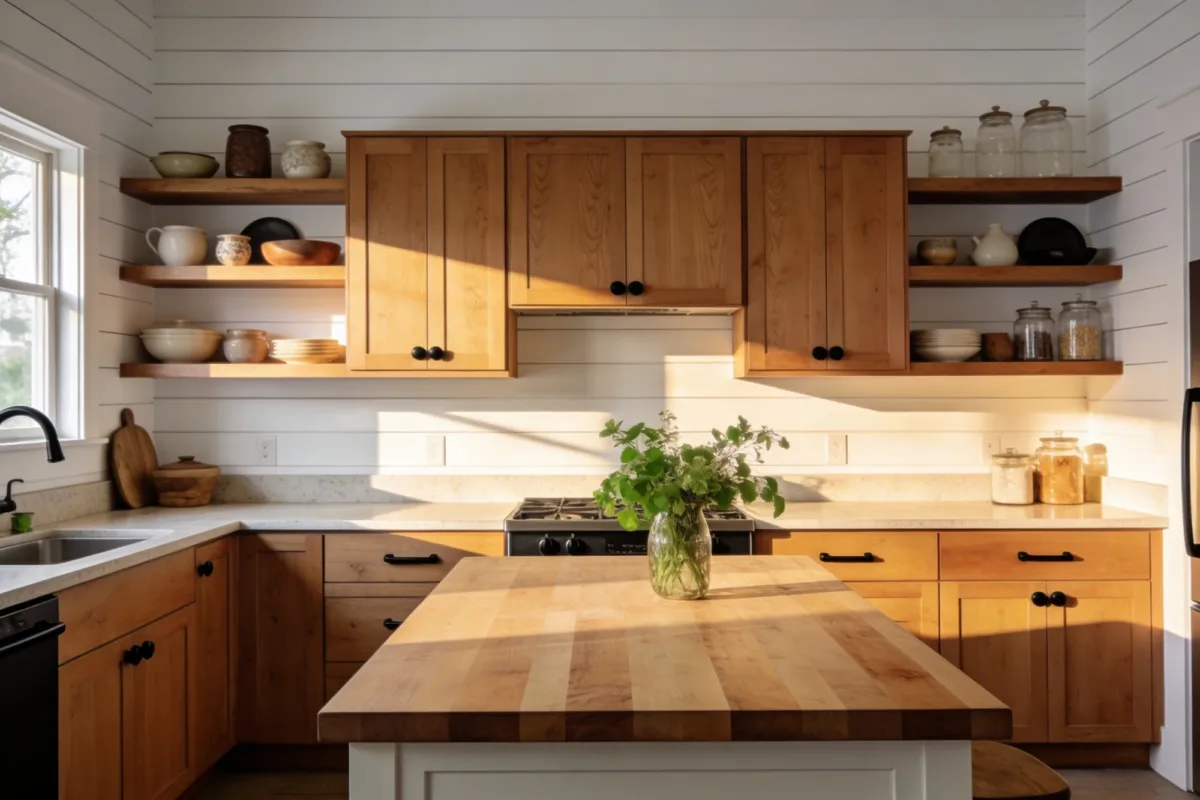
The modern farmhouse kitchen look mostly comes down to this pairing: a natural wood tone (oak or maple, not a mix of both) with simple shaker-style doors, finished off with contemporary hardware — gold or matte black pulls, nothing ornate. The wood carries the farmhouse warmth; the hardware carries the modern edge.
Pick one wood species and stay with it through the whole run of cabinets. Two different wood tones in the same small kitchen — say, a lighter island and darker perimeter cabinets — can work in a large kitchen where your eye has room to process the transition, but in a small one it usually just looks unplanned.
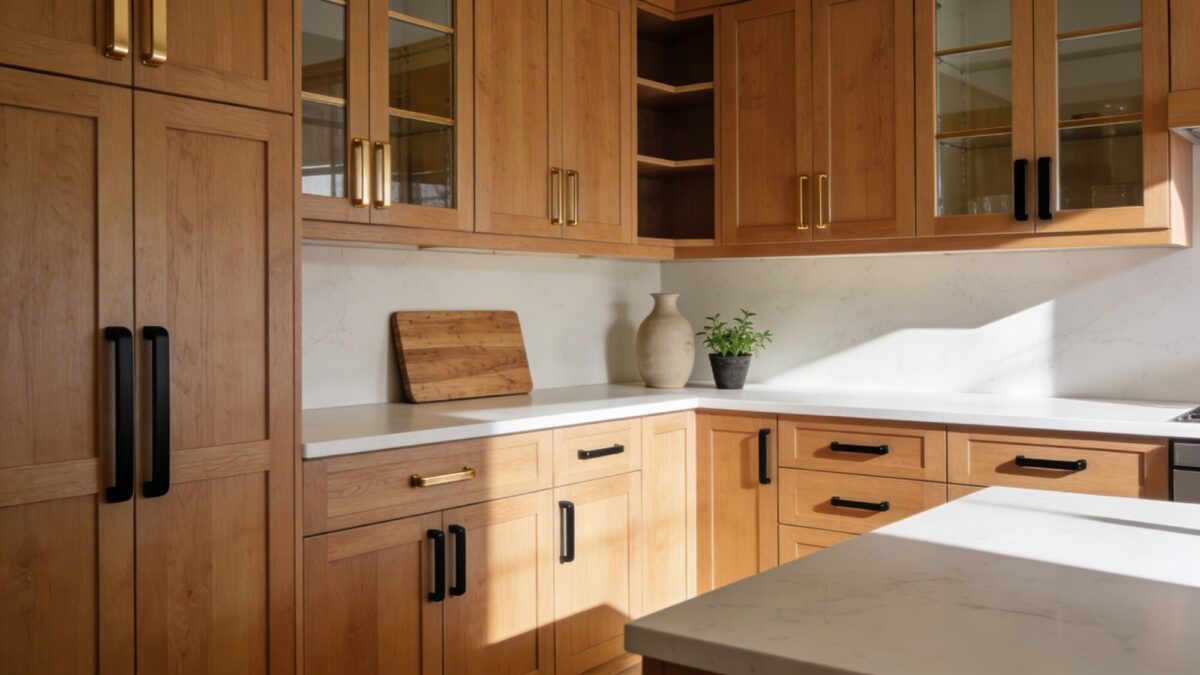
💡 Pro Tip: If you’re refinishing existing cabinets rather than replacing them, test your hardware finish against the actual wood stain before ordering a full set — gold reads very differently against a honey-oak tone than it does against a gray-washed one, and swatches under store lighting rarely match your kitchen’s light.
2. Open Shelving That Looks Curated, Not Half-Furnished
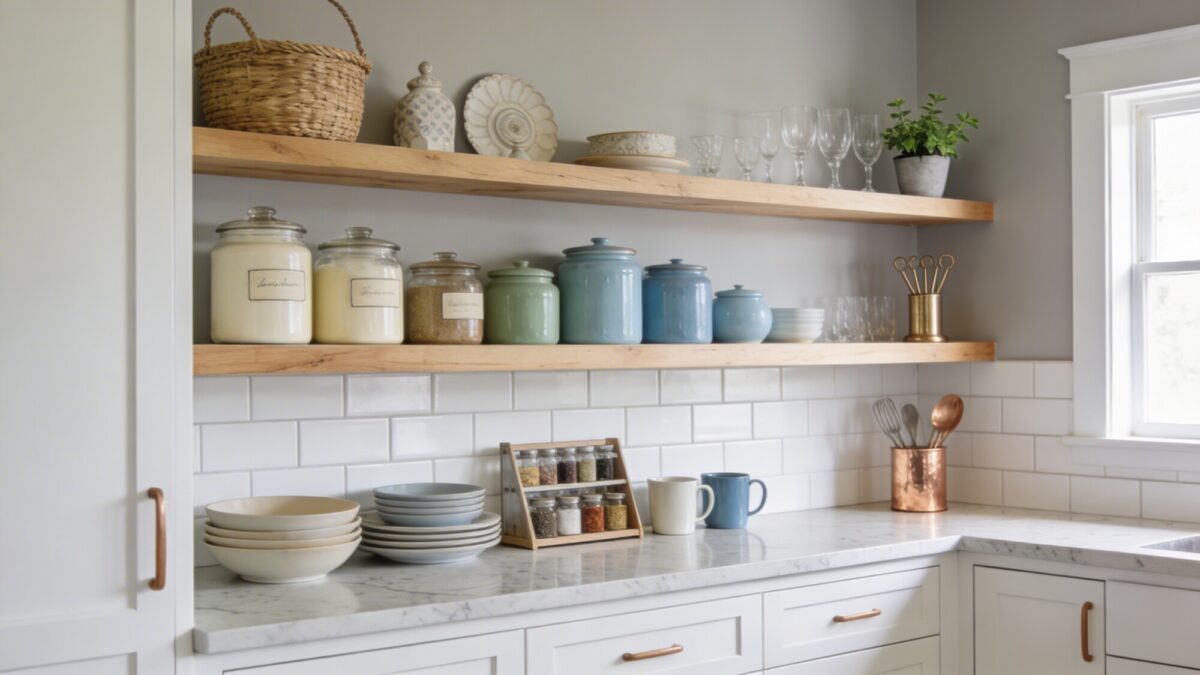
Open shelving is the fastest way to make a small kitchen feel less boxed-in, but it only reads as deliberate if you group things with a plan. Color-coordinated jars and canisters on one shelf, a couple of statement ceramic pieces on another, and the bottom shelf reserved for what you actually reach for daily — bowls, a small spice rack, the mugs in daily rotation.
The mistake people make here is treating every shelf like a display shelf. Keep at least one tier purely functional. It’s the difference between shelving that photographs well once and shelving you’ll actually keep organized six months from now.
3. A Farmhouse Sink With Modern Practicality
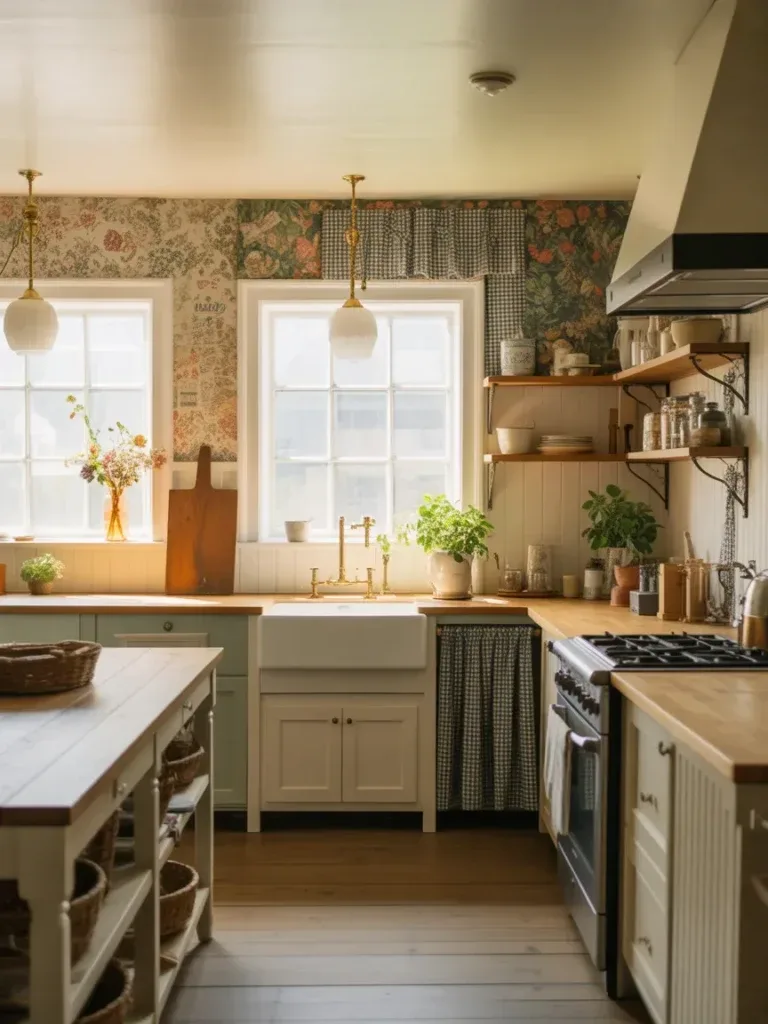
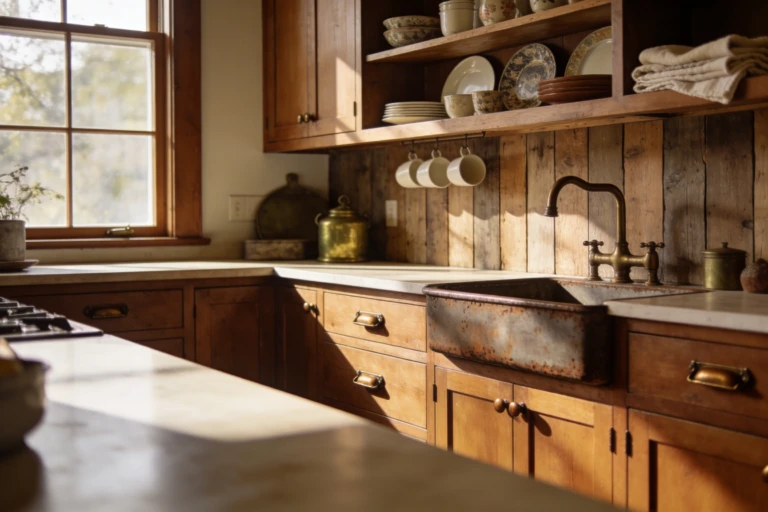
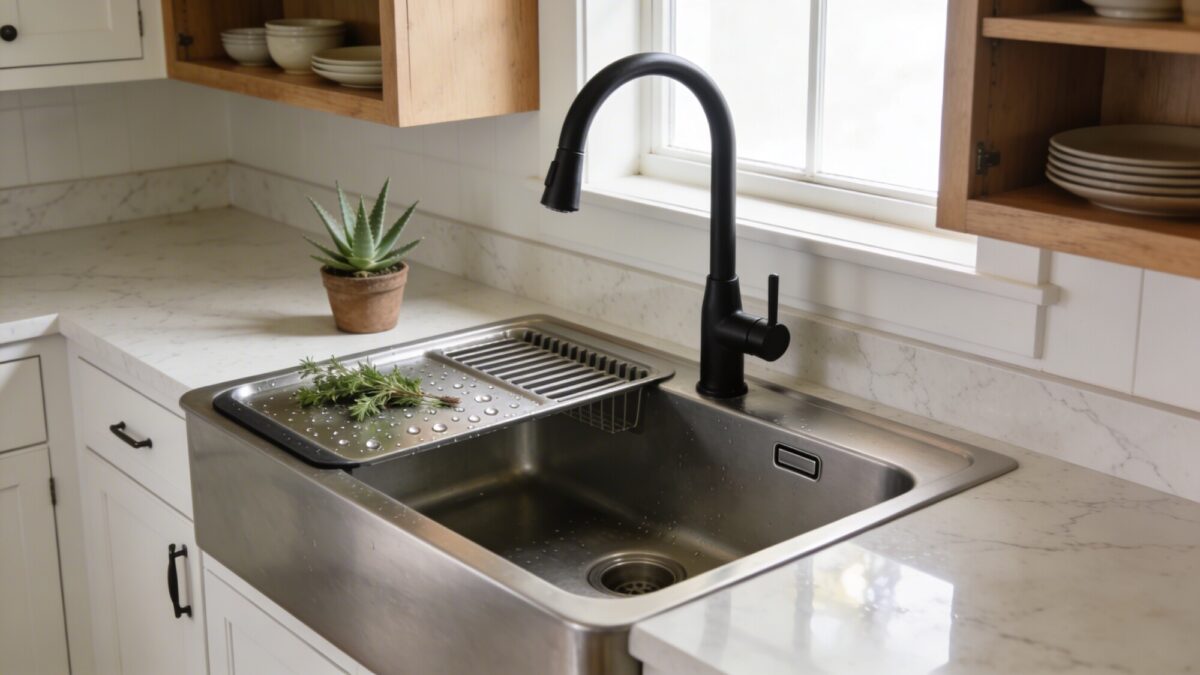
The classic apron-front sink still anchors a modern farmhouse kitchen, but the newer versions solve the old sink’s biggest complaint — no dedicated space to set wet dishes. A satin stainless or fireclay basin with an integrated drain board on one side does that job without eating extra counter space.
Stainless steel is the easier material to live with day to day — it resists chipping better than fireclay and costs less, though fireclay holds its glossy finish longer if you’re gentle with it. Neither is wrong; it’s a maintenance-versus-upfront-cost trade-off, not a quality gap.
4. Quartz Countertops That Skip the Maintenance of Real Stone
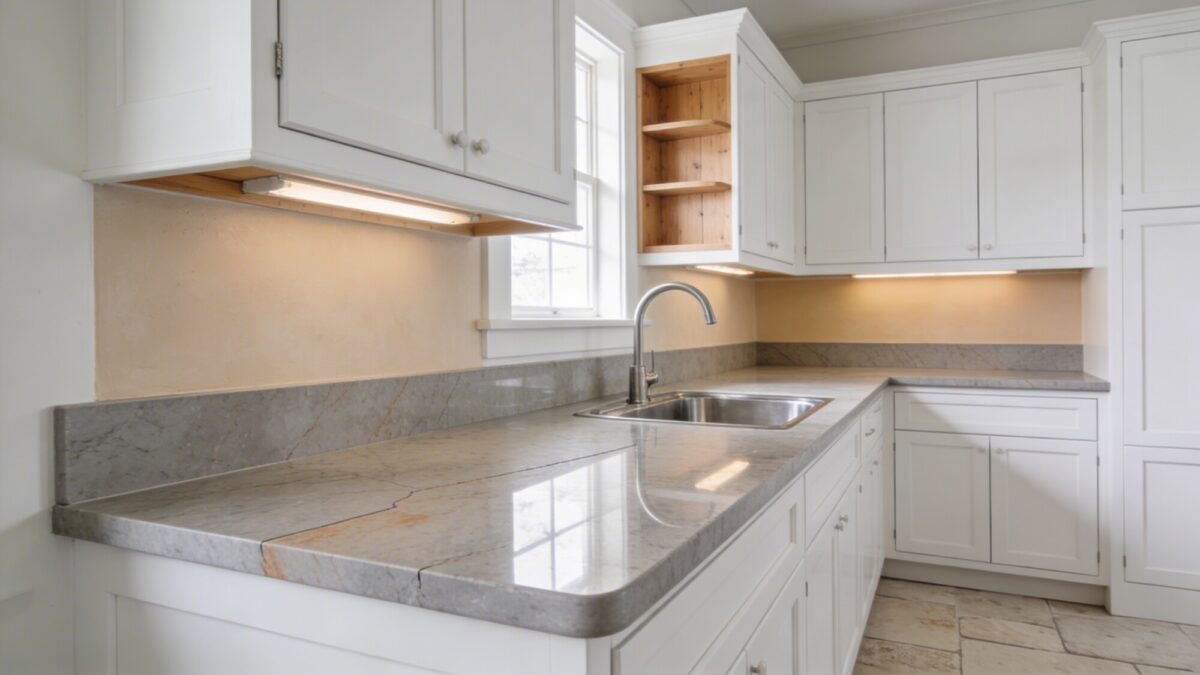
Quartz gets you the visual weight of marble or soapstone without the yearly resealing natural stone needs, and in a small kitchen, a light gray or warm beige slab bounces more light than a dark countertop would — which matters more here than in a larger room with multiple windows.
| Countertop Option | Maintenance | Best Fit |
|---|---|---|
| Quartz | Low — no sealing required | Small kitchens wanting a stone look with less upkeep |
| Natural stone (marble, granite) | Higher — needs periodic sealing | Kitchens where authentic stone veining matters more than upkeep |
| Butcher block | Moderate — occasional resealing | Kitchens leaning more farmhouse than modern |
Go with the largest slab size you can get for the run — fewer seams reads as more intentional, and it’s the kind of detail that shows up in photos even if you can’t articulate why a countertop looks “off.”
5. Mixed Metal Accents Without the Clash
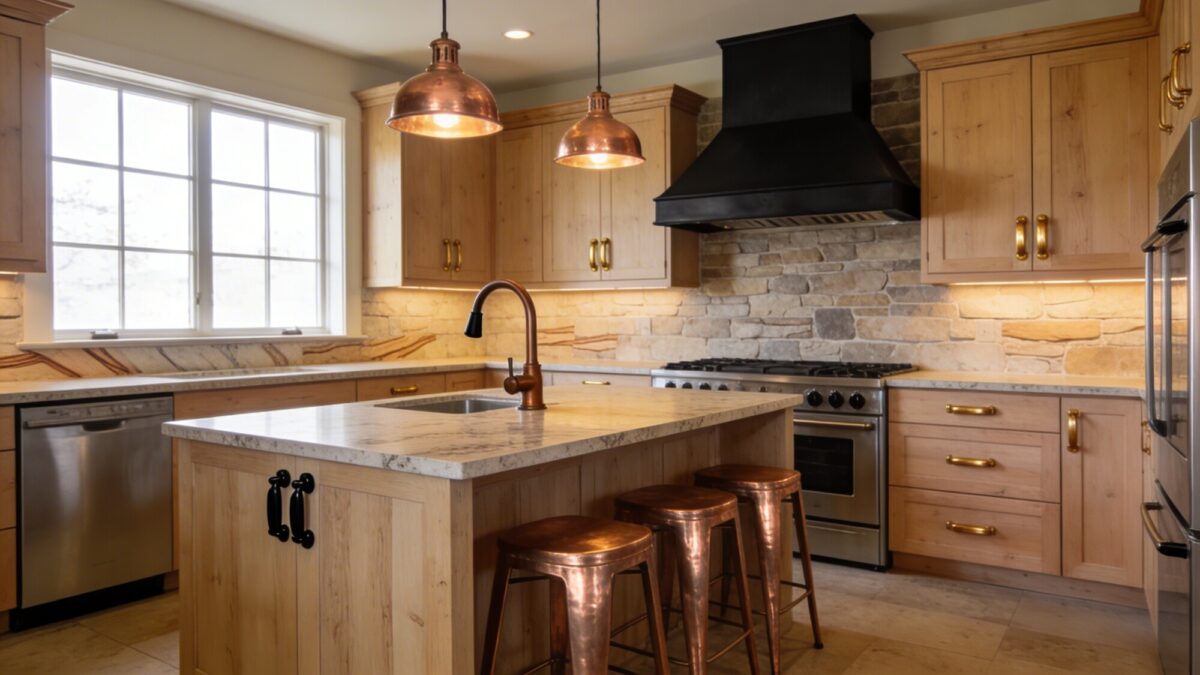
Mixing metal finishes is where a lot of modern farmhouse kitchens go wrong — not because mixing is a bad idea, but because three or four unrelated finishes read as unplanned rather than eclectic. The version that works: two to three metals total, distributed evenly around the room rather than clustered in one spot, with one warm metal (brass or copper) picked as the anchor tone.
A bronze faucet, matte black cabinet pulls, and a copper pendant over the island is a workable combination because each metal shows up in a different fixture type — faucet, hardware, lighting — instead of competing for the same visual job.
6. Under-Cabinet Lighting That Earns Its Keep
This is the upgrade people budget for last and notice first once it’s in. LED strip lighting under the upper cabinets removes the shadow line that a single ceiling fixture always leaves across the counter — the exact spot where you’re cutting vegetables or reading a recipe.
Dimmable strips in warm white give you flexibility between full task lighting and a lower evening glow. Whether you go plug-in or hardwired depends mostly on your existing wall layout and whether you’re comfortable running wire — plug-in is the realistic DIY option for a rental or a quick weekend install.
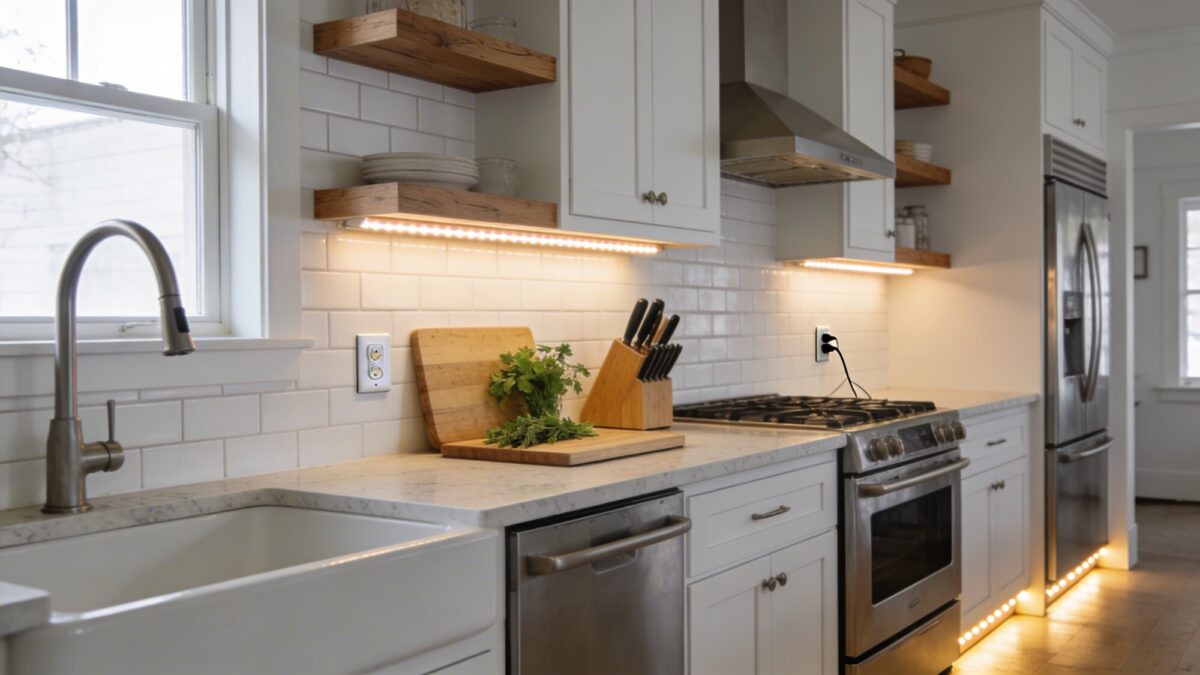
💡 Pro Tip: Position the LED strip toward the front edge of the cabinet, not tucked at the back — front-mounted strips light the countertop where you’re actually working; back-mounted ones mostly light the backsplash and leave your cutting board in its own shadow.
7. A Palette Built on White, Wood, and One Accent Hue
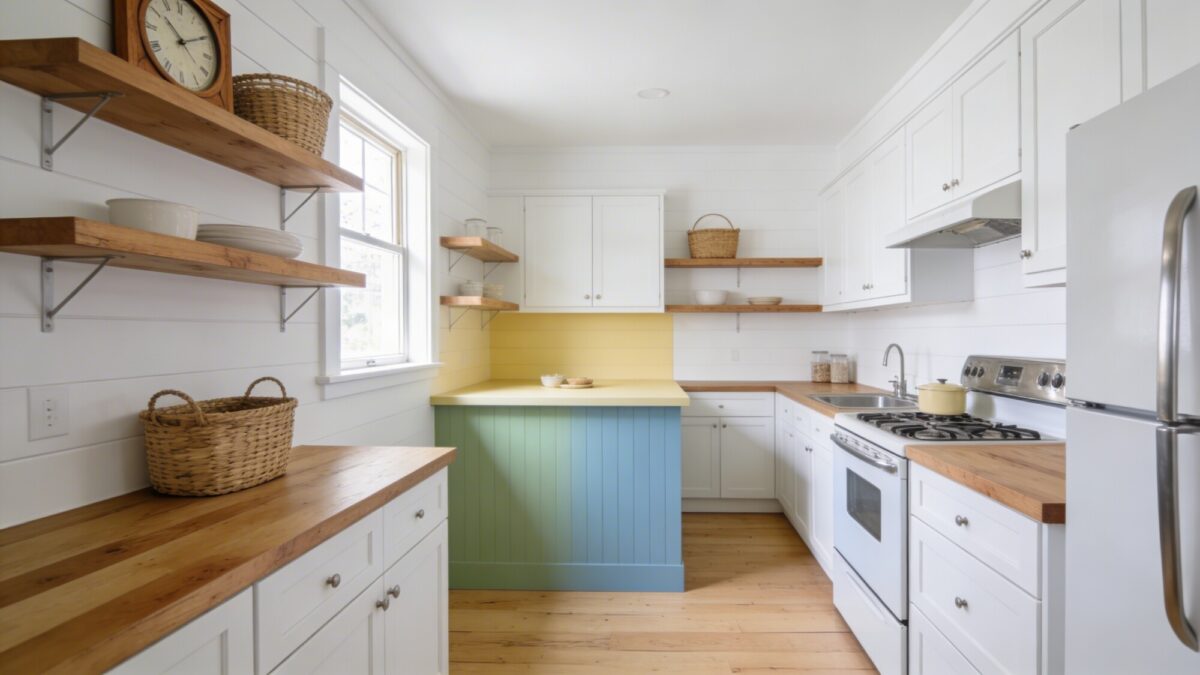
White walls and warm wood surfaces are the base of the modern farmhouse kitchen look, but an all-white-and-wood room can start to feel flat without a third element. A single accent color — sage green, butter yellow, or a muted blue — on one surface (an island, a feature wall, open shelving backing) gives the eye a place to land without turning the whole room into a color statement.
Keep that accent to one surface. Two accent surfaces in different colors is where a calm palette turns busy, especially in a room small enough that every wall is visible from every angle.
8. A Cozy Nook That Still Works as Real Seating
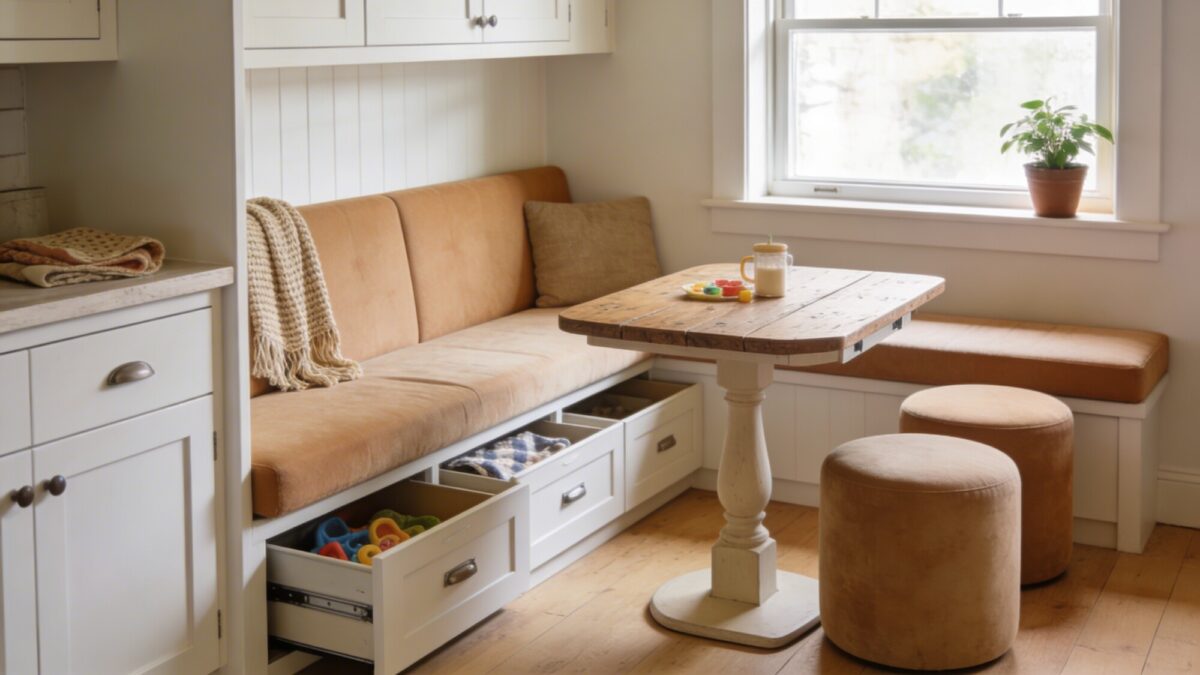
Seating in a small kitchen has to do double duty — it needs to be comfortable enough for a real meal and compact enough not to block traffic. Built-in bench seating with storage underneath is the most space-efficient option because it recovers the floor space a freestanding chair would otherwise take, while a window seat or a couple of rounded stools soften the corners without adding bulk.
Durable, easy-clean upholstery matters more here than in a formal dining room — a farmhouse kitchen nook gets used daily, and a fabric that can’t handle a coffee spill will show it within a month.
Modern Farmhouse Kitchen Appliances: What Actually Matters
Appliances aren’t decor, but in a small modern farmhouse kitchen they’re visible from nearly every angle, so finish consistency matters more than it would in a larger layout. Matte black or stainless steel appliances both work with the palette above — the deciding factor is usually whether your hardware and faucet lean warm (brass, bronze) or cool (matte black, chrome). Match the appliance finish family to whichever one you picked as your anchor metal in idea 5, rather than treating appliance finish as a separate decision.
Frequently Asked Questions
What makes a kitchen “modern farmhouse” instead of just farmhouse?
Cleaner lines and fewer decorative extras. Traditional farmhouse leans on visible texture and rustic details throughout; modern farmhouse keeps surfaces simpler — quartz over butcher block, restrained hardware over ornate pulls — and lets one or two farmhouse elements (the sink, the wood tone) carry the style.
Is quartz or butcher block the better small-kitchen countertop?
Quartz if low maintenance is the priority — no sealing, more stain-resistant. Butcher block if you want the warmer, more traditional farmhouse look and don’t mind resealing it periodically.
How many metal finishes is too many in a small kitchen?
More than three starts to look unplanned rather than eclectic. Two to three, distributed across different fixture types, is the workable range.
Do I need under-cabinet lighting, or is it just decorative?
It’s functional first — it removes the shadow a single overhead light leaves across your counter. Treat it as a task-lighting upgrade, not a decorative extra, when you’re prioritizing a budget.
Our Take
If you’re prioritizing by impact, cabinets and hardware first, lighting second, decor last — the reverse of how most people shop for a kitchen refresh. A small modern farmhouse kitchen lives or dies on its largest surfaces, not its accessories. For layout-specific guidance once the finishes are settled, see our small farmhouse kitchen layout guide, and if you’re weighing a bigger renovation next, our small farmhouse kitchen remodel roundup picks up from here.