7 Small Cottage Kitchen Farmhouse Style: Cozy, Quick Wins
A small cottage kitchen farmhouse style lives or dies on one distinction: lived-in versus staged. Cottagecore and farmhouse decor both get accused of looking like a theme-park set when someone buys the whole aesthetic at once instead of layering it in over time. The seven ideas below build the look in the order that actually holds up — cabinets and shelving first, textiles and small details last. For a broader look at how this style compares to other small-kitchen approaches, see our farmhouse cozy-but-chic kitchen design ideas.
None of this requires a contractor. It’s paint, hardware, shelving, and the kind of small kitchen decor that’s genuinely doable in an afternoon.
Key Takeaways: Small Cottage Kitchen Farmhouse Style
- Matte wood finishes read as cottage; high-gloss reads as showroom — pick matte if warmth is the goal.
- Shaker cabinet doors are the safest long-term choice because they don’t date the way ornate panel styles do.
- Open shelving works only if you actually use what’s displayed — it should be functional storage that happens to look good, not a museum case.
- White walls need a counterweight — texture, wood tone, or a vintage accent — or the room reads sterile instead of airy.
- Lighting layered at two temperatures (task and ambient) matters more than any single statement fixture.
1. Warm Wood Cabinets in a Matte Finish
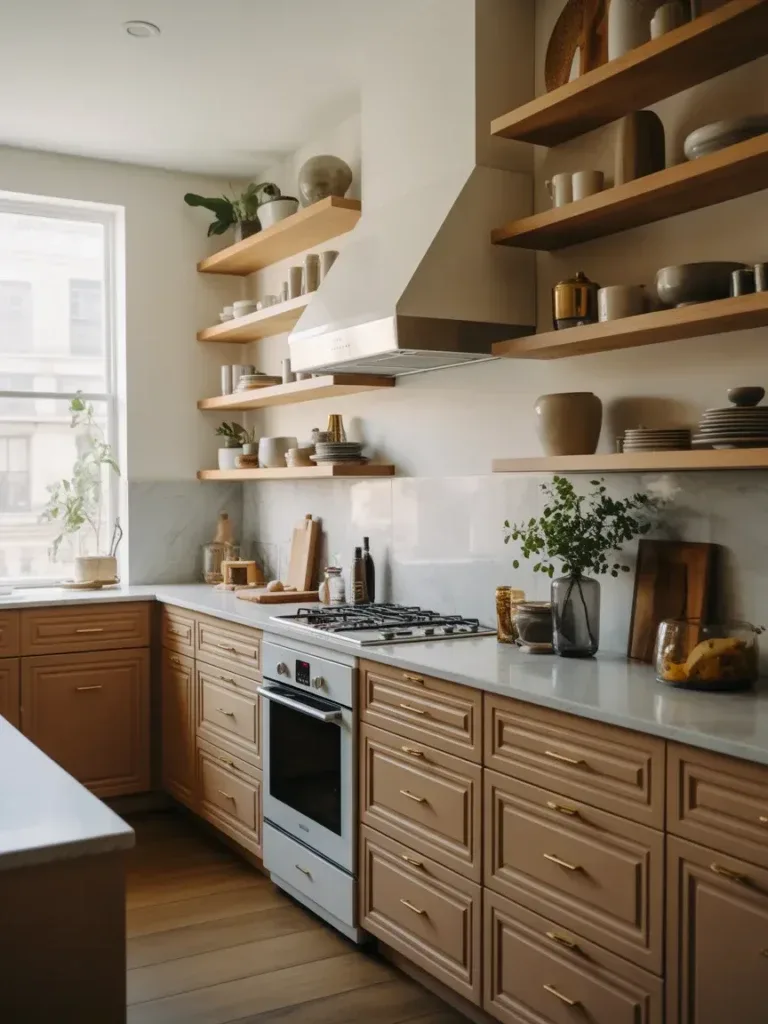
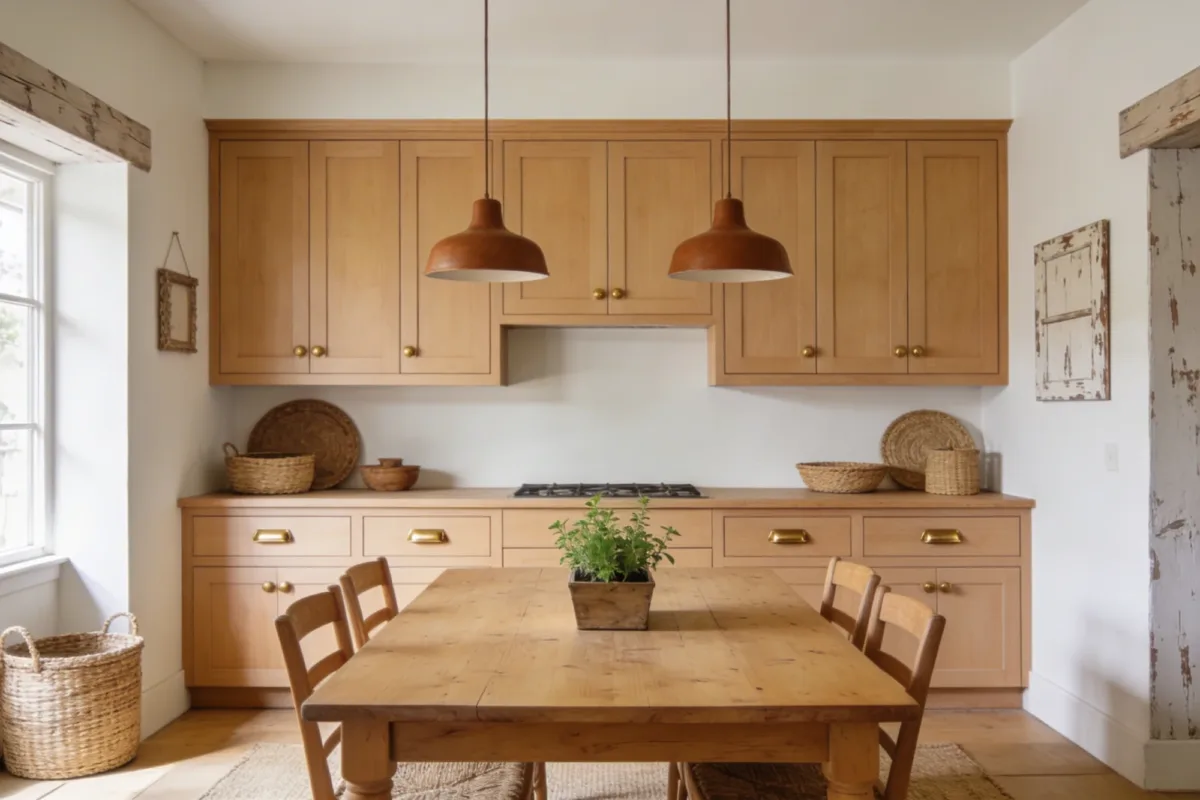
Wood grain is doing most of the work in a cottage farmhouse kitchen, and the finish decides whether it reads as cozy or as a furniture showroom. Matte holds onto the cottage feel; high gloss pushes the same cabinet toward a more modern look, even in the same wood tone. Ash, oak, or pine in a lighter stain — or a light whitewash over any of them — keeps the kitchen from feeling dark in a small footprint.
You don’t need to replace cabinets to get here. A stripped-and-restained existing cabinet run gets most of the same visual result as new cabinets, for a fraction of the cost — it’s slower, but it’s the more budget-realistic route for most small kitchens.
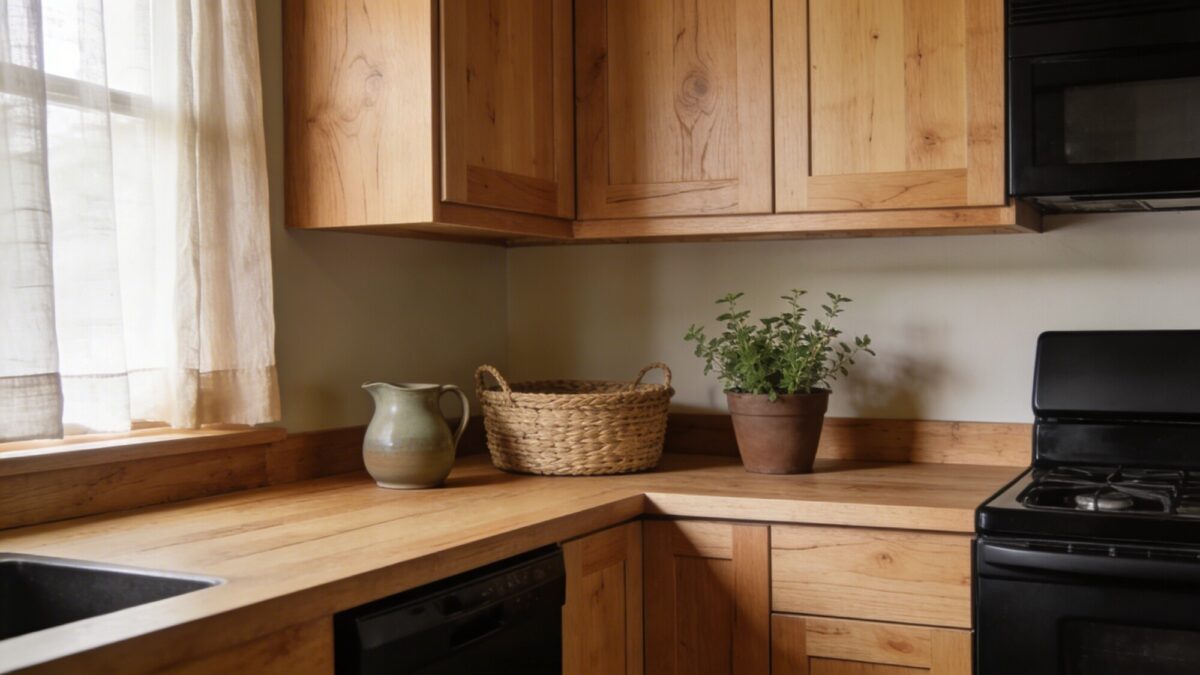
💡 Pro Tip: If you’re restaining rather than replacing, test the new stain on the inside of a cabinet door first — old cabinet wood absorbs stain unevenly compared to fresh lumber, and you want to know that before you commit to the whole kitchen.
2. Shaker-Style Doors: Classic for a Reason
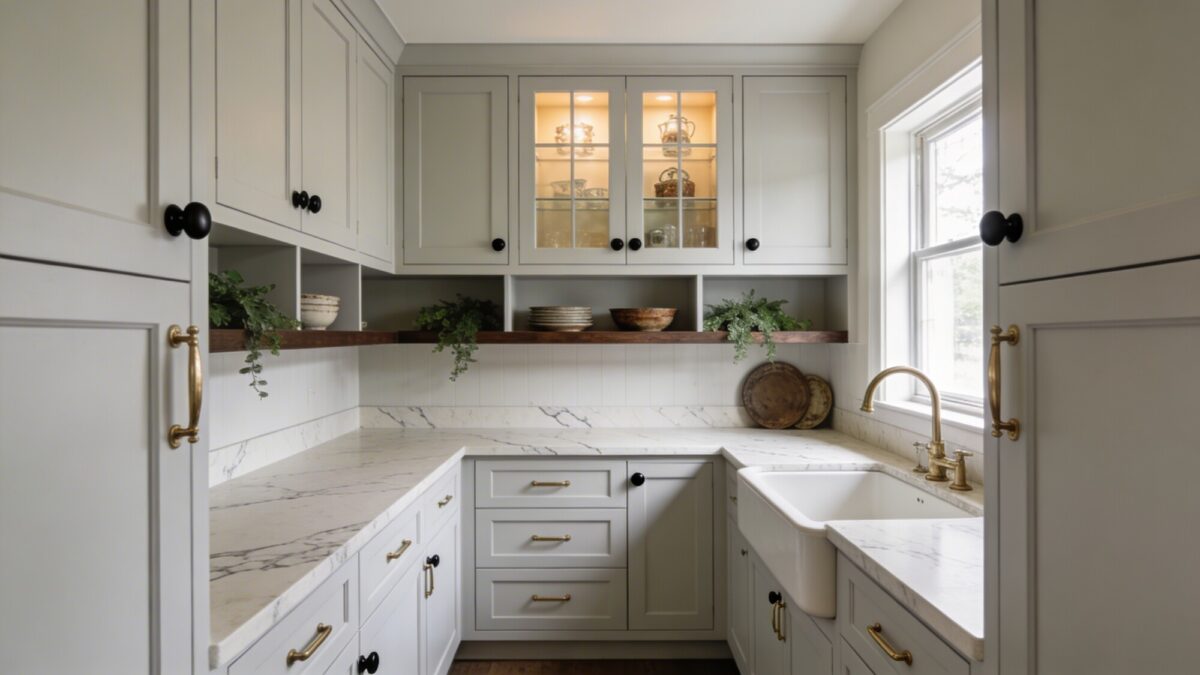
Shaker doors are the one cabinet style that hasn’t gone out of fashion in decades, which matters if you’re not planning to redo the kitchen again in five years. The flat-panel simplicity works whether you paint it a soft ivory or pale gray, or leave it in natural wood — it’s the frame that adapts, not a trend that ages out.
Glass-front uppers work well paired with shaker lowers if you have a few keepsakes worth displaying, but they’re not required — a mix of solid shaker uppers and open shelving lower down does the same visual job of breaking up a wall of identical cabinet doors.
3. Open Shelving That Doubles as a Prep-Zone Spotlight
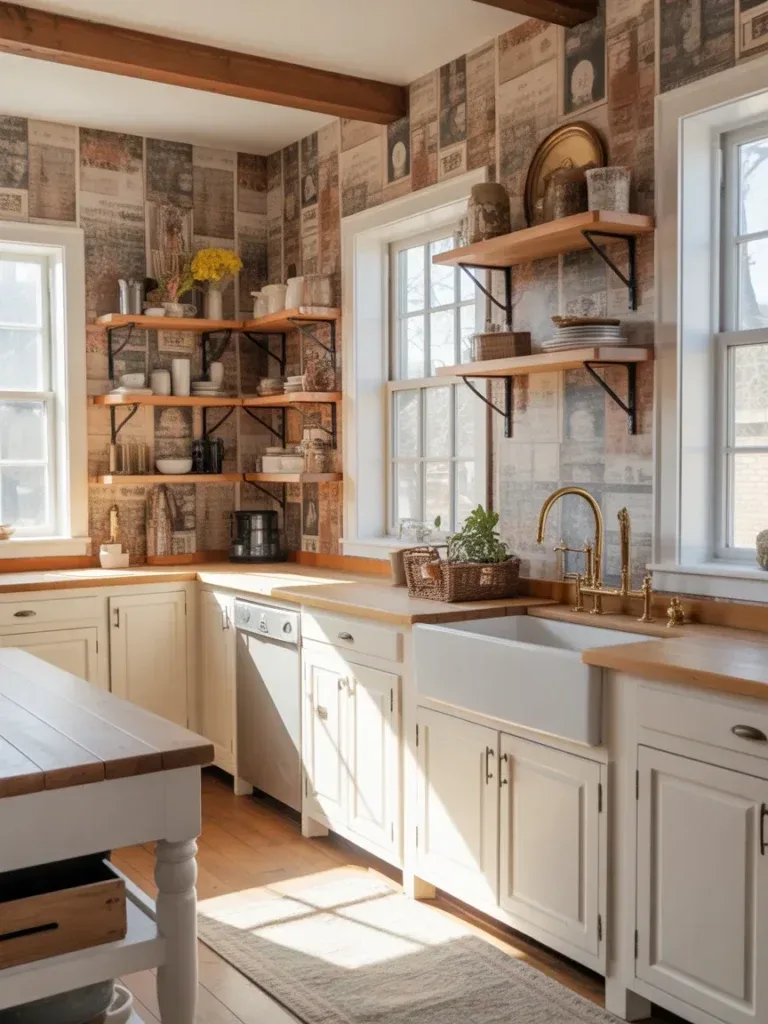
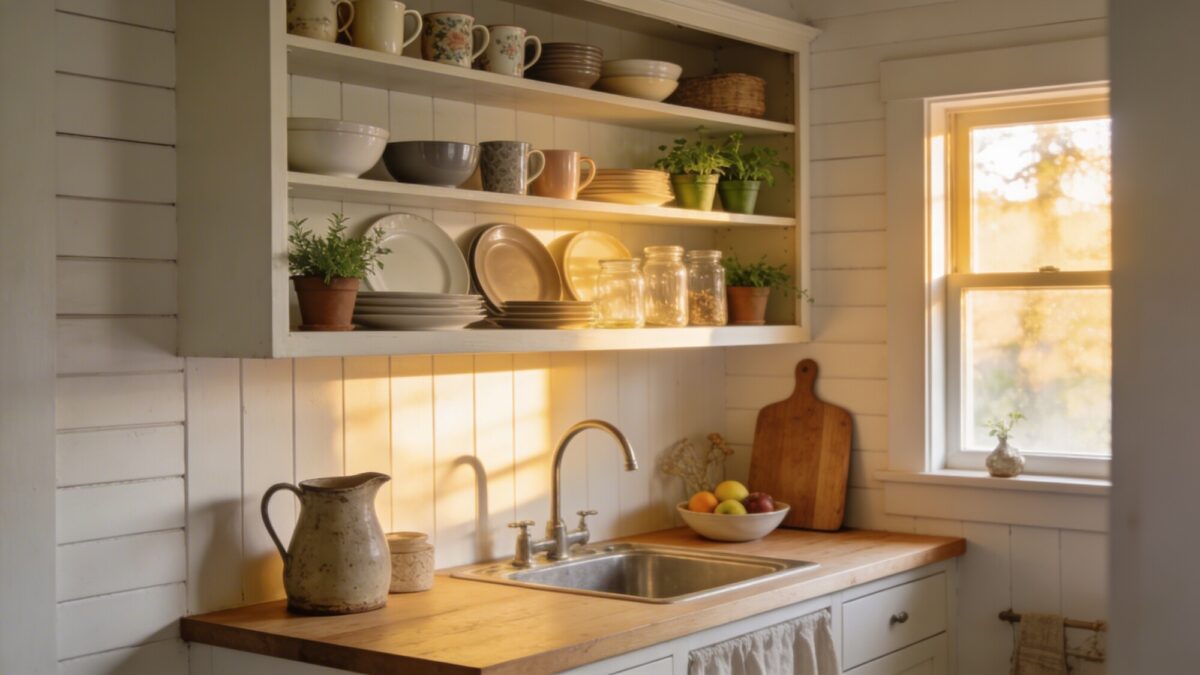
Open shelves work best mounted where you’re actually cooking — near the prep zone or above the sink — rather than on a wall you just pass by. That placement forces a kind of built-in editing: you naturally keep the shelves stocked with what you reach for, because the alternative is walking further to get it.
Mixing vintage ceramics with a few modern pieces adds contrast without looking mismatched, as long as the color palette stays consistent. Vary the heights across the shelf rather than lining everything up evenly — uneven heights read as arranged; identical heights read as inventory.
4. White Walls With Granny Chic Accents
White walls open up a small kitchen, but on their own they can read closer to a rental unit than a cottage. Granny chic accents — a wood-framed mirror, a vintage clock, a couple of botanical prints — are what turn a white kitchen small decor scheme from sterile to warm without adding clutter.
A gingham or linen curtain does more for the cottagecore kitchen feel than almost any wall decor, because textiles read as soft in a way hard surfaces don’t. If you’ve got a genuinely old stove or a reproduction with a vintage silhouette, that’s the kind of single statement piece — a vintage kitchen with an old-fashioned stove as the anchor — that can carry the whole room’s character on its own, without needing much else around it.
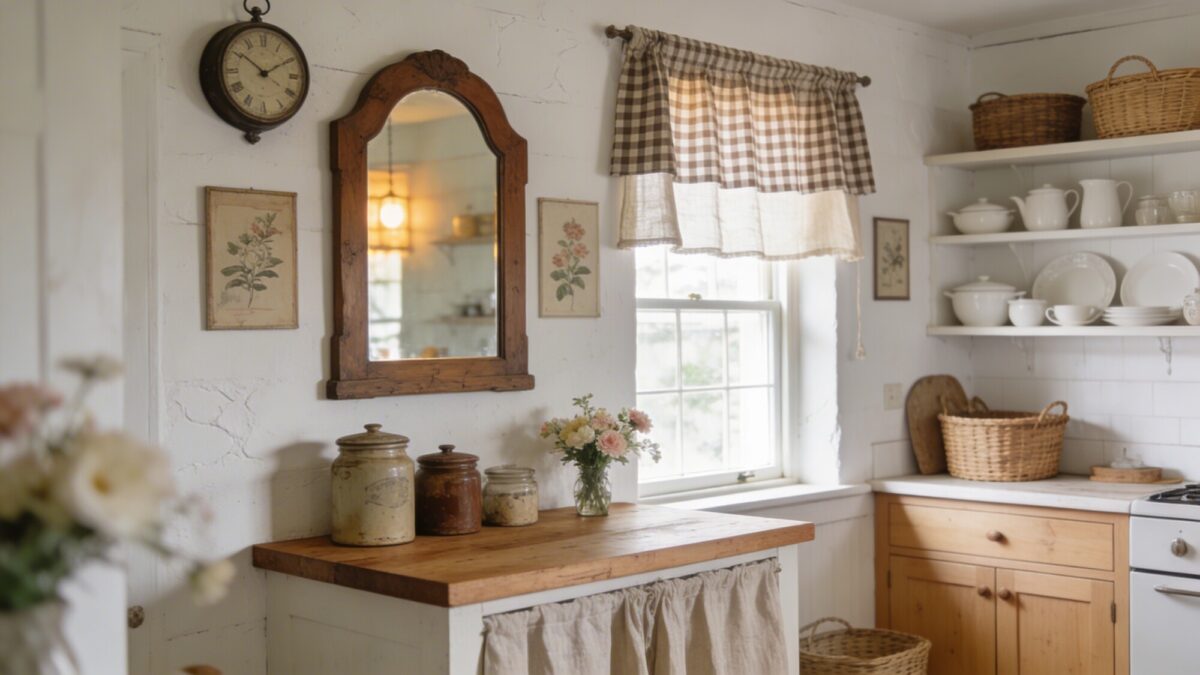
💡 Pro Tip: If you’re leaning into shabby chic farmhouse touches like a vintage mirror or clock, buy one real piece rather than several reproduction ones. A single genuine secondhand find does more for the room than a shelf of matching “vintage-style” decor bought new.
5. Textiles That Make the Kitchen Feel Cozy Cottage Small Space
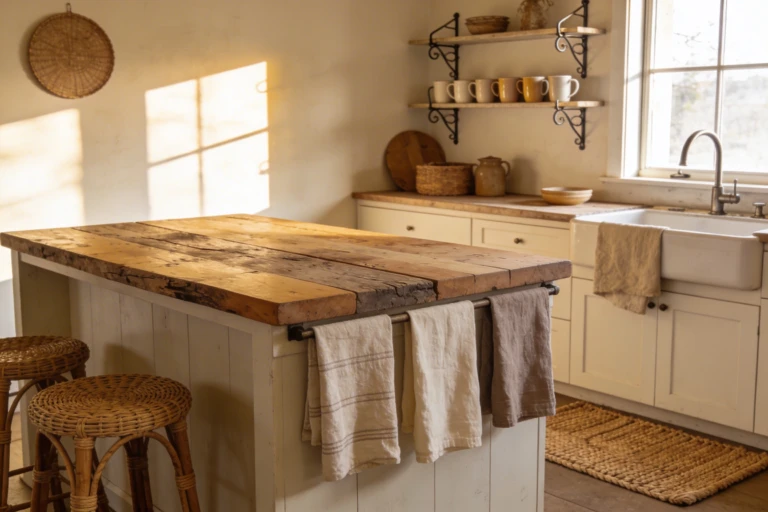
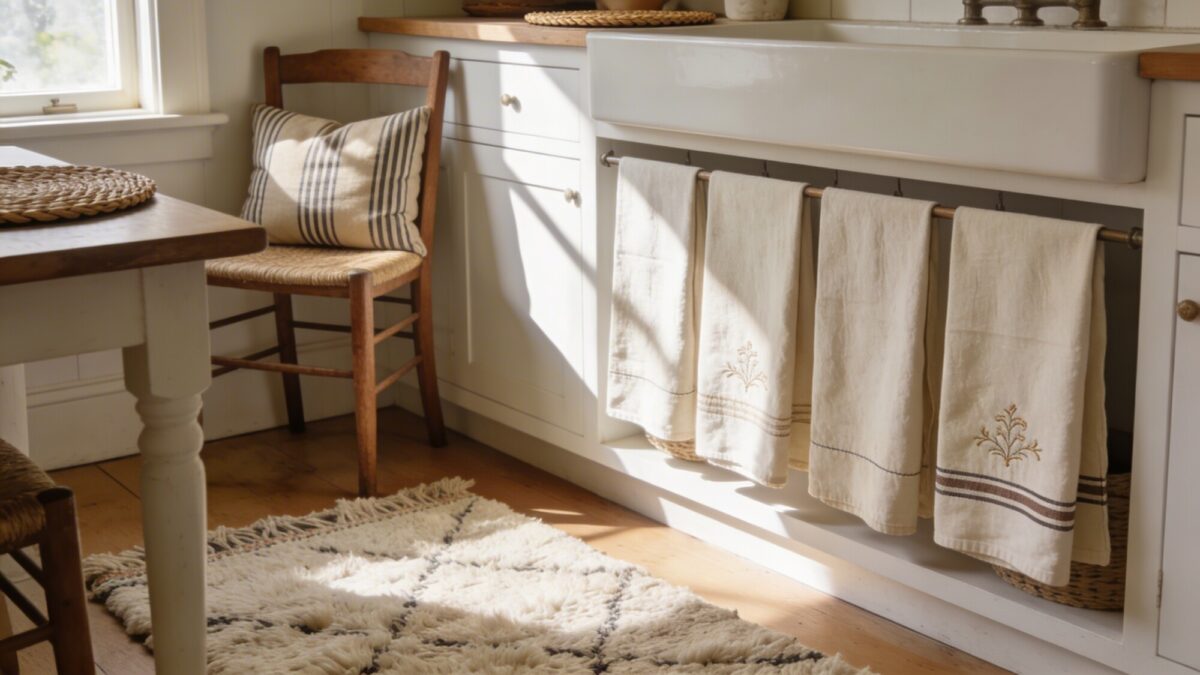
Textiles are the cheapest, fastest way to change how a cottage kitchen feels, and they’re the part people skip because they don’t seem like “real” decor. A woven wool rug, linen or ticking-striped chair cushions, and embroidered cotton tea towels do more to soften a small kitchen than another wall decoration would.
Keep the palette to warm neutrals — cream, soft beige, natural wood — so the textiles layer with the room instead of competing with the cabinetry or backsplash for attention.
6. Lighting That Balances Task and Ambient Glow
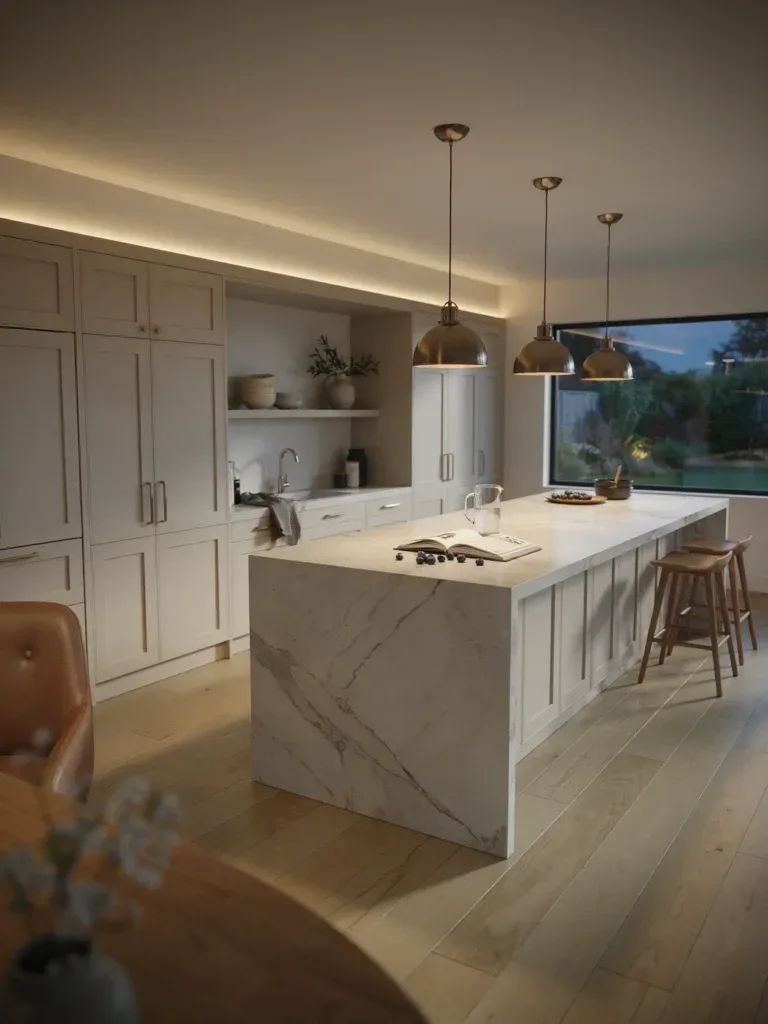
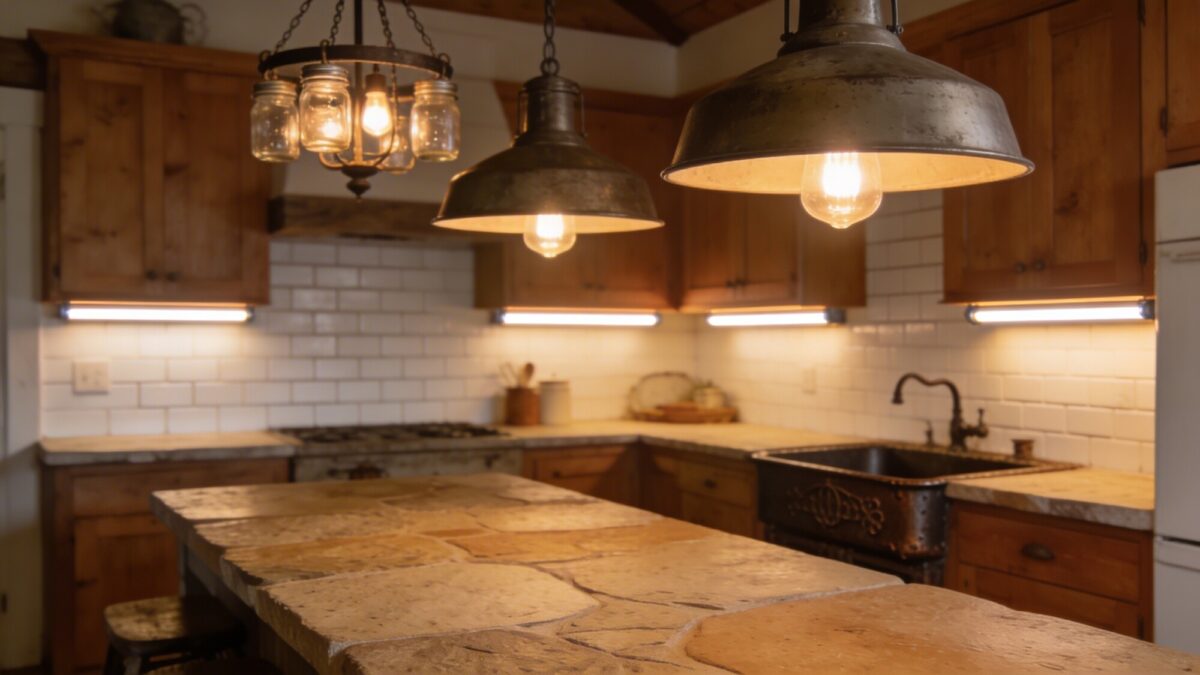
A cottage kitchen needs to be bright enough to actually cook in and warm enough to want to linger in after dinner — those are two different lighting jobs, and one fixture rarely does both well. Industrial metal pendants over the island or sink handle the task-light job; under-cabinet LED strips fill in the shadow a pendant alone leaves on the counter.
Warm bulbs in the 2700–3000K range keep the whole scheme consistent. A small chandelier or a cluster of mason jar lights adds the whimsy that separates a strictly functional kitchen from one with real cottage character — but that’s the last layer, not the first fixture to buy.
7. Small Details: Hardware, Backsplash, and Basket Storage
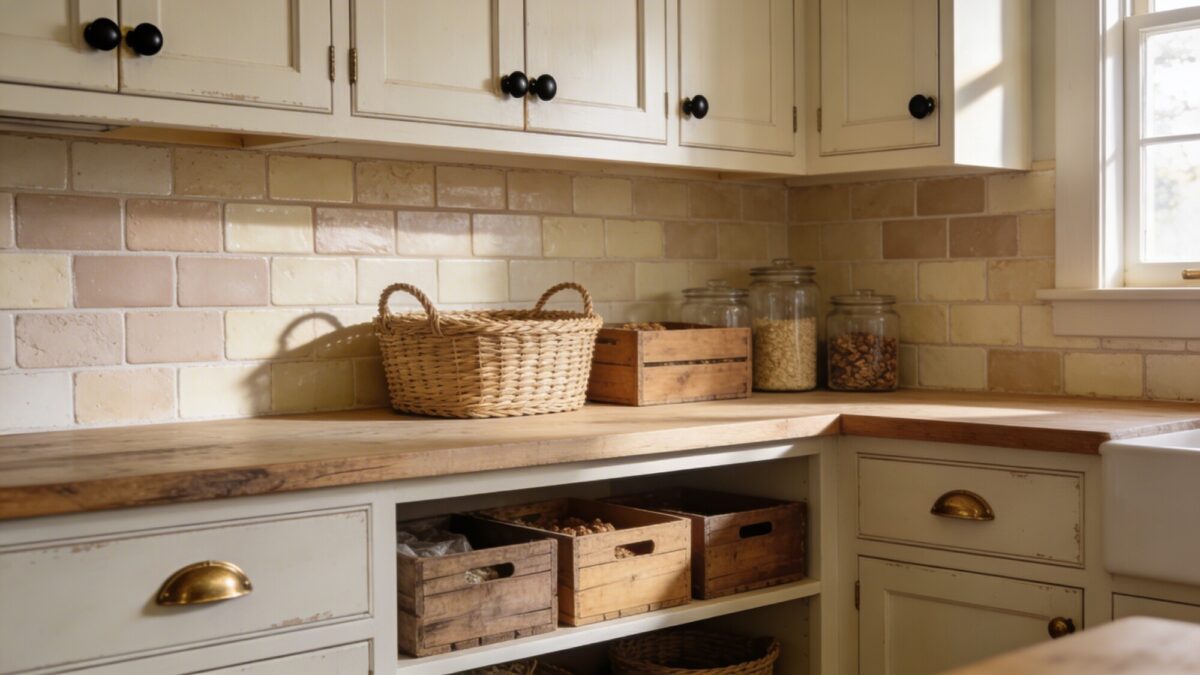
The last details are the ones people notice without knowing why: hardware finish, backsplash texture, and how storage is handled. Brass or matte black hardware with a slightly worn, vintage-style finish reads as farmhouse style shelves and cabinets rather than new construction. A soft, handmade-looking backsplash in a neutral tone — subway tile or something with a bit of texture — does the same job without needing to be literally reclaimed material.
Wicker baskets and wooden crates for pantry storage are rustic kitchen organization ideas that actually function, not just decorate — they corral loose dry goods and give open shelving a place to hide the less photogenic items.
Things to Consider Before You Start
- Are you restaining existing cabinets or replacing them? Restaining is slower but far cheaper for the same visual result.
- Do you have one genuine vintage piece to anchor the room, or are you buying several reproduction items instead?
- Is your lighting handling both task and ambient needs, or just one?
- Will your open shelving hold what you actually use daily, or only what looks good?
Frequently Asked Questions
What’s the difference between cottagecore and farmhouse kitchen style?
Cottagecore leans more whimsical and vintage — florals, mismatched vintage finds, a slightly worn look. Farmhouse leans more structured — shaker doors, apron sinks, a calmer palette. A small cottage kitchen farmhouse style blends both: farmhouse structure with cottagecore’s softer, more personal details.
Is matte or glossy cabinet finish better for a cottage kitchen?
Matte, almost always. Gloss reflects more light and can look sharper, but it reads closer to modern or contemporary than to a lived-in cottage look.
Do I need real vintage pieces, or do reproductions work?
Reproductions work for hardware and small accents. For a statement piece — a mirror, a clock, a stove — a genuine secondhand find tends to carry more character than a new item styled to look old.
How do I keep white walls from feeling sterile in a small kitchen?
Add texture and warmth elsewhere — wood tones, textiles, a vintage accent piece. White walls are the backdrop, not the whole room; they need something to play off of.
Our Take
Start with the cabinets and shelving — they’re the largest surfaces in the room and the ones that set whether the space reads as cottage or just plain small. Textiles and small details come last, once the bones are right; adding them first just decorates a kitchen that still doesn’t look like the style you’re going for. For more cottage-adjacent decor pairings, our small kitchen farmhouse decor ideas roundup is a good next stop, and if your kitchen needs bigger structural changes before decor makes sense, see our small farmhouse kitchen essentials guide.