Cozy Kitchen Design Small Farmhouse Wins Ambience
“Cozy” gets used as a catch-all word in kitchen design, but in a real cozy kitchen design small farmhouse space, it comes down to a handful of specific, repeatable choices — warm bulb temperature, a tight color palette, and a layout that doesn’t fight the room’s actual dimensions. It’s not about adding more farmhouse objects; it’s usually about editing. If you’re still working out the bones of the room, this guide to small farmhouse kitchen layout strategies covers the groundwork this article builds on.
Below is the order that actually matters when you’re building ambience in a tight kitchen: layout, color, materials, storage, lighting, and then the personal touches that make it feel lived-in rather than staged.
Make It Feel Bigger: Layout That Works With a Tiny Footprint
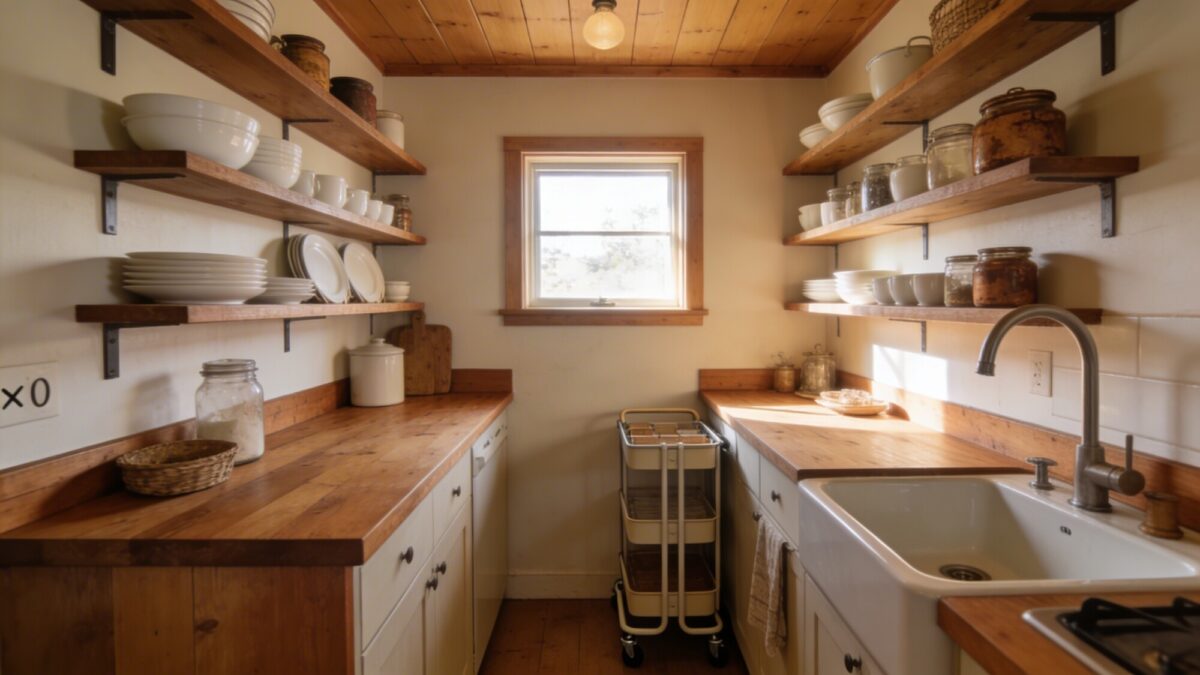
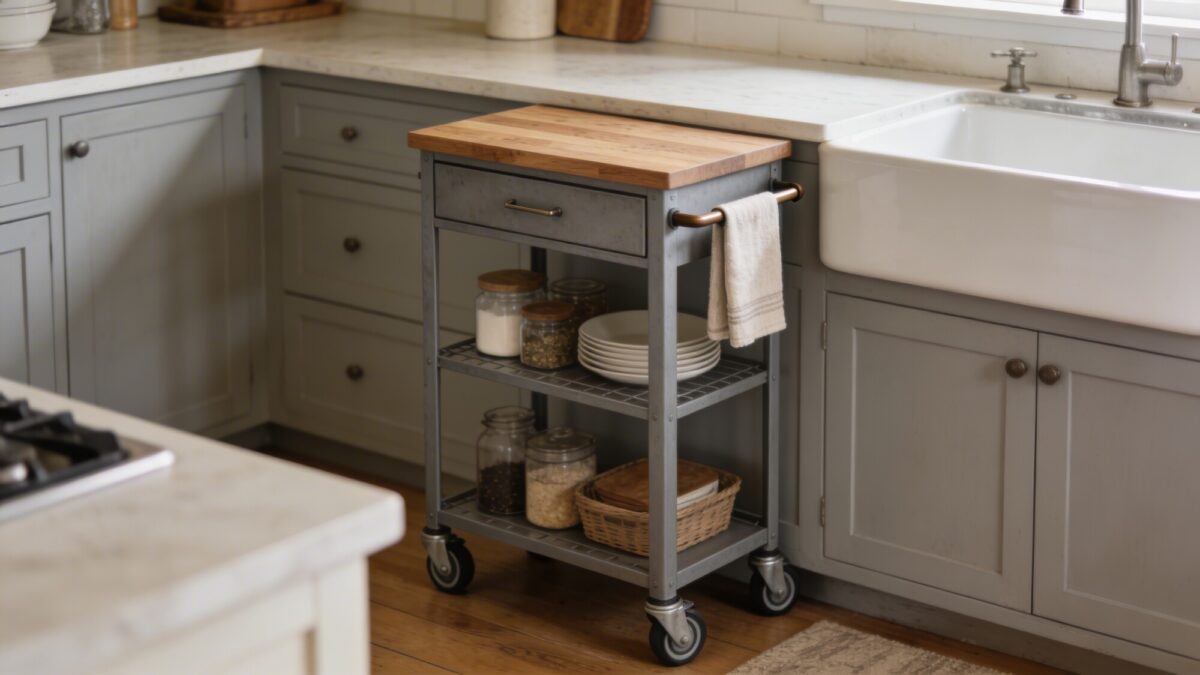
An 8×10 kitchen — roughly the size of a small bedroom — can’t fit a fixed island without compromising the walkway on both sides. A slim rolling cart tucked beside the sink solves the same problem an island would, minus the commitment: pull it out when you need extra prep surface, push it back against the wall when you don’t. Skipping the island entirely is often the right call at this size, not a compromise.
Open Shelving Wins, With a Twist
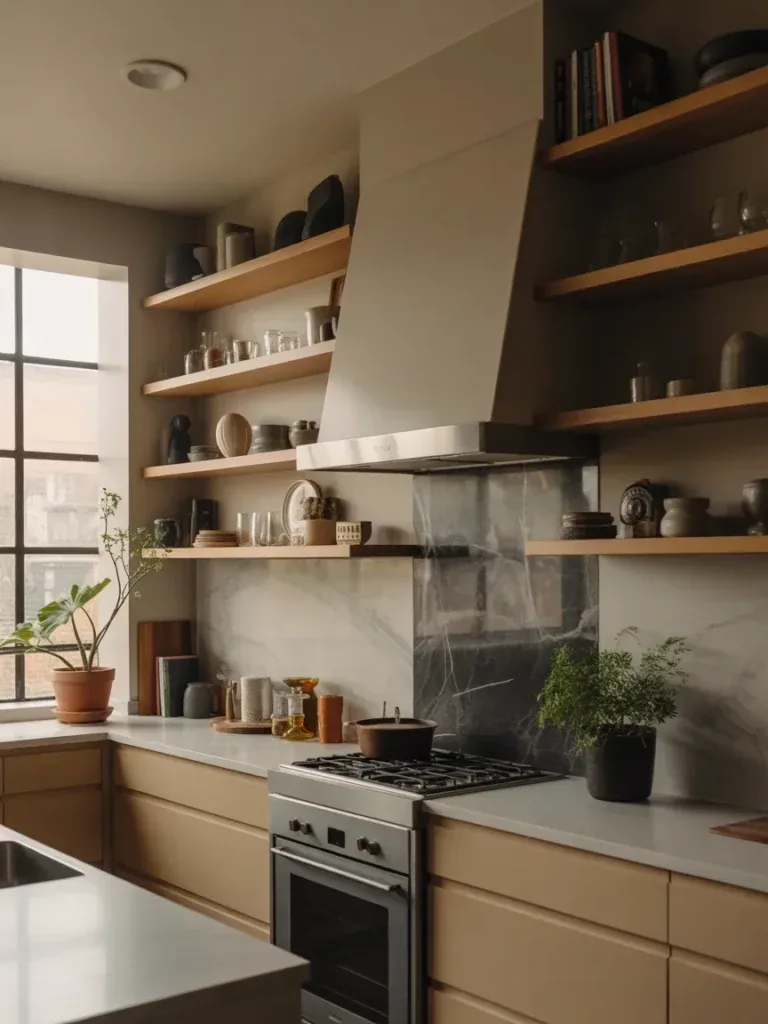
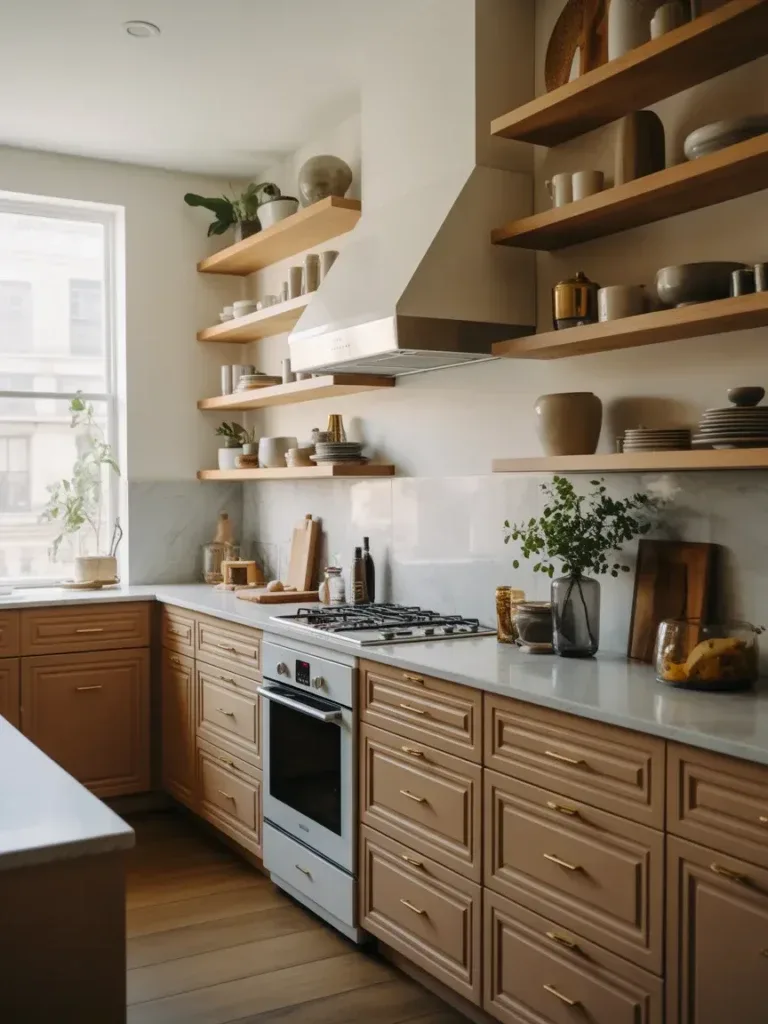
Open shelves work in a small farmhouse kitchen white cabinets or otherwise, but the twist that actually makes them feel cozy instead of bare is mixing plain white dishware with a few rustic jars or ceramics — not filling every shelf edge to edge. A shelf that’s two-thirds full, styled with intention, reads warmer than one crammed with everything you own.
💡 Pro Tip: Leave roughly a third of each open shelf visually empty. It sounds counterintuitive when you’re trying to make a small kitchen feel “full” of character, but empty space between styled items is what reads as curated rather than cluttered — cram every inch and the coziness disappears into visual noise.
Color Psychology: Warm Tones That Actually Feel Like Home
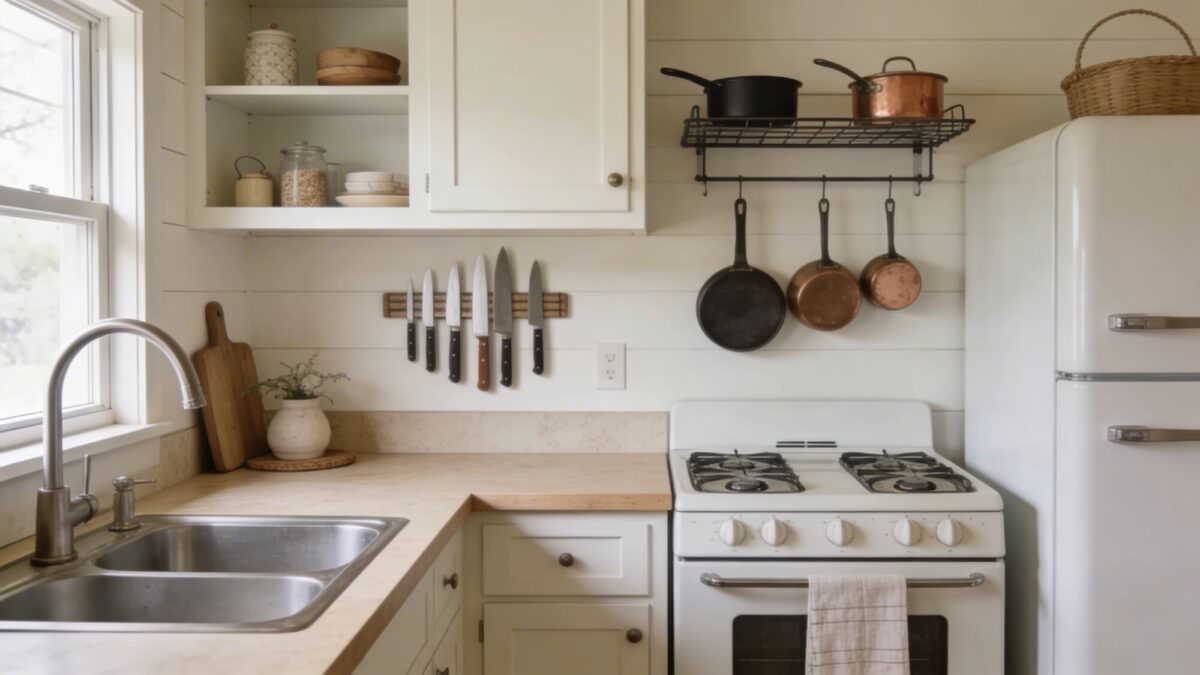
Soft beige and white together read warmer than pure white alone — pure white under cool-temperature bulbs can tip a small kitchen toward clinical instead of cozy, which is the opposite of what most people are going for with a farmhouse direction. A tight sink-stove-fridge work triangle also contributes to the “cozy” feeling more than people expect; a kitchen where every tool is within arm’s reach feels intimate in a way a sprawling layout doesn’t, even when the sprawling layout has more square footage.
Hardware and Details That Tie It All Together
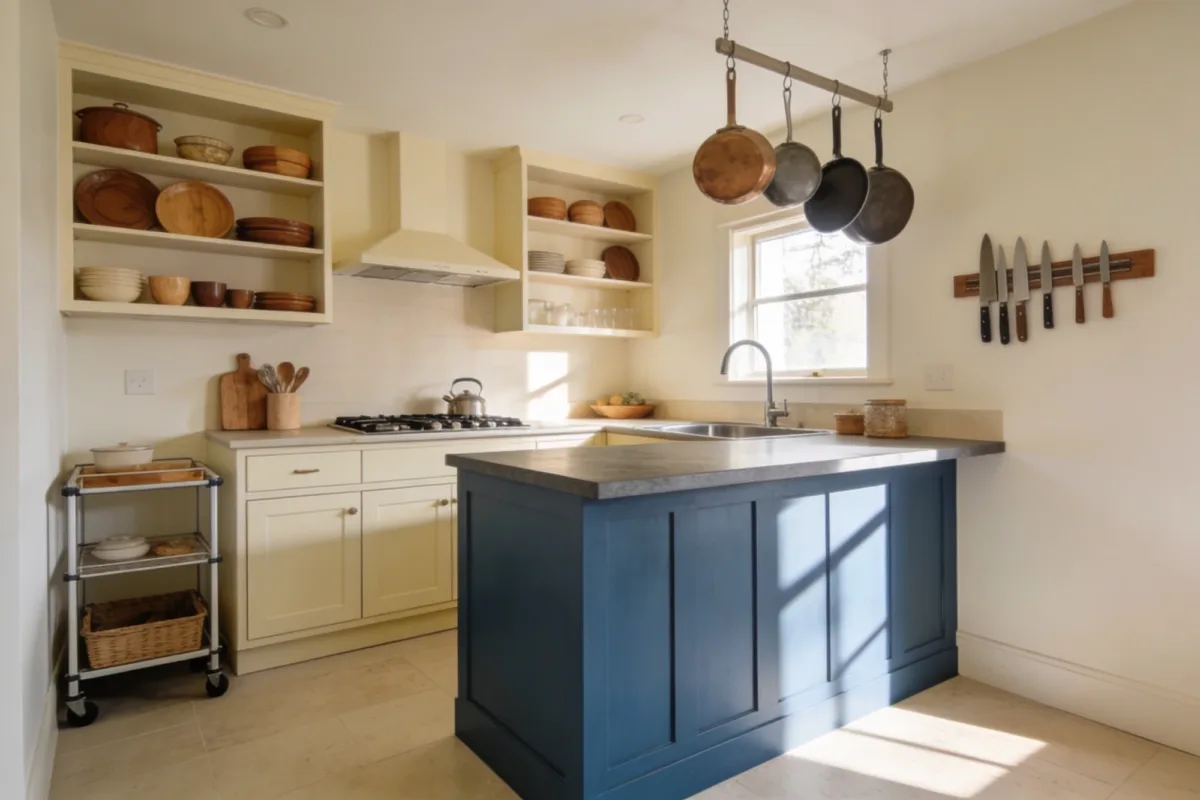
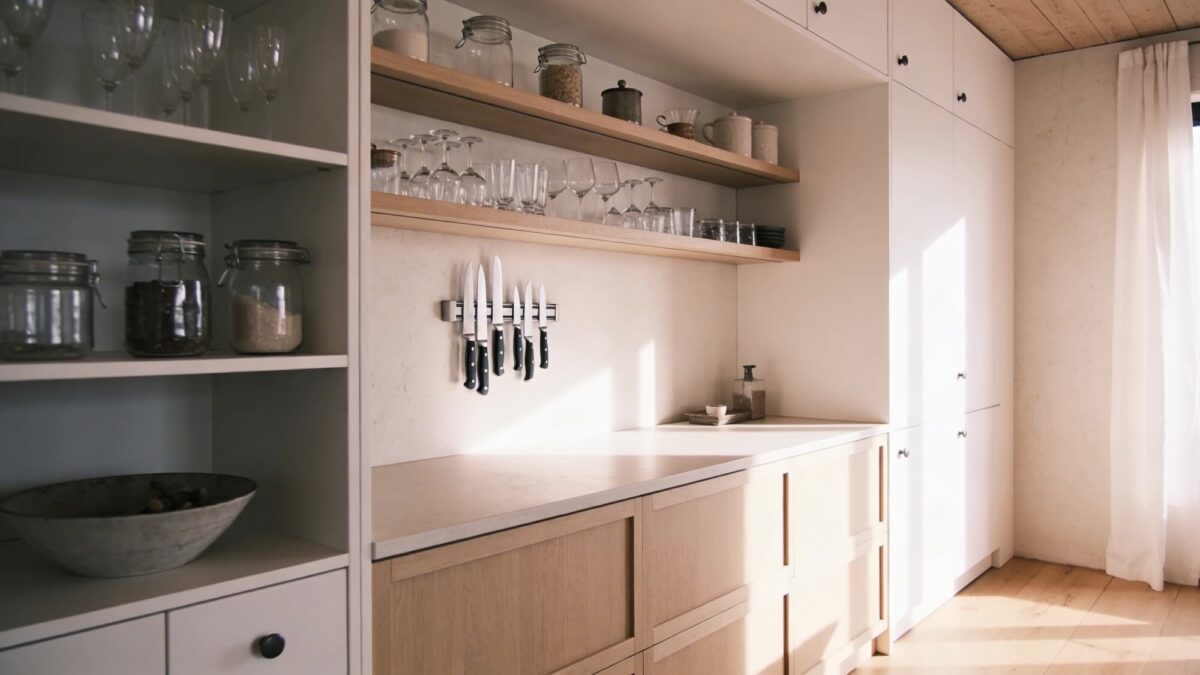
A magnetic knife strip and a small hanging pot rack do two things at once: they free up drawer and cabinet space, and they add warmth through visible, well-used tools rather than blank cabinet fronts. This is where cozy small kitchen with wooden cabinets ideas tend to succeed — wood tones plus visible, functional objects, not wood tones plus empty counters.
Materials That Stand the Test of Time
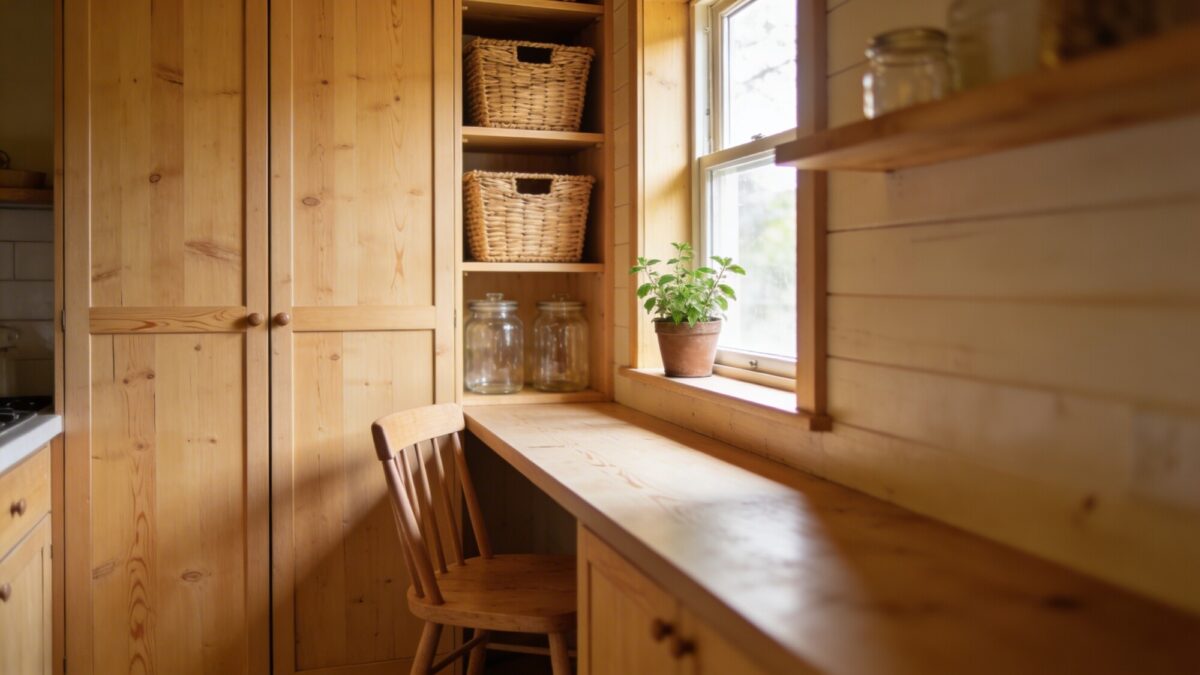
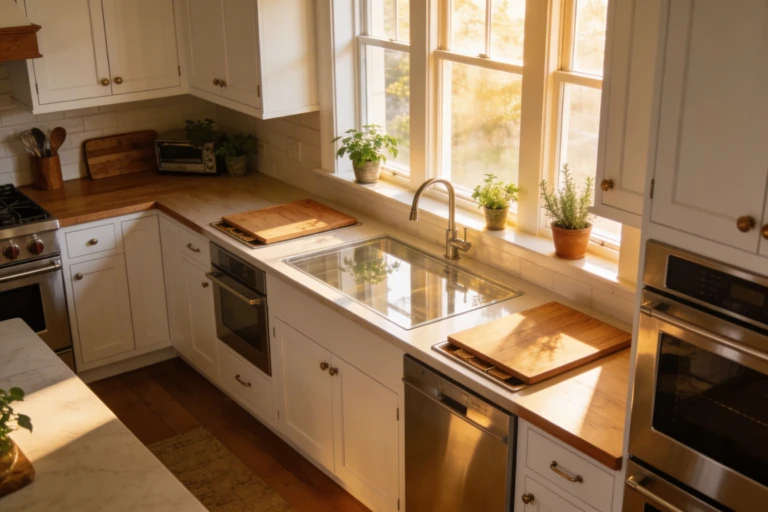
White kitchen cabinets with wooden countertops is one of the more durable farmhouse pairings available, because the wood countertop carries the “warm” half of the look while white cabinetry keeps the small room from feeling boxed in by dark surfaces on every side. The trade-off: a wood countertop needs periodic oiling, especially near a sink, or it will dull and stain faster than a sealed stone surface would.
Flooring That Feels Cozy, Not Crammed
Wide-plank wood or wood-look flooring reads warmer underfoot and visually than small-format tile, which can visually chop up a tight floor plan with too many grout lines. If you’re renovating flooring alongside cabinetry, wider planks are generally the better call in a small farmhouse kitchen specifically for that reason.
Storage Ideas That Actually Help You Find Things
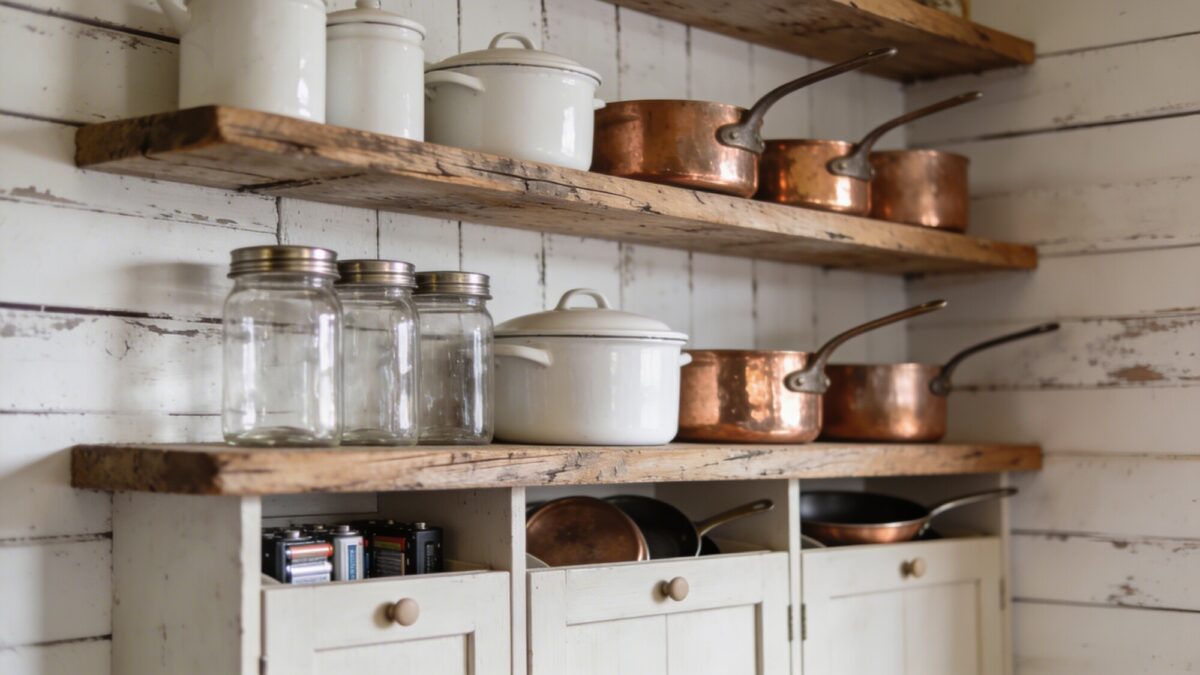
Distressed wood open shelves paired with hidden lower cabinet storage give you the best of both: visible, styled items up top, and a place to put batteries, extra pans, and anything else that shouldn’t be on display, below. This mixed approach solves the biggest complaint about all-open storage — that eventually you run out of things worth displaying and start displaying things that shouldn’t be displayed.
Multi-Functional Zones
The rolling cart mentioned earlier does more work if you give it a second job — towel bar on the side, small drawer for utensils — rather than treating it purely as extra counter space. In a small traditional kitchen ideas context, every piece of furniture earns its floor space faster if it’s handling two tasks instead of one.
Lighting That Feels Bright and Welcoming
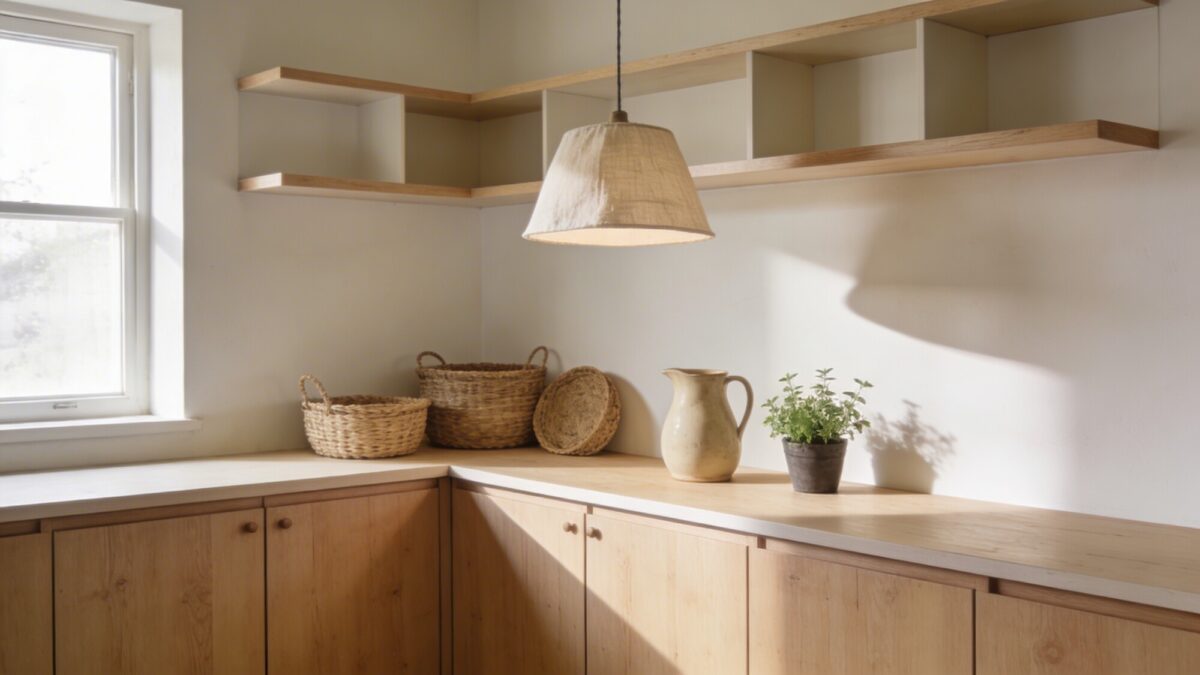
Warm-white bulbs (2700K–3000K) are non-negotiable for a genuinely cozy farmhouse kitchen; anything cooler and the room stops feeling warm no matter what else you’ve done with color or materials. A single statement fixture — one pendant, one lantern — over the sink or the busiest counter zone gives the room a focal point without adding visual clutter the way multiple smaller fixtures can in a tight ceiling area.
Statement Fixtures Without the Clutter
One fixture, chosen deliberately, beats three smaller fixtures scattered across a small ceiling. This is a common overcorrection: people worry a single light won’t be “enough” for the room and end up installing multiple fixtures that compete with each other instead of one that anchors it.
💡 Pro Tip: If you’re torn between two pendant styles, pick the one with a warmer-toned shade (wicker, fabric, or amber glass) over one with clear or metal-only construction. The shade material affects how the light itself feels in the room almost as much as the bulb temperature does.
Personal Touches: The Farmhouse Flavor You’ll Actually Remember
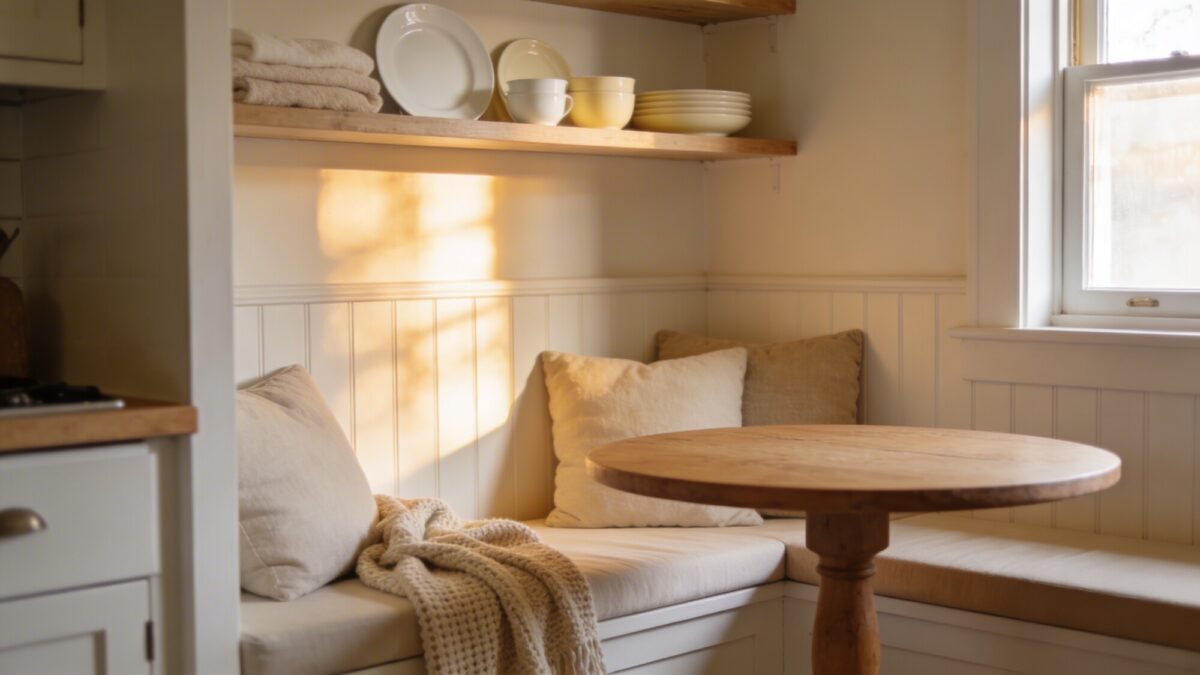
A breakfast nook — even a compact built-in bench with a small round table — adds more genuine coziness than almost any decorative object on this list, because it gives the kitchen a place to sit rather than just work. If your layout can spare a corner for one, it’s usually worth the floor space it costs.
Textiles and Soft Surfaces
A runner rug, cushions on a bench seat, and simple curtains soften a room that’s otherwise mostly hard surfaces — cabinetry, countertop, appliances. In a small kitchen, even one or two textile touches change how the room feels underfoot and against the eye more than an equivalent amount spent on hard decor would.
Smart but Simple: Tech That Doesn’t Steal the Show
Keep smart-home elements — under-cabinet lighting controls, a smart speaker — visually minimal or tucked out of sightlines. The coziness of a small farmhouse kitchen depends partly on the room looking analog and lived-in; visible tech, even useful tech, works against that unless it’s genuinely hidden.
Clean Up Without Turning It Into a Studio
Keep countertops shallow on “stuff” even while keeping the room warm — a magnetic knife strip and one styled tray beat a counter lined with every appliance you own. The line between “cozy” and “cluttered” in a small kitchen is thinner than in a large one, and it’s almost always about how much is sitting out, not how nice each individual item is.
Things to Check Before You Start
- Are your bulbs warm-white (2700K–3000K), or still on a cooler default temperature?
- Is your color palette limited to two or three tones, including the countertop?
- Do your open shelves have breathing room, or are they packed edge to edge?
- Is there one statement light fixture, or several competing smaller ones?
- Does any furniture in the room (a cart, a bench) serve more than one function?
Frequently Asked Questions
Can a small farmhouse kitchen still feel spacious?
Yes, but “spacious” and “cozy” pull in slightly different directions, and most small kitchens do better leaning cozy rather than trying to fake more square footage than they have. Light colors and good lighting help with both, but over-editing a small kitchen to look bigger often makes it feel colder in the process.
What are the best countertop materials for durability and style?
Quartz gives you durability with minimal upkeep; a wood countertop gives you more warmth but needs regular oiling, especially near a sink. Neither is wrong — it’s a genuine trade-off between maintenance and look, not a clear winner.
How can I incorporate vintage elements without making the space feel cluttered?
Pick two or three vintage pieces you actually love and give each one visual space on a shelf, rather than grouping many smaller vintage items together. A single well-placed piece reads as intentional; a cluster of five reads as a collection that outgrew its space.
What’s a smart approach to lighting in a small farmhouse kitchen?
One statement fixture at warm-white temperature, plus under-cabinet task lighting if your budget allows it. Skip multiple decorative fixtures competing for the same small ceiling area.
Are open shelves worth it in a small kitchen?
Worth it if you’re willing to keep them edited — roughly two-thirds full, not packed solid. If you know you won’t maintain that, closed cabinets with good hardware will look more consistently cozy over time than open shelves that slowly fill up with clutter.
Our Take
Bulb temperature and color restraint do more for genuine coziness than any single piece of farmhouse decor — get those two right before buying anything decorative. A small kitchen with warm-white lighting and a tight two-color palette will feel cozier than one with every farmhouse detail applied under cool white bulbs. For decor ideas to layer on once the fundamentals are in place, see this collection of farmhouse small kitchen decor ideas.