Cozy Wins with a Small Farmhouse Kitchen Table
Most small farmhouse kitchen table mistakes happen before the table ever arrives — someone falls for a look in a photo and doesn’t measure the floor clearance first. A table that photographs beautifully in a wide-angle shot can make a narrow kitchen unusable if you can’t pull a chair out without hitting the counter behind it. If you haven’t settled on your kitchen’s layout yet, our small farmhouse kitchen layout guide is worth reading before you shop for furniture.
This guide covers sizing, materials, layout tricks, and the small maintenance habits that keep a wood table looking good for years instead of months.
Why a Small Farmhouse Kitchen Table Actually Works in Tiny Spaces
A table in a small kitchen does more than hold food — it’s usually the one flat surface that isn’t already claimed by counters or a sink. Homework happens there. Mail gets sorted there. A small farmhouse breakfast table earns its footprint by being useful for things that have nothing to do with eating, which is exactly why it’s worth the floor space in a kitchen where every square foot is contested.
The trade-off is real, though: a table that’s too large makes the room feel smaller, not more furnished. The goal isn’t the biggest table that technically fits — it’s the smallest one that still does the job you actually need it to do.
Size and Clearance Matters More Than Style
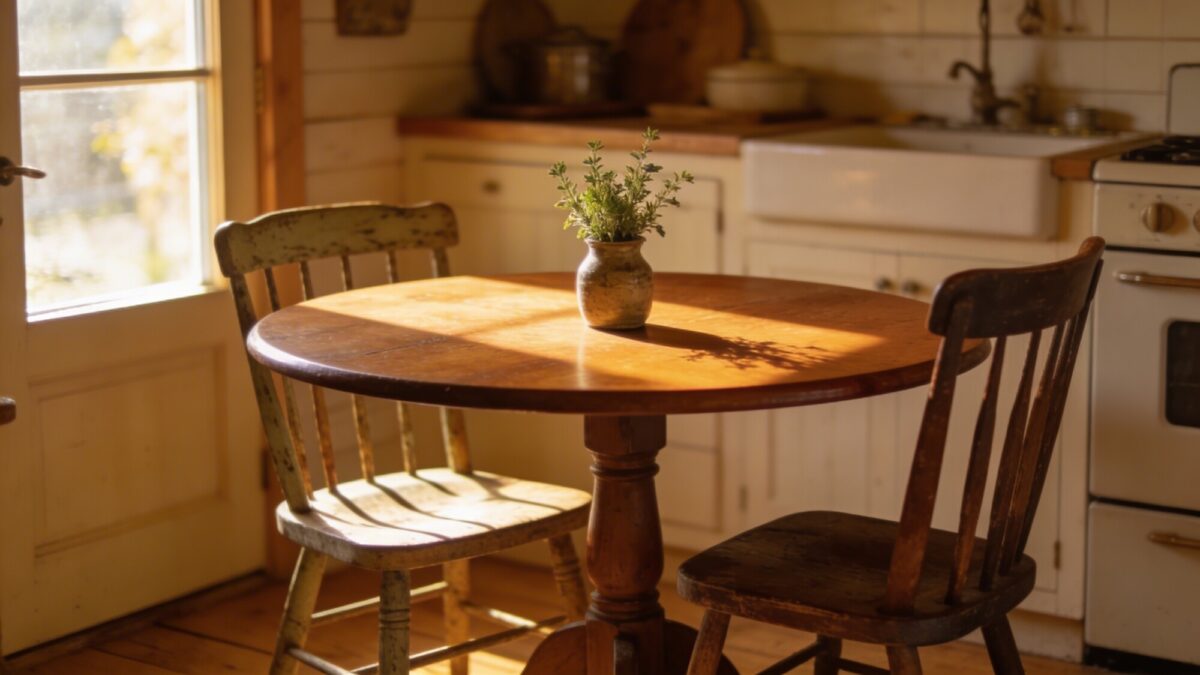
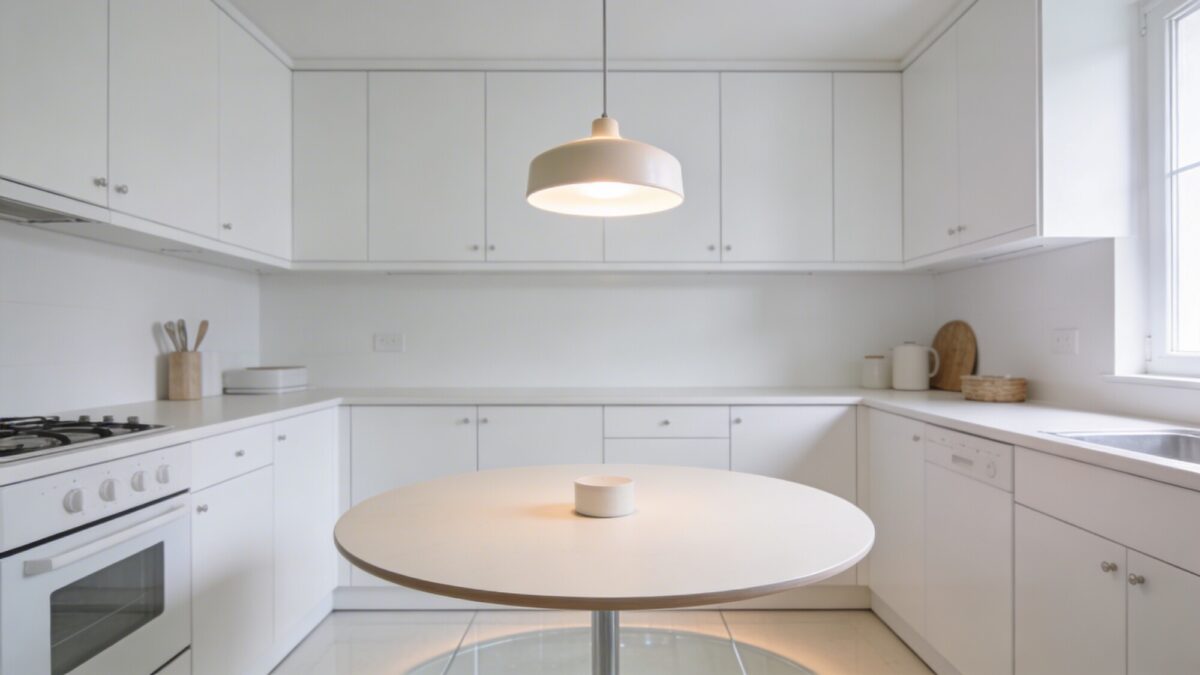
Before you fall for a finish or a leg style, get the numbers right. A round table between 36 and 40 inches across seats two to four comfortably in a genuinely small kitchen, and a round shape has no corners to catch a hip on when you’re moving past it — which matters more in a narrow galley than it sounds like it would.
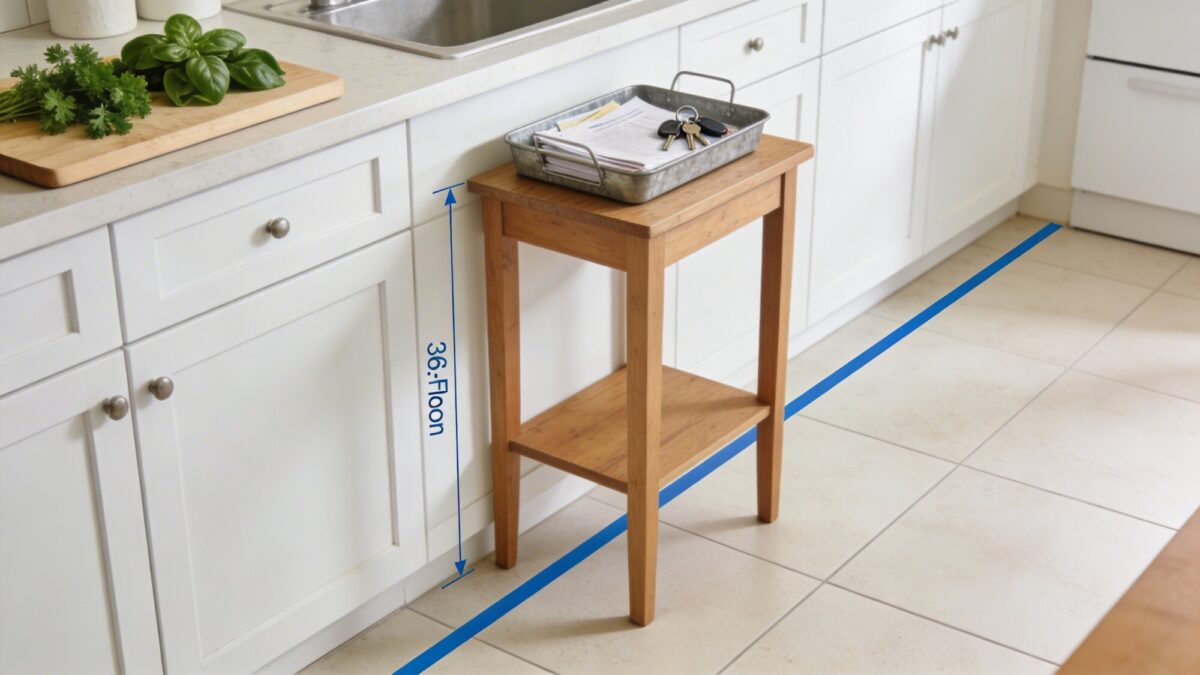
The clearance number that actually matters: 36 inches minimum between the table edge and the nearest wall or counter, so a chair can pull out and someone can stand behind it without turning sideways. Less than that, and the table becomes a squeeze-past every time someone sits down.
💡 Pro Tip: Before buying, mark the table’s footprint on your floor with painter’s tape — full size, not a scaled sketch. Walk around it for a day. Most clearance problems only become obvious once you’ve actually tried to live with the space, not when you’re looking at a floor plan.
Farmhouse Style, But Make It Functional
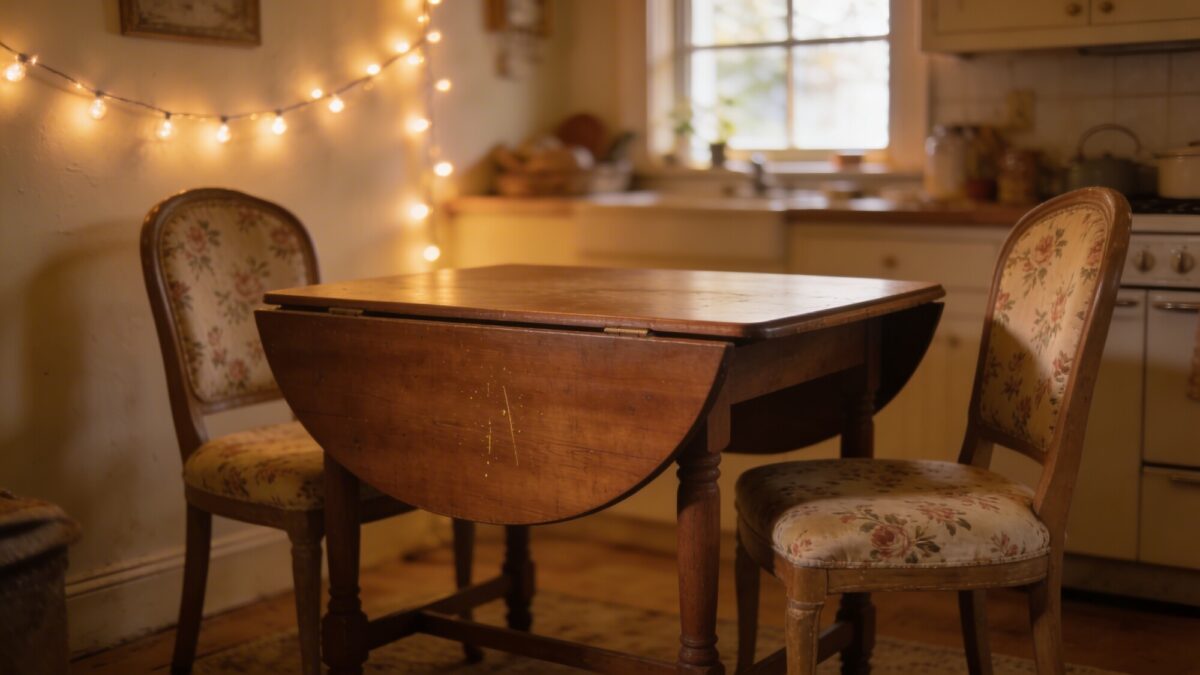
A drop-leaf table is the single most useful design for a farmhouse small kitchen table, because it changes size with the day. Folded down, it’s a narrow console that barely intrudes on the room; leaves up, it seats real guests. That flexibility is worth more in a small kitchen than almost any finish or leg detail.
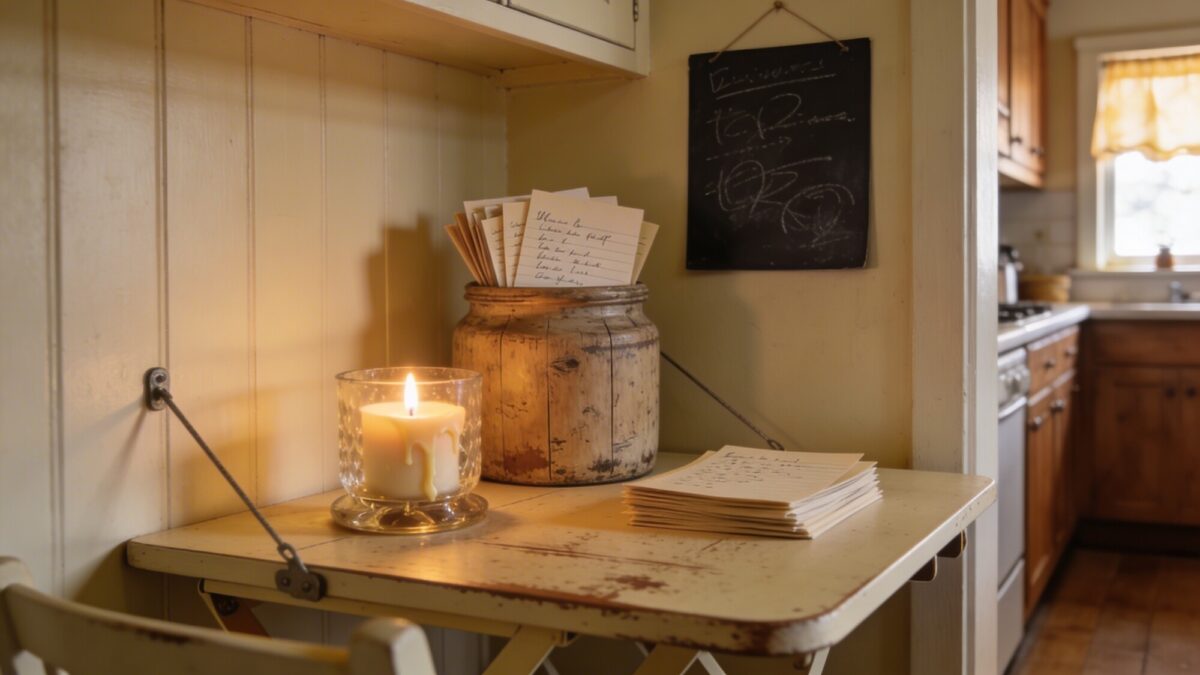
Keep a small daily-use system nearby — a jar of recipe cards, a chalkboard note pad on the wall — so the table itself stays functional rather than becoming the household’s default junk-mail landing spot.
Materials That Age Gracefully
Solid wood — pine, oak, or reclaimed lumber — is the standard farmhouse choice because it takes dents and scratches without looking damaged; a nick in solid wood often just reads as character. Engineered wood or laminate tops cost less upfront but chip at the edges in a way that doesn’t sand out or refinish, so the savings tend to be temporary.
Pine specifically is soft enough to dent from daily use, which some people want (the lived-in look) and others find frustrating within the first year. If you want the farmhouse look without the softness, oak holds up closer to how it looked on day one.
Finish With a Practical Twist
A matte or low-sheen sealant hides daily wear better than a high-gloss finish, which shows every water ring and light scratch under kitchen lighting. If the table doubles as a workspace — homework, craft projects, food prep overflow — a polyurethane topcoat resists water and heat better than plain oil, though it changes the wood’s texture slightly, going from a raw, touchable feel to something closer to a sealed surface.
Layout Ideas That Maximize Small Spaces
Placement matters as much as the table itself. Pushed against a wall, a small table frees up a full side for walking room — useful in a galley kitchen where the table would otherwise sit in the main traffic path. Centered in a nook, it becomes a real dining spot but demands the full clearance on every side.
Bench Seating for Efficiency
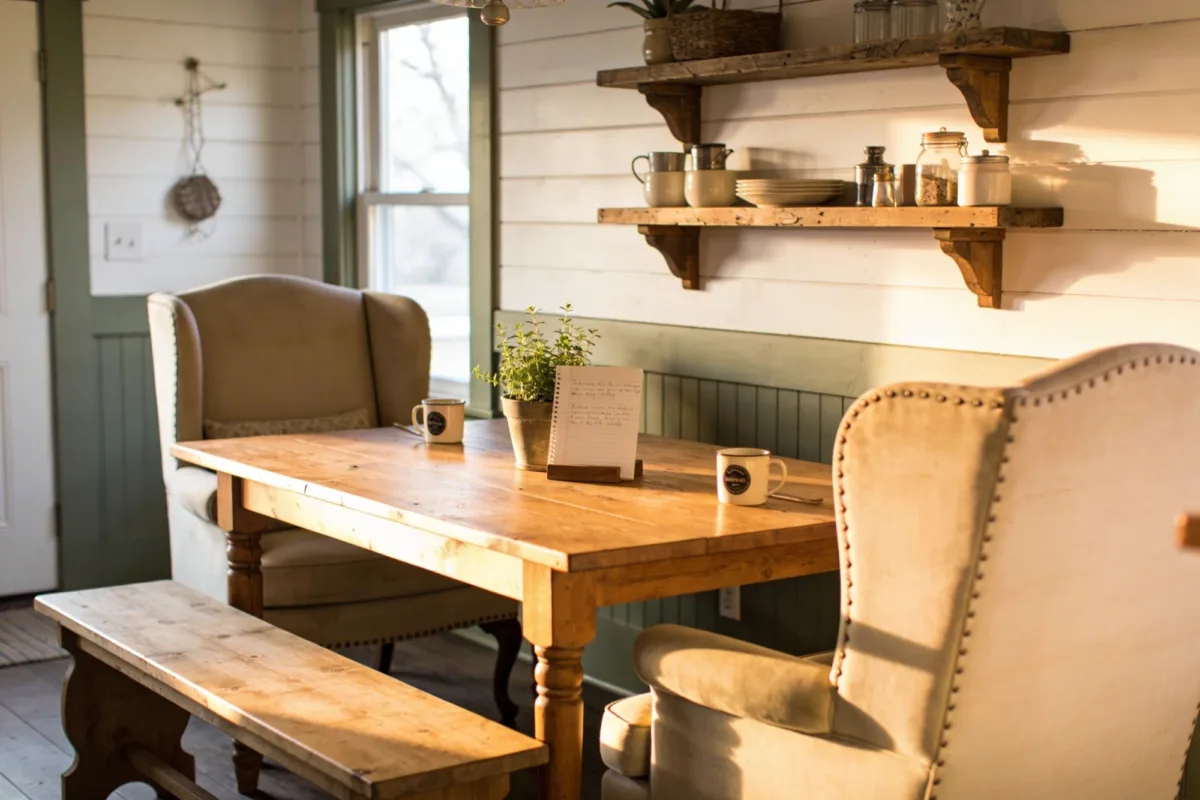
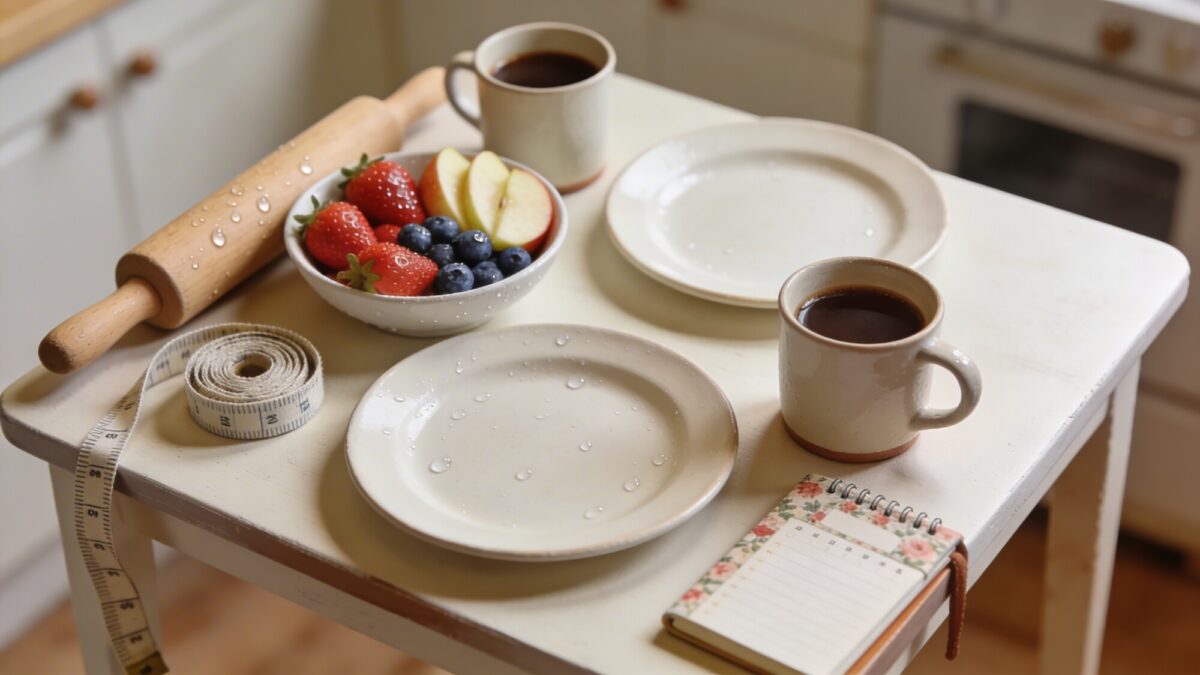
A bench along one side of the table seats more people in less linear space than individual chairs do, because it doesn’t need the gap between chairs that lets someone pull one out. It also slides fully under the table when not in use, which chairs generally don’t do as cleanly. The trade-off is getting in and out — a bench means the person on the inside has to wait for the person on the outside to move, which matters if the household includes small kids who don’t sit still for a full meal.
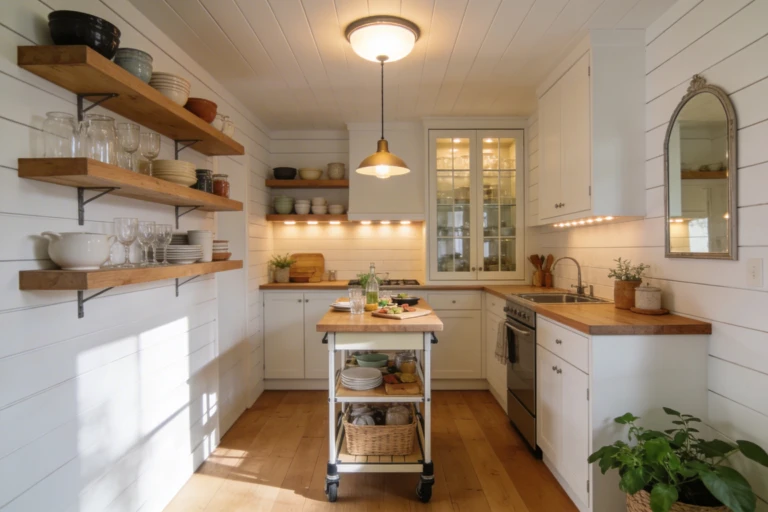
Corner Nooks and Floating Islands
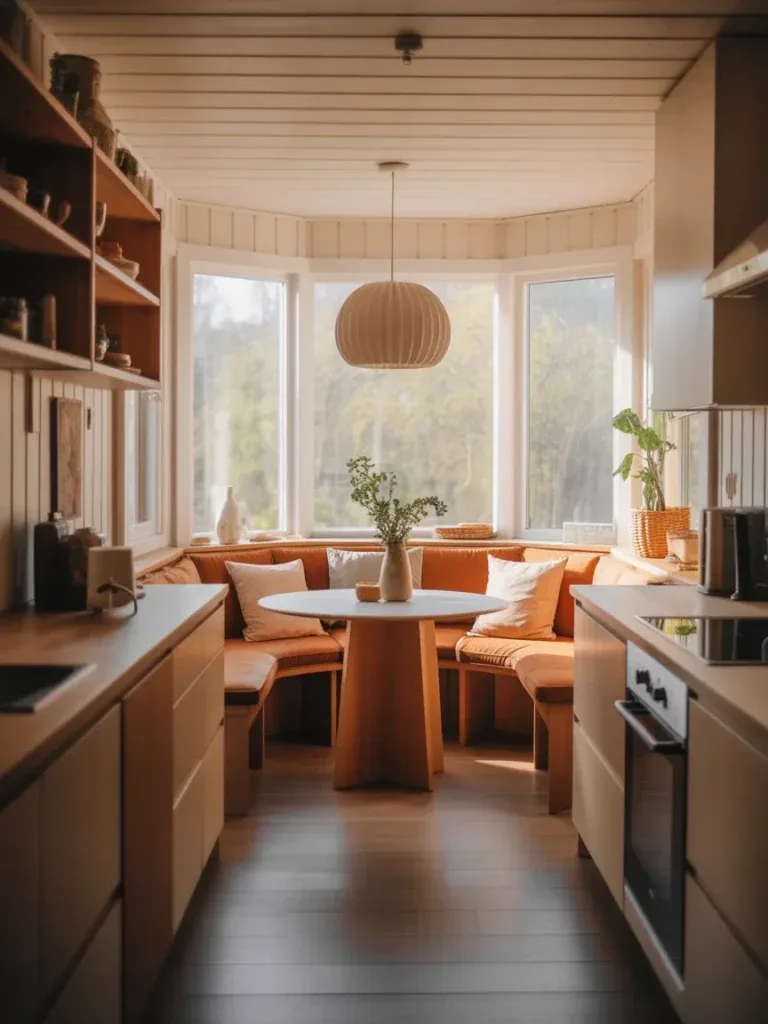
A corner nook with built-in bench seating uses two walls the table would otherwise need clearance around, which is often the single biggest space-saver available in a genuinely tiny kitchen. A small farmhouse kitchen table for 2 fits into a surprising number of corners that would never accommodate a four-top with chairs on every side. If floor space is tighter still, a narrow floating island with stool seating can substitute for a table entirely — see our guide on small farmhouse kitchens with an island for that comparison.
Smart Storage That Doesn’t Steal Space
An extendable table with a hidden leaf gives you daily table space and occasional-guest capacity from the same footprint, without needing a second table stored somewhere else. It’s the closest thing to “free” seating capacity a small kitchen can get.
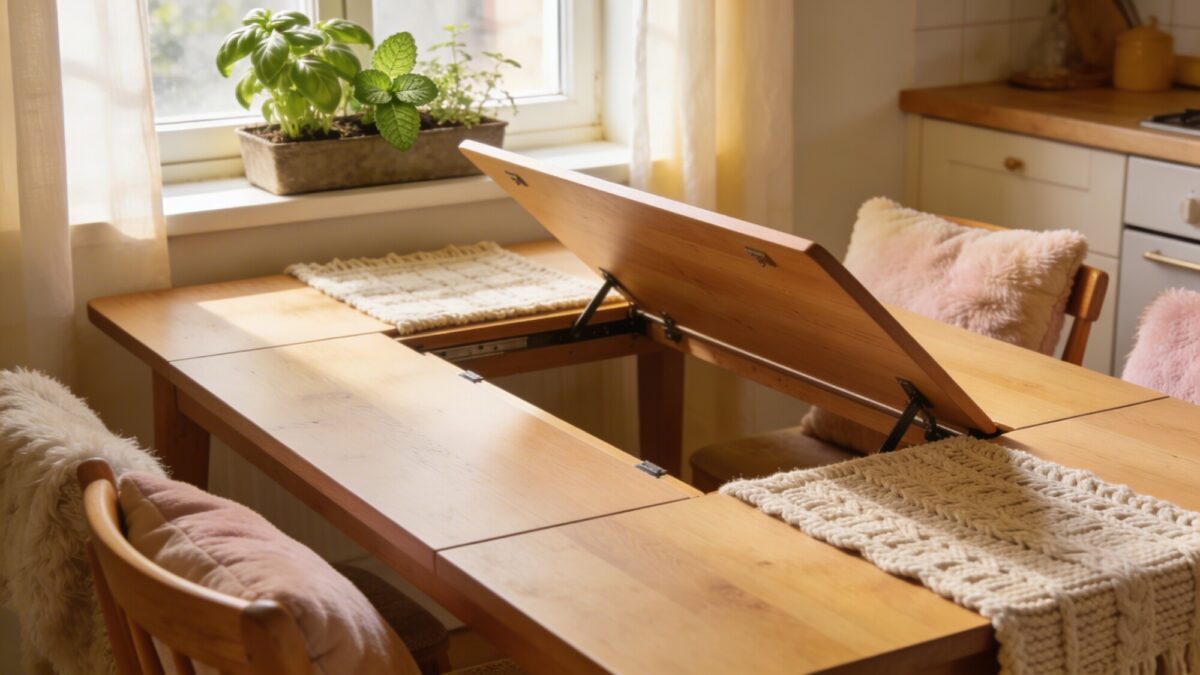
💡 Pro Tip: If you’re considering an extendable table, test the leaf mechanism in the store or read reviews specifically about how smoothly it opens — a stiff or awkward leaf mechanism is the most common regret with these tables, and it’s not something you can tell from a photo.
Under-Table Strategies
A pedestal base (single center leg) opens up legroom on every side, which matters more in a small kitchen than it would in a dining room — there’s no wasted corner where a table leg blocks a chair from tucking in fully. Four-leg tables are typically sturdier for heavy daily use, but they cost you usable space at each corner.
Chairs That Pull Their Weight
Stackable or lightweight chairs matter more in a small kitchen than people expect — the ability to move a chair out of the walking path entirely, not just push it in, is what actually keeps a tight kitchen navigable during meal prep. Mismatched wooden chairs are a genuine farmhouse-style choice, not just a budget compromise; the slight variation reads as collected rather than incomplete, as long as the wood tones are in the same general family.
Materials, Care, and Longevity
Choosing Wood Wisely
Reclaimed wood carries the most visual character but can vary in stability piece to piece, since it wasn’t milled as a matched set — check that the table has been properly kiln-dried and sealed if it’s genuinely reclaimed, not just distressed to look that way. New oak or maple gives you more predictable durability if consistency matters more to you than backstory.
Care Tips That Actually Work
Wipe spills immediately rather than letting them sit — even a sealed finish will eventually show a water ring if liquid pools on it for hours. Reapply a food-safe oil or wax finish roughly once or twice a year on an oiled (not polyurethaned) table; if the wood starts looking dry or pale, that’s the visual cue it’s due, not a fixed calendar date.
Mood Boosters: Color, Lighting, and Accessories

Color Cues That Feel Farmhouse-y but Fresh
A natural or lightly whitewashed wood tone keeps a small table from visually anchoring the room too heavily — a dark-stained tabletop in a small kitchen can read as a large, heavy object even if its actual footprint is modest. Save darker stains for larger kitchens where the table has more room to be a statement piece.
Lighting That Makes a Space Glow
A single pendant centered over the table, hung low enough to feel intimate but high enough not to block sightlines across it, does more for the mood of a small dining spot than any tablecloth or centerpiece. Warm-temperature bulbs (2700–3000K) keep it feeling like a farmhouse kitchen table rather than a task-lit workstation.
Accessories That Don’t Clutter
A small vase, a jar of recipe cards, or a single stack of cloth napkins is plenty for a small table’s centerpiece. The temptation is to style it the way a styled photo would — runner, centerpiece, place settings, seasonal decor all at once — but on a genuinely small table that setup eats the exact surface area you need for actual meals.
Frequently Asked Questions
Can a small farmhouse table really seat four?
Yes, if you’re using a 36–40 inch round table or a rectangular table roughly 48 inches long, paired with slim or armless chairs. Bench seating on one side stretches capacity further in the same footprint.
What about chairs — wood vs. metal vs. upholstered?
Wood is the standard farmhouse pairing and the easiest to wipe clean. Metal chairs (often with a wood seat) save visual weight in a small room since they read as less bulky. Upholstered chairs add comfort but need fabric that can handle spills — avoid them if the table doubles as a kids’ homework or craft spot.
How do I protect a farmhouse table from everyday kitchen chaos?
A sealed matte finish handles most daily wear. Beyond that, wipe spills right away, use trivets for anything hot, and keep felt pads under any decor or dishware that sits on the surface long-term to prevent scratching.
Is a round or rectangular table better for tiny kitchens?
Round, in most genuinely small kitchens — no corners to bump into while moving past it, and it tends to fit better in an irregular or narrow floor plan. Rectangular makes more sense against a wall or in a defined nook where the straight edges align with the room’s lines.
How can I make a small farmhouse table look lived-in but organized?
Keep one small, functional item on it at all times (a candle, a jar, a small stack of napkins) rather than leaving it bare, but resist adding more than two or three objects total. A table that’s fully cleared looks unused; one with five decorative items looks cluttered — the lived-in middle ground is usually just one or two.
Conclusion
Get the clearance and size right first — that single decision determines whether the table makes your kitchen feel more finished or permanently cramped. Style, wood tone, and finish are all real decisions, but they’re the ones you can change later with paint or a new set of chairs; the footprint isn’t something you can fix after the fact. For more on how a table fits into the rest of a tight kitchen’s layout, see our small farmhouse kitchen essentials guide, and if a round table specifically is what you’re after, our small round farmhouse kitchen table guide goes deeper on that shape.