9 Small Kitchen Farmhouse Decor Ideas You’Ll Love
Most small kitchen farmhouse decor ideas fail for one reason: they’re sized for a kitchen with 40 linear feet of counter, not the 8 feet you’re actually working with. The ideas below are the ones that hold up in a genuinely small kitchen — an L shaped kitchen, a galley, a one-wall setup — where every inch has to earn its place. If you want more layout-specific inspiration once you’ve got the basics down, our guide to small farmhouse kitchen essentials for tiny spaces goes deeper on that.
None of these require a renovation. They’re the kind of kitchen decorating ideas you can knock out over a weekend, in whatever order your budget allows, and undo later if you change your mind.
Quick Takeaways
- Start with one high-visibility swap (open shelving or a chalkboard corner) before touching hardware or backsplash — it tells you if the farmhouse look actually suits your space.
- Reversible upgrades (peel-and-stick beadboard, canisters, lanterns) cost less and let you back out if the look doesn’t land.
- White kitchen cabinets aren’t required — accenting with warm wood and iron hardware gets 80% of the effect for a fraction of the cost.
- Open shelving only works if you’re honest about what you’ll actually display; a shelf of things you never use just becomes visible clutter.
1. A Chalkboard Corner That Actually Gets Used
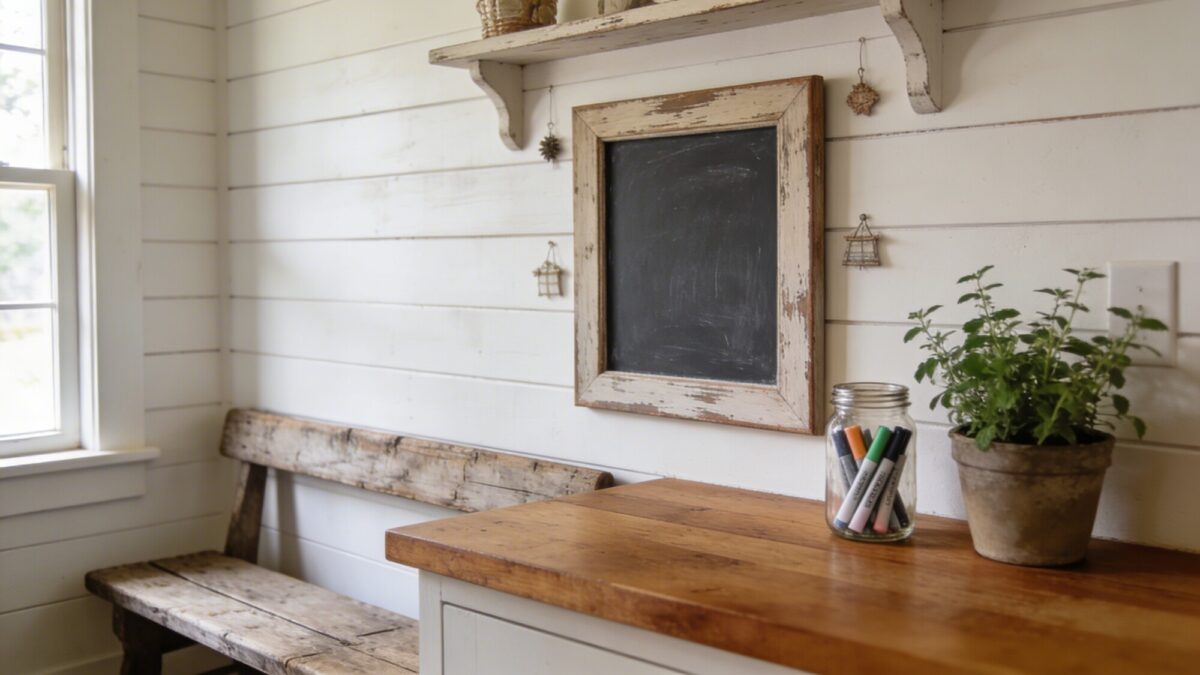
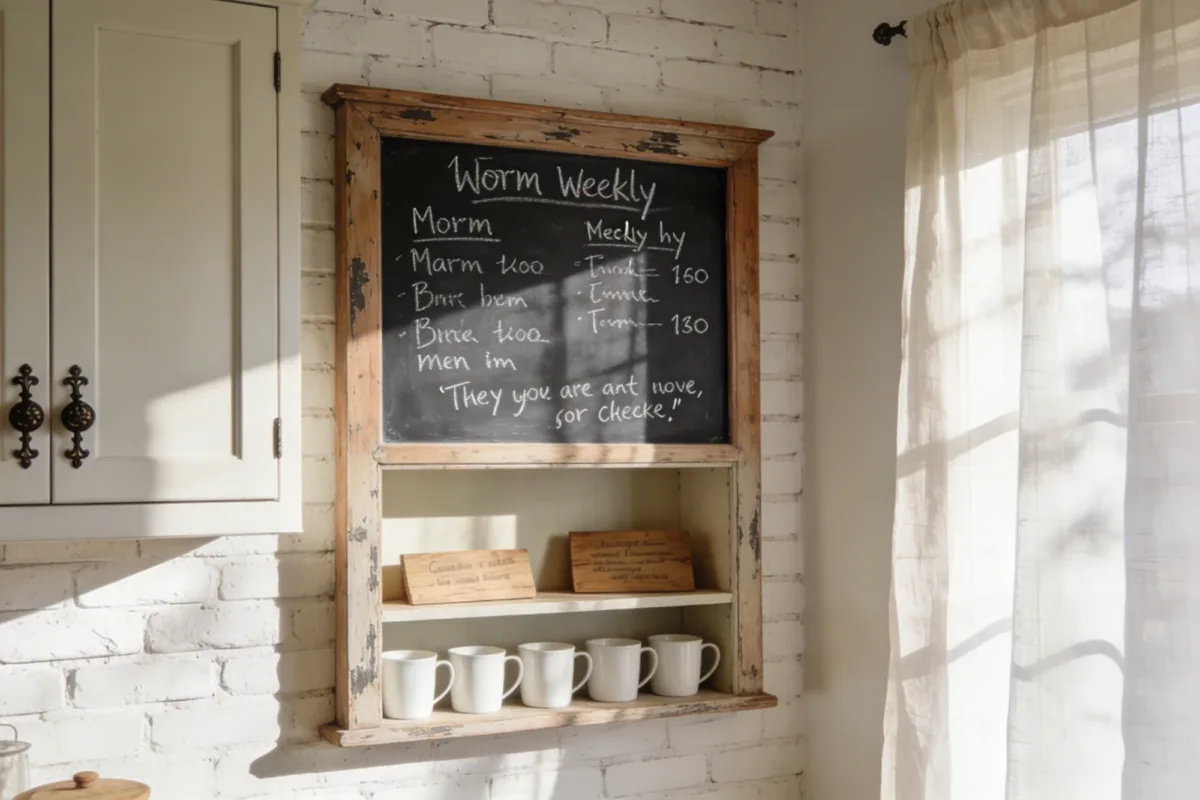
A framed chalkboard earns its wall space if you use it — for the week’s meals, a grocery list, or whatever needs to not be forgotten by Thursday. The mistake people make is buying an oversized board for a small kitchen and then never filling half of it. A 16×20-inch framed board in a distressed wood or warm white frame does the job without eating into your sightlines.
💡 Pro Tip: Seal the frame with a matte polyurethane before you hang it — chalk dust sticks to a glossy finish and turns your clean lines gray within a month. A $6 can of matte spray finish solves this permanently.
Keep a small eraser and a jar of chalk markers hanging right next to the board. If the supplies aren’t within reach, the board stops getting used within two weeks — that’s the actual failure point, not the design.
2. Warm Up White Kitchen Cabinets Without Replacing Them
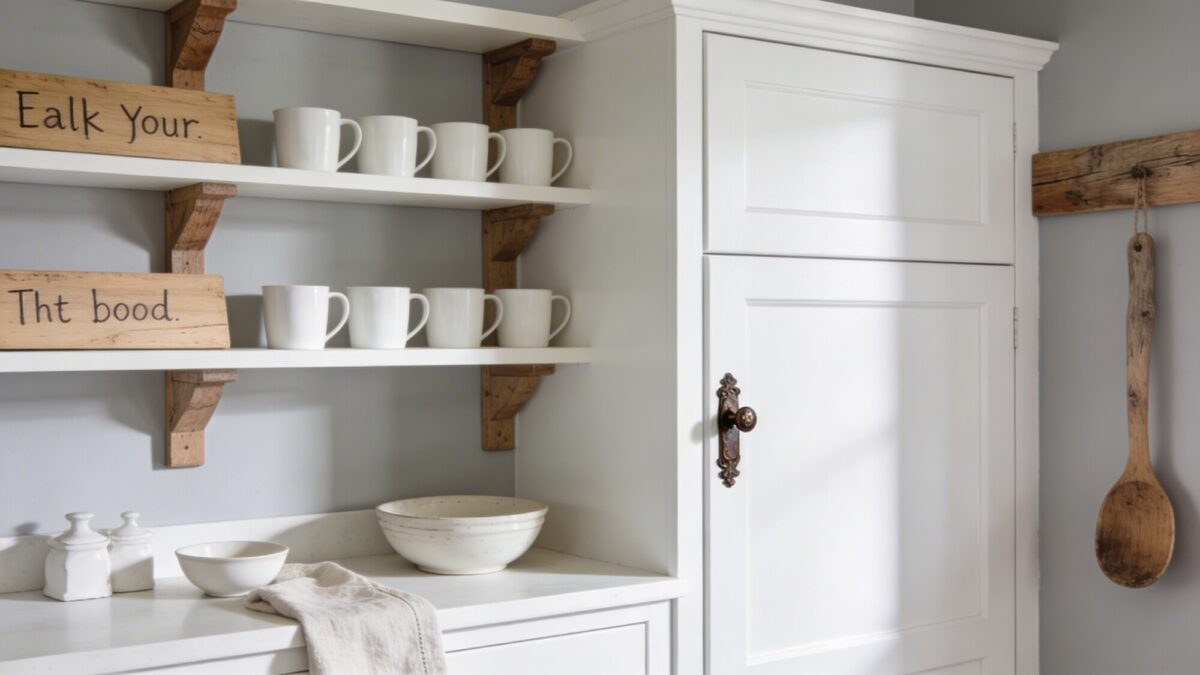
If your cabinets are already white or a light neutral, you don’t need a repaint to get the farmhouse look — you need to break up the flatness. Swap the pulls on one or two cabinets for iron or black hardware, add a run of open shelving in the same run, and let a few wooden accessories carry the warmth the white surfaces are missing.
Full cabinet hardware swaps for an average small kitchen (10–14 doors and drawers) usually run somewhere in the $80–150 range for mid-grade iron pulls, depending on finish. Doing just the upper cabinets first is a reasonable way to test the look before committing to the whole kitchen. For more on pairing cabinet finishes with farmhouse accents, see our piece on small farmhouse kitchen cabinet ideas.
3. Glass Canisters That Replace Cabinet Clutter
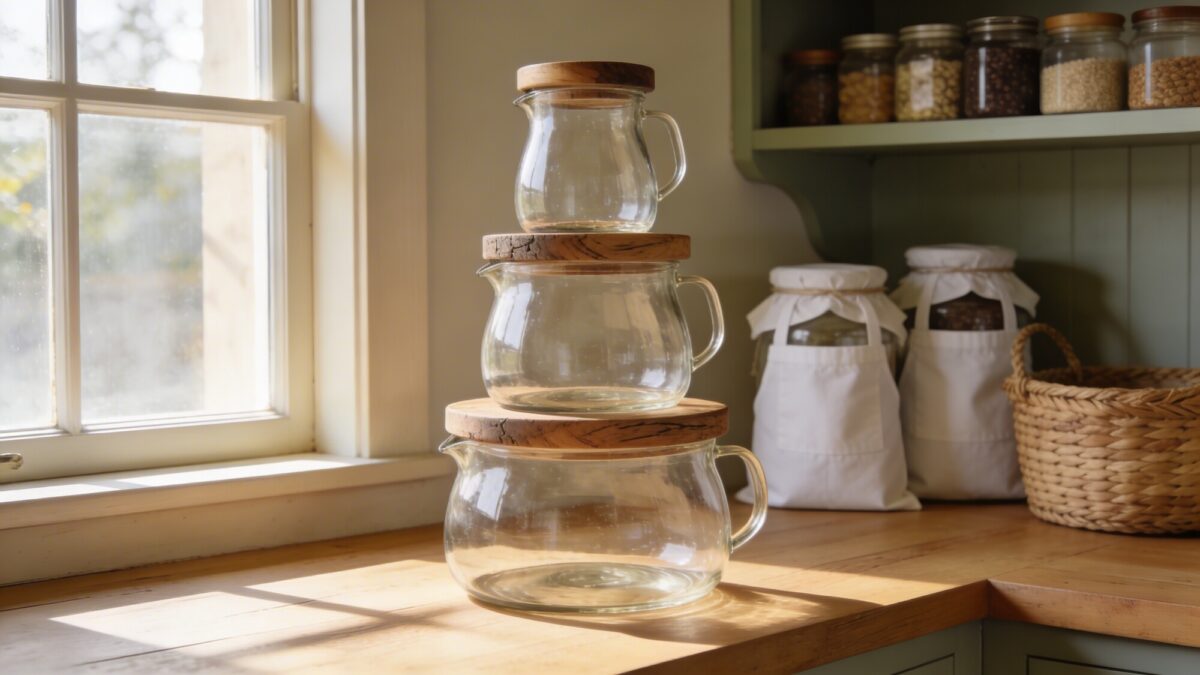
Clear glass canisters with wood or cork lids do two things at once: they get bulky flour and sugar bags off your shelf, and they give you a farmhouse vignette without buying a single decorative object. Group them by height on a tray so they read as a display rather than loose jars.
Label with a handwritten tag rather than a printed label — it reads as intentional, not staged. And be realistic about what actually needs to live in a canister: flour, sugar, oats, and coffee make sense. Snack-size items usually just end up looking cluttered again within a few weeks.
4. Barn-Door Towel Rods and Other Small Hardware Swaps
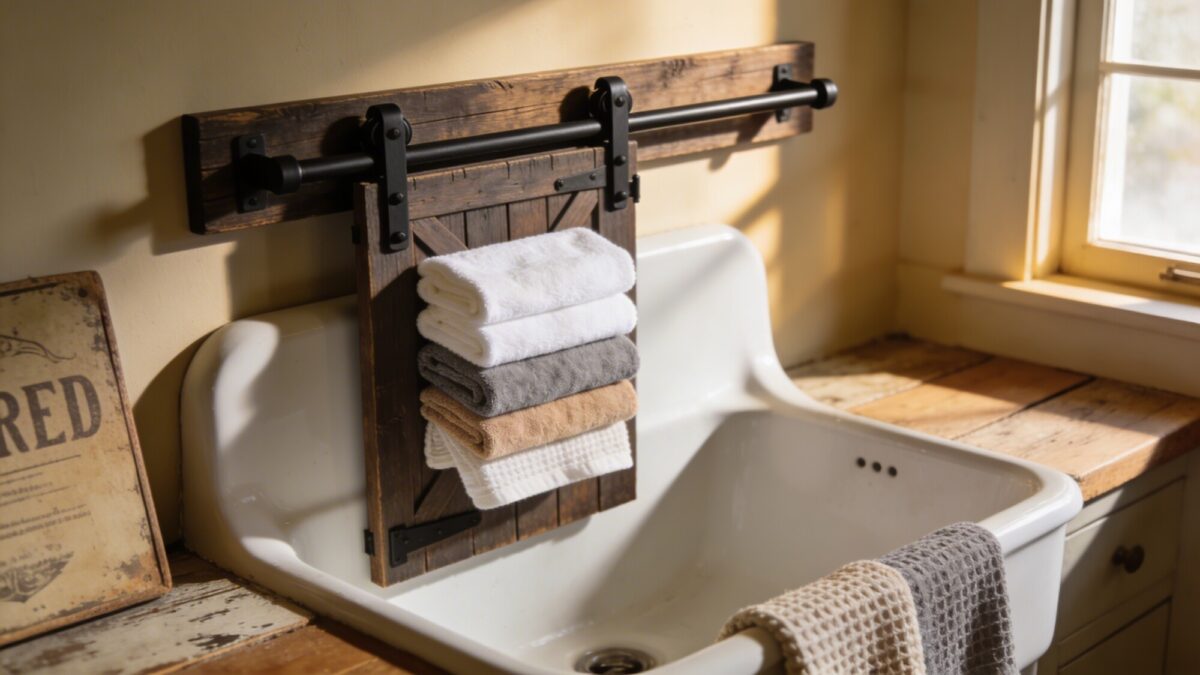
A slim towel rod styled like a mini barn door, mounted above or beside the sink, moves towels off the oven handle and gives you a small, deliberate design moment near your busiest work zone. It’s a fifteen-minute install with two screws into a stud — no plumbing or major hardware involved.
Hang two towels max in a genuinely small kitchen. More than that and the rod starts to look like laundry day rather than decor.
5. Countertop Lanterns for Ambient Light
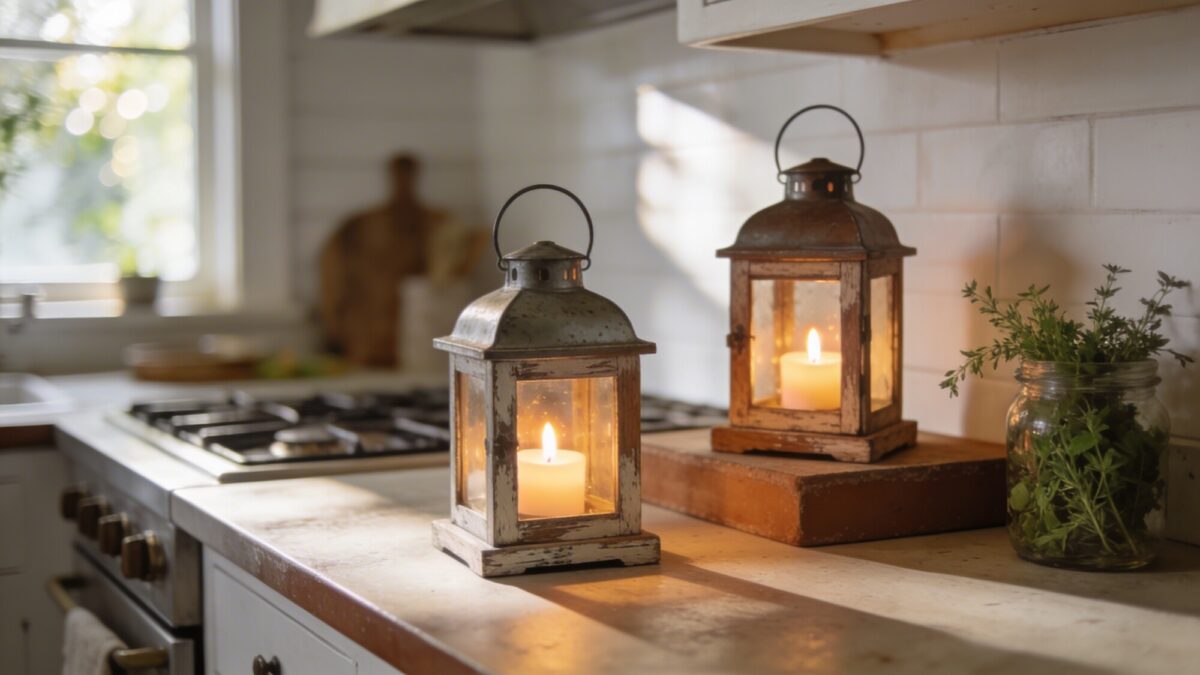
Overhead lighting in most small kitchens is functional but flat. A pair of small metal or distressed-wood lanterns with battery LED candles adds a second, warmer light source without any wiring. Set them at slightly different heights — one taller lantern and one shorter — so they don’t read as a matched pair from a big-box store.
💡 Pro Tip: Buy LED candles with a flicker setting and a timer function, not a plain steady bulb. The timer means you’re not manually turning them on every evening, and the flicker is what actually sells the ambiance — a steady LED just looks like a nightlight.
6. A Wood Tray to Corral Counter Chaos
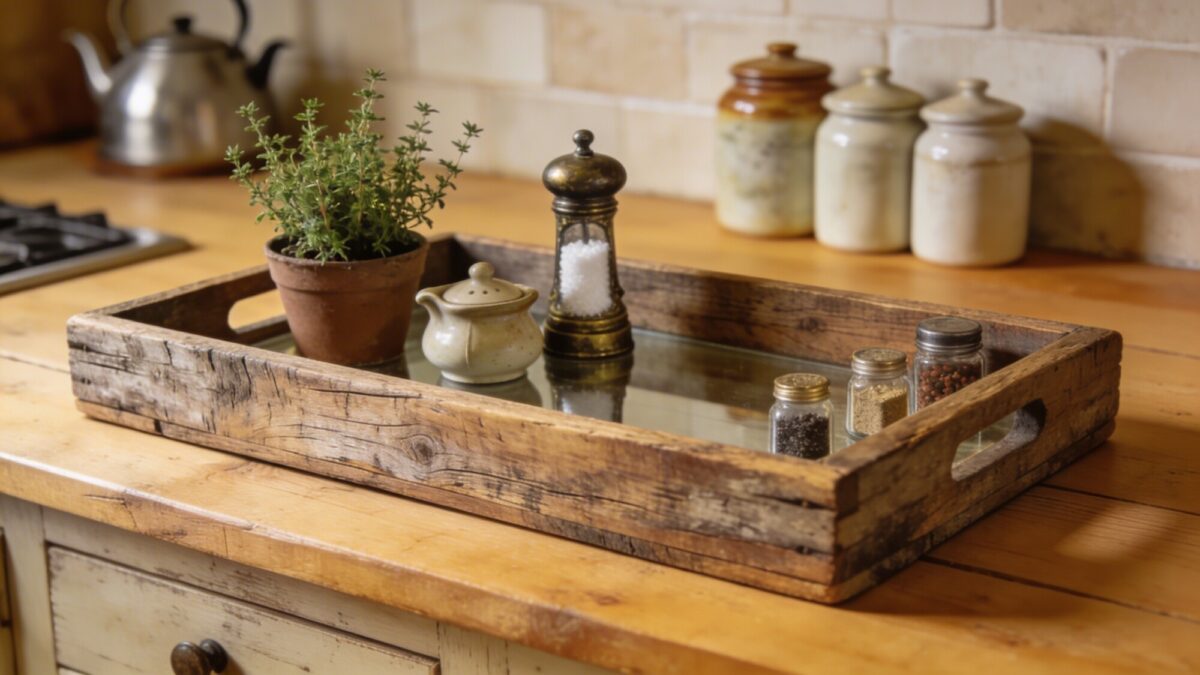
Every small kitchen counter decor plan eventually runs into the same problem: mail, keys, spice jars, and a stray magnet all migrate to the same six inches of open counter. A shallow reclaimed-wood tray gives that clutter a boundary. Center it with a small potted herb and a salt pig, and the same pile of stuff suddenly reads as styled rather than dumped.
This is one of the few ideas here that solves an actual daily annoyance instead of just adding decor for its own sake, which is why it’s worth doing even if you skip everything else on this list.
7. Open Shelving — With a Coffee Cup Shelf Done Right
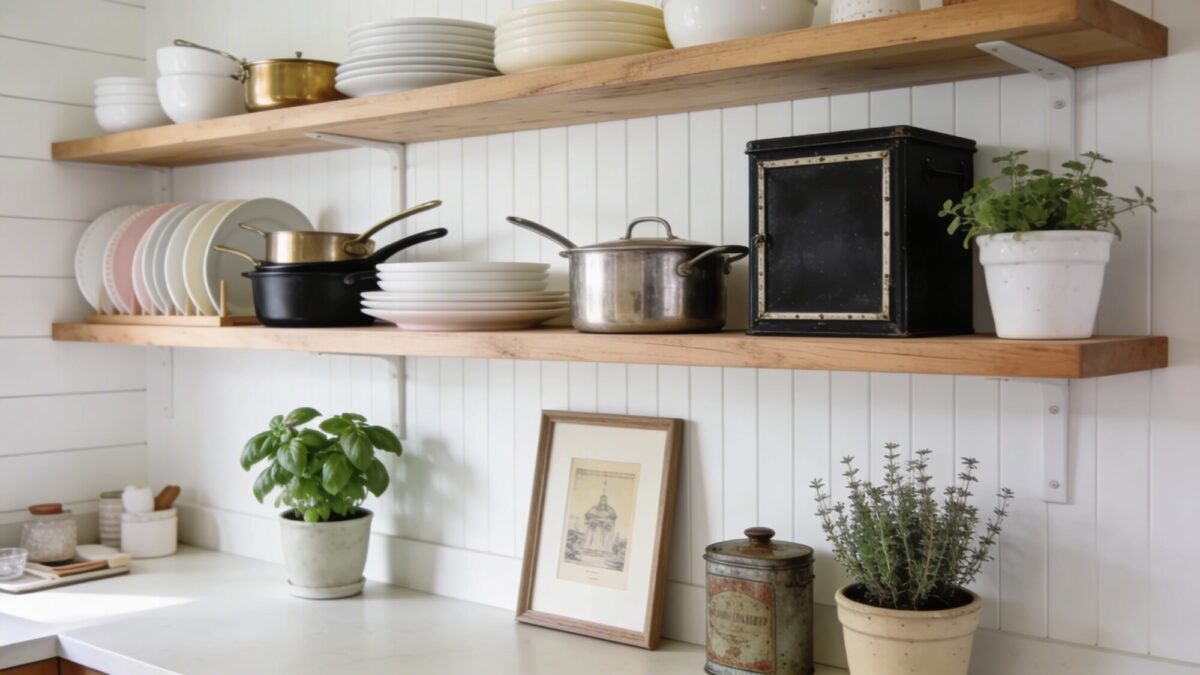
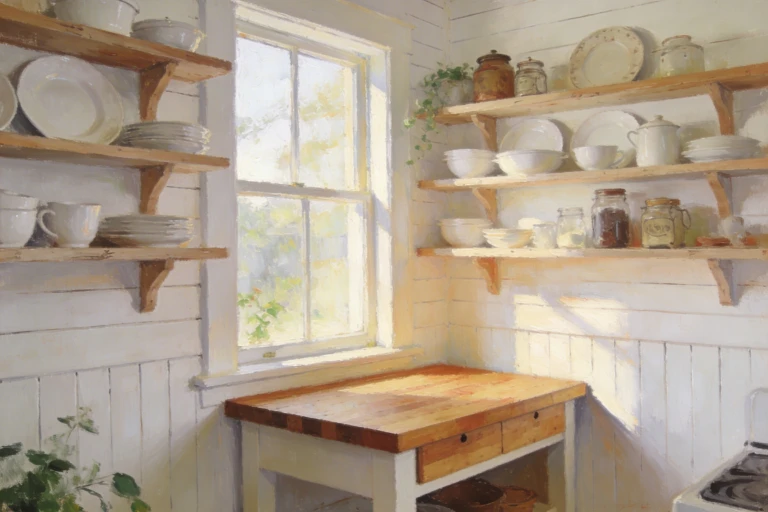
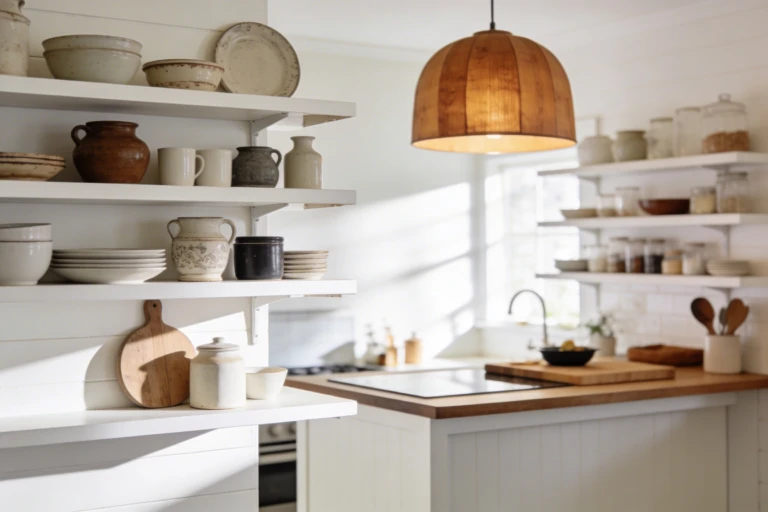
Open shelving is the single highest-impact change on this list, and also the one most likely to backfire. Done well, a couple of floating shelves with dishes grouped by color make a small kitchen feel bigger. Done poorly, it’s just your cabinet clutter now visible to guests.
A small coffee cup shelf or a space-saving mug rack mounted under a cabinet is a good entry point if you’re not ready to commit to full open shelving — it solves real storage pressure in a tight kitchen while giving you the same farmhouse look on a smaller scale. Mug hooks under an 18-inch shelf typically hold 6–8 mugs, which is enough to clear a mug tree off the counter entirely.
💡 Pro Tip: Before installing open shelving, pull everything out of the cabinet you’re planning to replace and count what you’d actually keep visible. If it’s more than about 12 items, you need a second shelf or you’re better off leaving the cabinet closed.
Our roundup of small farmhouse kitchen decor wins has more on shelf styling if you want to see this idea taken further.
8. A Backsplash Update Without a Full Remodel
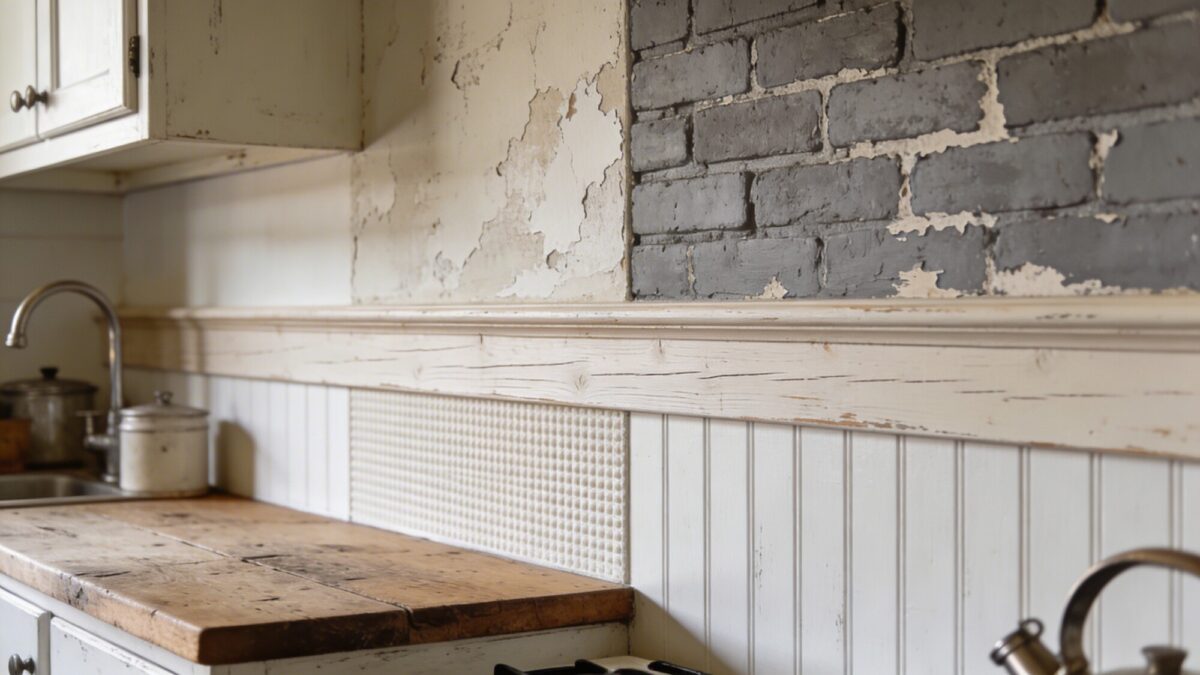
Full tile backsplashes are expensive and permanent, which makes them a poor first move if you’re not sure the farmhouse look is for you long-term. Peel-and-stick beadboard panels or a painted shiplap runner get most of the visual effect and can be removed later without damaging the wall behind them.
Beadboard panels are the more forgiving option for a rental or a first attempt — they hide minor wall imperfections that painted shiplap won’t.
9. Linen Textiles and a Small Floral Touch
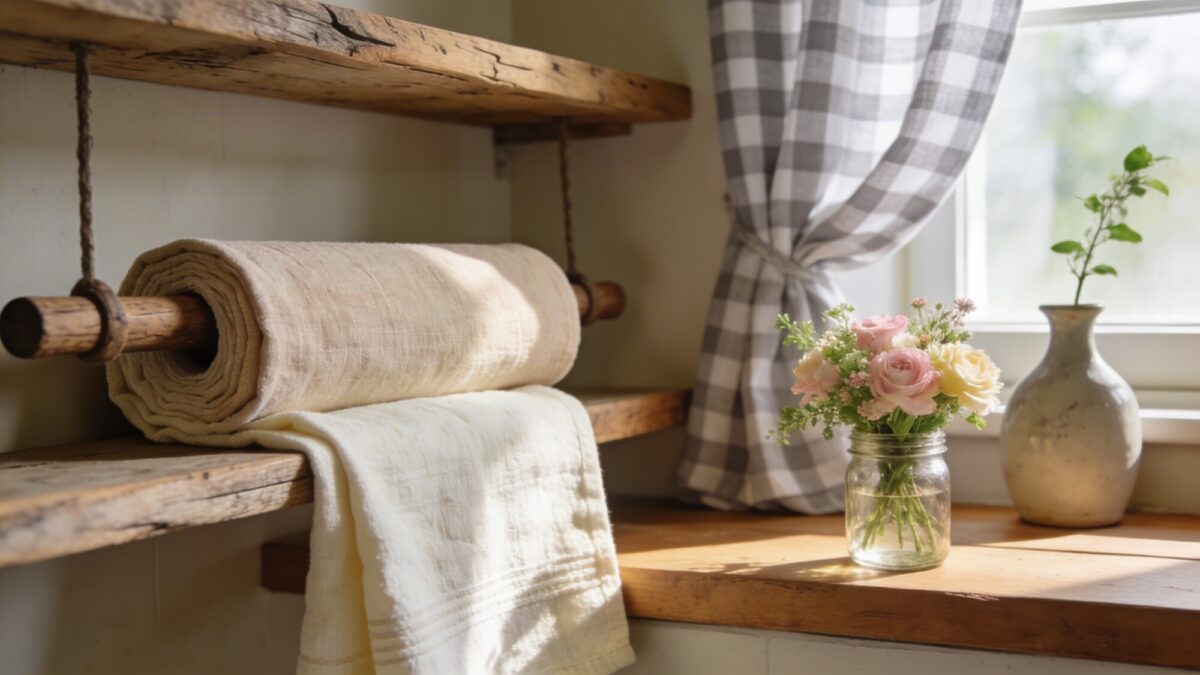
Neutral linen towels, a small bouquet in a mason jar, and a gingham curtain soften the hard surfaces that dominate most small kitchens. If neutral feels flat, a kitchen with red accents — a red gingham tea towel or a single red stoneware canister — is a common and effective way to add color without turning the room busy.
Keep the floral element genuinely small. A single stem or a mini bouquet works; a large arrangement competes with counter space you don’t have to spare.
Comparing the Low-Cost Upgrades
If you’re deciding where to start, here’s how four of the reversible options stack up against each other:
| Upgrade | Typical Cost | Time to Install | Reversible? |
|---|---|---|---|
| Chalkboard corner | $20–40 | 10–15 minutes | Yes — just a wall mount |
| Glass canister set | $25–60 | Immediate | Yes |
| Countertop lanterns | $25–50 per pair | Immediate | Yes |
| Peel-and-stick beadboard backsplash | $40–90 | 1–2 hours | Mostly — some adhesive residue on removal |
Things to Consider Before You Start
- Measure your actual counter space before buying trays, canisters, or lanterns — items that look small online often aren’t in an L shaped kitchen with limited runs.
- Decide if you’re renting or owning first — that determines whether shiplap gets painted directly on the wall or applied as a removable panel.
- Pick a light source (LED candles, under-cabinet lighting) before finalizing shelf placement, since shadows change how open shelving reads at night.
- If you’re doing open shelving, plan the declutter of the cabinet first — don’t buy shelves before you know what’s going on them.
Frequently Asked Questions
Do I need white kitchen cabinets for the farmhouse look to work?
No. White cabinets are common in farmhouse kitchens because they reflect light in small spaces, but the look works on cream, sage, or even navy lowers as long as you keep the hardware, wood tones, and textiles consistent.
What’s the cheapest single upgrade on this list?
The wood counter-top tray or the chalkboard corner — both are achievable for under $40 and require no tools beyond a hammer or drill for wall mounting.
Will open shelving make my small kitchen look more cluttered?
Only if you put too much on it. Limit each shelf to items you use weekly and group by color — mismatched dishware in every color is the most common reason open shelving looks messy instead of intentional.
Can I do a farmhouse look in an L shaped kitchen without losing storage?
Yes, but be selective. Reserve open shelving for the shorter leg of the L and keep the primary run of cabinets closed, so you’re not sacrificing storage on your main workspace.
How do I add color without it looking off-theme?
Stick to one accent color at a time — a kitchen with red accents through towels and a canister or two reads as intentional; mixing red, sage, and navy accents in the same small space usually looks unplanned.
Our Take
Start with the chalkboard corner or the counter tray — both are cheap, fast, and tell you within a week whether the farmhouse look fits how you actually use your kitchen. Save the backsplash and cabinet hardware for once you’re sure, since those are the two upgrades on this list that take real time to undo. If you’re working with a genuinely small footprint, our guide to small farmhouse kitchen ideas on a budget is a good next stop for sequencing the bigger changes.