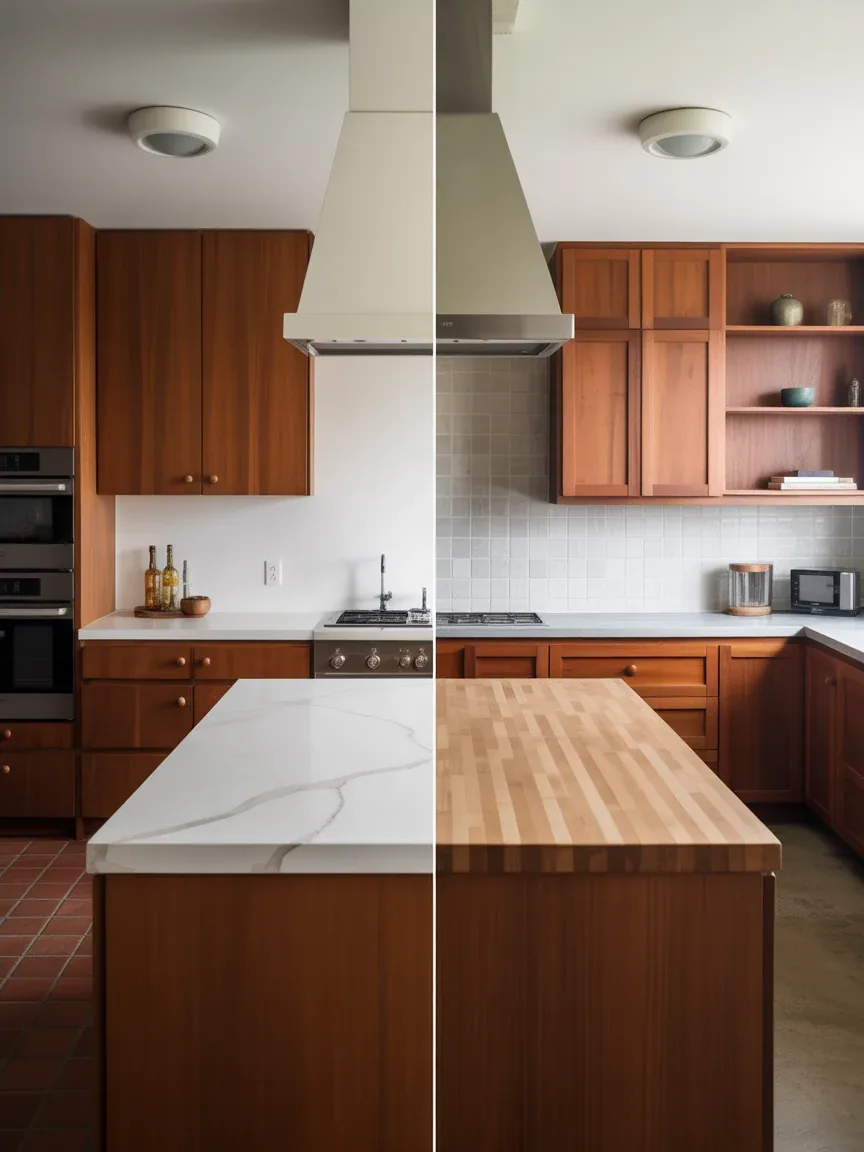
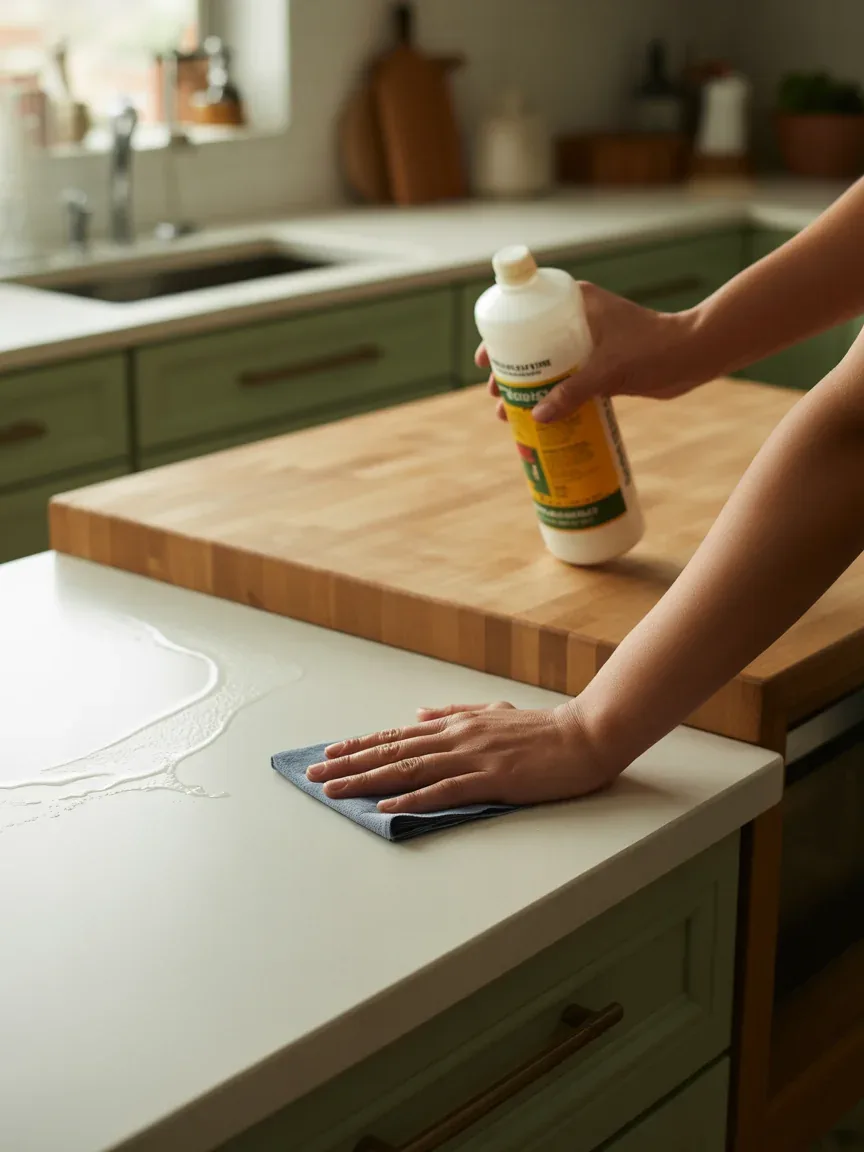
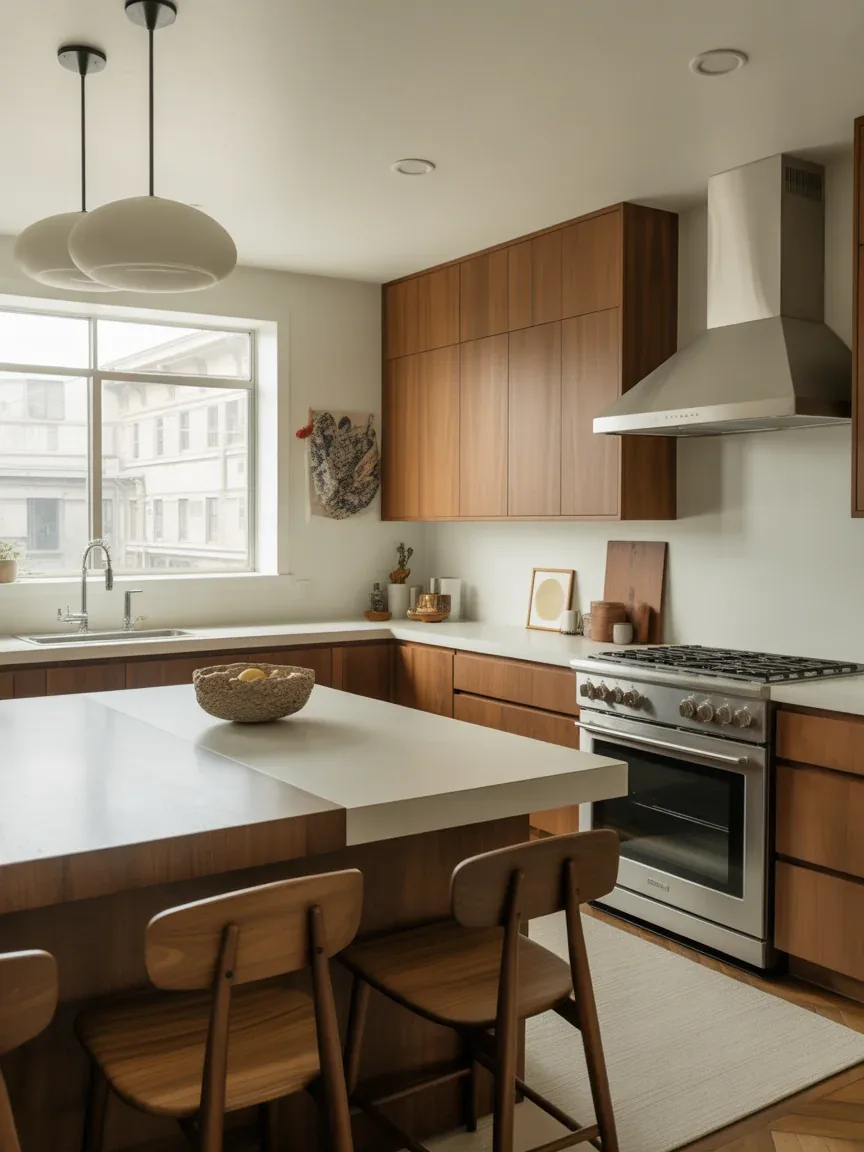
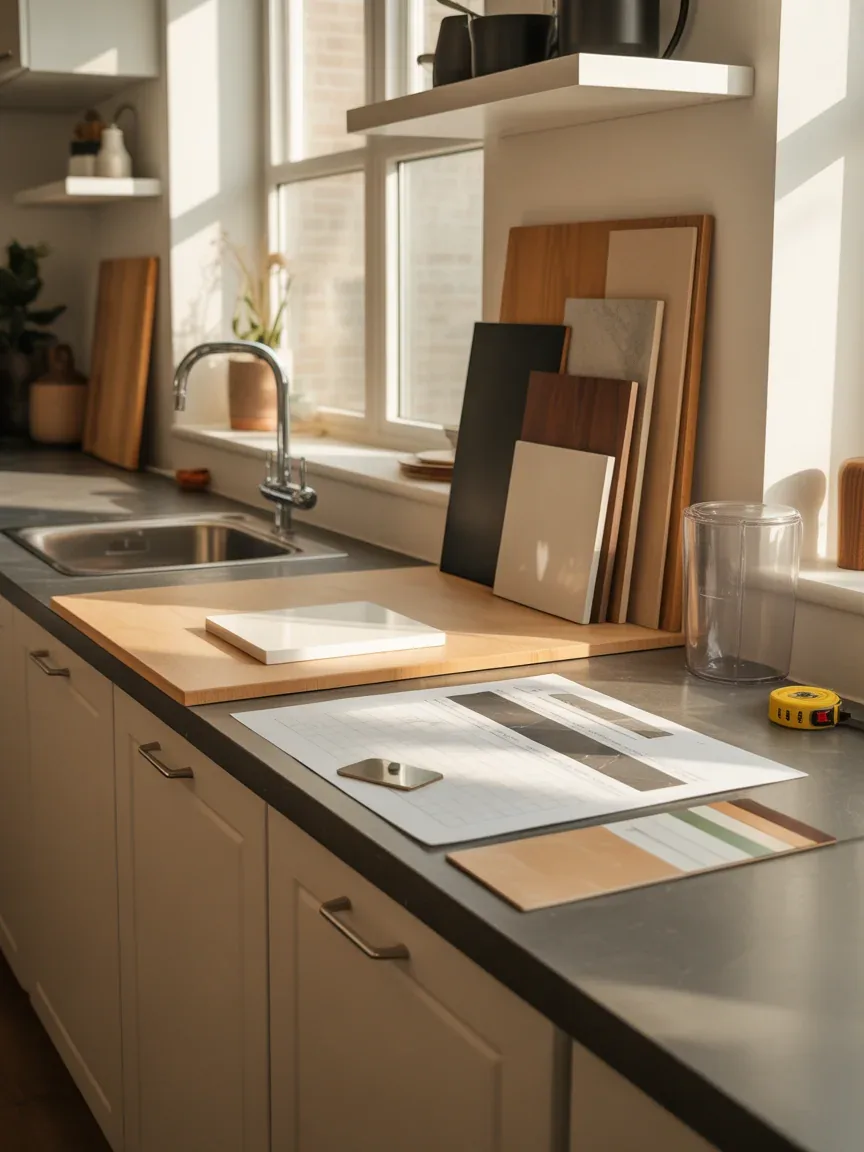
Choosing between quartz and butcher block for a mid-century modern kitchen can feel weirdly dramatic. One gives sleek retro-cool vibes. The other screams warm, lived-in charm and “yes, I own expensive olive oil.” Both can look incredible—but they create very different kitchens. If you’re trying to nail that clean-lined, walnut-and-brass mid-century aesthetic, the right countertop matters more than people think. Let’s break down which one actually deserves a spot in your kitchen. Why Countertops Matter So Much in Mid-Century Modern Design Mid-century modern kitchens thrive on balance. You want warm natural materials, clean geometry, and minimal visual clutter. Countertops take up a huge amount of visual real estate, so they can either elevate the look or completely derail it. Photo by Sergey Kotenev on Unsplash Pick the wrong surface and suddenly your carefully planned retro-inspired kitchen looks like a random showroom mashup. Harsh? Maybe. True? Also yes. That’s why this choice matters. Sophia & William Swivel Bar Stools Set of 4, 30 Inch Bar Height B… 【Comfortable & Relaxed】With its padded high density seat and sturdy wood frame, these bar stools will provide you with a… 【360°Swivel Bar Stool】The bar stool adopts a unique 360-degree rotating circular seat design. You can move freely or int… 【Water & Stain Resistant】With high-quality Faux leather, water will not penetrate the sponge, will only stay on the surf… $399.99 Buy on Amazon Quartz: Sleek, Polished, and Effortlessly Modern Quartz has become the go-to for homeowners who want style without babysitting their countertops. Photo by Jardin Maison on Unsplash It’s engineered stone, which means manufacturers combine natural quartz with resins and pigments to create a durable slab. Translation? It looks polished and upscale while handling daily chaos like a champ. Why Quartz Works in Mid-Century Kitchens Quartz fits beautifully with the clean, streamlined aesthetic of mid-century modern design. It offers: Photo by Sergey Kotenev on Unsplash Crisp, smooth surfaces Minimal patterning for uncluttered visuals A high-end tailored look Tons of neutral and earthy color options A soft white or warm greige quartz paired with walnut cabinets? That’s peak Pinterest-board energy. Quartz Pros Extremely durable Non-porous and stain-resistant No sealing required Easy to clean Resists scratches better than wood Quartz Cons Can feel slightly “too perfect” or sterile in some spaces Higher-end quartz gets pricey fast Lacks the organic warmth of real wood If you love low maintenance and polished design, quartz makes a very convincing argument. Butcher Block: Warm, Organic, and Full of Character Butcher block brings instant warmth. It softens a kitchen and adds that rich natural texture mid-century spaces love. Photo by Sergey Kotenev on Unsplash It’s typically made from strips of hardwood—often maple, walnut, or oak—glued together into thick slabs. The result feels handcrafted, timeless, and a little cozy in the best way. Gepege 6 Inch Beaded Ceramic Planter Set of 2 with Drainage Hole … 【With Drain Holes and Mesh Pad】:Large drain holes are good for draining, and with leak-proof mesh pads, it keeps soil fr… 【Removable Trays】:There are two methods to place saucer, which can be changed at will, not only suitable for planting pl… 【Makes Gift】:It’s the perfect suitable present for your relatives and friends, they make great birthday gifts, anniversa… $24.99 Buy on Amazon Why Butcher Block Looks Amazing in Mid-Century Spaces Mid-century modern design already leans heavily into wood tones. So adding butcher block can make the whole room feel cohesive and intentional. It pairs especially well with: Photo by Henry Kobutra on Unsplash Flat-panel wood cabinetry Open shelving Brass or matte black fixtures Retro lighting Basically, if your dream kitchen looks like Don Draper hired an interior designer, butcher block gets you there. Butcher Block Pros Beautiful natural warmth Budget-friendly compared to many quartz options Can be sanded and refinished Adds character over time Feels authentic and organic Butcher Block Cons Requires regular sealing/oiling Scratches and dents more easily Can stain if neglected More vulnerable to water damage Butcher block ages like leather boots: beautifully if cared for, terribly if ignored. Deco 79 Seagrass Handmade Decorative and Functional Storage Baske… WICKER BASKET WITH ARCHED HANDLES – Large woven wicker basket with arched wrapped-ring end handles features a wide and d… WOVEN SEAGRASS CONSTRUCTION – Madwe with natural water hyacinth (seagrass), the woven braided fiber provides for strengt… VERSATILE DESIGN – Rustic natural brown finish blends classic design with a touch of modern styling to complement a vari… Buy on Amazon Which One Fits Mid-Century Modern Better? Here’s the honest answer: both work. The better choice depends on which side of mid-century modern you want to emphasize. Choose Quartz If You Want: A more refined, contemporary take on mid-century modern Cleaner, sharper lines Minimal upkeep A brighter, airier kitchen Quartz works especially well in kitchens that blend mid-century with Scandinavian or modern minimalist styles. Choose Butcher Block If You Want: A warmer, more vintage-inspired aesthetic Rich natural texture A cozy, collected feel More obvious retro character Butcher block shines in kitchens that lean heavily into authentic vintage mid-century charm. Maintenance: The Real-Life Factor Nobody Loves Discussing Design matters, sure. But so does reality. Because a countertop can look stunning on day one and become your enemy by month three if it doesn’t fit your lifestyle. Living With Quartz Quartz requires almost no special care. You wipe it down. You don’t stress. You move on with your life. That’s a massive perk if you: Cook often Have kids Hate maintenance Know deep down you will never remember to oil wood countertops No judgment. Many people buy “high-maintenance aesthetic” and then regret it immediately. Living With Butcher Block Butcher block needs commitment. To keep it looking good, you’ll need to: Oil it regularly Wipe spills quickly Avoid standing water Accept minor wear and patina Some people love that evolving lived-in look. Others see one water ring and spiral. Know yourself. The Hybrid Option: Why Not Both? Can’t decide? Good news—you don’t actually have to. Many of the best mid-century modern kitchens combine both materials for a layered designer look. Popular combinations include: Quartz perimeter counters + butcher block island Butcher block accent section + quartz main workspace Quartz backsplash and counters with walnut butcher block coffee bar This gives you the best of both worlds: Durability where you need it Warmth where you want it Serious custom-designer vibes Honestly, mixed materials often look more intentional and high-end than choosing one countertop everywhere. Cost Comparison: Which Gives Better Value? Pricing varies by region and quality, but generally: Quartz: Higher upfront cost Butcher Block: Lower initial cost, more maintenance over time Quartz often wins long-term for resale and durability. But butcher block can deliver huge style impact for less money upfront—especially if you install it strategically rather than throughout the whole kitchen. So the better value depends on whether you prioritize low maintenance or lower upfront cost. FAQ Is Quartz Too Modern for a Mid-Century Modern Kitchen? Not at all. Quartz works beautifully in mid-century kitchens when you choose colors and patterns carefully. Stick to subtle veining or solid tones rather than dramatic marble-look slabs if you want a more authentic retro feel. Does Butcher Block Make a Kitchen Look Dated? No—when styled correctly, it looks warm and timeless. Pair it with sleek cabinetry and modern fixtures so it reads intentional rather than “1998 kitchen remodel.” Which Countertop Lasts Longer? Quartz generally lasts longer with less upkeep. Butcher block can last for decades too, but only if you maintain it properly. Can You Put Hot Pans on Quartz or Butcher Block? You shouldn’t place hot pans directly on either. Quartz can discolor from heat, and butcher block can scorch. Trivets exist for a reason. Which Countertop Adds More Home Value? Quartz usually appeals more broadly to buyers because it’s durable and low maintenance. But a beautifully designed butcher block kitchen can absolutely impress the right buyer. Conclusion So, Quartz vs Butcher Block: The Best Countertop for a Mid-Century Modern Kitchen? If you want sleek, durable, low-maintenance practicality, quartz wins. If you want warmth, character, and authentic vintage-inspired charm, butcher block steals the show. IMO, the real winner might be combining both. A little quartz for practicality, a little butcher block for soul. Because the best mid-century modern kitchens don’t just look stylish—they feel layered, thoughtful, and effortlessly cool.
Choosing between quartz and butcher block for a mid-century modern kitchen can feel weirdly dramatic. One gives sleek retro-cool vibes. The other screams warm, lived-in charm and “yes, I own expensive olive oil.” Both can look incredible—but they create very different kitchens.
If you’re trying to nail that clean-lined, walnut-and-brass mid-century aesthetic, the right countertop matters more than people think. Let’s break down which one actually deserves a spot in your kitchen.
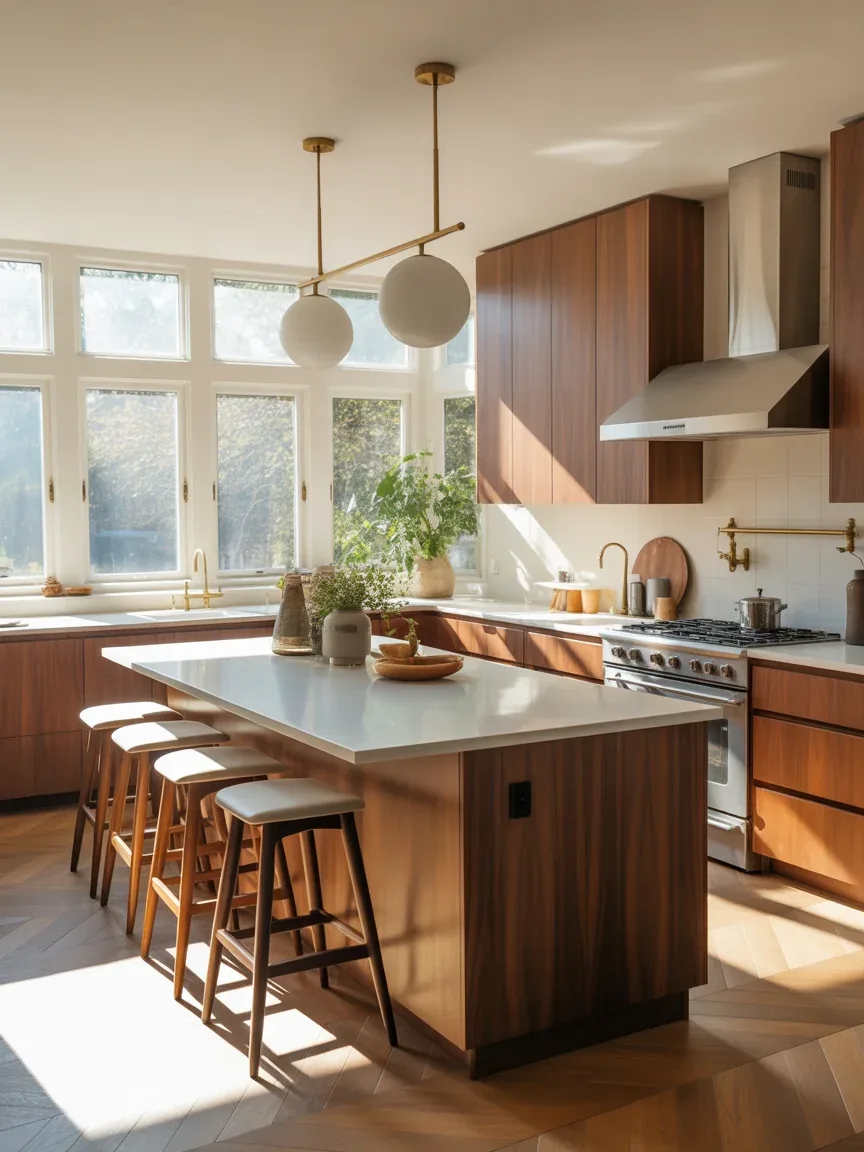
Mid-century modern kitchens thrive on balance. You want warm natural materials, clean geometry, and minimal visual clutter. Countertops take up a huge amount of visual real estate, so they can either elevate the look or completely derail it.
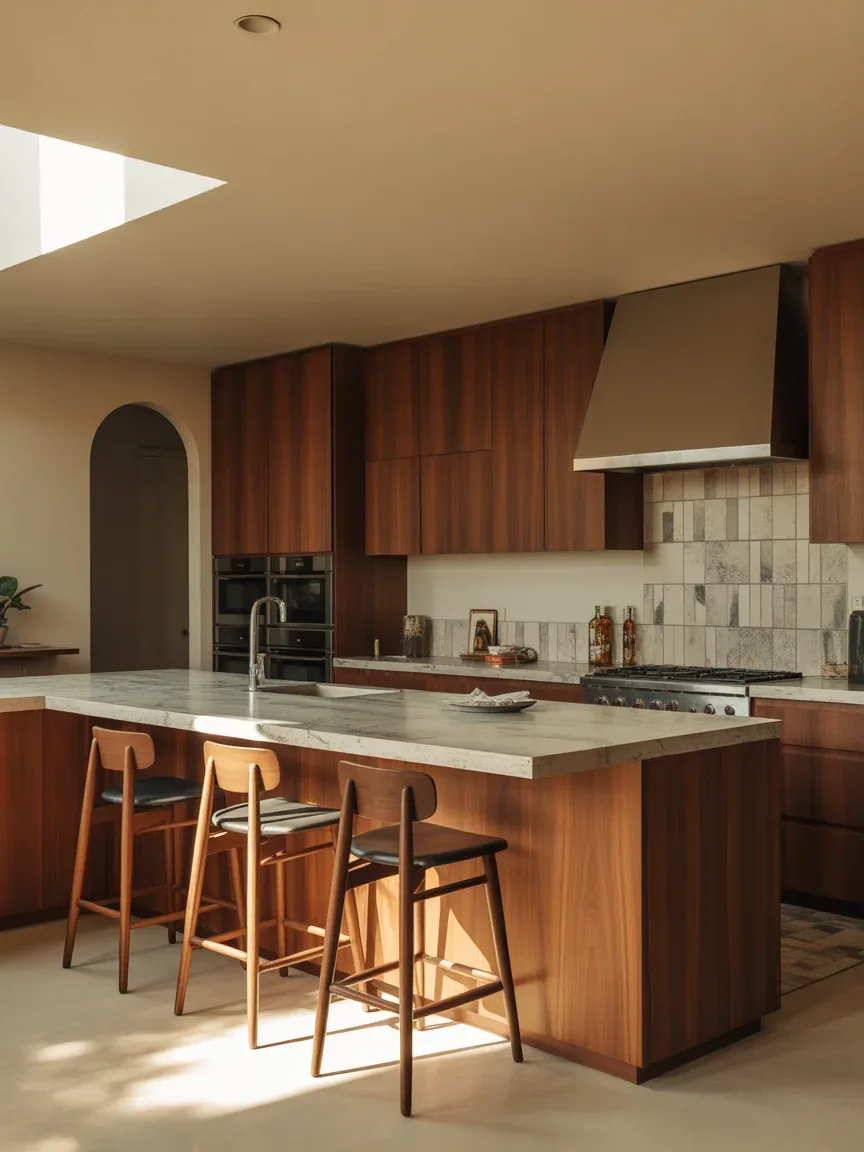
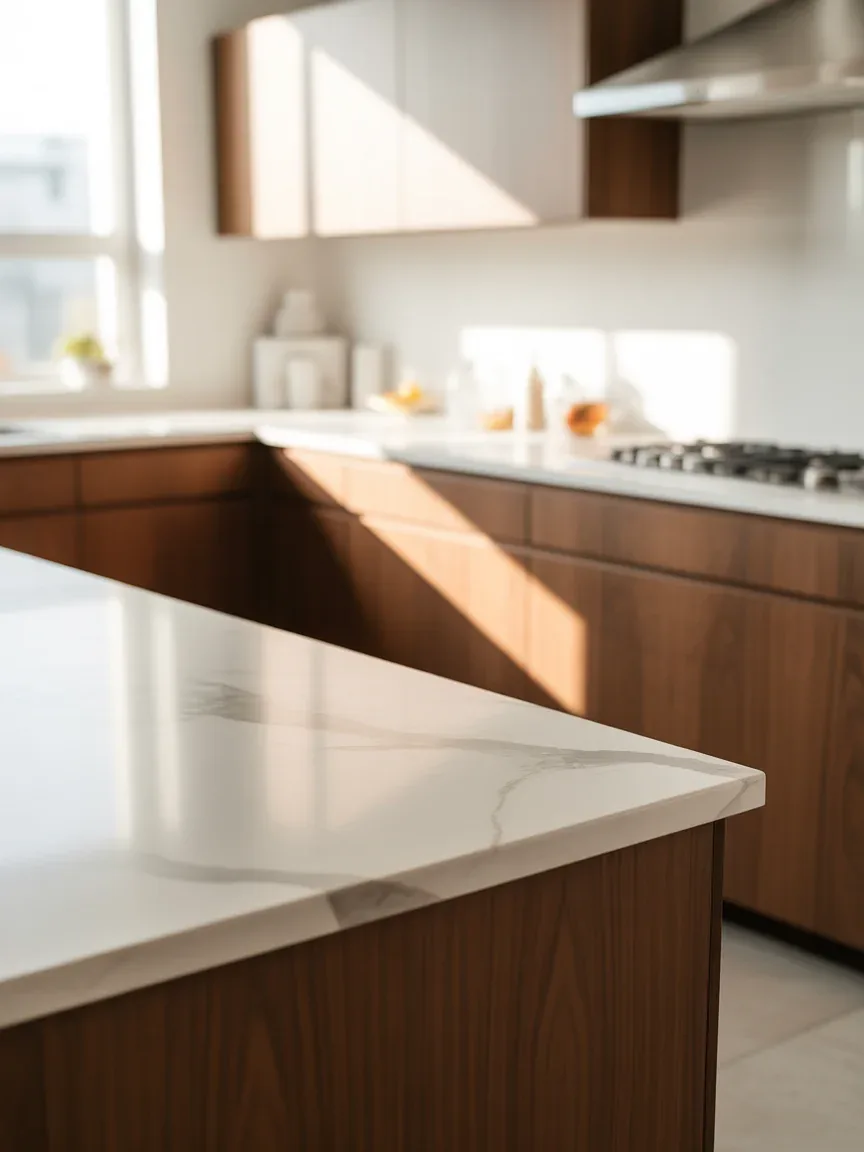
It’s engineered stone, which means manufacturers combine natural quartz with resins and pigments to create a durable slab. Translation? It looks polished and upscale while handling daily chaos like a champ.
Why Quartz Works in Mid-Century Kitchens
Quartz fits beautifully with the clean, streamlined aesthetic of mid-century modern design.
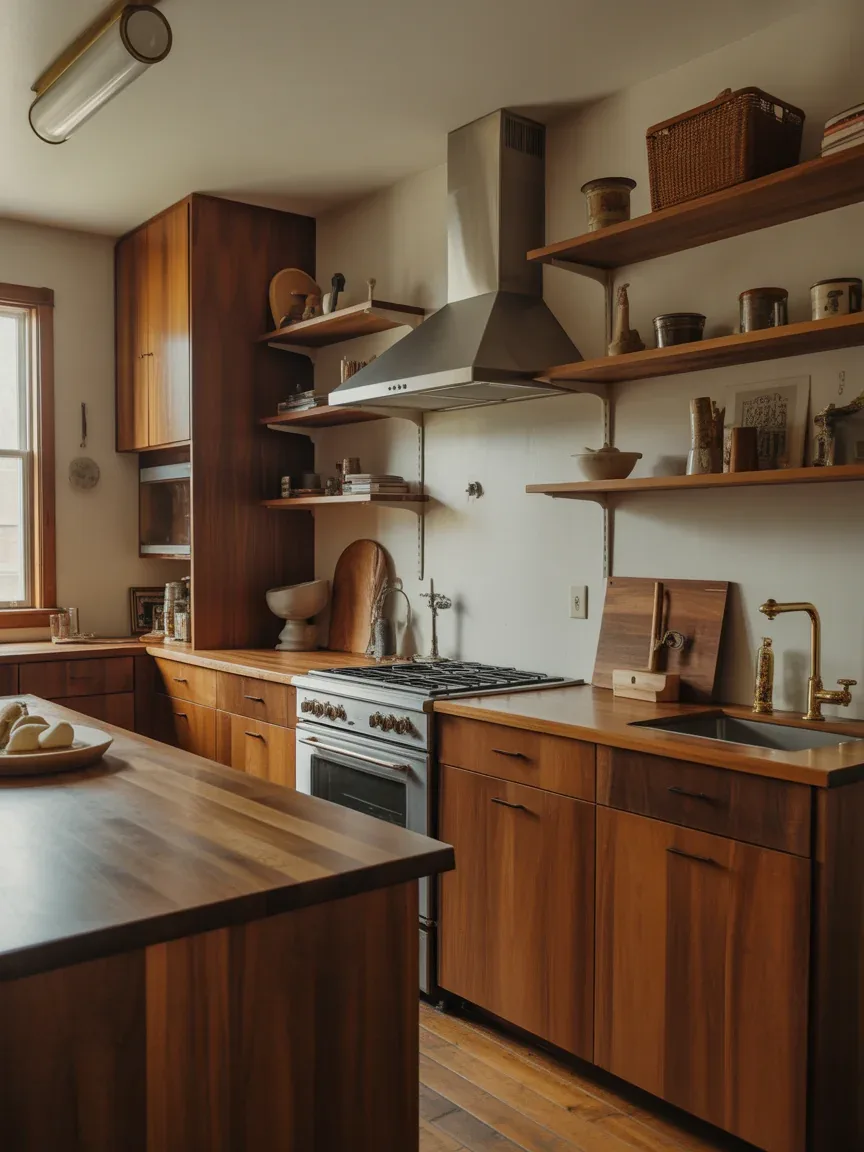
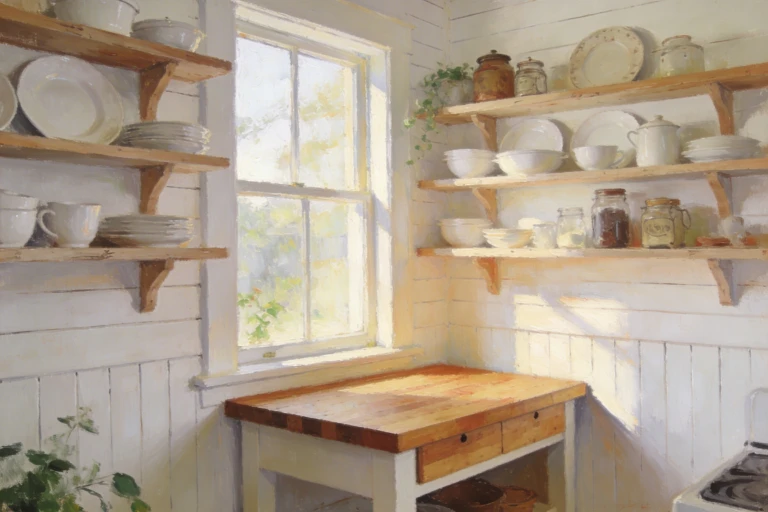
It’s typically made from strips of hardwood—often maple, walnut, or oak—glued together into thick slabs. The result feels handcrafted, timeless, and a little cozy in the best way.
Pricing varies by region and quality, but generally:
Quartz: Higher upfront cost
Butcher Block: Lower initial cost, more maintenance over time
Quartz often wins long-term for resale and durability.
But butcher block can deliver huge style impact for less money upfront—especially if you install it strategically rather than throughout the whole kitchen.
So the better value depends on whether you prioritize low maintenance or lower upfront cost.
FAQ
Is Quartz Too Modern for a Mid-Century Modern Kitchen?
Not at all. Quartz works beautifully in mid-century kitchens when you choose colors and patterns carefully. Stick to subtle veining or solid tones rather than dramatic marble-look slabs if you want a more authentic retro feel.
Does Butcher Block Make a Kitchen Look Dated?
No—when styled correctly, it looks warm and timeless. Pair it with sleek cabinetry and modern fixtures so it reads intentional rather than “1998 kitchen remodel.”
Which Countertop Lasts Longer?
Quartz generally lasts longer with less upkeep. Butcher block can last for decades too, but only if you maintain it properly.
Can You Put Hot Pans on Quartz or Butcher Block?
You shouldn’t place hot pans directly on either. Quartz can discolor from heat, and butcher block can scorch. Trivets exist for a reason.
Which Countertop Adds More Home Value?
Quartz usually appeals more broadly to buyers because it’s durable and low maintenance. But a beautifully designed butcher block kitchen can absolutely impress the right buyer.
Conclusion
So, Quartz vs Butcher Block: The Best Countertop for a Mid-Century Modern Kitchen?
If you want sleek, durable, low-maintenance practicality, quartz wins.
If you want warmth, character, and authentic vintage-inspired charm, butcher block steals the show.
IMO, the real winner might be combining both. A little quartz for practicality, a little butcher block for soul. Because the best mid-century modern kitchens don’t just look stylish—they feel layered, thoughtful, and effortlessly cool.
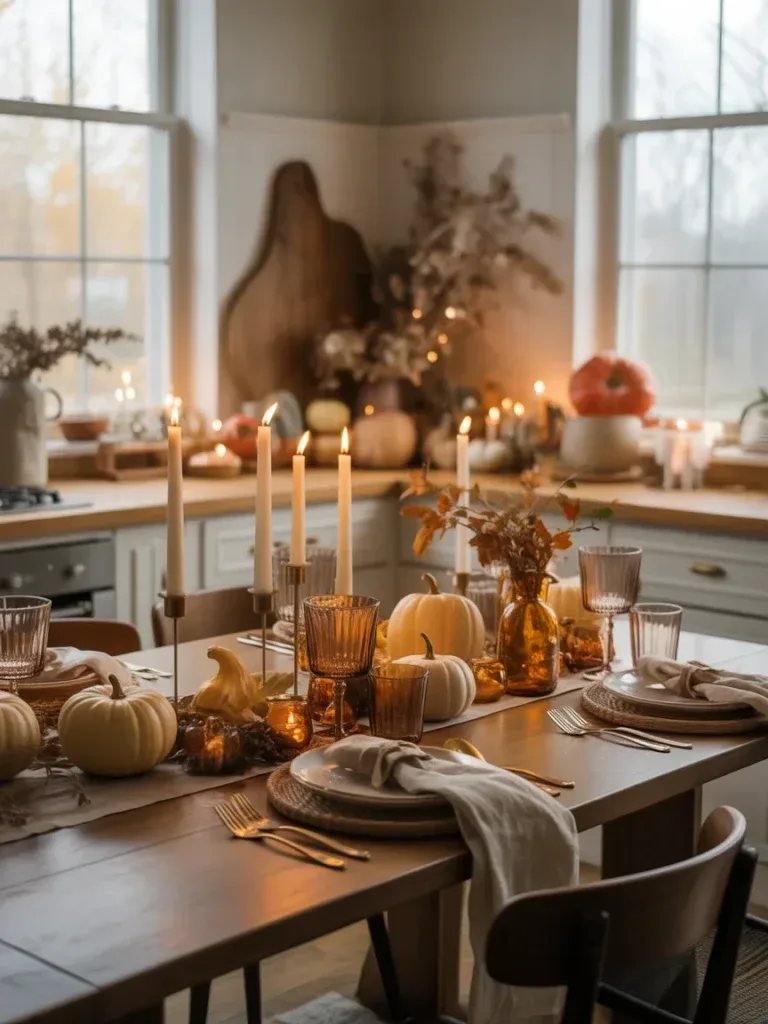
Listen to this article 10 10 0:00 / 0:00 Speed 0.75×1×1.25×1.5×2× Nothing makes a home feel more inviting than a beautifully styled kitchen table during fall. The second the weather cools down, suddenly everyone wants candles glowing, cinnamon-scented everything, and a dining space that practically begs you to stay for another cup of coffee. If…
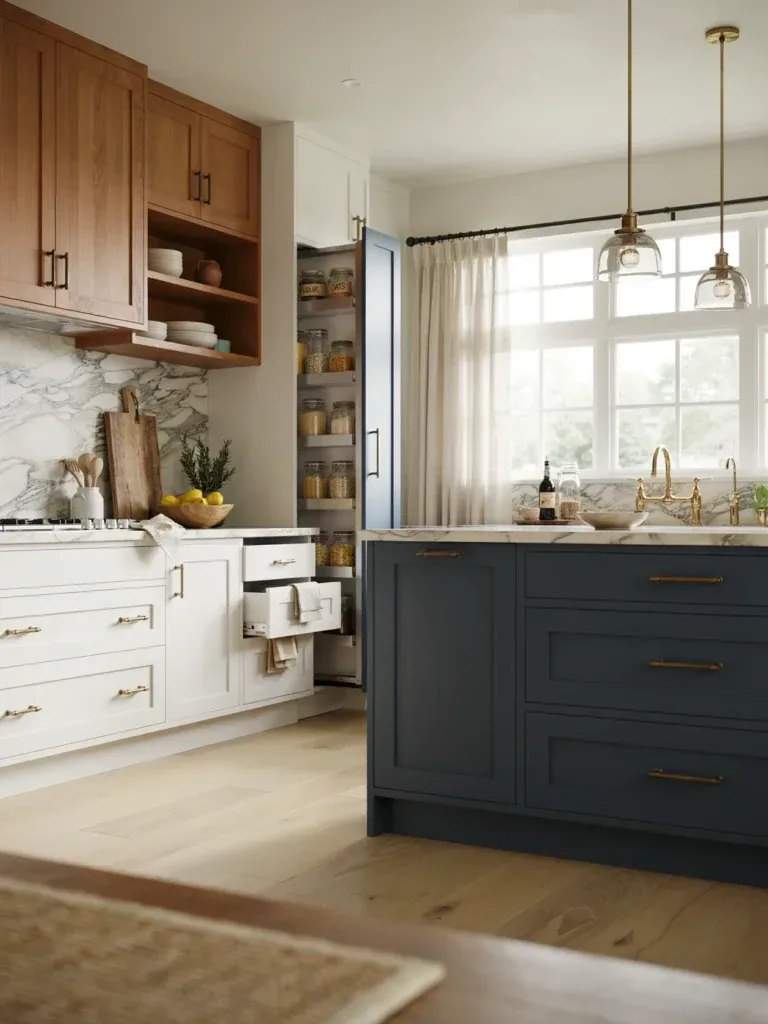
Listen to this article 10 10 0:00 / 0:00 Speed 0.75×1×1.25×1.5×2× Your kitchen cabinets do a lot more than hide pots, pans, and that random collection of takeout menus. They set the entire tone of your kitchen while helping you stay organized and sane during busy mornings. The good news? You don’t need a massive…
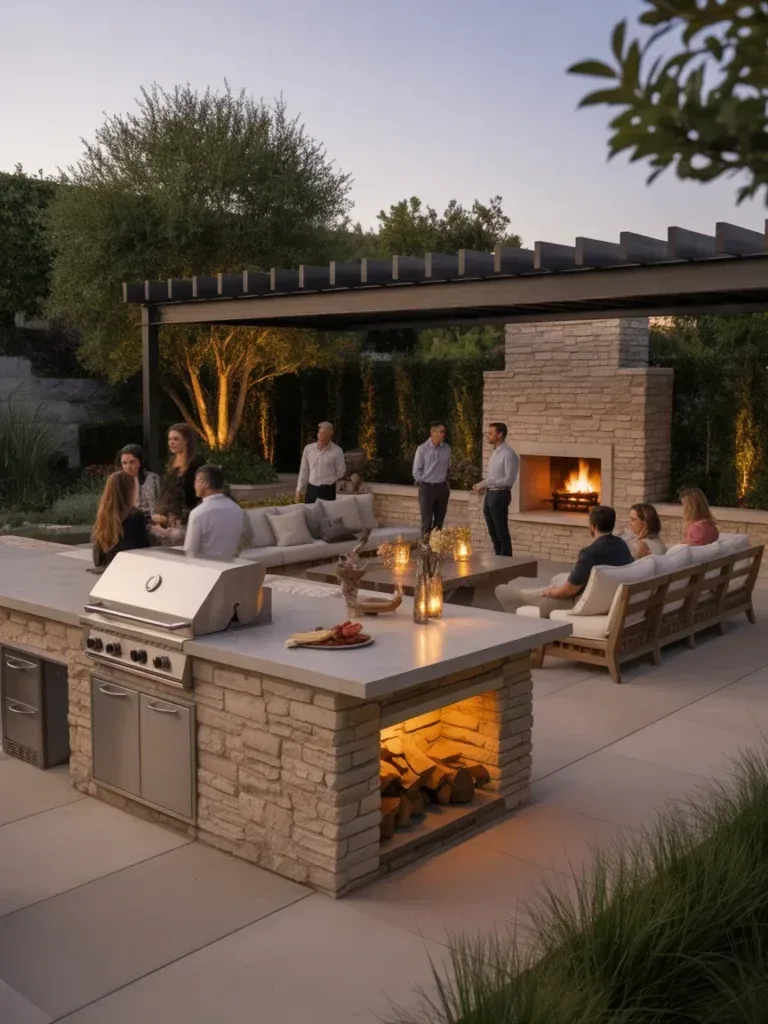
Listen to this article 10 10 0:00 / 0:00 Speed 0.75×1×1.25×1.5×2× An outdoor kitchen can turn a basic backyard into the place where everyone mysteriously wants to hang out every weekend. Suddenly your patio becomes the unofficial family headquarters, your friends “just happen” to stop by around dinner, and you become that person with the…
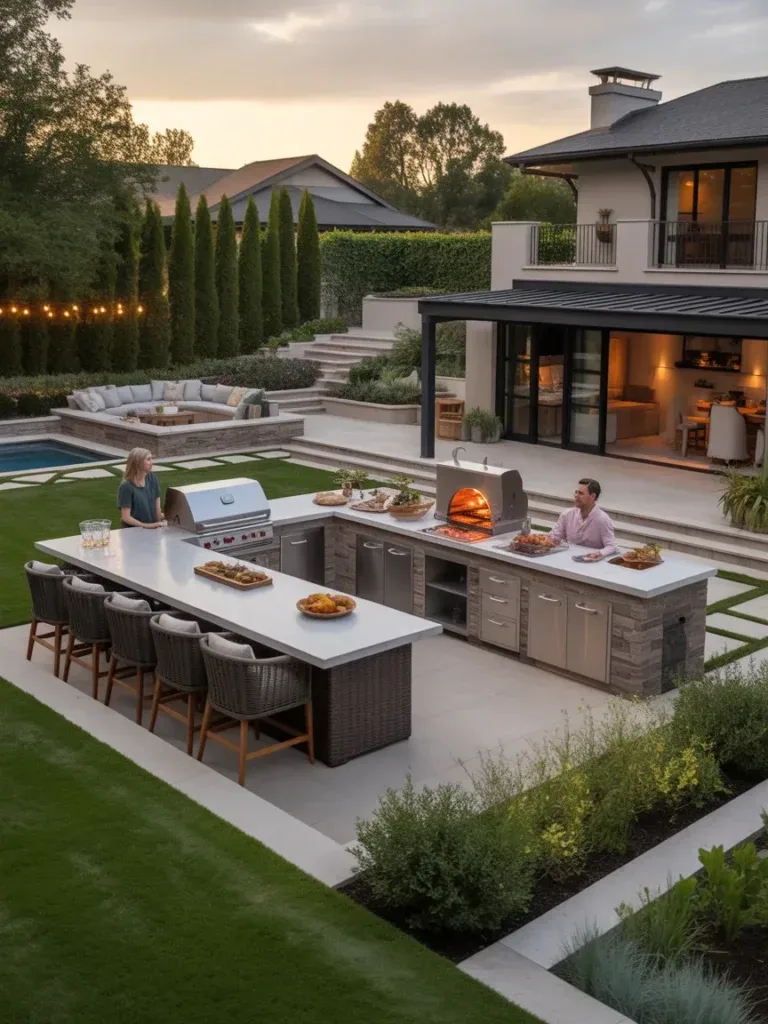
Listen to this article 10 10 0:00 / 0:00 Speed 0.75×1×1.25×1.5×2× Your backyard is begging for an upgrade, and an outdoor kitchen might just be the glow-up it deserves. Imagine sizzling grills, chilled drinks, and zero trips back inside—yeah, it’s that kind of vibe. Whether you’re working with a tiny patio or a sprawling lawn,…
Listen to this article 10 10 0:00 / 0:00 Speed 0.75×1×1.25×1.5×2× A small farmhouse kitchen has one problem a big kitchen never has to solve: every choice shows. There’s no back corner to hide a mismatched cabinet run or a sink that’s too small for a stockpot. The fixes below aren’t about cramming more into…
Listen to this article 10 10 0:00 / 0:00 Speed 0.75×1×1.25×1.5×2× A small farmhouse galley kitchen has one advantage most other small kitchens don’t: everything is already close together. The work triangle is short by default. The problem is usually storage and light, not layout — a galley rarely has room for a pantry closet,…