7 Small Farmhouse Kitchen on a Budget: Luxe on a Tiny Budget
A small farmhouse kitchen on a budget usually fails for one of two reasons: people try to do everything at once and run out of money halfway through, or they buy decor before fixing the bones — lighting, storage, surfaces — that actually make the room work. The seven ideas below are ordered roughly by return on effort, starting with the cheapest fix and ending with the one that takes the most planning. If you want the fuller list of what a small farmhouse kitchen needs before you start picking finishes, our guide to small farmhouse kitchen essentials is a good starting point.
None of this requires gutting cabinets or moving plumbing. It’s paint, hardware, shelving, and a few smart material swaps — the kind of farmhouse kitchen on a budget DIY project you can realistically finish over a few weekends.
Key Takeaways: Farmhouse Kitchen Updates Under a Real Budget
- Painted cabinets and new hardware cost the least and change the room the most — start there before anything else.
- Open shelving only saves money if you actually own fewer dishes than a closed cabinet would hide. Otherwise it just shows the clutter you were storing.
- Peel-and-stick backsplash tile is reversible, which matters if you rent — a full tile job usually isn’t.
- Butcher block and laminate that mimics stone get you most of the visual weight of real quartz for a fraction of the cost.
- Lighting layers (pendant, under-cabinet, ambient) are the cheapest way to make a small kitchen photograph — and feel — bigger.
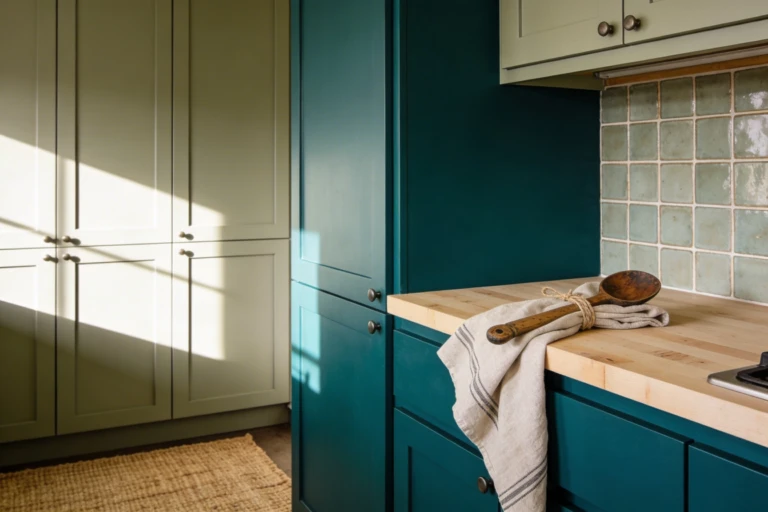
1. Painted Cabinet Accents Instead of a Full Cabinet Swap
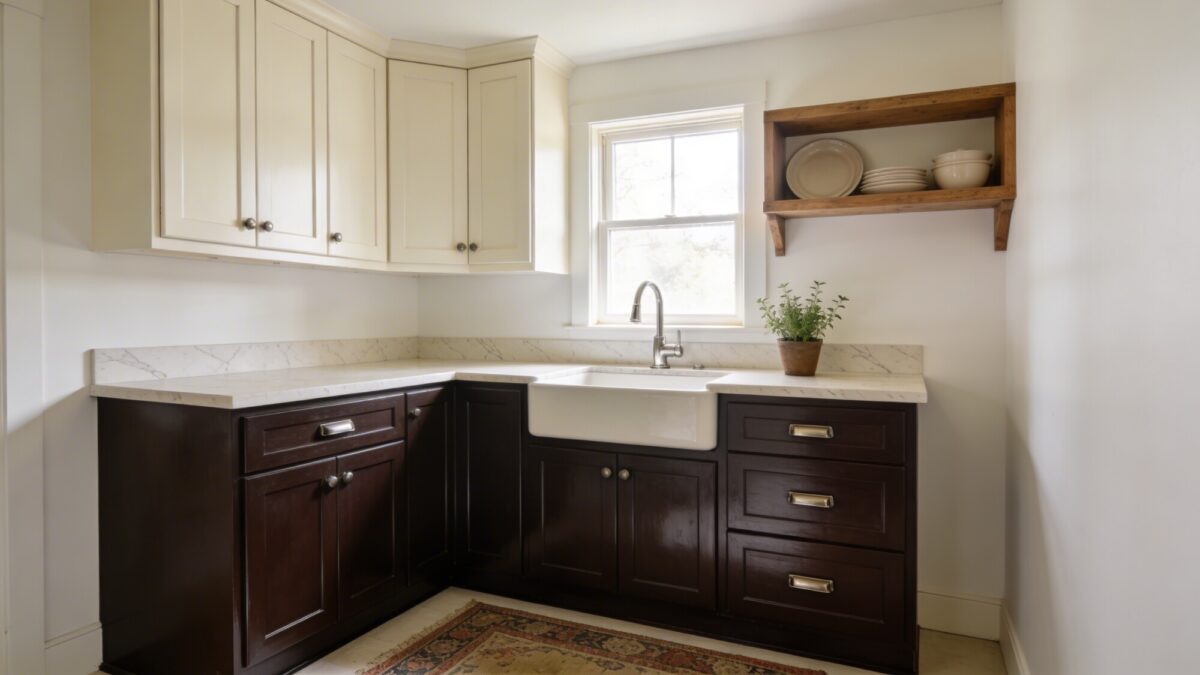
Replacing cabinets is the single most expensive line item in most kitchen projects. Painting the ones you already have is the cheapest way to get most of that visual change without it. A semi-gloss enamel holds up to grease and wiping better than a flat or eggshell finish — this matters more on lower cabinets, which take the most contact from hands and spills.
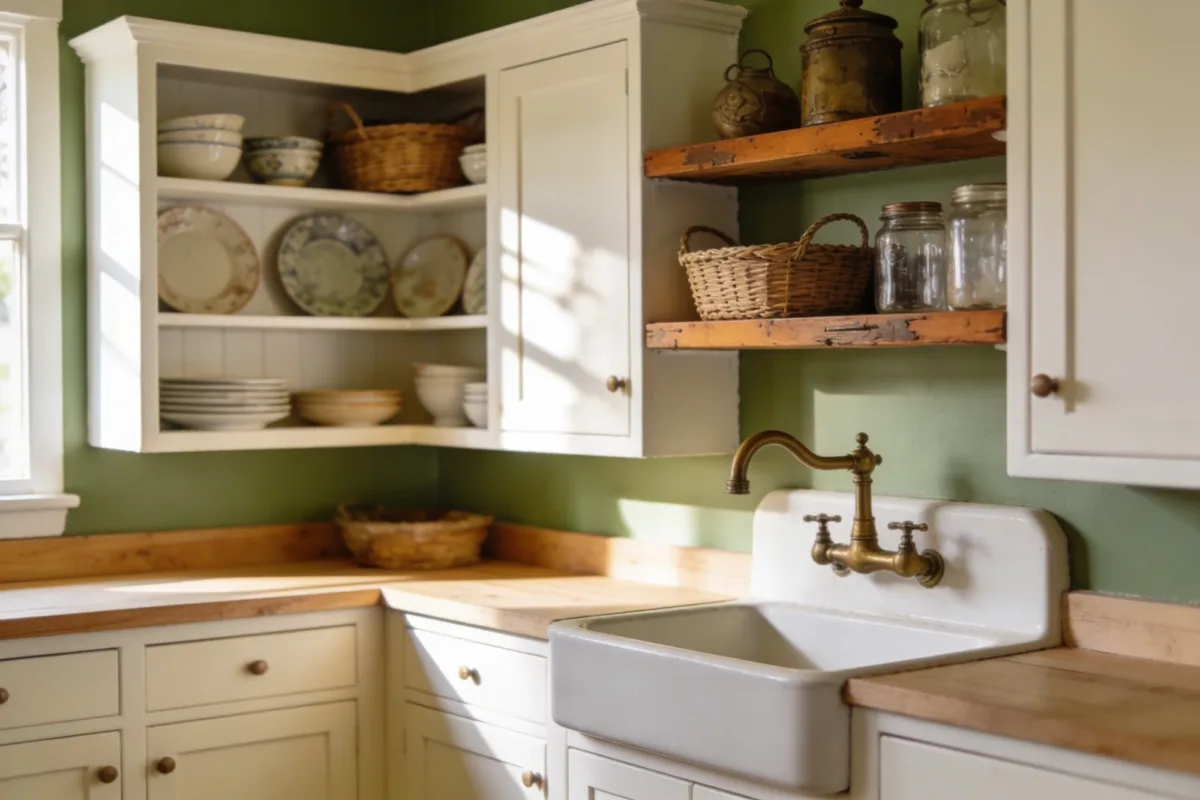
A two-tone approach — lighter uppers, a darker lower run — adds depth without doubling your paint cost, since you’re still painting the same total surface area either way. Soft white, creamy ivory, or a muted sage all read as farmhouse without looking dated in five years the way a trend color might.
💡 Pro Tip: Sand and prime before you paint cabinets, even if the can says “no prep needed.” Skipping this step is the number one reason DIY cabinet paint jobs chip within the first year — the paint needs something to grip, especially on cabinets that already have a factory finish.
Swap the hardware at the same time. New pulls and knobs in brushed nickel or matte black finish the look and cost far less than they seem to — it’s a screwdriver job, not a contractor call.
2. Open Shelving, Done the Cheap and Right Way
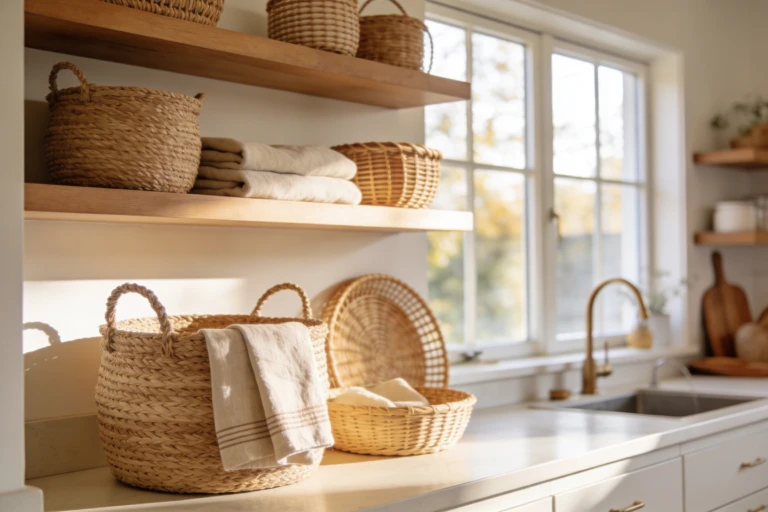
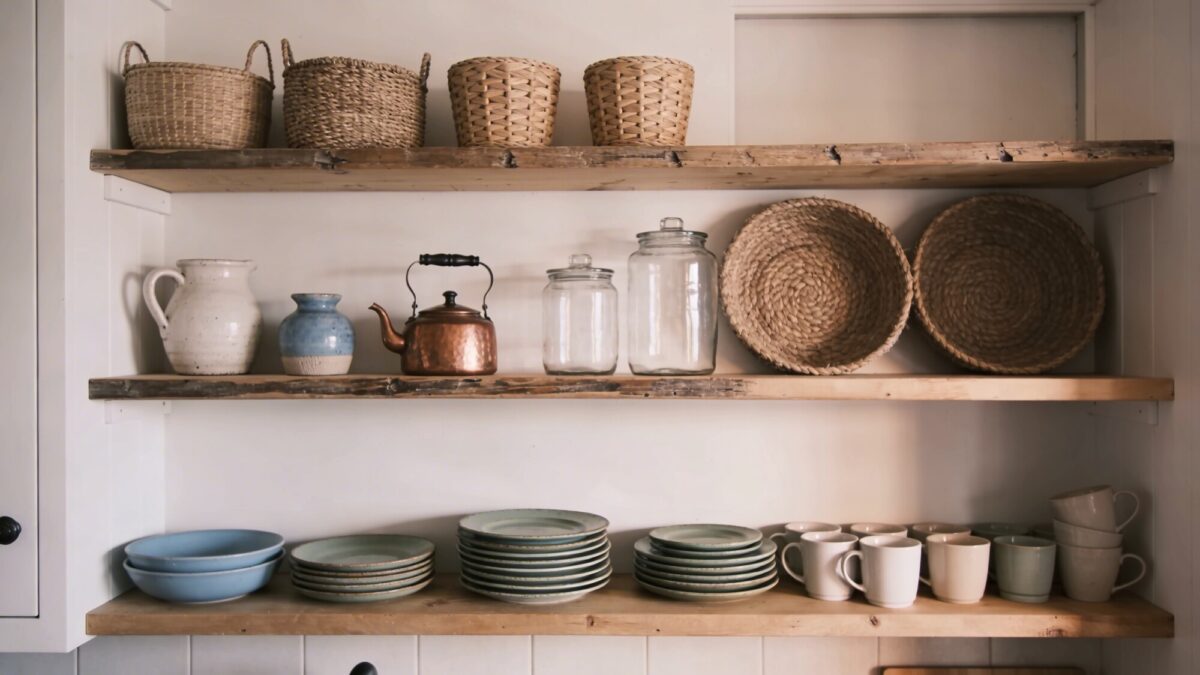
Open shelving is often sold as a budget move because it skips cabinet doors, but it only actually saves money if you’re disciplined about what goes on display. If you own more dishware than fits on two or three shelves with room to spare, open shelving becomes a second storage problem, not a solution.
Reclaimed wood or inexpensive pine boards, mounted on simple brackets, get you a rustic look for close to the cost of the lumber. Group items in odd numbers — three jars, not four — because odd groupings read as arranged rather than lined up. Leave at least one shelf mostly empty; it’s the visual pause that keeps the whole wall from looking crowded.
3. Sink-Driven Layout Fixes
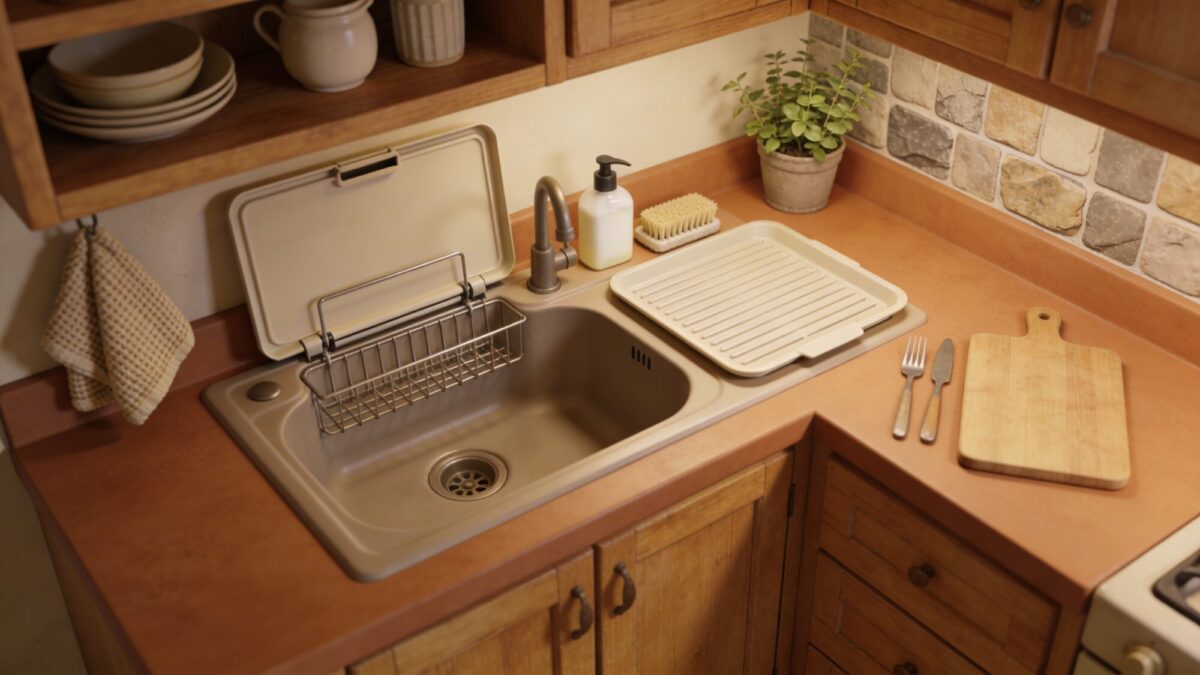
You probably aren’t replacing your sink on a tight budget, but you can fix how it’s used. A fold-down drying rack that clips to the sink edge frees up real counter space compared to a standalone dish rack — in a small galley kitchen makeover, that’s often the difference between a usable counter and a permanently cluttered one.
If you want the farmhouse apron-front look without the plumbing work a real one requires, an inexpensive front-panel liner or skirt made for standard undermount sinks gets you close, though it won’t have the depth or durability of an actual cast-iron or fireclay farmhouse sink. Be honest with yourself about that trade-off before you buy — it’s a look, not a functional upgrade.
4. A Backsplash You Can Install in a Weekend
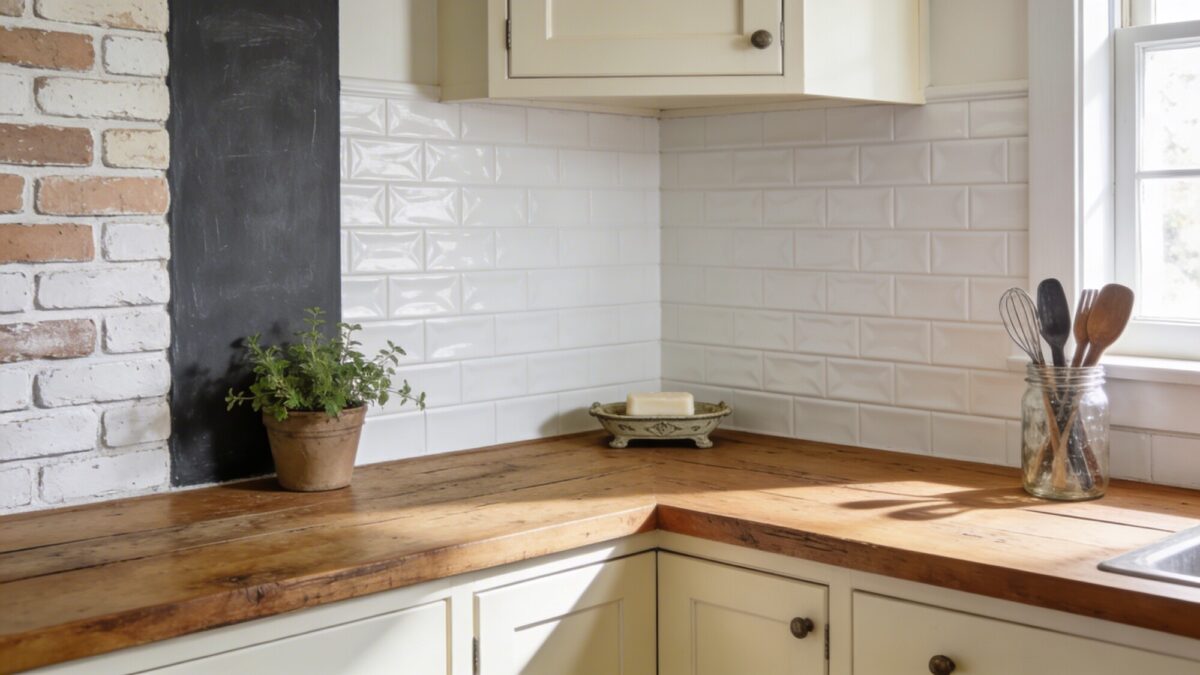
Full tile installation means mortar, spacers, grout, and usually a day you don’t have. Peel-and-stick backsplash tile skips all of that — and it’s removable, which matters if you’re renting or just not sure you’ll love the pattern in two years. It won’t hold up as well to direct heat as real ceramic, so keep it clear of the space right behind a stove burner.
Beadboard panels are the other budget-friendly farmhouse route — they install with adhesive and trim, no grout at all, and give you that classic vertical-groove look. A narrow strip of chalkboard paint near the fridge or pantry doubles as a grocery list and costs almost nothing beyond a can of paint.
💡 Pro Tip: Test peel-and-stick tile on an inconspicuous spot first — some adhesive-backed products don’t release cleanly from textured or freshly painted walls and can pull paint off with them when removed.
5. Lighting That Reads Expensive Without Being Loud
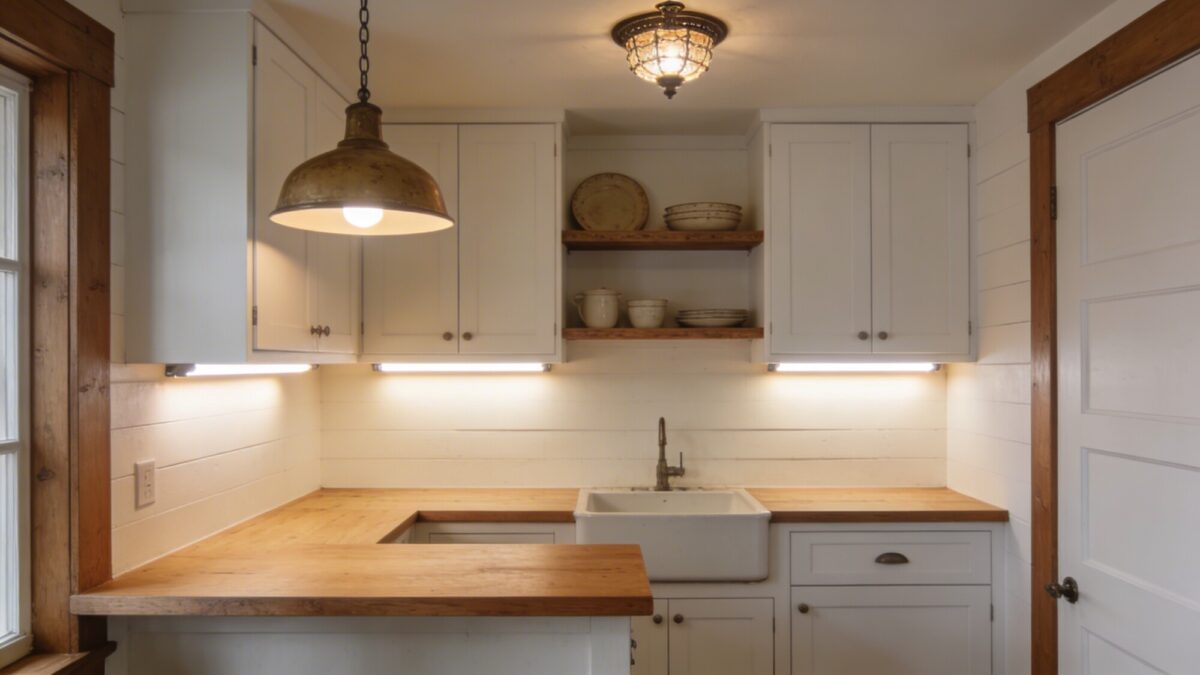
A single ceiling fixture doing every job — task light, ambient light, mood light — is why a lot of small kitchens feel flat in photos and dim at the counter. Layering fixes this cheaper than most people assume: one statement pendant over the main work area, stick-on LED strips under the upper cabinets, and warm white bulbs in the 2700–3000K range throughout.
Daylight-temperature bulbs (5000K+) make a small room look larger in daytime photos but read cold and clinical once the sun goes down — that’s the trade-off. If you want one bulb temperature for the whole kitchen, warm white is the safer farmhouse choice.
6. Farmhouse-Ready Surfaces Without Solid-Surface Prices
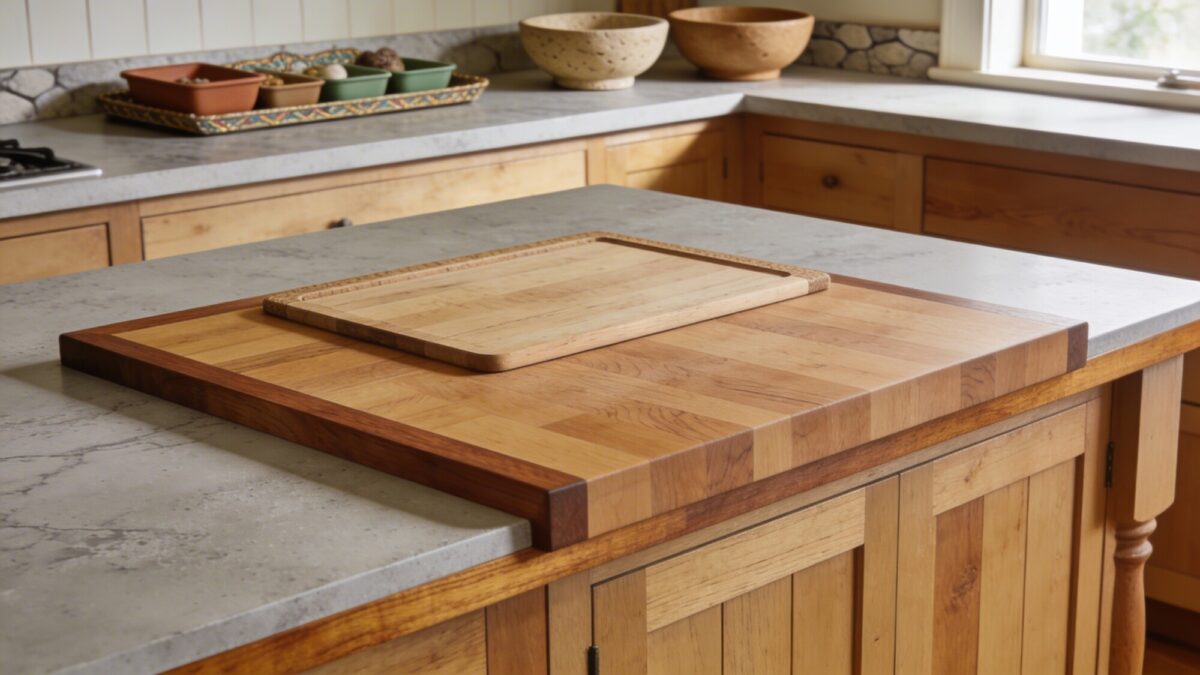
Real quartz or granite counters aren’t in most budget renovations, but you don’t need them to get the look. Butcher block gives you genuine wood grain and warmth for less than most stone options, though it needs periodic resealing to resist water damage near the sink. Laminate that mimics marble or concrete has come a long way — it won’t fool anyone up close, but from across the room it reads as intentional, not cheap.
| Surface Option | Upfront Cost | Trade-off |
|---|---|---|
| Butcher block | Lower than stone | Needs resealing periodically; can water-stain near the sink if unsealed |
| Laminate (stone-look) | Lowest of the three | Seams and edges can look less convincing up close |
| Real quartz | Highest | Best durability, no long-term maintenance trade-off |
Whichever you choose, a simple cutting-board zone protects the surface where you actually work, and a couple of stone or wood bowls anchor a prep area without adding real cost. For more surface and material comparisons, see our small kitchen remodel on a budget guide.
7. Smart Storage That Doubles as Decor
Vertical space is the most underused square footage in a small kitchen. A tall pull-out pantry — even a narrow one on wheels — fits into gaps most people write off as unusable. A wall-mounted pegboard holds utensils, spices, and small gadgets without eating counter or cabinet space, and it doubles as texture on an otherwise blank wall.
Clear stackable jars for dry goods aren’t just aesthetic — they let you see when you’re low on flour or oats before you’re mid-recipe and out. It’s a small thing, but it’s the kind of detail that actually changes how a kitchen functions day to day, not just how it photographs.
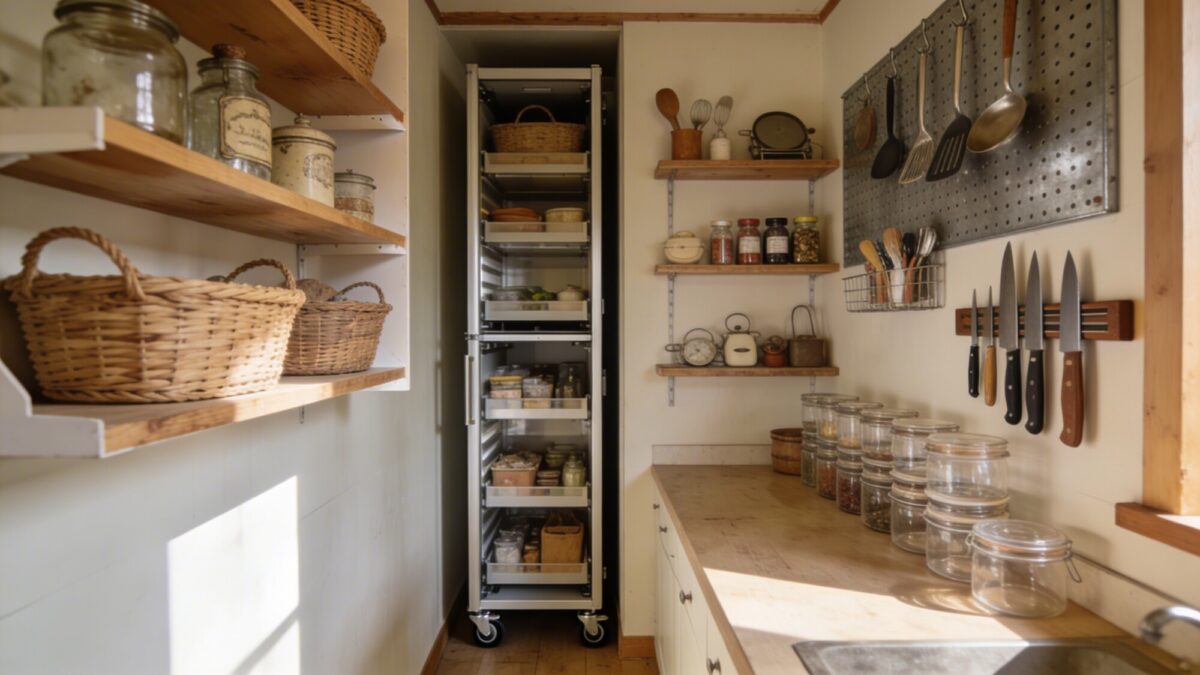
💡 Pro Tip: Mount the pegboard before you buy hooks — measure your actual tools and spice jars first. Buying a generic hook kit before knowing what you’re hanging is the most common reason pegboards end up half-used.
A Note for Boho or Renter-Friendly Farmhouse Looks
If you’re leaning boho small kitchen rather than strict farmhouse, most of this list still applies — swap the muted whites and sage for warmer terracotta or rattan accents, and lean harder on the open shelving and woven basket ideas above. A small kitchen remodel boho in style uses the same budget logic: paint, hardware, and layered lighting first, statement pieces later.
Frequently Asked Questions
What’s the cheapest way to update a small farmhouse kitchen?
Cabinet paint and hardware, in that order. Both are DIY-friendly, don’t require special tools beyond a sander and a screwdriver, and change more of the room’s visual weight than almost anything else on this list.
Is peel-and-stick backsplash worth it?
Yes for renters or anyone testing a look before committing. It’s not as heat- or scratch-resistant as ceramic tile, so keep it away from direct stove heat, but it installs in an afternoon and comes off just as fast.
Can I get a farmhouse sink look without replacing my sink?
Front-panel liners exist for this, but they’re cosmetic — they won’t give you the depth or durability of an actual apron-front sink. If the sink itself is functional, this is a reasonable stopgap; if it’s not, it’s better to save for the real replacement.
Should I do warm or daylight bulbs in a small kitchen?
Warm white (2700–3000K) for most farmhouse kitchens — it stays cozy day and night. Daylight bulbs make photos look brighter but can feel clinical once the sun goes down.
Is butcher block or laminate the better budget countertop?
Butcher block if you don’t mind resealing it occasionally and want real wood grain. Laminate if upfront cost is the priority and you’re comfortable with a look that’s convincing from a few feet away but not up close.
Our Take
If you’re working with a real budget and not just a smaller one, do the cabinet paint and hardware first, lighting second, and treat open shelving and the backsplash as optional extras rather than must-haves. Those two alone — paint and hardware — tend to do more for how a small farmhouse kitchen feels than any single decor purchase, and they’re the easiest to reverse if you change your mind later. Once those are done and you’re ready for a bigger project, our guide to a full small farmhouse kitchen remodel covers what comes next, and our budget-friendly farmhouse decor ideas roundup is a good next stop for finishing touches. For more DIY-specific projects at this scale, see our farmhouse kitchen DIY upgrade ideas.