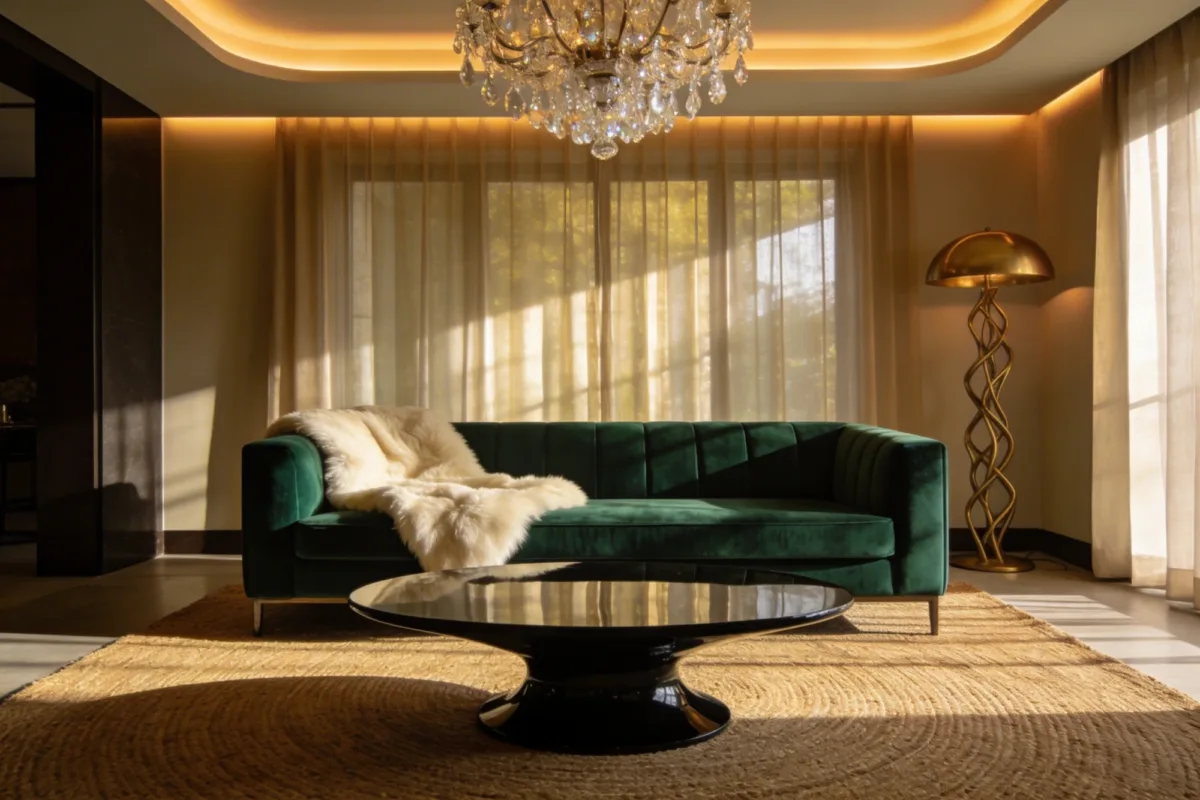
7 Elegant Home Decor Luxury Living Room: Luxe Ideas to Try Now
Getting an elegant home decor luxury living room right is less about spending big and more about knowing which few things actually read as “expensive” versus which just look busy. Texture, lighting, one strong focal piece, and restraint everywhere else — that’s most of it. If your taste runs toward something bolder and more ornate than what’s below, this Moroccan-inspired luxe styling guide is worth a look for a different direction entirely.
None of these seven ideas require a full renovation, and you don’t need to do all seven at once — most rooms improve noticeably with just two or three.
Quick-Reference: The 7 Moves
- Layer at least three textures rather than matching one
- Build a lighting scene with three layers, not one overhead fixture
- Choose one true statement piece and let it anchor the room
- Use metallic accents sparingly — a few pieces, not a theme
- Pick one or two accent colors against a neutral base
- Arrange seating for conversation, not just for looks
- Add personal, lived-in details last
1. Layer Textures Instead of Matching Them
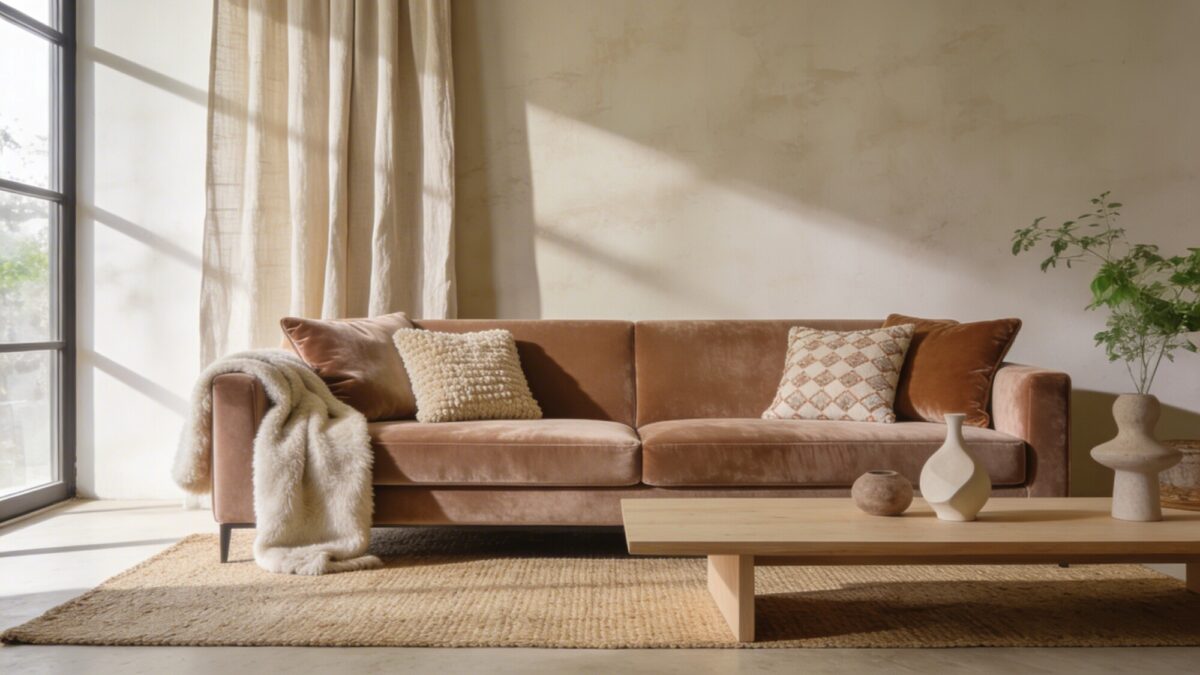
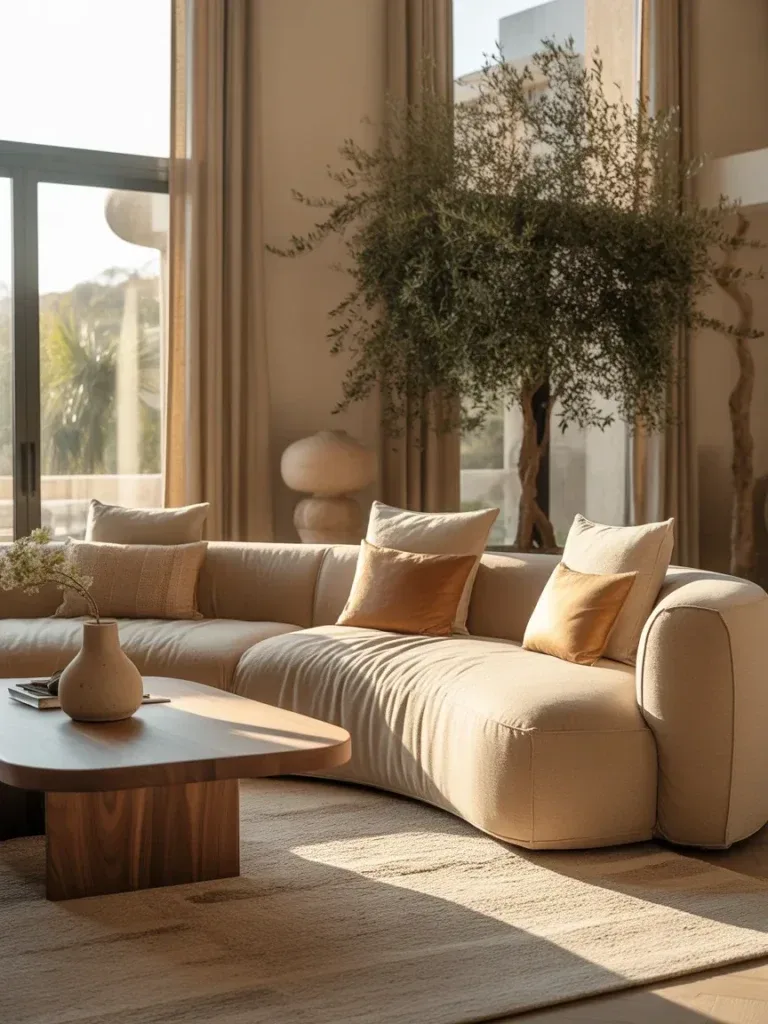
A room where every surface is the same material — one fabric on the sofa, matching curtains, a flat rug — tends to read as flat no matter how expensive the individual pieces were. Layering fixes that without touching the color palette: a velvet or chenille sofa, a wool or boucle throw draped over one arm, and a natural fiber rug (jute or sisal) underneath to ground the seating area.
The common mistake here is over-layering — piling on five different textures until the room looks cluttered instead of curated. Two or three contrasting textures per seating group is usually the ceiling before it starts working against you.
💡 Pro Tip: Add exactly one glossy or reflective surface — a lacquered tray, a glass side table — against all the soft textures. Without at least one hard, reflective element, an all-soft room can start to feel heavy rather than luxe.
2. Curate a Lighting Scene, Not Just a Light Source
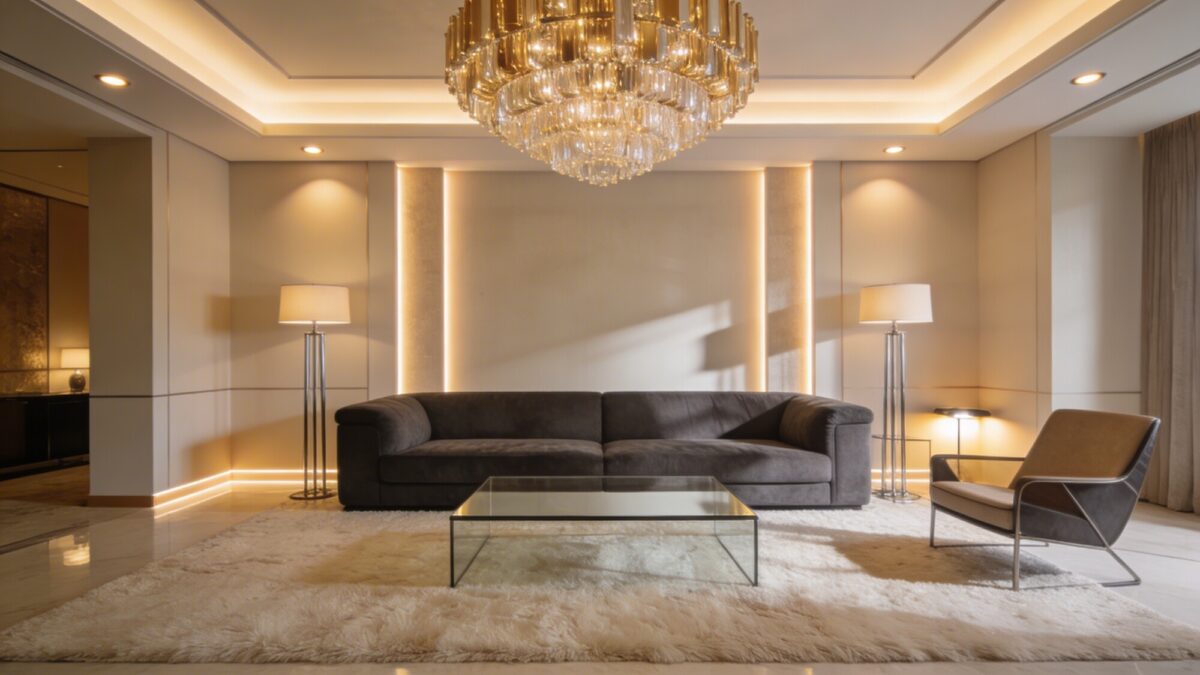
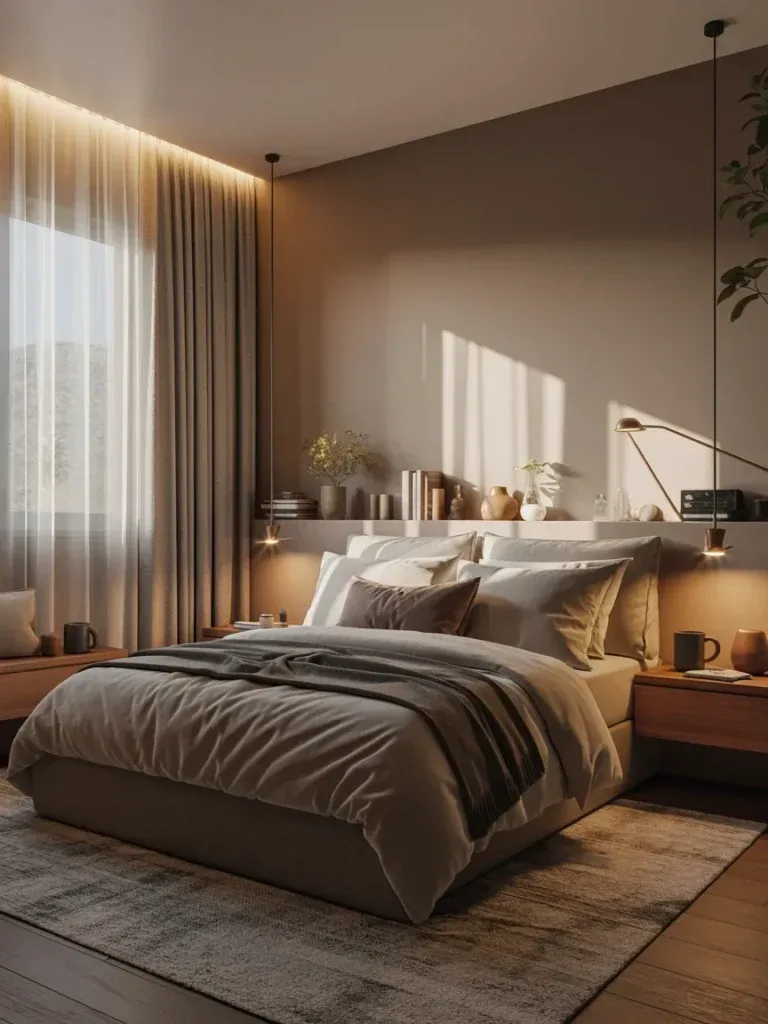
A single chandelier, however dramatic, still only gives you one direction of light and one mood. Real luxury lighting layers three sources: a statement chandelier or pendant as the visual anchor, ambient recessed or warm-white LEDs for general fill, and a pair of floor or table lamps near the seating for the evening layer. Stick to warm white bulbs — 2700 to 3000K — since anything cooler undercuts the coziness the other elements are working toward.
If you’re leaning toward a more maximalist direction — a luxury living room with gold ceiling, ornate trim, that kind of scale — the layering principle holds, but the fixtures themselves carry more of the visual weight, and this chandelier styling guide goes deeper into scaling a fixture to a room.
💡 Pro Tip: Put your chandelier on a separate dimmer from your lamps. Full brightness on the chandelier works for hosting; killing it entirely and running on lamp light alone is what actually creates the after-dinner mood people associate with “luxury” lighting.
3. Choose One Signature Statement Piece
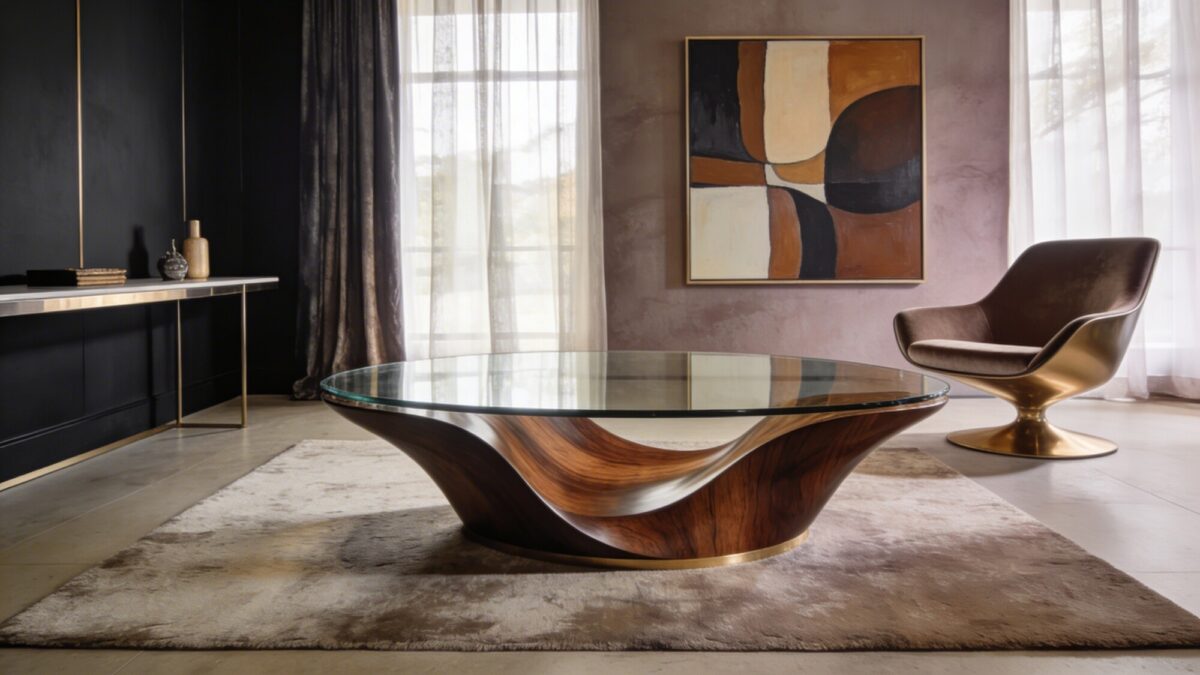
Every genuinely elegant room has one object doing most of the visual work — a sculptural coffee table, a bold art print, an unusual console — and everything else in the room is quiet by comparison. The mistake is treating three or four pieces as “statement” pieces simultaneously; when nothing is subordinate to anything else, the room reads as competing rather than composed.
Pick the one piece you’d genuinely be upset to give up, and build the room’s restraint around it. If art is your statement piece of choice rather than furniture, styling with books and objects covers how to build a supporting cast around it on shelves and side tables without competing for attention.
4. Use Metallic Accents Sparingly
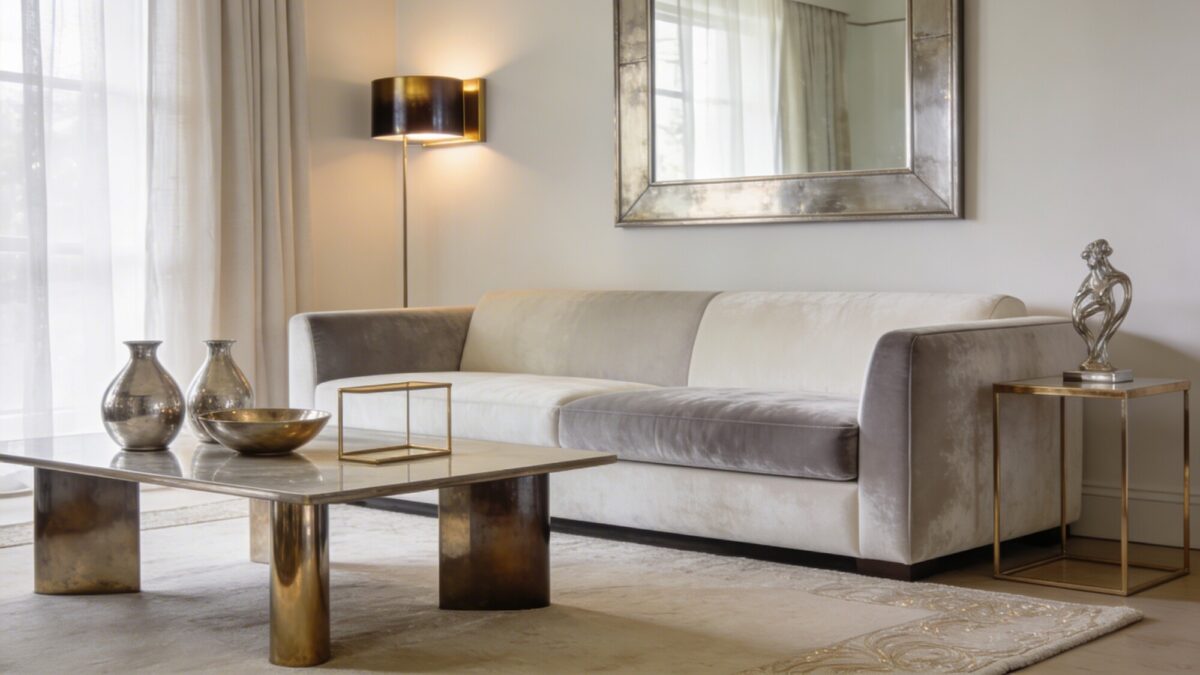
Metallics — brass, smoked metal, silver — catch light and read as luxurious, but only in small doses. A pair of metallic vases, brass legs on a console, or a framed metal mirror is plenty for most rooms. Metallic hardware on every surface tips from elegant into showroom-flashy fast, and that’s the line most people cross without noticing until the room feels cold instead of warm.
Stick to one metal tone throughout the room — all brass, or all silver, not both — since mixed metals in a small space tend to look accidental rather than intentional.
5. Master Color Without Letting It Take Over
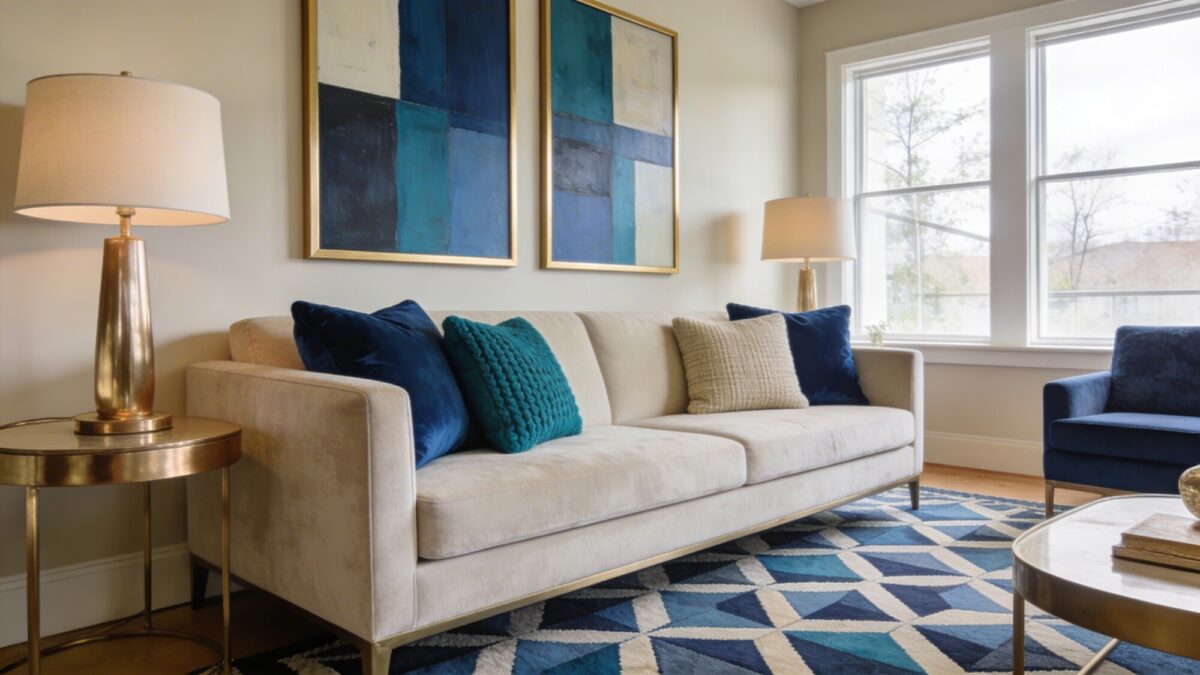
Luxury classic living room interiors tend to lean on a neutral base — cream, taupe, greige — with exactly one or two accent colors repeated across cushions, art, and a rug. Deep blue, emerald, and burgundy all work well against warm neutrals. The advantage of this restraint: swapping the accent later, whether that’s new pillows or different art, is a cheap refresh instead of a full redo.
💡 Pro Tip: Let your rug do double duty as the color anchor. A patterned rug that repeats your two accent colors ties the room together faster than trying to match those colors across five separate smaller objects.
6. Arrange Seating for Actual Conversation
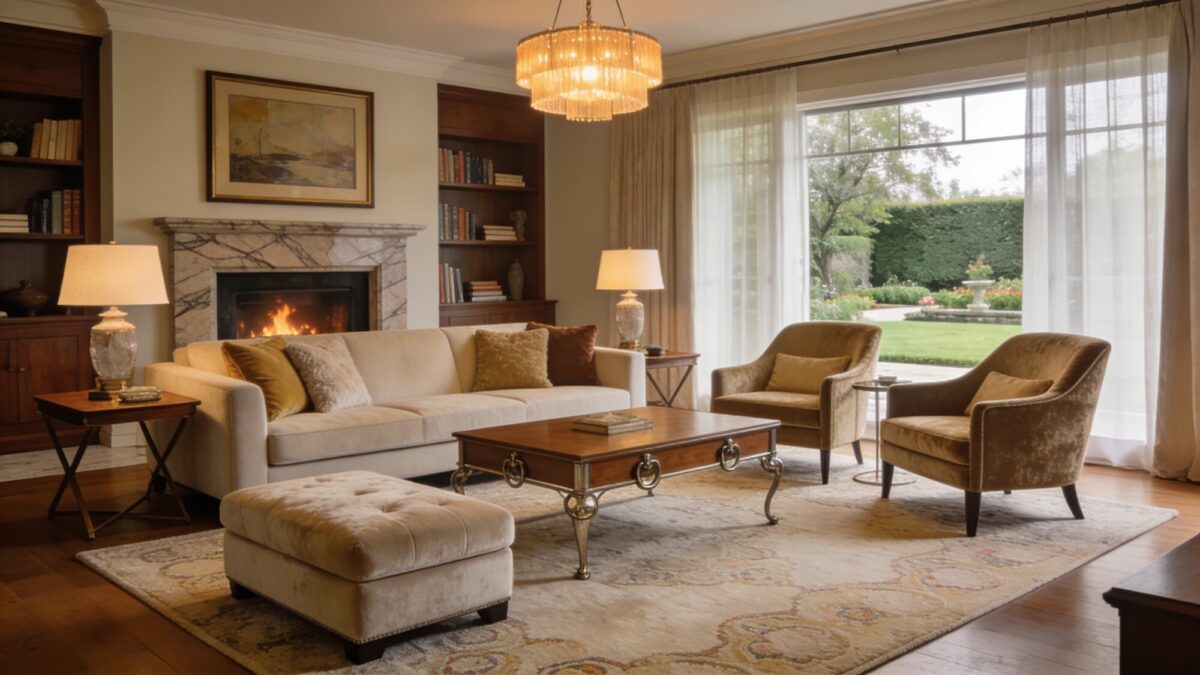
A gorgeous sofa facing a blank wall or a TV, with two chairs off to the side, doesn’t function as a real seating plan even if every piece is beautiful. Anchor the group with a rug sized to fit under at least the front legs of every piece, add a pair of chairs or a loveseat angled toward the sofa, and finish with an ottoman or coffee table within actual reach.
Leave enough space between pieces to walk through comfortably — a seating group that’s technically “complete” but crammed into too little floor space reads as cramped no matter how nice the furniture is.
7. Add Personal, Lived-In Details Last
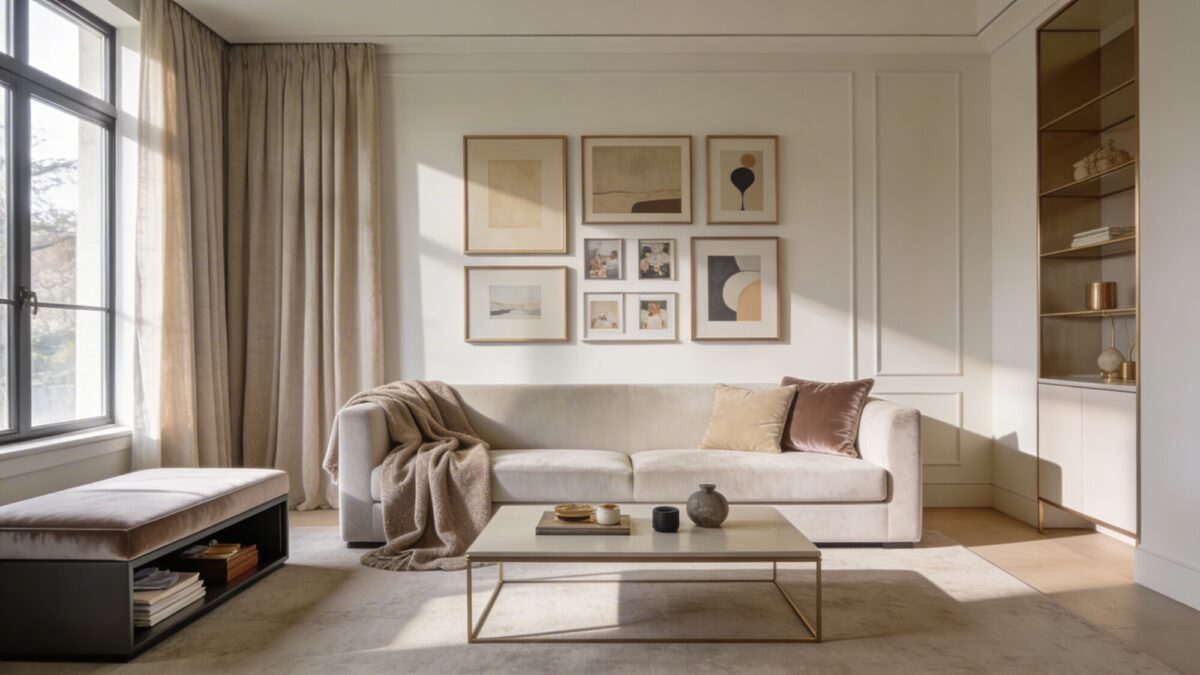
The details that separate a genuinely elegant room from a showroom display are the last things you add, not the first: a cashmere or good wool throw, a curated art wall with cohesive framing rather than mismatched frames, and hidden storage — an ottoman with a lid, a bench with a hinged seat — that keeps surfaces clear without looking sterile.
This step is easy to skip because it doesn’t photograph as dramatically as the chandelier or the statement piece, but it’s the difference between a room that looks staged and one that looks like someone actually lives there.
Things to Consider Before You Start
- Do you want a modern luxury living room interior design direction (clean lines, restrained ornament) or something closer to elegant baroque living room decor (more pattern, more gold, more visual richness)? Pick one before buying accents — mixing both dilutes each.
- Is your lighting hardwired, or can you add lamps and a dimmer freely?
- Do you already own a piece that could serve as the signature statement item, or are you shopping for one?
- How much floor space do you actually have for a proper conversational seating layout, including walking room?
FAQ
What’s the fastest of these seven to see results from?
Lighting. Adding two lamps and switching to warm-white bulbs changes the feel of a room within an evening, with no furniture rearranging required.
How many accent colors is too many for a luxury living room?
More than two, generally. One or two repeated colors read as a deliberate palette; three or more competing accents usually reads as unplanned, even with expensive individual pieces.
Do I need a chandelier for this to feel luxurious?
No — a statement floor lamp or a well-scaled pendant can do the same anchoring job. A chandelier helps if your ceiling height and room size can actually support one; in a smaller room it can overwhelm rather than elevate.
What’s the biggest mistake people make chasing this look?
Treating every piece as a statement piece. A room with four “important” objects competing for attention reads as cluttered, not luxurious — the restraint around the one hero piece is what makes it read as expensive.
Can this style work in a rental?
Mostly, yes. Lighting layers (plug-in lamps), textures, seating arrangement, and personal details are all fully reversible. Anything requiring wall-mounted fixtures or hardwired chandeliers is the part to check with a landlord first.
Our Take
Start with lighting and one signature piece — those two changes have the highest visual return for the effort involved, and they don’t require committing to a full color scheme yet. Save the metallic accents and color palette decisions for once those two are settled, since they’re easier to get right against a room that already has its anchor point established. For more ideas once the basics are in, this modern luxe inspiration roundup is a reasonable next stop.