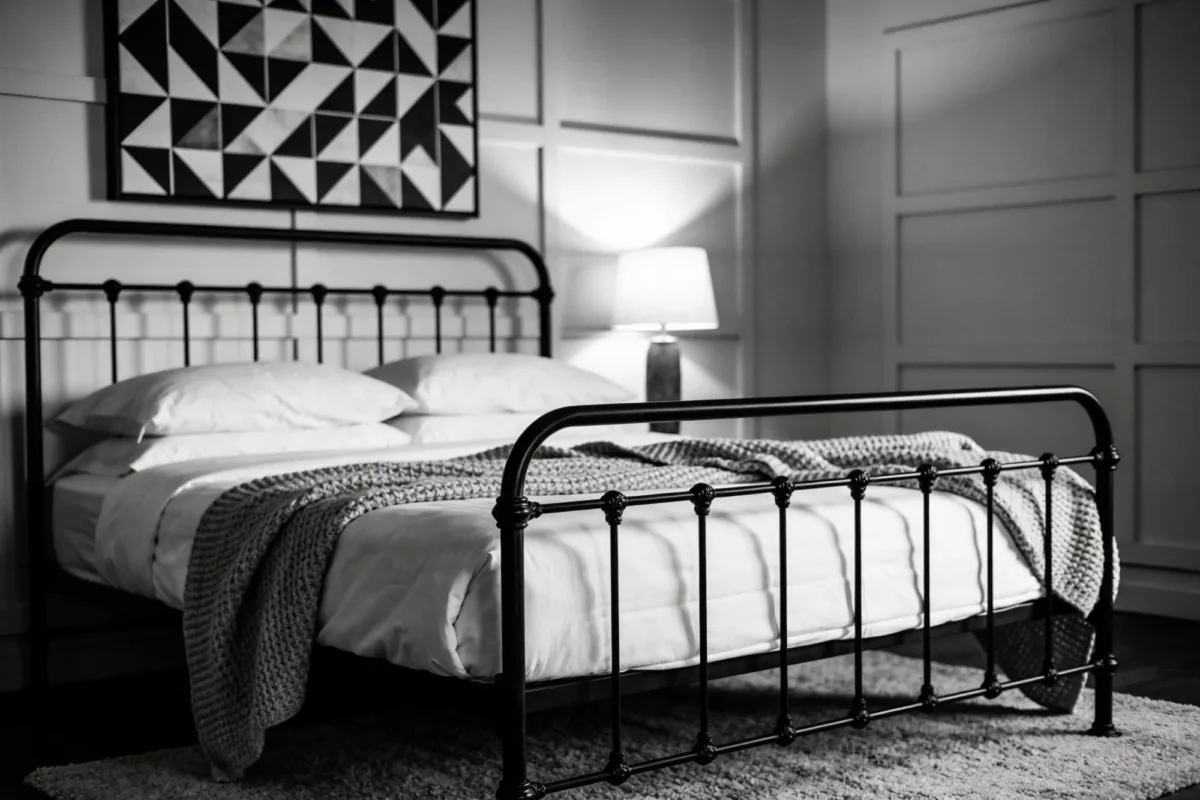
9 Black and White Room Decor Bedroom Ideas: Bold, Cozy, Chic
Black and white room decor bedroom ideas have one recurring failure mode: the room ends up looking like a hospital waiting area instead of a bedroom. That happens when every surface goes pure white and every accent goes pure black, with nothing in between to soften the contrast. The fix isn’t abandoning the palette — it’s controlling where the contrast lives and where the room gets to breathe. If you want to see the full range this style can take before deciding on your own version, our black and white bedroom ideas gallery is worth a look first.
Below are nine ways to build this out, with notes on where the contrast should be sharp and where it needs to ease off so the room still feels like somewhere you’d want to sleep.
Quick Reference: Where to Put the Contrast
- One high-contrast focal point (a wall, the bed, or a piece of art) reads better than contrast spread evenly across every surface.
- Texture is what keeps black and white from feeling cold — velvet, knit, and linen do more work than a second black accent ever will.
- Matte black beats glossy black in a bedroom; gloss reads more commercial/office than restful.
- Warm-white bulbs (2700K–3000K) stop a monochrome room from tipping into “clinical” after dark.
- Wood is the easiest warmth fix if the room already feels too stark once it’s finished.
1. Start With Monochrome Minimalism, Not Monochrome Everything
A black-and-white minimalist room works when the palette is disciplined but the materials aren’t identical. A black metal bed frame against crisp white linen is a strong start, but if the walls, floor, and every accessory are also flat black or flat white with no texture, the room reads sterile rather than calm.
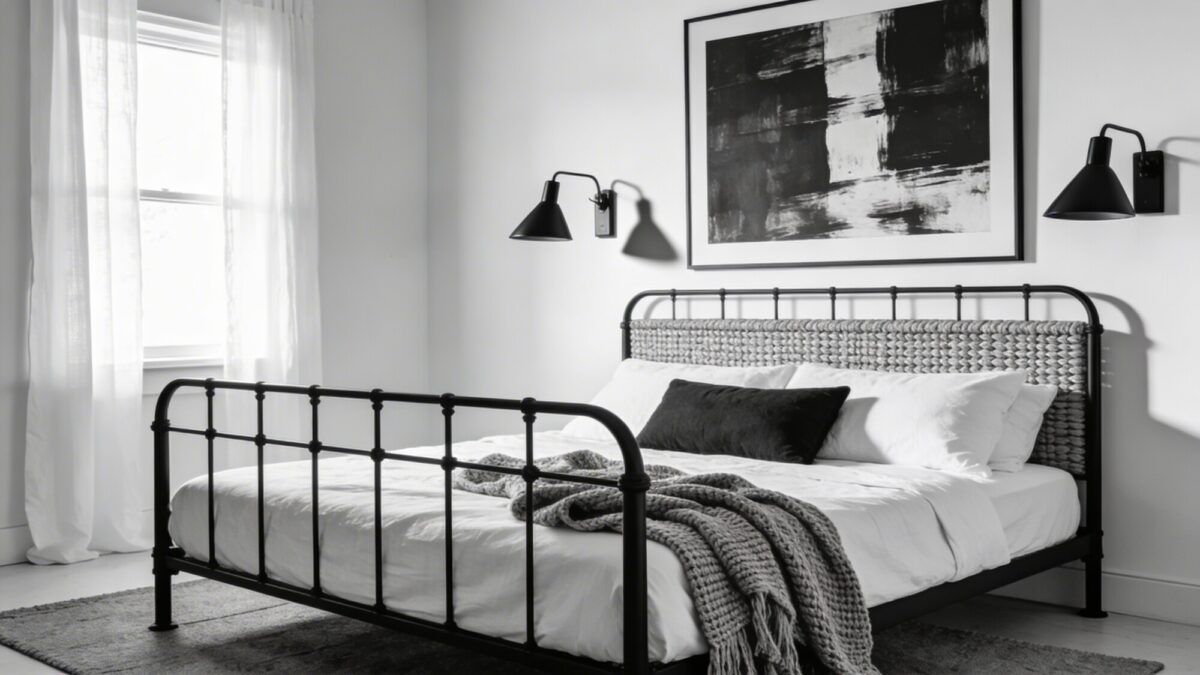
What actually keeps it from feeling clinical
- A soft gray rug instead of pure white or pure black, to give the eye a resting point between the two extremes
- A woven throw or knit blanket in charcoal or off-white, draped rather than folded flat
- One piece of high-contrast artwork as the room’s single loudest element — not three or four competing statement pieces
💡 Pro Tip: If a monochrome room you’ve already put together feels flat, don’t add more black or white first — add gray. A mid-tone gray rug or throw does more to soften a stark black-and-white room than any additional accent in either extreme color.
2. Use a Graphic Wall as the Room’s One Loud Element
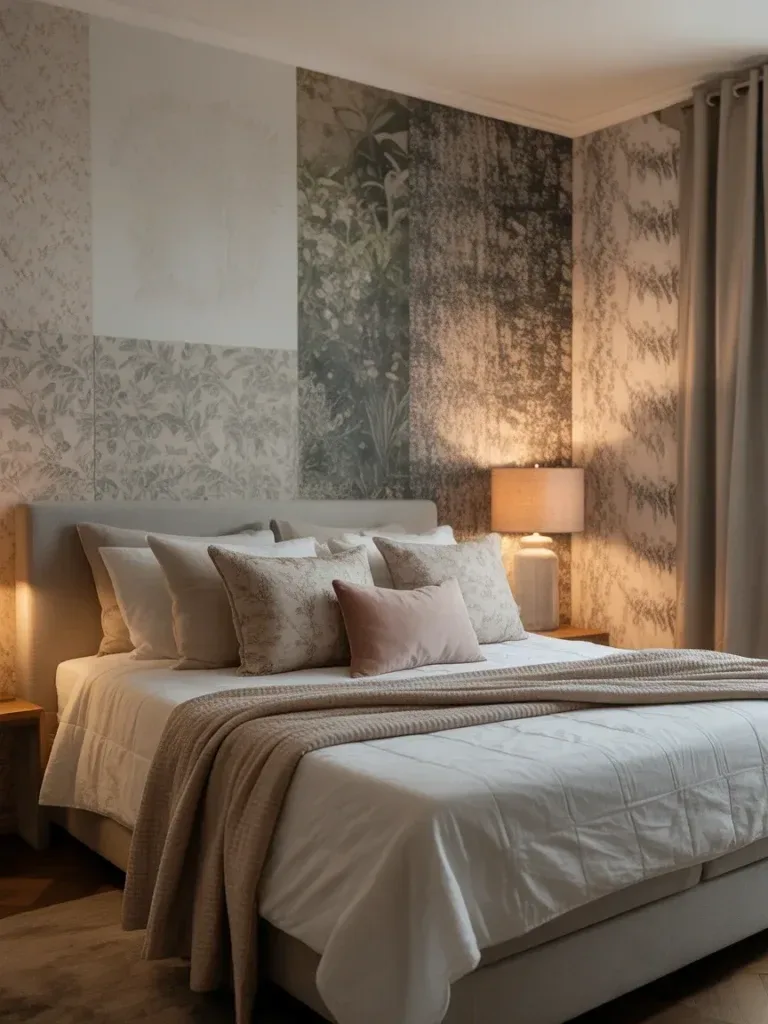
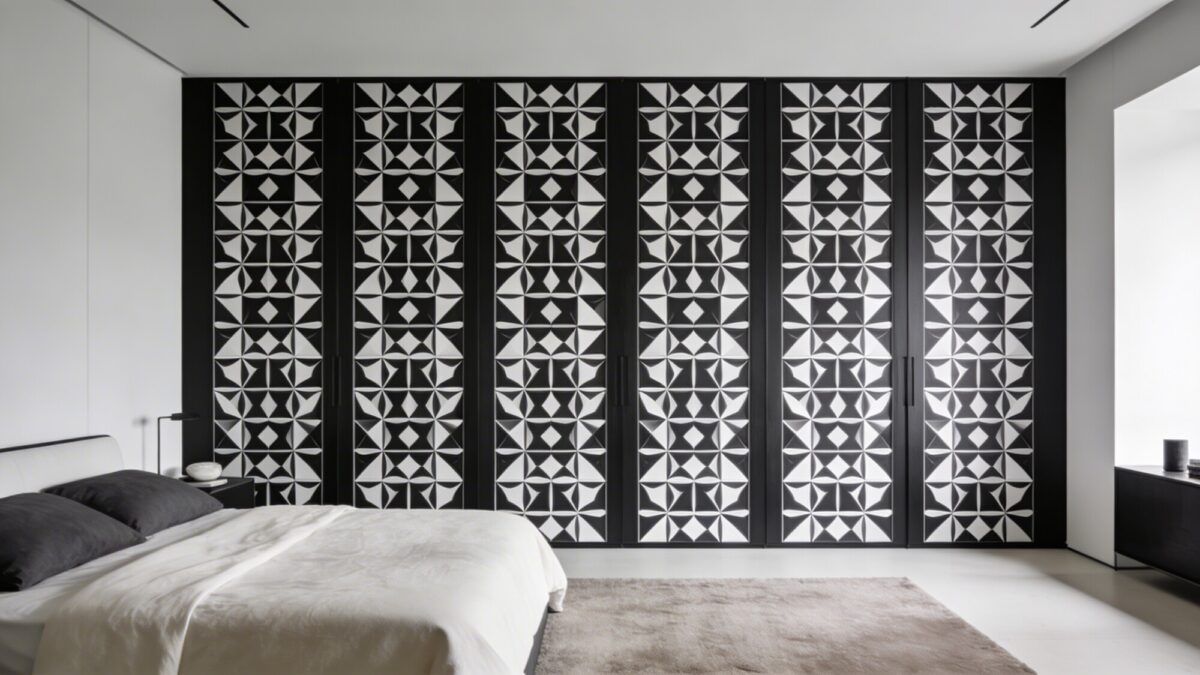
A bold geometric wall panel, mural, or striking wallpaper can carry the entire black-and-white room ideas bedroom concept on its own, but only if you resist decorating around it with equal intensity. The room needs exactly one loud surface. If the bedding, rug, and wall are all fighting for attention, none of them win.
Keeping the rest of the room quiet
- Solid bedding in charcoal or ivory — not another pattern — so it doesn’t compete with the wall
- A plush rug in a single neutral tone, not a second graphic pattern
- Matte finishes across hardware and fixtures, since glossy surfaces catch light and pull focus away from the wall
This is the same principle behind minimalist styling more broadly — if that’s the direction you’re leaning, our modern minimalist bedroom ideas guide covers how to keep a room from feeling empty once you’ve stripped it back this far.
3. Let High-Contrast Bedding Be the Star, Not a Supporting Player
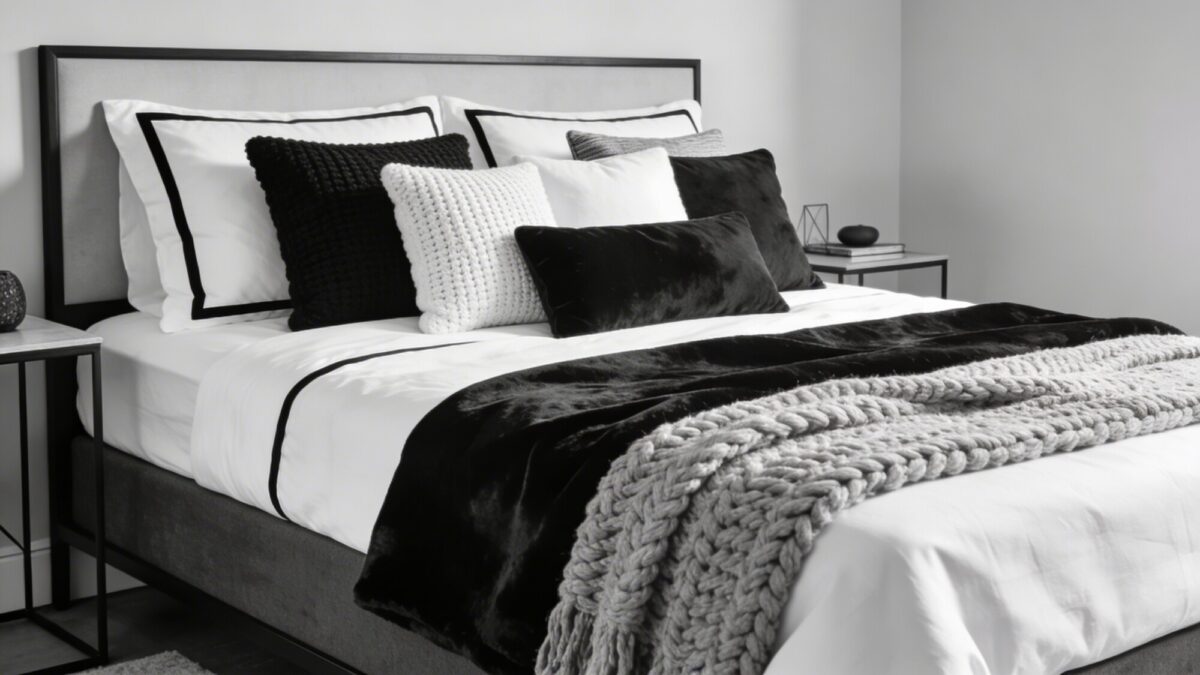
Crisp white bedding with black piping, or the reverse, is one of the more reliable moves in a black and white bedroom decor plan, because it puts the contrast where you actually spend the most time looking at it — the bed. The trade-off: if the rest of the room is also high-contrast, the bed stops standing out and just becomes one more busy surface among several.
Texture mix that keeps it from looking flat
- A crisp cotton duvet with black piping as the base
- A charcoal mattress cover or duvet insert peeking out slightly for depth
- A mix of pillow textures — velvet, knit, and linen — even though they’re all in the same black-white-charcoal range
💡 Pro Tip: Piped bedding is one of the few places where the “match everything” instinct actually backfires. A duvet, sham, and throw pillow that are all the exact same shade of black look flatter than three slightly different blacks (a true black duvet, a charcoal pillow, a soft-black knit throw). Slight variation reads as intentional layering instead of a matched set bought off one page.
4. Get the Lighting Temperature Right Before You Buy Fixtures
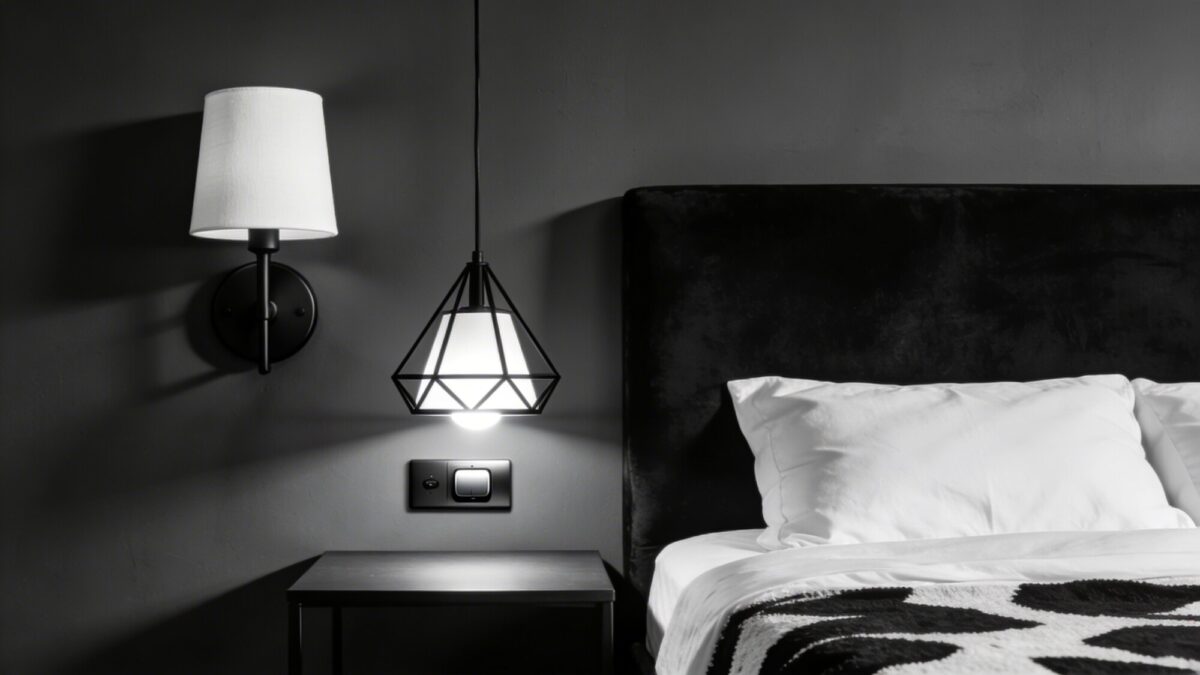
This is the step most people underrate in a black and white aesthetic bedroom, and it’s the fastest one to get wrong. Cool-white bulbs on top of a black-and-white palette push the whole room toward “office” rather than “bedroom.” Warm white bulbs, in the 2700K–3000K range, are what keep white surfaces looking soft instead of stark once the sun goes down.
Fixture choices worth considering
| Fixture style | Effect in the room | Trade-off |
|---|---|---|
| Matte black sconce, white fabric shade | Sharp contrast without a harsh glare; shade softens the light | Needs wiring or a plug-in version if you’re not doing electrical work |
| Geometric monochrome pendant | Strong focal point over a nightstand or reading chair | Can feel heavy in a smaller bedroom if hung too low |
| Simple black table lamp, warm bulb | Easiest to install, easiest to move if you rearrange later | Least dramatic of the three; more functional than statement-making |
A dimmer switch is worth adding here specifically because monochrome rooms show lighting changes more dramatically than colorful ones do — the same room can go from crisp and bright in the morning to genuinely moody at night with one dial.
5. Choose a Rug That Adds Depth Instead of More Contrast
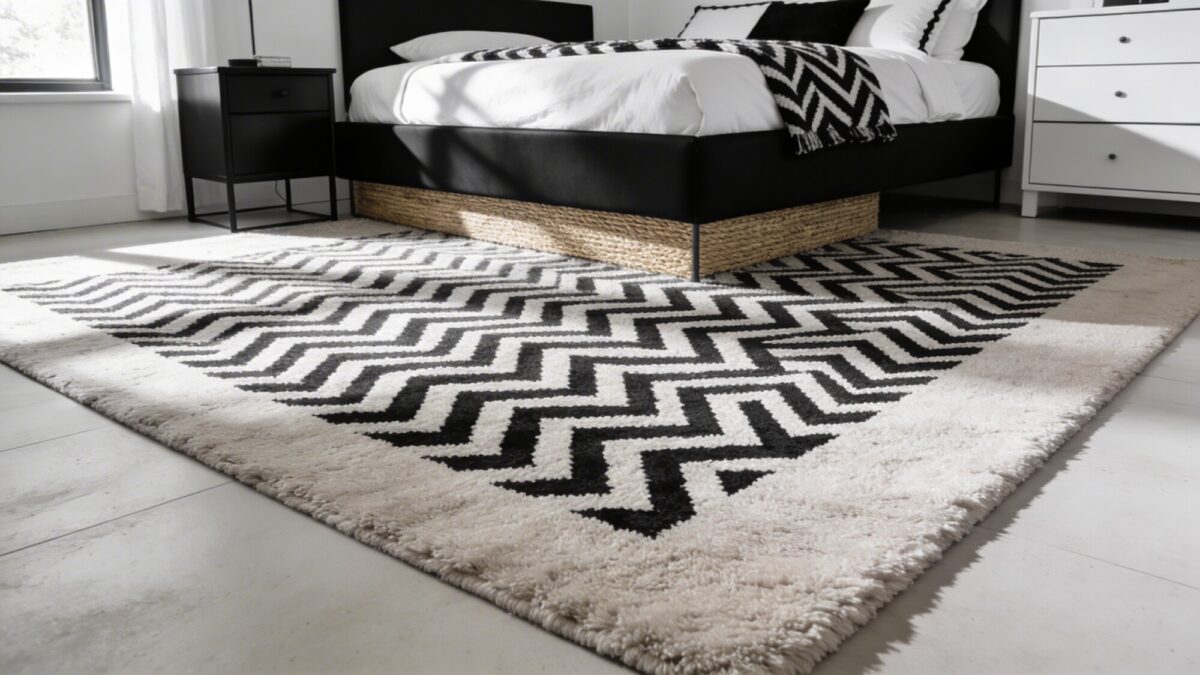
A textured rug in a black-and-white minimalist room is doing more work than most people give it credit for — it’s usually the largest soft surface in the room, and it either grounds the palette or adds to the visual noise, depending on the pattern you choose.
What to look for
- A chevron or herringbone pattern if you want the rug itself to be a feature, not just a base
- A natural fiber rug with a subtle monochrome fringe if you’d rather the rug recede and let the bed or wall lead
- Low-pile construction under the bed specifically — high-pile rugs trap dust and are harder to vacuum in the space you’ll clean least often
If you’re leaning toward softer contrast rather than stark black-and-white, a grey and white bedroom approach uses the same grounding principle with less visual intensity, which is worth a look if the full black-and-white palette feels like too much once you picture it in your actual room.
6. Build a Gallery Wall That’s Actually Yours
A black-and-white gallery wall is one of the few elements on this list that’s genuinely personal rather than purchasable as a finished look. Mixing photography, abstract prints, and a piece of typography only works if there’s some logic tying the pieces together — usually a single mat color or a consistent frame material, even when the frames themselves vary between black, white, and wood.

How to lay it out without it looking random
- Lay every piece out on the floor first, in the arrangement you’re considering, before you put a single nail in the wall
- Pick one large piece as the anchor and build the smaller pieces around it, rather than treating all pieces as equal size and importance
- Keep spacing consistent — 2 to 3 inches between frames is a reasonable default that reads as a gallery rather than a cluster
💡 Pro Tip: Photograph your floor layout before hanging anything. It’s easy to misjudge spacing once frames are vertical on a wall instead of flat on the ground, and a photo lets you check the balance before you’re patching nail holes.
For more direction on building a wall that reflects your own taste rather than a generic template, our aesthetic bedroom decor ideas guide has additional approaches to personal styling beyond black and white specifically.
7. Use Black Accents Sparingly in an Otherwise White Room
If a full black-and-white scheme feels like too much commitment, going mostly white-washed with a handful of black accents gets you most of the visual punch with a fraction of the risk. A matte black console table, a black-framed mirror, and black hardware on white furniture are usually enough — you don’t need much more than that.
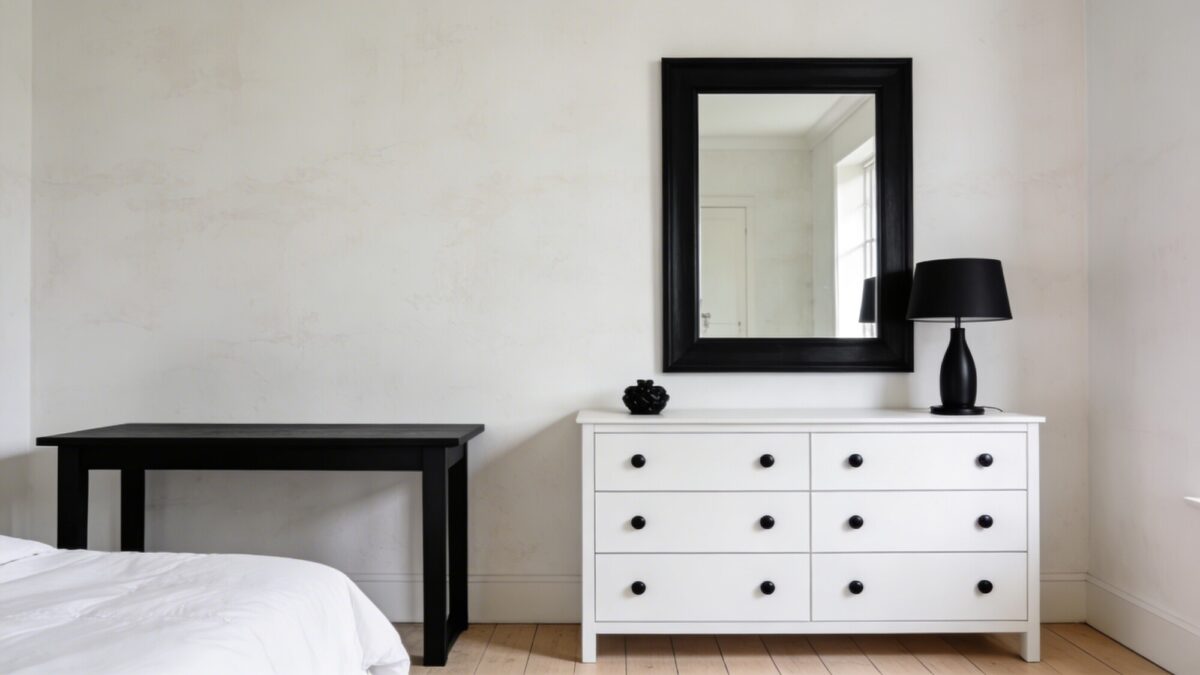
The mistake to watch for here is going too far in the other direction — enough black accents that the room stops reading as “white with black accents” and starts reading as a full black-and-white room with the ratio just slightly off. If you’re aiming for restraint, three to four black touches total (one furniture piece, one wall element, and hardware) is a reasonable ceiling before the room shifts categories.
8. Add One Small Nook Where the Contrast Gets to Relax
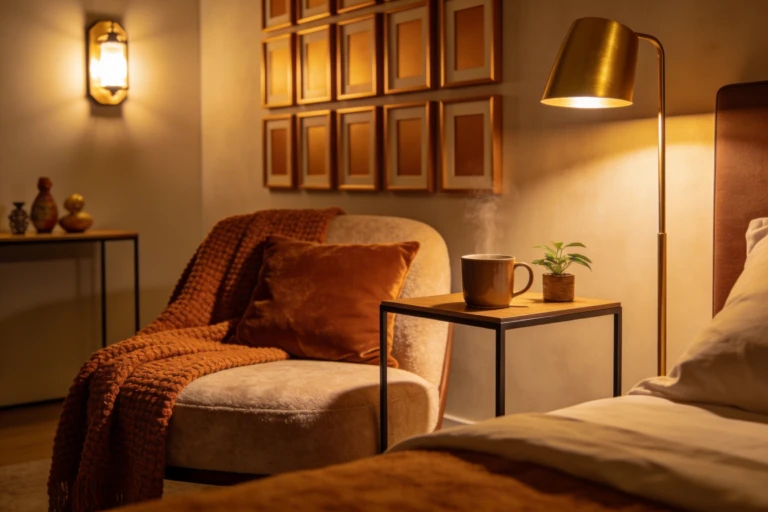
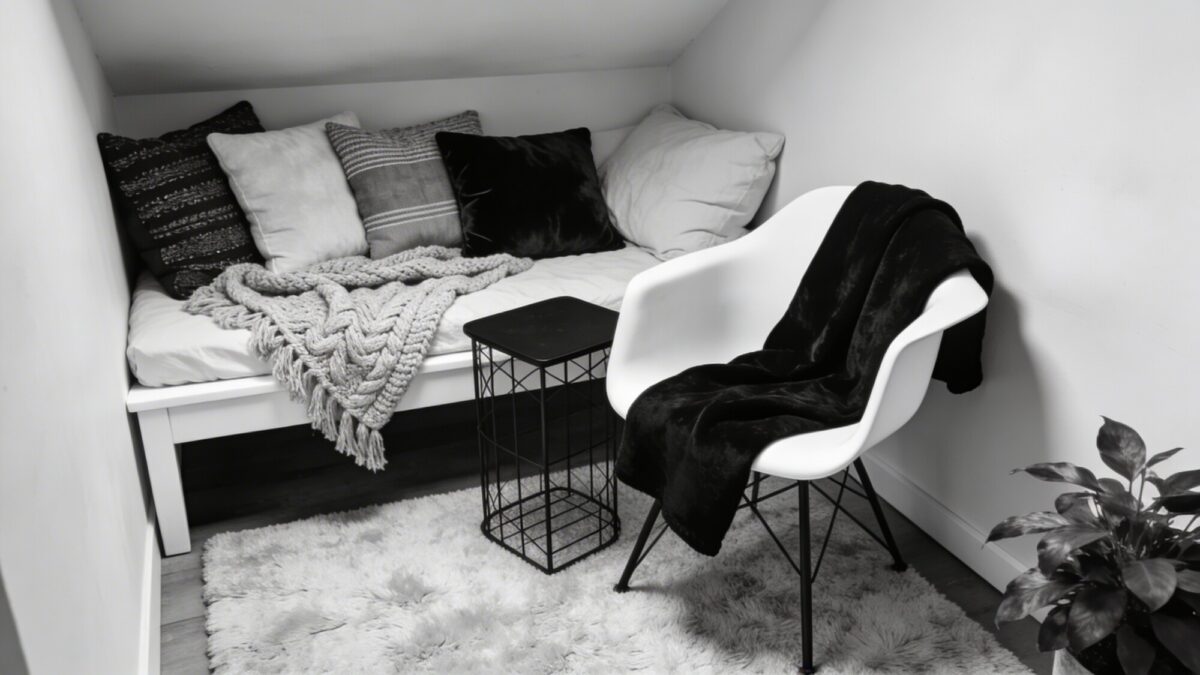
A reading corner or small lounge nook is a natural place to soften the palette without abandoning it. A white chair with a black throw, or a black metal side table next to a white bench, keeps the black-and-white room inspiration going while giving the room a spot that feels less formal than the bed setup.
What makes a nook feel inviting instead of staged
- Layered textures — linen, wool, and velvet cushions together, even within the same two-color palette
- A small plant, which is one of the few elements on this list that isn’t black, white, or wood, and it earns its place by breaking up the palette slightly
- A chunky knit throw left visibly draped rather than folded — it should look like something you’d actually use, not a display prop
9. Bring In Warm Wood Where the Palette Needs to Breathe
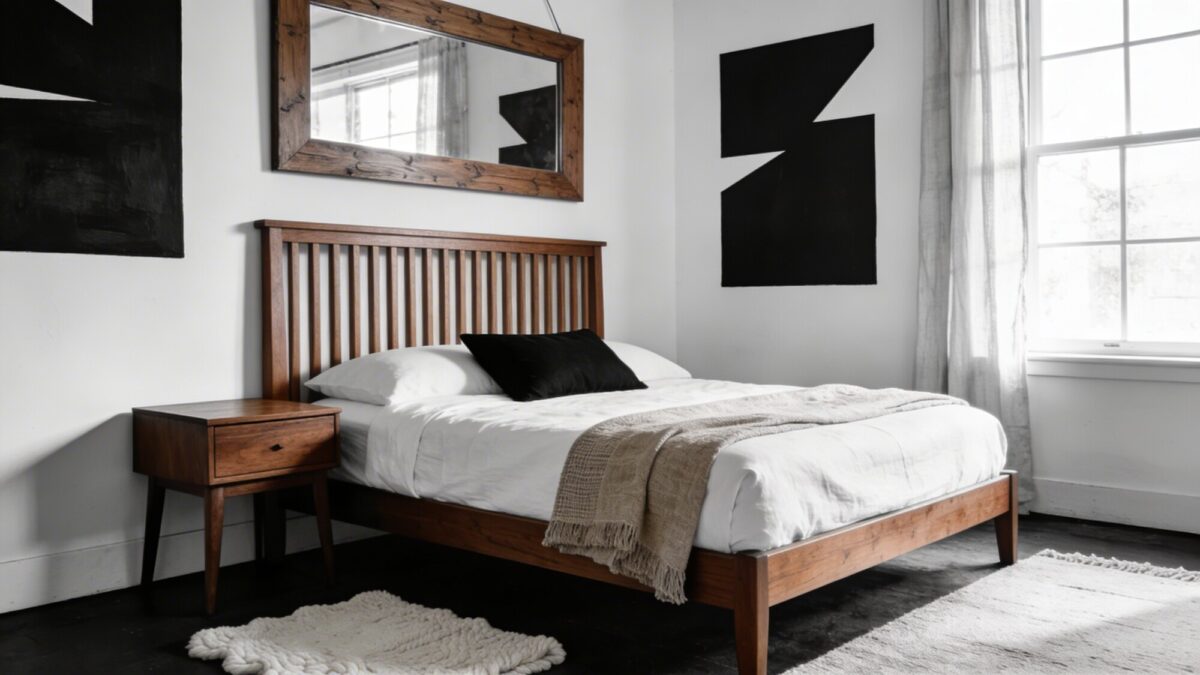
This is the fix for a black-and-white bedroom that’s technically finished but still feels a little cold. A wood headboard, nightstand, or wood-framed mirror in a mid-tone like oak or walnut softens the contrast without diluting it — you keep the drama of the palette and lose the chill.
Where wood fits best in this scheme
- The headboard, if you’re building the room around a wood-and-monochrome combination from the start
- A single nightstand, if you want a smaller, lower-commitment way to test whether wood tones work with your existing black-and-white pieces
- A wood-framed mirror, which adds warmth at eye level without taking up floor space
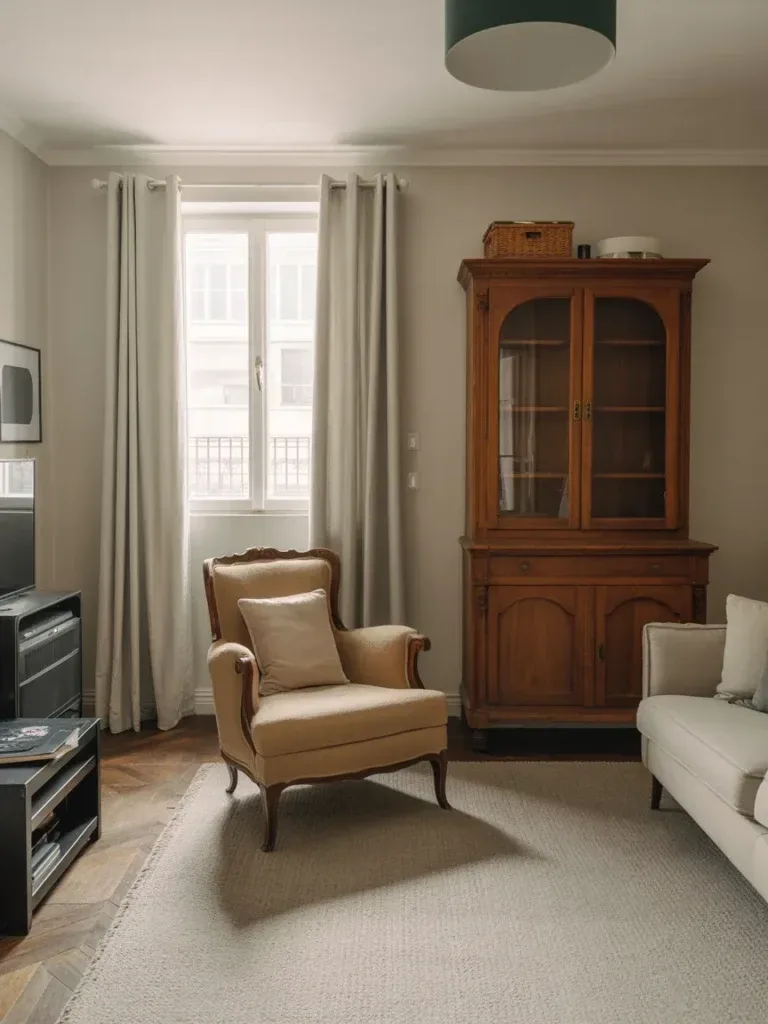
If wood combined with black-and-white specifically appeals to you, our vintage-inspired bedroom pieces guide has more on mixing aged wood tones into a otherwise contemporary color scheme.
Black vs. White vs. Wood: Where Each One Should Lead
| If your room needs… | Lead with | Why |
|---|---|---|
| More visual drama | Black (wall, bed frame, or art) | Black reads as intentional and grounding when it’s the minority color against white |
| More light and space | White (walls, bedding, large furniture) | White as the majority color keeps a small bedroom from feeling boxed in |
| Less “cold,” more “cozy” | Wood (headboard, nightstand, mirror frame) | Wood grain adds warmth and texture that flat black or white can’t provide on their own |
Things to Consider Before You Start
- Is your room naturally bright or dim? A north-facing bedroom with limited natural light will feel starker in black-and-white than a sunny south-facing one — consider leaning white-majority with black accents if your room runs dim.
- Do you already own any wood furniture you could keep instead of replacing? Reusing an existing wood nightstand or dresser is the cheapest way to add the warmth this palette often needs.
- How much of the room is textiles versus hard surfaces? A room with more rug, throw, and pillow real estate has more opportunity to add texture — lean into that if your walls and furniture are already set.
- What’s your bulb temperature right now? Check it before buying new fixtures — it’s the least expensive variable on this list to fix.
Frequently Asked Questions
Will a black and white bedroom feel too cold or clinical?
It can, if the palette is applied in flat, single-texture surfaces with no in-between tones. The fix is texture (knit, velvet, linen) and at least one warm material, usually wood, somewhere in the room. A black-and-white room with no texture variation is what tends to read as sterile — the color palette itself isn’t the problem.
Should the ratio of black to white be even?
No — most black-and-white bedrooms that work well lean white or off-white as the majority color, with black used for contrast in smaller doses: a frame, a fixture, a piece of hardware, or one furniture item. An even 50/50 split tends to look busier and harder to rest your eyes on.
What’s the easiest way to test this look before committing?
Start with bedding rather than furniture or paint. A high-contrast duvet cover is inexpensive relative to a bed frame or wall treatment, and it tells you quickly whether you actually like living with that much contrast day to day.
Do I need matching black hardware throughout the room?
Not necessarily. Matte black hardware on a few pieces (drawer pulls, a mirror frame, a lamp base) reads intentional. Matching it on every single fixture in the room can start to feel like a themed set rather than a room that’s evolved naturally.
Is a black and white bedroom a safe long-term choice, or does it date quickly?
It tends to hold up well specifically because it’s not tied to a color trend — the risk with this style isn’t the palette going out of fashion, it’s choosing a specific pattern (a particular geometric print, for instance) that feels dated later. Keep patterned pieces in easily swappable items like pillows and throws, and keep the larger, harder-to-replace pieces (bed frame, walls) closer to solid black or white.
Our Take
The black and white bedroom decor ideas that hold up over time are the ones that pick a single loud element — a wall, the bedding, or a gallery wall — and let everything else stay quieter around it. The rooms that feel overdone are usually the ones where every surface is trying to be the statement piece at once. If you’re only going to take one thing from this list, make it that: choose your one loud element first, then build texture and warmth around it rather than adding more contrast on top.
For a slightly softer take on the same palette, or if this feels like more contrast than you want to commit to, our black, white, and grey bedroom ideas collection is a good next stop.