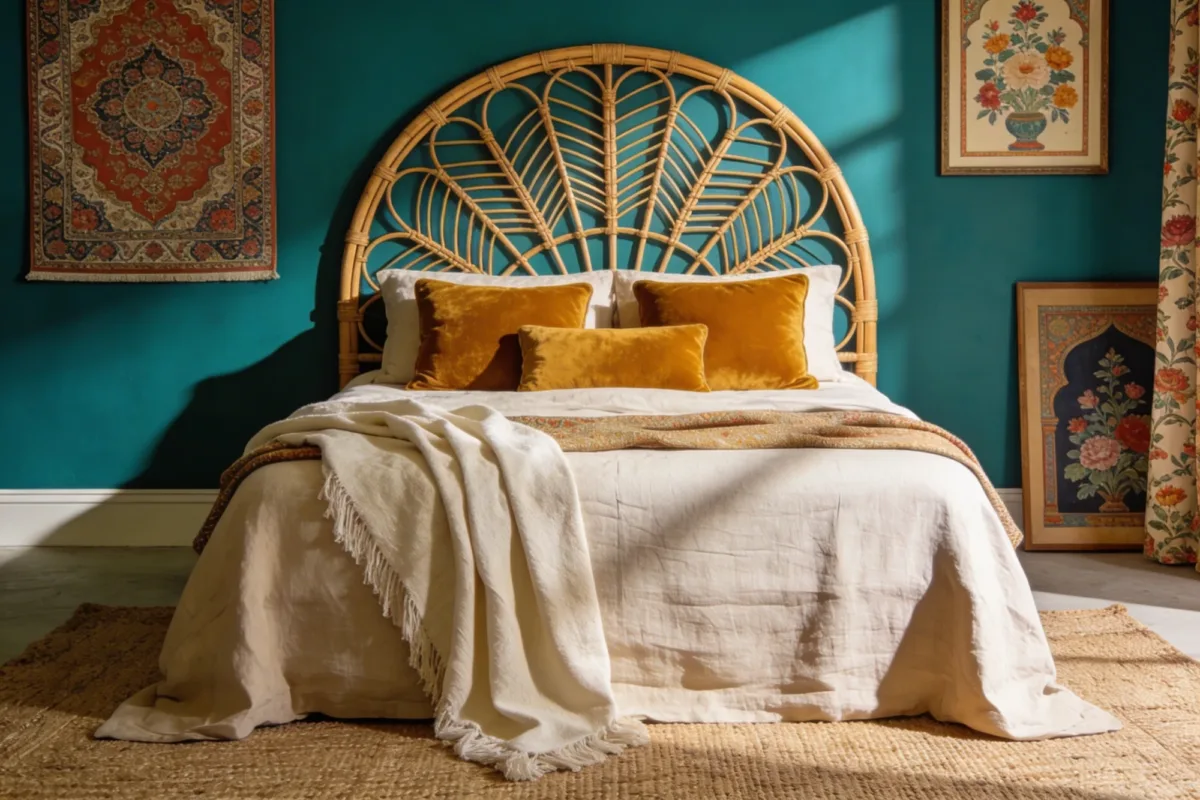
8 Indian Room Decor Ideas Bedroom: Bold, Budget-Friendly Glow
Good Indian room decor ideas bedroom projects tend to share one thing: restraint. The look you’re going for — rich, warm, a little maximalist — comes from a few well-chosen pieces working together, not from filling every surface. If your bedroom is on the smaller side, our budget-friendly Indian bedroom ideas guide covers a leaner version of this same approach.
These eight ideas cover color, texture, craft details, and lighting — the building blocks that show up again and again in Indian bedroom decor, whether the style leans traditional, contemporary, or somewhere in between. You don’t need all eight. Most rooms that actually work well lead with two or three of these and let the rest stay simple.
Quick-Reference: The 8 Ideas
- Bold color echoes — one vivid accent wall or shade, balanced with neutral bedding
- Layered textures — rattan, jute, cotton, and velvet mixed together
- Traditional motifs, modern twist — paisley, peacock, or floral patterns in small doses
- Statement headboard — carved wood or brass-accented headboard as the room’s anchor
- Metallic accents — brass or copper lamps, frames, and mirror details
- Textured wall art — kantha textiles, block prints, Madhubani-style prints
- Warm layered lighting — pendant lights, string lights, warm-toned bulbs
- Personal touches and greenery — plants and framed photos to make it feel lived-in
1. Embrace Bold Color Echoes
The Indian bedroom aesthetic leans on color, but the rooms that photograph well almost always pair one strong color with a neutral base — not five strong colors fighting each other. A single accent wall in saffron, teal, or magenta does more for the room than the same color spread across every surface.
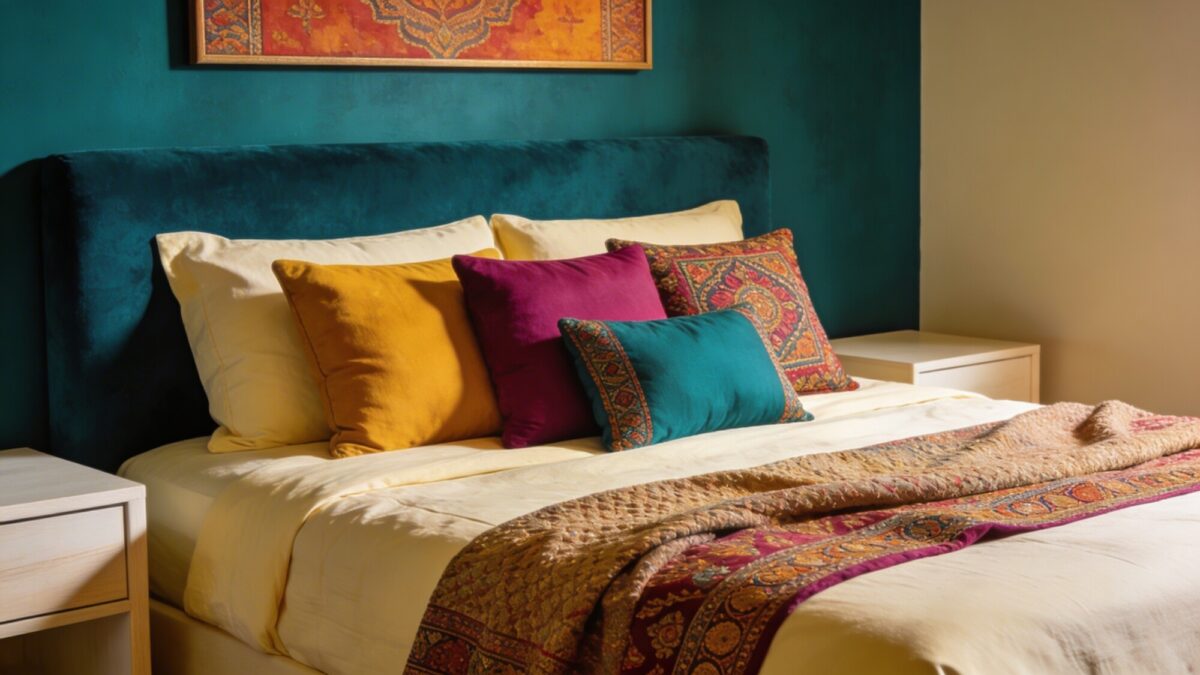
Keep the bedding itself in cream, off-white, or another neutral, then bring the color back in through cushions, a throw, or wall art. This is the difference between “curated” and “cluttered” in most Indian style room decor — the neutral base gives the eye somewhere to rest between the bold notes.
💡 Pro Tip: If you’re not ready to commit to a painted accent wall, a large piece of fabric — a sari, a dupatta, or a length of block-print cotton — stretched on a frame or hung flat gives you the same color-block effect and comes down in five minutes if you change your mind.
2. Layer Textures Like a Pro
Texture is what makes a room feel finished without adding more color or more furniture. A rattan headboard panel, a jute rug, a velvet cushion, and a linen throw all sitting in the same space read as “layered” rather than “matched,” and that’s actually the goal — indian room interior design rarely goes for a perfectly matched look.
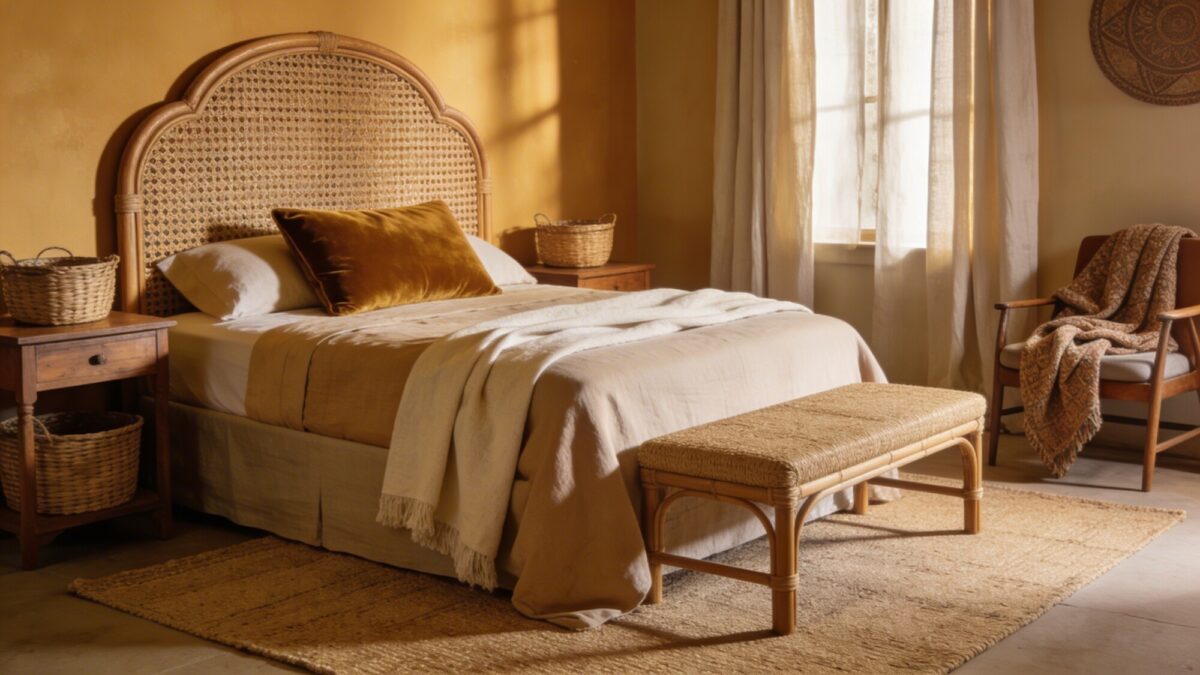
Jute rugs specifically are worth calling out: they’re inexpensive relative to wool or silk options, they hold up well in high-traffic rooms, and the natural fiber color works with almost every wall shade. The trade-off is they’re rougher underfoot than a plush rug, so a lot of people layer a smaller soft rug on top near the bed and let the jute show around the edges.
3. Traditional Motifs, Modern Twist
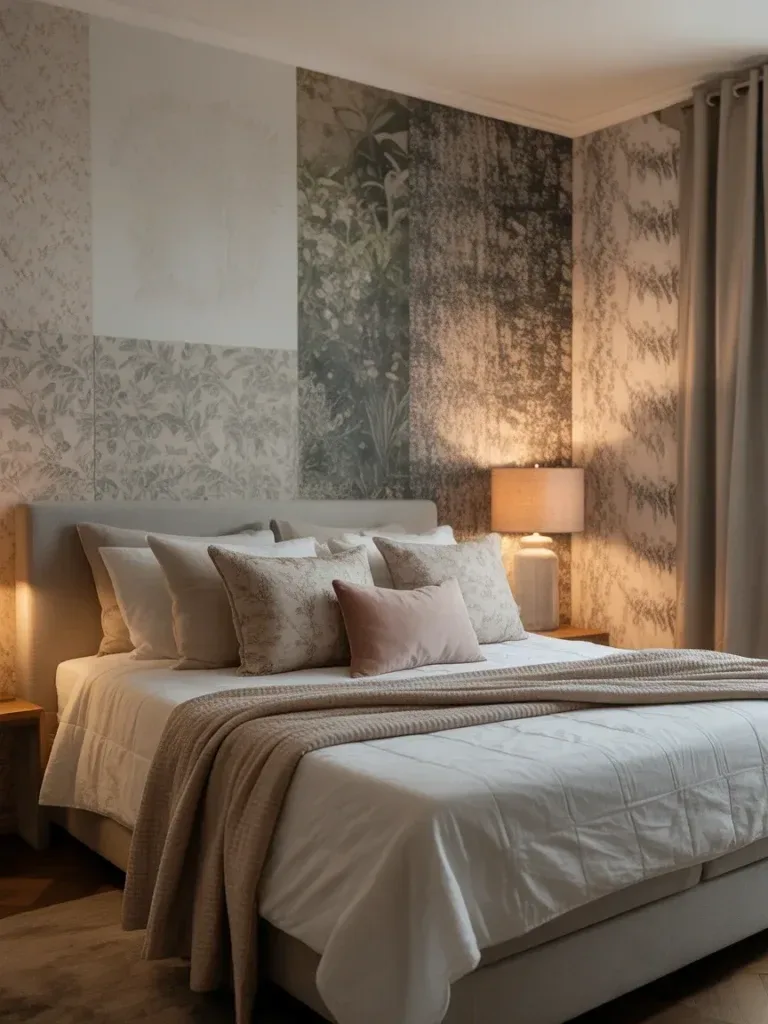
Paisley, peacock, and floral motifs are the fastest way to make a room read as culturally specific rather than generic “boho.” The mistake is using all three at once, or repeating one motif on every textile in the room — that’s what tips a space from “punchy” into what a lot of people call “circus vibes” once it’s overdone.
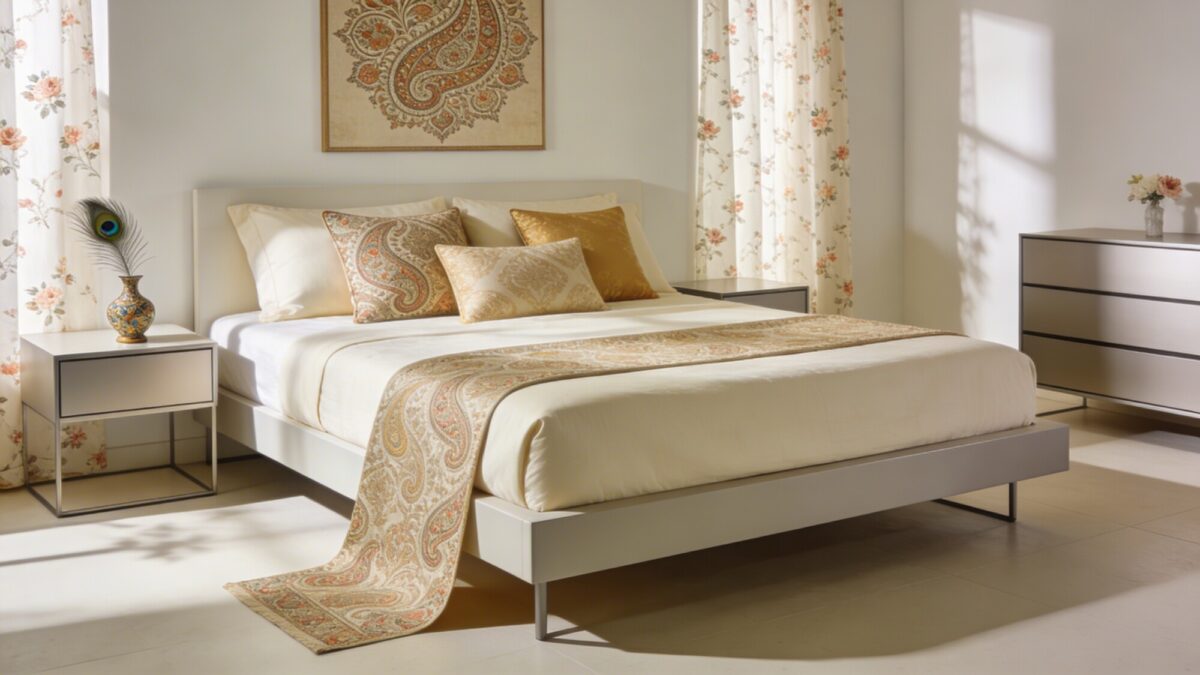
Pick one motif and repeat it in two or three places — a set of cushions, one framed print, a bed runner. Keep everything else in the room (walls, larger furniture) in a subtle, cohesive palette so the motif has room to stand out instead of competing with a busy background.
💡 Pro Tip: Buy the motif pieces (cushion covers, a bed runner) separately from the base bedding. Motif-print bedding sets are harder to swap out later, while a runner or cushion covers can be rotated seasonally without redoing the whole room.
4. Add a Statement Headboard with Indian Craft
Of everything on this list, a crafted headboard is the one worth spending more on if your budget allows it, because it becomes the room’s built-in focal point — everything else (lighting, textiles, wall art) can stay simpler once the headboard is doing the visual work.
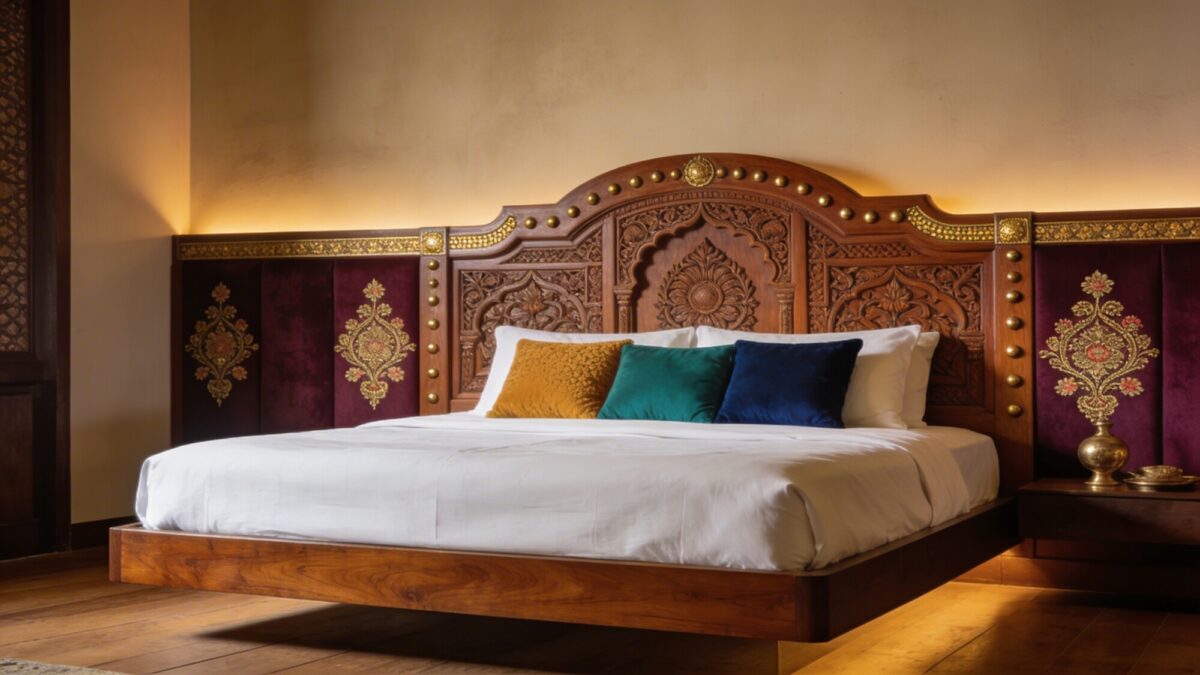
Carved wood panels, brass stud detailing, or an upholstered headboard with embroidered motifs all work. If a full carved headboard is out of budget, even a wall-mounted wood panel behind the bed frame — rather than a true structural headboard — gets a similar visual effect for less.
5. Use Metallic Accents That Sparkle
Brass and copper tones are doing a specific job in this style: they catch light and add a sense of polish without adding more color or pattern to a room that may already have both. A brass table lamp, a copper-framed mirror, or metallic thread woven through a cushion cover are all low-commitment ways to bring this in.
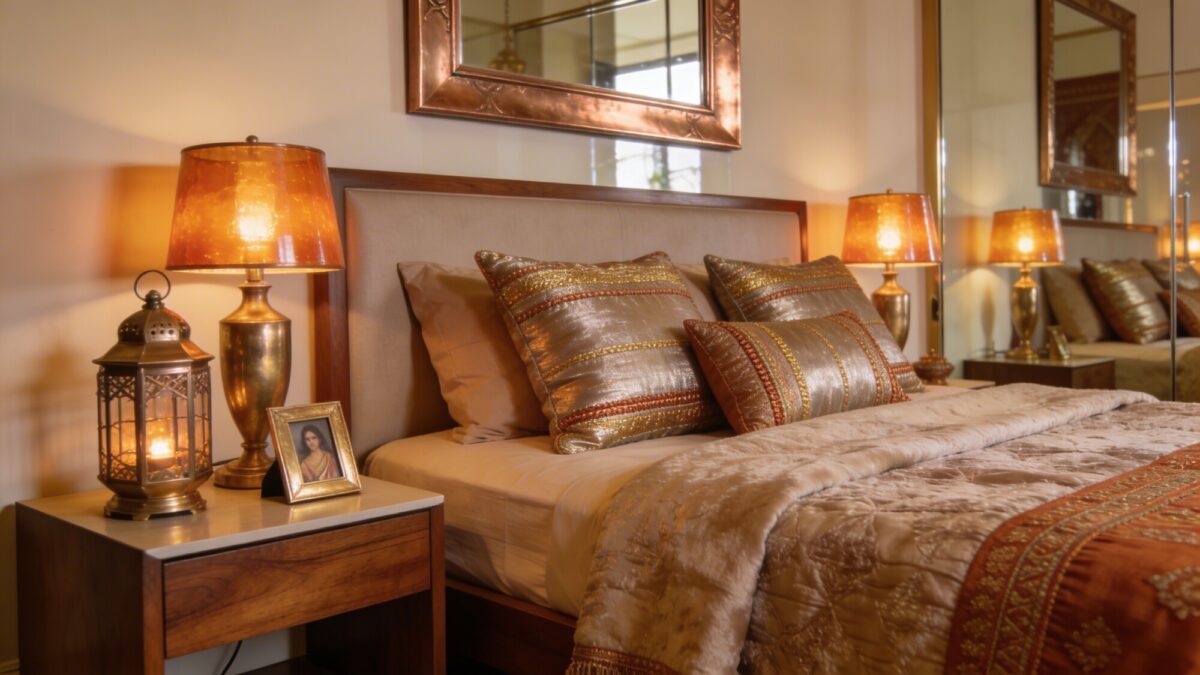
The mistake here is scale, not taste — too many metallic pieces in a small room starts looking like a display case rather than a bedroom. Two or three metallic touches (a lamp pair counts as one) is usually the ceiling before it stops reading as “tasteful” and starts reading as “a lot.”
6. Bring in Textured Walls with Handcrafted Art
Walls don’t have to be paint-only. A kantha-stitched textile hanging, a framed block-print panel, or a small cluster of Madhubani-style folk art prints all add texture and a genuine handmade quality that a poster or mass-produced print doesn’t have.
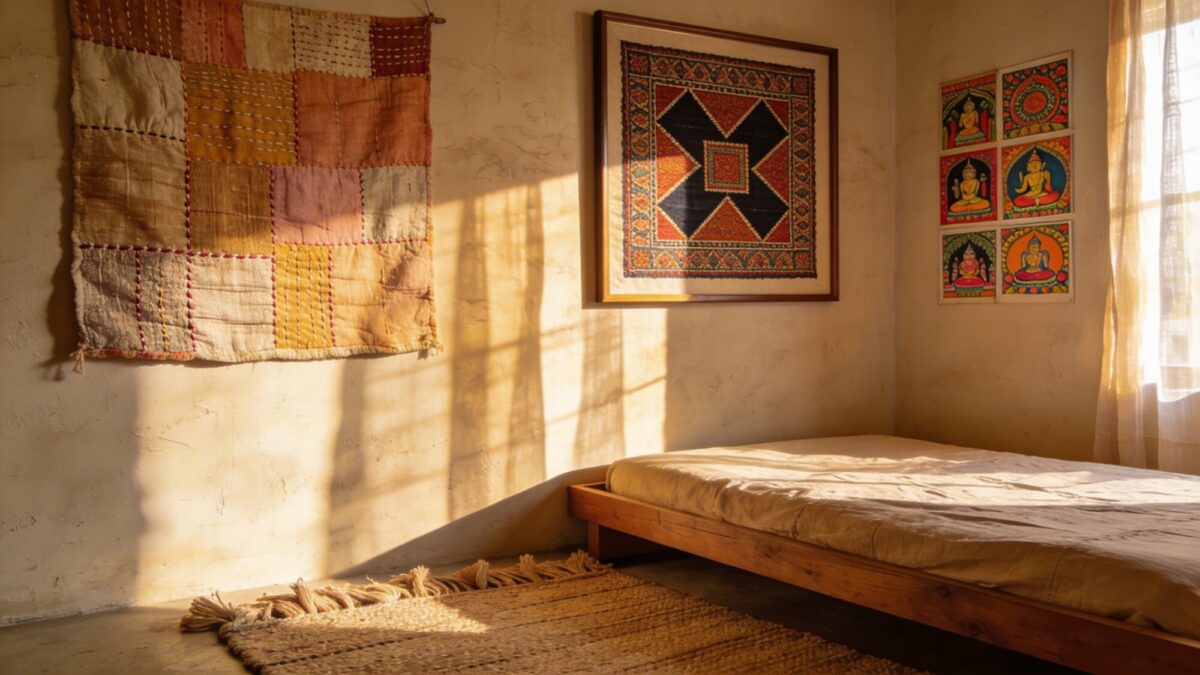
If you’re shopping on a budget for these pieces, marketplaces like Meesho carry a wide range of block-print and kantha textiles at prices well under what a framed art print typically costs — worth checking before assuming handcrafted means expensive.
💡 Pro Tip: A kantha textile doesn’t need a frame at all — a simple wooden dowel through the top hem and a length of cord is enough to hang it as a wall piece, and it’s easier to swap out than anything framed under glass.
7. Layer Lighting That Feels Warm and Cozy
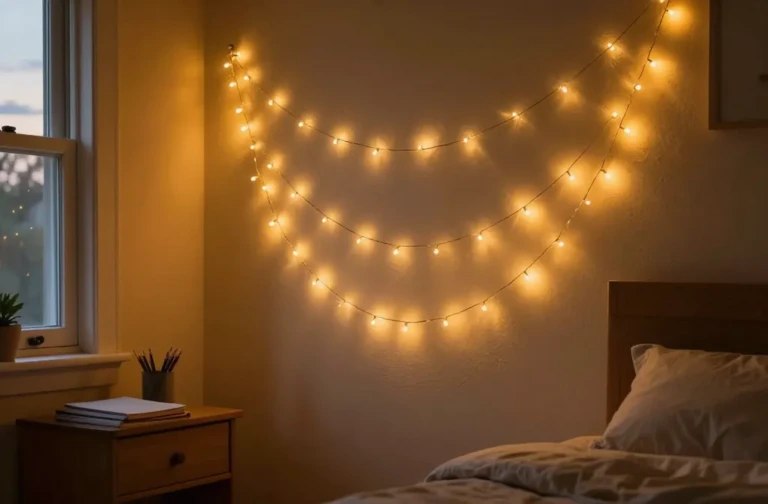
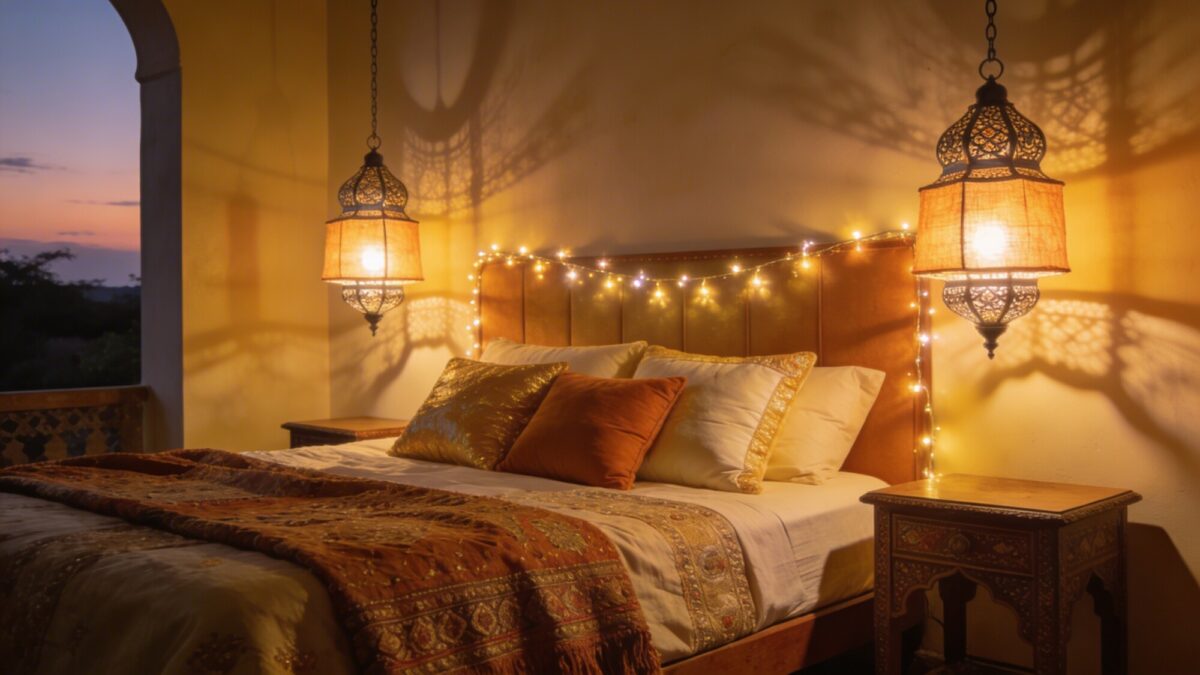
Cool-white or bright overhead lighting undercuts almost everything else on this list — the warmth of the color palette and textures depends on warm-toned light to actually read as warm. Warm LED bulbs (look for a color temperature around 2700K–3000K on the packaging), pendant fixtures with metalwork or fabric shades, and string lights along a headboard all work together rather than needing to pick just one.
8. Add Personal Touches and Greenery
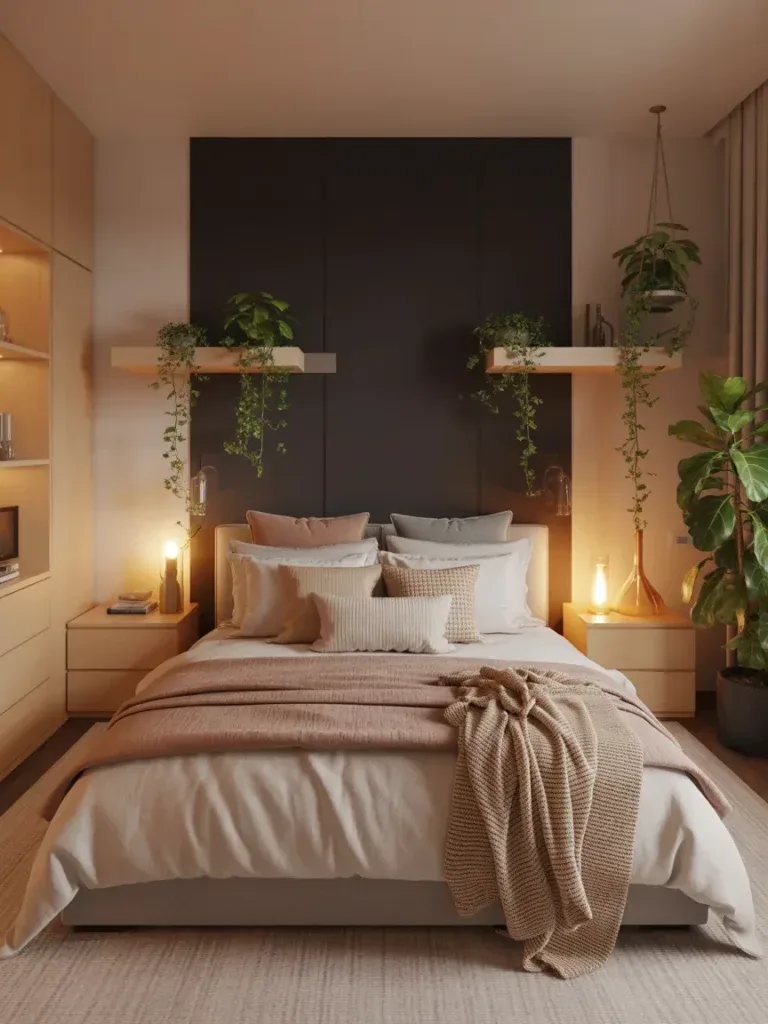
The first seven ideas are all about the room’s bones. This one is what actually makes it feel lived-in rather than staged: a plant in a woven basket, a few framed photographs in brass or wood frames that match the room’s existing metal tones, small succulents on an open shelf.
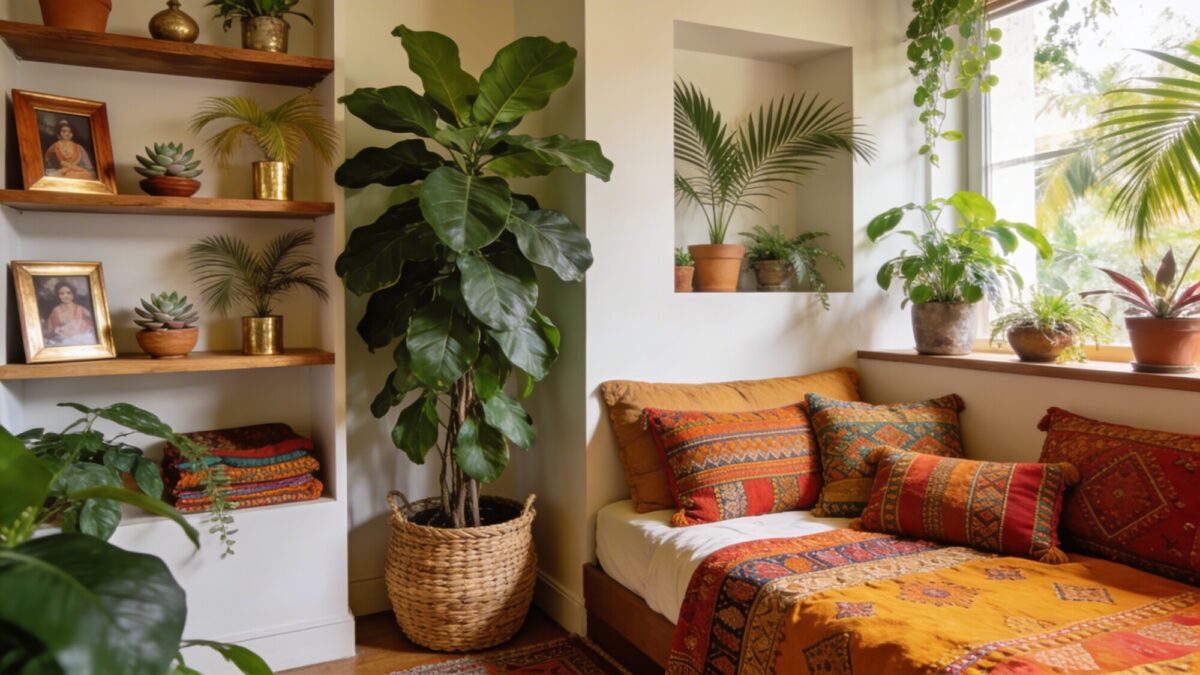
Pothos and money plants are both common low-maintenance choices that tolerate indirect light and irregular watering, which matters if plant care isn’t a strict routine in your house. If real plants are more commitment than you want, dried florals or a single well-placed artificial plant in a woven basket gets most of the visual benefit without any upkeep.
Traditional vs. Contemporary vs. Maximalist: Which Fits Your Room?
| Style Direction | What It Looks Like | Best For |
|---|---|---|
| Traditional | Carved wood, kantha and block-print textiles, warm earth tones, one dominant motif | Larger rooms, or anyone wanting an heirloom, heritage-decor feel |
| Contemporary | Clean-lined furniture, a single accent wall, motifs used sparingly on cushions/art only | Small or rented rooms where bold patterns on furniture aren’t practical |
| Maximalist | Multiple motifs, layered textures, metallics, and color all at once, intentionally busy | Larger rooms with good natural light, and a willingness to edit often |
Things to Consider Before You Start
- Is this a rental? Favor fabric wall hangings, freestanding lamps, and removable rugs over anything painted, glued, or drilled in.
- How much natural light does the room get? Deep jewel tones and dark wood read heavier in low-light rooms — balance with a lighter neutral base if the room doesn’t get much sun.
- What’s your actual budget ceiling? A carved headboard is the priciest single item here; color, textiles, and lighting all deliver a lot of the look for far less.
- How many motifs are already in the room? If your bedding, rug, and art all carry different patterns, the room will read as busy no matter how nice each piece is individually.
- Real plants or low-maintenance alternatives? Be honest about whether you’ll actually keep a watering schedule.
Frequently Asked Questions
What’s the cheapest way to start with Indian bedroom decor?
Color and textiles. A set of new cushion covers, a throw, and warm-toned bulbs in your existing lamps can change the whole feel of a room for well under the cost of new furniture, and none of it requires paint or permanent changes.
How do I keep the look from feeling too busy?
Limit yourself to one dominant motif and one accent color at a time, then use neutral bedding and walls as the resting point between them. If you’re not sure whether a room is too busy, take a photo — patterns that feel fine in person often read as overwhelming in a flat image, and that’s a decent gut check.
Can this style work in a small bedroom?
Yes, but scale down the boldest elements. A full carved headboard can overwhelm a small room; a wall-mounted panel or a simpler upholstered version gets a similar effect. Stick to one accent wall rather than heavy color throughout, and keep floor-level texture (rugs, floor cushions) to one piece so the room doesn’t feel crowded.
Do I need to buy authentic handcrafted pieces, or are prints okay?
Both work — it depends on budget and how much the craft detail matters to you personally. A genuine kantha textile or hand-block-printed panel has texture and irregularity a printed reproduction won’t have, but a well-chosen print in the same motif still delivers the visual effect for a fraction of the cost.
Our Verdict
If you’re starting from zero, lighting and textiles are the highest-value first move — they’re the cheapest ideas on this list and they touch nearly everything else, since warm light is what makes the color and texture choices actually read as warm. Save the statement headboard for later, once you know the rest of the room’s palette is settled; it’s the one piece here that’s genuinely hard to swap out once it’s in.
For pulling the same aesthetic into other rooms of the house, our Indian-inspired living room ideas guide covers the living-room version of this approach, and if space is your main constraint, our small bedroom decor ideas post has more on scaling any of these down. For a version of this look with a slightly more upscale finish, see these luxury bedroom decor ideas.