7 Mens Room Decor Bedroom Ideas: Style Hacks for Men
Most mens room decor bedroom ideas floating around online boil down to “add a plant and a navy accent wall,” with no explanation of why those specific moves work or how to avoid the room still looking like a leftover college setup. If your room started as a small bedroom for men and never really got upgraded past that stage, that’s usually the actual problem — not the decor itself.
The seven ideas below go in the order that tends to matter most: texture and color first, because they change how the whole room reads, then lighting, the bed, personal touches, storage, and plants last, since those are refinements once the bones of the room are right.
Quick Takeaways
- A neutral base (gray, taupe, charcoal) with one bold accent color reads as intentional; five different accent colors reads as unplanned.
- Layered lighting — ambient, task, and accent — does more for mood than any single overhead fixture, no matter how nice.
- The bed’s headboard sets the tone for the whole room faster than any other single piece of furniture.
- Storage that’s visible and unplanned reads as clutter even when the room is objectively clean; storage that’s hidden or built-in reads as organized even with the same amount of stuff.
1. Layer Textures Instead of Adding More Objects

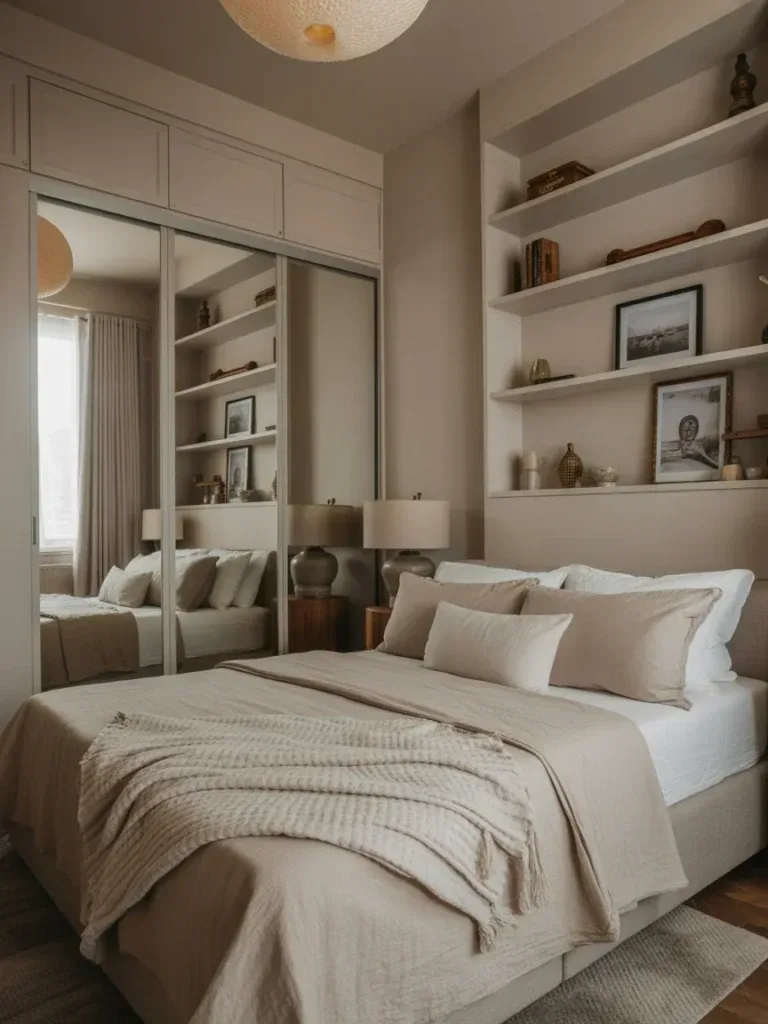
A room that feels flat usually isn’t missing color — it’s missing texture. A knit or rope-woven headboard accent, a rug with some visible pile, and a leather or suede throw pillow against a smooth cotton duvet do more for how “designed” a room feels than adding another piece of furniture would.
The trade-off worth knowing: too many heavy textures in one small area (a shag rug plus a chunky knit throw plus a leather headboard, all touching) starts to look busy rather than layered. Mix in at least one smooth surface — a leather nightstand top, a smooth ceramic lamp — so the eye has somewhere to rest.
💡 Pro Tip: Start with the rug and throw blanket before touching anything else. They’re the cheapest texture additions and the easiest to swap if the combination doesn’t work the way you pictured it.
2. Go Minimal, Then Add One Bold Color

Deep navy and forest green are the two colors that show up most often in this style for a reason — they read as bold without reading as loud, and they pair cleanly with the grays and charcoals most men’s bedrooms already default to. One accent wall, or even just a painted bedside table, carries the color; the rest of the room stays monochrome.
Where this goes wrong: people paint the accent wall, then also buy a colored throw in a different shade, a colored lamp in a third shade, and a rug that doesn’t relate to either. Pick one accent color and repeat that exact shade — not a “similar” shade — across two or three items max. A lamp shade, a clock, or a small vase in the same navy or green as the wall is enough.
3. Layer Your Lighting Instead of Relying on One Fixture

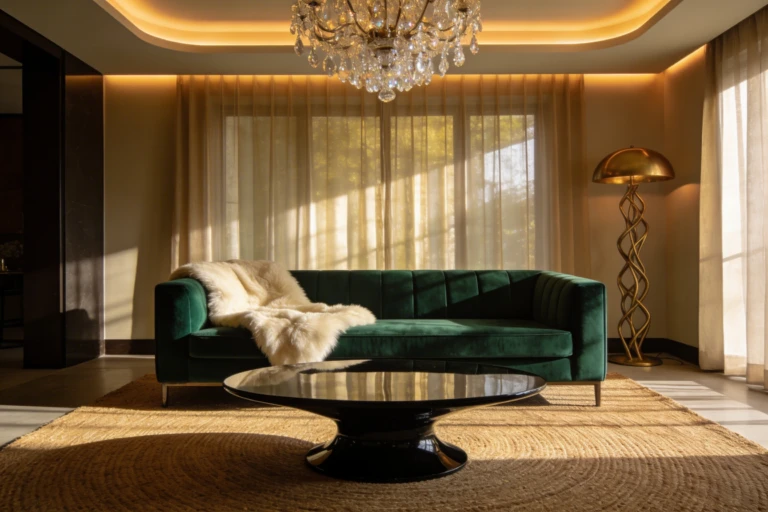
One overhead light gives a room exactly two states: on and off. An ambient floor lamp, wall sconces flanking a piece of art, and a dimmable task light at the desk give you actual range — bright enough to work, dim enough to relax, without switching a single bulb. Warm bulbs in the 2700K–3000K range read as cozy; anything closer to daylight white tends to feel clinical in a bedroom.
Dimmer switches or dimmable smart bulbs are worth the extra cost here specifically because a bedroom’s lighting needs change more throughout the day than almost any other room — reading light, wind-down light, and “getting dressed” light are three different jobs one fixed brightness can’t do well.
4. Let the Bed Set the Tone

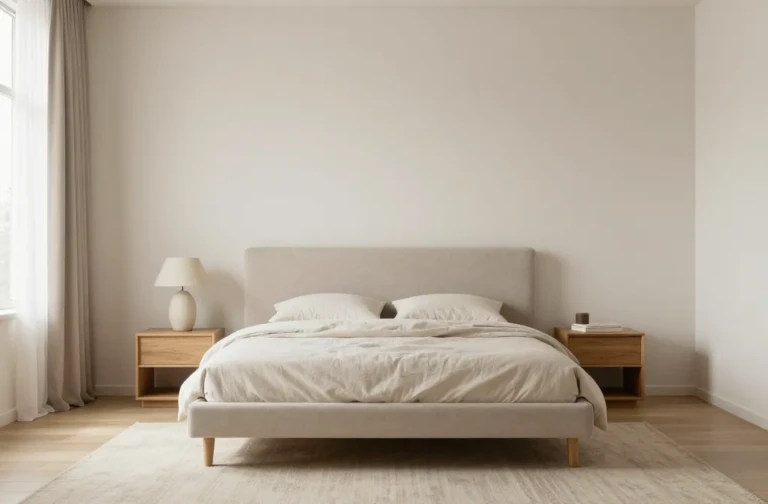
The bed is the largest object in the room, so whatever it looks like is effectively what the room looks like. A large upholstered headboard in charcoal, navy, or espresso fabric gives the room a grounded, deliberate anchor that a bare metal or basic wood frame can’t match at a similar price point.
Bedding with a geometric or textured pattern in a tight monochrome palette — charcoal, graphite, white — reads as more considered than a plain solid duvet, without adding actual color that competes with the rest of the room’s single accent hue.
5. Add Personal Pieces Without Overdoing It

Personality doesn’t require gallery-quality art. A few small framed pieces — a travel photo, a vintage find, something sports-related if that’s genuinely your thing — say more about the room’s owner than a generic canvas print bought purely to fill wall space. The trick is scale variation: three small frames of different sizes read as curated, while three identical frames read as a matched set from a store display.
Keep the color palette of whatever you display tied to the room’s existing scheme. A framed piece with the same navy or green accent color you used on the wall ties back into the room instead of looking like a separate decision.
6. Choose Storage That Hides Clutter, Not Storage That Displays It

Open shelving looks great in a photo and collects visible clutter within a month in an actual bedroom. Floating nightstands, a low-profile matte dresser, and a couple of closed baskets or a small trunk keep the same amount of stuff in the room while hiding it from view — which is most of what makes a room look “put together” versus “cluttered” day to day.
💡 Pro Tip: If you’re going to buy one new furniture piece from this list, make it the trunk or a closed basket at the foot of the bed. It’s the single easiest place to dump everything you don’t want on display, and it doubles as extra seating.
7. Add Plants That Actually Survive Neglect

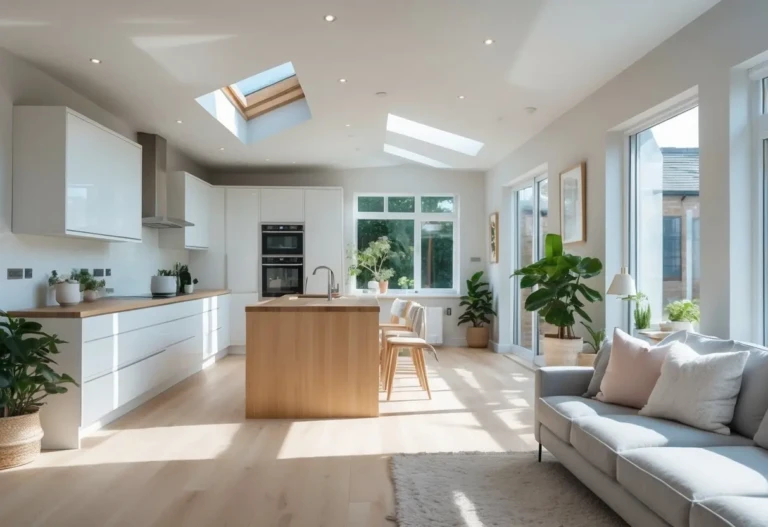
Snake plants, pothos, and ZZ plants tolerate low light and irregular watering better than almost anything else sold as a houseplant, which matters if plant care isn’t a priority in your routine. One taller plant in a corner balances the room’s vertical lines; a couple of smaller pots on a nightstand or floating shelf add color without needing a dedicated plant stand.
A small terrarium is a low-effort way to get greenery into a room without any ongoing watering schedule at all — worth considering if even a snake plant feels like more commitment than you want.
Where to Focus First
| If your room currently looks like… | Fix first | Why |
|---|---|---|
| A flat, no-personality box | Texture layering | Cheapest way to add depth without new furniture |
| A mismatched grab-bag of colors | One accent color, repeated | Gives the room a single visual thread |
| Harshly lit or dim and flat | Layered lighting | Changes mood instantly, low cost |
| Generic dorm-style bed | Upholstered headboard + monochrome bedding | Bed sets the tone for the whole room |
| Impersonal, could belong to anyone | Small personal art/props | Adds identity without clutter |
| Cluttered despite being clean | Closed storage over open shelving | Hides visual noise, not just physical mess |
Things to Consider Before You Start
- Pick your one accent color before buying anything else — it’s the decision every other purchase should match against.
- If you’re renting, check what the lease allows before painting an accent wall; a large removable fabric panel or a bold headboard can substitute for paint.
- Test warm-white bulbs (2700K–3000K) in one lamp before replacing every bulb in the room — the difference is bigger than most people expect.
- Measure your nightstand and dresser depth against your actual walking space before buying floating furniture — floating pieces still take up floor clearance even without legs.
If the room in question is on the smaller side and space is the real constraint, our modern, mature male bedroom ideas guide covers a similar approach scaled for tighter square footage.
Our Recommendation
If you’re only changing two things this weekend, do the accent color and the lighting. They’re the fastest to execute, the cheapest relative to impact, and neither commits you to a full furniture overhaul before you know the direction is right. The headboard and storage upgrades are worth doing, but they’re bigger purchases — get the cheap changes right first and you’ll have a much clearer sense of what the room actually still needs.
For more finished-room examples in this same restrained, masculine style, 12 trendy bedroom ideas for men is a good next stop.
FAQ
What’s the fastest way to make a men’s bedroom look less like a dorm room?
Swap the lighting first. Warm bulbs and a couple of extra light sources change the mood of a room faster and cheaper than any furniture purchase.
Is navy or gray the safer color choice for a men’s bedroom?
Gray is the safer neutral base — it works with almost any accent color you add later. Navy works well as the accent itself, not usually as the base, since a room in navy walls plus navy bedding plus navy accents can start to feel heavy rather than bold.
Do I need an upholstered headboard, or is a wood frame fine?
A wood frame is fine and often the more budget-friendly and durable choice. Upholstered headboards add visual softness a wood frame can’t, but they’re a style preference, not a requirement — plenty of well-designed men’s bedrooms skip them entirely.
How much art is too much for a masculine bedroom?
If you can’t summarize the wall’s theme or color thread in one sentence, it’s probably too much or too mismatched. Three to five pieces in a shared palette is usually the upper limit before a wall starts looking cluttered rather than curated.
Are plants actually worth it if I’m bad at keeping them alive?
Snake plants and ZZ plants specifically tolerate weeks of neglect and inconsistent light, which makes them a reasonable bet even for someone who’s killed other plants before. If even that feels risky, a terrarium needs essentially no maintenance.
For a broader set of examples across different budgets and room sizes, 9 mens room decor bedroom ideas that wow covers a wider range of styles than this guide’s seven core moves.