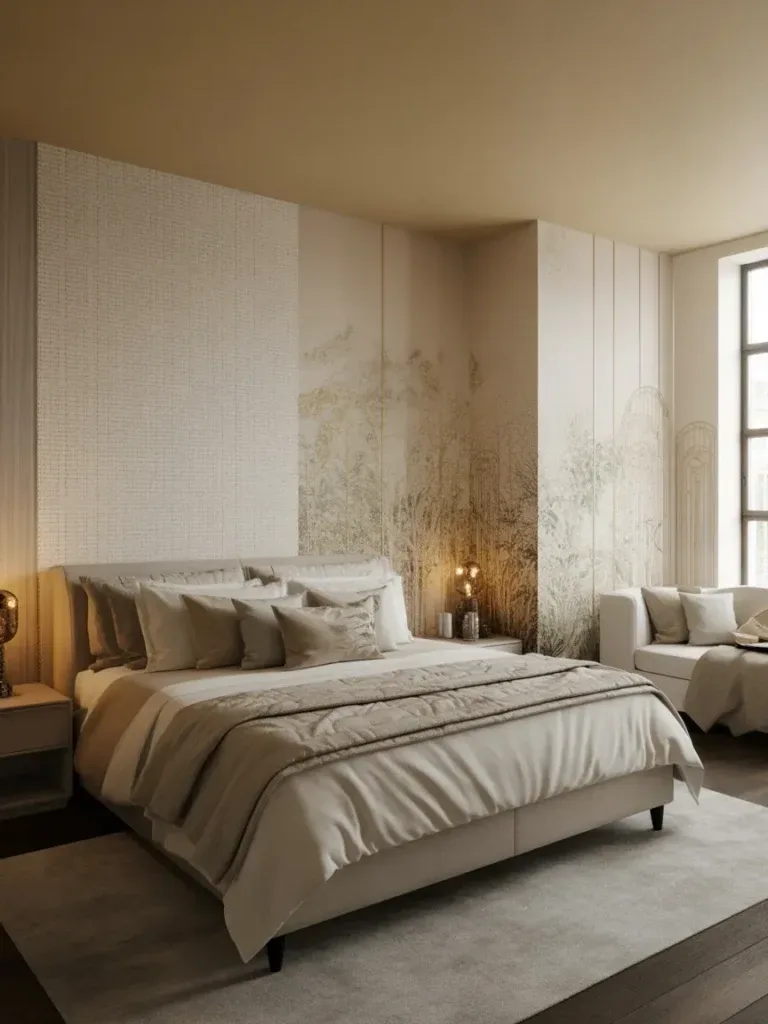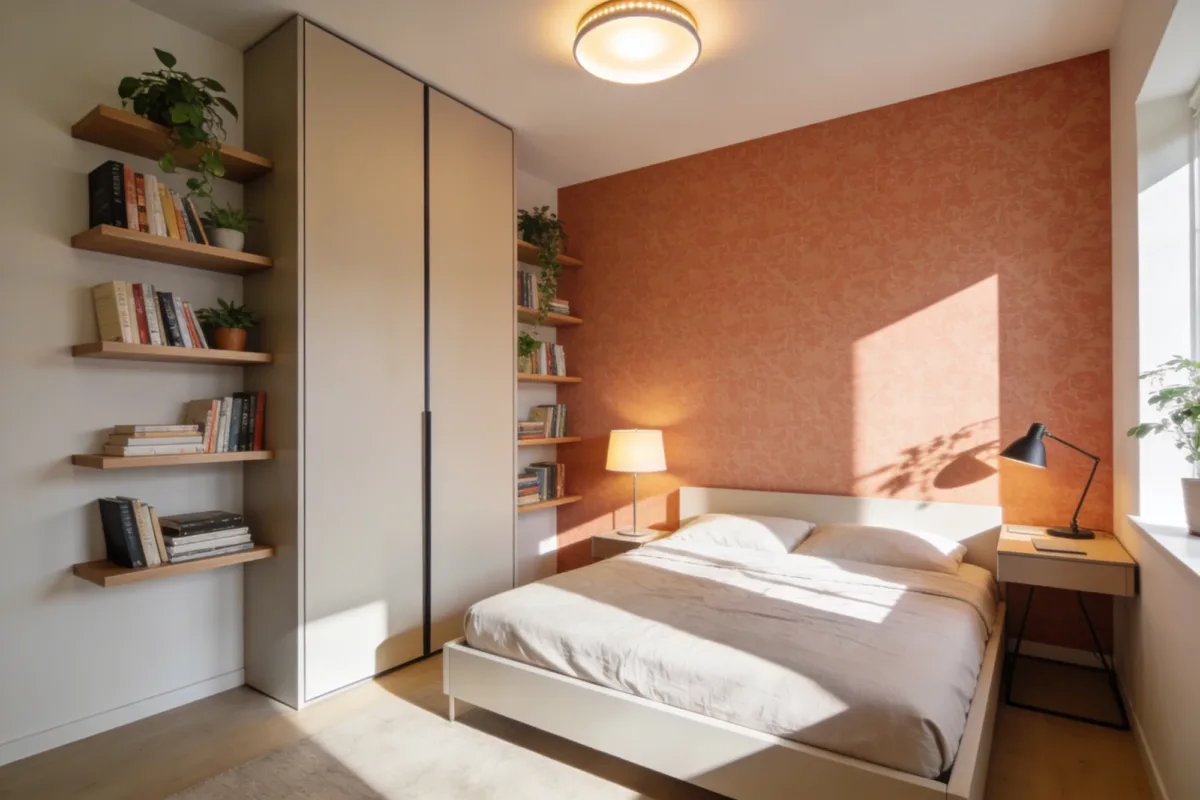
7 Room Decor Ideas Small Bedroom You’Ll Love
A small bedroom doesn’t need less decor — it needs decor that’s picked for the size of the room instead of borrowed from a Pinterest board shot in a room twice as big. If you’ve tried a handful of room decor ideas small bedroom searches and ended up with a list of vague tips like “add a mirror” with no explanation of why or how much space it actually buys you, this is the more specific version. If your issue is really the layout itself rather than the decor, our small bedroom layout ideas guide is the better starting point.
The seven ideas below are ordered roughly by impact per dollar and effort — vertical space and lighting first, because they change how big the room feels without buying a single new piece of furniture, then furniture and finishing touches after.
Quick Takeaways
- Going vertical (shelves, tall storage) does more for a small bedroom than almost any horizontal furniture swap — it uses wall space nobody else is competing for.
- Three light sources (ambient, task, accent) on separate switches or lamps make a small room feel larger than one bright overhead fixture does.
- A low-profile bed frame with visible floor underneath reads as more spacious than a tall frame, even at the same footprint.
- Furniture that does two jobs — an ottoman that’s also storage, a desk that folds flat — is worth more in a small room than furniture that’s slightly cheaper but single-purpose.
1. Use Your Walls Before You Touch the Floor
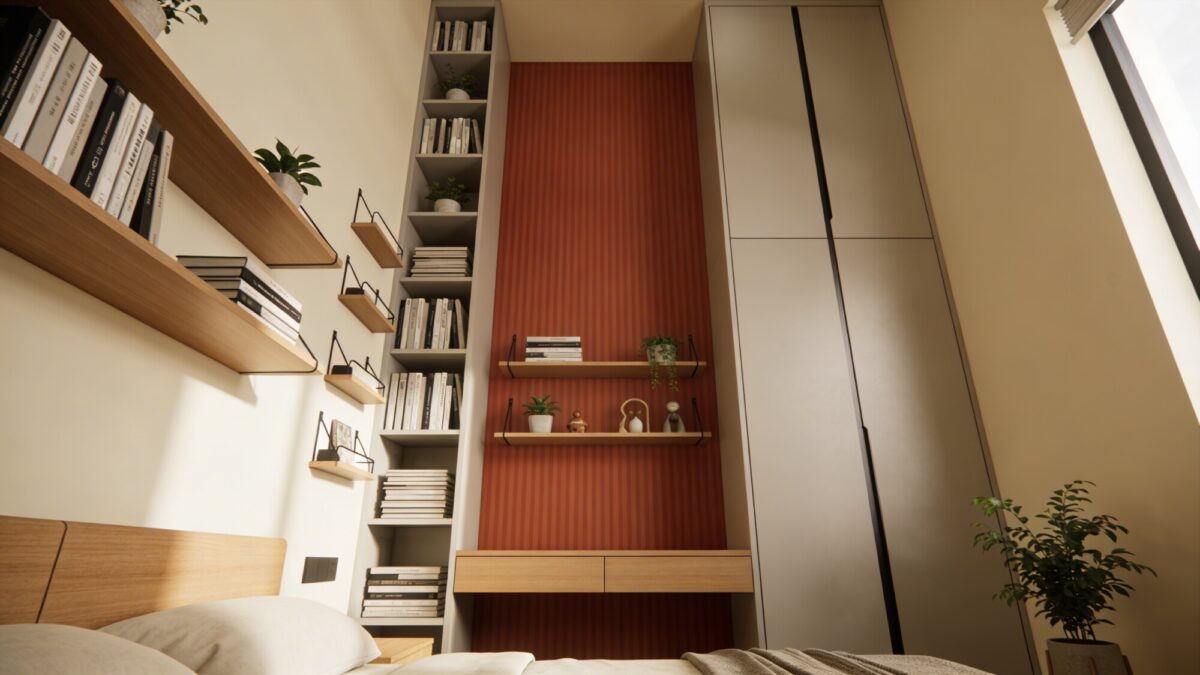
Floor space in a small bedroom is the scarcest resource in the room, and most people spend it on furniture that could just as easily live on a wall. Floating shelves, a tall slim wardrobe, and wall-mounted organizers all give you the same storage without eating into the square footage you actually walk on.
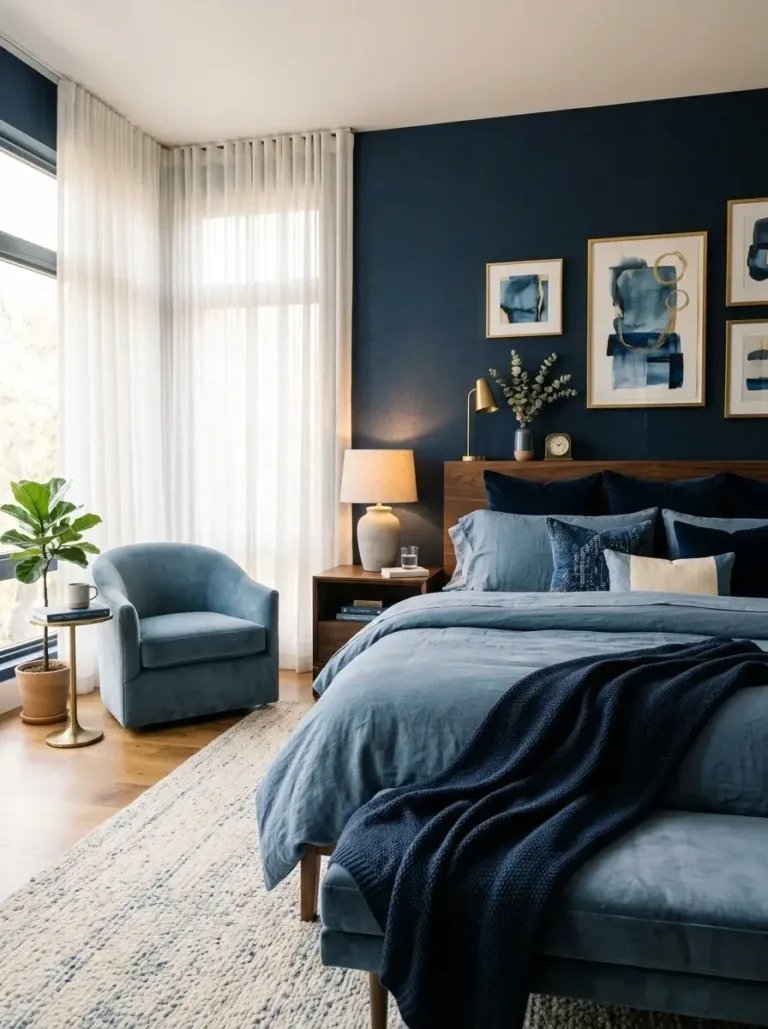
The part people skip: an accent wall or vertical-pattern wallpaper on one wall pulls the eye upward, which makes the ceiling feel higher even though it isn’t. This works better as a single wall than as a full room — four walls of the same bold pattern in a small space usually closes it in rather than opening it up.
💡 Pro Tip: Start with one wall of floating shelves before committing to a full wardrobe swap. It’s the cheapest way to test whether vertical storage actually solves your clutter problem before you spend on furniture.
2. Layer Your Lighting Instead of Relying on One Overhead Fixture
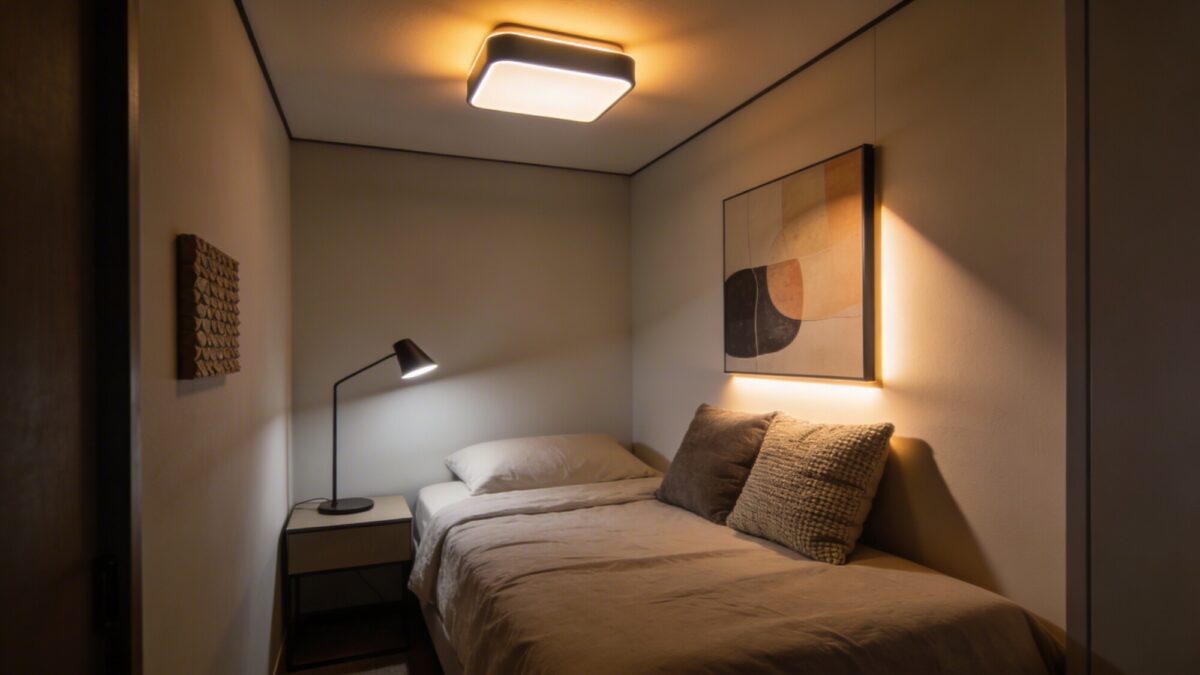
One ceiling light on one switch means the room only has one mode: fully lit or dark. Three separate sources — an ambient ceiling fixture, a task lamp by the bed or desk, and a smaller accent light on a shelf or piece of art — give you actual control over how the room feels at different times of day, and a room with dimension in its lighting tends to read as bigger than one lit flat from above.
This is one of the lowest-cost changes on this list. A task lamp and a small accent light together often cost less than a single decorative overhead fixture, and you don’t need an electrician — just outlets and lamps.
3. Choose a Bed That Reads as Roomy, Not Just Small
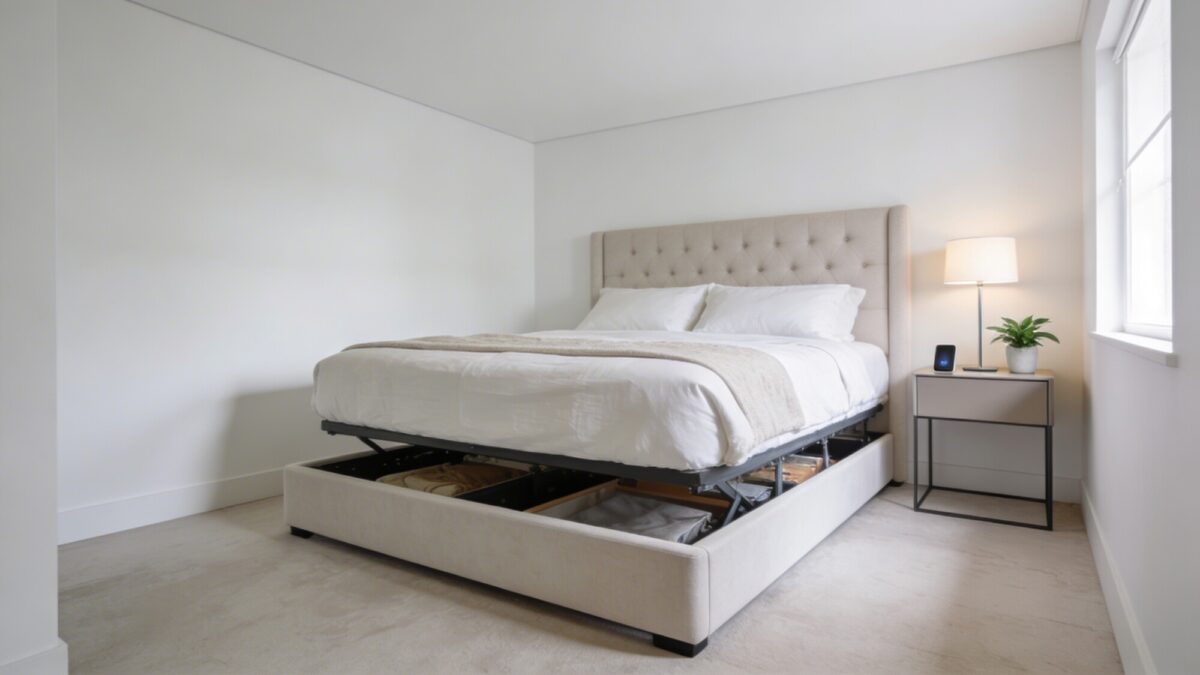
The bed is the largest object in most bedrooms, so its shape does more to set the tone of the room than anything else you’ll add. A low-profile frame — one where you can see floor underneath rather than a solid base to the ground — visually shrinks the amount of “furniture” in the room even at the exact same footprint as a taller bed.
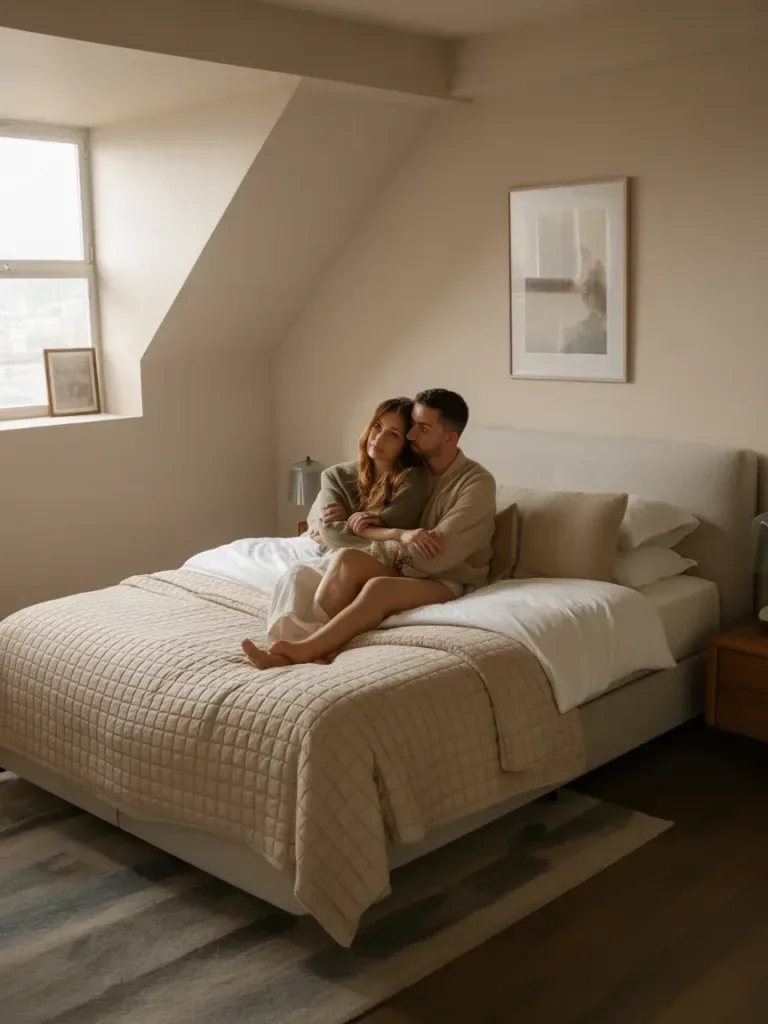
An upholstered headboard is worth the small premium over a bare frame in a small room specifically: it adds visual softness without adding bulk, which a bulky wood headboard can’t do in the same space. Pair it with white or light neutral bedding, since darker bedding on a large bed absorbs more visual weight than the same bed would in a lighter color.
If storage is tight, this is also where under-bed storage earns its keep — a bed frame with drawers or clearance for storage bins recovers the square footage a small bedroom otherwise loses to a dresser.
4. Keep the Base Neutral, Then Add One Bold Color
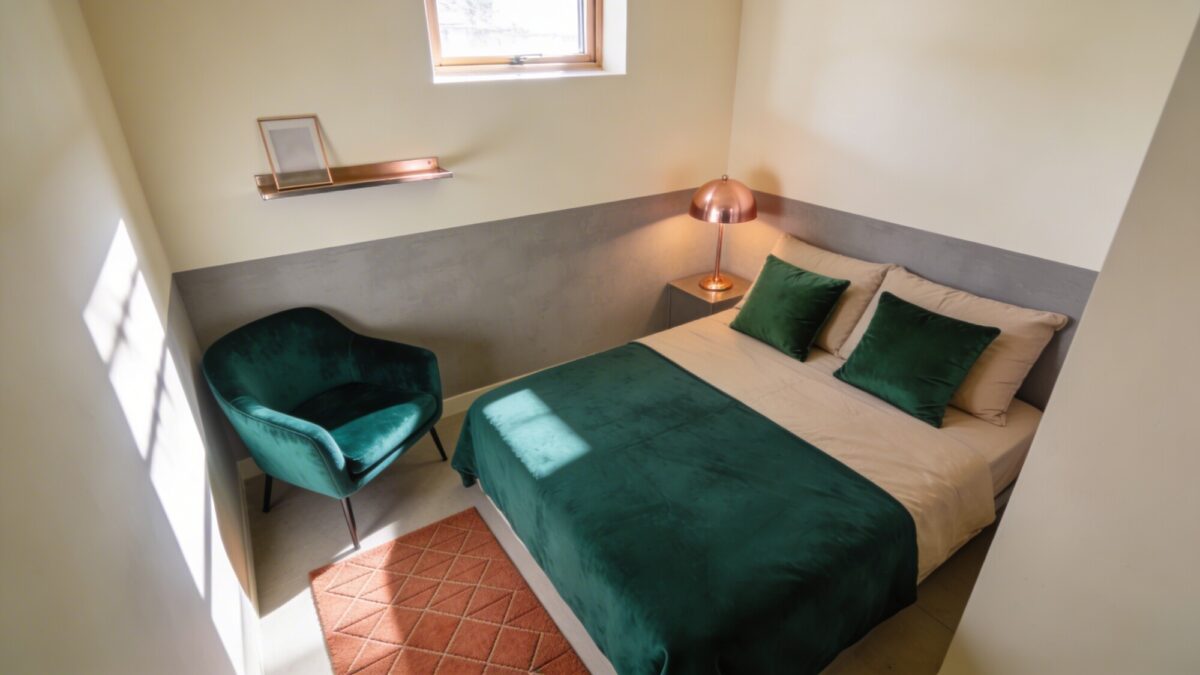
This matters more in a small room than a large one, because a small room has less physical distance for multiple bold colors to breathe. A neutral base — cream, warm gray, beige — with one accent color repeated two or three times (a pillow, a duvet, a rug) reads as intentional. The same accent color scattered across five different unrelated items in five different shades reads as clutter.
If you’re drawn to a pastel bedroom or aesthetic room inspo you’ve seen with soft pinks or pastel green and purple palettes, the same rule still applies — pastels are still colors, and a room in five different pastels at once has the same clutter problem as five saturated colors. Pick one or two and let the rest of the room stay neutral.
💡 Pro Tip: Add the metallic touch — a brass or rose gold lamp base, a slim metal picture ledge — after the color, not before. It’s the detail that makes an otherwise simple neutral-plus-accent room look finished rather than unfinished.
5. Buy Furniture That Does Two Jobs
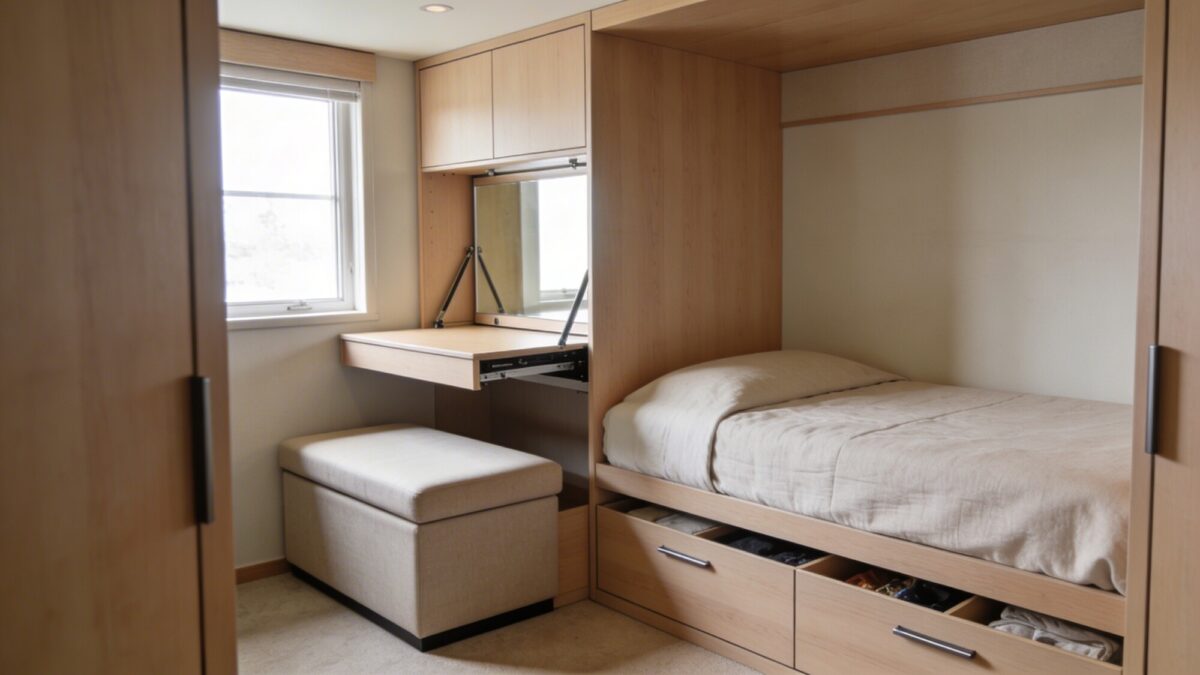
In a small bedroom, every piece of furniture is competing for the same limited floor space, so furniture that only does one job is a worse deal than it looks on price alone. A storage ottoman at the foot of the bed works as both seating and a place to stash extra bedding. A fold-down or Murphy-style desk gives you a work surface without a desk-sized footprint sitting empty the other 20 hours a day you’re not using it.
This is where small college apartment or tiny apartment setups usually go wrong: people buy furniture piece by piece as they need it, ending up with a desk, a chair, a bench, and a set of drawers that each do one job when two or three multi-functional pieces would’ve covered the same needs in half the space.
6. Layer Textures Instead of Adding More Objects
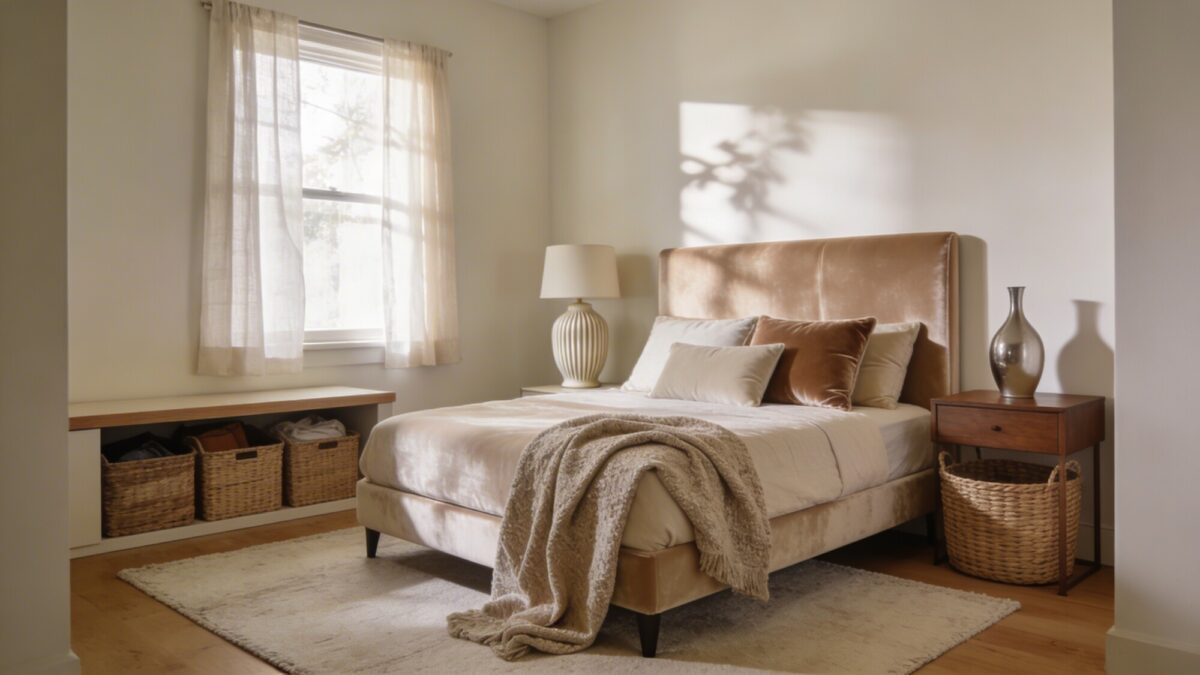
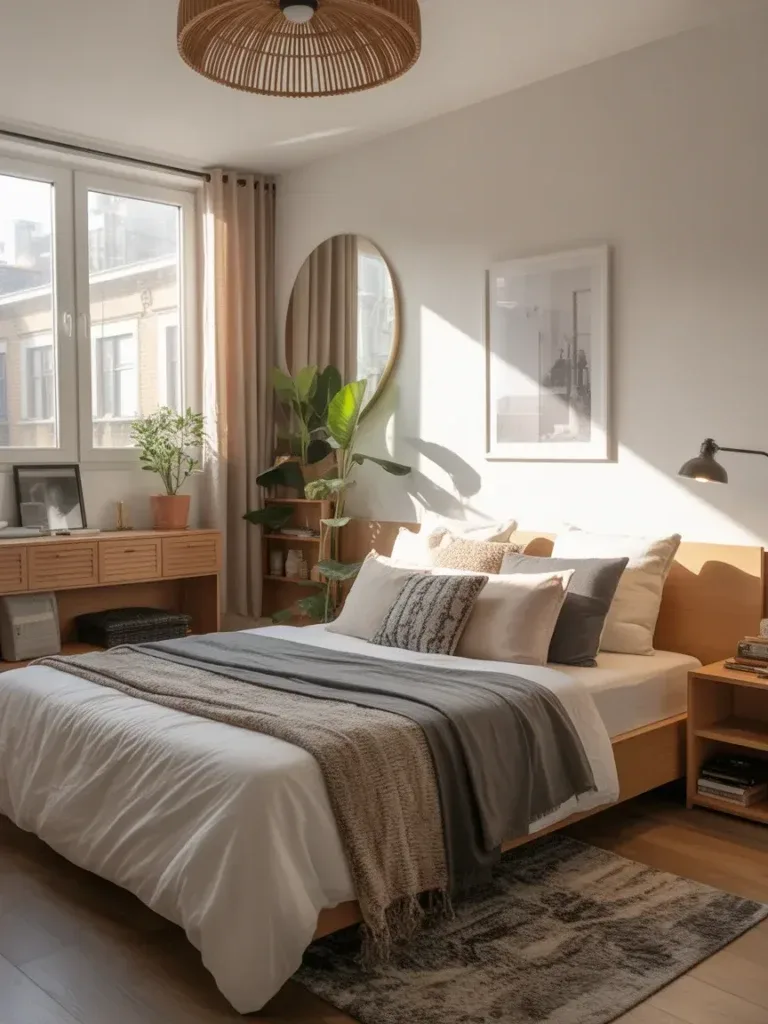
A small room that feels “busy” usually doesn’t have too many colors — it has too many hard, similar surfaces with nothing to break them up. A soft rug under the bed, a mix of linen and velvet pillows, and a woven basket or two add depth through texture rather than through more stuff, which is the difference between a room that feels layered and one that just feels crowded.
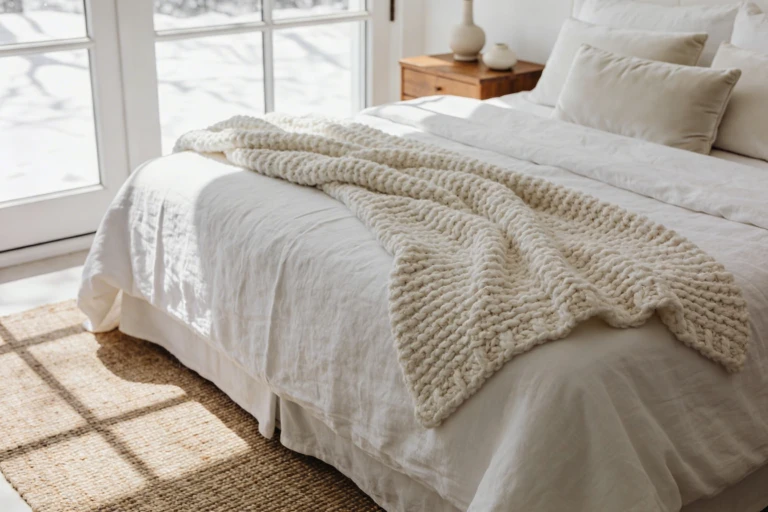
The trade-off to know: texture adds warmth but also visual weight, so don’t stack heavy texture (a shag rug, a chunky knit throw, a velvet headboard) all in the same small area. Spread the heavier textures out and let one or two lighter ones — linen, a smooth ceramic lamp — sit between them.
7. Add Compact Greenery for Color Without Clutter
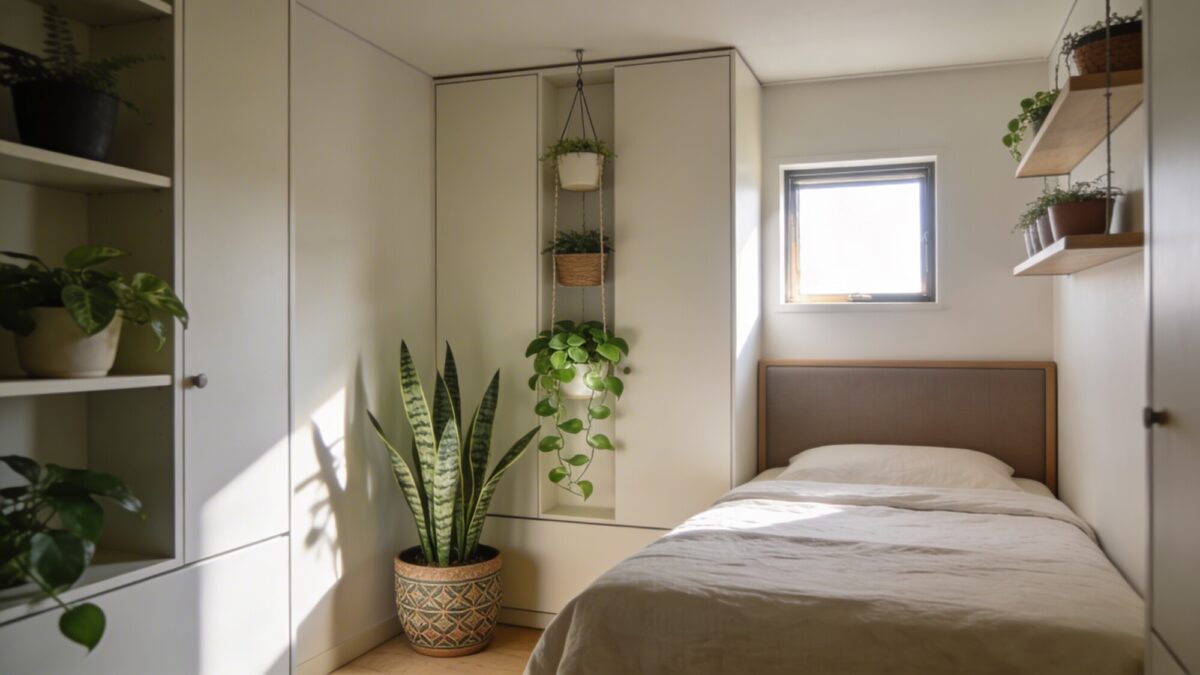
Plants solve a real problem in a small room: they add color and life without taking up the floor space a piece of furniture would. Snake plants, pothos, and ZZ plants specifically tolerate low light and irregular watering, which matters if your small bedroom window doesn’t get much direct sun.
Hanging planters are the better choice over shelf planters if your shelves are already doing storage duty — they use ceiling and wall space that’s otherwise empty. Save floor space for one larger statement plant in a corner if you want a bigger visual moment; more than one large floor plant in a small bedroom usually starts eating into walking space.
Small Bedroom Decor Priorities: Where to Start
| If your room feels… | Start with | Why |
|---|---|---|
| Cluttered and full of stuff | Vertical wall storage | Recovers floor space without buying less |
| Flat and dim | Layered lighting | Cheapest, fastest mood change in the room |
| Boxy and heavy | Low-profile bed frame | Changes the room’s dominant shape |
| Chaotic or mismatched | Neutral base + one accent color | Gives the eye one thing to follow instead of five |
| Short on function (nowhere to work, sit, store) | Multi-functional furniture | Solves two problems per purchase instead of one |
| Flat and one-note | Layered textures | Adds depth without adding objects |
| Sterile or lifeless | Compact greenery | Adds color and air without eating floor space |
Things to Consider Before You Start Buying
- Measure your actual wall height before committing to floor-to-ceiling shelving — some apartment ceilings are lower than the “tall wardrobe” photos you’re working from suggest.
- Decide your one accent color before you shop for pillows, a rug, and a lamp separately — buying them in the wrong order is the most common way a room ends up mismatched.
- Check under-bed clearance before assuming you can add storage bins there — some low-profile frames leave almost no gap.
- If you’re renting, confirm what wall-mounted shelving or fixtures your lease allows before buying anything that needs drilling.
If your small bedroom also needs to double as a workspace, our room corner decor ideas for cozy nooks guide covers carving out a desk area without losing the room’s main function.
Our Recommendation
If you can only do two things from this list, do vertical storage and lighting first. They cost the least relative to how much they change how the room feels, and neither one requires committing to a full furniture replacement before you know if the rest of your plan is going to work. Everything else on this list — the bed, the color, the multi-functional furniture — is easier to get right once those two are handled, because you’ll actually be able to see the room clearly instead of just seeing what’s cluttering it.
For a fuller room-by-room breakdown with more photo examples at this same scale, 23 small bedroom decor ideas that maximize space and style is a good next stop.
FAQ
What’s the single best change for a small bedroom on a tight budget?
Layered lighting. A task lamp and a small accent light cost less than most furniture pieces and change how the room feels immediately, without needing to move anything around.
Does a full-size bed fit in a small bedroom, or should I go smaller?
A full-size bed generally works in a small bedroom as long as you leave at least two feet of walking clearance on the sides you actually use. If your room is narrow rather than short, a low-profile frame without a footboard usually fits better than a twin XL squeezed against two walls.
Should I paint a small bedroom light or dark?
Light colors reflect more available light and generally make a small room feel more open, but a dark accent wall on one wall (not all four) can add depth without shrinking the room the way people expect it to.
How do I add storage without buying a dresser?
Under-bed drawers or bins, a storage ottoman, and wall-mounted shelving usually recover as much storage as a dresser without the floor footprint. A dresser is often the least space-efficient storage option in a small bedroom.
Are dark, heavy curtains a bad idea in a small bedroom?
Not automatically, but they do add visual weight. If the room is already on the smaller or darker side, lighter curtain fabric in a similar tone to the wall usually keeps the window from becoming a heavy focal point the room doesn’t have space for.
For a version of this same approach built specifically around a tighter budget, 23 small bedroom decor ideas on a budget walks through cost-conscious swaps for each of these same categories.