9 Classy Room Decor Luxury Bedroom Ideas to Wow Guests
A hotel suite doesn’t feel expensive because of one big-ticket item — it’s usually five or six small decisions working together: the way the sheets feel, the way the light lands at 9 p.m., the fact that nothing on the nightstand is fighting for attention. These classy room decor luxury bedroom ideas are built the same way. None of them require a renovation, and you can see the bedroom pieces that read as expensive without the price tag if you want a shopping-first approach instead.
Below are nine changes, roughly in order of how much visual impact they deliver per dollar. Start with one, live with it for a week, then move to the next.
Quick-Reference: Key Takeaways
- Texture does more for “expensive-looking” than color does — mix at least three finishes on the bed (satin, knit, velvet, linen).
- One deep accent wall beats an all-white room for making furniture and art look intentional.
- Lighting temperature matters more than fixture style — stay in the 2700K–3000K warm white range for anything near the bed.
- A headboard doesn’t have to be new furniture; an upholstered panel behind the existing bed gets you 80% of the effect.
- Metal accents work best limited to one or two finishes in a room — mixing brass, chrome, and bronze reads as cluttered, not curated.
1. Layer Textures Like a Pro
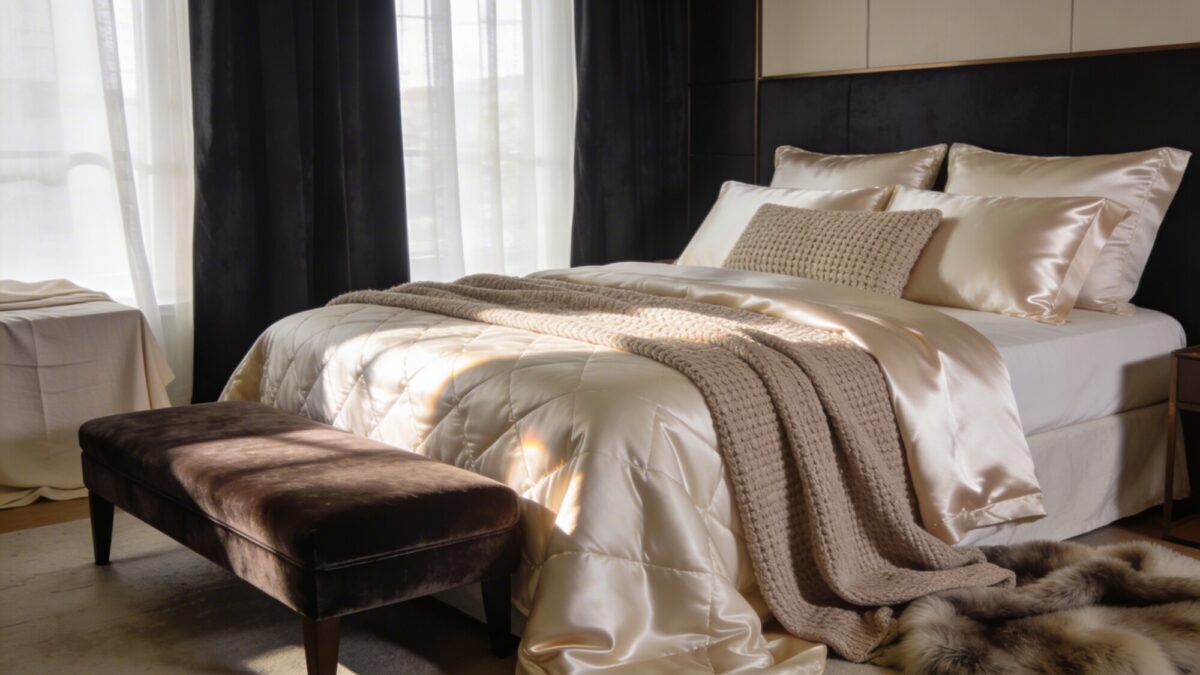
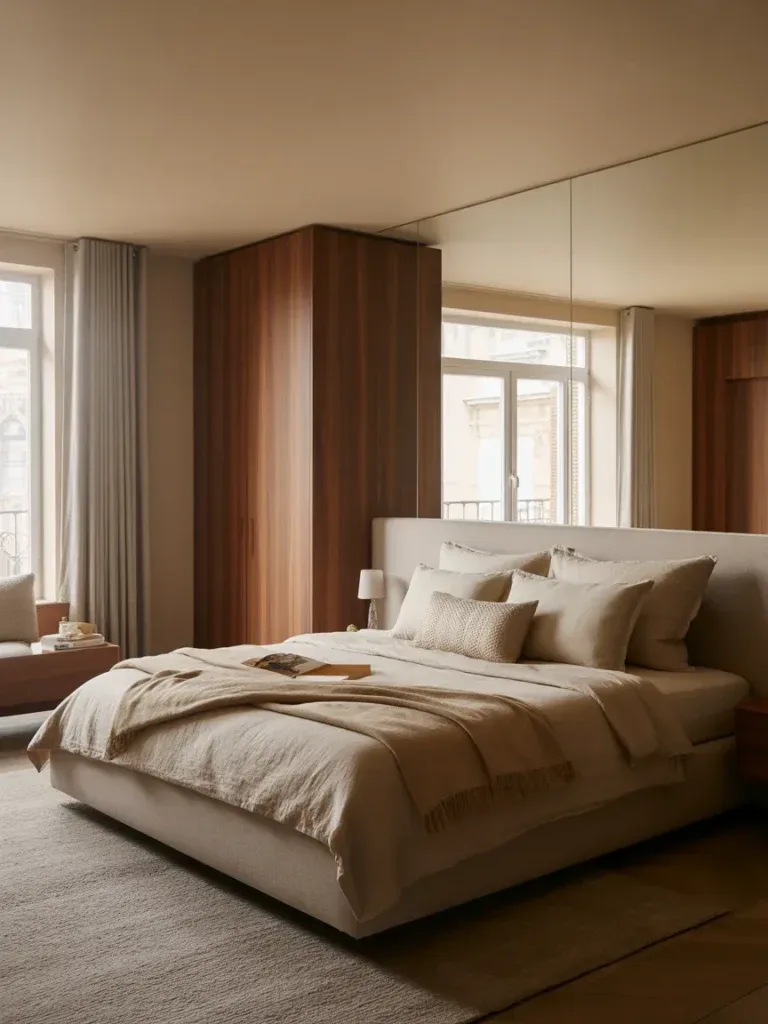
Texture reads as expensive in a way that color alone doesn’t. A room where every surface is roughly the same smoothness — cotton sheets, cotton curtains, cotton rug — looks flat under normal light, even if the palette is good. The fix is mixing at least three different finishes on and around the bed: something with sheen (satin pillow shams), something knit (a chunky throw), and something with weight (a quilted or weighted coverlet draped at the foot).
Linen sheets underneath, a velvet bench at the foot of the bed, and a faux fur throw layered on top of that bench is a combination that photographs well and feels even better in person, because your hand notices the contrast before your eye does.
💡 Pro Tip: Don’t match your throw pillows to your duvet in the same fabric — that’s the fastest way to make a bed look like a matching hotel bedding set instead of a curated one. Pick pillows in a different texture and a slightly off-tone shade instead.
2. Create a Focal Wall with Calm, Rich Color
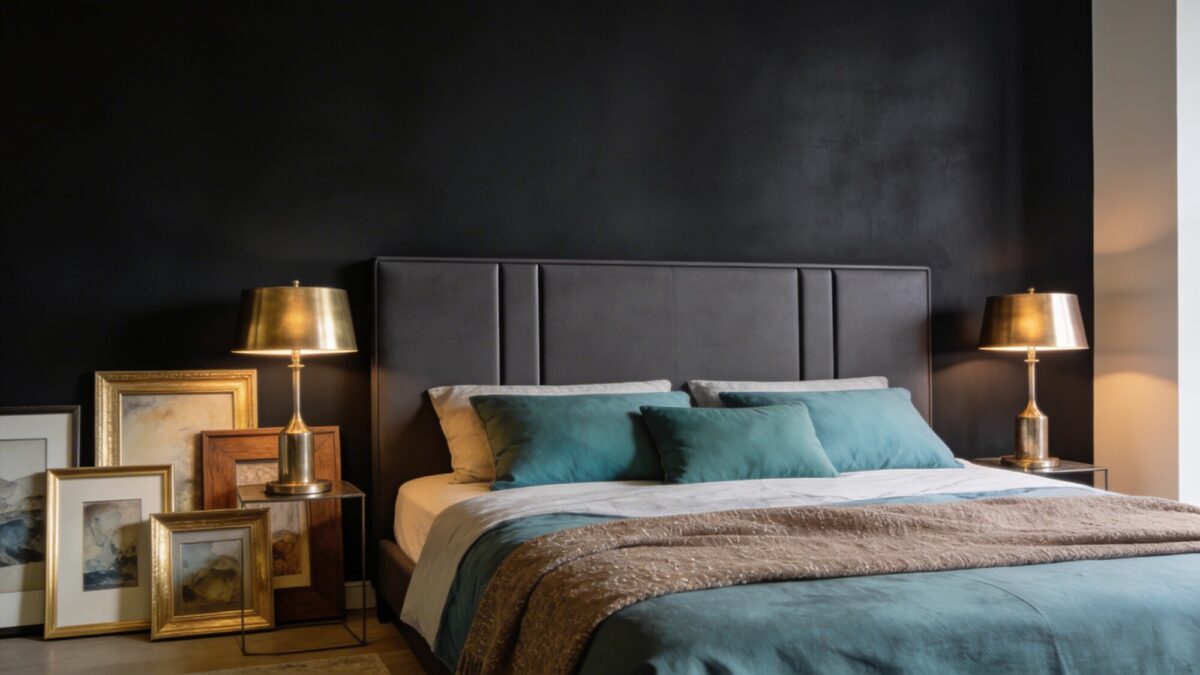
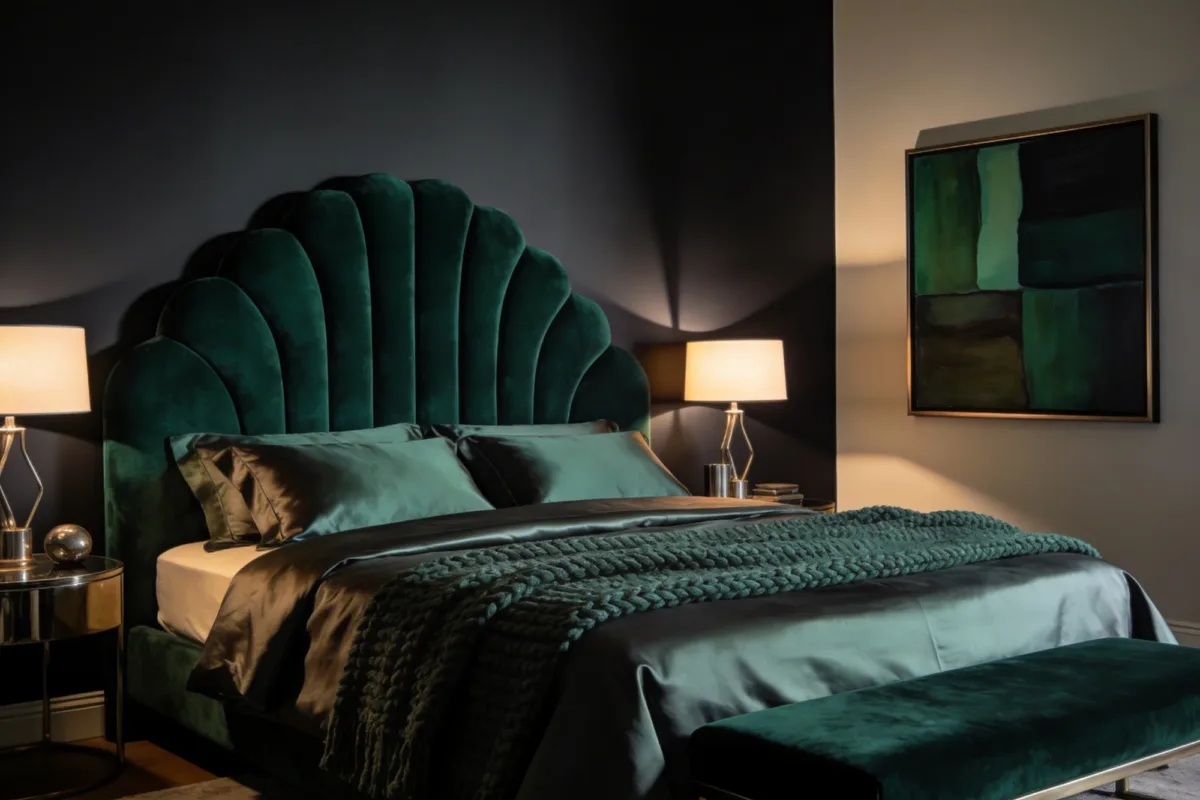
A single wall in a deeper shade — coal, olive, or a muted blue-green — gives the room something to anchor to. The most common mistake here is choosing a trendy accent color instead of a calm one; a saturated jewel tone or a trend-of-the-year shade can date the room within a couple of years, while a muted, low-chroma color stays flattering much longer.
Stick to a matte or eggshell finish behind the bed specifically — glossier sheens bounce light and show every roller mark, which undercuts the calm effect you’re going for. Then let your bedding and a piece of art repeat the wall color in a smaller dose, so the wall doesn’t feel disconnected from the rest of the room.
3. Invest in a Statement Headboard
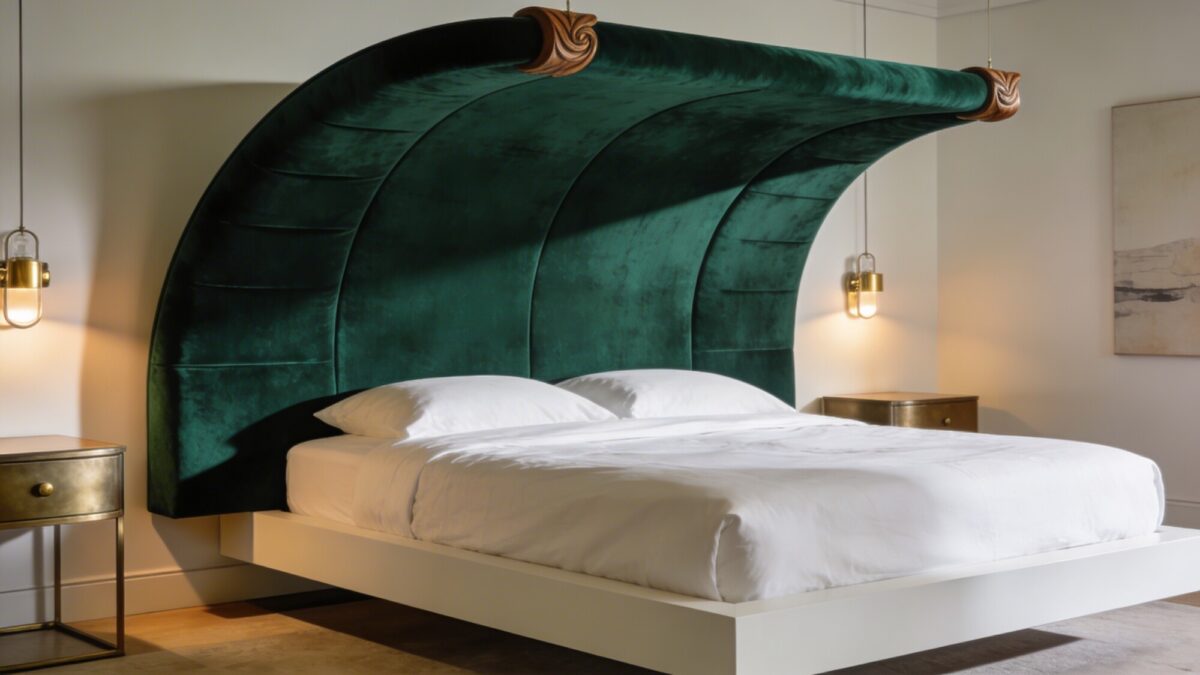
The headboard carries more visual weight than almost any other single piece in the room, because it’s the backdrop for the bed itself. Velvet, leather, and sculpted wood all read as high-end; a thin, unupholstered headboard from a flat-pack set generally doesn’t, no matter how nice the rest of the room is.
What to Consider
- Proportion — the headboard should be roughly as wide as the bed, not narrower
- Float it an inch or two off the wall so it casts a soft shadow instead of sitting flush
- If you’re not ready to buy a new bed frame, an upholstered wall panel mounted behind the existing headboard gets close to the same visual effect for less money and no furniture swap
4. Curate a Gentle Lighting Suite (Bedroom Lighting Inspiration Worth Copying)
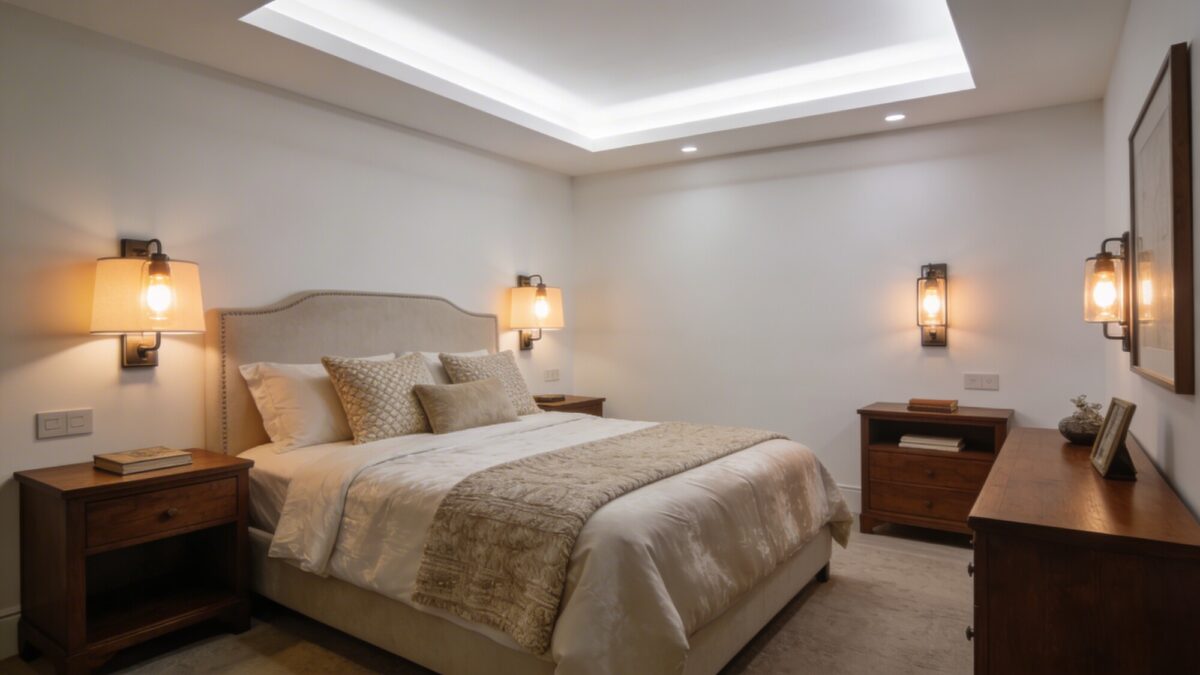
Bedroom lighting inspiration usually comes down to one number: color temperature. Warm white, roughly 2700K to 3000K, is what makes a bedroom feel like a suite instead of a waiting room. A dimmable ceiling fixture, two matching bedside lamps, and — if your nightstands are small — a pair of wall-mounted reading sconces cover almost every lighting need without cluttering the surfaces.
There’s a separate, more dramatic look worth mentioning here, because it comes up a lot in searches: a modern bedroom with a starry ceiling, using LED string lights or a star-projector panel for a glowing, futuristic room effect. It’s a real and popular option, especially for kids’ rooms or a statement accent wall, but it’s a different mood than the classy, hotel-suite look this article is focused on — starry ceiling bedroom decor and luxury bedroom master LED lights read as playful or high-tech, not calm. If that’s the vibe you actually want, treat it as its own design direction rather than layering it on top of warm ambient lighting; the two don’t blend well in the same room.
💡 Pro Tip: Put your bedside lamps on the same dimmer circuit or use smart bulbs set to the same warm-white temperature. Two lamps at slightly different color temperatures — one warmer, one cooler — is a common mismatch that makes an otherwise well-decorated bed look off, and most people can’t identify why.
5. Add a Touch of Metallic Warmth
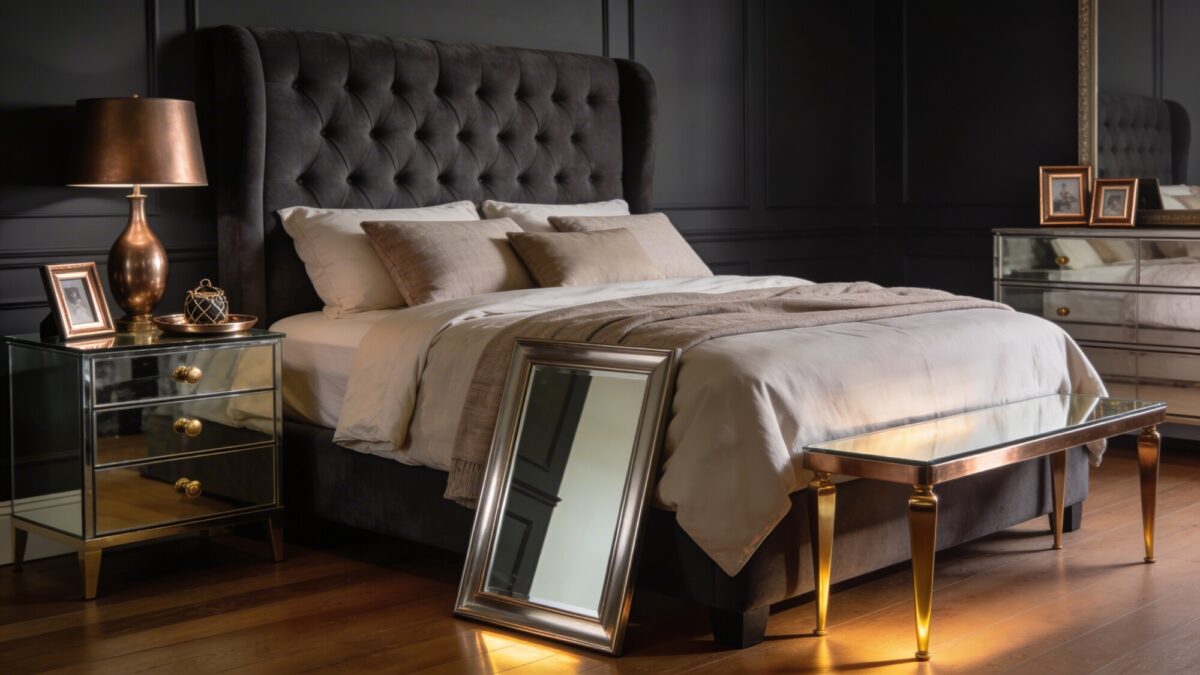
Bronze, brass, and brushed gold accents add glow without adding visual noise, which is the opposite of what most other “add luxury” advice does. Use them on picture frames, a lamp base, drawer hardware, and a tray on the nightstand for catching small items like rings or a watch.
Where to Use It
- Picture frames, lamp bases, and drawer or cabinet hardware
- A metal tray on the nightstand instead of loose items on bare wood
- A mirrored or glass-top console at the foot of the bed with metal legs
The trade-off most people get wrong: mixing metals. One brass lamp next to a chrome mirror next to bronze picture frames doesn’t read as eclectic, it reads as unfinished. Pick one metal finish — two at most if they’re closely related, like brass and antique gold — and repeat it three or four times around the room.
6. Introduce an Elegant Seating Nook
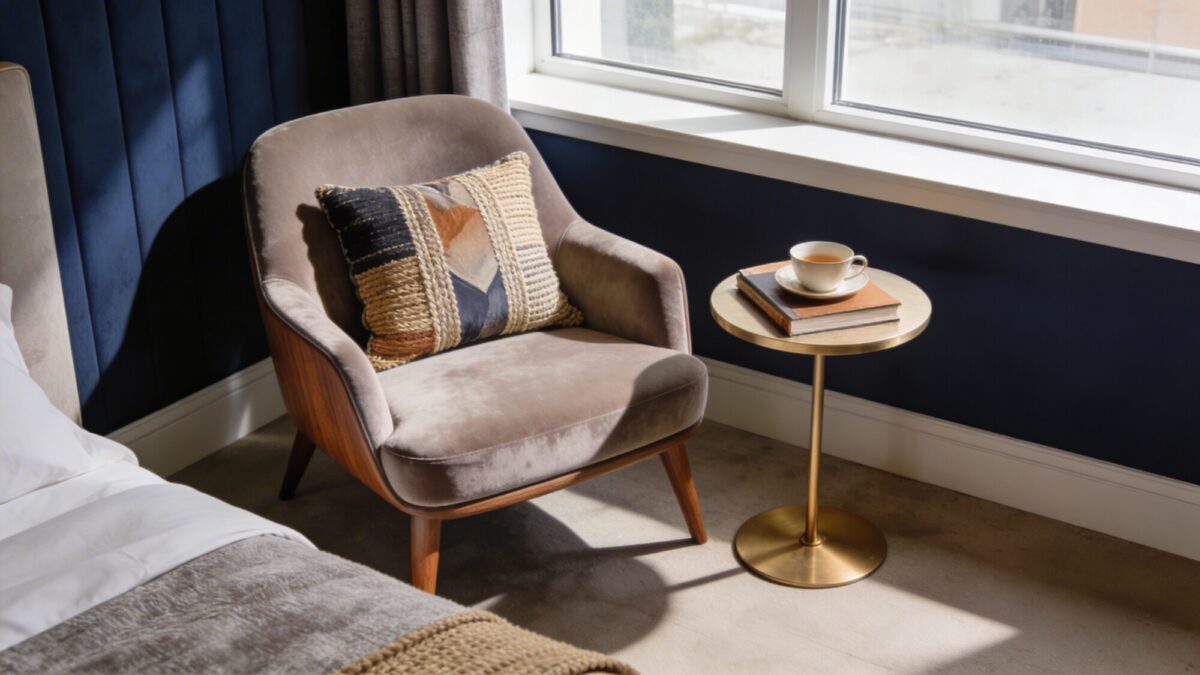
A single chair and a small side table near a window turns a bedroom from “a place to sleep” into a room you’d actually want to sit in during the day. It doesn’t need to be large — a compact mid-century accent chair and a round side table for a book and a mug is enough.
Position the nook near natural light if you have it, or near your accent wall from idea #2 so the two elements reinforce each other instead of competing for attention on opposite sides of the room. See our full walkthrough on layering a luxury bedroom sanctuary if you’re planning the seating nook alongside a bigger reset of the room.
7. Craft a Gallery-Worthy Wall of Art
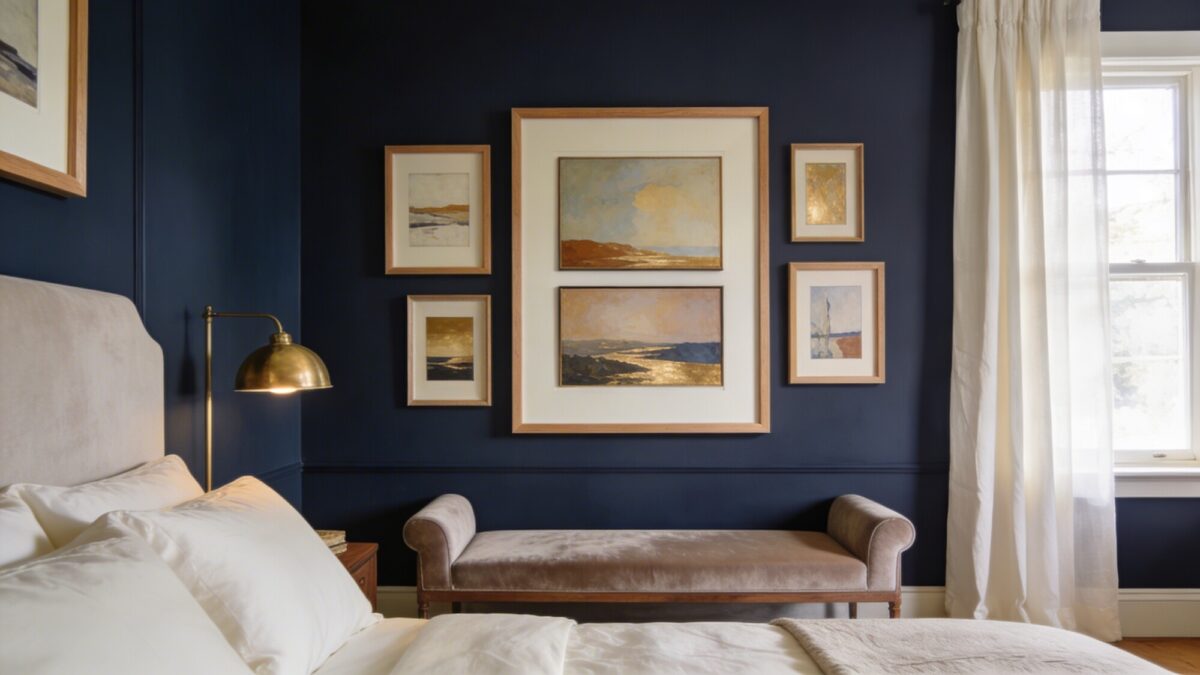
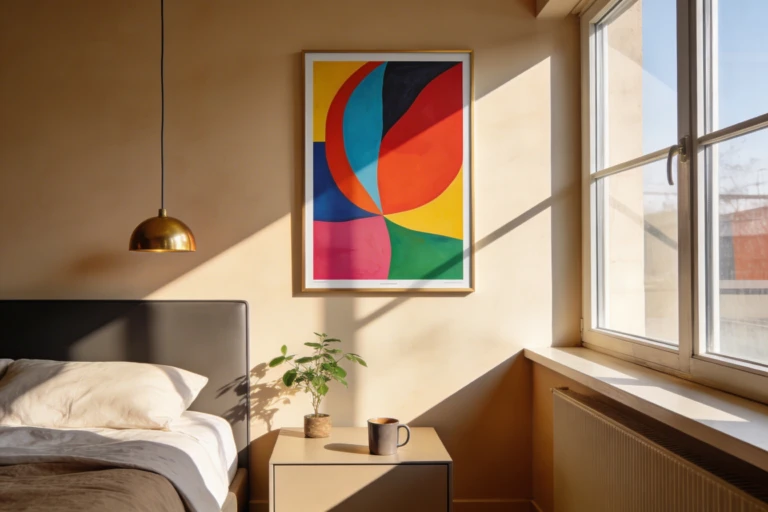
Art gives the room a point of view. The most reliable formula is one larger centerpiece piece with two or three smaller pieces around it, all sharing a frame style or color so they read as a set instead of a random collection.
The mistake to avoid is filling the whole wall edge to edge. Leaving visible negative space — gaps of blank wall between and around the frames — is what keeps a gallery wall from turning into clutter. If you’re unsure of spacing, lay the arrangement out on the floor first and step back before you put a single nail in the wall.
8. Upgrade the Bedding, Smartly
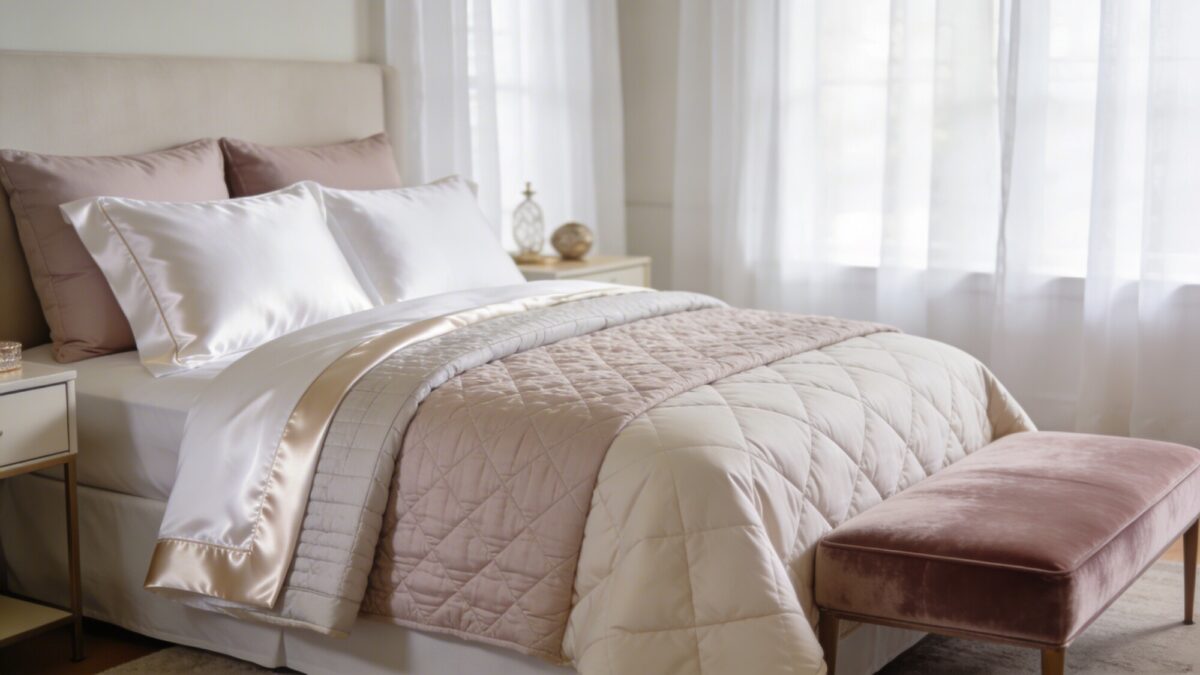
This is the upgrade with the highest ratio of “how good it feels” to “how much effort it takes.” Long-staple or Egyptian cotton sheets, a breathable duvet insert, and a lighter comforter layered on top for warmer months covers you through most of the year without buying two full bedding sets.
A washable duvet cover is worth the small extra cost — it’s the difference between washing a full comforter (which most machines and dryers at home can’t handle well) and just stripping a cover the way you’d strip a pillowcase.
9. Add Greenery for Fresh Energy
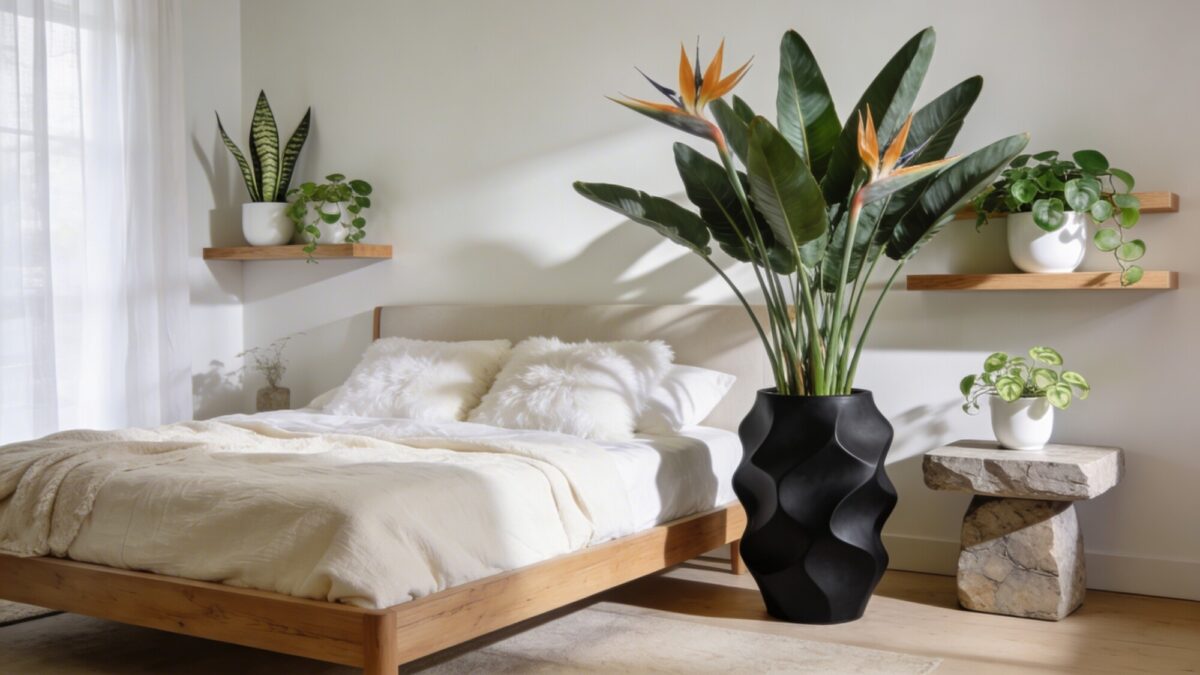
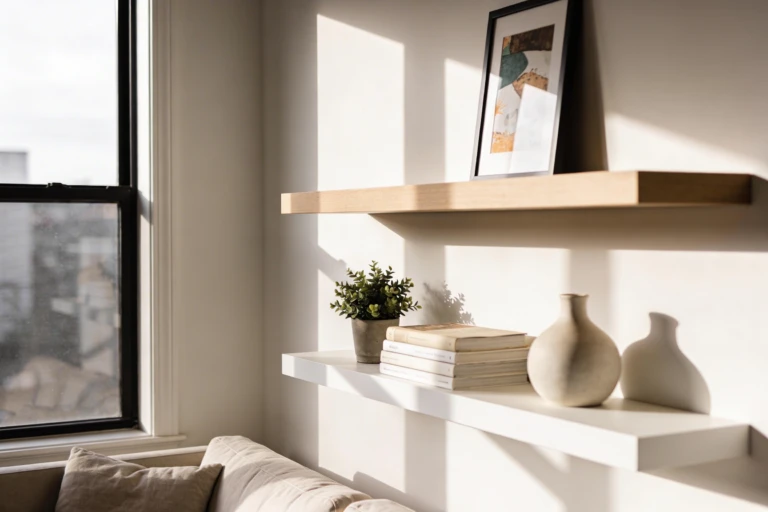
One large plant in a sculptural pot, plus one or two smaller plants tucked on a shelf or nightstand, softens every hard edge in the room — the headboard, the console, the picture frames — without adding another decorating decision. If you don’t have a track record keeping plants alive, snake plants and pothos tolerate low light and irregular watering better than almost anything else sold as a houseplant.
💡 Pro Tip: Keep real plants at least a few feet from any warm-white lamp left on for long stretches — the heat dries out soil faster than people expect, and it’s the most common reason a healthy-looking plant declines within a month of a lighting change.
Which Upgrade Gives the Most Impact for the Effort?
| Upgrade | Typical Effort | Typical Cost Range | Visual Impact |
|---|---|---|---|
| Bedding refresh (idea 8) | Low — no tools, one order | Budget to mid | High, especially up close |
| Lighting suite (idea 4) | Low to medium — may need an electrician for sconces | Budget to mid | High, changes the whole mood of the room |
| Accent wall (idea 2) | Medium — a weekend project | Budget | High, especially paired with art or bedding in the same tone |
| Statement headboard (idea 3) | Medium to high — furniture purchase or custom panel | Mid to high | Very high, the single biggest single-item impact |
| Seating nook (idea 6) | Low — needs floor space | Mid | Medium, mostly a daily-use upgrade |
Things to Consider Before You Start
- Pick a maximum of two accent colors (your wall and one repeated elsewhere) before you buy anything else — this keeps every later purchase easier to match
- Decide on one metal finish for hardware and frames before you shop, not after
- Check your lightbulbs’ color temperature (listed on the box or packaging) before assuming a fixture is the problem
- Measure your headboard wall width before ordering furniture — a headboard narrower than the bed frame looks like a sizing mistake, not a style choice
- Start with the change that’s easiest to reverse (bedding, lighting) before committing to anything structural (an accent wall, a new headboard)
For a bigger-picture plan that ties several of these ideas together at once, our guide to building a classy sleep sanctuary walks through sequencing a full room refresh.
FAQ
What’s the single change that makes the biggest difference?
Of the nine ideas here, a statement headboard tends to have the largest single-item visual impact, because it’s the backdrop for the bed itself. If budget is the limiting factor, a lighting change or a bedding refresh gets you most of the way there for less money.
Do I need to hire a designer to pull this off?
No. Every idea in this article is something you can do yourself with off-the-shelf furniture and paint. A designer helps most when you’re trying to combine several of these changes at once and want someone to keep the palette consistent.
What color temperature should my bedroom lighting be?
Stay in the 2700K to 3000K warm white range for anything near the bed. Cooler, bluer light (4000K and above) is better suited to a home office or kitchen than a bedroom you’re trying to relax in.
Can I mix a starry ceiling or LED accent lighting with a classic luxury look?
You can, but treat it as its own accent rather than blending it into your main lighting suite. A starry-ceiling or glowing LED effect reads as playful and modern, while warm ambient lighting reads as calm and classic — mixing the two in the same fixture group usually undercuts both looks.
How many metal finishes should I use in one bedroom?
One is safest. Two closely related finishes, like brass and antique gold, can work if you’re consistent about which pieces use which. Three or more finishes in the same room almost always reads as unplanned rather than eclectic.
Do I need to replace all my furniture to get this look?
No — several of these ideas (bedding, an accent wall, lighting, a gallery wall) work with your existing furniture. The headboard and seating nook are the two most likely to involve a new purchase.
Our Verdict
If you only do one thing from this list, do the lighting. It’s the cheapest change here, it’s the most reversible, and it affects how every other piece in the room reads after dark — including furniture and art you haven’t upgraded yet. From there, a statement headboard is the next highest-leverage move if your budget allows it, because it does more visual work per square foot than almost anything else in the room.
Once the bones are in place, the smaller layers — texture, metal accents, greenery — are what make the room feel finished rather than staged. For more ways to keep the whole space feeling intentional without a full renovation budget, take a look at our budget-friendly luxe bedroom ideas.