Luxury Bedroom Design: Elevate Your Sanctuary Now
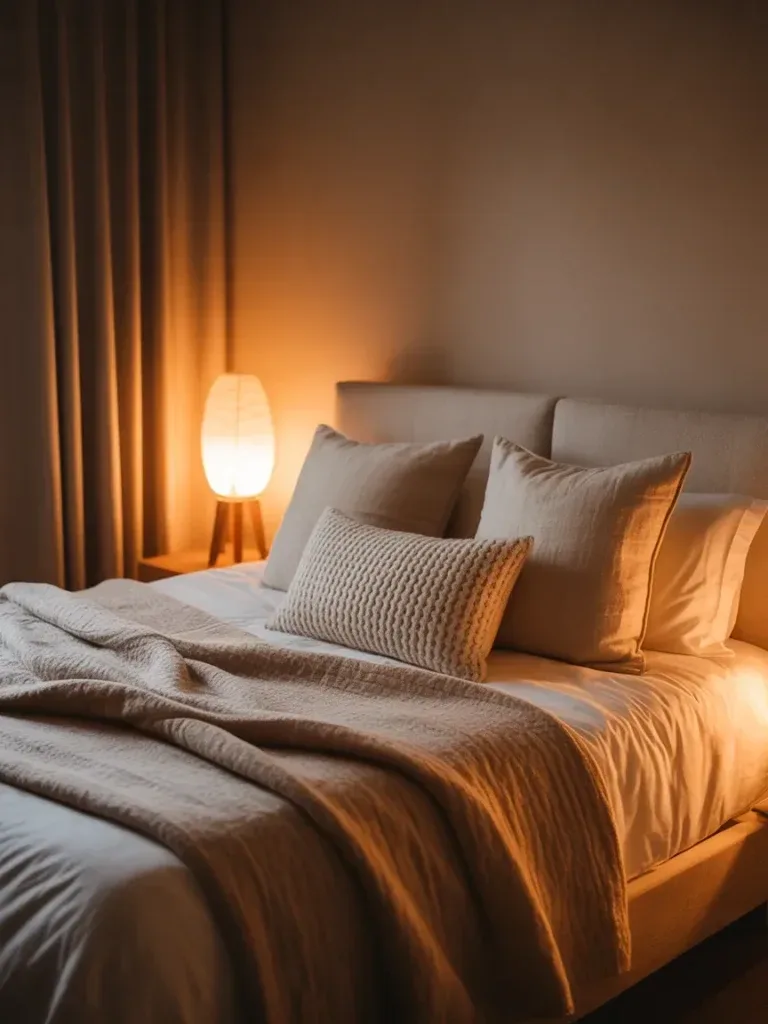
Luxury bedroom design gets confused with “expensive bedroom” constantly, and that’s where most rooms go wrong. You can spend a fortune on furniture and still end up with a room that feels showy instead of restful. The rooms that actually read as luxurious tend to share the same handful of decisions: a restrained palette, one strong focal point, real textiles instead of synthetic ones, and lighting that’s layered instead of just bright. Everything else is detail work.
Quick Takeaways
- Pick one focal point — usually the bed — and let everything else support it instead of competing with it.
- Three colors is the practical ceiling for a luxury palette: a warm neutral base, one deep accent, and a lighter tone to keep it from feeling heavy.
- Fabric quality matters more than fabric quantity. One good linen duvet beats three mediocre throws.
- Layered lighting (ambient, task, accent) does more for “luxury” than any single statement fixture.
- In big bedrooms especially, empty space is doing design work — don’t fill it just because you can.
What Luxury Bedroom Design Actually Means Before You Buy Anything
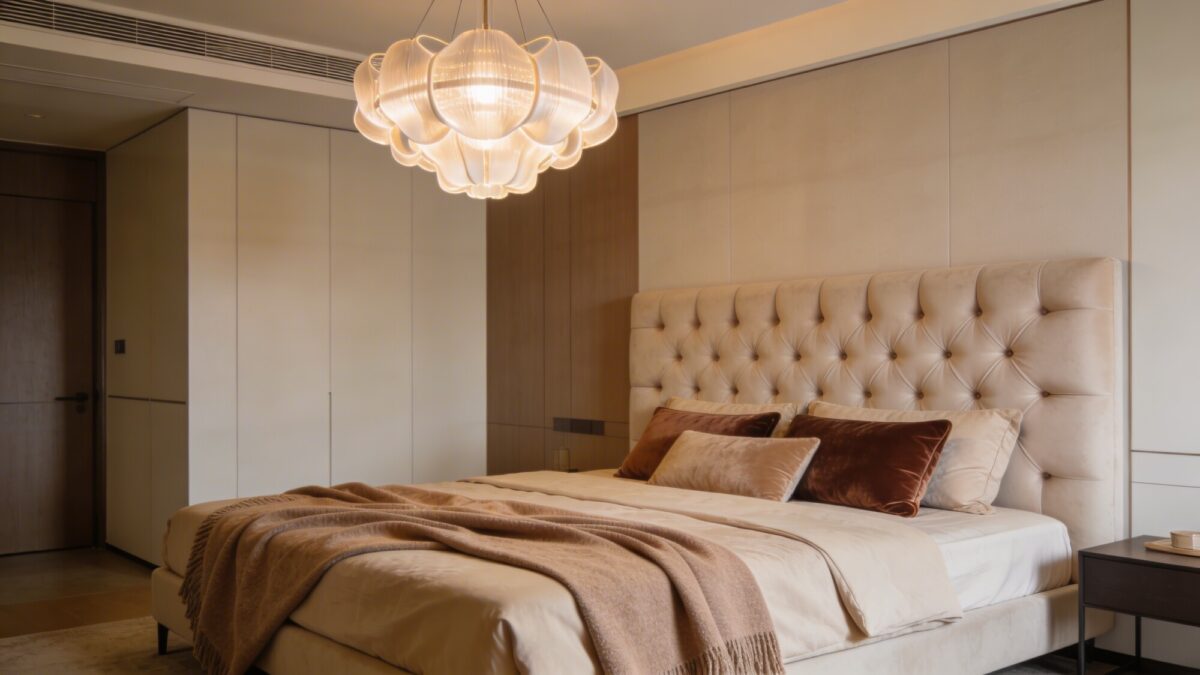
Before picking a single piece of furniture, decide what “luxury” means for this specific room. It’s not one look — a hotel-inspired suite with crisp whites and brass hardware and a moody, jewel-toned retreat with a deep emerald wall are both legitimately luxury, and they call for almost opposite shopping lists. Pin down the mood first, or you’ll end up buying pieces that fight each other.
Color does a lot of the psychological heavy lifting here. Warm neutrals — taupe, warm gray, soft ivory — read as calm and expensive because they don’t demand attention. Cooler, brighter tones tend to read as “clean” rather than “luxurious,” which is a different feeling entirely. If you want drama, add it through one deep accent color rather than a bright one; deep tones photograph as rich, bright tones photograph as loud.
The Bed as the Centerpiece: Headboards and Big Bedroom Scale
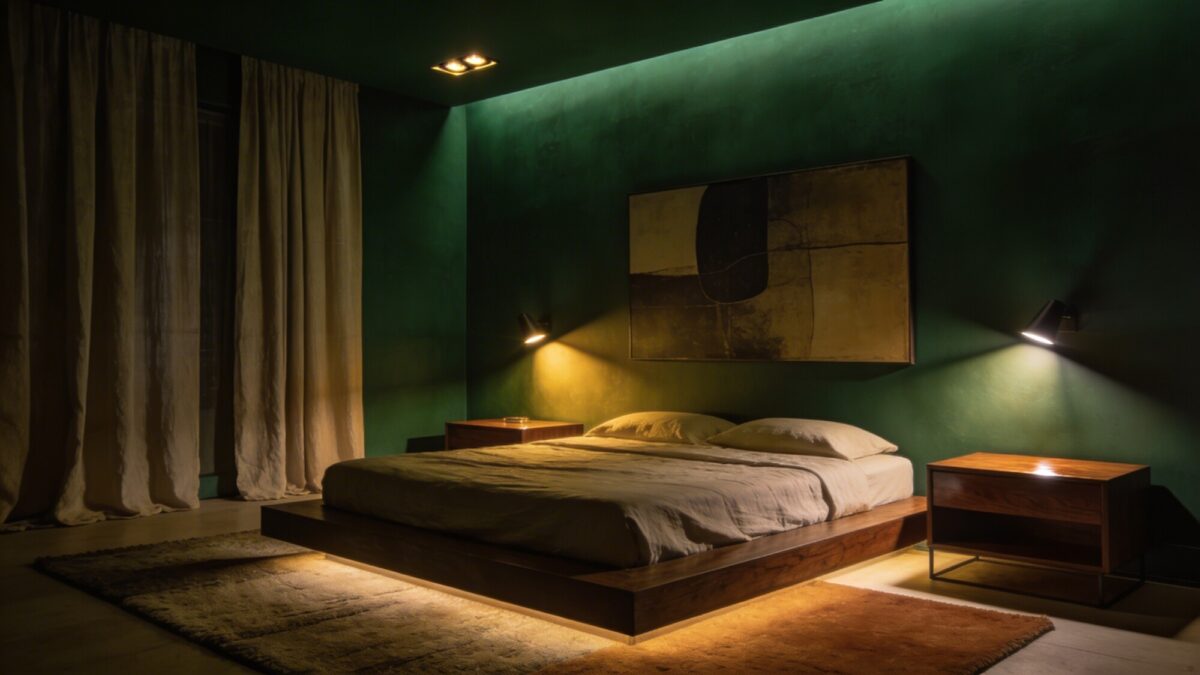
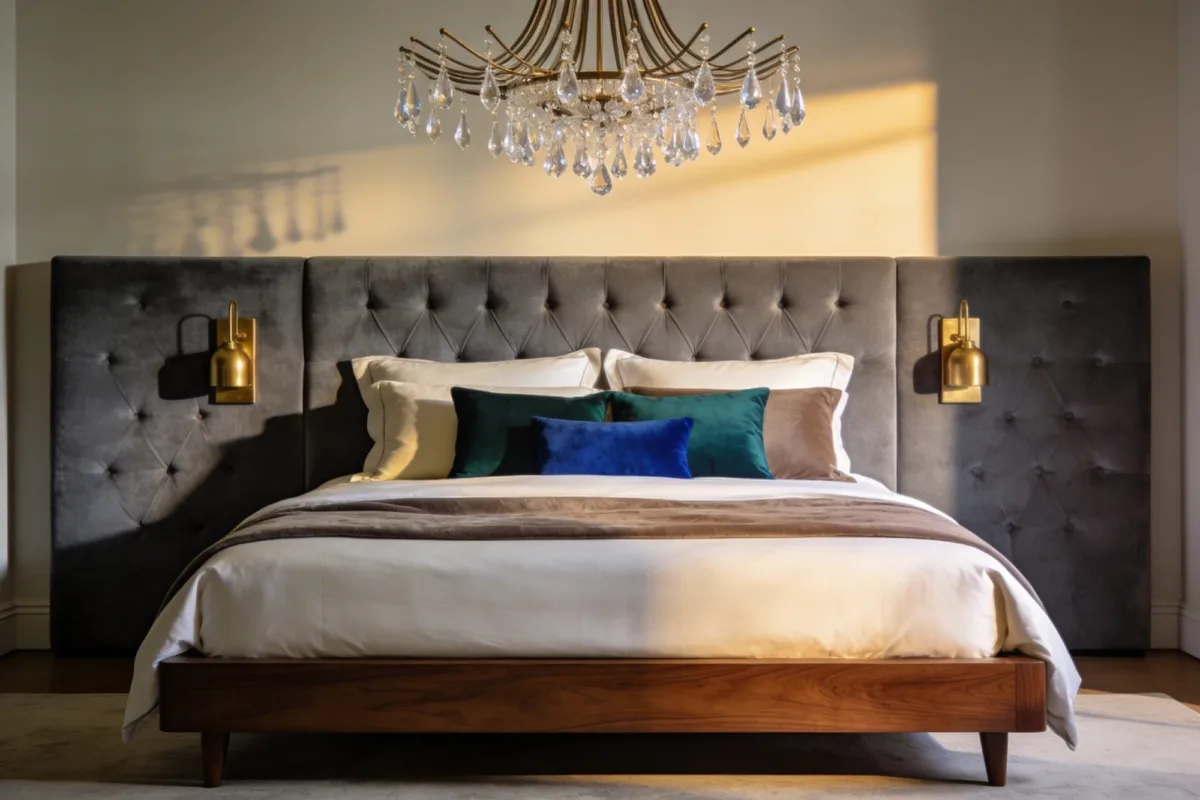
The bed carries more of the room’s luxury signal than anything else in it, so it’s worth spending disproportionately there. A luxury bed with a geometric headboard — angular tufting, a faceted upholstered panel, a chevron or fan pattern — gives the room a focal point without needing extra wall art, which is one of the more efficient design moves available: one piece doing the job of three.
On headboards specifically, there’s a real trade-off between DIY and designer that’s worth thinking through honestly:
| Approach | What You Get | What You Give Up |
|---|---|---|
| DIY upholstered headboard | Lower cost, full control over fabric and shape, a genuinely custom result if you’re handy | Time investment, and the finish rarely matches a professional edge — visible in close-up photos or side lighting |
| Designer/custom-ordered headboard | Precise tailoring, professional-grade padding and stitching, no build time | Meaningfully higher cost, and longer lead times if it’s made to order |
In a big bedroom, scale matters as much as style — a headboard sized for a standard room will look undersized once it’s centered on a large wall. Measure the wall, not just the bed frame, before you commit to a headboard width.
Texture and Material: Where the Money Actually Shows
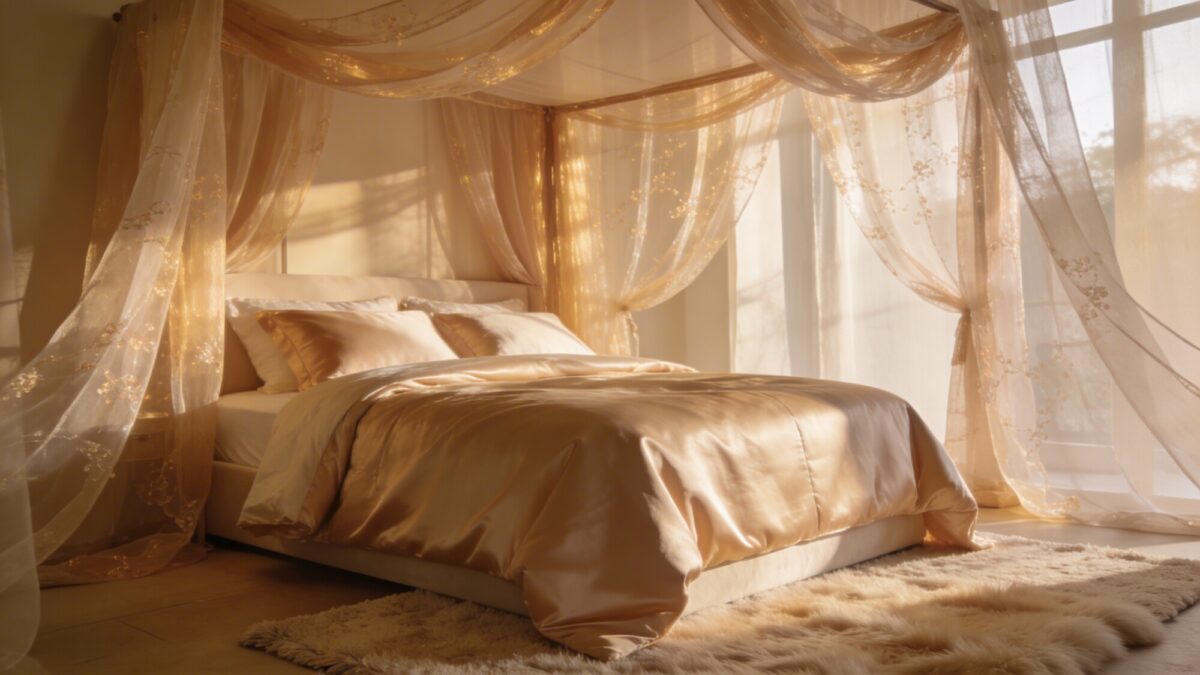
This is the section most people underspend on, and it’s the one that shows up first when someone actually touches your bedding. High-thread-count linens and a real wool or cotton rug read as luxurious the moment someone sits on the bed or walks across the floor — long before they’ve registered the color scheme or the furniture. Synthetic fabrics can look identical in a photo and feel completely different in person.
On rug placement: for a queen or king bed, the rug should extend at least 18–24 inches past the sides and foot of the bed, so it’s visible from the walking space around the room rather than hiding entirely under the frame. A rug that’s too small for the bed is one of the more common mistakes in otherwise well-designed rooms — it makes an expensive room look under-furnished.
Lighting: The Detail That Sells the Whole Room
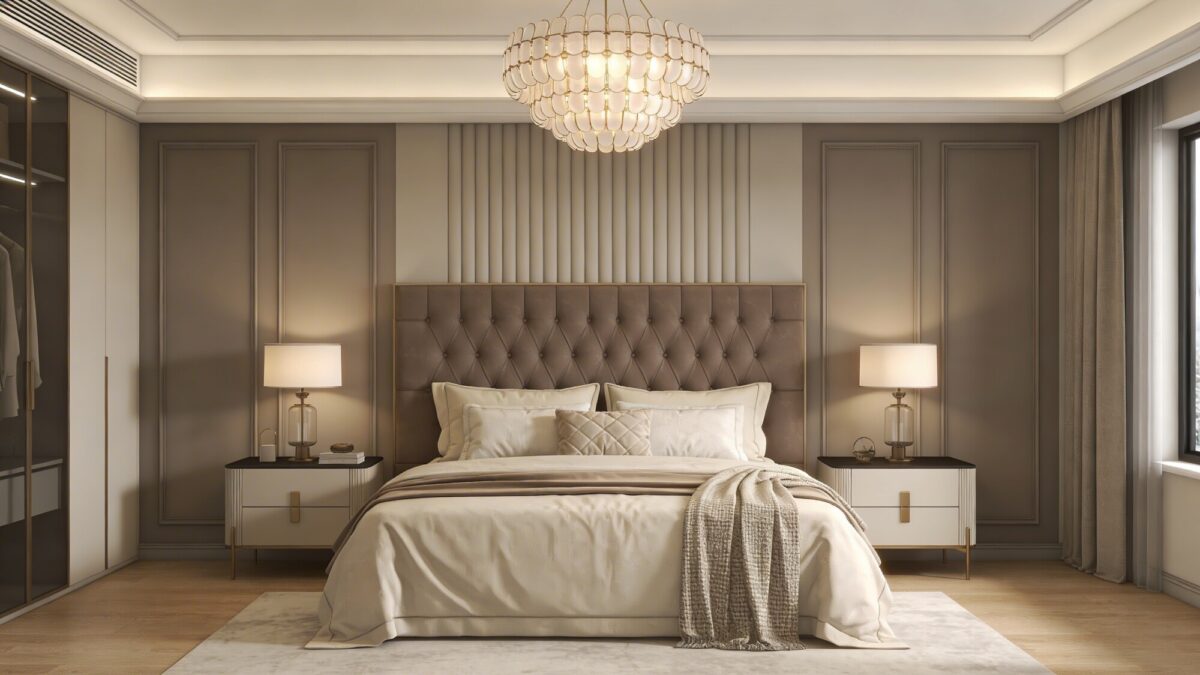
A single bright overhead fixture is the fastest way to flatten an otherwise well-designed room. Luxury lighting is layered: a dimmable ambient source for general light, task lighting at the nightstands for reading, and one statement fixture — a sculptural pendant or chandelier — that does double duty as art.
Symmetry is worth defaulting to here. Matching nightstand lamps on either side of a centered headboard read as calm and considered in a way that mismatched or single-sided lighting doesn’t, even when the mismatched version is technically more “interesting.” Save the asymmetry for texture and accessories, not the core lighting layout.
Modern Luxury Bedroom Design and Furniture That Earns Its Keep
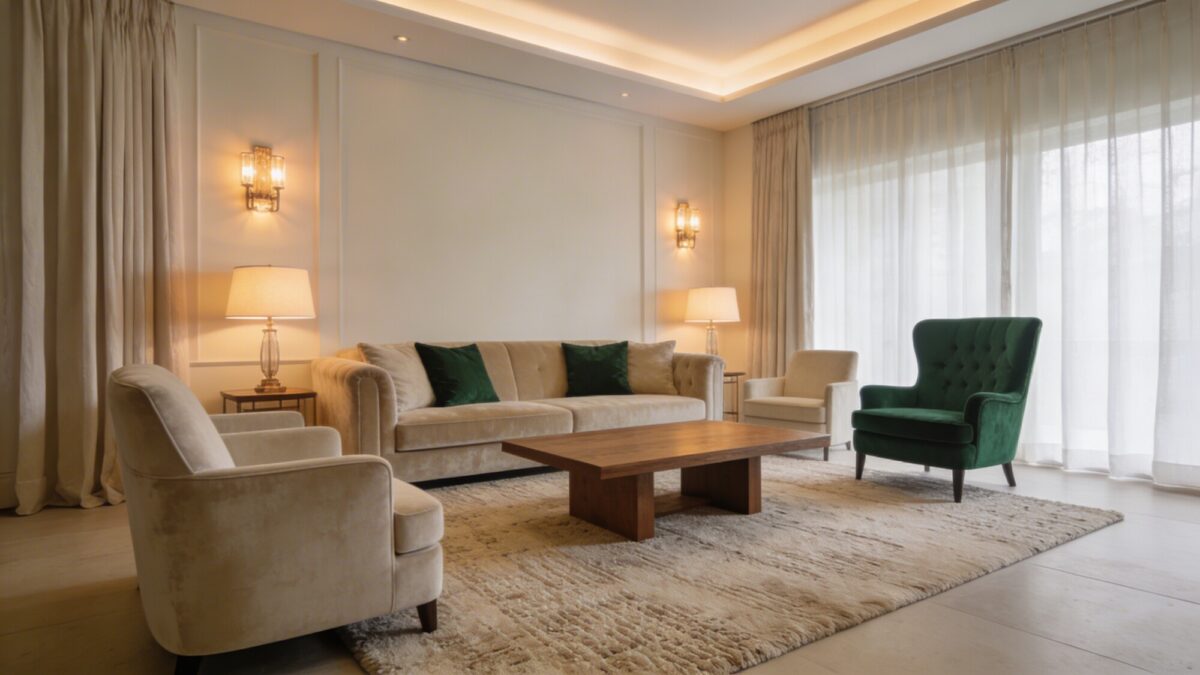
Modern luxury bedroom design leans toward fewer, better pieces rather than a fully furnished showroom look. Three core colors is a genuinely useful ceiling to hold yourself to: a warm neutral base for walls and large furniture, one deep accent color (a green, navy, or burgundy shows up in a lot of higher-end rooms for a reason — they read as rich without being loud), and a lighter tone like ivory to keep the room from feeling heavy.
For luxury bedroom furniture design specifically, prioritize spending on the pieces you touch daily — the bed frame, the nightstands, a proper dresser — over decorative furniture you’ll walk past. A well-made nightstand in solid wood will outlast three cheaper versions and looks better doing it.
Wardrobe strategy changes if the room is on the smaller side: a built-in wardrobe with flush, handle-less doors reads as more expensive than a freestanding armoire, mostly because it removes visual bulk rather than adding a large piece of furniture to a tight footprint. In a genuinely big bedroom, a freestanding statement wardrobe can work as its own focal point instead.
Highlight Walls and Luxury Bedroom Wall Panels
An accent wall does more for a luxury look than most people expect, and it’s usually cheaper than upgrading furniture. Luxury bedroom wall panels — fluted wood, upholstered, or 3D textured panels — behind the headboard add depth and a hotel-style focal point without adding clutter to the floor. A deep emerald or charcoal highlight wall paired with warm wood tones is one of the more reliable “instant upgrade” combinations, because the contrast does the work that extra furniture would otherwise need to do.
The trade-off: panels and textured accent walls are close to permanent once installed, unlike paint. If you’re not fully committed to a color or texture, test it with a large fabric swatch or a paint sample on the actual wall for a few days before ordering panels.
Art, Personal Touches, and a Little Drama
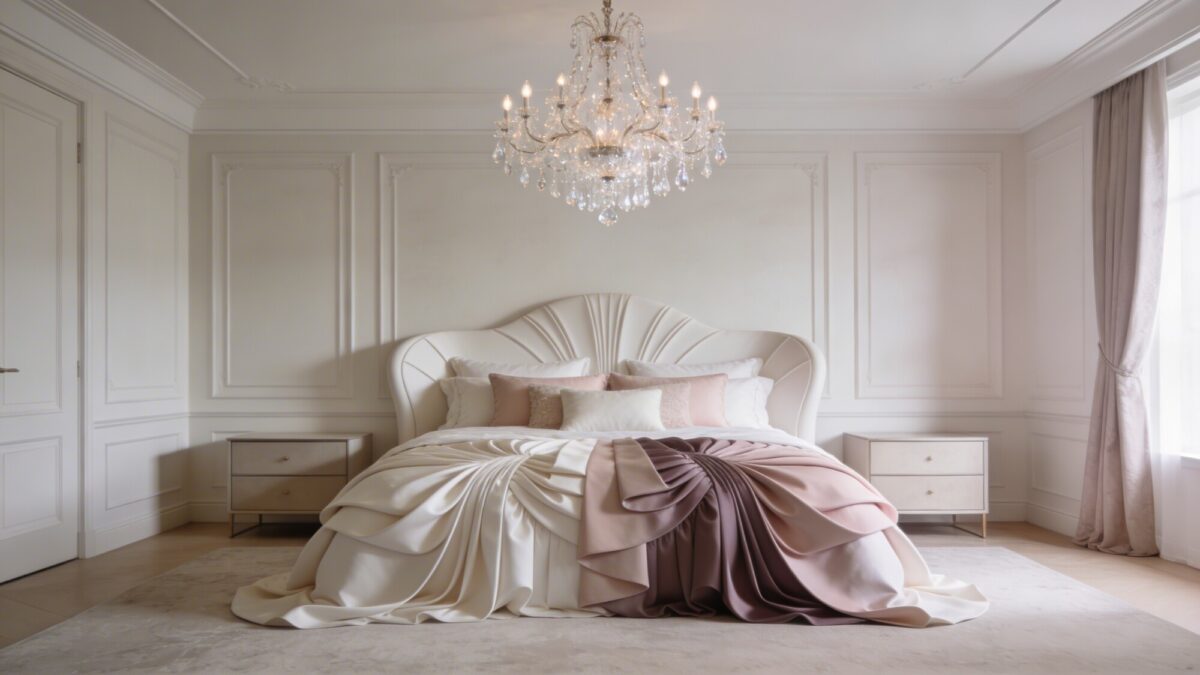
One piece of statement art or a sculptural chandelier is usually enough drama for a bedroom — this is a room meant to be restful, not a gallery. The common mistake is treating the bedroom like a living room and adding a gallery wall, a rug layered under another rug, and a chandelier all in the same space. Pick one dramatic element and let the rest of the room stay quiet around it.
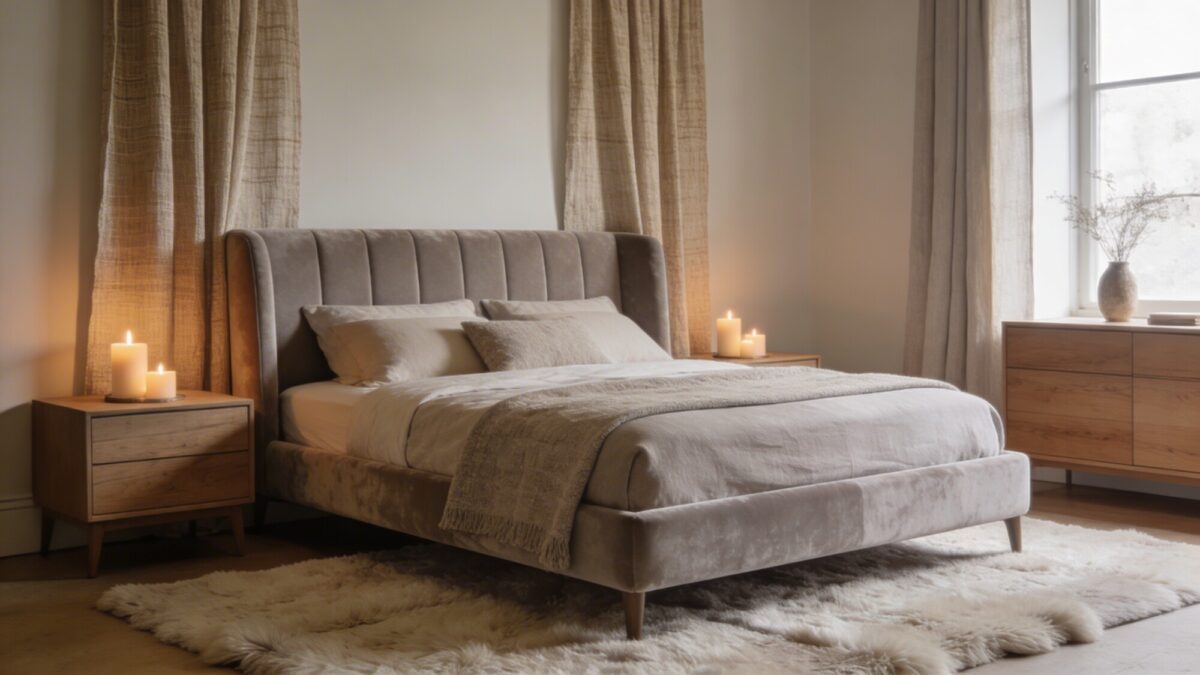
For a romantic luxury bedroom specifically, soft sculptural bedding and warm, low lighting do more than any single decor object. Candles or candle-style lighting, a canopy of sheer curtains, and rounded, soft-edged furniture shapes read as romantic in a way that sharp angular pieces generally don’t.
Sound and Scent: The Layer Most Rooms Skip
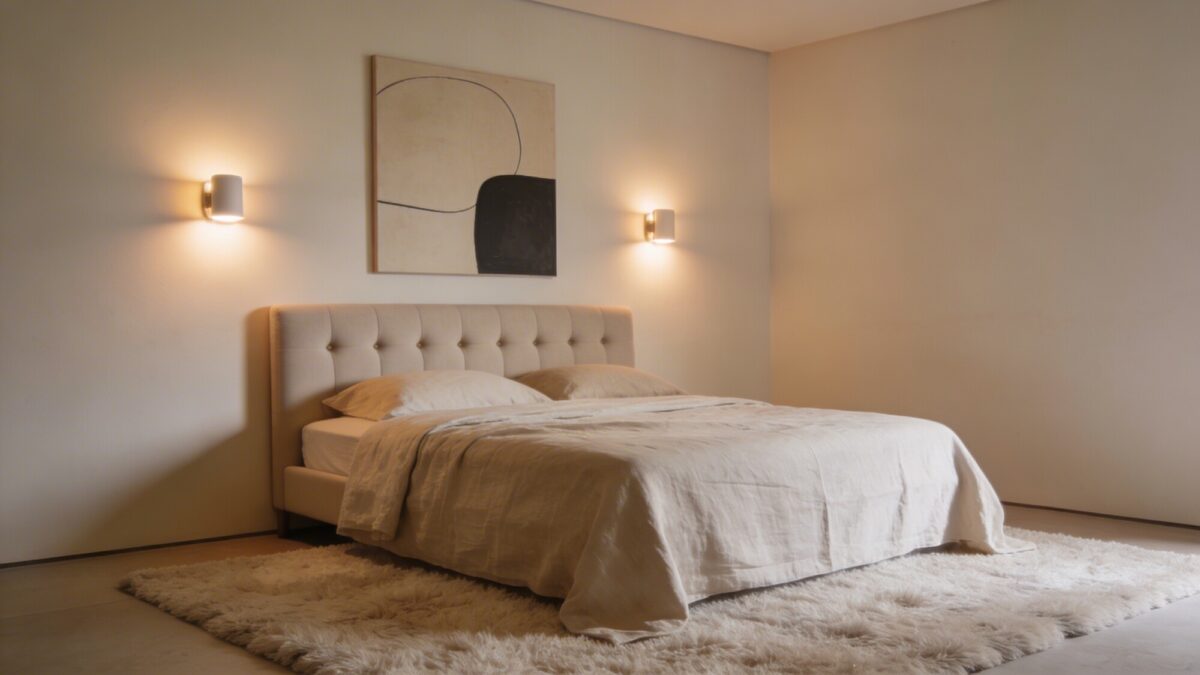
Visual design gets all the attention, but a genuinely luxurious bedroom also considers what it sounds and smells like. A rug and heavier drapery quiet a room measurably compared to bare floors and thin curtains — worth knowing if the bedroom faces a street or shares a wall. On scent, keep it subtle: one consistent, unscented-adjacent candle or diffuser reads as intentional; switching scents constantly or layering multiple fragrances reads as cluttered, the olfactory version of too much decor.
Smart, subtle tech fits here too — a dimmer you control from the nightstand or a small speaker tucked out of sight adds function without adding visual clutter, which is really the whole philosophy of this kind of room.
Where to Spend, Where to Save
If your budget doesn’t stretch to upgrading everything at once, this is the order that tends to make the biggest visible difference first:
| Priority | Item | Why It’s Worth It First |
|---|---|---|
| 1 | Bedding and linens | Touched daily, visible in every photo, and the fastest way to change how the room feels |
| 2 | Headboard or bed frame | The room’s focal point — upgrading it changes the read of the whole space |
| 3 | Lighting (lamps, dimmer, one statement fixture) | Cheap relative to furniture, big impact on mood |
| 4 | Rug | Grounds the room and hides flooring that doesn’t match the new palette |
| 5 | Wall treatment or panels | Higher cost and semi-permanent — worth doing last, once you’re sure of the palette |
FAQ: Quick Answers to Common Questions
What are the non-negotiables for a luxury bedroom?
Real fabric (not synthetic), layered lighting instead of one overhead fixture, and a rug sized properly for the bed. Skip any of those three and the room stops feeling high-end no matter what else is in it.
How do I balance luxury with comfort on a budget?
Spend on bedding and lighting first — they’re the cheapest upgrades relative to their visual impact — and hold off on wall panels or custom furniture until the rest of the room is dialed in. A tight budget spent on the right three items beats a bigger budget spread thin across everything.
What are current luxury bedroom trends?
Deep, moody accent colors (emerald, navy, burgundy) paired with warm wood tones, geometric and fluted headboard shapes, and textured wall panels behind the bed instead of flat paint. The common thread across most current builds is fewer statement pieces done well rather than a fully decorated look.
How can I personalize a luxury look without overdoing it?
Pick one personal element — a piece of art, a specific textile, a scent — and let it be the only “loud” thing in the room. Personalizing five different elements at once is what tips a luxury room into cluttered.
Is minimalist luxury still a thing in bedrooms?
Yes, and it’s arguably easier to get right than a maximalist luxury look, because there’s less room for competing elements to clash. The risk with minimalist luxury is that it can read as sparse instead of restrained if the materials aren’t good enough to carry the empty space — this is where fabric and rug quality matter even more than usual.
Our Verdict
If you’re planning a full luxury bedroom design and can only do three things well, make them the bed (frame and linens), the lighting, and the rug — in that order. Wall panels, statement chandeliers, and curated art all matter, but they’re refinements on top of a foundation, not substitutes for one. Get the foundation right first and the room will carry the rest of the decisions with less effort than you’d expect. For more direction on specific looks once you’ve got the basics locked in, these modern luxury bedroom ideas built around a 5-star hotel feel and this set of luxury master bedroom decor ideas are both worth a look. If lighting is where your current room is falling short, this guide to high-end bedroom lighting covers it in more depth than we could here, and if you’re leaning toward a softer, romantic direction, these white headboard bedroom ideas are a good starting point.