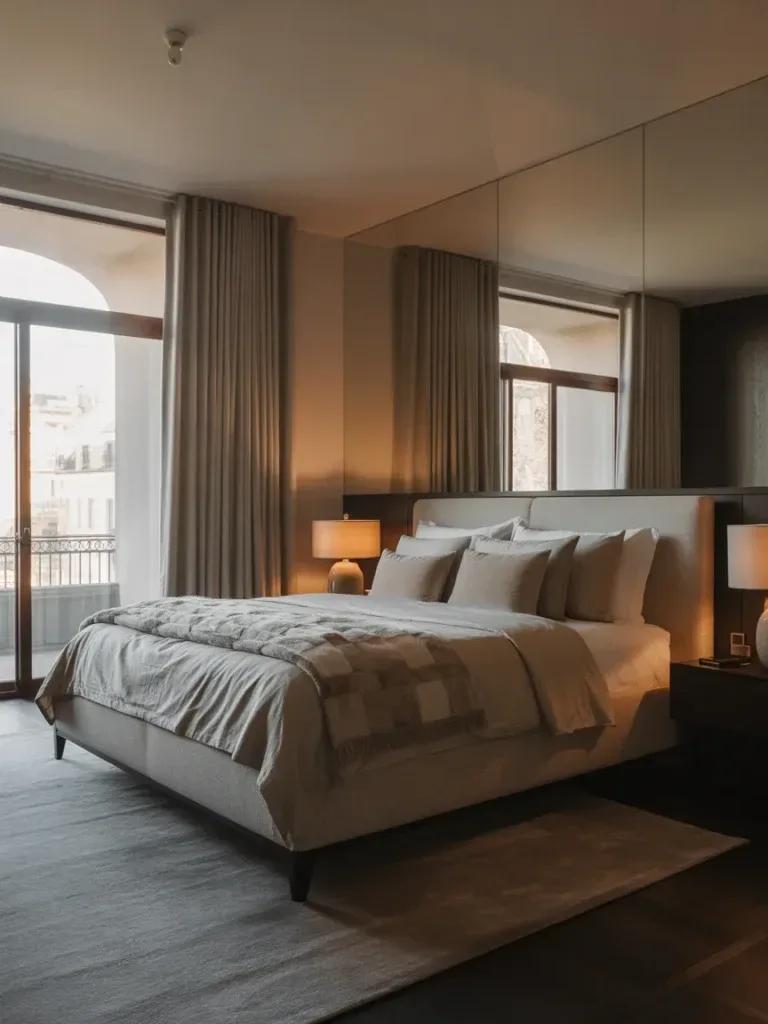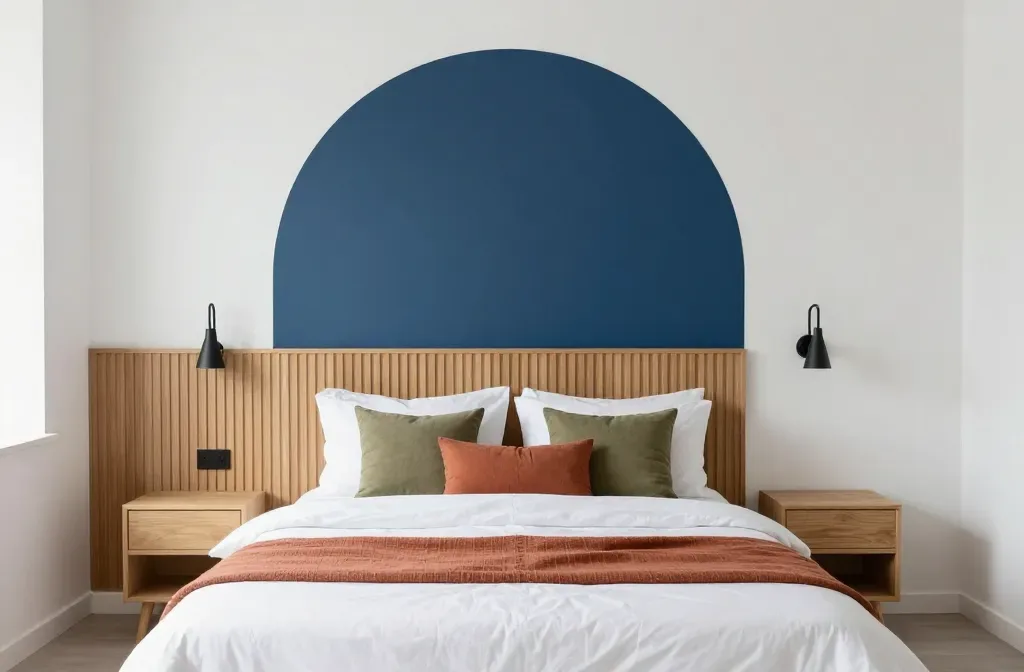
12 Bedroom Back Wall Design Ideas That Wow on a Budget
The wall behind your bed does more design work than almost any other surface in the house, and most people leave it blank out of indecision rather than taste. A good back wall gives the room a focal point, sets the tone before you’ve even noticed the furniture, and can make a small bedroom feel intentional instead of half-finished. If you’re weighing paint against panels against a full mural, this guide walks through twelve bedroom back wall design ideas that actually hold up once the paint is dry and the guests have left — including the ones that photograph well but are a pain to live with. If you haven’t picked a wall treatment yet at all, our DIY accent wall ideas guide is a good place to start before you commit to one of these.
Quick takeaways before you scroll:
- Paint and board-and-batten are the cheapest, most reversible options — start there if you rent or you’re not sure about commitment.
- Slats, upholstery, and shelf ledges add real texture and depth, but they need proper wall prep and, in most cases, a helper.
- Mirrors and limewash do the most for a dark or small bedroom bed design without adding bulk to the room.
- Whatever you pick, keep the rest of the room quieter — a loud back wall and loud everything else fights itself.
1. Go Bold With Color-Blocked Paint
Color-blocking is the fastest way to add architecture to a flat wall using nothing but paint and a steady hand with painter’s tape. Frame the bed with a contrasting band, a soft arch, or a half-wall in a deep tone — ink blue, moody olive, and terracotta all read well behind a bed because they’re dark enough to anchor the space without swallowing it. This is also one of the few back-of-bed design moves you can undo in an afternoon if you rent, which is why it tends to be the first thing people try.
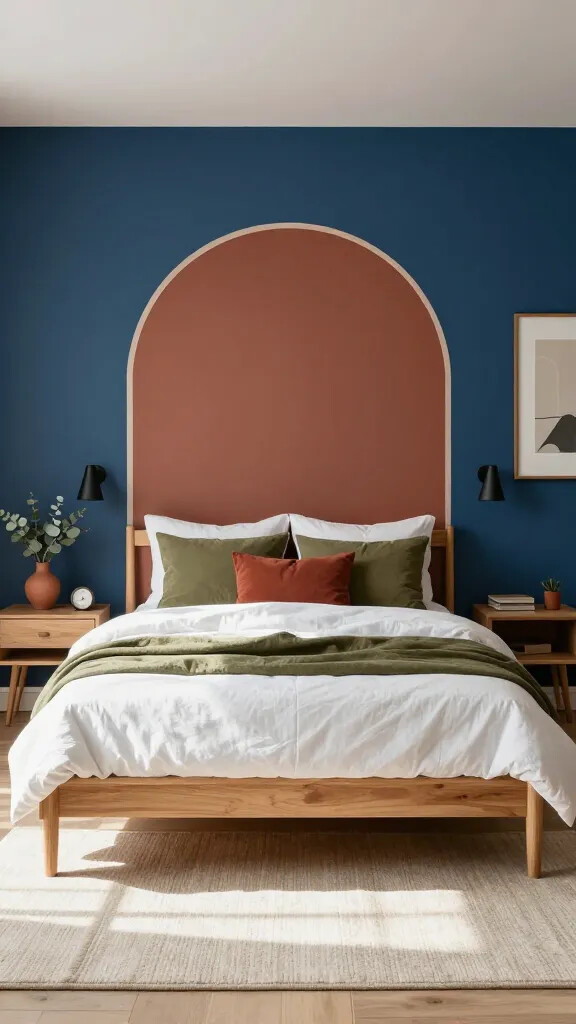
The mistake people make with color-blocking isn’t the color — it’s the shape. A crisp geometric block reads modern; a wobbly hand-drawn arch reads like a mistake. Use a plumb line and a compass or string-and-pencil for any curve, and always cut in with a small angled brush before rolling the rest, or your edges will bleed under the tape.
💡 Pro Tip: Test your color block at actual scale before committing — tape off the shape in painter’s tape only, live with it for two days, then paint. A block that looks great as a 4×6 mood board swatch can feel oppressive at full wall height.
Tips for Getting It Right
- Pick a deep tone behind the headboard rather than a pastel — pastels tend to disappear once bedding and pillows are layered in front of them.
- A rounded arch softens a room with a lot of hard edges (metal bed frame, angular furniture); a rectangle suits a more tailored, modern look.
- Match your bedding to one accent color in the block rather than the whole palette — one point of connection reads as intentional, three starts to feel matchy.
2. Add Texture With Vertical Slat Panels
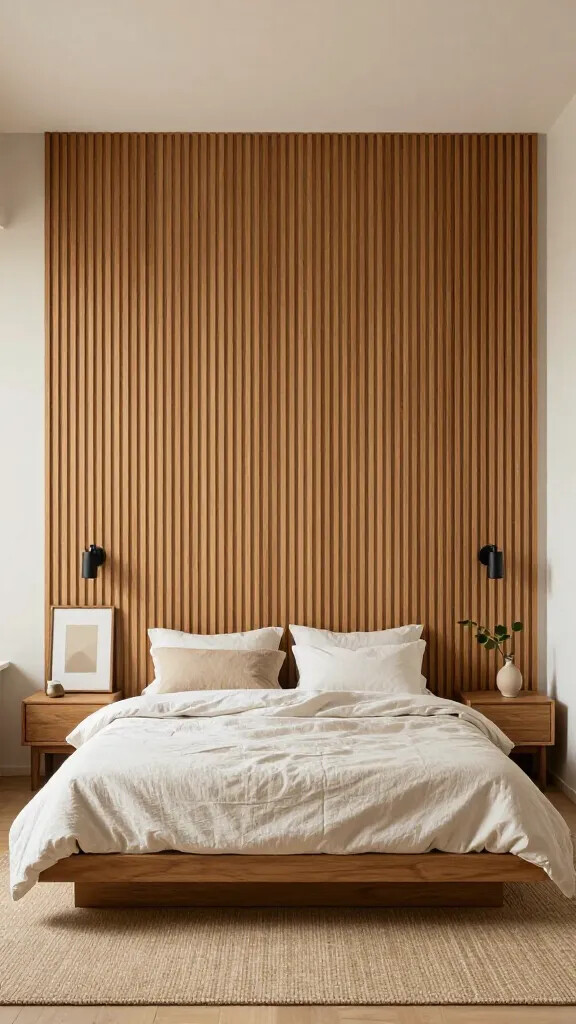
Slats are the treatment people ask about most when they see it in photos, because it looks custom-built even though it’s really just battens and adhesive. Vertical wood slats create shadow lines that shift throughout the day, add real texture you can feel, and make a low ceiling feel taller by pulling the eye upward — a genuine trick, not just a design cliché. Run them floor-to-ceiling and they double as a statement headboard on their own, which matters if you’re working with a stylish double bed design that doesn’t have a headboard of its own.
What You’ll Actually Need
- Pre-made MDF slats (cheaper, paint-friendly) or real wood battens (pricier, better grain when stained)
- Stain or paint — matte finishes read more expensive than gloss on this treatment
- Construction adhesive plus a brad nailer, since adhesive alone tends to bow over time in humid climates
The trade-off here is spacing. Tight spacing (an inch or less between slats) gives you a more solid, dramatic wall but costs more material and takes longer to install. Wider spacing (2–3 inches) is faster and cheaper but reads more casual — closer to Scandi than to a boutique hotel. Neither is “correct,” but pick one on purpose rather than defaulting to whatever spacing the tutorial you found happened to use.
3. Curate a Gallery Wall With Intent
A gallery wall behind the bed only works if it looks curated rather than accumulated. Skip the impulse to hang whatever frames you already own in whatever gaps are left; instead, pick one theme — black-and-white photography, botanical sketches, travel prints — and stick to it, with no more than two frame finishes in the mix. A tight grid with consistent spacing reads as considered even if every piece inside it is inexpensive.
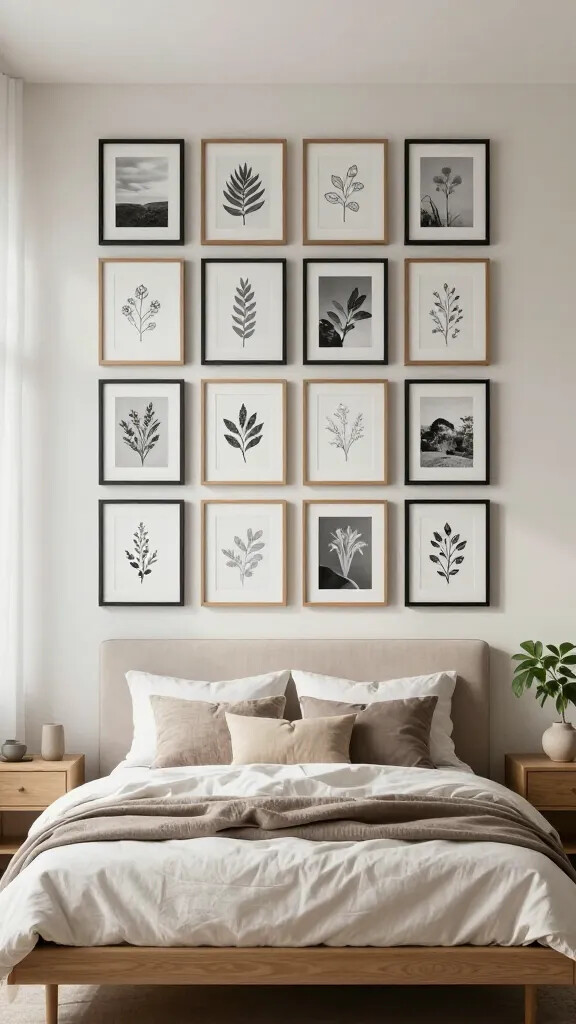
💡 Pro Tip: Before you touch a nail, lay the whole arrangement out on the floor first and photograph it from above. It’s much easier to shift frames around on carpet than to keep patching drywall because the layout “felt right” on the wall and then didn’t.
Key Points
- Keep the centerline of the grid at roughly eye level, or aligned with the top of the headboard — not dead center of the wall, which usually sits too high once the bed is in front of it.
- Leave 2–3 inches between frames for a grid arrangement; salon-style (mixed sizes, looser spacing) can go tighter since the irregularity is the point.
- Swap seasonally if you like variety — it’s the one back-of-bed design idea that costs nothing to change your mind about.
4. Create a Soft Upholstered Wall
An upholstered back wall is the closest you’ll get to a hotel room without hiring a contractor, and it does something none of the other options on this list do: it actually absorbs sound. If you read in bed while someone else sleeps, or your bedroom backs onto a noisy hallway, this is worth the extra effort over paint or slats. Fabric panels over foam and batting also hide uneven or damaged rental walls better than almost anything short of full drywall replacement.
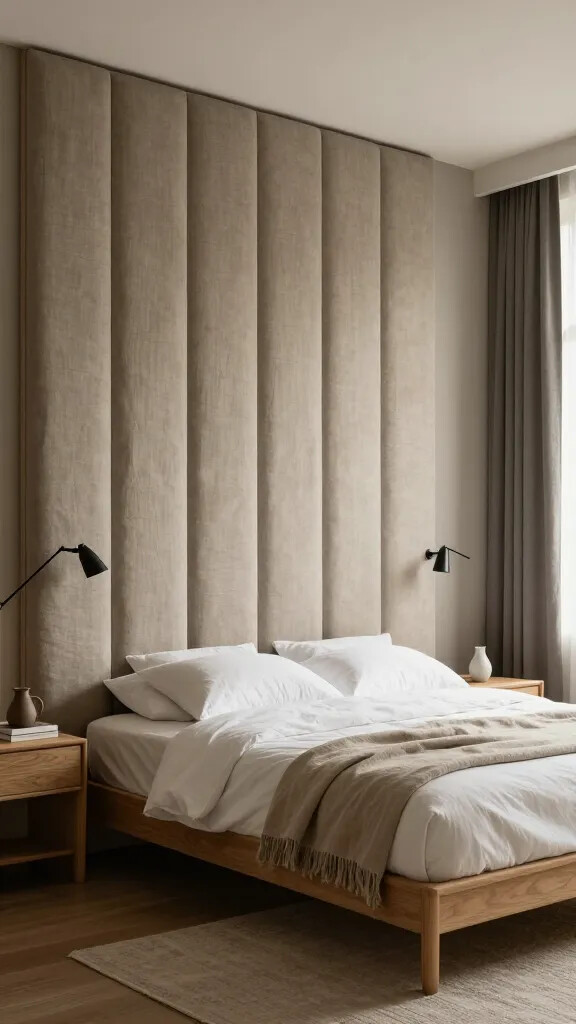
Materials
- Foam and batting for the cushioned base
- Fabric: linen for a relaxed look, velvet for drama, performance polyester if you have kids or pets
- A DIY plywood backer, or a pre-cut stick-on panel kit if you want to skip building anything
- Staple gun and a level — the level matters more than people expect, since crooked panels are obvious the second the light hits them at an angle
Vertical panel orientation adds height to a low room; horizontal panels widen a narrow one. That’s the whole decision, and it’s worth making on purpose rather than by habit.
5. Frame the Bed With Built-In Sconces
Lighting changes a room faster than almost any other single change you can make, and wall-mounted sconces do two things at once: they free up nightstand space, and they create symmetry even when your furniture doesn’t match. Swing-arm sconces give you flexible reading light; simple uplights give you ambiance without the reading function. For more layered evening lighting ideas that pair well with this look, see our guide to fairy light styling for bedroom walls.
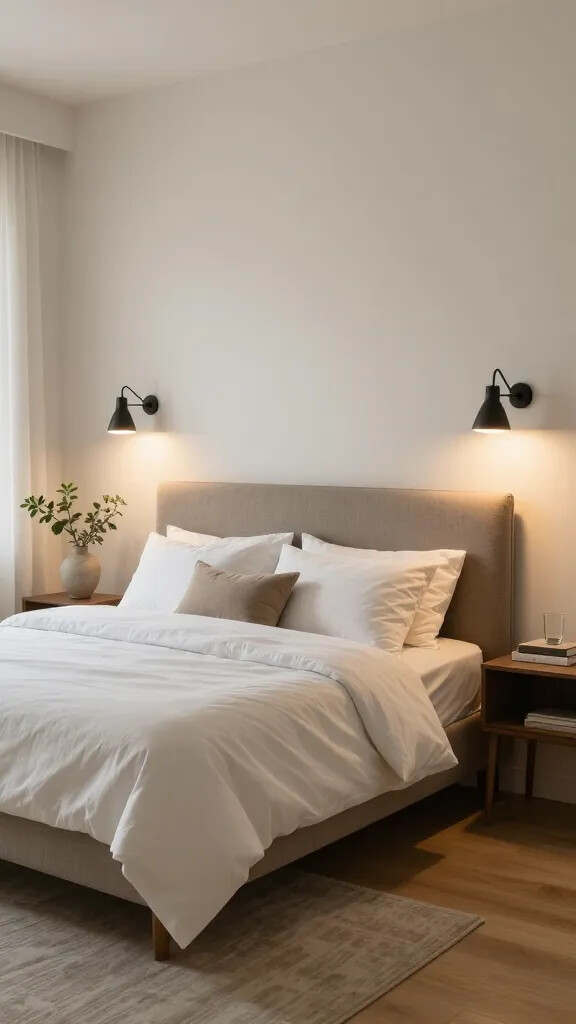
Tips
- Hardwire for a completely clean look, or use plug-in sconces with cord covers if you can’t run new wiring — the covers are inexpensive and look intentional if you route them straight down behind the headboard.
- Mount at roughly shoulder height when seated in bed, not at standard eye-level height, or you’ll get glare every time you look up from a book.
- Warm bulbs in the 2700K–3000K range look like a hotel room; anything higher on the Kelvin scale starts to feel clinical in a bedroom.
6. Embrace Limewash or Plaster Finish
Limewash gives a wall depth without adding a single object to the room. The cloudy, uneven texture reads as artisanal even on a DIY job, and it has a practical upside most people don’t think about: it hides small wall imperfections — patched holes, minor texture mismatches — far better than flat paint does, because the irregularity is baked into the finish itself.
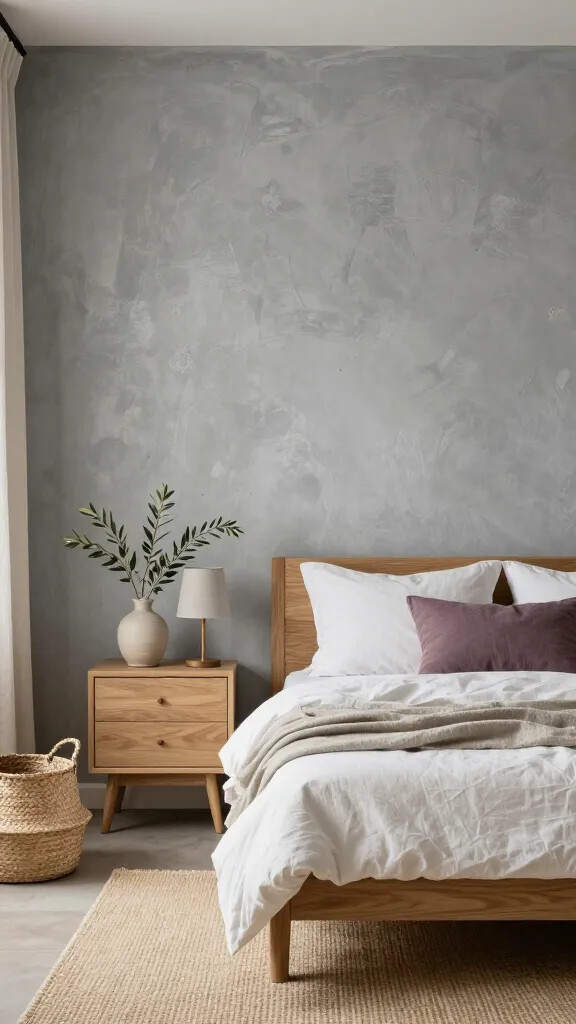
Good Color Picks
- Stone gray for calm minimalism
- Wheat for warmth that doesn’t skew yellow
- Smoky mauve for a subtle, quiet color statement
💡 Pro Tip: Apply limewash with a natural bristle brush in loose, irregular X-strokes rather than uniform vertical passes. Even, uniform brushwork is what makes limewash look like a bad paint job instead of the mottled, cloudy finish it’s supposed to have.
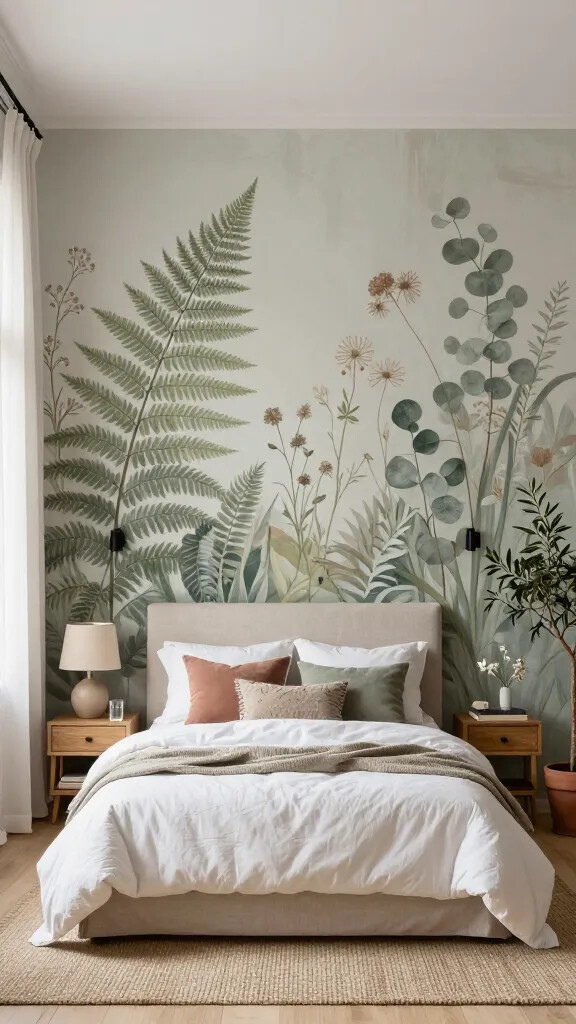
7. Paint or Wallpaper a Dramatic Mural
One large-scale image turns a plain wall into a focal point instantly, and because the bed sits in front of most of it, even a bold mural won’t overwhelm the room the way it would on an open wall. Muted botanical designs and soft geometrics tend to age better than trend-driven patterns — you’ll still like it in three years, which matters more for a mural than for almost any other item on this list, since it’s genuinely difficult to undo. If peel-and-stick sounds more manageable than pasted paper, our peel-and-stick wall mural roundup covers options that come down clean.
Tips
- Choose a muted palette if you want longevity — saturated, high-contrast murals are the first thing people regret two years in.
- Center the mural on the headboard, not on the wall itself, since the headboard is what your eye actually measures against.
- Peel-and-stick wallpaper keeps the commitment low if you’re not sure you’ll love it in a year.
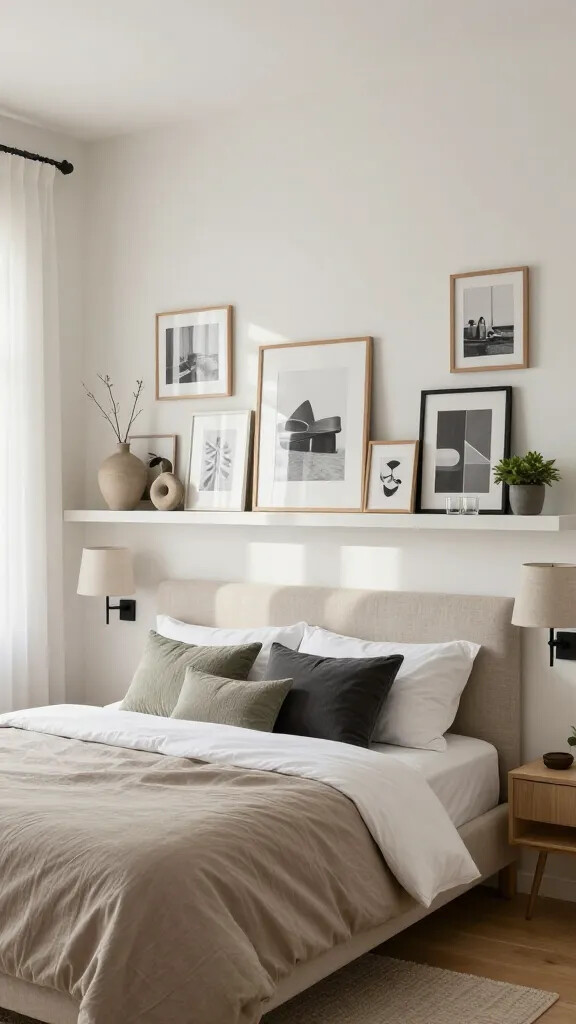
8. Build a Shelf-Ledged Headboard Wall
A shallow floating ledge does double duty as storage and styling, which makes it one of the better small bedroom bed design solutions on this list — it replaces the need for bulky nightstands entirely if your floor space is tight. Layer framed art, a candle or two, and one sculptural object at varying heights rather than lining everything up in a row; the slight overlap and height variation is what makes it look effortless instead of like a display shelf at a store.
For more ways to make a compact room feel deliberate rather than cramped, our small bedroom layout ideas guide is worth a look alongside this one.
Key Elements
- Floating picture ledges (the cheaper route) or a built-out drywall niche (more permanent, more expensive)
- Layered frames at slightly different heights — never perfectly aligned
- One or two accent objects: a small vase, a mini plant, a single sculptural piece — resist adding a third
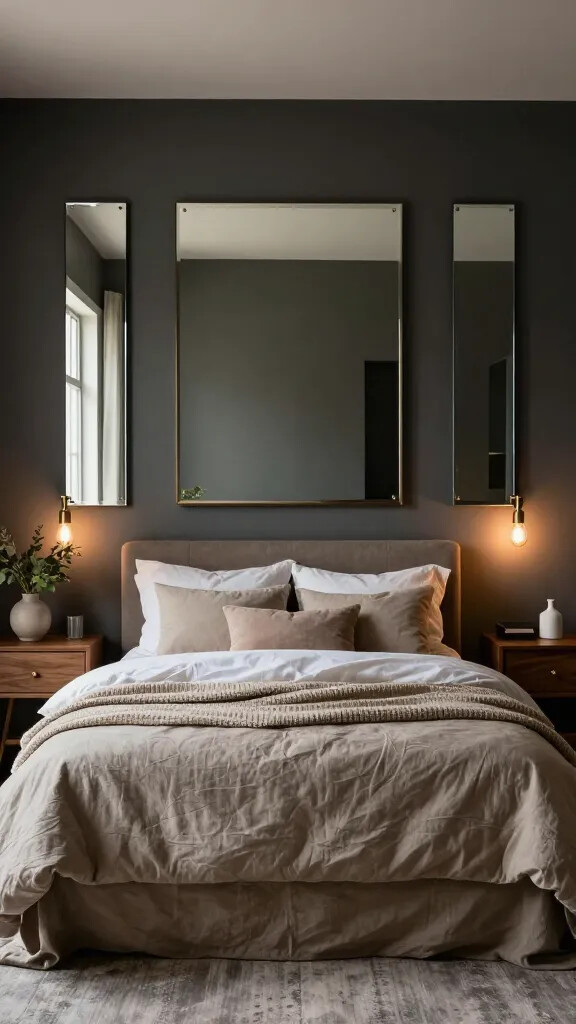
9. Mix Mirrors for Light and Drama
Mirrors solve a problem lighting alone can’t: they bounce whatever natural light exists around the room instead of just adding more of it. A single oversize mirror hung horizontally behind the bed feels luxe and a little unexpected; a pair of slim mirrors flanking the headboard adds symmetry without the visual weight of one giant piece. Either works well in a dark room or one that faces a brick wall or narrow airshaft, where more windows simply aren’t an option.
Smart Moves
- Antique or smoked glass gives a softer, more bedroom-appropriate glow than clear glass, which can feel closer to a bathroom or gym.
- Check your sightlines before hanging — a mirror that reflects a cluttered closet or an unmade corner of the room undoes the whole effect.
- Secure heavily, with proper wall anchors rated for the weight. This is the one item on this list where a shortcut installation is a genuine safety issue, not just an aesthetic one, given it hangs directly over where you sleep.
💡 Pro Tip: Angle sconces or reading lights away from any mirror surface behind the bed. Direct light hitting a mirror at night bounces straight back at eye level, which is a surprisingly common complaint from people who add mirrors and lighting in the same renovation without thinking through how they interact.
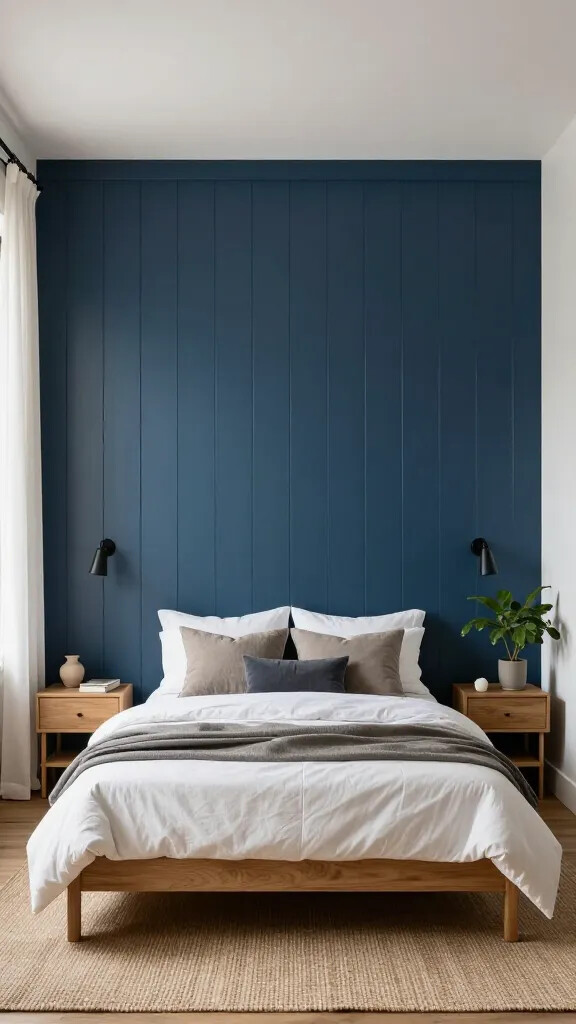
10. Layer Board-and-Batten or Wainscoting
Board-and-batten is the most old-money-on-a-budget option on this list. Running vertical battens two-thirds up the wall, topped with a horizontal cap rail, adds the kind of architectural depth that usually signals a much bigger renovation than it actually is. Paint the battens the same color as the wall for a subtle, texture-only effect, or contrast the colors for something with more visual punch — both read as intentional back-of-bed design rather than an afterthought.
Quick Guide
- Run the paneling at least two-thirds up the wall for a modern proportion — anything shorter starts to look like wainscoting from an older style of home.
- Space battens 8–12 inches apart at 3–4 inches wide for balanced proportions; tighter spacing costs more in material and installation time.
- Finish in satin or eggshell — flat paint on trim shows every scuff within a year, especially at headboard height where bedding brushes against it.
11. Go Organic With a Rattan or Cane Inlay
Cane and rattan bring warmth that paint and hard materials simply can’t replicate — it’s the fastest way to soften a room that’s gone a little too modern or too cold. A custom-framed cane panel set into painted wood molding behind the bed reads as considered rather than trendy, especially paired with linen bedding and warm metal accents like brass.
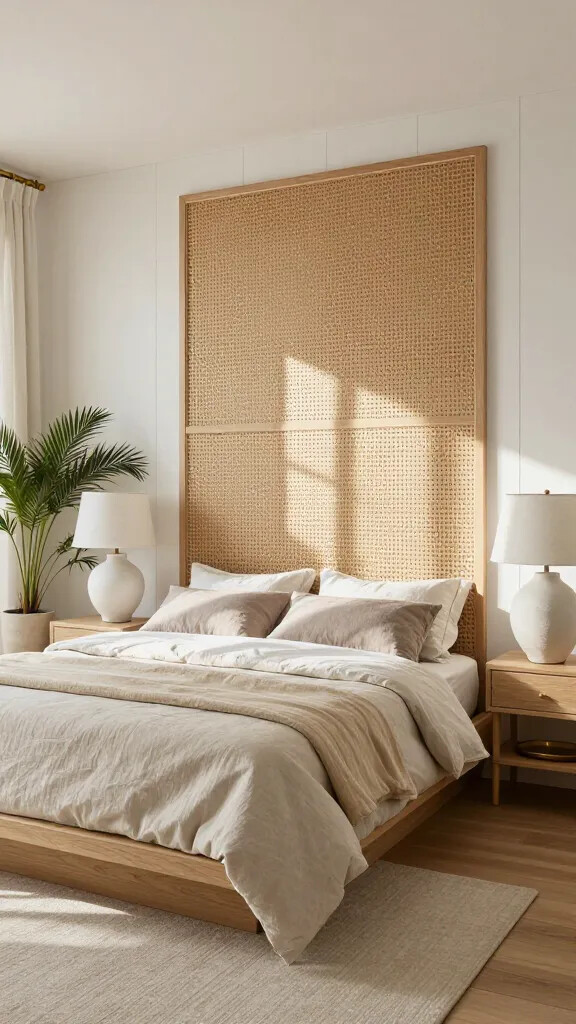
How to Style It
- Frame cane panels with painted wood trim for a finished, custom look rather than leaving raw edges exposed.
- Keep accessories simple — a ceramic lamp, a single plant, soft throws. Cane already reads as textured; piling on more pattern competes with it rather than complementing it.
- Stick to warm metal tones (brass, aged bronze) for hardware and fixtures — cool metals like chrome or matte black tend to fight the organic warmth of the cane.
12. Install Statement Fabric or Tapestry Drapery
A wide curtain panel hung behind the bed does three things paint can’t: it softens hard architectural lines, dampens sound, and hides an imperfect wall without any patching or prep work at all. Mount the rod high and wide — closer to the ceiling than the headboard — and it also has the side effect of making the ceiling feel taller, similar to the trick vertical slats pull off with wood instead of fabric.
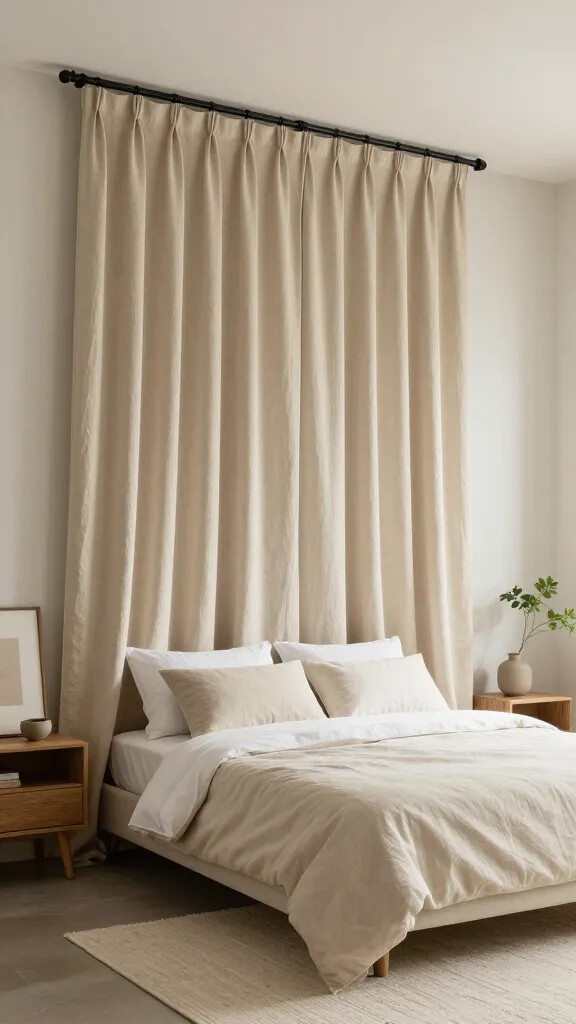
Pro Moves
- Mount the rod as high and wide as your ceiling allows — the extra height is what sells the illusion of a taller room.
- Washed linen, bouclé, or velvet all add texture; avoid stiff, sheet-like fabrics, which read cheap even when they aren’t.
- Stick to solids or subtle patterns so the bed stays the visual focus rather than competing with a busy print.
Comparing the Options: Cost, Effort, and Best Fit
| Treatment | Relative Cost | DIY Difficulty | Best For |
|---|---|---|---|
| Color-blocked paint | Low | Easy | Renters, quick refreshes |
| Vertical slat panels | Medium | Moderate | A stylish double bed design without a real headboard |
| Upholstered wall | Medium–High | Moderate–Hard | Light sleepers, sound dampening, hiding rough walls |
| Limewash / plaster | Low–Medium | Moderate | Neutral rooms that still want texture |
| Mirrors | Medium | Easy–Moderate | Dark rooms, small bedroom bed design |
| Board-and-batten | Medium | Moderate | Renters who plan to sell later; timeless appeal |
| Fabric drapery | Low–Medium | Easy | Fast, seasonal, fully reversible change |
Things to Consider Before You Start
- Are you renting? Prioritize paint, drapery, or removable panel kits over anything that requires drilling into drywall for structural framing.
- Is your bed off-center on the wall? An off centre bedroom design isn’t a flaw — treatments like a single wide mural, a full-wall slat panel, or drapery mounted wall-to-wall all read as intentional regardless of where the bed itself sits, since they don’t depend on perfect symmetry the way a tight gallery grid does.
- Do you actually need sound dampening? If so, upholstery and heavy drapery are doing real work here — paint and mirrors are purely visual.
- What’s your actual budget ceiling? Board-and-batten and slats both scale in cost depending on material choice (MDF versus real wood), so price it out before you fall in love with a specific finish.
Frequently Asked Questions
What’s the cheapest bedroom back wall design idea on this list?
Color-blocked paint. You’re paying for a couple of cans of paint, painter’s tape, and time — no materials to build or panels to hang. Fabric drapery is a close second if you already own or can thrift a wide curtain panel.
What works best behind the bed in a small bedroom?
Mirrors and a shelf-ledge headboard wall both perform well for small bedroom bed design because neither adds bulk into the room. Mirrors bounce existing light around, and a shallow ledge replaces bedside furniture that would otherwise eat up floor space.
Can I combine two of these ideas?
Yes, and some pairings work particularly well — sconces with board-and-batten, or a mirror with limewash. Avoid stacking two high-texture treatments together, like slats plus upholstery, since they tend to compete rather than complement each other.
Will a mural or wallpaper make a small room feel smaller?
Not if you keep the pattern muted and let the bed cover most of the lower portion. A large-scale, low-contrast botanical or soft geometric print actually recedes visually more than a smaller busy pattern would.
What’s a common mistake with an off-centre bed?
Trying to force a symmetrical treatment — like a tight gallery grid or matched sconces — onto a wall where the bed isn’t centered. It never quite lines up. Full-wall treatments (slats, drapery, a wide mural) sidestep the problem entirely because they don’t rely on symmetry to look finished.
Our Take
If you want the lowest-risk starting point, paint or drapery first — both are reversible and neither requires tools you don’t already own. If you’re staying in the space for years and want something with more presence, slats or board-and-batten give you the best return for the effort, since both add genuine architectural depth rather than just surface color. Save upholstery and mirrors for when you know exactly what problem you’re solving — sound in the first case, light in the second — rather than picking them for looks alone. Whichever bedroom back wall design idea you land on, treat it as the one loud decision in the room and keep the rest of the space quieter around it; that contrast is what makes any of these actually read as designed rather than decorated. For more inspiration once you’ve settled on a direction, browse our full modern bedroom design ideas collection.