6 Elegant Minimalist Living Room Decor That Captivates in Calm
Done wrong, elegant minimalist living room decor ends up looking empty rather than calm — a sofa, a rug, nothing else, and a room that feels unfinished instead of intentional. Done right, it’s the opposite: fewer objects, but each one earning its place. If you’re still deciding how far to take the minimalist direction, this roundup of minimalist aesthetic ideas is a good place to see the range before committing to a specific look.
The difference between “calm” and “bare” comes down to six things — texture, furniture presence, lighting, color restraint, art, and storage. Get most of these right and the room reads as considered rather than incomplete.
Quick-Reference: The 6 Moves
- Layer textures within a tight neutral palette
- Choose furniture with quiet presence, not just low profile
- Build three lighting layers, warm-toned throughout
- Keep color to one monochrome base plus a single accent
- Use one large art piece instead of several small ones
- Hide the clutter in storage that still looks intentional
1. Layer Textures Within a Tight Palette
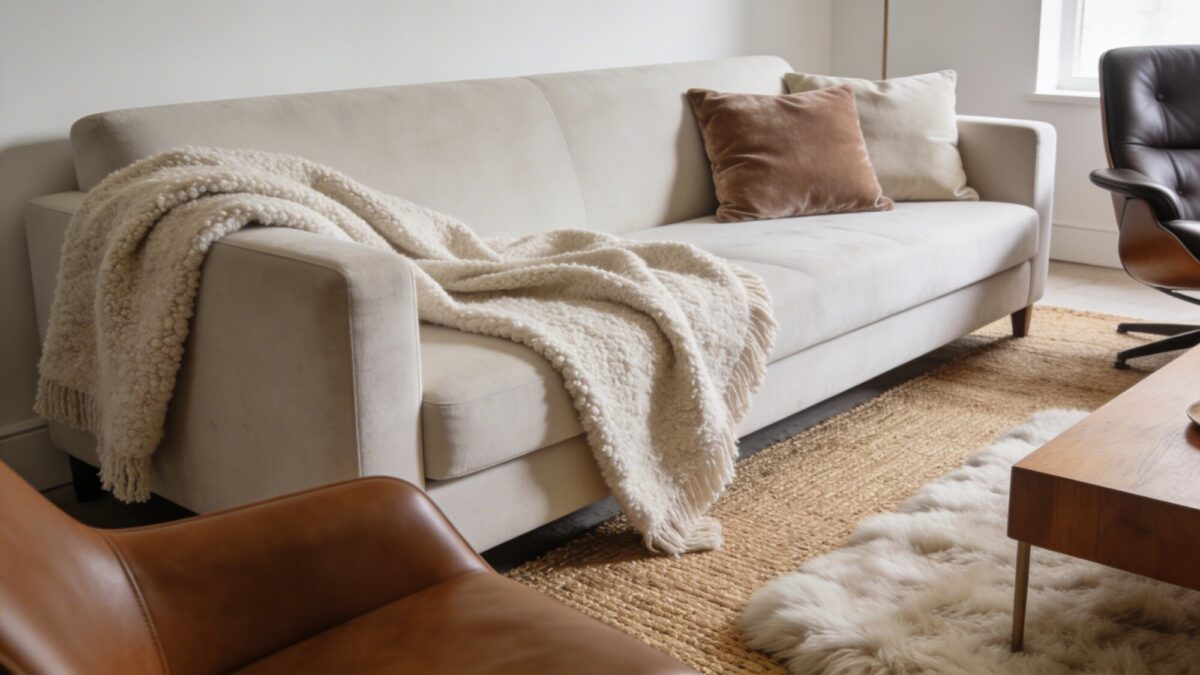
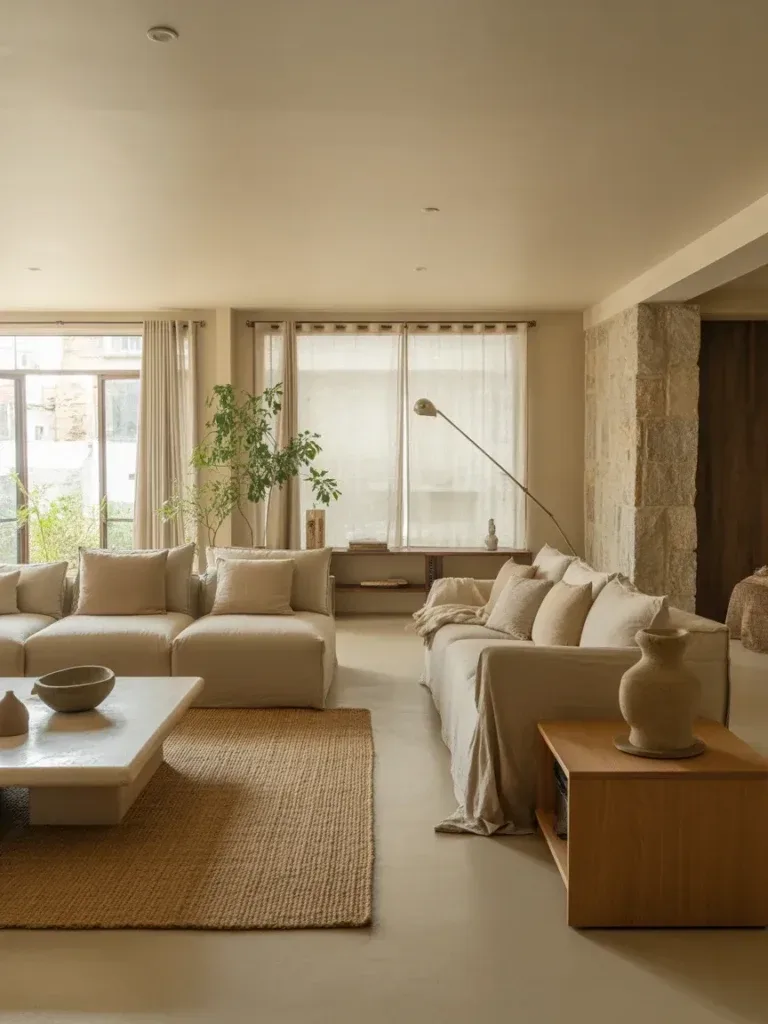
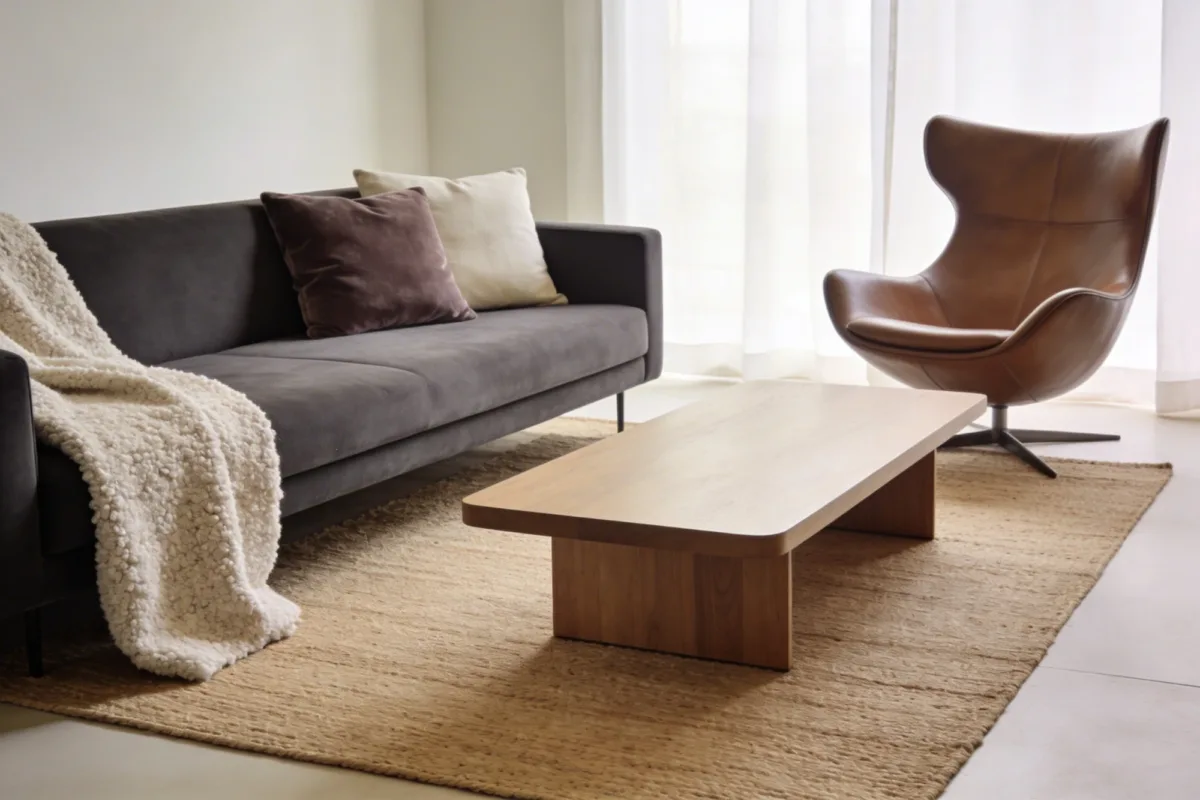
This is the step that separates elegant minimalist decor from a stark, sparse room. Because the color palette in minimalist design stays tight, texture is doing the job that color and pattern would normally do — it’s where the depth comes from. A wool or boucle throw over a streamlined sofa, a jute or sisal rug underneath, and a few velvet or linen cushions for contrast is usually enough.
Pair a fluffy textured rug with something hard and sleek — a leather chair, a wood coffee table — so the room has tactile contrast rather than one uniform softness throughout.
💡 Pro Tip: If a minimalist room still feels flat after adding furniture, check whether every texture in it is smooth. A single rough or nubby texture — a boucle throw, a woven basket — against an otherwise sleek room does more for warmth than adding another neutral cushion.
2. Choose Furniture With Quiet Presence
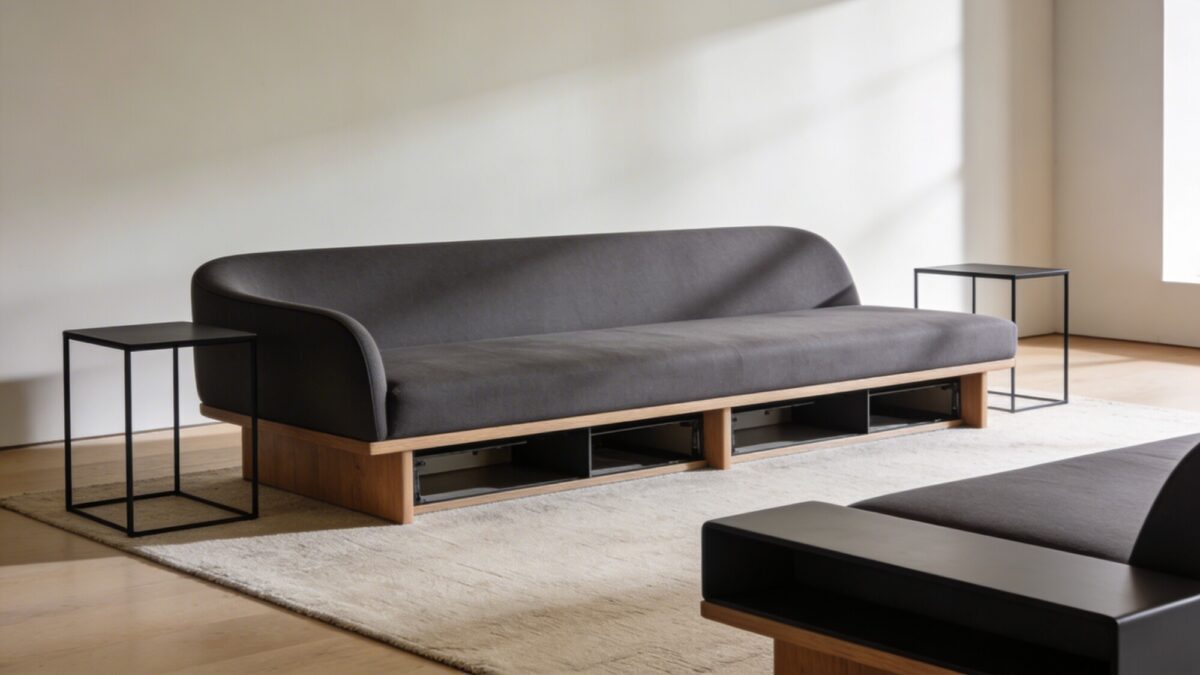
In a minimalist living room, furniture can’t hide behind other decor — every piece is visible and doing real visual work, so the shapes matter more than they would in a busier room. A low-profile sofa with clean lines and a visible timber or metal frame reads as sculptural rather than just “plain.” Hidden storage under the seat cushions keeps the room clutter-free without adding another visible piece of furniture.
The trade-off worth knowing: a genuinely low sofa (seat height under about 16 inches) looks striking but is harder to get up from comfortably over time. If the room is one you’ll actually relax in daily, a standard 17–19 inch seat height is usually the better long-term call even if it photographs slightly less dramatically.
3. Light It Like a Gallery
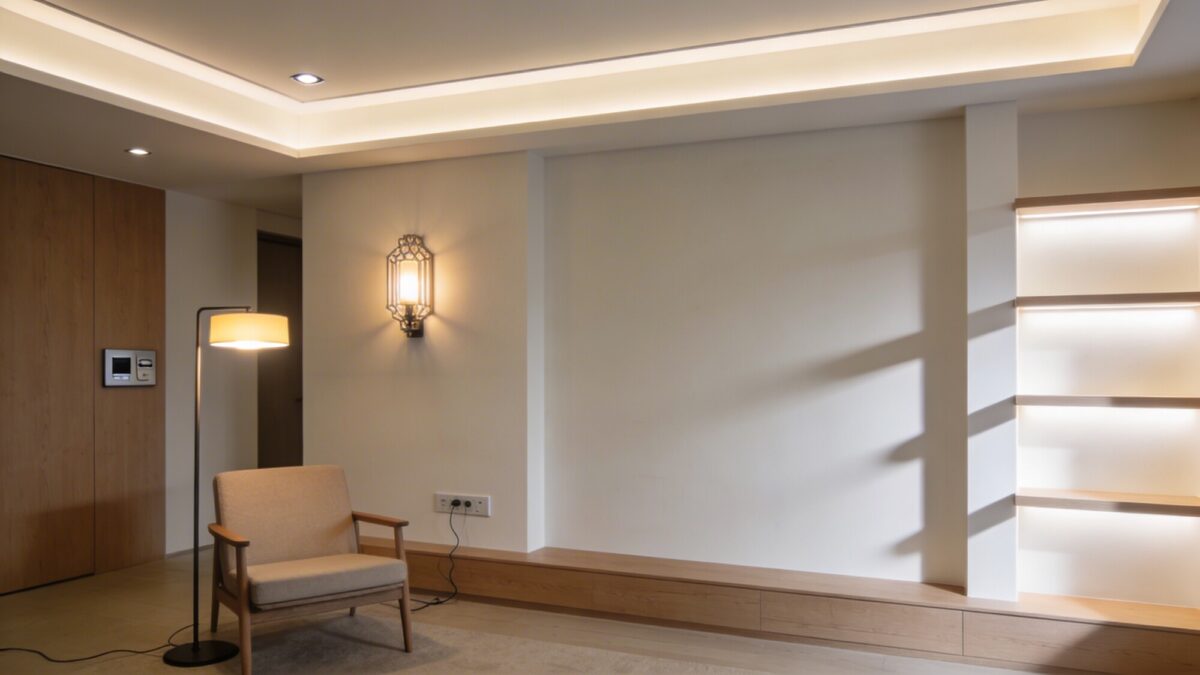
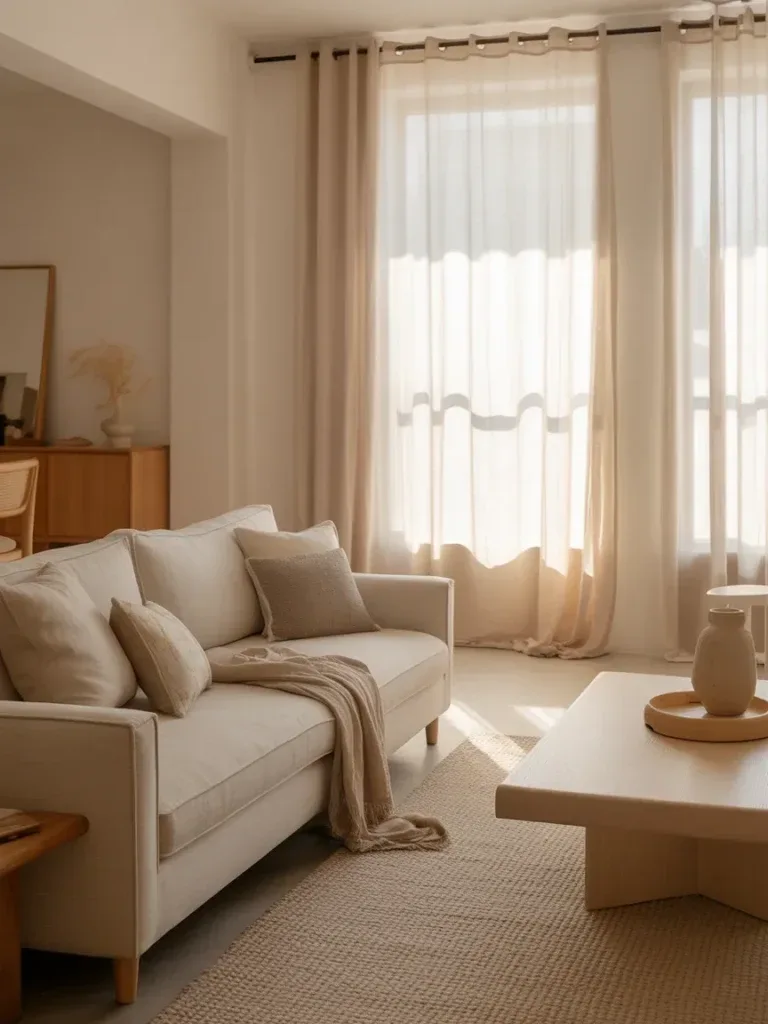
Minimalist rooms are unforgiving under flat lighting — with fewer objects to distract the eye, poor lighting shows immediately. Three layers fix this: ambient (a clean ceiling fixture or recessed LEDs), task (a slim floor lamp beside a reading chair), and accent (a wall sconce or backlit open shelf). Keep every bulb at 2700–3000K; cooler light makes an already-spare room feel clinical instead of calm.
💡 Pro Tip: Route lamp cords behind furniture legs or along baseboards before you finalize furniture placement. In a minimalist room, a visible cord snaking across the floor is far more noticeable than it would be in a busier space — there’s nothing else to distract the eye from it.
4. Let Color Speak Softly
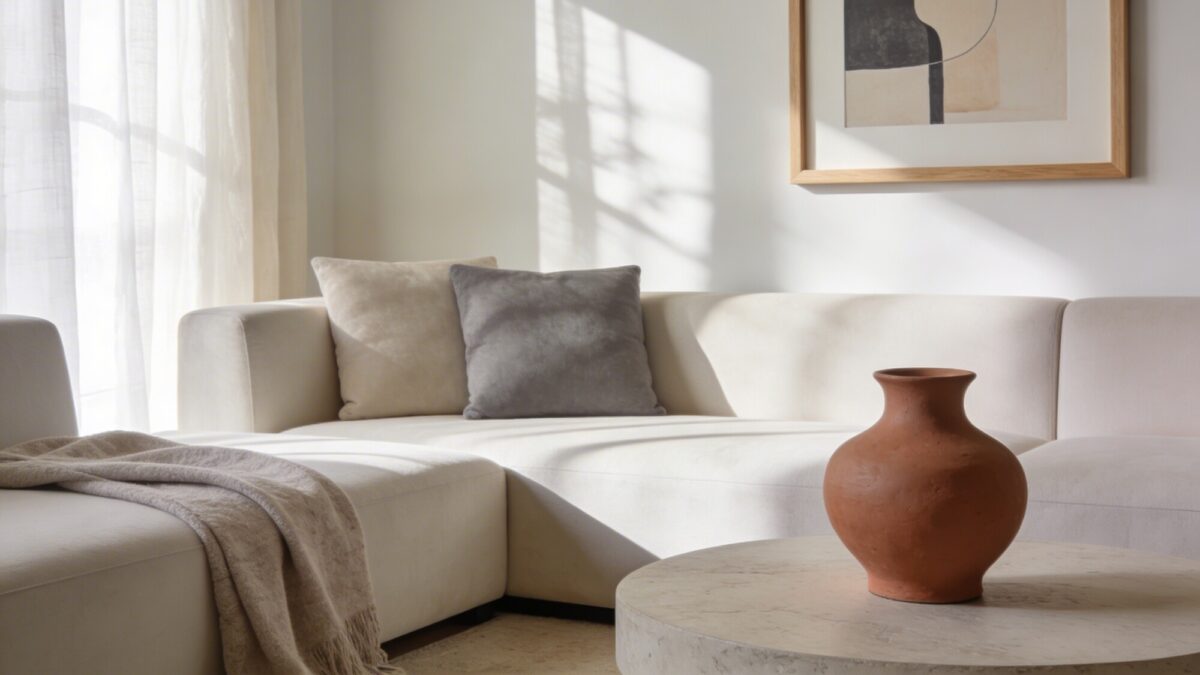
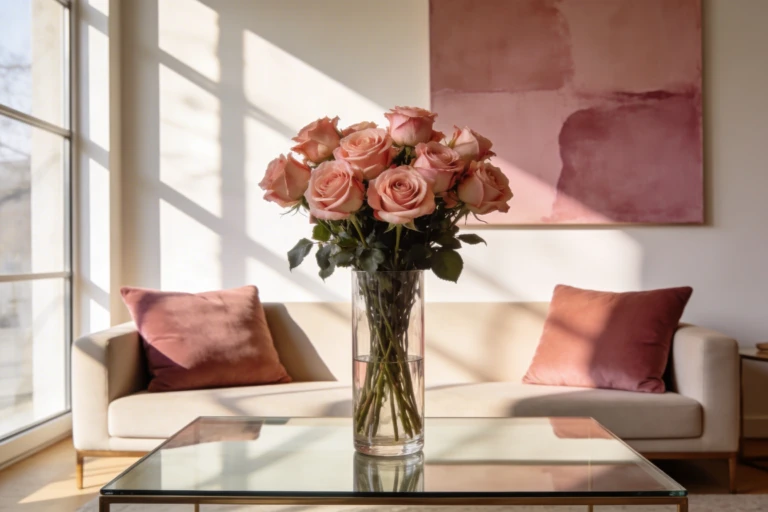
A neutral color living room decor palette — warm off-whites, stone grays, gentle taupes — works because it lets texture and shape carry the room instead of color doing it. Pick two complementary neutrals as the base, then add exactly one bolder texture or object as the accent: a matte terracotta sculpture, a single abstract print in warm tones.
Matte finishes over glossy ones keep the calm feeling intact — a glossy black side table in an otherwise soft, matte room tends to pull focus away from everything else, even though it seems like a small choice.
5. Choose One Art Piece That Actually Commands Attention
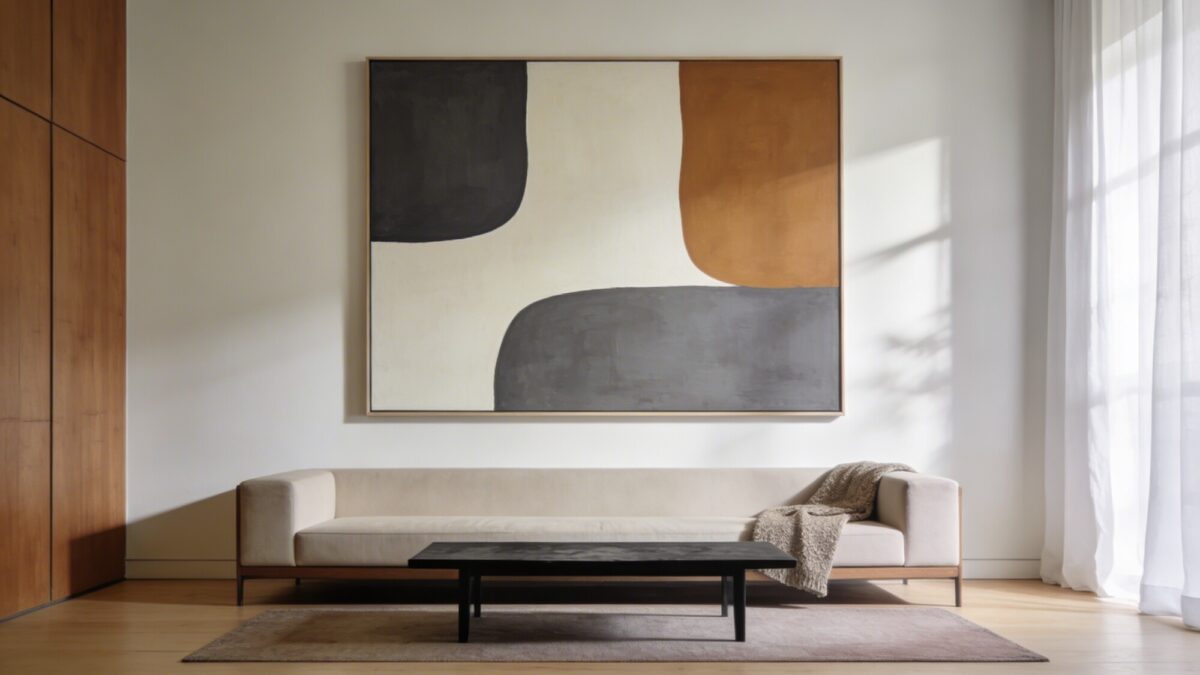
One large-scale piece with generous negative space around it does more for a minimalist room than any gallery wall — in a space this pared-down, a cluster of small frames reads as clutter rather than curation, even at just three or four pieces. Go glassless where you can, since glare on framed art under gallery-style lighting undercuts the calm you’re building everywhere else.
Hang at eye level, and resist the urge to fill the wall. The empty space around the piece is doing as much work as the piece itself.
6. Hide Clutter Without Losing the Calm
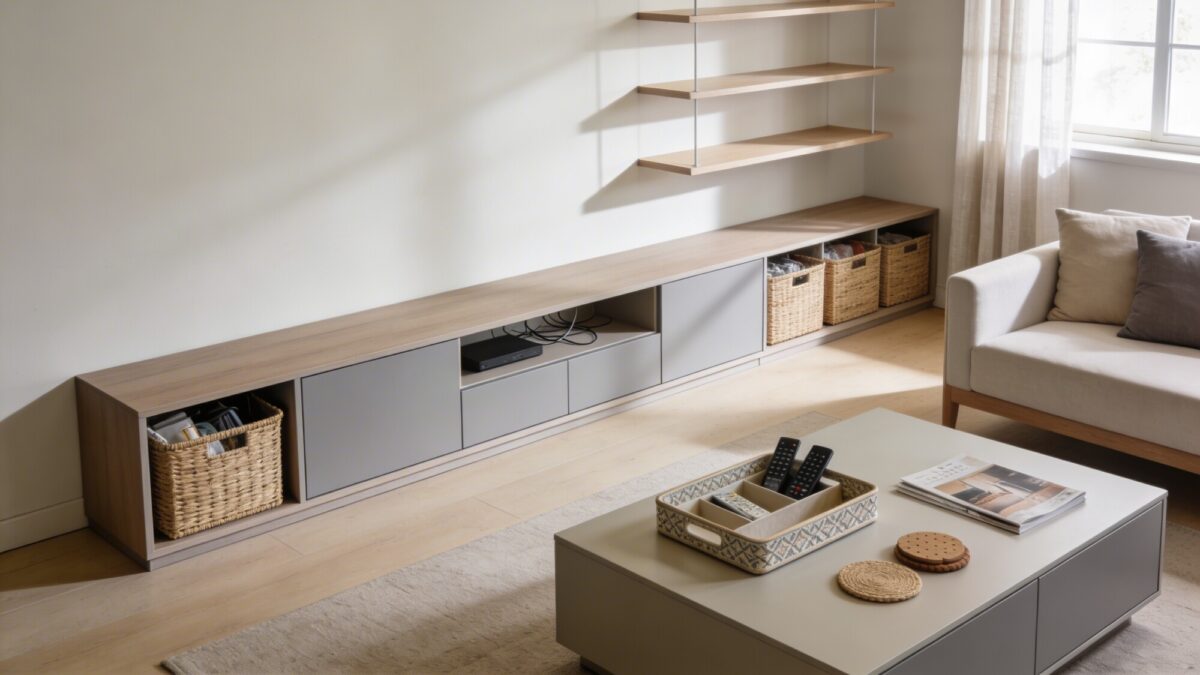
Minimalist decor fails fastest at the clutter stage — the aesthetic depends on visible surfaces staying clear, and daily life doesn’t cooperate on its own. A low-profile media console with concealed compartments, floating shelves mounted high enough to feel airy rather than crowded, and a couple of woven baskets tucked out of the main sightline handle most of it.
A single lidded tray on the coffee table for remotes and coasters solves the most common failure point: the coffee table slowly filling with daily-use items until the “minimalist” room doesn’t look minimalist anymore.
What Minimalist Luxury Actually Means Here
Minimalist luxury interior design isn’t about owning fewer things for its own sake — it’s about every remaining object being higher quality, since there’s nowhere for a cheap-looking piece to hide. A simple modern living room with three well-made pieces reads as more elegant than the same room with six mediocre ones. That’s the real trade-off in this style: fewer purchases, but each one worth spending more on.
Things to Consider Before You Start
- Do you actually use this room daily, or mostly for guests? Low-profile furniture trades some daily comfort for visual impact.
- Is your existing lighting a single overhead fixture, or can you add lamps and accent lighting easily?
- Do you have a genuine focal wall for the single art piece, or is your layout better suited to a gallery arrangement instead?
- How much daily clutter (mail, remotes, chargers) actually accumulates in this room — plan storage capacity around the real answer, not the ideal one.
FAQ
Isn’t minimalist decor just an empty room with a couch?
Done wrong, yes — that’s the “bare” version. Done right, texture, one art piece, and layered lighting fill the sensory gap that color and extra furniture would normally fill in a more maximalist room.
How many accent colors can I use?
One, generally. A monochrome or near-monochrome base with a single accent color or texture keeps the calm; a second accent color usually starts to compete with the first.
Do I need to buy new furniture to go minimalist?
Not necessarily. Editing down what you already have — removing a third of the objects in the room — often gets you most of the way there before any new purchase is needed.
What’s the biggest mistake people make with minimalist living rooms?
Skipping texture. A room with clean lines and neutral color but only one type of fabric throughout looks sparse rather than elegant. Texture is what makes “minimal” read as “considered” instead of “unfinished.”
Is a low-profile sofa always the right call for this look?
Not for every household. It photographs well and opens up sightlines, but a genuinely low seat height is harder to get in and out of over time — worth testing in person before committing, especially if the room gets daily use.
Our Take
Start with texture and lighting — they’re the two most forgiving changes and the ones that turn “bare” into “calm” fastest, without requiring you to commit to new furniture yet. Save the art and storage decisions for once the palette and lighting are settled, since it’s easier to choose one right piece against a room that already feels resolved. If you want to see this same restraint applied at a larger, more varied scale, this collection of minimalist living room ideas is a solid next stop.