6 Elegant Living Room Decor Luxury Modern: Luxe Makeover in Minutes
A modern luxury drawing room rarely comes from buying everything new at once. It usually comes from six or so targeted swaps — lighting, texture, a coffee table, a wall of art — layered in over a few weeks. If you’re starting from a blank room rather than refreshing one, our luxury living room decor guide is a good place to plan the fuller scope before you get into specifics.
Below is the order I’d actually tackle these in, starting with the one that changes a room the fastest for the least effort: lighting.
Quick Takeaways
- Lighting has the best effort-to-impact ratio of anything on this list — start there if you’re short on time or budget.
- Texture (velvet against linen, wool against stone) reads as luxurious faster than any single expensive object does.
- One monochrome base plus one accent color beats a room with three or four competing colors.
- Storage that’s visible but not hidden (open shelving, exposed baskets) undercuts a luxe look faster than most people realize.
1. Start With Sculptural Lighting, Not a New Sofa
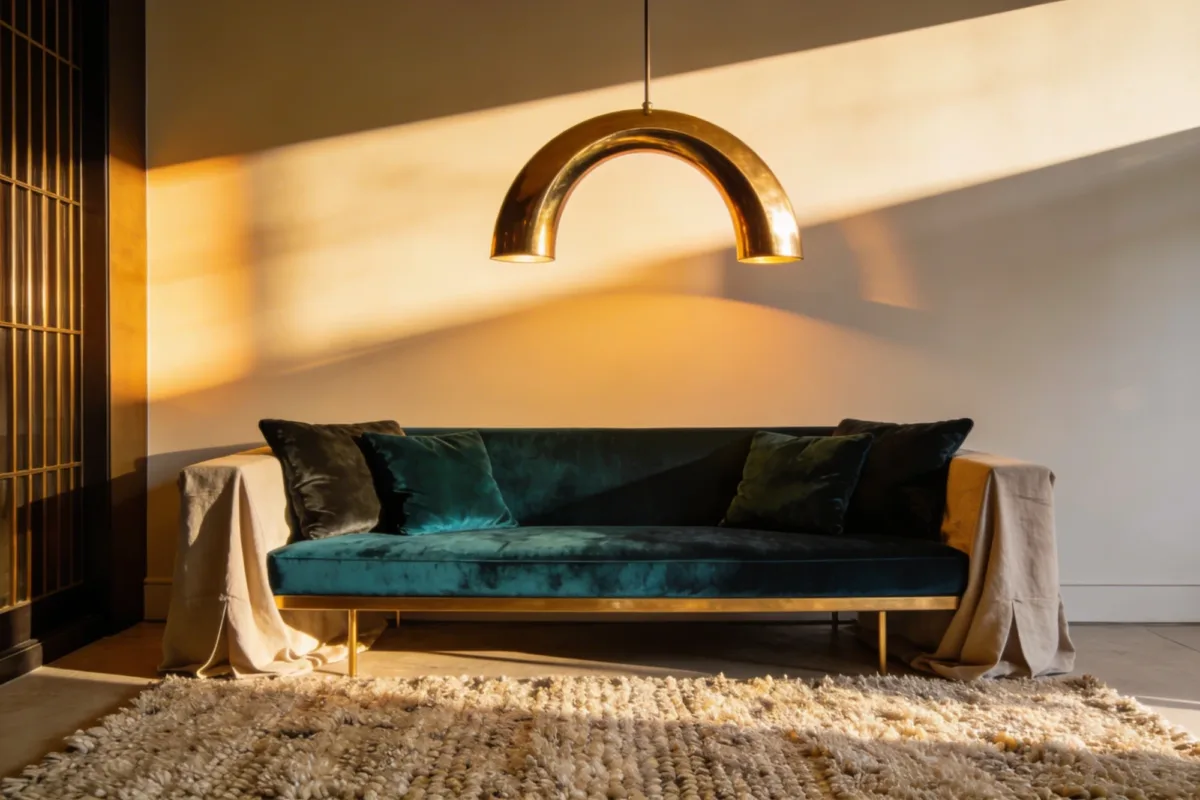
If you’re redoing a living room on a limited timeline, lighting is where I’d spend the first hour of planning. A single statement fixture — an arc floor lamp with a brass frame, or a pendant with a distinct geometric shape — does more to signal a modern luxury drawing room than a new sofa costing five times as much, because it’s the one object in the room that changes how everything else looks after dark.
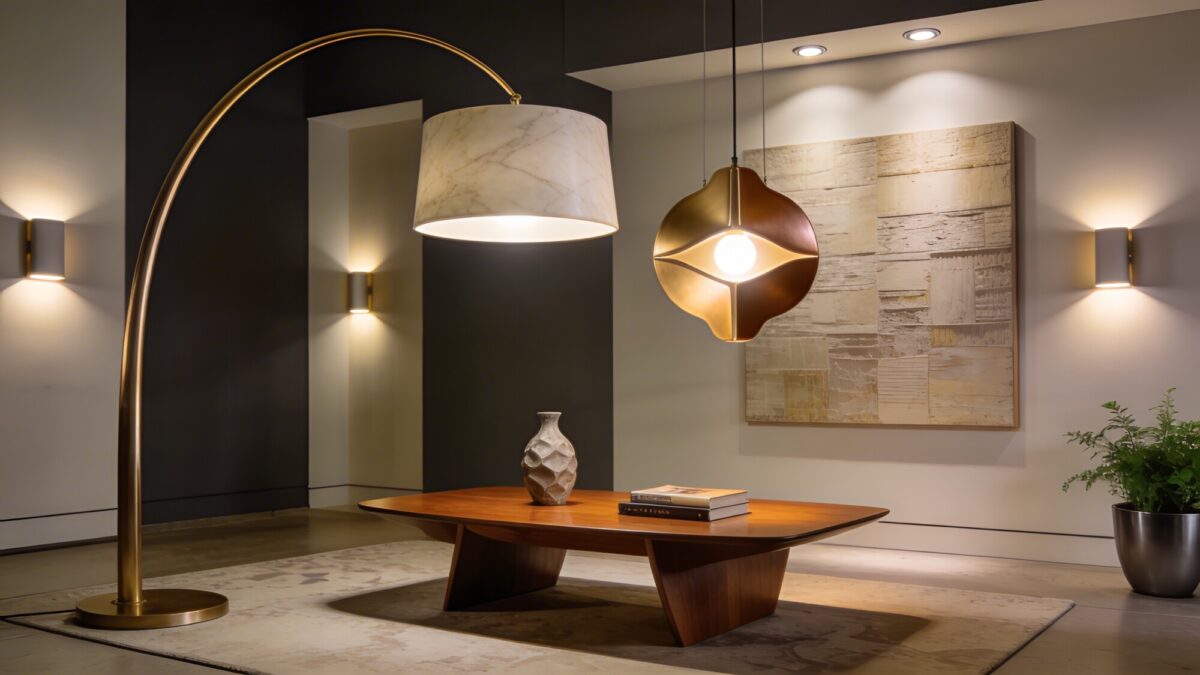
The bulb temperature matters more than people expect. Warm white, roughly 2700K to 3000K, is the range that makes brass and wood tones look rich instead of flat; anything closer to daylight (4000K+) will make the same room look clinical no matter how good the furniture is.
💡 Pro Tip: Layer three light sources on independent switches — ambient (ceiling or recessed), task (a lamp near where you actually sit and read), and accent (something small, aimed at art or a shelf). One overhead fixture alone, no matter how well chosen, still reads as an office at night.
2. Mix Velvet and Linen Before You Touch Anything Else
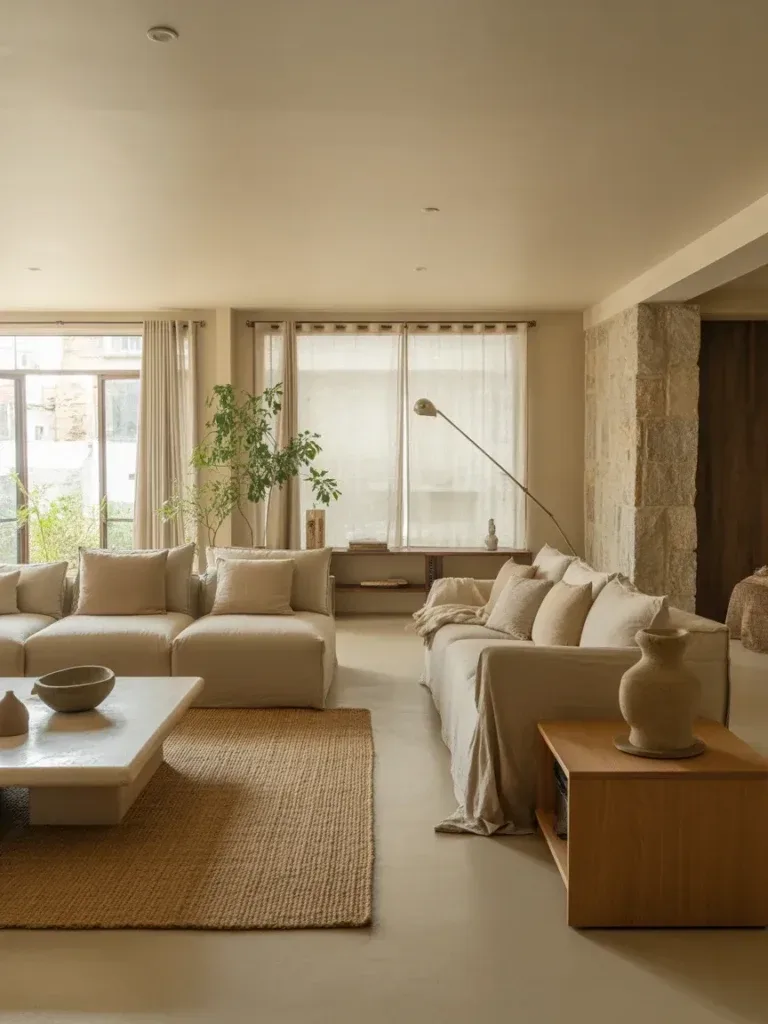
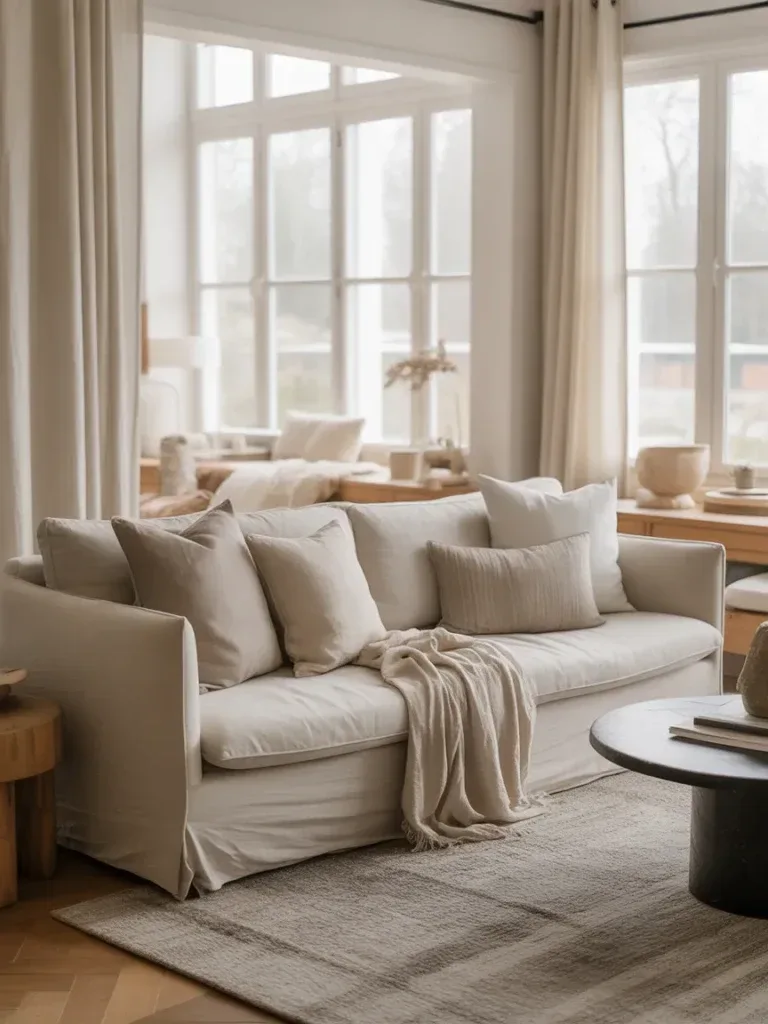
Texture is the cheapest lever in a luxury drawing room design, and it’s the one people skip because it feels less consequential than furniture. It isn’t. A velvet sofa in a deep jewel tone — emerald or sapphire hold up better than trend colors like blush or mustard — paired with crisp linen or cotton slipcovers and a wool or bouclé rug creates contrast that a single-fabric room can’t fake.
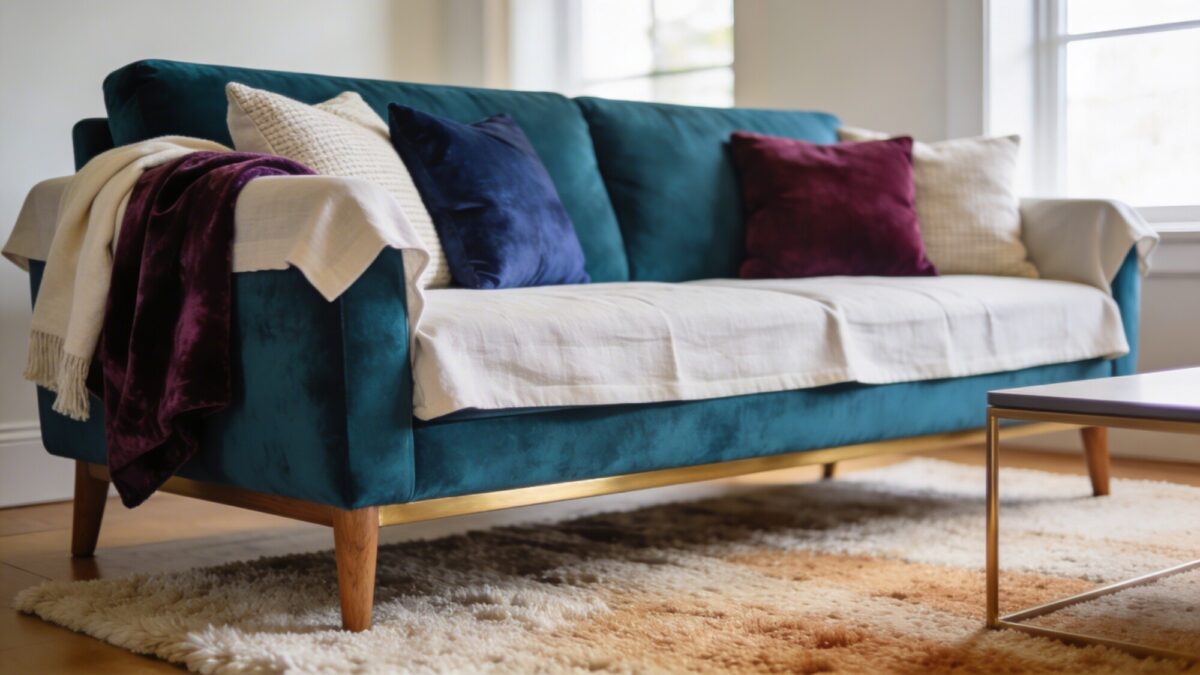
The trade-off worth knowing: velvet shows wear differently than linen. It bruises and flattens with heavy use in high-traffic seating, while linen wrinkles but recovers. If the sofa is where people actually sit daily, put the velvet on accent cushions and throws instead of the main upholstery, and save the full velvet piece for a lower-traffic accent chair.
3. Pick a Coffee Table That Does More Than Hold Coffee
A coffee table in a modern majlis design luxury interior or any luxury drawing room needs to work as both furniture and a visual anchor for the seating group. Mixed materials — a stone top on a sculptural metal base, or glass with a thick wood edge — read as more deliberate than an all-wood or all-glass piece.
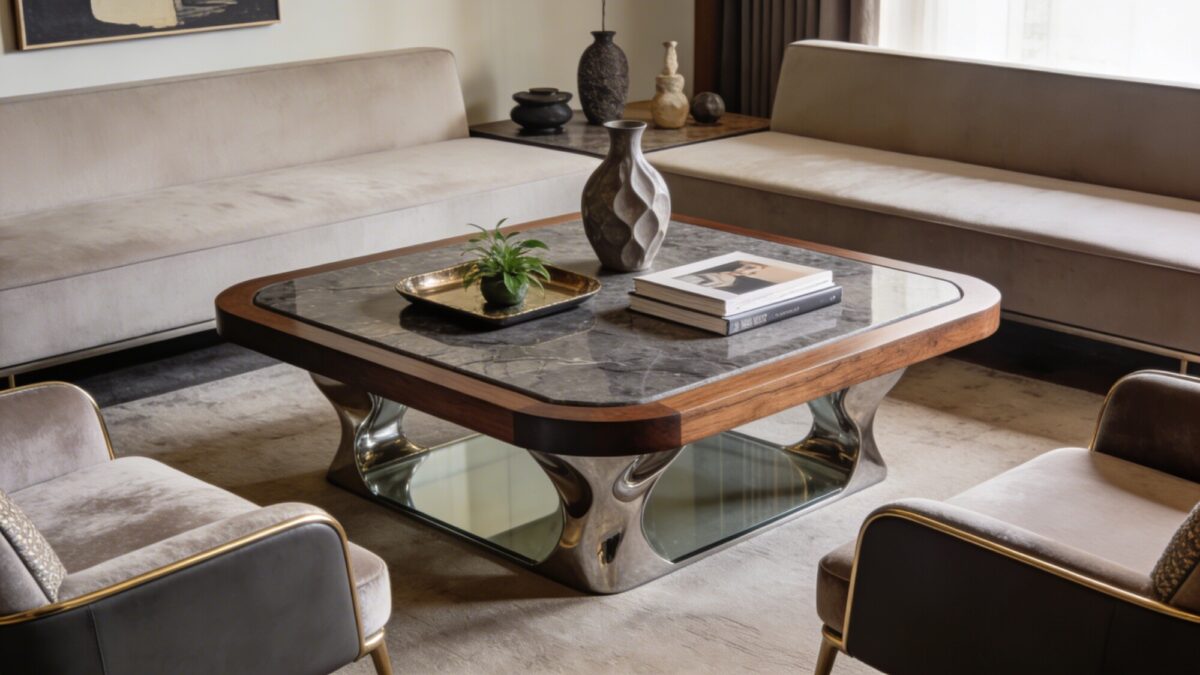
Scale is the most common mistake here. A table that’s too small for the seating arrangement around it looks like an afterthought no matter how expensive the material — as a rough guide, the table should span roughly two-thirds the length of the sofa in front of it, with enough clearance (about 14–18 inches) between the table and seating for legs and foot traffic.
💡 Pro Tip: Style the table with an odd number of objects — a tray, a low sculptural vase, one stack of books — rather than an even, symmetrical arrangement. Odd groupings photograph and read as curated; even ones tend to look staged.
4. Build a Monochrome Base, Then Let One Color Punch Through
A restrained palette of charcoal, warm gray, or creamy beige does the heavy lifting in a luxurious drawing room because it shows off architectural lines — window trim, built-ins, ceiling height — instead of competing with them. The accent color is where personality comes in: emerald, cobalt, or a rich terracotta, used in one or two places only.
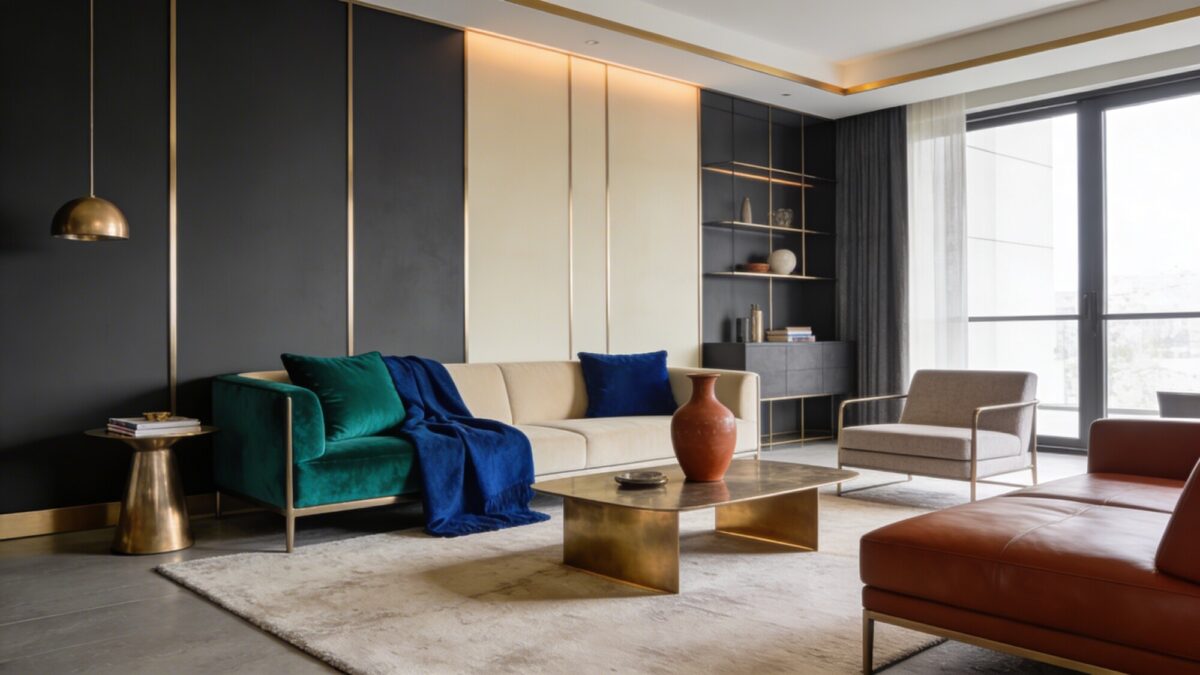
Brass or brushed gold hardware ties a monochrome room together without adding a second competing color, which is why it shows up so often in these spaces — it reads as a metal, not a hue, so it doesn’t fight with your accent choice.
5. Let Art Carry the Room’s Personality
A perfectly lit, well-textured, monochrome room can still feel like a hotel lobby if nothing in it looks chosen rather than sourced from a set. One large abstract canvas above the sofa, or a cohesive trio of related pieces, fixes that faster than almost any other single addition.
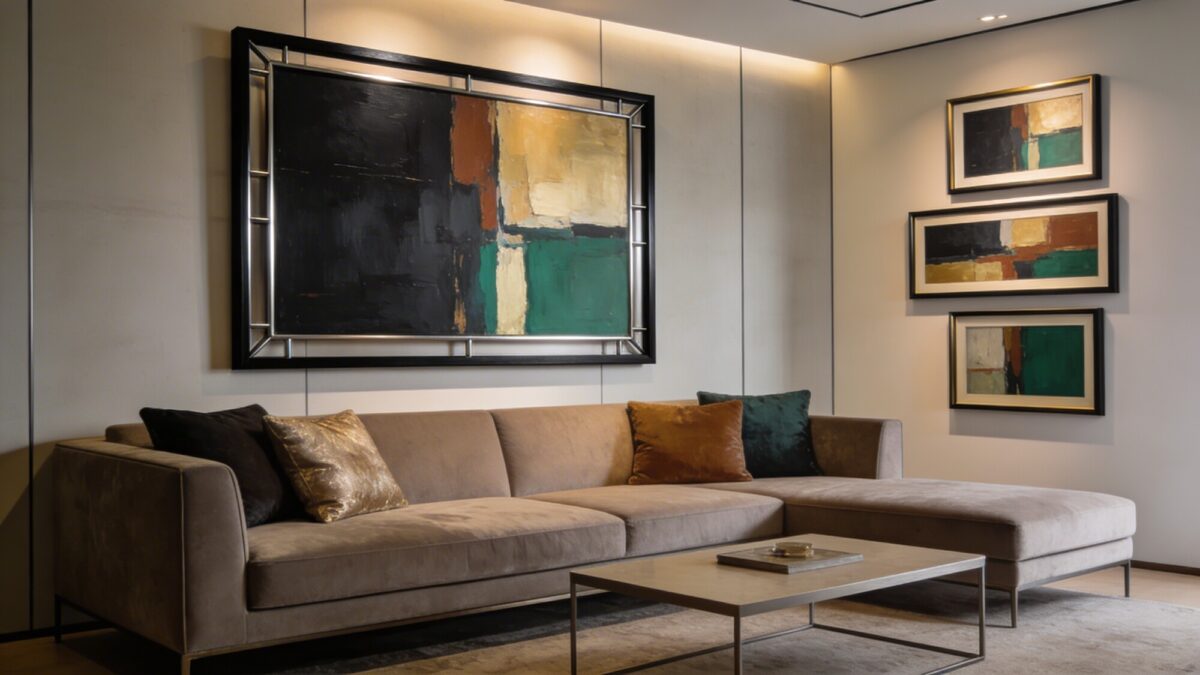
Frame choice matters more than most people budget time for. Metal or black wood frames read as contemporary; ornate gold frames pull the room toward traditional even if everything else in it is modern. Match the frame to the direction you’re actually going, not to what happened to be in stock. For more on scaling and placing art specifically, our guide to styling books and art together covers pairing artwork with shelving, which is a natural next step once the main wall piece is up.
6. Hide Storage Instead of Decorating Around It
Visible clutter is the fastest way to undercut everything above it. A low-profile media console with closed doors, a storage ottoman that doubles as extra seating, and a couple of woven baskets tucked under the coffee table handle the everyday mess — remotes, chargers, throws — without turning the room into a display of organizational effort.
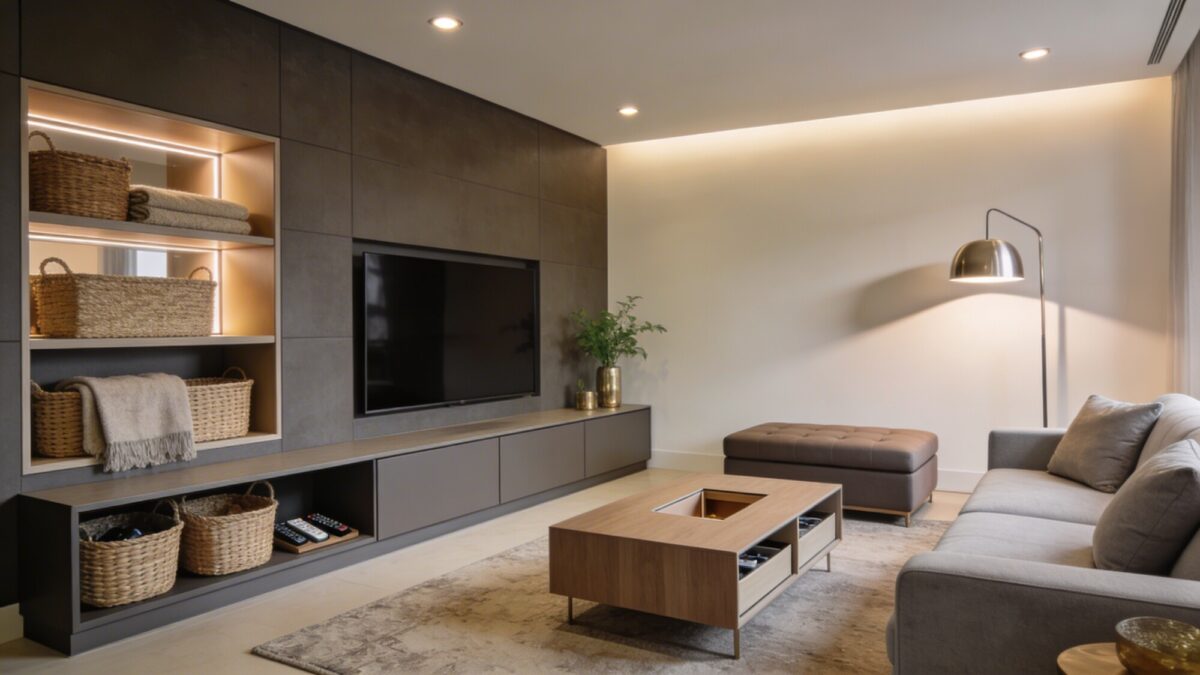
💡 Pro Tip: Open shelving looks great in photos and gets messy in real life within about two weeks. If you want visible storage, limit it to one curated shelf and put everything else — cables, chargers, mail — behind a closed door.
How the Six Changes Compare
| Change | Effort | Visible Impact | Approx. Cost Range |
|---|---|---|---|
| Statement lighting | Low | High | $150–$600 per fixture |
| Texture layering (velvet/linen/wool) | Low | High | $100–$400 for cushions, throws, rug |
| Statement coffee table | Medium | Medium | $300–$1,200 |
| Monochrome palette + accent | Medium–High | High | Varies widely (paint vs. furniture) |
| Art / gallery wall | Low–Medium | Medium–High | $100–$800+ |
| Hidden storage | Medium | Medium | $150–$500 |
Frequently Asked Questions
What’s the single fastest way to make a living room feel more like a luxury drawing room?
Swap the lighting. A statement fixture plus warm-white bulbs changes how the whole room looks after dark, and it’s usually a same-day project.
Is an all-velvet sofa a good idea for a modern luxury drawing room?
Only if the room gets light use. Velvet shows wear on high-traffic seating faster than linen or performance fabrics, so many people put the velvet on cushions and a lower-traffic accent chair instead of the main sofa.
Do I need matching metal finishes throughout the room?
No, but you should limit yourself to two metal tones at most — brass and matte black, for instance. Three or more competing finishes (brass, chrome, nickel, bronze) tends to look accidental rather than curated.
How big should my coffee table be relative to my sofa?
Roughly two-thirds the length of the sofa, with 14–18 inches of clearance for legs and walking room. Too small looks like an afterthought; too large blocks movement through the space.
Is open shelving a good storage solution for a luxury living room?
It looks good for about two weeks before daily items pile up. Closed storage — consoles, ottomans, cabinets — holds the look longer; reserve open shelving for one curated display, not general storage.
Our Take
If you’re doing this in stages, lighting and texture come first — they’re the cheapest, fastest changes with the most visible payoff. The coffee table, palette, art, and storage matter, but they’re refinements on a room that’s already working, not the foundation of it. Trying to do all six at once tends to produce a room that looks decorated rather than lived in; spacing them out over a few weekends gives you time to actually notice what the room needs next.
For a version of this same approach built around a tighter budget, our budget-friendly elegant decor guide covers which of these six to prioritize when you can’t do all of them at once.