8 Elegant Living Room with Green and Gold Decor Dazzlers
Green and gold is one of those color pairings that looks effortless in photos and surprisingly easy to get wrong in real rooms. Too much gold and a living room starts to look like a hotel lobby; too little green and it just reads as beige with brass hardware. If you’re planning a full refresh, it helps to look at how classy, elegant living room layouts handle proportion before you commit to a single green and gold color scheme.
What follows are eight ways to work this combination into a real living room, plus the details that separate a considered green and gold living room from one that just has a green couch and some gold picture frames.
Quick Takeaways
- Keep gold to two or three surfaces max — legs, hardware, and one lighting fixture is usually the ceiling
- Pick one green (emerald, sage, or forest) and stay in that family rather than mixing greens
- Walls should be quieter than furniture — let the sofa or curtains carry the color
- Brushed or antiqued gold reads calmer than polished gold in a room with a lot of green
- Add plants last — they’re the cheapest way to fix a green and gold room that feels flat
1. Velvet Emerald Sofas with Gold Accents
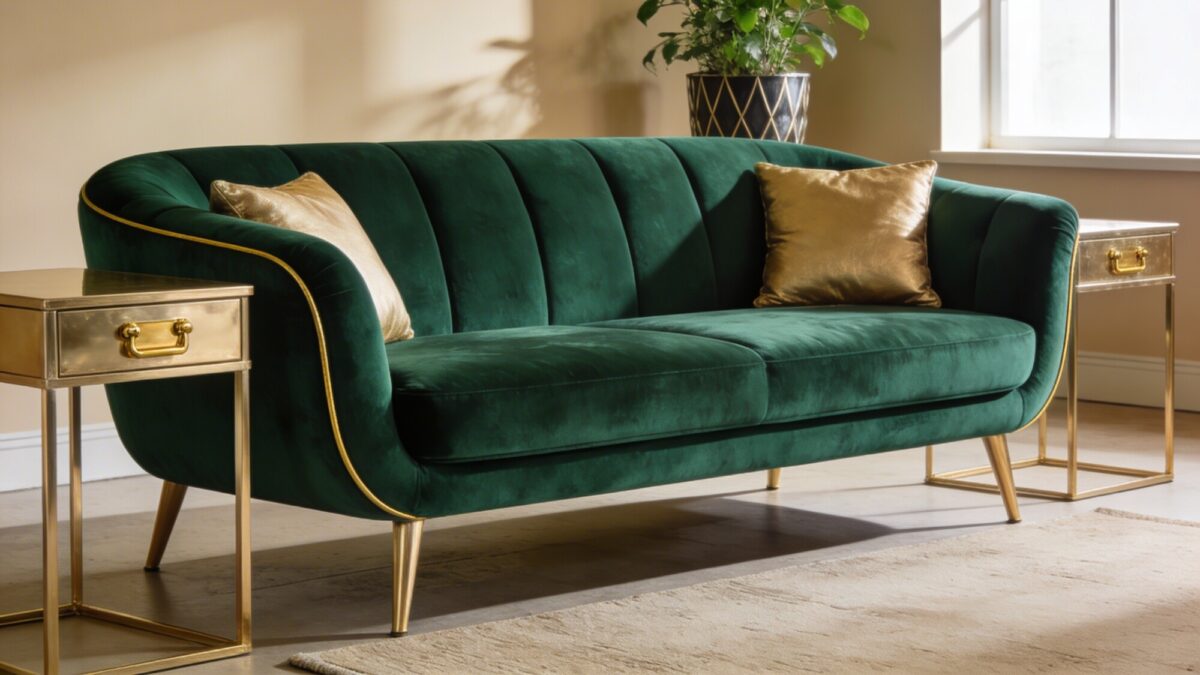
An emerald velvet sofa is the fastest route to an elegant living room with green and gold decor, mostly because velvet does half the work on its own. The nap of the fabric shifts color depending on where the light hits it, so the same sofa can look forest-dark in a corner and almost jade near a window. Pair it with slim gold legs, a gold-framed side table, or a coffee table with brass detailing, and you get contrast without adding another color to manage.
The mistake people make here is choosing a green that’s too dark for the room’s natural light. A north-facing living room with limited daylight will swallow a deep bottle-green sofa and make the space feel smaller, not richer. If your room doesn’t get much sun, go for a lighter emerald or a green with more blue undertone — it photographs the same in listing photos but behaves very differently in person.
💡 Pro Tip: Bring a fabric swatch home and look at it under your own lighting at 7pm, not just in daylight. Velvet in particular can shift from rich emerald to almost muddy olive under warm bulbs, and that’s the light you’ll actually be sitting in most evenings.
What to Get Right
- Pick a saturated green for a statement piece, or a muted sage-green for a sofa you won’t tire of in five years
- Limit gold hardware to legs, trim, and one or two lamp bases — don’t gold-plate everything in reach
- Keep walls neutral (warm white, greige, or soft taupe) so the sofa stays the focal point
2. Green and Gold Metallic Wall Panels
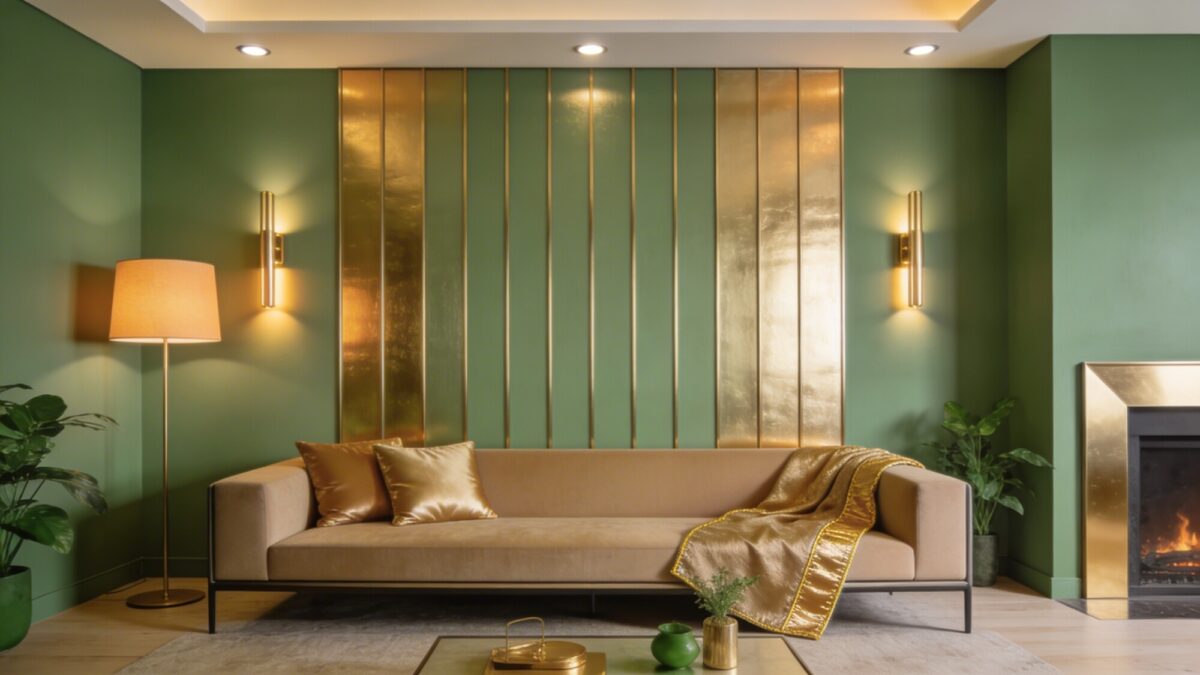
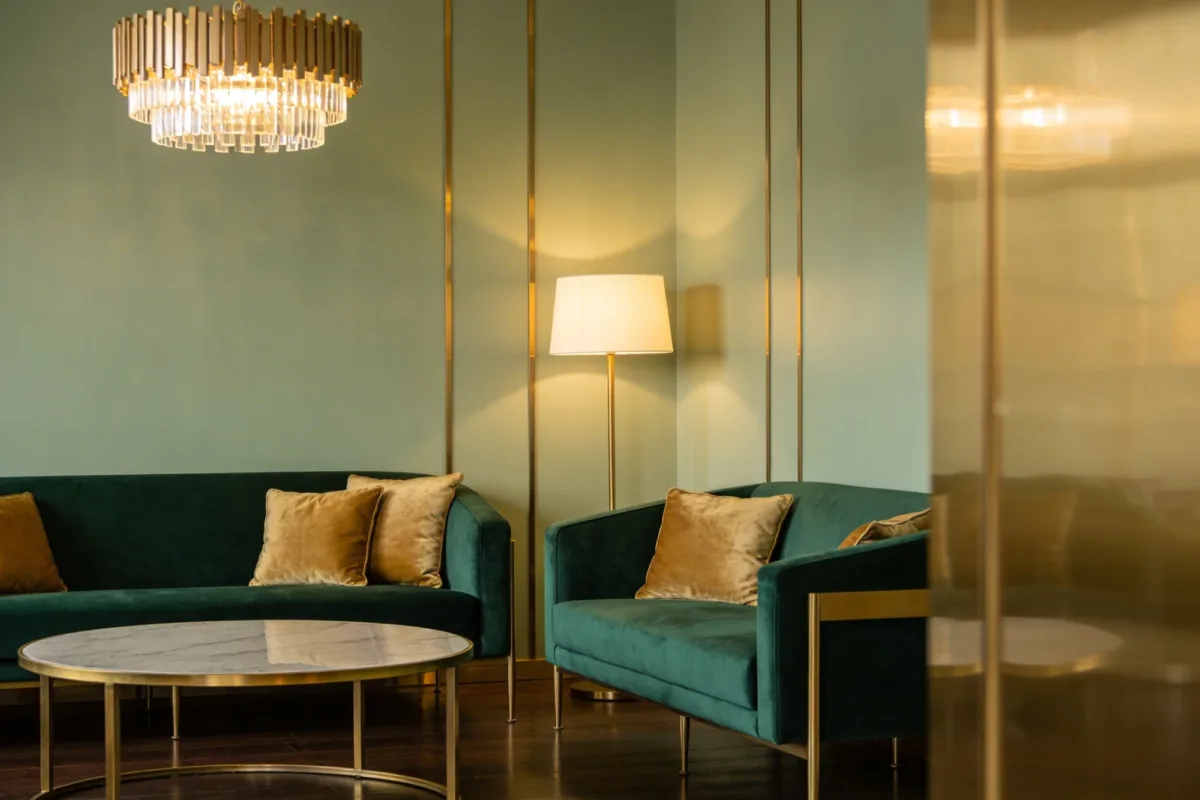
Wall panels are a bigger commitment than furniture, so this one’s worth thinking through before you order anything. Slim gold metallic strips set into a sage-green wall create a subtle rhythm — not a full mirrored feature wall, just enough reflective surface to catch light as the sun moves through the room. Behind a low sofa or flanking a fireplace, this reads as architectural detail rather than decoration you bought off a shelf.
The trade-off is upkeep and cost. Real brass or gold-leafed panels aren’t cheap, and they show fingerprints and dust more than a painted wall does. A lower-cost alternative is a single accent panel behind the sofa rather than a full wall — you get the same visual rhythm for a fraction of the material and none of the maintenance across a whole room.
What to Consider
- Choose a soft sage base rather than a saturated green — dark green plus reflective gold panels can feel heavy in a small room
- Space panels evenly for a deliberate look, not scattered
- Pair with warm-toned bulbs (2700K–3000K), not daylight LEDs, or the gold will look flat instead of glowing
3. Antique Gold Mirrors Framing Green Artwork
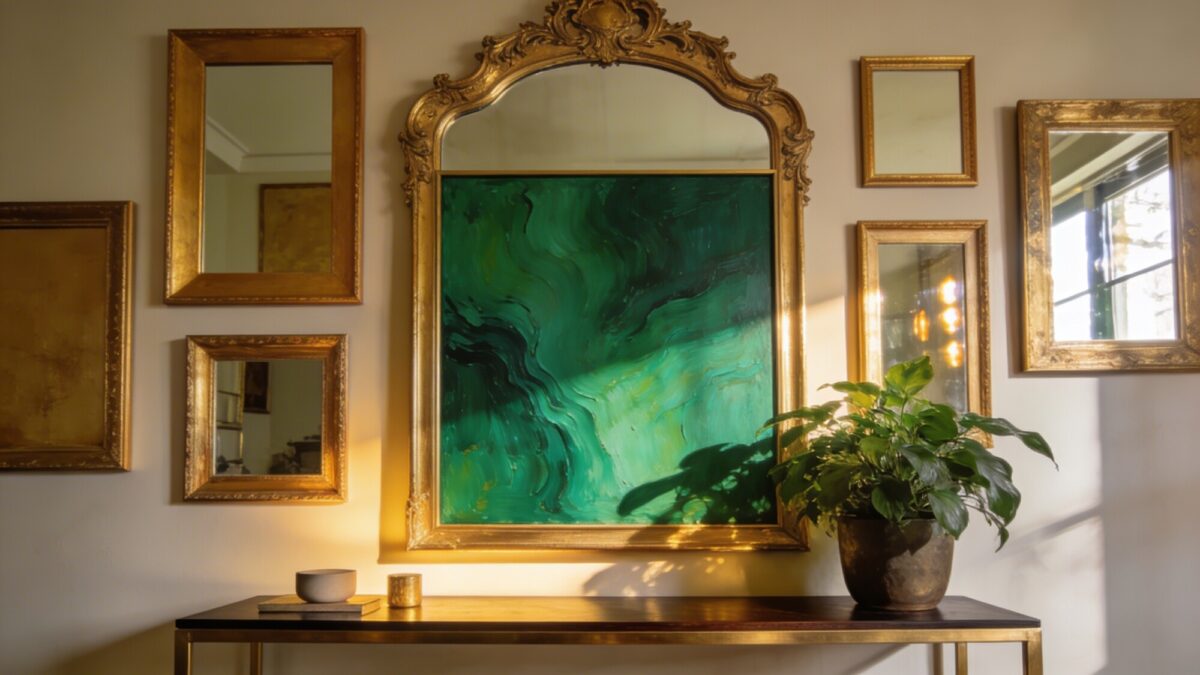
This is the cheapest idea on this list and often the most effective. An antique (not polished) gold mirror frame paired with a bold green piece of art does two things at once: it amplifies whatever natural light the room has, and it gives the green and gold theme somewhere to live besides the furniture. If you’re renovating on a budget, this is worth doing before you touch upholstery — it’s a one-afternoon change that reshapes the whole room’s color story.
For anyone weighing frame styles, our guide on pairing marble and metal finishes covers how antiqued gold sits next to cooler materials like marble, which is useful if your fireplace surround or side tables lean toward stone.
Tips
- Mix two or three frame sizes rather than matching them exactly — it looks collected instead of purchased as a set
- Hang the center of the arrangement at eye level (roughly 57 inches from the floor to the center point)
- If you only have budget for one piece, go large — a single oversized framed print does more than five small ones
4. Gold-Detailed Coffee Table with Emerald Accessories
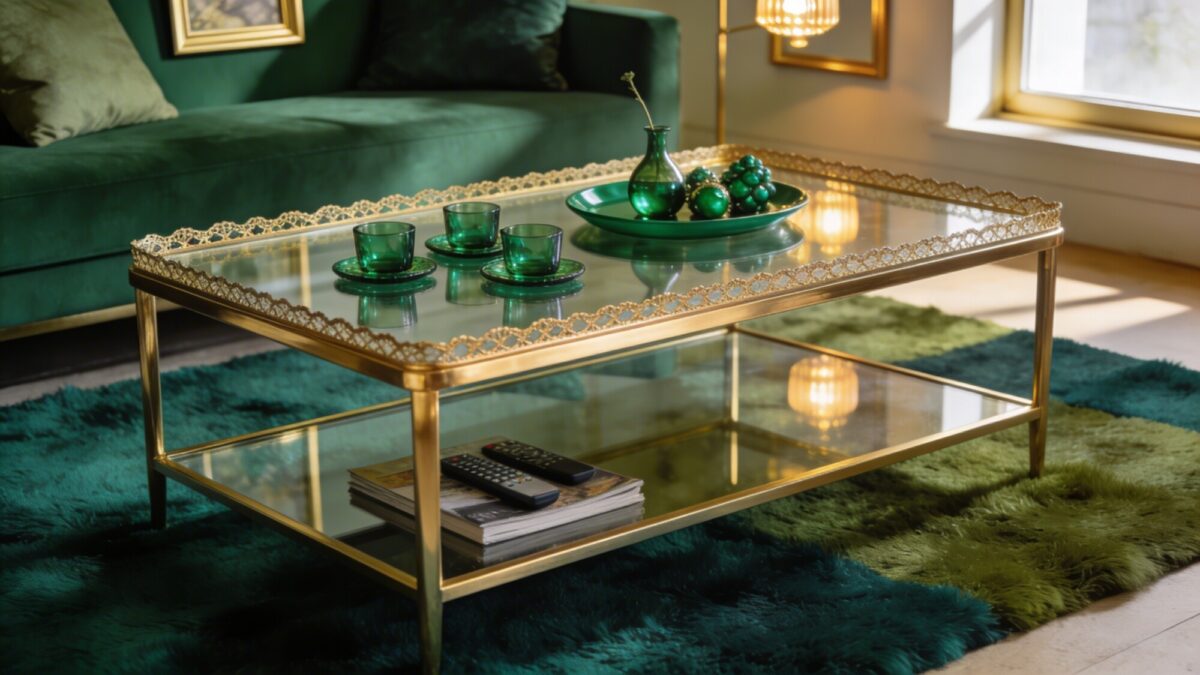
A glass-top coffee table with a slim gold frame does most of the heavy lifting for this look, and it’s forgiving because you can build the green around it in small, swappable pieces — coasters, a tray, a single vase — instead of committing to a big green purchase. That matters if you’re not sure yet how much green you actually want to live with day to day.
One thing the original version of this idea usually skips: pick a table with a lower shelf if you have kids, remotes, or a coffee-table-book habit. A fully open glass surface looks great in photos and lasts about a week before it’s covered in clutter.

💡 Pro Tip: If you’re testing whether green and gold works for you before committing to furniture, start with the coffee table styling — a tray, coasters, and one vase. It’s under $60 in most cases and you can undo it completely if it’s not for you.

5. Emerald Plants in Gold Planters
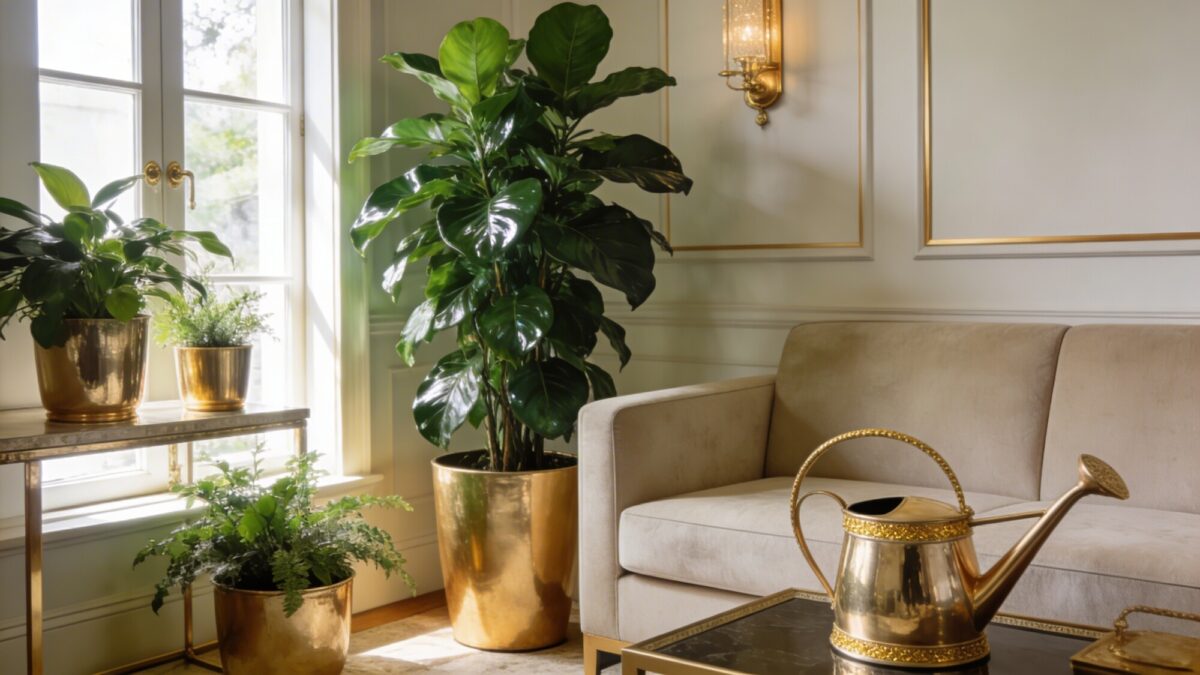
Real plants solve a problem that fabric and paint can’t: they’re the one part of a green and gold living room color scheme that changes slightly over time, which keeps the room from feeling staged. A tall plant — a fiddle leaf fig, a rubber plant, or a snake plant if you want something closer to maintenance-free — in a gold-trimmed planter next to the sofa adds height and a genuine green that no fabric quite matches.
Skip the fake plants here if you can. Faux greenery in a room built around this color pairing tends to look flatter than it would elsewhere, because everything else in the room is already reflective and staged-looking; a live plant is the one texture that isn’t trying to shine.
Ideas to Try
- One tall plant (4 feet or more) in a gold planter as a corner anchor
- Two or three smaller pots in graduated gold tones on a windowsill
- A gold-trimmed watering can left out as decor — it’s a small detail, but it signals the plants are cared for, not just staged
6. Green Velvet Curtains with Brass Rods
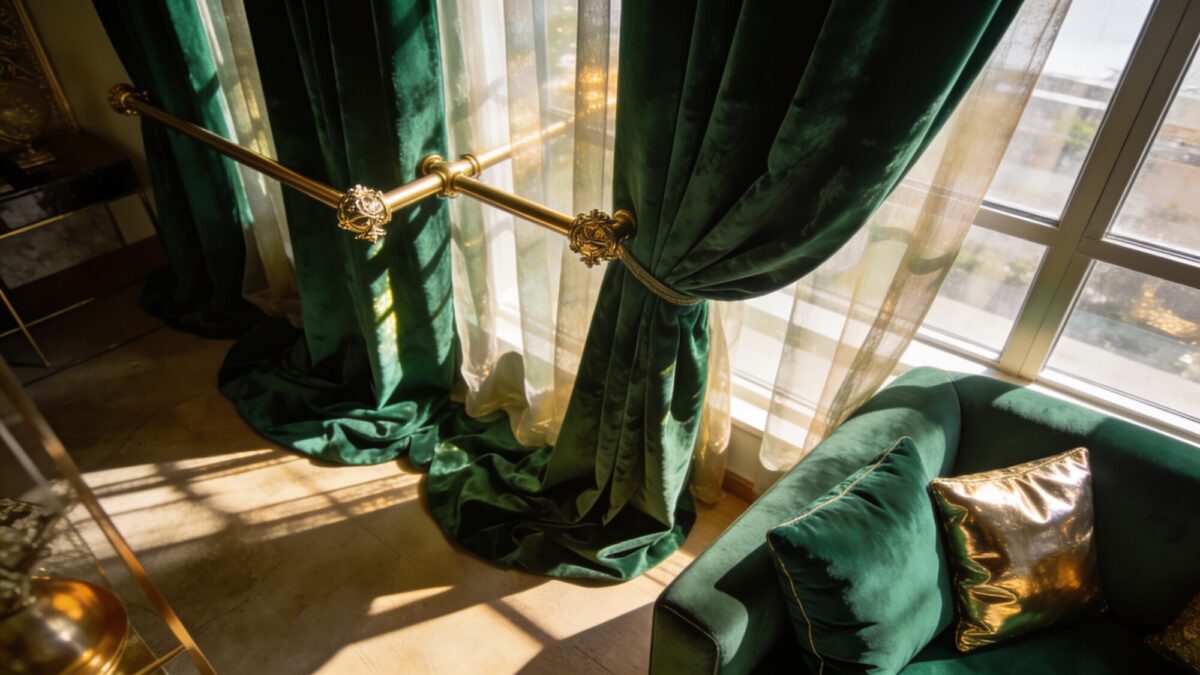
Curtains are the largest fabric surface in most living rooms, which means they’re also the easiest way to overdo an emerald green and gold living room. Full-length green velvet panels on brass rods look substantial and a little formal — appropriate for a living room that doesn’t double as a playroom, less so if you need curtains that get yanked open and shut daily by kids or pets.
Length matters more than people expect. Curtains that stop an inch above the floor read as “not quite finished.” A slight pool — an extra inch or two of fabric breaking on the floor — is what gives velvet drapes that expensive look in photos, but it does mean vacuuming around them more carefully.
Tips
- Hang rods 4–6 inches above the window frame and extend them past the frame width to make windows look larger
- Add a sheer layer behind the velvet if the room needs daytime light control — solid velvet alone can make a room dark
- Match at least one cushion or throw to the curtain’s exact green so the two don’t compete as two different greens
7. Gold-Trimmed Lighting Over Green Corners
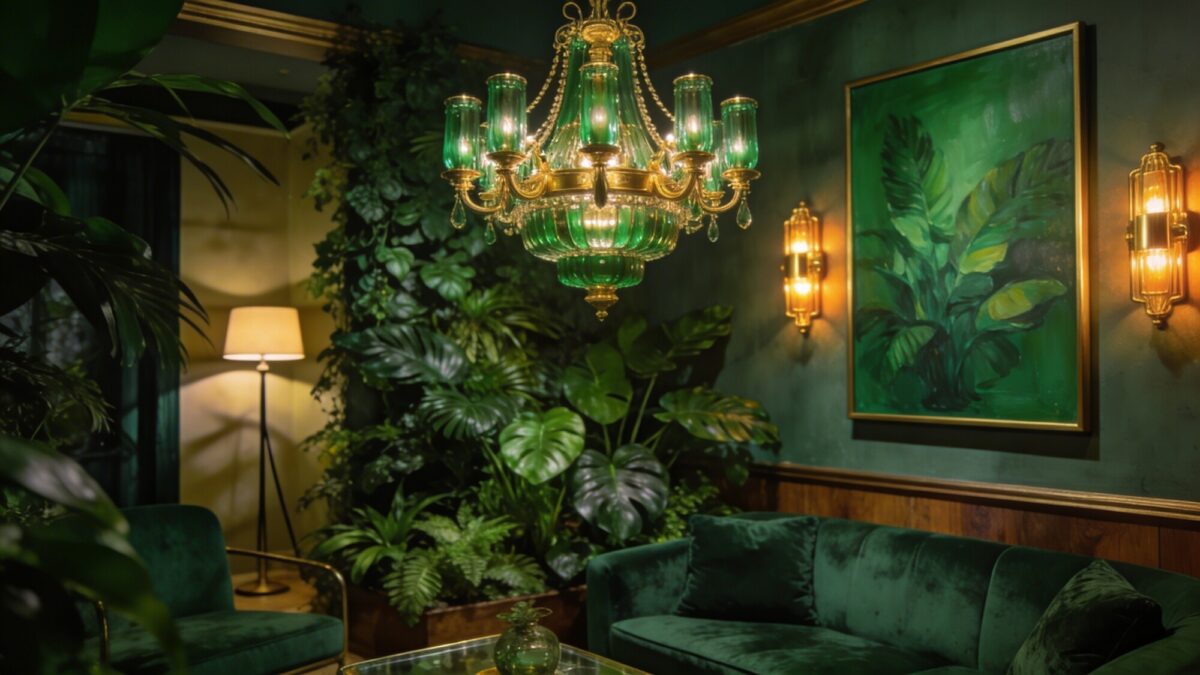
Lighting fixtures are underrated in a green and gold interior because most people spend their budget on furniture and treat the ceiling as an afterthought. A chandelier with brass or gold detailing above a plant-heavy corner, or a pair of brass sconces flanking a piece of green art, does more to set the mood at night than almost anything else on this list — daylight decor choices don’t matter once the sun goes down, but lighting does.
If you’re also updating other rooms with a similar palette, our piece on choosing a statement chandelier goes deeper into sizing a fixture to your ceiling height, which matters more than most people budget time for.
What to Choose
- A chandelier with warm brass or antiqued gold finish over cool chrome or nickel
- Sconces at roughly 60–66 inches from the floor, flanking artwork rather than centered on a blank wall
- 2700K bulbs — daylight-toned bulbs will make gold finishes look dull instead of warm
8. Monochrome Green and Gold Textiles
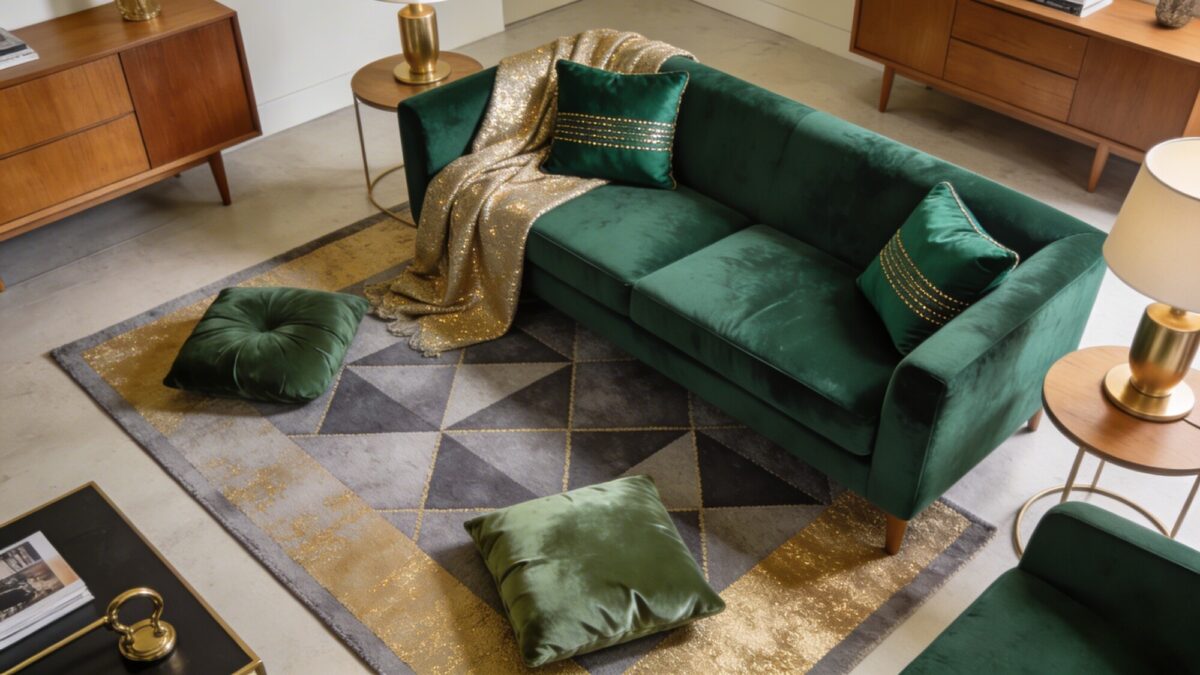
The last approach is the most restrained: skip the statement furniture entirely and build the green gold color combination through textiles alone — a gold-threaded throw, a couple of emerald cushions with subtle metallic stitching, and a rug with a faint gold undertone. This is the option for anyone renting, or anyone who’s not ready to commit to a green sofa but still wants the palette.
The trade-off is obvious: it’s a quieter effect. Don’t expect the drama of the velvet sofa idea. What you get instead is a room that reads as intentional without looking like it was designed around one big-ticket item.
💡 Pro Tip: Layer one patterned piece — a geometric rug or a textured cushion — with the plain green and gold pieces. An entire room of solid colors, even good ones, tends to look flat in photos and a little sparse in person.
Comparing the Three Ways to Add Gold
| Gold Finish | Best For | Watch Out For |
|---|---|---|
| Polished/Mirror Gold | Small accents — lamp bases, picture frames | Shows fingerprints and dust fast; can look brassy under cool lighting |
| Brushed Gold | Hardware, table legs, larger surfaces | Slightly more expensive than polished; harder to find in budget lines |
| Antiqued/Aged Gold | Mirrors, frames, vintage-leaning rooms | Can read as “old” rather than “elegant” if overused in a modern room |
Things to Consider Before You Commit
- Do you have consistent natural light? Dark green needs a bright room; a dim room needs a lighter green
- Is this a formal living room or a family space? Velvet and light-colored rugs wear differently under daily use
- How much gold is already in your fixtures (door handles, faucets nearby)? Mixing gold with existing chrome or nickel elsewhere in an open-plan home can look unplanned
- Are you starting with furniture or with paint? Paint is cheap to redo; a green sofa is not — pick the harder-to-change item first and build around it
FAQ
Does green and gold work in a small living room?
Yes, but lean lighter — sage or a muted green rather than deep emerald, and keep gold to accents rather than large surfaces. Dark green plus a lot of gold in a small room can close the space in rather than open it up.
What wall color works best with a green and gold living room?
Warm white, soft greige, or a pale taupe let the green furniture and gold accents do the talking. If you want color on the walls too, a muted sage reads as tonal rather than competing with a bolder green sofa.
Is brass the same as gold for this look?
Not exactly — brass has a slightly warmer, more yellow cast and ages with a visible patina over time, while “gold” finishes are often a coated metal designed to stay consistent. Both work for this palette; just don’t mix warm brass and cool polished gold in the same room.
How much does it cost to redo a living room in this style?
It depends heavily on whether you’re starting from furniture or accents. Restyling with textiles, a mirror, and plants can be done for a few hundred dollars. A new velvet sofa alone is usually the single biggest line item, so many people start with everything except the sofa and upgrade that last.
What’s the biggest mistake people make with this color combination?
Using too many different gold finishes in one room — polished brass lamp, antiqued gold mirror, and cool-toned gold hardware all in view at once looks unplanned rather than elegant. Pick one gold finish family and stick with it.
Our Take
If you’re only doing one thing from this list, start with the mirror and artwork combination in Idea 3 or the textile layering in Idea 8 — both are low-cost, reversible, and will tell you within a week whether you actually want to live with green and gold before you commit to a sofa. Save the velvet furniture and wall panels for once you’re sure the palette works with your room’s light. For more ways to round out the rest of the space once your palette is set, see our guide on layering pattern into a calm living room.